The cost of living in Malaysia in 2026 is about RM2,900–3,900 (~$710–$955) a month for a single person on a lean budget, and about RM5,500–6,000 (~$1,350–$1,470) for a comfortable single life in central Kuala Lumpur. A couple should plan on roughly RM7,100–8,100 (~$1,740–$1,985), and a family of four about RM9,800–11,500 (~$2,400–$2,820) before international school fees. These figures use an exchange rate of about RM4.08 per US dollar, based on Bank Negara Malaysia rates in early October 2026. Rent is the biggest variable, and fuel is the biggest surprise this year: foreigners pay the unsubsidized petrol price, which has climbed past RM4.50 a liter. Below you’ll find city-by-city rents, food and transport prices, healthcare, taxes, visa costs, and sample budgets.
Quick Answer
- Single person: RM2,900–3,900 (~$710–$955) on a lean budget; RM5,500–6,000 (~$1,350–$1,470) for a comfortable one in central KL.
- Couple: RM7,100–8,100 (~$1,740–$1,985) a month in a two-bedroom condo.
- Family of four: about RM9,800–11,500 (~$2,400–$2,820) before international school fees.
- Rent, one-bedroom: RM775–1,600 (~$190–$390) outside city centers; RM1,600–2,525 (~$390–$620) in the center, depending on the city.
- Utilities: about RM150–285 (~$37–$70) a month for an 85 m² apartment; home internet adds about RM105–120 (~$26–$29).
- Transit: RM150 (~$37) for a 30-day unlimited Rapid KL pass open to foreigners.
- Minimum wage 2026: RM1,700 (~$415) a month, with a possible increase under review in Budget 2027.
Exchange Rate, Inflation, and Wages in 2026
Four numbers shape what Malaysia costs you this year.
The exchange rate. Bank Negara Malaysia rates put the US dollar at about RM4.08 at the close on October 2, 2026, and the KL USD/MYR reference rate was 4.0859 on October 7. All dollar figures in this guide use RM4.08. If you earn in another currency, check the rate before you sign a lease.
Inflation. Consumer prices rose 1.9% in the year to August 2026, up from 1.8% in July, according to the Department of Statistics Malaysia (DOSM), as reported by The Star. Transport, housing and utilities led the increase. Electricity costs climbed after a fuel-cost adjustment for homes using more than 600 kWh a month.
Wages. DOSM’s Salaries and Wages Survey 2025, released in September 2026, put the median monthly salary at RM2,940 (~$720) and the mean at RM3,803 (~$930). Pay is higher in the cities. The mean is RM4,955 (~$1,215) in Kuala Lumpur, RM4,258 (~$1,045) in Selangor and RM3,912 (~$960) in Penang.
The minimum wage. The national minimum wage is RM1,700 a month, in force for all employers since August 2025. The government is reviewing an increase, and RM2,000 has been discussed. No new rate or start date has been set, and any decision is expected with Budget 2027.
Local households spend far less than most expats. DOSM’s 2024 Household Expenditure Survey found the average household spent RM5,566 (~$1,365) a month, and that covers about four people.
Cost of Living by City
Rents vary more between cities than any other expense. The table uses crowd-sourced averages from Numbeo (Kuala Lumpur, Johor Bahru, Kota Kinabalu and the national figures were updated in late September or early October 2026; Penang in July 2026). Kuala Lumpur has more than 1,000 price reports. Penang, Johor Bahru and Kota Kinabalu have far fewer, so treat those as rough guides.
| City | 1-Bed, City Center | 1-Bed, Outside Center | 3-Bed, Outside Center | Basic Utilities (85 m²) | Single Person, Excl. Rent |
|---|---|---|---|---|---|
| Kuala Lumpur | RM2,525 (~$620) | RM1,518 (~$370) | RM2,647 (~$650) | RM254 (~$62) | RM2,413 (~$590) |
| Penang (George Town) | RM1,648 (~$405) | RM939 (~$230) | RM1,698 (~$415) | RM152 (~$37) | RM2,114 (~$520) |
| Johor Bahru | RM2,125 (~$520) | RM1,600 (~$390) | RM2,600 (~$635) | RM215 (~$53) | RM2,324 (~$570) |
| Kota Kinabalu | RM1,760 (~$430) | RM775 (~$190) | RM1,524 (~$375) | RM283 (~$69)* | — |
| Malaysia average | RM1,604 (~$395) | RM1,112 (~$275) | RM1,865 (~$455) | RM221 (~$54) | RM2,167 (~$530) |
*Kota Kinabalu’s figures come from fewer than 10 contributors.
A few patterns stand out:
- Kuala Lumpur has the highest rents, especially in KLCC, Bangsar and Mont Kiara. Areas on the LRT and MRT lines outside the center, such as Cheras or parts of Petaling Jaya, cost much less.
- Penang is the best value for a city with good private hospitals and an established expat community. Outside George Town, one-bedrooms average under RM1,000.
- Johor Bahru has rents close to KL’s because many residents commute to Singapore. Units near the Causeway and the upcoming RTS Link cost more.
- Kota Kinabalu and smaller cities such as Ipoh have the lowest rents, but fewer international schools, specialist doctors and transit options.
For a closer look at the capital, see our Kuala Lumpur cost of living guide.
Housing and Renting as a Foreigner
Most foreigners rent a condominium. Condos usually include security, a pool, a gym and covered parking, which explains the gap between condo rents and the cheaper older flats many locals rent. Building age, distance to a rail station and furnishing can matter as much as the city.
Typical tenancy terms. The standard arrangement is often called “2+1+½”: two months’ rent as a security deposit, one month in advance, and half a month as a utility deposit. On a RM1,500 apartment, that is about RM5,250 (~$1,285) before you move in. Leases usually run 12 months, and many landlords accept foreigners with a passport and a valid pass.
Furnished or not. Most condos in expat areas come fully or partly furnished. Fully furnished units cost more but save you the cost of buying furniture and appliances.
Before you pay a deposit:
- Confirm the landlord or agent is real and that payment goes to the right account.
- Get a written tenancy agreement that states the deposit, refund rules, repairs and notice period.
- Photograph the unit and record any damage on move-in day.
- Ask who pays the building maintenance fee, parking and internet.
Utilities, Internet, and Phone
Basic utilities (electricity, water and garbage) for an 85 m² apartment average about RM221 (~$54) a month nationwide, ranging from about RM150 in Penang to about RM285 in Kota Kinabalu. Air conditioning drives most of the difference.
Electricity. Tenaga Nasional (TNB), the power company in Peninsular Malaysia, moved to a new tariff structure in July 2025. For homes using up to 1,500 kWh a month, the generation, capacity and network charges add up to about 44.43 sen per kWh, according to a breakdown of the TNB tariff. That puts 300 kWh at about RM133 (~$33) before rebates and the monthly fuel adjustment. The retail charge is waived below 600 kWh. Heavy users pay more, since the August 2026 fuel adjustment hit homes above 600 kWh.
Other monthly connections:
- Home internet (60+ Mbps): about RM107–121 (~$26–$30).
- Mobile plan with 10 GB or more: about RM35–42 (~$9–$10). Prepaid plans are cheap and easy to set up with a passport.
- Water: usually a small part of the bill, but check whether the rent or building fee includes it.
Food: Groceries and Dining Out
A single person who cooks most meals spends about RM700–900 (~$170–$220) a month on groceries. Couples should plan on about RM1,500 (~$370). Local produce, rice, chicken and eggs are cheap. Cheese, wine and imported goods are expensive because of import duties and excise taxes.
Average national prices in September 2026:
| Item | Typical Cost (RM) | Approx. USD |
|---|---|---|
| Milk (1 liter) | 7.69 | $1.88 |
| Bread (1 lb loaf) | 3.95 | $0.97 |
| Rice (1 lb) | 2.68 | $0.66 |
| Eggs (12) | 8.62 | $2.11 |
| Chicken fillets (1 lb) | 7.66 | $1.88 |
| Beef (1 lb) | 16.28 | $3.99 |
| Cheese (1 lb) | 25.60 | $6.27 |
| Apples (1 lb) | 5.57 | $1.37 |
| Mid-range bottle of wine | 78.00 | $19.12 |
Eating out is where Malaysia feels cheap. A plate of nasi lemak, char kway teow or roti canai at a hawker stall or kopitiam usually costs well under RM15. Other common prices:
- Meal at an inexpensive restaurant: about RM15 (~$3.70) nationally, RM20 (~$4.90) in KL
- Three-course dinner for two at a mid-range restaurant: about RM80 (~$20) nationally, RM120 (~$29) in KL
- Fast-food combo meal: about RM20 (~$4.90)
- Cappuccino: about RM11.60 (~$2.85)
- Domestic beer (pint, at a bar): about RM15 (~$3.70)
Alcohol is the exception. High excise duties make beer and wine pricier than in Thailand or Vietnam. Café meals and frequent food delivery can push a couple’s food spending above RM2,000 a month.
Eating a hawker or kopitiam lunch every weekday at RM12 costs about RM265 (~$65) a month.
Transportation and Fuel
Public transit in the Klang Valley is cheap and covers most of central KL. Rapid KL changed its passes on January 1, 2026, as reported by the New Straits Times. Several cheap passes are for Malaysians only, so check eligibility before you budget.
| Item | Price (RM) | Approx. USD | Notes |
|---|---|---|---|
| Rapid Bulanan 30-day pass | 150 | $37 | unlimited Rapid KL rail and bus; open to foreigners |
| My50 30-day pass | 50 | $12 | Malaysian citizens only |
| Rapid Kembara pass | 25 / 55 | $6 / $13 | 1-day / 3-day unlimited travel |
| RON95 petrol, unsubsidized (per liter) | 4.52 | $1.11 (~$4.19/gal) | price paid by foreigners, Oct 1–7, 2026 |
| RON95 petrol, BUDI95 (per liter) | 1.99 | $0.49 | eligible Malaysian citizens with MyKad, monthly quota |
| RON97 petrol (per liter) | 5.00 | $1.23 (~$4.64/gal) | floats weekly |
| Diesel, unsubsidized (per liter) | 5.27 | $1.29 (~$4.89/gal) | Peninsular Malaysia market price |
Fuel is the big change in 2026. Unsubsidized prices are set weekly. The Ministry of Finance set unsubsidized RON95 at RM3.37 a liter in its July 8, 2026 statement. By the first week of October it was RM4.52, according to Paul Tan’s weekly fuel price tracker. Malaysians with a MyKad still pay RM1.99 under BUDI95, but foreigners do not qualify. Do not use the subsidized price in an expat budget.
Other transport costs:
- Grab and taxis: taxis start around RM5 (~$1.25). Grab is the main ride-hailing app and is handy for short trips and the first or last stretch from a station. Fares rise at peak times and in rain.
- Cars: local brands are cheap. The Perodua Axia starts at RM22,000 (~$5,390) before insurance. Imported and foreign-brand cars cost far more; a new Toyota Corolla averages about RM140,000 (~$34,370). Add insurance, road tax, tolls, parking and fuel at market prices.
- Intercity travel: the ETS electric train links KL with Ipoh, Penang (Butterworth) and the north. Budget airlines make KL to Penang, Langkawi, Kota Kinabalu and Kuching cheap to reach.
A commuter on the Rapid Bulanan pass with a few Grab rides a week spends roughly RM250–350 (~$60–$85) a month. Running a small car at market fuel prices costs much more.
Healthcare and Insurance Costs
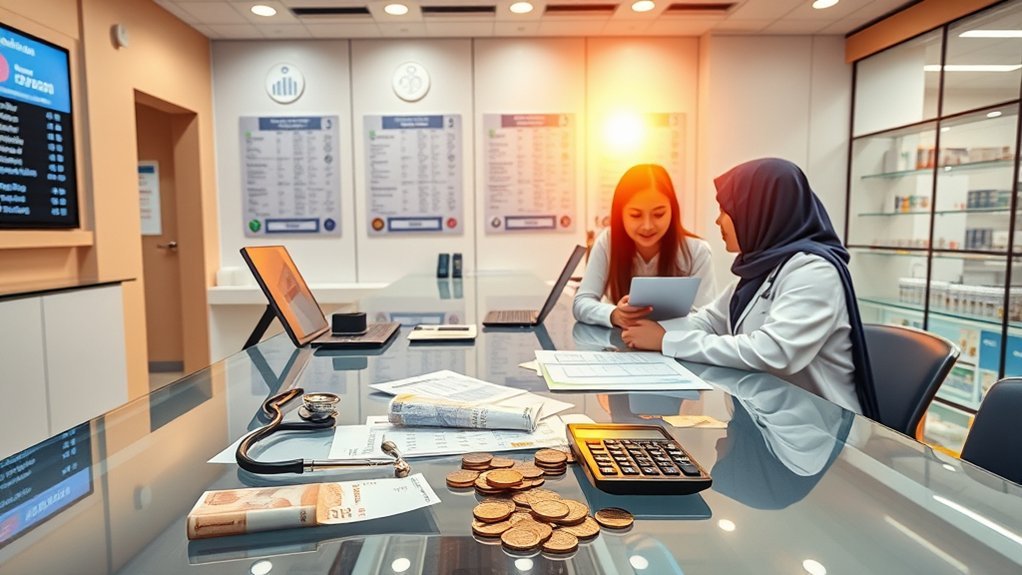
Malaysia has a large public system and many private hospitals, especially in KL and Penang. Citizens pay token fees at government facilities. Foreigners pay a separate, higher schedule set by the Ministry of Health.
Published Ministry of Health fees for foreigners at government facilities:
| Service | Fee per Visit (RM) | Approx. USD |
|---|---|---|
| General outpatient care | 40 | $10 |
| Specialist outpatient care | 120 | $29 |
| Emergency department | 100 | $25 |
These fees cover the consultation only. Medicines, tests, procedures and ward stays cost extra, and public hospitals may ask foreigners for a deposit before admission. Check the current Ministry of Health schedule before you rely on these figures.
Private care. Most expats use private clinics and hospitals. A neighborhood GP clinic is inexpensive, while private hospital specialists and admissions cost much more. Service tax at 6% applies to private healthcare for foreign patients.
Health insurance. Premiums depend on age, coverage area, deductible and medical history, so there is no standard price. Younger adults can find local plans for a few hundred ringgit a month. People over 60 or those who want worldwide coverage often pay well over RM1,000 a month. Get several written quotes and compare annual limits, exclusions, waiting periods and renewal rules. MM2H applicants need valid medical insurance.
Schools and Childcare
Families face the widest cost range, because school choice matters so much.
- International primary school in KL: about RM53,600 (~$13,140) a year per child on average, with reported fees from about RM30,000 to RM97,600. The national average is about RM33,300 (~$8,170). Top schools also charge enrollment fees, deposits, buses and uniforms.
- Private full-day preschool: about RM770 (~$190) a month nationally and about RM1,220 (~$300) in KL.
- Public schools: teach mainly in Malay. Foreign children can enroll in some cases, but most expat families choose international or private schools.
For a family with two children at an average KL international school, tuition alone adds about RM8,940 (~$2,190) a month.
Taxes: SST and Income Tax
- Sales and Service Tax (SST): Malaysia has no VAT. Sales tax is mostly 5% or 10% on taxable goods. Service tax is generally 8%, with 6% for food and beverage, telecom, private healthcare and education services, according to PwC’s Malaysia tax summary. The scope widened in July 2025 to cover more goods and services, including some rentals and leasing.
- Tax residency: you are generally a tax resident if you spend at least 182 days in Malaysia in a calendar year.
- Income tax rates: resident rates are progressive, from 0% on the first RM5,000 of chargeable income to 30% above RM2 million. Non-residents pay a flat 30% on Malaysian-source income, per PwC’s personal income tax summary.
- Retirement fund for foreign employees: since October 2025, foreign employees also contribute to the Employees Provident Fund (EPF) at prescribed rates.
If you plan to work or stay past 182 days, talk to a Malaysian tax adviser early, especially if you have foreign pensions, investments or rental income.
Visas and Residency Costs
US, UK and most EU citizens can visit Malaysia visa-free, generally for up to 90 days. A visit does not allow you to work or live there long term. The two main long-stay routes for people with outside income are MM2H and the DE Rantau Nomad Pass.
Malaysia My Second Home (MM2H). The official MM2H category overview lists these core requirements:
| Category | Fixed Deposit | Minimum Property Purchase | Pass Term | Minimum Age |
|---|---|---|---|---|
| Silver | US$150,000 | RM600,000 (~$147,000) | 5 years, renewable | 25 |
| Gold | US$500,000 | RM1,000,000 (~$245,000) | 15 years, renewable | 25 |
| Platinum | US$1,000,000 | RM2,000,000 (~$490,000) | 20 years, renewable | 25 |
| SEZ/SFZ, age 50+ | US$32,000 | set by the zone’s developments | 10 years, renewable | 50 |
| SEZ/SFZ, age 21–49 | US$65,000 | set by the zone’s developments | 10 years, renewable | 21 |
Fees include a processing fee of RM5,000 (~$1,225) for the main applicant and RM2,500 (~$615) per dependent, plus a participation fee that starts at RM1,000 for Silver. Applicants aged 25–49 must spend at least 90 days a year in Malaysia, counted across the family. Applicants aged 50 and over have no minimum stay. The Special Economic Zone (SEZ/SFZ) track is the cheapest entry point, but you must live in and buy within the approved zone.
DE Rantau Nomad Pass. Run by the Malaysia Digital Economy Corporation, the DE Rantau program lets remote workers live in Malaysia for up to 12 months, renewable once. It has historically required US$24,000 a year in income for digital-tech roles and a higher floor for other remote work. Confirm the current income rules and fees with MDEC before you apply.
Employment Pass. If a Malaysian company hires you, the employer applies for your pass. Salary floors depend on the category.
One-Time Setup Costs
Budget for these before your first month:
- Rental deposits: about 3.5 months of rent under the usual 2+1+½ terms. On a KL one-bedroom outside the center (RM1,518), that is about RM5,300 (~$1,300).
- Visa or pass costs: MM2H processing fees start at RM5,000 plus the participation fee, and the fixed deposit must be placed in a Malaysian bank.
- Furnishing: small if you rent furnished. Unfurnished units need appliances, a mattress and kitchenware.
- Transit card and pass: a Touch ‘n Go card plus RM150 for the first Rapid Bulanan pass.
- Health coverage gap: travel or international insurance until a local plan starts.
- Bank and transfer costs: currency conversion fees on your first large transfers.
Sample Monthly Budgets
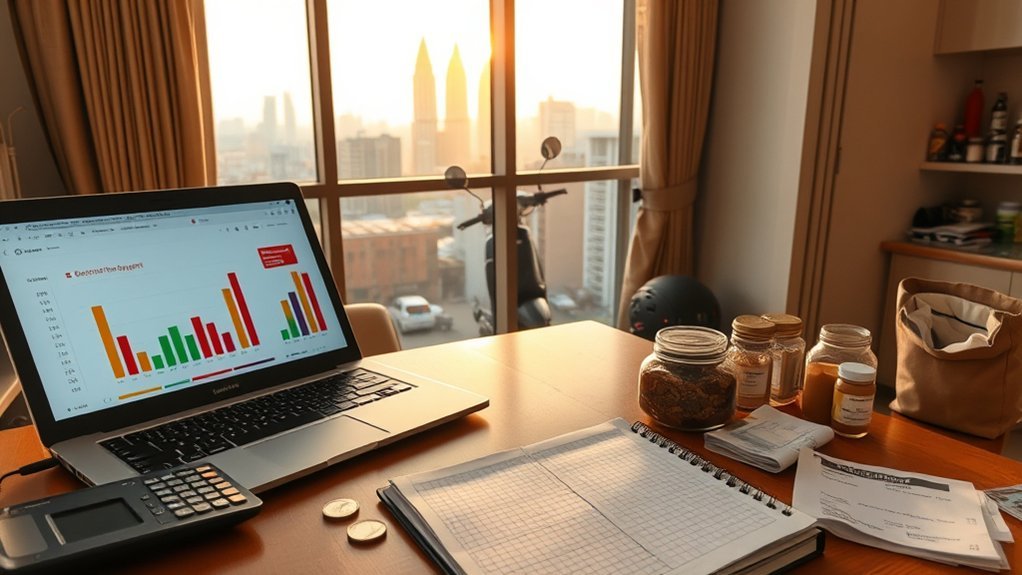
These budgets combine the averages above. The lean budget uses one-bedroom rents outside the center in KL, Penang and Johor Bahru. The comfortable single budget uses a central one-bedroom in Johor Bahru or KL. The couple budget uses a two-bedroom condo in the Klang Valley or Penang.
| Expense | Single, Lean | Single, Comfortable | Couple | Family of Four |
|---|---|---|---|---|
| Rent | 940–1,520 | 2,125–2,525 | 2,100–3,000 | 1,865–2,650 (3-bed) |
| Utilities | 150–255 | 255–350 | 300–400 | included below |
| Internet + mobile | 145–160 | 150 | 190 | included below |
| Groceries | 700–900 | 900 | 1,500 | included below |
| Eating out + leisure | 500 | 1,000 | 1,500 | included below |
| Transport | 150 | 300 | 450 | included below |
| Health insurance | 200–300 | 300 | 600 | included below |
| Gym + miscellaneous | 150 | 450 | 500 | included below |
| Living costs excl. rent | — | — | — | 7,900–8,815 |
| Total (RM) | 2,900–3,900 | 5,500–6,000 | 7,100–8,100 | 9,800–11,500 |
| Total (USD) | $710–$955 | $1,350–$1,470 | $1,740–$1,985 | $2,400–$2,820 |
Family of four: Numbeo’s crowd-sourced estimate for a family of four is about RM7,900 (~$1,935) a month before rent nationally and RM8,815 (~$2,160) in KL. Add a three-bedroom outside the center and the total is about RM9,800–11,500. Two children at an average KL international school push that to roughly RM18,700–20,400 (~$4,585–$5,000).
Retirees: a retired couple can follow the couple column but should expect higher insurance costs and lower commuting costs. With private cover of RM1,200–2,000 a month for two people over 60, a realistic budget is about RM7,450–9,250 (~$1,825–$2,265). Penang is a popular choice because of its private hospitals and lower rents.
How this compares with local pay: the median Malaysian salary is RM2,940 a month. A lean expat budget is close to that, and a comfortable couple’s budget is about twice the average household’s spending of RM5,566.
Money-Saving Tips
- Live near a rail line. A condo near an LRT or MRT station lets you rely on the RM150 pass instead of daily Grab rides or a car at market fuel prices.
- Look one area out. Petaling Jaya, Cheras or Subang often cost far less than KLCC or Mont Kiara for a similar condo.
- Eat local. Hawker centers and kopitiams beat cooking with imported groceries on price.
- Cut back on imports and alcohol. Excise duties make wine, beer and imported cheese some of the most expensive items in a supermarket.
- Watch the air conditioning. Staying under 600 kWh a month avoids the retail charge and the fuel surcharge on heavy users.
- Compare furnished and unfurnished. Include the cost of buying furniture before choosing the cheaper rent.
- Get several insurance quotes. Premiums vary widely, especially after age 60.
How Malaysia Compares With Nearby Countries
Malaysia sits in the middle of the range for Southeast Asia. Across the Causeway, the cost of living in Singapore is several times higher, especially for rent, which is why many people live in Johor Bahru and commute. The cost of living in Thailand is similar overall, with cheaper alcohol but a less English-friendly setup outside Bangkok. For lower budgets, compare the cost of living in Indonesia and the cost of living in the Philippines, where rents outside the main business districts are lower but public services are less consistent.
Frequently Asked Questions
How much money do you need to live in Malaysia per month?
A single person needs about RM2,900–3,900 (~$710–$955) a month on a lean budget, and about RM5,500–6,000 (~$1,350–$1,470) for a comfortable life in central Kuala Lumpur. A couple should budget about RM7,100–8,100 (~$1,740–$1,985).
Is $1,000 a month enough to live in Malaysia?
Yes, for a single person on a lean budget. At about RM4.08 per dollar, $1,000 is roughly RM4,080. That covers a one-bedroom outside the center in KL, Penang or Johor Bahru, local food and a transit pass. It does not cover a central KL condo or a car at market fuel prices.
How much is rent in Kuala Lumpur in 2026?
A one-bedroom averages about RM2,525 (~$620) a month in the city center and about RM1,518 (~$370) outside it. A three-bedroom outside the center averages about RM2,647 (~$650). Expect to pay about 3.5 months of rent upfront in deposits.
Which Malaysian city is cheapest to live in?
Among the main cities, Kota Kinabalu and Penang have the lowest rents outside the center, at under RM1,000 for a one-bedroom. Penang is often the best value overall because it combines lower rents with good private hospitals.
Can foreigners buy subsidized petrol in Malaysia?
No. The RM1.99 BUDI95 price is for eligible Malaysian citizens with a MyKad. Foreigners pay the unsubsidized price, which was RM4.52 a liter for RON95 in the first week of October 2026.
What is the minimum wage in Malaysia in 2026?
The minimum wage is RM1,700 a month (about $415). The government is reviewing an increase, and RM2,000 has been discussed, but no new rate or start date has been set.
How much does MM2H cost?
The Silver tier needs a US$150,000 fixed deposit and a property purchase of at least RM600,000. The processing fee is RM5,000 for the main applicant and RM2,500 per dependent. The Special Economic Zone track starts at a US$32,000 deposit for applicants aged 50 and over.
Conclusion
Malaysia remains one of the better-value places to live in Southeast Asia. Food, transit and rent outside the city centers are cheap, and inflation is low at 1.9%. A single person can live simply on about $710–$955 a month, and a couple comfortably on about $1,740–$1,985. The costs that catch newcomers are the ones locals do not pay: unsubsidized fuel, foreigner healthcare fees, private insurance, international schools and imported goods. Pick your city and neighborhood first, live near a rail line if you can, and check the exchange rate and visa rules before you commit.
Sources
- Bank Negara Malaysia – KL USD/MYR reference rate
- Business Today – foreign exchange rates, October 2, 2026
- The Star – DOSM inflation, August 2026
- DOSM – Salaries and Wages Survey Report 2025
- DOSM – Household Expenditure Survey Report 2024
- Human Resources Online – minimum wage review
- Numbeo – Malaysia, Kuala Lumpur, Penang, Johor Bahru, Kota Kinabalu
- Speedhome – TNB domestic tariff explained
- New Straits Times – Rapid KL pass prices from January 1, 2026
- Ministry of Finance – petroleum prices, July 2026
- Paul Tan – weekly fuel prices
- Perodua – Axia
- PwC – Malaysia personal income tax
- PwC – Malaysia SST and other taxes
- MM2H – category overview
- MDEC – DE Rantau