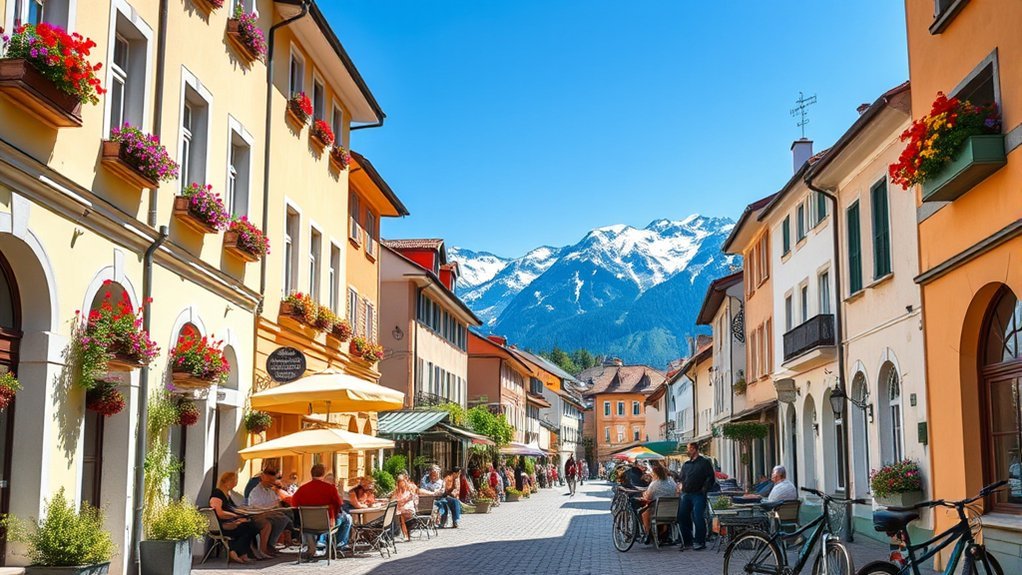
The cost of living in Austria in 2026 runs about €1,600–€1,715 a month for a single person living simply in a city like Graz or Linz, and about €2,200–€2,515 for a comfortable single life in Vienna. A couple in Vienna should plan on roughly €3,230–€3,480, and a family of four about €4,900 before private school fees. In US dollars, that is about $1,795–$1,925 for a lean single budget and $2,465–$2,825 for a comfortable one, using the European Central Bank rate of €1 = $1.1225 on October 2, 2026. Rent is the biggest swing factor: a one-bedroom outside the center averages around €620 in Graz but more than €1,000 in Salzburg. Below you’ll find city-by-city rents, utility and transport costs, taxes, healthcare fees, salaries, and sample budgets.
Quick Answer
- Single person: €1,600–€1,715 (~$1,795–$1,925) on a lean budget outside Vienna; €2,200–€2,515 (~$2,465–$2,825) for a comfortable one in Vienna.
- Couple: €3,230–€3,480 (~$3,620–$3,905) a month in Vienna.
- Family of four: about €4,900 (~$5,490) in Vienna before private or international school fees.
- Rent, one-bedroom: €620–€1,000 (~$695–$1,120) outside the center; €730–€1,275 (~$820–$1,430) in the center, depending on the city.
- Utilities: about €260–€380 (~$295–$425) a month for an 85 m² apartment; internet adds about €30 (~$35).
- Transit: Vienna’s 31-day pass costs €65.20 digitally; the nationwide KlimaTicket Ö costs €1,400 a year.
- Official benchmarks: average household spending is €4,170 a month, and spending per adult equivalent is €2,760.
Exchange Rate, Inflation, and Official Benchmarks
Three numbers shape what Austria costs you this year.
The exchange rate. The ECB reference rate was $1.1225 per euro on October 2, 2026, down from about $1.159 in early September. A weaker euro makes Austria a little cheaper for people paid in dollars. All dollar figures in this guide use the October 2 rate.
Inflation. Statistics Austria put annual inflation at 3.2% in August 2026, and its flash estimate for September is 3.6%. Energy drove most of the rise, with fuel and heating oil prices up sharply. Services inflation stayed above 4%, which matters for rent, restaurants, and repairs. Food inflation was low, mostly because of a VAT cut on basic groceries that started in July (see the taxes section below).
Official spending benchmarks. The latest Statistics Austria Household Budget Survey (April 2024 to May 2025) found that private households spent an average of €4,170 (~$4,680) a month. Spending per adult equivalent averaged €2,760 (~$3,100). More than a quarter of household spending goes to housing and energy.
The adult-equivalent figure adjusts spending for household size. Statistics Austria counts the first adult as 1.0, each extra person aged 14 or older as 0.5, and each child under 14 as 0.3. That makes it the better number for comparing a single person with a family.
| Benchmark | Monthly Amount | Approx. USD | What It Represents |
|---|---|---|---|
| Student budget (OeAD) | about €1,300 | $1,460 | student housing and an economical lifestyle |
| Residence permit minimum, single | €1,308.39 | $1,470 | legal income floor, not a comfortable budget |
| Spending per adult equivalent | €2,760 | $3,100 | official average, adjusted for household size |
| Average private household | €4,170 | $4,680 | average across all household sizes and incomes |
These are statistical averages, not personal budgets. Someone sharing a flat can spend far less, while a family renting a new apartment in central Vienna will spend more.
Cost of Living by City
Rent varies more between Austrian cities than any other cost. The table uses crowd-sourced averages from Numbeo (updated September and October 2026) for rent and utilities. Vienna has hundreds of price reports; Salzburg, Innsbruck, and Linz have far fewer, so treat those as rough guides. Vienna’s transit fare is the official 2026 digital price.
| City | 1-Bed, City Center | 1-Bed, Outside Center | 3-Bed, Outside Center | Basic Utilities (85 m²) | Monthly Transit Pass |
|---|---|---|---|---|---|
| Vienna | €1,135 (~$1,275) | €817 (~$915) | €1,388 (~$1,560) | €275 (~$310) | €65.20 |
| Salzburg | €1,275 (~$1,430) | €1,000 (~$1,120) | €1,820 (~$2,045) | €350 (~$395) | about €72 |
| Innsbruck | €1,155 (~$1,295) | €921 (~$1,035) | €1,684 (~$1,890) | €377 (~$425) | about €60 |
| Graz | €733 (~$825) | €619 (~$695) | €1,038 (~$1,165) | €341 (~$385) | about €67 |
| Linz | €729 (~$820) | €642 (~$720) | €1,265 (~$1,420) | €262 (~$295) | about €59 |
| Austria average | €889 (~$1,000) | €731 (~$820) | €1,257 (~$1,410) | €316 (~$355) | — |
A few patterns stand out:
- Salzburg has the highest rents of the five cities, both in and out of the center. Tourism, second homes, and limited land all push prices up.
- Innsbruck is close behind. It is a university city in a narrow Alpine valley, and housing is tight.
- Vienna is pricier than Graz or Linz in the center but often reasonable outside it, thanks to its huge stock of municipal and cooperative housing. For a deeper look at the capital, see our full Vienna cost of living guide.
- Graz and Linz are the value picks. One-bedrooms in the center cost about a third less than in Vienna, and wages are not far behind.
Housing: Rent, Deposits, and Leases
Statistics Austria reported an average rent of €694.70 (~$780) per dwelling in the second quarter of 2026, including running costs. That works out to €10.50 per square meter. This figure looks low next to the city table because it includes old leases, municipal flats, and cooperative housing. A newly listed private apartment in Vienna, Salzburg, or Innsbruck usually costs more.
What the Rent Includes
Austrian listings often quote a total that includes base rent, building operating costs (Betriebskosten), and VAT. Heating, hot water, and electricity may or may not be included. Before you sign, ask for:
- The total monthly payment and what it covers
- Whether heating is central (billed through the rent) or a separate contract
- The previous tenant’s electricity and heating bills for the last 12 months
- Whether operating costs are a fixed fee or an advance with a yearly settlement
- Parking, storage, and internet options at the address
Municipal and Subsidized Housing
Vienna has one of Europe’s largest public and cooperative housing sectors. Access depends on income, length of residence, household size, and housing need. The City of Vienna’s 2026 income limits for subsidized rental and cooperative flats are €61,280 net a year for one person, €91,320 for two, €103,330 for three, and €115,360 for four. Meeting the income limit alone does not guarantee a flat, and newcomers rarely qualify in their first years.
Deposits and Broker Fees
Landlords usually ask for a deposit (Kaution) of three gross monthly rents. On a €817 one-bedroom outside central Vienna, that is about €2,450 (~$2,750). Since July 1, 2023, Austria has used the “first client” rule for rental brokers: whoever hires the agent pays the commission. In most normal listings, that means the landlord pays, not the tenant.
Photograph the apartment and sign a written handover report when you move in. It is your best protection when you ask for the deposit back.
Utilities, Internet, and Phone

Basic utilities (electricity, heating, water, and garbage) for an 85 m² apartment average about €316 (~$355) a month nationally, based on crowd-sourced reports. Linz and Vienna come in lower, at about €260–€275, while Innsbruck and Salzburg run €350–€380 because of longer, colder winters. Your real bill depends on insulation, the heating system, and whether part of it is already in the rent. Energy prices rose 10% year on year in August 2026, so ask for recent bills, not last winter’s.
Other monthly costs:
- Home internet (60+ Mbps): about €28–€36 (~$32–$40).
- Mobile plan with 10 GB+ data: about €13–€14 (~$14–$15).
- ORF broadcasting fee: €15.30 a month per household address. Some states add a levy: €3.10 in Tyrol, €4.60 in Burgenland and Carinthia, and €4.70 in Styria. Vienna, Salzburg, Upper Austria, Lower Austria, and Vorarlberg add nothing.
- Household and liability insurance (Haushaltsversicherung): optional but common, and some landlords expect it.
Food: Groceries and Dining Out

A single person who cooks most meals spends about €300–€400 (~$335–$450) a month on groceries. The OeAD student guide uses €300. Couples should plan on about €600–€700. Discount chains such as Hofer and Lidl, and store brands at Billa and Spar, keep bills down.
Average national prices in October 2026 (crowd-sourced):
| Item | Typical Cost (EUR) | Approx. USD |
|---|---|---|
| Milk (1 liter) | 1.50 | $1.68 |
| Bread (1 lb loaf) | 2.20 | $2.47 |
| Rice (1 lb) | 0.95 | $1.07 |
| Eggs (12) | 4.19 | $4.70 |
| Chicken fillets (1 lb) | 5.76 | $6.47 |
| Beef (1 lb) | 8.99 | $10.09 |
| Local cheese (1 lb) | 7.55 | $8.47 |
| Potatoes (1 lb) | 0.88 | $0.99 |
| Apples (1 lb) | 1.16 | $1.30 |
Since July 1, 2026, VAT on basic foods such as milk, butter, eggs, bread, rice, pasta, flour, fruit, and vegetables has dropped from 10% to 4.9%. The government expects a family of four to save around €100 a year. The cut is the main reason grocery inflation was close to zero in the summer.
Eating out costs more than in neighboring Central European countries but less than in Switzerland:
- Meal at an inexpensive restaurant: about €15–€16 (~$17–$18)
- Three-course dinner for two at a mid-range restaurant: about €70 (~$79)
- Fast-food combo meal: about €12 (~$13)
- Cappuccino: about €4.10–€4.60 (~$4.65–$5.15)
- Domestic beer (pint, at a bar): about €5–€5.30 (~$5.60–$5.95)
Many restaurants and canteens offer a weekday lunch menu (Mittagsmenü) that costs much less than ordering à la carte in the evening. University cafeterias (Mensa) are cheaper still.
Transportation and Getting Around
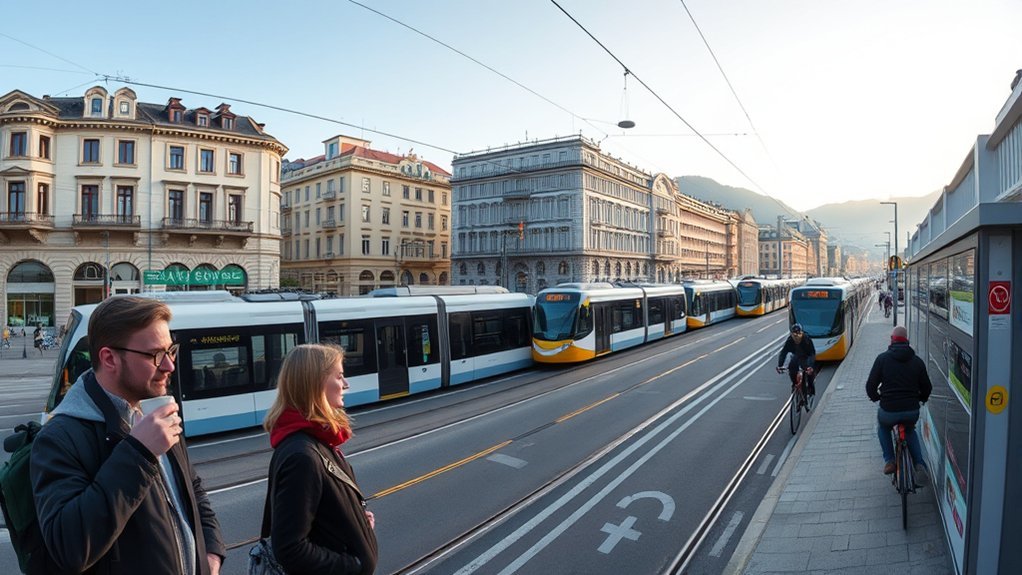
Public transport is excellent, and most people in larger cities don’t need a car. Vienna raised fares on January 1, 2026, and now charges less for digital tickets than for paper ones.
| Vienna Ticket (Wiener Linien) | Digital | Paper |
|---|---|---|
| Single trip | €3.00 | €3.20 |
| 24 hours | €9.70 | €10.20 |
| 7 days | €25.20 | €28.90 |
| 31 days | €65.20 | €75.00 |
| Annual pass (paid at once) | €461 | €467 |
The annual pass works out to about €38 (~$43) a month, the best deal for daily riders. Under-26s can get a €300 annual pass.
For travel across the country, the KlimaTicket Ö costs €1,400 (~$1,570) a year in 2026 and covers almost all trains, buses, and city transit in Austria. People under 26 or over 65 pay €1,050. Families can add up to four children aged 6–15 for €140.
Other transport costs:
- Gasoline: about €1.71–€1.80 per liter (~$7.25–$7.65 per gallon). Fuel prices climbed in late summer 2026.
- Car ownership: budget for insurance, registration, parking permits, the motorway vignette, winter tires, and inspections on top of fuel.
- Cycling: Vienna, Graz, Linz, and Salzburg have good bike networks, which cut costs for short trips.
Healthcare and Insurance Costs
Austria has compulsory public health insurance for employees, most self-employed people, pensioners, and their dependants. Contributions are taken from your pay, so most residents don’t pay a separate premium. Coverage is broad, but some fees apply:
- Prescription fee (Rezeptgebühr): €7.55 per item in 2026. Once you’ve paid 2% of your annual net income in prescription fees, the rest of the year is free.
- e-card service fee: €25 a year for 2026, rising to €26.85 for 2027 (collected in November 2026).
- Hospital stays: insured patients pay a small daily contribution in general wards, capped at 28 days a year. The amount varies by state.
- Private doctors (Wahlärzte): you pay the bill up front and get back part of it, often about 80% of what the public fund would have paid a contracted doctor.
Low-income residents can apply for exemption from prescription and e-card fees. The 2026 net income limit is €1,308.39 a month for a single person and €2,064.12 for a couple.
Many expats add private supplementary insurance (Zusatzversicherung) for a private room in hospital or a free choice of doctor. Prices depend on age and cover, so get quotes. People applying for a residence permit must show health insurance that covers all risks in Austria.
Schools, Childcare, and Universities
- Public schools: free, with nine years of compulsory schooling for all resident children. Budget for meals, supplies, trips, and after-school care.
- Public kindergarten: Vienna’s public kindergartens charge no care fee, though families pay for meals. Rules and fees differ in other states, so check with your municipality.
- Private preschool: about €317–€380 (~$355–$425) a month on average, crowd-sourced.
- International primary school: about €14,400 a year nationally and about €24,800 (~$27,800) in Vienna on average. Top schools charge more, plus enrollment fees.
At public universities, Austrian and EU/EEA students pay no tuition within the standard study period plus two extra semesters, and €363.36 per semester after that. According to Study in Austria, most non-EU students pay €726.72 per semester. Every student also pays the €26.20 student union fee, which includes accident insurance.
The OeAD estimates a typical student spends about €1,300 (~$1,460) a month: €450–€700 for housing, about €300 for food, and about €500 for study costs, transport, and leisure. A room in a shared flat (WG) or student dorm is the cheapest option.
Taxes: VAT and Income Tax
- VAT (Umsatzsteuer): the standard rate is 20%. A reduced 10% rate covers most food and residential rent, and basic foods have been at 4.9% since July 2026.
- Tax residency: you generally become fully taxable in Austria if you have a home there or stay more than six months. Residents are taxed on worldwide income.
- Social insurance: employees pay pension, health, unemployment, and accident insurance through payroll before income tax is calculated.
Income tax is progressive. The 2026 brackets from the Austrian business service portal are:
| Taxable Income (EUR/year) | Rate |
|---|---|
| Up to 13,539 | 0% |
| 13,539–21,992 | 20% |
| 21,992–36,458 | 30% |
| 36,458–70,365 | 40% |
| 70,365–104,859 | 48% |
| 104,859–1,000,000 | 50% |
| Over 1,000,000 | 55% (until 2029) |
Most employees get their salary in 14 payments a year. The 13th and 14th payments (holiday and Christmas pay) are taxed at a lower flat rate, which raises take-home pay compared with 12 equal payments.
Salaries vs. Living Costs
Statistics Austria’s latest income data (for 2024) puts the median gross annual income at €38,043 (~$42,700) for all employees and €55,678 (~$62,500) for full-time, year-round workers. Crowd-sourced figures put average net pay at about €2,730 (~$3,065) a month nationally and €3,140 in Vienna, though many contributors say these figures run high for entry-level jobs.
Austria has no statutory national minimum wage. Minimum pay is set by collective agreements for each industry, which cover the vast majority of employees.
What this means in practice:
- A full-time worker on a median salary can afford a comfortable single life in Vienna or Graz, with room to save.
- A single earner supporting a family in Vienna will find the €4,900 family budget tight, especially with rent on the private market.
- Lower-paid workers in Salzburg and Innsbruck feel housing costs most, since rents there are highest while wages are similar to the rest of the country.
Our guide to the salary you need to live comfortably in Vienna works through take-home pay for different household types.
Visas and Income Requirements
US, Canadian, UK, and Australian citizens can visit Austria visa-free for up to 90 days in any 180-day period, as long as they don’t work. Stays of 91 days to six months generally need a national Visa D. Living in Austria longer requires a residence title, such as the Red-White-Red Card for skilled workers, a student permit, or a settlement permit for people with their own means.
Most residence titles require proof of a secure livelihood. According to Migration Austria, the 2026 reference amounts are:
- Single person: €1,308.39 (~$1,470) a month
- Married couple or registered partners: €2,064.12 (~$2,315) a month
- Each child: an extra €201.88 (~$225) a month
Regular costs such as rent and loan payments above a set allowance raise the amount you need to show. Some permits, including the settlement permit for people not working in Austria, require much more. These are legal minimums, not realistic budgets. A single person living on €1,308 would struggle anywhere but a shared flat.
One-Time Setup Costs
Budget for these before your first normal month:
- Rental deposit: usually three months’ gross rent, about €2,450–€3,400 (~$2,750–$3,820) for a one-bedroom in Vienna.
- First month’s rent: paid on signing.
- Furniture and kitchen: many unfurnished Austrian flats come without a kitchen, or the previous tenant asks a fee (Ablöse) to leave theirs. Budget a few thousand euros if you furnish from scratch.
- Temporary housing: furnished short-term rentals while you search cost more than long leases.
- Residence paperwork: application fees, certified translations, apostilles, and photos.
- Transit pass: €65.20 for a first 31-day pass in Vienna, or €461 for the annual pass.
- Health insurance gap: private or travel coverage until public insurance starts through your job.
Sample Monthly Budgets
These budgets combine the averages above. The lean budget uses Graz and Linz rents outside the center. The other columns use Vienna.
| Expense (EUR) | Single, Lean (Graz/Linz) | Single, Comfortable (Vienna) | Couple (Vienna) |
|---|---|---|---|
| Rent | 619–642 (1-bed outside center) | 817–1,135 (1-bed) | 1,135–1,388 (1-bed center or 3-bed outside) |
| Utilities | 262–341 | 275 | 275 |
| Internet + mobile | 45–50 | 41 | 54 |
| Groceries | 300 | 400 | 700 |
| Eating out + leisure | 200 | 400 | 600 |
| Transport | 59–67 | 65 | 130 |
| Gym | — | 34 | 67 |
| ORF fee | 15 | 15 | 15 |
| Insurance, clothing, other | 100 | 150 | 250 |
| Total (EUR) | €1,600–€1,715 | €2,200–€2,515 | €3,230–€3,480 |
| Total (USD) | $1,795–$1,925 | $2,465–$2,825 | $3,620–$3,905 |
Public health insurance is not listed because employees pay it through payroll.
Family of four: crowd-sourced data puts a Vienna family’s costs at about €3,505 (~$3,935) a month before rent. Add a three-bedroom outside the center at €1,388 and the total is about €4,900 (~$5,490). International school for two children adds about €4,130 a month at Vienna’s average fees, pushing the total to roughly €9,000 (~$10,130). In Graz, the same family using public schools would spend about €4,680 (~$5,250).
Students: about €1,300 a month in a shared flat or dorm, as estimated by the OeAD.
Leisure and Entertainment
Leisure spending varies more than any other category. Typical prices:
- Gym membership: about €34–€45 (~$38–$50) a month, with budget chains cheaper.
- Cinema ticket: about €12.50 (~$14).
- Skiing: day passes at big resorts are a major expense. Locals save with regional season passes.
- Free and low-cost options: hiking trails, lakes, city parks, standing-room opera tickets in Vienna, and free museum days.
A modest €100–€200 a month covers occasional dinners, a gym, and a few events. Frequent travel, skiing, or nightlife can add several hundred euros more.
Money-Saving Tips
- Pick Graz or Linz over Salzburg or Innsbruck if your job allows it. Rents are roughly 30–40% lower.
- Compare total housing cost, not base rent. A cheap flat with poor insulation can cost more over a winter than a pricier, efficient one.
- Buy the annual transit pass. Vienna’s €461 pass costs about €38 a month, far below 31-day tickets.
- Buy tickets digitally. Vienna charges less for app tickets than for paper ones.
- Shop at discounters and buy staples. Basic foods now carry only 4.9% VAT.
- Use contracted doctors. Check that a doctor or dentist has a contract with your health fund (Kassenarzt) before you book.
- Share a flat at first. A WG room cuts rent, utilities, and setup costs while you learn the market.
How Austria Compares With Nearby Countries
Austria sits near the top of the range for Central Europe, but well below its western neighbor. The cost of living in Switzerland is much higher on rent, food, and healthcare, which is why some people work in Switzerland and live across the border in Vorarlberg. Our guide to the cost of living in Germany shows broadly similar prices, with Munich more expensive than Vienna.
To the east, costs drop. Compare the Czech Republic living cost guide and our page on monthly expenses in Hungary: rents in Prague and Budapest are lower than in Vienna, though local wages are lower too. To the south, the cost of living in Slovenia offers Alpine scenery for less, especially outside Ljubljana.
Frequently Asked Questions
How much money do you need to live in Austria per month?
A single person needs about €1,600–€1,715 (~$1,795–$1,925) a month for a simple life in Graz or Linz, and about €2,200–€2,515 (~$2,465–$2,825) for a comfortable one in Vienna. A couple in Vienna should budget about €3,230–€3,480 (~$3,620–$3,905).
How much does it cost to live in Austria in US dollars?
At the ECB rate of $1.1225 per euro on October 2, 2026, a lean single budget is about $1,795–$1,925 a month, a comfortable single budget in Vienna is about $2,465–$2,825, and a family of four in Vienna needs about $5,490 before school fees.
What is the average rent in Austria?
Statistics Austria reported an average rent of €694.70 per dwelling, including running costs, in the second quarter of 2026, or €10.50 per square meter. That includes older and subsidized leases. New private listings cost more: a one-bedroom outside the center averages about €817 in Vienna and €1,000 in Salzburg.
Which Austrian city is cheapest to live in?
Among the five largest cities, Graz and Linz have the lowest rents, with one-bedrooms in the center averaging about €730. Salzburg and Innsbruck are the most expensive, and Vienna falls in between.
How much income do you need for an Austrian residence permit?
The 2026 secure-livelihood reference amounts are €1,308.39 a month for one person, €2,064.12 for a married couple or registered partners, and an extra €201.88 for each child. Rent and loan payments above a set allowance raise the amount, and some permits require more.
Is healthcare free in Austria?
Most care is covered by compulsory public insurance, which employees pay through payroll. Patients still pay some fees, including €7.55 per prescription item in 2026, a €25 yearly e-card fee, and a small daily charge for hospital stays.
Is Vienna more expensive than the rest of Austria?
Vienna’s central rents are higher than in Graz or Linz, but lower than in Salzburg and Innsbruck. Its large supply of municipal housing and cheap annual transit pass (€461) help keep everyday costs reasonable.
Conclusion
Austria is not cheap, but it gives good value for the money. A single person can live comfortably in Vienna for about €2,200–€2,515 a month, or on closer to €1,600 in Graz or Linz. Housing drives most of the difference, so choose your city and check the full rent, heating setup, and deposit before you commit. Inflation is back above 3%, energy prices are rising, and the euro has slipped against the dollar, so build a buffer into any budget and recheck the exchange rate before you move.
Sources
- European Central Bank – euro reference rates, US dollar
- Statistics Austria – consumer price index, August 2026 and September flash estimate
- Statistics Austria – flash estimate, August 2026
- Statistics Austria – Household Budget Survey 2024/25
- Statistics Austria – housing costs, Q2 2026
- Statistics Austria – annual personal income
- Numbeo – Austria, Vienna, Salzburg, Innsbruck, Graz, Linz
- City of Vienna – subsidized housing income limits
- ORF-Beitrags Service – fee and state levies
- VATCalc – Austria food VAT cut, July 2026
- Wiener Linien – tickets
- KlimaTicket Ö – prices
- oesterreich.gv.at – prescription and e-card fee exemptions
- WKO – fees and social benefits 2026
- Study in Austria (OeAD) – living costs
- Study in Austria (OeAD) – tuition fees
- Austrian Business Service Portal – income tax brackets 2026
- Migration Austria – residence requirements