
Last updated: October 3, 2026. The cost of living in Germany in 2026 runs from roughly €1,500 a month for a single person in a lower-cost city such as Leipzig to about €2,600 in central Munich, before taxes. Rent drives most of that gap. Groceries have barely moved over the past year, while rents, insurance contributions, and transit fares keep inching up.
Quick Answer
Plan on about €1,500–€2,600 per month for one adult (about $1,680–$2,920), €1,000–€1,200 for a student in shared housing outside Munich, and roughly €4,500–€6,100 for a family of four, depending on the city. These ranges combine current rent data with typical everyday spending. They are planning estimates, not official minimums.
Key Takeaways
- A one-bedroom apartment outside the city center rents for about €520 in Leipzig, €1,000 in Berlin or Frankfurt, and €1,120 in Munich.
- The Deutschlandticket costs €63 per month in 2026 and rises to €66.80 on January 1, 2027.
- Employees with statutory health insurance give up about 21.75% of gross pay for social insurance on average (childless, average supplementary rate), plus income tax.
- The minimum wage is €13.90 per hour in 2026 and €14.60 from January 2027. The median full-time salary was €54,066 a year in 2025.
- Budget for a deposit of up to three months’ net cold rent, plus the first month’s rent, furniture, and visa or permit fees, before you move.
Average Monthly Cost of Living in Germany (2026)

The most reliable official benchmark is the Federal Statistical Office (Destatis) income and expenditure survey, Germany’s large household spending survey. Its latest detailed results cover 2023. They show average private consumption of €3,032 per household per month and €1,918 for people living alone.
| Household type | Official monthly spending (2023) | Annual equivalent |
|---|---|---|
| Person living alone | €1,918 | €23,016 |
| Single parent | €2,594 | €31,128 |
| All households (average) | €3,032 | €36,384 |
| Couple without children | €3,523 | €42,276 |
| Couple with child or children | €4,305 | €51,660 |
Prices have kept rising since then. Destatis put consumer price inflation at 2.9% in August 2026, so treat the 2023 averages as a floor. Some categories behave differently, though. Food prices were up only 0.1% year over year in August 2026, while net cold rents for existing leases rose 1.9%.
Here is how an average household and a single person split their spending in the same survey:
| Expense category | All households (per month) | Living alone (per month) |
|---|---|---|
| Housing, energy, and home maintenance | €1,137 | €817 |
| Food, beverages, and tobacco | €436 | €254 |
| Transportation | €361 | €195 |
| Recreation, sport, and culture | €260 | €149 |
| Restaurants and accommodation | €206 | €113 |
| Information and communication | €142 | €108 |
| Furnishings and household equipment | €137 | €77 |
| Clothing and footwear | €111 | €60 |
| Health (out of pocket) | €98 | €61 |
Housing takes about 37.5% of the average household budget, by far the biggest share. The health line covers only out-of-pocket spending. Statutory health insurance is deducted from pay separately, as explained below.

Come Eat offers 100 approachable recipes designed to make everyday cooking more enjoyable, nourishing, and sustainable. With a focus on flavorful meals and practical preparation, this hardcover cookbook is ideal for home cooks looking for inspiration for salads, sides, and main dishes. Author Melissa Ben-Ishay shares recipes that encourage consistent, feel-good eating without sacrificing taste.

This daily devotional helps parents pray purposefully for their children through a full year of Scripture readings, reflections, and guided prayer prompts. Written to encourage faithful family discipleship, it offers practical, biblically grounded support for parents who want to shape their prayers around God's Word. A foreword by Sinclair B. Ferguson adds trusted theological insight and encouragement.

Die With Zero offers a fresh perspective on personal finance by encouraging readers to use money intentionally to create memorable life experiences instead of simply accumulating wealth. Written by Bill Perkins, this book combines practical guidance with a motivating philosophy to help readers align spending, saving, and life goals for a more fulfilling future.
Sample Monthly Budgets by Household Type
The table below adds current rent data to typical non-rent spending. Rents and non-rent costs come from crowdsourced Numbeo data updated in late September and early October 2026; student figures use the latest shared-flat survey and 2026 insurance rates.
| Household | Lower-cost city | Expensive city | In US dollars |
|---|---|---|---|
| Single adult, 1-bedroom | €1,520–€1,700 (Leipzig) | €2,200–€2,580 (Munich) | $1,710–$2,900 |
| Student, shared flat | About €1,000–€1,200 | About €1,330–€1,540 (Munich) | $1,120–$1,730 |
| Couple, no children | From about €3,500 | Higher; rent drives the gap | From about $3,930 |
| Family of four, 3-bedroom | About €4,510 (Leipzig) | €5,510–€6,120 (Munich) | $5,060–$6,870 |
Note: Single and family ranges add Numbeo’s rent for a one- or three-bedroom apartment (outside vs. inside the center) to its estimate of other monthly costs: about €1,000–€1,080 for a single person and about €3,455 for a family of four. The couple figure uses the official 2023 average as a starting point. Dollar values use the ECB reference rate of $1.1225 per euro on October 2, 2026. None of these totals include income tax or payroll contributions.
Rent and Housing Costs by City
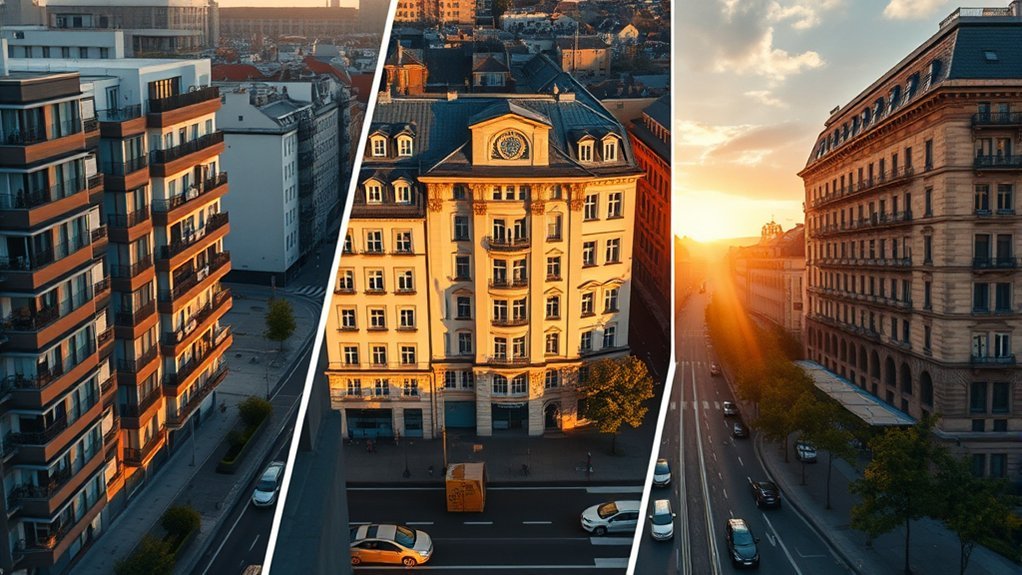
Housing is the biggest and least predictable part of a German budget. Where you live matters most, but apartment size, building age, energy efficiency, and whether the quoted price is cold or warm rent all change the final number.
| City | 1-bed, city center | 1-bed, outside center | Advertised rent per m² (Q2 2026) | Single budget incl. rent |
|---|---|---|---|---|
| Munich | €1,500 | €1,124 | €23.70 | €2,200–€2,580 |
| Frankfurt | €1,162 | €1,000 | €17.80 | €2,070–€2,230 |
| Berlin | €1,321 | €995 | €15.30 | €2,050–€2,380 |
| Hamburg | €1,146 | €840 | €16.50 | €1,870–€2,170 |
| Stuttgart | €1,118 | €734 | €16.30 | €1,750–€2,140 |
| Cologne | €1,050 | €779 | €16.00 | €1,820–€2,090 |
| Leipzig | €698 | €523 | €10.50 | €1,520–€1,700 |
| Germany (all cities) | €810 | €627 | — | €1,620–€1,810 |
Apartment rents are crowdsourced Numbeo averages from September–October 2026. The per-square-meter column is the GREIX index of advertised net cold rents for the second quarter of 2026. On that index, Cologne (+6.0%) and Hamburg (+5.1%) posted the fastest annual increases among the big cities, while Berlin was the only large city where advertised rents fell (−0.8%).
Nationwide, ImmoScout24 reported an average asking rent of €9.01 per m² for existing apartments and €13.42 per m² for new builds in the third quarter of 2026. A typical 70 m² existing apartment was advertised for about €1,414 a month in Munich and €636 in Leipzig. For a deeper look at one city, see our breakdown of living costs in Berlin.
| German rental term | What it means |
|---|---|
| Kaltmiete (Nettokaltmiete) | Base rent without operating costs or heating. |
| Nebenkosten (Betriebskosten) | Monthly advance for building costs such as water, waste collection, cleaning of shared areas, and often heating. |
| Warmmiete | Cold rent plus Nebenkosten and usually heating. Electricity is normally a separate contract. |
| Kaution | Security deposit, capped at three months’ net cold rent. |
Warning: Never transfer a deposit before you have viewed the apartment (or verified it reliably), confirmed the landlord or agent, and received a proper lease. Be very careful if a “landlord” is abroad, refuses a viewing, pushes you to decide immediately, or wants payment by gift card, cryptocurrency, or through a third party.
First-Month Setup Costs
Moving to Germany takes far more cash up front than a normal month does. A rental deposit can be up to three months of net cold rent, and tenants may pay it in up to three monthly installments, with the first installment due when the lease starts.
| One-time cost | Typical amount | Notes |
|---|---|---|
| Rental deposit | Up to 3× net cold rent | At €900 cold rent, up to €2,700 |
| First month’s warm rent | Varies by city | Due when you move in |
| National (long-stay) visa | €75 | Paid at the German mission abroad |
| Residence permit | Up to €100 | Paid to the local immigration office |
| Settlement permit (later) | €113 | Permanent residence for most applicants |
| Deutschlandticket | €63 | First month of transit |
| Broadcasting contribution | €55.08 | Usually billed per quarter |
| Furniture, kitchen, bedding | Varies widely | Many unfurnished apartments have no kitchen fittings or lamps |
Pro Tip: Compare apartments by total warm rent, expected electricity use, commute cost, and move-in cash. A lower cold rent can end up costing more if the building is poorly insulated or adds a long daily commute.
Utilities, Internet, and Household Bills
Numbeo’s users report basic utilities (electricity, heating, water, and garbage) of about €305 a month for an 85 m² apartment nationwide. City averages range from about €280 in Stuttgart to €345 in Berlin. Heating costs depend heavily on the building, so ask for the previous tenant’s Nebenkosten statement before signing.
Electricity is usually a separate contract. According to the German Association of Energy and Water Industries (BDEW), households have paid an average of 37.0 cents per kWh so far in 2026. A household using 3,500 kWh a year pays about €1,295 a year, or roughly €108 a month. A single person using 1,500 kWh would pay roughly €46 a month at the same average price. In its last full survey, the Federal Network Agency measured average household prices of 40.1 cents per kWh for electricity and 12.13 cents per kWh for gas in spring 2025.
| Monthly household bill | Typical cost (2026) |
|---|---|
| Basic utilities, 85 m² apartment | About €280–€345 |
| Electricity, 1,500 kWh/year (single) | About €46 |
| Electricity, 3,500 kWh/year (family) | About €108 |
| Home internet (60 Mbps or faster) | €30–€50 (average about €43) |
| Mobile plan | About €22 on average |
| Broadcasting contribution (per dwelling) | €18.36 |
Every household pays the Rundfunkbeitrag (broadcasting contribution) of €18.36 a month, no matter how many people live there or whether anyone owns a TV. Roommates usually split it. Germany’s broadcasting finance commission has recommended raising it to €18.64 from January 2027, but the 16 states still have to approve that, so the 2026 rate applies until a new treaty takes effect.
Groceries and Eating Out

Groceries are one of the better-value parts of German life. In the official 2023 survey, a person living alone spent €254 a month on food, drinks, and tobacco, and the average household spent €436. Food prices have been nearly flat over the past year, so those numbers remain a reasonable guide. Because the figure includes drinks and tobacco, a non-smoker who cooks at home can often spend less, while premium brands and takeout push it higher.
| Grocery item | Average price (October 2026) |
|---|---|
| Milk, 1 liter | €1.16 |
| Bread, 500 g loaf | €1.74 |
| Eggs, 12 | €3.43 |
| Rice, 1 kg | €3.09 |
| Chicken fillets, 1 kg | €10.43 |
| Local cheese, 1 kg | €12.96 |
| Apples, 1 kg | €2.87 |
| Potatoes, 1 kg | €1.32 |
| Tomatoes, 1 kg | €3.81 |
| Bananas, 1 kg | €1.81 |
| Domestic beer, 0.5 L bottle (store) | €0.99 |
These are crowdsourced national averages, so expect higher prices at Rewe, Edeka, organic stores, and corner shops, and lower prices at Aldi, Lidl, Netto, and Penny.
Restaurant and Café Prices
| Item | Typical price |
|---|---|
| Meal at an inexpensive restaurant | €15.00 |
| Three-course dinner for two, mid-range restaurant | €65.50 |
| Fast-food combo meal | €11.00 |
| Cappuccino | €3.61 |
| Draft beer, 0.5 L | €4.50 |
| Cinema ticket | €13.00 |
Restaurant spending adds up quickly. Two €15 meals out each week come to about €130 a month before drinks and tips. Students can eat for much less at university cafeterias (Mensa), where meals are subsidized; prices vary by campus.
Transportation Costs

Public transit is where Germany is cheap by international standards. The Deutschlandticket costs €63 per month in 2026 and is valid on all local and regional buses, trams, subways, S-Bahn, and regional trains across the country. It does not cover long-distance ICE, IC, or EC trains, private operators, or first class.
The price goes up again soon. The federal and state transport coordination council confirmed a price of €66.80 per month from January 1, 2027, a 6.1% increase. The ticket is a monthly subscription you can cancel each month.
| Transportation cost | Price |
|---|---|
| Deutschlandticket (2026) | €63 per month |
| Deutschlandticket (from January 2027) | €66.80 per month |
| Single local transit ticket | About €3.40 |
| Gasoline, 1 liter | About €1.84 |
| Average household transport spending (2023) | €361 per month |
Owning a car costs far more. On top of fuel, budget for insurance, vehicle tax, inspections, repairs, tires, parking, and depreciation. In big cities, the Deutschlandticket plus occasional car sharing is usually much cheaper than owning a car. In rural areas, a car is often hard to avoid.
Health Insurance Costs
Health insurance is mandatory for everyone living in Germany. Most employees are in the statutory system. In 2026, the general contribution rate is 14.6% plus an average supplementary rate of 2.9%, and income is assessed only up to €5,812.50 per month (€69,750 a year). Employees earning more than €77,400 a year can choose private insurance instead.
| Who pays | Typical monthly cost (2026) |
|---|---|
| Employee, statutory (health) | 7.3% of gross plus half the fund’s supplementary rate; about 8.75% with the average 2.9% |
| Employee, long-term care | 1.8% of gross; 2.4% if 23+ and childless |
| Employee at the income ceiling | About €509 health plus up to €140 long-term care |
| Student under 23 (TK example) | €141.16 |
| Student 23+ without children (TK example) | €146.29 |
Your employer pays roughly the same share again. Each fund sets its own supplementary rate. TK’s, for example, is 2.69% in 2026, which is why its student rate sits slightly below the average. Self-employed people usually pay both the employee and employer shares themselves, so their contributions can be much higher.
Note: Ask any insurer for a written monthly total that includes the supplementary contribution and long-term care. Quoting only the base health rate understates the bill.
Salaries, Taxes, and Take-Home Pay
Costs only make sense next to income. According to Destatis, the median full-time employee earned €54,066 gross in 2025, including bonuses, or about €4,505 a month. The average was higher, at €64,441, because top earners pull it up. Pay also varies a lot by region and industry:
- Western states: €55,435 median. Eastern states: €46,013.
- Energy supply (€77,522) and finance and insurance (€76,594) pay the most.
- Hospitality (€35,545) and agriculture (€35,689) pay the least.
- The bottom 10% of full-time workers earned €33,828 or less; the top 10% earned €100,719 or more.
The statutory minimum wage is €13.90 per hour in 2026 and rises to €14.60 on January 1, 2027. A full-time job at 40 hours a week pays about €2,409 a month gross at the 2026 rate.
Income Tax and Social Contributions
Germany taxes income progressively. In 2026, the first €12,348 of taxable income is tax-free, the 42% top rate starts at €69,879, and the 45% rate applies above €277,826. Most people no longer pay the solidarity surcharge, which only kicks in when your income tax exceeds €20,350. Members of a registered church also pay church tax.
Employees also pay half of each social insurance contribution:
| Contribution | Total rate (2026) | Employee share |
|---|---|---|
| Pension insurance | 18.6% | 9.3% |
| Unemployment insurance | 2.6% | 1.3% |
| Health insurance (average) | 17.5% | 8.75% |
| Long-term care insurance | 3.6% (4.2% childless) | 1.8% (2.4% childless) |
Pension and unemployment contributions apply to pay up to €8,450 a month in 2026. Here is roughly what that leaves a single, childless employee in tax class I with average health insurance and no church tax:
| Gross monthly pay | Estimated net pay | Net in US dollars |
|---|---|---|
| €2,409 (full-time minimum wage) | About €1,720 | About $1,930 |
| €3,000 | About €2,050 | About $2,310 |
| €4,505 (2025 median) | About €2,880 | About $3,230 |
| €6,000 | About €3,640 | About $4,090 |
Note: Net pay figures are our estimates using the 2026 tax formula, standard allowances, and the contribution rates above. Actual payroll differs with tax class, church membership, children, and your health fund. Use an official payroll calculator or ask your employer for an exact figure.
Comparing these figures with the city budgets above shows the squeeze. A median earner taking home about €2,880 can live comfortably in Leipzig or Cologne. In central Munich, rent and everyday costs eat up most of that pay. On a full-time minimum wage, shared housing or a lower-cost city is usually necessary.
Cost of Living for Students in Germany
Most international students need a blocked account to get a visa. According to Make it in Germany, students who have already been admitted must show at least €11,904 for the year (€992 a month). Applicants still seeking a place need €1,091 a month. Treat these as legal minimums rather than comfortable budgets.
Housing is the deciding factor. The Moses Mendelssohn Institute and WG-Gesucht found that a room in a shared flat (WG) costs an average of €510 a month warm in the winter semester 2026/27, usually including electricity and internet. Munich is the most expensive at €850, followed by Berlin and Hamburg (€650), Cologne (€640), and Frankfurt (€630). Student residence halls cost much less, about €306 warm on average according to the Deutsches Studierendenwerk in late 2025, but places are scarce.
| Student expense | Typical monthly cost |
|---|---|
| Room in a shared flat (national average, warm) | €510 |
| Health and long-term care insurance | €141–€146 |
| Food (single-person average) | About €254 |
| Transit (semester ticket or Deutschlandticket) | Up to €63 |
| Phone | About €22 |
| Clothing and leisure (single-person averages) | €60–€210 |
| Total outside Munich | About €1,000–€1,200 |
Public universities charge a semester contribution for student services and often a semester ticket. The amount depends on the university, so check yours before you budget.

This hardcover book celebrates the art of gathering with inspiring table settings, thoughtful traditions, and practical ideas for hosting memorable meals. Written by Shea McGee, it offers beautiful design inspiration alongside approachable guidance for creating warm, welcoming spaces for family and friends. It's a charming resource for anyone who loves entertaining, home styling, and making everyday moments feel special.

The LG LT1000P is a genuine replacement refrigerator water filter designed to deliver cleaner, fresher-tasting water and ice for your household. Certified to meet NSF standards, it helps reduce a wide range of contaminants while ensuring a proper fit and reliable performance in compatible LG refrigerators. With a recommended replacement cycle of several months and support for substantial water volume, it offers dependable filtration and peace of mind.

From Brian Tyler Cohen, this book offers a progressive roadmap for protecting democracy and navigating a post-Trump political landscape. It blends political analysis with practical strategy, making it a timely read for voters, activists, and anyone seeking actionable insight into the future of American governance.
Cost of Living for Families
Numbeo estimates that a family of four spends about €3,455 a month on everything except rent. Add a three-bedroom apartment outside the center and the total comes to about €4,500 in Leipzig, €5,300 in Berlin, and €5,500 in Munich. Central Munich pushes it past €6,100.
Family benefits soften the bill. Kindergeld (child benefit) is €259 per child per month in 2026, so a family with two children receives €518 a month. Public schools are free.
Daycare costs depend on the state. According to the German Education Server, daycare is free in Berlin (parents pay only for meals) and Mecklenburg-Vorpommern, and free from age 3 in Brandenburg. Other states offer partial relief:
- Hamburg: up to five hours a day free from birth.
- Rhineland-Palatinate: free from age 2.
- Hesse: six hours a day free from age 3 until school.
- Bremen and Lower Saxony: free from age 3.
- North Rhine-Westphalia: free in the last two years before school.
- Thuringia: free in the last 24 months before school.
Elsewhere, fees are set by each city and are often tied to income. Private kindergartens average about €510 a month, and international primary schools average about €15,560 a year, according to Numbeo’s crowdsourced data.
Visa and Residence Permit Costs
Citizens of the EU, EEA, and Switzerland can move to Germany freely and only need to register their address. Most other newcomers need a visa and a residence permit. According to Germany Trade & Invest, a national visa costs €75 and a residence permit costs up to €100. A permanent settlement permit costs €113 for most applicants later on. Budget separately for translations, certified documents, and recognition of your qualifications if your job requires it.
Germany Compared With the US and India
No single percentage tells you whether Germany is cheaper than another country. The answer depends on the city, your income, your health coverage, and how you get around. Germany tends to come out ahead on public transit, tuition-free public universities, and broad health coverage. Lower-cost US regions often win on housing size and take-home pay.
On October 2, 2026, the European Central Bank reference rates were €1 = $1.1225 and €1 = ₹108.1245:
| Euro amount | US dollars | Indian rupees |
|---|---|---|
| €1,000 | $1,123 | ₹108,124 |
| €1,500 | $1,684 | ₹162,187 |
| €2,000 | $2,245 | ₹216,249 |
| €3,000 | $3,368 | ₹324,374 |
Banks and money transfer services use their own rates and fees, so check the rate on the day you transfer money. If you are weighing Germany against its neighbors, see our guides to the cost of living in Austria, the Netherlands, and Switzerland.
How to Save Money in Germany
- Share housing or look beyond the center. A one-bedroom outside central Berlin costs about €330 a month less than one in the center.
- Pick the right city. Leipzig rents are less than half of Munich’s per square meter.
- Use the Deutschlandticket. At €63 (€66.80 from 2027), it usually beats owning a car in a city.
- Shop at discounters. Aldi, Lidl, Netto, and Penny keep the grocery bill low, especially for store brands.
- Switch electricity and internet providers. Compare full contract costs, not introductory rates.
- Claim what you are owed. Kindergeld, free daycare hours, and a tax return can return a meaningful amount each year.
- Keep a utility reserve. Set aside a little each month for the annual Nebenkosten settlement.
Pro Tip: Keep groceries and restaurants as separate budget lines. Combining them hides how much takeout and dining out are really costing you.
Frequently Asked Questions
How much does it cost to live in Germany per month?
A single adult typically needs about €1,500–€2,600 per month in 2026, depending on the city. Leipzig sits at the low end and central Munich at the high end. Students in shared flats can manage on about €1,000–€1,200 outside Munich, while a family of four usually needs about €4,500–€6,100.
Is €2,000 a month enough to live in Germany?
Yes, for a single person in most cities. €2,000 covers a one-bedroom apartment outside the center plus everyday costs in Leipzig, Cologne, Stuttgart, or Hamburg. In Berlin and Frankfurt it falls slightly short, and in Munich it is not enough for a one-bedroom apartment on your own.
How much does the Deutschlandticket cost?
The Deutschlandticket costs €63 per month in 2026. From January 1, 2027, the price rises to €66.80 per month. It covers local and regional public transportation nationwide but not long-distance ICE, IC, or EC trains.
What is a good salary in Germany in 2026?
The median full-time salary was €54,066 gross a year in 2025, or about €4,505 a month. For a single person without children, that leaves about €2,880 net per month, which covers a comfortable lifestyle in most cities but is tight in central Munich.
How much money do international students need for Germany?
Admitted students need a blocked account with at least €11,904 for one year, or €992 per month. Applicants still seeking admission need €1,091 per month. Realistic budgets are about €1,000–€1,200 per month outside Munich, including health insurance of about €141–€146.
What is the minimum wage in Germany?
The minimum wage is €13.90 per hour in 2026, or about €2,409 a month gross for full-time work. It rises to €14.60 per hour on January 1, 2027.
Conclusion
The cost of living in Germany in 2026 depends mostly on where you rent. A single person needs roughly €1,500 a month in Leipzig and up to about €2,600 in central Munich. Students in shared flats can get by on about €1,000–€1,200 outside Munich, and families of four should plan on €4,500–€6,100 before child benefits. Groceries are stable and transit is cheap, but taxes and social contributions take a large share of gross pay. Budget for the deposit and setup costs before you arrive.
Sources
- Federal Statistical Office (Destatis): Private consumption by household type
- Destatis: Consumer prices, August 2026
- Destatis: Gross annual earnings 2025
- Federal Ministry of Health: Statutory health insurance contributions
- Haufe: Social insurance contribution rates 2026
- Federal Government: Deutschlandticket questions and answers
- ADAC: Deutschlandticket price for 2027
- Federal Ministry of Labour and Social Affairs: Minimum wage
- BDEW electricity price analysis
- Federal Network Agency: Monitoring report 2025
- ARD ZDF Deutschlandradio Beitragsservice: Payment
- Make it in Germany: Visa for studying
- Techniker Krankenkasse: Contributions for students
- WG-Gesucht and Moses Mendelssohn Institute: Student housing costs 2026/27
- German Education Server: Daycare fees by state
- Germany Trade & Invest: Visa or residence permit
- VISAGUARD.Berlin: Fees for residence permits
- Sparkasse: Rental deposit rules
- GREIX German Real Estate Index
- ImmoScout24 WohnBarometer Q3 2026
- WEB.DE: Student rents pass €500 (October 2025)
- European Central Bank: Euro reference exchange rates
- Numbeo crowdsourced price data for Germany and major German cities (accessed October 2026)
- Steuerschroeder.de: 2026 income tax tariff and Kindergeld amounts

This hardcover cookbook offers fast, approachable recipes designed for busy days and low-energy nights. Caroline Chambers focuses on simple, flavorful meals that help you get dinner on the table without overthinking it. It's a practical pick for home cooks who want quick weeknight inspiration and minimal-fuss cooking.

Velveeta Shells and Cheese Original Cup delivers a creamy, comforting mac and cheese experience in convenient single-serve cups. Made with real cheese and shelf-stable for easy storage, it’s a quick microwave meal or side that works for busy nights, kids’ meals, and snack cravings. Each cup includes shell pasta and cheese sauce for rich flavor with minimal prep.

Stay organized with a durable 1-subject notebook set designed for school, note-taking, and digital study support. The college ruled pages resist ink bleed, tear out cleanly, and work with the Five Star Study App to create flashcards and sync notes to Google Drive. Tough pockets, a water-resistant cover, and Spiral Lock wire help protect your work throughout the year.