The cost of living in the Republic of the Congo in 2026 runs about XAF 400,000–700,000 (~$685–$1,195) a month for a single person living a simple local-style life in Brazzaville, and about XAF 1.1–2.1 million (~$1,880–$3,590) for a single expat in a furnished, secure apartment. A couple living to expat standards should plan on roughly XAF 1.7–3.0 million (~$2,905–$5,130), and a family of four about XAF 2.4–4.8 million (~$4,100–$8,205) before international school fees. These figures use an exchange rate of about XAF 585 per US dollar, based on the European Central Bank’s reference rate on October 5, 2026. Rent, imported food, backup power, and private healthcare drive most of the gap between a local budget and an expat one. This guide covers Congo-Brazzaville only, not the Democratic Republic of the Congo next door.
Quick Answer
- Single person, local style: XAF 400,000–700,000 (~$685–$1,195) a month.
- Single expat, comfortable: XAF 1.1–2.1 million (~$1,880–$3,590) a month.
- Couple, expat standard: XAF 1.7–3.0 million (~$2,905–$5,130) a month.
- Family of four: XAF 2.4–4.8 million (~$4,100–$8,205) before school fees.
- Rent, one-bedroom in Brazzaville: about XAF 262,000 (~$445) outside the center and XAF 674,000 (~$1,150) in the center.
- Gasoline: XAF 775 per liter (~$1.32), a regulated pump price.
- Minimum wage: XAF 70,400 (~$120) a month in the private sector.
Currency, Exchange Rate, and Inflation in 2026
The Republic of the Congo uses the Central African CFA franc (XAF, often written FCFA). It is shared by the six CEMAC countries, including Gabon and Cameroon. It is not the Congolese franc used in Kinshasa.
The exchange rate. The Bank of Central African States pegs the franc to the euro at €1 = XAF 655.957. The dollar rate moves with the euro. On October 5, 2026, the ECB reference rate was $1.1204 per euro, which works out to about XAF 585 per dollar. In late July 2026 a dollar bought closer to XAF 575. If you earn in euros, your budget is fixed. If you earn in dollars, it shifts a little every week.
Inflation. Prices have been fairly stable compared with many African countries. The World Bank’s Congo overview puts growth at 3.1% in 2025 and notes that inflation has picked up again after a dip. In July 2026 the government’s revised budget projected 2026 inflation at 2.7%, according to Capmad’s report on the supplementary 2026 budget. Imported goods, which make up much of an expat shopping basket, can rise faster than the national average.
At XAF 585 per dollar, $1,000 a month is about XAF 585,000. That covers a simple local-style life in Brazzaville, but not a furnished expat apartment.
Cost of Living by City
More than half of the country’s 6.1 million people live in two cities: Brazzaville, the capital on the Congo River, and Pointe-Noire, the oil port on the Atlantic coast. Almost every foreign resident lives in one of them.
The table uses crowd-sourced averages from Numbeo (Brazzaville updated August 2026, Pointe-Noire June 2026). Both cities have only a handful of contributors, so treat these as rough guides rather than official data.
| Item | Brazzaville | Pointe-Noire |
|---|---|---|
| 1-bed, city center | XAF 674,000 (~$1,150) | XAF 287,000 (~$490) |
| 1-bed, outside center | XAF 262,000 (~$445) | XAF 100,000 (~$170) |
| 3-bed, city center | XAF 1,889,000 (~$3,230) | XAF 900,000 (~$1,540) |
| 3-bed, outside center | XAF 850,000 (~$1,455) | XAF 450,000 (~$770) |
| Home internet (60+ Mbps) | XAF 25,000 (~$43) | XAF 20,000 (~$34) |
| Inexpensive restaurant meal | XAF 4,870 (~$8.30) | XAF 5,750 (~$9.80) |
| Gasoline (1 liter) | XAF 775 (~$1.32) | XAF 788 (~$1.35) |
A few patterns stand out:
- Brazzaville is the more expensive city for housing. Embassies, ministries, and international agencies compete for a small stock of secure, furnished apartments in Centre-Ville and nearby districts.
- Pointe-Noire shows lower average rents, but oil-company housing near the coast can cost as much as central Brazzaville. The low averages mostly reflect local-standard homes.
- Smaller towns such as Dolisie and Owando have cheaper housing, but far fewer services, weaker power and water supply, and limited healthcare.
Housing and Rent
Housing is the largest and most variable cost. A basic unfurnished unit in a local neighborhood can cost under XAF 150,000 (~$255) a month. A furnished, guarded apartment with air conditioning, water storage, and a generator can cost XAF 500,000–900,000 (~$855–$1,540) or more. Expats in Brazzaville tend to look at Centre-Ville, Plateau des 15 ans, and parts of Bacongo, Poto-Poto, and Moungali.
What pushes rent up:
- Security: gated access, a guard, and good outdoor lighting.
- Backup power and water: a generator or inverter, plus a water tank and pump.
- Furnishing and air conditioning: furnished units with working AC units in every room cost much more.
- Location: short commutes matter because traffic and road conditions can be poor.
Leases and deposits. Landlords commonly ask for several months of rent upfront, plus a deposit and sometimes an agency fee. Ask exactly how many months are due at signing, how the deposit is returned, and who pays for generator fuel, guards, and repairs. Get a written lease and receipts for every payment. Do not send large advance payments before you have seen the property and confirmed the person renting it has the right to do so.
Visit any property during the day and in the evening. Test water pressure, mobile signal, the AC, locks, and how the backup power switches on.
Utilities, Internet, and Phone
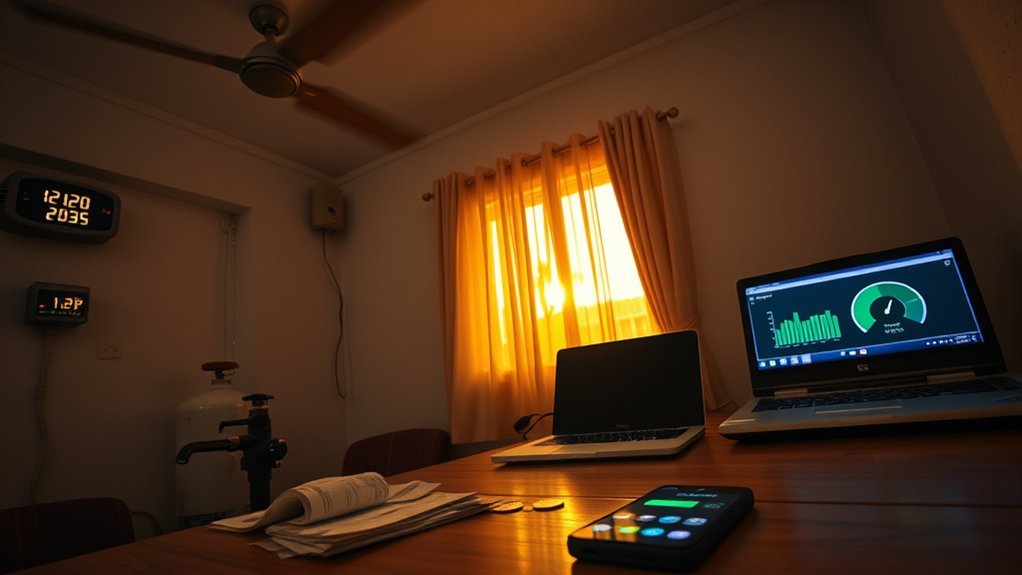
Grid electricity is cheap per unit but unreliable. The World Bank puts electricity access at about 67% in cities and 12.4% in rural areas. Since 2025, distribution has been run under a 10-year lease by Senegal’s power company Senelec, while the state keeps control of tariffs.
The low-voltage tariff table published on Liziba, the government’s business portal, lists household single-phase rates of about XAF 44–49 per kWh before taxes, plus a fixed monthly charge of roughly XAF 2,300–4,000. At those rates, 300 kWh costs under XAF 20,000 (~$34) before tax. The real cost comes from outages: generator fuel, inverter batteries, and repairs.
| Item | Monthly Cost (XAF) | Approx. USD |
|---|---|---|
| Grid electricity, water, and garbage (modest apartment) | 30,000–100,000 | $51–$171 |
| Backup power (fuel, batteries, servicing) | 25,000–150,000+ | $43–$256+ |
| Home internet (crowd-sourced average) | 20,000–25,000 | $34–$43 |
| Congo Telecom fiber, 512 Mbit/s | 35,000 | $60 |
| Mobile plan with 10 GB+ data | 9,800–18,750 | $17–$32 |
Congo Telecom’s fiber plan also carries setup charges: an access fee of XAF 75,000 (~$128) plus study and line installation fees, according to Liziba’s telecom price page. MTN and Airtel sell prepaid mobile data bundles and 4G home routers. Remote workers should budget for two connections, such as fiber plus a mobile data backup, and enough battery power to keep the router running during outages.
Never run a generator indoors or near windows. Carbon monoxide builds up without any smell.
Food: Groceries and Dining Out
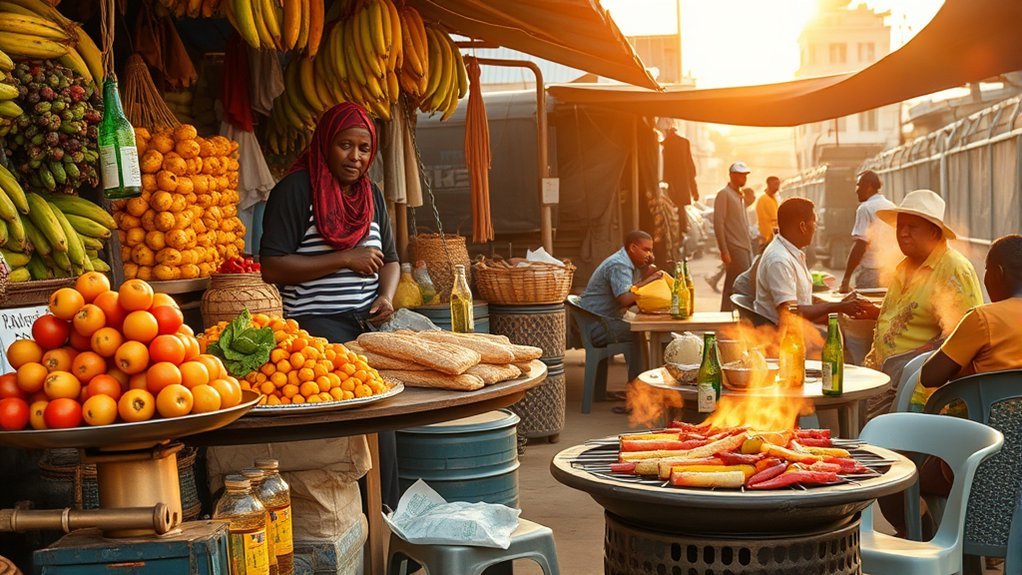
Food is where local and expat budgets split the most. Cassava, plantains, fish, and seasonal produce from markets are cheap. Dairy, cheese, cereal, wine, and most packaged goods are imported, often from Europe, and cost more than in Europe.
Typical prices in Brazzaville (crowd-sourced, August 2026):
| Item | Typical Cost (XAF) | Approx. USD |
|---|---|---|
| Milk (1 liter) | 1,650 | $2.82 |
| Bread (1 lb loaf) | 2,540 | $4.34 |
| Rice (1 lb) | 816 | $1.40 |
| Eggs (12) | 1,688 | $2.89 |
| Chicken fillets (1 lb) | 2,434 | $4.16 |
| Beef (1 lb) | 3,819 | $6.53 |
| Local cheese (1 lb) | 4,282 | $7.32 |
| Bottled water (1.5 liters) | 500 | $0.85 |
A single person who cooks mostly with local ingredients can spend about XAF 120,000–180,000 (~$205–$310) a month on groceries. One who relies on supermarket imports should plan on XAF 200,000–300,000 (~$340–$515). Tap water is not safe to drink, so add bottled or filtered water to the budget.
Eating out:
- Meal at an inexpensive restaurant: about XAF 4,900–5,750 (~$8.30–$9.80)
- Three-course dinner for two at a mid-range restaurant: about XAF 15,000 (~$26) in Pointe-Noire and XAF 28,700 (~$49) in Brazzaville
- Fast-food combo meal: about XAF 2,900 (~$4.90)
- Cappuccino: about XAF 2,300 (~$3.90)
- Domestic beer (pint, at a bar): about XAF 3,300 (~$5.60)
Transportation
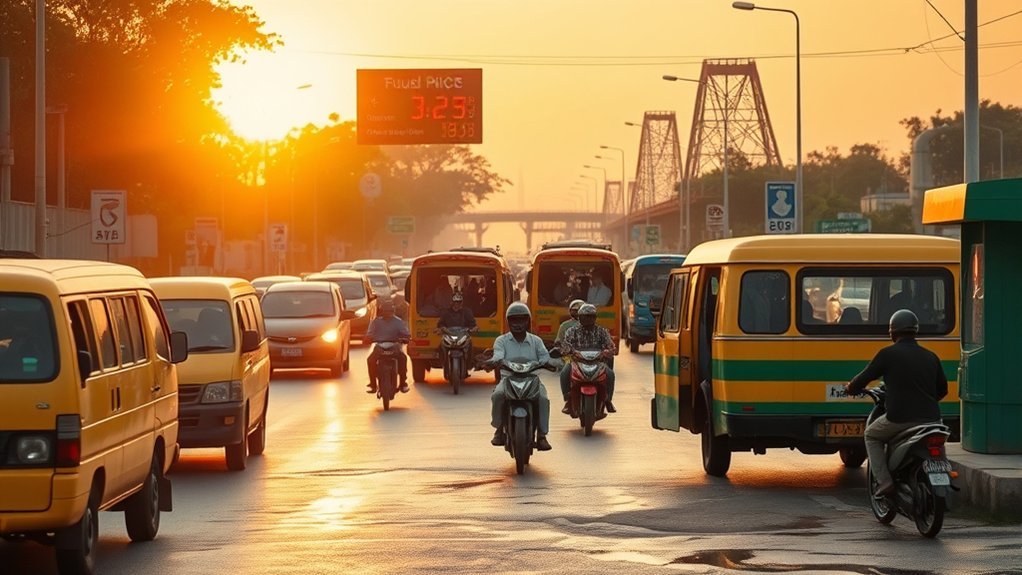
Most people get around by minibus, shared taxi, or private taxi. There is no metro or formal bus network like those in larger African capitals.
| Item | Cost (XAF) | Approx. USD |
|---|---|---|
| Bus or minibus ride (Pointe-Noire) | 150 | $0.26 |
| Monthly public transport (Brazzaville) | 13,500 | $23 |
| Taxi start (Brazzaville) | 1,000 | $1.71 |
| Taxi per mile (Brazzaville) | 1,250 | $2.14 |
| Gasoline (1 liter) | 775 | $1.32 (~$5.01 per gallon) |
Fuel prices are set by the government. The price of super gasoline rose by about 25% to XAF 775 per liter in July 2023, and 2026 price reports from Brazzaville and Pointe-Noire still show the same level. Supply shortages happen from time to time, and black-market fuel then sells for much more.
Cars and drivers. Many expats hire a car with a driver or buy a sturdy vehicle. Fuel, a driver, maintenance, insurance, and parking can add XAF 150,000–500,000 (~$255–$855) a month before the cost of the car itself. The US State Department’s country page warns of poor roads, unmarked checkpoints where officials may ask for bribes, and robbery risk on rural roads, so avoid driving outside cities at night.
Healthcare and Insurance

Medical facilities are limited, especially outside Brazzaville and Pointe-Noire. Hospitals and doctors often want payment upfront, usually in cash, and private hospitals usually require a deposit before admission. Public hospitals have little staff at night, and ambulance response times are unpredictable. The State Department strongly recommends insurance that covers medical evacuation, because serious cases are often flown to South Africa or Europe.
Typical costs:
- Private general practitioner visit: about XAF 15,000–20,000 (~$26–$34), based on a 2026 Brazzaville expat guide.
- Private specialist visit: about XAF 20,000–35,000 (~$34–$60).
- International health insurance with evacuation: premiums depend on age, deductible, and coverage area. Get written quotes. Our budgets assume XAF 80,000–200,000 (~$135–$340) a month per adult, which may be low for older applicants.
- Health prep: a yellow fever vaccination is required to enter, and malaria prevention is advised. Budget for vaccines and antimalarials before you arrive.
Keep an emergency cash reserve. Even insured patients may have to pay first and claim later.
Schools and Childcare

Families face the biggest cost swing. Public schools teach in French and are often crowded. Most expat children attend the French-system Lycée International Français Saint-Exupéry or the American International School of Brazzaville (AISB). Local private schools charge far less.
The AISB fee schedule (latest published, 2024–2025) shows what an English-language international school costs:
| Grade | Annual Tuition (USD) | Approx. XAF |
|---|---|---|
| Pre-kindergarten | $8,118 | 4.75 million |
| Kindergarten | $18,628 | 10.9 million |
| Grades 1–5 | $23,400 | 13.7 million |
| Grades 6–8 | $24,810 | 14.5 million |
| Grades 9–12 | $25,552 | 14.9 million |
On top of tuition, AISB charges a $650 application fee and a one-time $5,000 (~XAF 2.9 million) capital levy for new students, then $500 a year. Lunch is optional at $900–$1,400 a year. Fees for 2026–2027 may be higher, so ask the school for the current schedule.
French-system and local private schools cost less. A 2026 Brazzaville expat guide puts international school tuition at XAF 2.3–5.2 million (~$3,930–$8,890) a year, depending on grade and extra fees. Private full-day preschool averages about XAF 30,000–32,500 (~$51–$56) a month in crowd-sourced data.
Many expat employment packages pay school fees directly. Confirm this before you accept a job offer.
Salaries and Minimum Wage
The private-sector minimum wage (SMIG) is XAF 70,400 (~$120) a month, up from XAF 50,400 on January 1, 2025. The public-sector minimum is XAF 120,000 (~$205). No change has been announced for 2026, according to WageIndicator’s minimum wage page.
The gap between local pay and expat costs is very large. A minimum-wage salary would not cover even a one-bedroom outside central Brazzaville. Many households pool several incomes, share housing, and earn in the informal economy.
For foreign hires, the same 2026 expat guide puts net monthly pay at about XAF 1.5–3 million (~$2,565–$5,130) for entry and mid-level roles, and XAF 4–7 million (~$6,840–$11,970) or more for senior or specialized roles, mostly in oil, mining, and international organizations. When comparing offers, add up housing, school, car and driver, insurance, flights home, and any hardship allowance, not just base pay.
Taxes: VAT and Income Tax
- VAT: the standard rate is 18%, plus a 5% surtax on the VAT amount, for an effective 18.9%, according to PwC’s Congo tax summary. A reduced 5% rate applies to some listed products.
- Who pays income tax on what: people domiciled in Congo are taxed on worldwide income. Others pay only on Congolese-source income.
- Employer social security: employers pay about 20% on top of gross salary for family allowances, work accidents, and pensions, within annual caps.
Personal income tax rates, per PwC’s personal income tax page (reviewed August 2026):
| Annual Taxable Income (XAF) | Approx. USD | Rate |
|---|---|---|
| 0–464,000 | $0–$793 | 1% |
| 464,000–1,000,000 | $793–$1,709 | 10% |
| 1,000,000–3,000,000 | $1,709–$5,128 | 25% |
| Over 3,000,000 | over $5,128 | 40% |
The top 40% rate starts at a low income by international standards, so most expat salaries fall largely in the top band. Some foreign employees seconded for short periods are taxed at a flat 20%. Get advice from a local tax adviser before you sign a contract, and ask whether your employer offers tax equalization.
Visas and Entry Costs
Most visitors, including US citizens, need a visa before they travel. Entry also requires a passport valid for six months, a yellow fever certificate on a WHO card, and an invitation letter or hotel booking.
- Tourist visa from the US: the embassy fee in Washington is about $205 (~XAF 120,000) for a single-entry visa valid for up to 30 days, according to visa service providers. Long-stay visas are not issued through that route.
- Working or living in Congo: employers normally arrange the work permit and long-stay residence paperwork. Ask your employer which fees it covers.
- Cash rules: you can bring in up to XAF 5 million. Amounts over XAF 1 million must be declared.
Visa fees and rules change often. Confirm them with the Congolese embassy in your country before you apply.
One-Time Setup Costs
Budget for these before your first month:
- Visa and travel documents: about $205 (~XAF 120,000) for a US tourist visa, plus yellow fever vaccination.
- Rent upfront: several months of rent plus a deposit is common. For a XAF 600,000 apartment, that can mean XAF 2–4 million (~$3,420–$6,840) at signing.
- Backup power: an inverter and batteries or a small generator if the home lacks one.
- Internet setup: about XAF 120,000 (~$205) in fees for Congo Telecom fiber, or a 4G router.
- School: application fees and, at AISB, a $5,000 capital levy per new student.
- Temporary housing: a hotel or serviced apartment while you search.
Sample Monthly Budgets
These budgets are estimates built from the prices above, for Brazzaville. Pointe-Noire can be somewhat cheaper for local-standard housing. All figures are in XAF per month.
| Expense | Single, Local Style | Single, Expat | Couple, Expat | Family of Four |
|---|---|---|---|---|
| Rent | 150,000–260,000 | 500,000–900,000 | 650,000–1,100,000 | 850,000–1,900,000 |
| Utilities + backup power | 30,000–60,000 | 100,000–200,000 | 120,000–220,000 | 200,000–350,000 |
| Internet + mobile | 10,000–35,000 | 35,000–55,000 | 45,000–65,000 | 50,000–70,000 |
| Groceries | 120,000–180,000 | 200,000–300,000 | 350,000–500,000 | 550,000–800,000 |
| Eating out | 30,000–60,000 | 100,000–200,000 | 150,000–300,000 | 100,000–250,000 |
| Transport | 15,000–40,000 | 60,000–150,000 | 100,000–250,000 | 250,000–500,000 |
| Health | 15,000–30,000 | 80,000–200,000 | 160,000–400,000 | 300,000–700,000 |
| Other (gym, household, personal) | 20,000–40,000 | 50,000–100,000 | 80,000–150,000 | 100,000–200,000 |
| Total (XAF) | 400,000–700,000 | 1.1–2.1 million | 1.7–3.0 million | 2.4–4.8 million |
| Total (USD) | $685–$1,195 | $1,880–$3,590 | $2,905–$5,130 | $4,100–$8,205 |
Local style means a simple one-bedroom outside the center, local food, shared transport, and pay-as-you-go healthcare. Expat means a furnished, secure apartment, a mix of local and imported food, taxis or a hired driver, and international insurance.
Family of four: the column assumes a three-bedroom house, a car with fuel and a part-time driver, and insurance for four. Two children at AISB in grades 1–5 add about XAF 2.3 million (~$3,900) a month, for a total of about XAF 4.7–7.1 million (~$8,035–$12,135).
Add a 10%–20% buffer for outages, repairs, and price changes on imports.
Safety and Practical Notes
The US State Department rates the Republic of the Congo at Level 2, “exercise increased caution,” because of crime, in its current travel advisory. Theft, burglary, and carjacking are the main risks, and they rise at night. Security costs, such as a guard, a gated home, and taxis after dark, are part of a realistic budget. Avoid demonstrations, and do not photograph government buildings, ports, or airports.
Money-Saving Tips
- Negotiate a package. Housing, school, a car, and insurance are the big costs. Having an employer cover them matters more than a higher salary.
- Buy local food. Markets, local fish, and seasonal produce cost far less than imported supermarket goods.
- Pick housing with backup power already installed. Buying a generator or inverter yourself adds a large upfront cost.
- Keep your budget in XAF. If you earn euros, the fixed peg protects you from exchange swings. If you earn dollars, keep a buffer.
- Bring what you can. Electronics, medicines, and specialty items cost more locally and can be hard to find.
- Compare taxi and driver costs. For short daily trips, taxis can cost less than running a car.
How the Republic of the Congo Compares With Nearby Countries
Brazzaville is one of the more expensive cities in Central Africa for foreigners, mainly because of rent and imported goods. Its neighbors share many of the same pressures. Gabon uses the same CFA franc and has similar oil-driven prices, so see the cost of living in Gabon. Cameroon, another CEMAC member, is generally cheaper for everyday goods; compare the cost of living in Cameroon. Kinshasa sits just across the river, but it runs on a different currency and has very different costs, as our guide to the cost of living in the Democratic Republic of the Congo shows. To the south, the cost of living in Angola is another useful comparison for oil-sector workers.
Frequently Asked Questions
How much money do you need to live in the Republic of the Congo per month?
A single person needs about XAF 400,000–700,000 (~$685–$1,195) a month for a simple local-style life in Brazzaville, and about XAF 1.1–2.1 million (~$1,880–$3,590) for a comfortable expat life. A couple living to expat standards should budget about XAF 1.7–3.0 million (~$2,905–$5,130).
Is it expensive to live in Brazzaville?
It depends on how you live. Local food, simple housing, and shared transport keep costs moderate. A furnished, secure apartment in the center averages about XAF 674,000 (~$1,150) a month, and imported groceries, backup power, and private healthcare push expat budgets well above XAF 1 million.
How much is rent in Brazzaville in 2026?
Crowd-sourced averages put a one-bedroom at about XAF 674,000 (~$1,150) in the center and XAF 262,000 (~$445) outside it. A three-bedroom averages about XAF 1.89 million (~$3,230) in the center and XAF 850,000 (~$1,455) outside.
What currency is used in the Republic of the Congo?
The country uses the Central African CFA franc (XAF), which is pegged to the euro at €1 = XAF 655.957. In early October 2026, one US dollar was worth about XAF 585. The Congolese franc is the currency of the Democratic Republic of the Congo, not Congo-Brazzaville.
What is the minimum wage in the Republic of the Congo?
The private-sector minimum wage is XAF 70,400 (~$120) a month, in effect since January 1, 2025. The public-sector minimum is XAF 120,000 (~$205).
What is the VAT rate in the Republic of the Congo?
The standard VAT rate is 18%, plus a 5% surtax on the VAT amount, for an effective rate of 18.9%. Personal income tax rises in steps from 1% to 40%, and the 40% rate applies to annual taxable income above XAF 3 million.
Do I need a visa to visit the Republic of the Congo?
Yes, most visitors, including US citizens, need a visa before travel. A single-entry tourist visa from the embassy in Washington costs about $205, and you also need a yellow fever vaccination certificate.
Conclusion
The cost of living in the Republic of the Congo depends mostly on the standard of housing and services you need. A local-style life in Brazzaville costs about XAF 400,000–700,000 (~$685–$1,195) a month, while a single expat should plan on XAF 1.1–2.1 million (~$1,880–$3,590). Rent, imported food, backup power, private healthcare, and school fees make up most of the difference. The euro peg keeps prices steady for euro earners, but dollar earners should check the rate before committing to a budget. Get written quotes for rent, school, and insurance, and push for an employment package that covers the biggest costs.
Sources
- European Central Bank – euro reference rate against the US dollar
- Bank of Central African States (BEAC) – CFA franc euro parity
- World Bank – Republic of Congo overview
- World Bank – Republic of Congo Economic Update 2025
- Capmad – supplementary 2026 budget and inflation forecast
- Numbeo – Brazzaville and Pointe-Noire (crowd-sourced prices)
- Liziba – electricity tariffs
- Liziba – telecom and internet prices
- AllAfrica – fuel pump prices in Congo-Brazzaville
- EcoMatin – Senelec takes over electricity distribution in Congo
- American International School of Brazzaville – fees and tuition
- WageIndicator – minimum wage in the Republic of the Congo
- PwC Tax Summaries – personal income tax
- PwC Tax Summaries – VAT and social security
- US State Department – Republic of the Congo country information
- US State Department – Republic of the Congo travel advisory
- The Africanvestor – Brazzaville expat guide (2026)