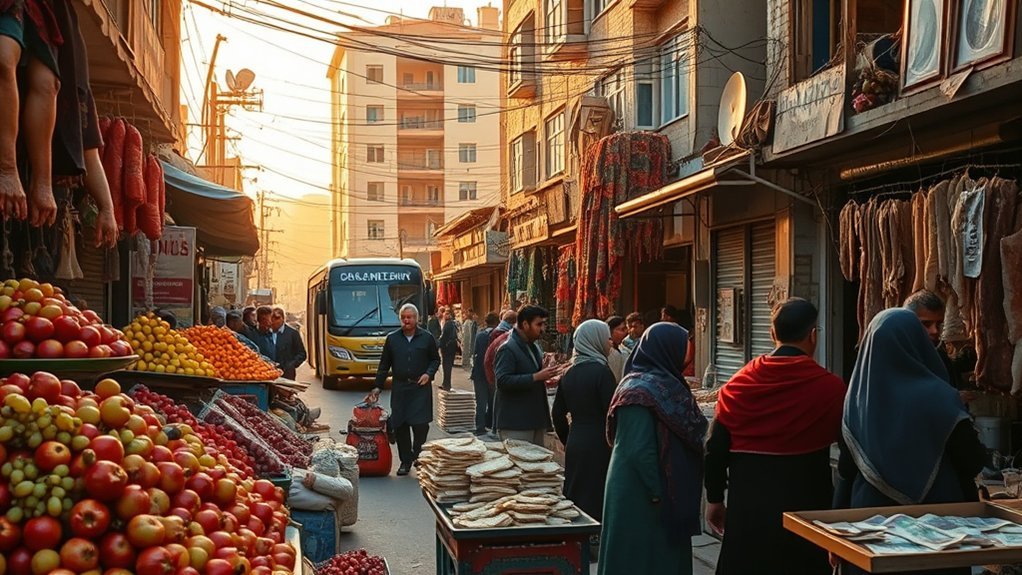
The cost of living in Afghanistan in 2026 is low by international standards, but it is not simple. A single person in ordinary local housing in Kabul spends roughly 29,000–34,000 AFN (~$445–$525) a month. A furnished studio raises that to about 41,000–54,000 AFN (~$630–$830), and a family of four needs about 83,500–96,000 AFN (~$1,285–$1,480). All dollar figures use Da Afghanistan Bank’s rate of 64.96 AFN per US dollar on October 4, 2026. Rents have climbed fast since millions of Afghans returned from Iran and Pakistan, and public price data are thin. For foreigners, security, insurance, and evacuation planning can cost more than rent and food combined. Below you’ll find rents by city, utility and internet prices, food costs, salaries, taxes, and sample budgets.
Quick Answer
- Single person, local housing: about 29,000–34,000 AFN (~$445–$525) a month in Kabul.
- Single person, furnished studio: about 41,000–54,000 AFN (~$630–$830).
- Family of four: about 83,500–96,000 AFN (~$1,285–$1,480) before private school or security costs.
- Rent: about 7,000–8,000 AFN (~$110–$125) for an ordinary one-bedroom; 12,000–20,000 AFN (~$185–$310) for many family houses in Kabul.
- Mobile data: 1 GB can cost 220–230 AFN (~$3.50); 20 GB costs about 2,000 AFN (~$31).
- Inflation: 6.7% year on year in August 2026, per the World Bank.
- Safety: the US and UK both advise against all travel to Afghanistan.
Travel warning: The US State Department rates Afghanistan Level 4, Do Not Travel (reissued February 20, 2026), citing terrorism, kidnapping, wrongful detention, and unrest. The UK Foreign Office advises against all travel and warns that travel insurance may be invalid if you go against its advice. Consular help is very limited.
Exchange Rate, Inflation, and the Economy in 2026
Three numbers shape what Afghanistan costs this year.
The exchange rate. Da Afghanistan Bank’s exchange rate table listed the US dollar at 64.96 AFN (cash sell) and 64.76 AFN (cash buy) on October 4, 2026. The afghani has been steady to slightly stronger. It averaged 65.18 per dollar in August, about 4.7% stronger than a year earlier. For dollar earners, that means prices in afghanis buy a little less each year.
Inflation. After two years of falling prices in 2023 and 2024, inflation is back. The World Bank’s Afghanistan Economic Monitor for August 2026 put headline inflation at 6.7% year on year, down from 7.5% in July. Food inflation was 7.0% and non-food inflation 6.4%. Afghanistan’s National Statistics and Information Authority, quoted by Pajhwok, reported a 9.6% annual rise for the month of Asad (late July to late August), led by cooking oil (up 5.4% in one month) and transport (up 5.0%).
Living standards. The World Bank’s May 2026 update found that the economy grew 4.8%, but about 3.7 million returnees pushed population growth to roughly 11% in 2025. GDP per person fell 5.6%. In plain terms: more people are competing for the same jobs and homes, which is why rents and staple prices have risen.
At 64.96 AFN per dollar, $1,000 buys about 65,000 AFN. That is about three times the crowd-sourced average net salary in Kabul.
Cost of Living by City
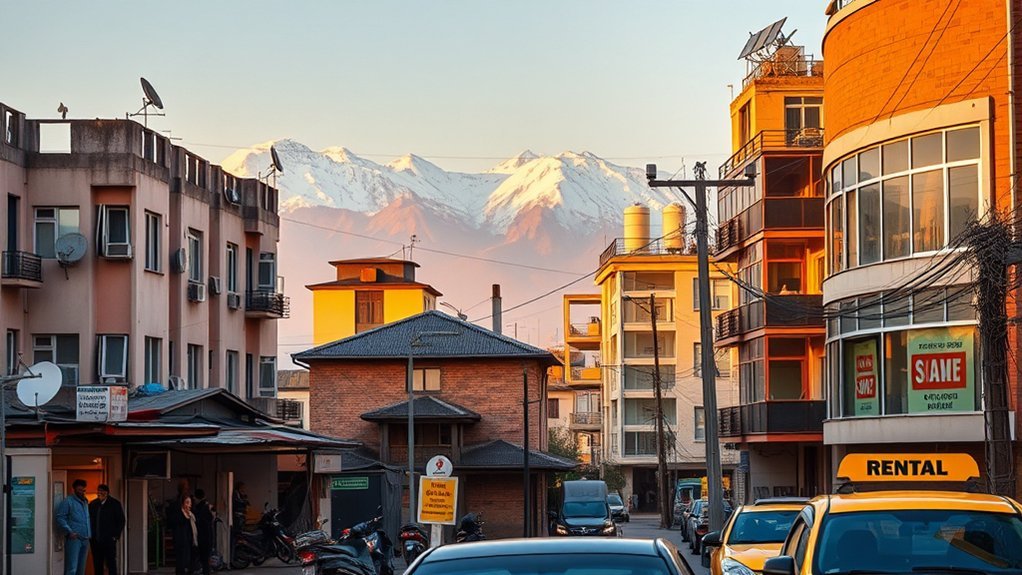
Kabul has the most price data. For other cities, the best current information comes from local news reporting rather than price databases. Treat every figure below as a range, not a market average.
| City | Typical Home and Rent | Approx. USD | Notes |
|---|---|---|---|
| Kabul – ordinary 1-bed | 7,000–8,000 AFN | $110–$125 | crowd-sourced averages, August 2026 |
| Kabul – 2–4 room family house | 10,000–20,000 AFN | $155–$310 | local reporting, May 2026 |
| Kabul – outlying areas | 3,000–5,000 AFN | $45–$75 | basic housing, often poor condition |
| Kabul – furnished studio | 16,200–25,500 AFN | $250–$395 | normal vs expensive area |
| Mazar-i-Sharif – 2-room home | 9,000–13,000 AFN | $140–$200 | local reporting, April 2026 |
| Mazar-i-Sharif – basic home | 6,000–7,000 AFN | $90–$110 | needs repairs |
| Herat – family home | 15,000–20,000 AFN | $230–$310 | 2025 reports after returns from Iran |
A few patterns stand out:
- Kabul rents roughly doubled in a few years. Tenants told Hasht-e Subh in May 2026 that homes once rented for 7,000–8,000 AFN now cost 12,000–15,000 AFN, and some landlords ask for large mortgage-style deposits (gerawi) of $35,000–$40,000 instead of monthly rent.
- Mazar-i-Sharif rents now top 10,000 AFN a month for ordinary homes. Landlords there often ask for two months’ rent in advance plus one month’s deposit, according to an April 2026 report.
- Herat took the largest wave of returnees from Iran. Homes that rented for 5,000 AFN were relisted at 15,000–20,000 AFN in 2025.
- Kandahar, Jalalabad, and smaller cities have little public price data. Expect lower rents than Kabul but fewer furnished options.
Housing: Rent and What to Check
Local Homes Versus Furnished Rentals
Most Afghans rent unfurnished houses or apartments with a courtyard and pay utilities separately. Furnished apartments aimed at foreigners and aid workers are a much smaller market. Crowd-sourced Kabul listings in 2026 show:
| Kabul Housing Type | Monthly Rent (AFN) | Approx. USD |
|---|---|---|
| 1-bed apartment, city center | 8,000 | $123 |
| 1-bed apartment, outside center | 7,072 | $109 |
| 3-bed apartment, city center | 14,100 | $217 |
| 3-bed apartment, outside center | 7,464 | $115 |
| Furnished 45 m² studio, normal area | 16,197 | $249 |
| Furnished 45 m² studio, expensive area | 25,547 | $393 |
| Furnished 85 m² apartment, normal area | 19,368 | $298 |
| Furnished 85 m² apartment, expensive area | 51,028 | $786 |
These samples are small, with only a few dozen people reporting prices in the past year. Secure compounds with guards, generators, and controlled access are a separate market. They are quoted privately, and their prices cannot be checked publicly.
Lease Terms and Deposits
There is no standard rental contract or rent cap. Before you pay anything, confirm in writing:
- How many months are due in advance, and how the deposit will be returned.
- Who pays electricity, generator fuel, heating, and water delivery.
- Whether the home has water storage and a filter.
- Which furniture and appliances are included.
- Who handles repairs, and how fast.
- Locks, boundary walls, and any guard arrangements.
Photograph every room, meter, and defect before you move in, and keep the lease, receipts, and the landlord’s ID in paper and digital form.
Can Foreigners Buy Property?
No. Article 41 of the constitution published by the Ministry of Justice bars foreign nationals from owning immovable property. Leasing for capital investment can be permitted under the law. Anyone considering a long lease should get local legal advice first.
Utilities, Internet, and Phone
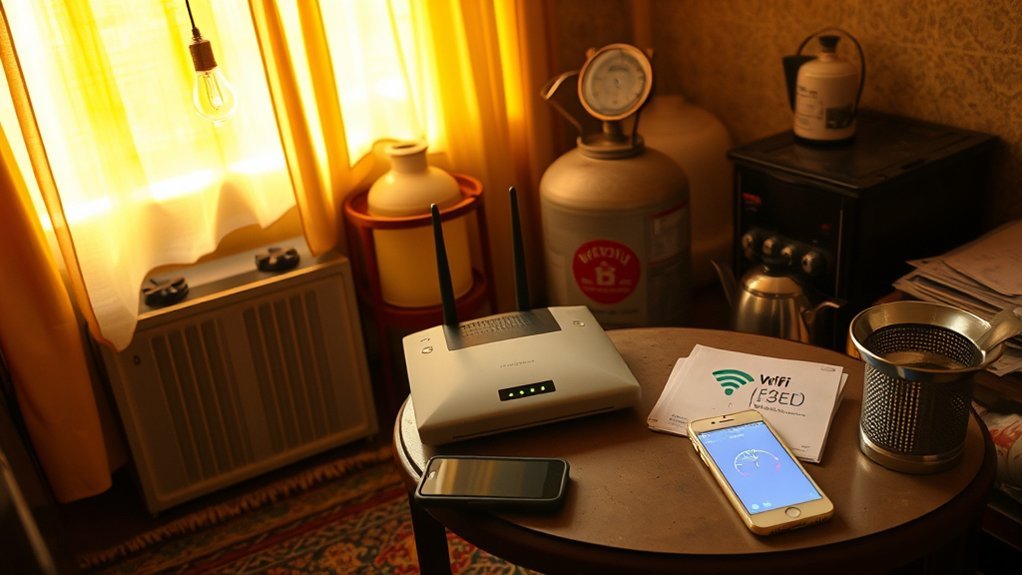
Afghanistan imports most of its electricity, and supply is patchy. Many Kabul homes get only a few hours of grid power a day in some seasons, so families spend extra on batteries, solar panels, or generator fuel.
Electricity, Heating, and Water
- Grid electricity: the published household rate is about 3.75 AFN (~$0.06) per kWh, one of the lowest in the region. Actual bills vary. Kabul residents told Hasht-e Subh in August 2026 they received bills of 5,000–6,000 AFN (~$75–$90) a month despite having power for only five to six hours a day.
- Basic utilities for a small apartment: crowd-sourced averages put electricity, heating, water, and garbage at about 2,760 AFN (~$42) a month. A two-person, 85 m² furnished flat averages about 4,350 AFN (~$67).
- Winter heating: Kabul sits at about 1,800 meters, and winters are cold. Wood, coal, gas heaters, or electric heating can push bills well above the average from December to February.
- Water: tap water is not safe to drink in most areas. Budget for bottled water, a filter, or delivered water.
Internet and Mobile
Mobile data is expensive compared with local incomes. Kabul residents told Hasht-e Subh in July 2026 that prices had not fallen despite a government deadline:
| Service | Price (AFN) | Approx. USD |
|---|---|---|
| Mobile data, 1 GB | 220–230 | $3.40–$3.55 |
| Mobile data, 3 GB | 400 | $6.15 |
| Mobile data, 20 GB | about 2,000 | $31 |
| Monthly call package | from 135 | from $2.10 |
| Mobile plan (crowd-sourced average) | 842 | $13 |
| Home internet, about 8 Mbps | 2,489 | $38 |
| Home internet, 60 Mbps or faster | 6,300 | $97 |
The same report says data costs about twice as much as in Pakistan and roughly eight times as much as in Iran. If you work online, keep SIM cards on two networks and a power bank for outages.
Food: Groceries and Dining Out
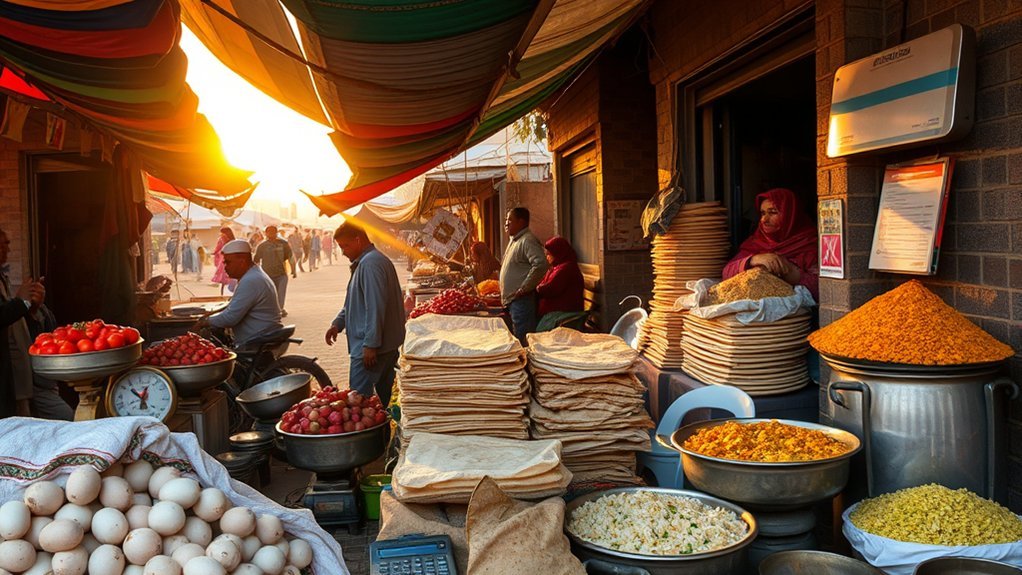
Local bread, vegetables, and street food are cheap. Rice, sugar, cooking oil, and imported goods have become much more expensive. The World Food Programme reported in June 2026 that high-quality rice cost 38% more than a year earlier, sugar 25% more, and wheat flour 9–12% more.
Kabul grocery and restaurant prices, from crowd-sourced averages updated in August 2026:
| Item | Price (AFN) | Approx. USD |
|---|---|---|
| Milk (1 liter) | 55 | $0.85 |
| Bread (1 lb loaf) | 14 | $0.22 |
| Rice (1 lb) | 54 | $0.82 |
| Eggs (12) | 101 | $1.55 |
| Chicken (1 lb) | 118 | $1.82 |
| Beef (1 lb) | 198 | $3.05 |
| Local cheese (1 lb) | 129 | $1.99 |
| Tomatoes (1 lb) | 16 | $0.24 |
| Apples (1 lb) | 21 | $0.32 |
| Bottled water (12 oz) | 10 | $0.15 |
Eating out:
- Meal at an inexpensive restaurant: about 180 AFN (~$2.75)
- Meal for two at a mid-range restaurant: about 500 AFN (~$7.70)
- Business-district lunch with a drink: about 378 AFN (~$5.80)
- Fast-food combo meal: about 300 AFN (~$4.60)
- Cappuccino: about 71 AFN (~$1.10)
Alcohol is banned. Possession is treated as a narcotics offense and can bring long prison terms, so leave it out of any budget.
A family that buys flour, rice, oil, and vegetables at local markets spends far less than one shopping for imported packaged food. Baby formula, special diets, and imported medicines are where food budgets jump.
Transportation and Getting Around
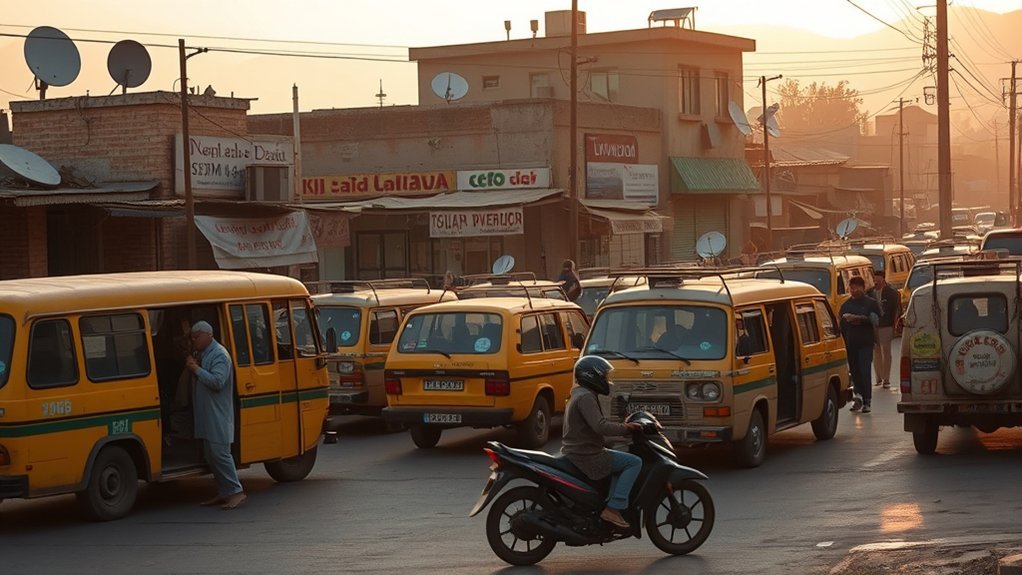
Public transport in Kabul means minibuses, shared taxis, and a few city buses. It is cheap but crowded, and many foreign employers do not allow staff to use it.
| Transport Item | Price (AFN) | Approx. USD |
|---|---|---|
| One-way local ride | 10 | $0.15 |
| Monthly pass (estimates vary) | 1,350–2,729 | $21–$42 |
| Taxi start fare | 135 | $2.10 |
| Taxi, 8 km trip | 470 | $7.25 |
| Petrol (1 liter) | 59–66 | $0.91–$1.02 |
| Diesel (1 liter) | about 60 | $0.92 |
Fuel prices move with imports from Iran, Turkmenistan, and Central Asia. Diesel cost about 14% more in May 2026 than a year earlier, according to the World Food Programme. Transport prices rose 5% in a single month in mid-2026.
For foreign residents, the real transport cost is safety. Employers may require approved drivers, tracked vehicles, and route checks, which can cost much more than fares or fuel. Road travel between provinces carries extra risk from crime and unexploded ordnance.
Healthcare and Insurance
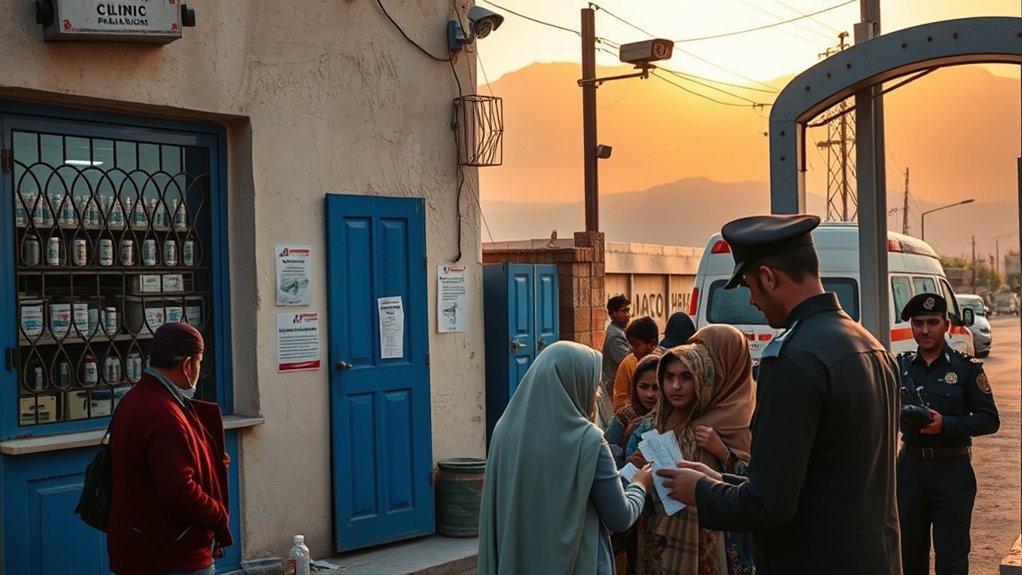
Healthcare is cheap per visit but limited in what it can do. The WHO-led Health Cluster says at least 422 primary health facilities closed in 2025 after US and other donor funding was cut, affecting about 3.3 million people. Its 2026 appeal was only 19% funded as of June.
What this means for your budget:
- Public clinics are low-cost but crowded and often short of staff, drugs, and equipment.
- Private hospitals in Kabul handle routine care and often want cash up front. They are generally below US standards, according to the State Department.
- Serious emergencies may require evacuation to another country. Medical evacuation insurance is strongly recommended.
- Medicines: bring a full supply of prescriptions in original packaging. Some drugs are unavailable, and counterfeit medicines circulate.
Many international insurers exclude countries under a Do Not Travel advisory. Get written confirmation that Afghanistan, your type of work, and medical evacuation are covered before you buy.
Schools and Childcare
- Private primary school: crowd-sourced data put annual fees at about 68,000 AFN (~$1,045) per child in Kabul.
- Preschool or kindergarten: about 1,320 AFN (~$20) a month.
- Girls’ education: girls are barred from secondary school and university. UNICEF estimates that 3.7 million children are out of school, 60% of them girls.
There are no functioning international schools of the kind found in neighboring capitals. Foreign families with children rarely relocate to Afghanistan, and most employers post staff on unaccompanied terms.
Salaries and Taxes
What People Earn
Afghanistan has no reliable national wage survey. The best available signals:
- Kabul average net salary: about 22,000 AFN (~$340) a month, from crowd-sourced reports in August 2026.
- Government jobs: about 15,000 AFN (~$230) a month, according to Mazar-i-Sharif residents interviewed in April 2026.
- Low-income workers: many report earning under 5,000 AFN (~$77) a month.
- Casual laborers: found work only about 1.9 days a week in May 2026, 20% fewer days than a year earlier, per the World Food Programme.
Compare that with rent. A 10,000 AFN family house takes nearly half of an average Kabul salary, which is why many families share homes or move to outlying districts.
Income and Business Taxes
- Salary tax: the Income Tax Law sets monthly rates of 0% up to 5,000 AFN, 2% from 5,001 to 12,500 AFN, 10% from 12,501 to 100,000 AFN, and 20% above 100,000 AFN. Employers withhold it.
- Business receipts tax (BRT): Afghanistan uses a turnover tax rather than a working VAT. Restaurants, hotels, and many services charge it, typically 4–5%, and it is built into prices.
Foreign employees of international organizations are often covered by separate tax arrangements. Check your contract and your home country’s tax rules.
Visas, Registration, and Money
- Visa: required before arrival. The State Department warns that authorities may reject visas issued by embassies they do not recognize. Fees vary by consulate and nationality, and there is no reliable official fee schedule online.
- Registration: foreigners must register on arrival at Kabul airport or at the Ministry of Interior’s Kabul office. Skipping it can lead to fines, detention, or trouble leaving.
- Cash: Afghanistan is a cash economy. Few businesses take cards, and ATMs that accept foreign cards often fail or charge high fees.
- Cash limits on exit: reports cited by the State Department put the limit at about $5,000 when flying out and $500 at land borders. Confirm before you travel.
One-Time Setup Costs
Budget for these before your first month:
- Rent in advance and deposit: often two months’ rent plus one month’s deposit, so 30,000–60,000 AFN (~$460–$925) for a 10,000–20,000 AFN house.
- Backup power: batteries, an inverter, or a small solar kit. Prices vary widely, so get quotes locally.
- Water filter and storage: needed in most homes.
- SIM cards and data: about 400–2,000 AFN (~$6–$31) to start on two networks.
- Winter heating equipment: a heater and fuel stock before December.
- Insurance: international health and evacuation cover that names Afghanistan. Quotes depend on your job and insurer.
Sample Monthly Budgets
These budgets combine Kabul rents with crowd-sourced estimates of everyday spending. A single person’s non-rent costs (food, utilities, transport, phone) average about 22,300 AFN a month, and a family of four’s about 76,000 AFN. They exclude security, private schooling, international insurance, and evacuation cover.
| Expense | Single, Local Housing | Single, Furnished | Family of Four | Foreign Assignment |
|---|---|---|---|---|
| Rent | 7,000–12,000 | 16,200–25,500 | 7,500–20,000 | about 51,000 |
| Everyday costs (food, utilities, transport, phone) | 22,300 | 22,300 | 76,000 | 22,300 |
| Broadband and backup power | — | 2,500–6,300 | — | 6,300 |
| Total (AFN) | 29,000–34,000 | 41,000–54,000 | 83,500–96,000 | about 80,000+ |
| Total (USD) | $445–$525 | $630–$830 | $1,285–$1,480 | $1,230+ |
Foreign assignment: the last column uses a furnished 85 m² apartment in an expensive area. Security staff, armored or tracked vehicles, and evacuation cover are on top and are usually paid by the employer. These can easily exceed the living budget itself.
Local families: many Afghan households live on far less than these totals by sharing homes, cooking only staples, and skipping broadband. The World Bank notes that living standards are falling for most families.
Money-Saving and Safety Tips
- Negotiate the advance. Landlords often ask for several months up front. Offer a longer lease in exchange for a smaller advance.
- Buy staples locally. Flour, rice, beans, and seasonal vegetables from markets cost far less than imported packaged food.
- Buy data in bigger bundles. A 20 GB package costs less per gigabyte than daily or 1 GB packs.
- Check electricity bills. Read your meter and photograph it monthly, since overbilling complaints are common.
- Prepare for winter. Buy heating fuel before December, when prices rise.
- Keep cash in more than one safe place, and follow your employer’s limits on how much to carry.
- Keep emergency money separate. A grocery reserve is not an evacuation plan.
How Afghanistan Compares With Nearby Countries
Afghanistan’s everyday prices are similar to or lower than its neighbors’, but internet costs more and services are far weaker. The cost of living in Pakistan is a useful comparison, since many returnees came from cities like Peshawar and Karachi, and mobile data there costs about half as much. Our guide to living costs in Iran covers the other major source of returnees, where inflation is much higher. To the north, see what it costs to live in Tajikistan, Uzbekistan’s monthly budget guide, and our Turkmenistan expat budget. All four neighbors offer more reliable housing, banking, and healthcare for foreigners.
| Country | Currency | Main Difference From Afghanistan |
|---|---|---|
| Pakistan | Pakistani rupee | cheaper mobile data, wider housing choice, private hospitals in big cities |
| Iran | Iranian rial | much higher inflation, cheaper internet, sanctions limit banking |
| Tajikistan | Somoni | stable housing market in Dushanbe, low wages |
| Uzbekistan | Som | modern banking and transport in Tashkent |
| Turkmenistan | Manat | restricted internet, tightly controlled entry |
Frequently Asked Questions
How much money do you need to live in Afghanistan per month?
A single person living in ordinary local housing in Kabul needs roughly 29,000–34,000 AFN (~$445–$525) a month. A furnished studio pushes that to about 41,000–54,000 AFN (~$630–$830). A family of four should plan on about 83,500–96,000 AFN (~$1,285–$1,480). Security, international insurance, and evacuation cover for foreigners come on top.
How much is rent in Kabul in 2026?
Crowd-sourced averages put an ordinary one-bedroom at about 7,000–8,000 AFN (~$110–$125) a month. Local reporting from May 2026 says many family homes now rent for 12,000–15,000 AFN, and a four-room house can reach 20,000 AFN. Furnished studios list for about 16,200–25,500 AFN (~$250–$395).
What is the exchange rate of the afghani in 2026?
Da Afghanistan Bank listed about 64.96 AFN per US dollar (cash sell rate) on October 4, 2026. The afghani has been stable to slightly stronger this year, gaining about 4.7% against the dollar in the year to August 2026, according to the World Bank.
What is the average salary in Afghanistan?
There is no reliable official wage survey. Crowd-sourced data for Kabul put the average net salary at about 22,000 AFN (~$340) a month in August 2026. Many workers earn far less: some Mazar-i-Sharif residents report under 5,000 AFN a month, and casual laborers found work only about 1.9 days a week in May 2026.
Is Afghanistan safe for foreigners to live in?
Major government advisories say no. The US State Department rates Afghanistan Level 4 (Do Not Travel), and the UK advises against all travel. Risks include terrorism, kidnapping, and wrongful detention, and consular help is very limited or unavailable.
Can foreigners buy property in Afghanistan?
No. Article 41 of the constitution published by Afghanistan’s Ministry of Justice bars foreign nationals from owning immovable property. Leases for capital investment can be allowed under the law. Get specialist legal advice before signing any property agreement.
Do credit cards work in Afghanistan?
Rarely. Afghanistan is mostly a cash economy. The US State Department says only a few businesses take cards, and ATMs that accept foreign cards often break down or charge high fees. Bring a lawful cash plan and check the current limits on carrying cash out of the country.
Conclusion
Afghanistan is cheap on paper. An ordinary Kabul home rents for 7,000–15,000 AFN, local meals cost under $3, and a single person can cover daily needs for about 29,000–34,000 AFN (~$445–$525) a month. But rents have doubled in a few years, staple prices are rising again, and incomes are falling. For foreigners, the true cost is driven by security, insurance, and the risk of detention, and both the US and UK advise against any travel. If you must go for work or family reasons, plan in afghanis, check rents in person, and fund your emergency plan before your living budget.
Sources
- Da Afghanistan Bank – exchange rates, October 4, 2026
- World Bank – Afghanistan Economic Monitor, August 2026
- World Bank – Afghanistan Development Update press release, May 2026
- Pajhwok – NSIA price data for Asad 1405, September 2026
- Amu TV – WFP market and labor report, June 2026
- Hasht-e Subh – Kabul rent prices, May 2026
- Hasht-e Subh – Mazar-i-Sharif rents, April 2026
- Hasht-e Subh – Kabul electricity bills, August 2026
- Hasht-e Subh – internet prices, July 2026
- US Department of State – Afghanistan travel advisory
- UK FCDO – Afghanistan travel advice
- WHO Health Cluster – Afghanistan
- UNICEF Afghanistan – education
- Ministry of Justice – Constitution of Afghanistan, Article 41
- Crowd-sourced price averages for Kabul (August–October 2026)
- Afghanistan Income Tax Law – salary tax schedule