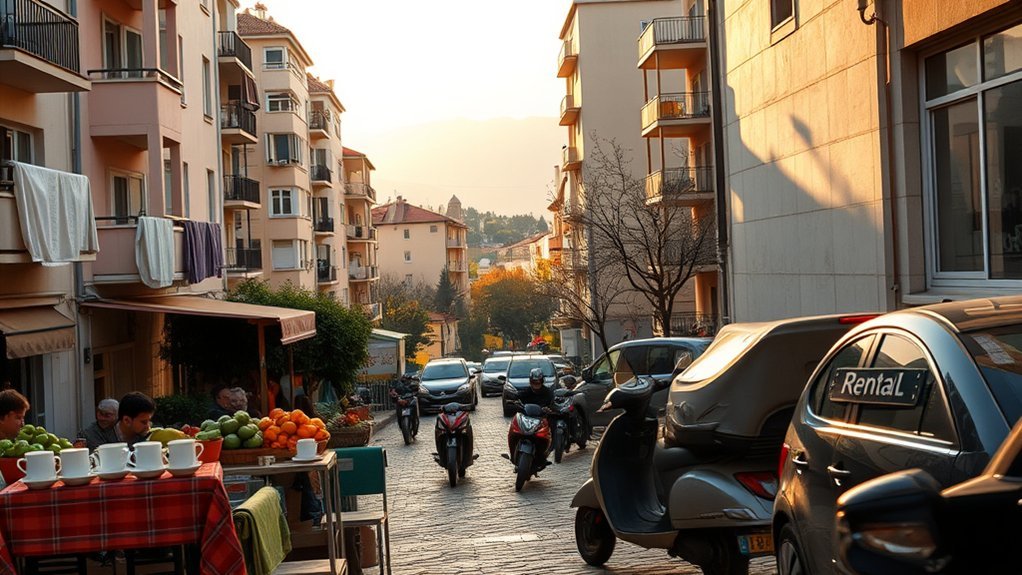
The cost of living in Albania in 2026 is about 101,000 ALL (~$1,240) a month for a single person renting outside central Tirana, and about 130,000 ALL (~$1,590) in the city center. A couple should plan on roughly 145,000–173,000 ALL (~$1,770–$2,115), and a family of four about 303,000–358,000 ALL (~$3,700–$4,375). These figures use the Bank of Albania’s official rate of 81.80 ALL per US dollar on October 2, 2026. Rent is the main swing factor. Tirana now costs far more than coastal Durrës or northern Shkodër, and summer tourism pushes prices up in Sarandë and Vlorë. Below you’ll find city rents, utilities, food, transport, healthcare, taxes, residence rules, and sample budgets.
Quick Answer
- Single person: about 101,000 ALL (~$1,240) outside central Tirana; about 130,000 ALL (~$1,590) in the center.
- Couple: about 145,000–173,000 ALL (~$1,770–$2,115) a month in Tirana.
- Family of four: about 303,000–358,000 ALL (~$3,700–$4,375) before international school fees.
- Rent, one-bedroom in Tirana: about 67,900 ALL (~$830) in the center and 39,300 ALL (~$480) outside it.
- Utilities: about 8,000 ALL (~$98) a month for an 85 m² apartment; internet about 1,600 ALL (~$20).
- Bus fare in Tirana: 40 ALL (~$0.49); monthly pass about 1,600 ALL (~$20).
- Minimum wage 2026: 50,000 ALL (~$610) a month.
Exchange Rate, Inflation, and Wages in 2026
Three numbers shape what Albania costs you this year.
The exchange rate. The Bank of Albania’s official rate was 81.80 ALL per US dollar and 91.98 ALL per euro on October 2, 2026. The lek has been strong against the dollar for several years, so dollar earners get less for their money than older guides suggest. Euro earners are less affected.
Inflation. INSTAT reported annual inflation of 3.2% in August 2026, up from 2.3% a year earlier. Transport prices rose 12.0% over the year, housing and utilities 3.7%, food 2.8%, and restaurants and hotels 2.3%.
Wages. The average gross monthly wage was 92,150 ALL (~$1,125) in the second quarter of 2026, up 9.8% from a year earlier, according to INSTAT’s Q2 2026 wage release. The minimum wage has been 50,000 ALL (~$610) since early 2026. Crowd-sourced data put the average net salary in Tirana at about 72,700 ALL (~$890).
A one-bedroom in central Tirana now costs about 93% of the average net Tirana salary. Most local families share housing, own their homes, or live outside the center.
Cost of Living by City
Rents differ more between cities than any other expense. The table uses crowd-sourced averages updated in June–October 2026. Tirana has over a thousand price reports a year; the smaller cities have far fewer, so treat their figures as rough guides.
| City | 1-Bed, City Center | 1-Bed, Outside Center | Basic Utilities (85 m²) |
|---|---|---|---|
| Tirana | 67,900 ALL (~$830) | 39,300 ALL (~$480) | 8,000 ALL (~$98) |
| Durrës | 37,000 ALL (~$450) | 27,000 ALL (~$330) | 7,600 ALL (~$94) |
| Vlorë | 44,400 ALL (~$545) | 34,400 ALL (~$420) | 5,000 ALL (~$61) |
| Sarandë | 69,700 ALL (~$850) | 31,200 ALL (~$380) | 8,000 ALL (~$98) |
| Shkodër | 39,000 ALL (~$475) | 25,300 ALL (~$310) | 5,000 ALL (~$61) |
A few patterns stand out:
- Tirana is the most expensive place to rent year-round. It also has the most jobs, private clinics, international schools, and English-speaking services.
- Durrës is about 45% cheaper than Tirana for a central one-bedroom and is less than an hour from the capital by road.
- Vlorë is mid-priced, with long-term rents well below Tirana.
- Sarandë has central rents as high as Tirana’s because of tourist demand, but the outskirts are cheap. Some landlords only rent long-term outside the summer season.
- Shkodër is among the cheapest larger cities, with one-bedrooms outside the center around 25,000 ALL.
Housing: Rent and Buying Property
Tirana Rents by Apartment Size
| Apartment | City Center | Outside Center |
|---|---|---|
| 1-bedroom | 67,900 ALL (~$830) | 39,300 ALL (~$480) |
| 3-bedroom | 128,800 ALL (~$1,575) | 74,000 ALL (~$905) |
Typical ranges run from about 60,000 to 80,000 ALL for a central one-bedroom and 35,000 to 45,000 ALL outside the center. Areas such as Blloku, the Pyramid and Skanderbeg Square area, and new towers near the Grand Park cost the most. Neighborhoods such as Kombinat, Laprakë, and Kinostudio cost less but are farther from the center.
Deposits and Extra Costs
Plan for more than the first month’s rent:
- A security deposit, usually one month’s rent.
- The first month’s rent in advance.
- An agency fee if you use an agent, often equal to part or all of one month’s rent.
- Building maintenance fees in newer buildings.
- Separate electricity and water bills, plus internet installation.
In coastal towns, a cheap rent may apply only from October to May. Confirm in writing that the lease covers all 12 months and that you won’t be asked to leave in summer.
Buying Property as a Foreigner
Foreigners can buy apartments and houses in Albania. The UK government’s living in Albania guide says you do not need to be a resident to buy property, except for agricultural land of 1,000 m² or more. Crowd-sourced data put apartment prices at about 357,000 ALL (~$4,370) per m² in central Tirana and about 173,000 ALL (~$2,115) per m² outside the center. Use an independent lawyer and notary to check ownership, permits, and liens, since title problems are common. Buying property does not give you a right to residence.
Utilities, Internet, and Phone
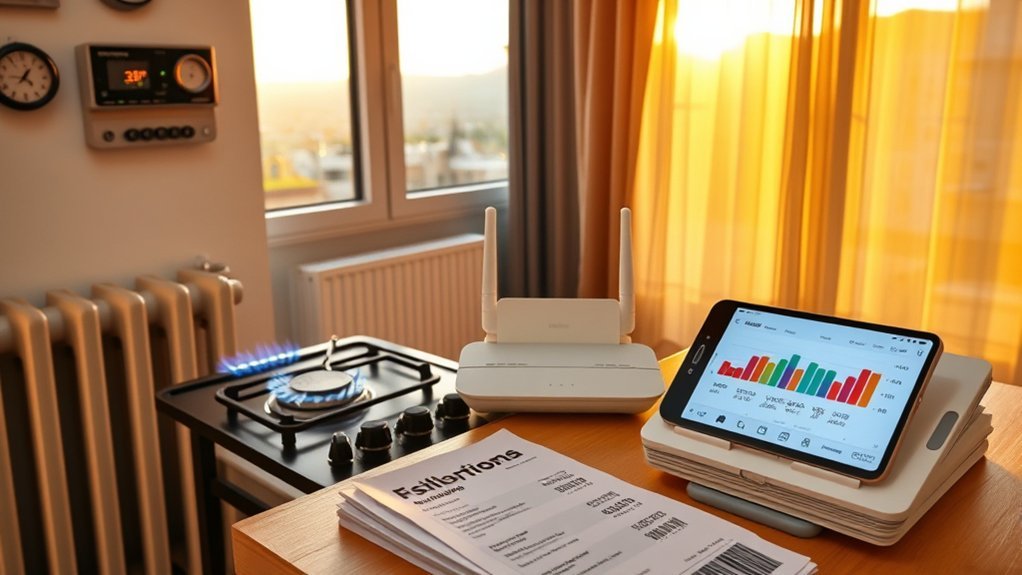
Basic utilities (electricity, heating or cooling, water, and garbage) for an 85 m² apartment average about 8,000 ALL (~$98) a month in Tirana, with a typical range of 6,000–15,000 ALL. Bills peak in July and August for air conditioning and in January for heating. Most Albanian apartments use electric air-conditioning units for both heating and cooling, so electricity is the main bill. Household electricity tariffs are set each year by the energy regulator, ERE, and the 2026 tariffs took effect on January 1.
Other monthly connections in Tirana:
- Home internet: about 1,630 ALL (~$20), with a typical range of 1,300–2,200 ALL.
- Mobile plan with data: about 1,490 ALL (~$18) per line.
- Bottled water and filters: many residents drink bottled or filtered water. Allow a small monthly amount for it.
Food: Groceries and Dining Out
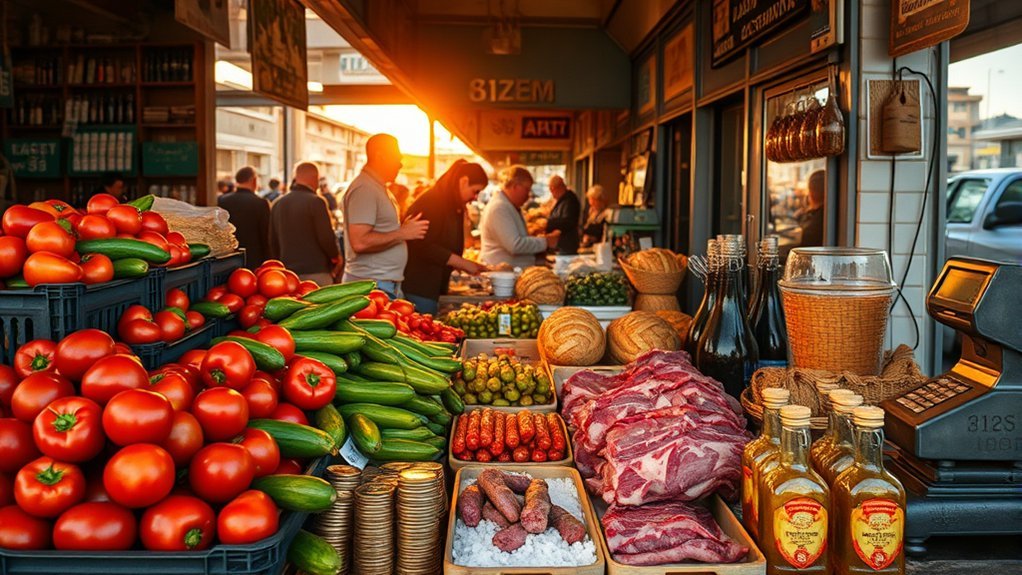
A single person who cooks most meals spends about 25,000–35,000 ALL (~$305–$430) a month on groceries. A couple should plan on roughly 45,000–60,000 ALL. Local markets are cheapest for fruit, vegetables, cheese, and bread. Supermarkets are better for packaged goods. Imported brands cost much more.
Tirana prices in October 2026:
| Item | Typical Cost (ALL) | Approx. USD |
|---|---|---|
| Milk (1 liter) | 183 | $2.24 |
| Bread (1 lb loaf) | 88 | $1.07 |
| Eggs (12) | 308 | $3.77 |
| Chicken fillets (1 lb) | 337 | $4.13 |
| Beef (1 lb) | 627 | $7.67 |
Eating out is still a good deal by Western standards:
- Meal at an inexpensive restaurant: about 800 ALL (~$9.80)
- Three-course dinner for two at a mid-range restaurant: about 4,500 ALL (~$55)
- Fast-food combo meal: about 900 ALL (~$11)
- Cappuccino: about 184 ALL (~$2.25)
- Domestic draft beer: about 290 ALL (~$3.55)
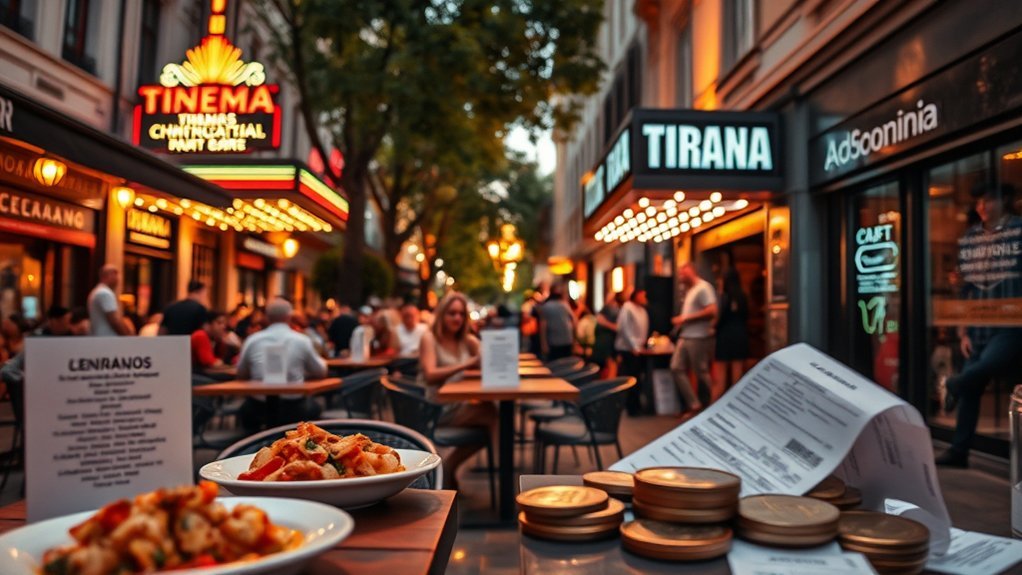
Café culture is central to daily life, and coffee is cheap. Restaurant prices jump on seaside promenades and in Blloku.
Restaurant and hotel prices rose only 2.3% in the year to August 2026, slower than overall inflation.
Transportation and Getting Around
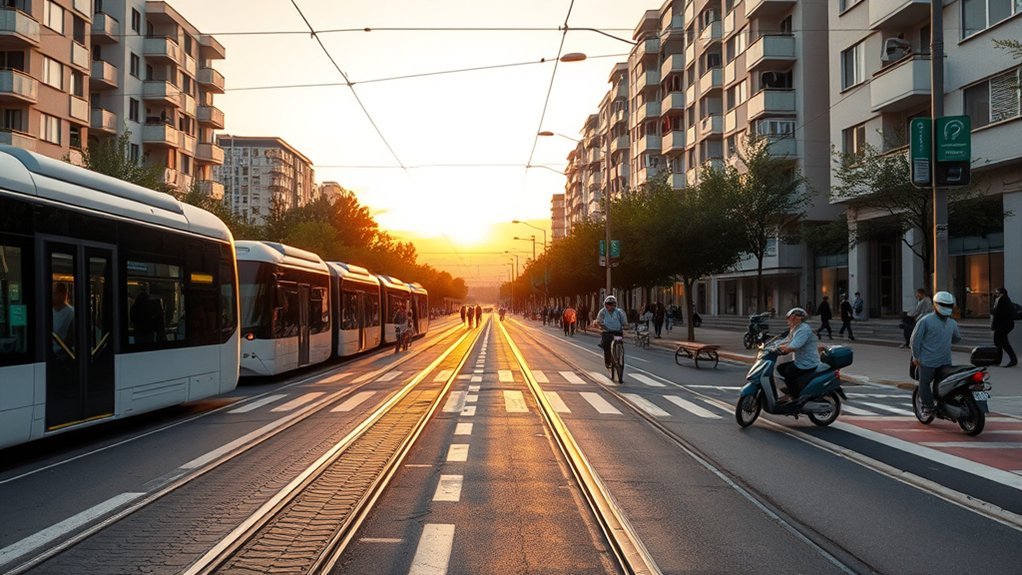
Central Tirana is compact and walkable. City buses cover most neighborhoods, though they can be crowded and slow in traffic.
| Item | Cost (ALL) | Approx. USD |
|---|---|---|
| Tirana bus ticket | 40 | $0.49 |
| Monthly bus pass | 1,600 | $19.60 |
| Taxi start fare | 300 | $3.67 |
| Taxi, per mile | 483 | $5.90 |
| Gasoline (1 liter) | about 190 | $2.32 |
A bus commuter spends about 1,600–2,400 ALL (~$20–$30) a month. Regular taxi use can push transport costs above 10,000 ALL. Transport was the fastest-rising price group in 2026, up 12% in a year, largely because of fuel.
Car owners also pay for insurance, registration, parking, and repairs. For travel between cities, buses (furgons) link Tirana with Durrës, Shkodër, Vlorë, and Sarandë at low cost.
Healthcare and Insurance
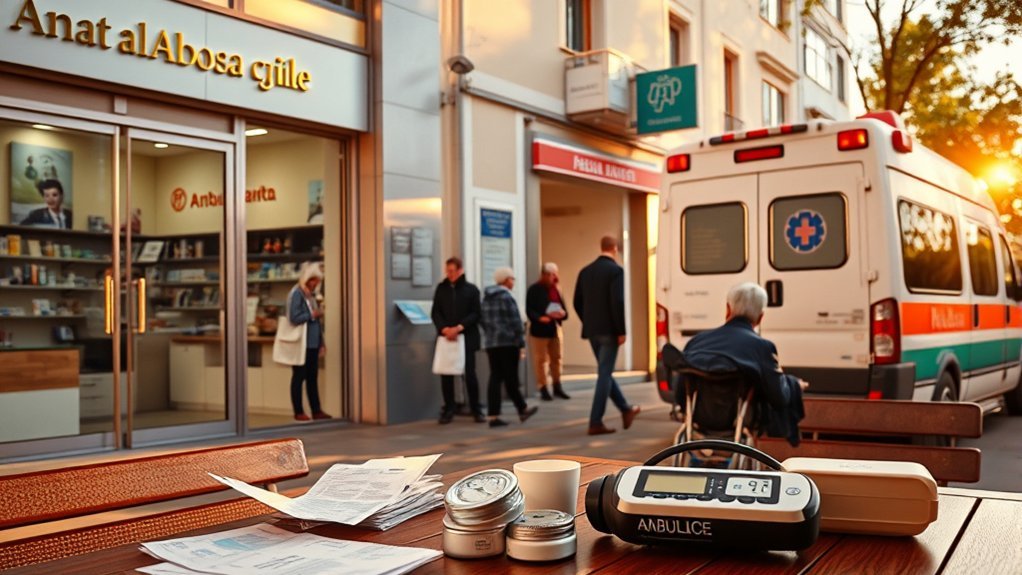
Albania has a public health system funded through compulsory health insurance contributions. The UK government guide says residents with a residence permit and a job get the same public healthcare benefits as Albanian nationals, and health insurance is compulsory for residents.
For employees, health insurance is part of payroll contributions: 1.7% from the employee and 1.7% from the employer. Self-employed people pay health contributions on twice the minimum wage.
Many foreigners use private clinics and hospitals in Tirana for faster appointments and English-speaking staff. The US State Department notes that most providers want cash payment up front, care outside Tirana is limited, and travel insurance with medical evacuation is strongly recommended.
Practical tips:
- Emergency number: 112 for general emergencies and 127 for ambulance.
- Private insurance: check annual limits, pre-existing conditions, and whether Tirana’s private hospitals are in network.
- Medicines: pharmacies are common in cities. Bring a supply of any specialist medication and a copy of the prescription.
Schools and Childcare
- International primary school: about 676,000 ALL (~$8,270) a year per child on average in Tirana, with a range of about 368,000 to 2.3 million ALL.
- Private preschool or kindergarten: about 28,200 ALL (~$345) a month, full day.
- Public schools: free and taught in Albanian.
A family with two children in international school adds roughly 113,000 ALL (~$1,380) a month for tuition alone.
Taxes: VAT and Social Contributions
- VAT: 20% standard rate, included in shelf prices.
- Income tax on wages: since January 2025, employment income is taxed annually at 13% up to 2,040,000 ALL (~$24,940) and 23% above that, according to PwC’s Worldwide Tax Summaries.
- Social and health contributions: employees pay 11.2% (9.5% social insurance and 1.7% health). Employers pay 16.7%.
- Property tax: about 0.05% of the value of a residential building each year.
- Tax residency: residents are taxed on worldwide income; non-residents only on Albanian income.
If you plan to stay long-term with foreign income or a pension, get advice from an Albanian tax adviser and check your home country’s rules.
Visas and Residence Permits
- US citizens: can stay up to one year from first entry without a visa, according to the State Department. Passports need at least three months of validity. A longer stay, or any work or study, requires a residence permit.
- Most other visitors: visa-free stays are generally limited to 90 days in any 180-day period, depending on nationality.
- Residence permits: the Ministry of Interior’s permit guide lists categories for work, family reunion, and other purposes. Some categories require proof of income of at least 32,000 ALL a month per person or a bank deposit of at least 300,000 ALL.
- Permit fees: the ministry lists 12,000 ALL for a five-year permit for US, EU, and Kosovo citizens in some categories. The biometric card costs extra.
Albania also offers residence for pensioners and remote workers under its law on foreigners. Requirements usually include proof of income, accommodation, health insurance, and a clean criminal record. Confirm current rules with the Albanian authorities before you apply.
One-Time Setup Costs
Budget for these before your first month:
- Deposit and first month: about 80,000–136,000 ALL (~$960–$1,660) for a Tirana one-bedroom.
- Agency fee: often part or all of one month’s rent.
- Residence permit and card: from a few thousand to about 12,000 ALL plus the biometric card, depending on category and nationality.
- Internet installation and router: sometimes free on a 12-month contract; ask before signing.
- Health insurance: a private or international policy until you qualify for public coverage.
- Household basics: linens, kitchenware, and a dehumidifier in coastal or ground-floor homes.
Sample Monthly Budgets
These budgets combine Tirana rents with crowd-sourced estimates of everyday spending (food, utilities, transport, phone, and some leisure). Crowd-sourced data put a single person’s non-rent costs at about 61,900 ALL a month and a family of four’s at about 228,900 ALL.
| Expense | Single, Outside Center | Single, City Center | Couple | Family of Four |
|---|---|---|---|---|
| Rent | 39,300 | 67,900 | 39,300–67,900 | 74,000–128,800 |
| Everyday costs | 61,900 | 61,900 | about 105,000 | 228,900 |
| Total (ALL) | about 101,000 | about 130,000 | 145,000–173,000 | 303,000–358,000 |
| Total (USD) | ~$1,240 | ~$1,590 | ~$1,770–$2,115 | ~$3,700–$4,375 |
Outside Tirana: swapping Tirana rent for a one-bedroom outside the center in Durrës (27,000 ALL) or Shkodër (25,300 ALL) cuts a single budget to roughly 87,000–89,000 ALL (~$1,065–$1,090), assuming similar everyday spending.
Families: the family figures exclude international school fees. Two children in international school add about 113,000 ALL a month.
Money-Saving Tips

- Live outside the center. In Tirana, this saves about 28,000 ALL a month on a one-bedroom.
- Consider Durrës or Shkodër. Rents are 30–45% lower than in Tirana.
- Sign a 12-month lease. Short-term and holiday rentals cost much more, especially on the coast.
- Shop at markets. Seasonal produce and local cheese cost far less than imported goods.
- Use buses and walk. A monthly pass costs about 1,600 ALL.
- Ask for past utility bills. Poorly insulated flats can double winter and summer bills.
- Budget in lek. Exchange-rate moves can change your dollar budget even when local prices stay flat.
How Albania Compares With Nearby Countries
Albania is one of the cheaper places to live in southern Europe, though Tirana is no longer a bargain. For a close neighbor with lower rents, see our guide to the cost of living in North Macedonia. To the north, compare living costs in Montenegro, which uses the euro and has similar coastal price swings, and what it costs to live in Serbia. Across the borders and the Adriatic, our Greece cost of living guide and modest budget guide for Italy show how much more EU countries cost.
| Country | Currency | Main Difference From Albania |
|---|---|---|
| North Macedonia | Denar | lower rents in Skopje, lower wages |
| Montenegro | Euro | no currency risk for euro earners, pricier coastal rents |
| Serbia | Dinar | larger job market in Belgrade, similar rents |
| Greece | Euro | EU member, higher rents and wages |
| Italy | Euro | much higher rents and services costs |
Frequently Asked Questions
How much money do you need to live in Albania per month?
A single person renting outside central Tirana needs about 101,000 ALL (~$1,240) a month, or about 130,000 ALL (~$1,590) in the center. A couple should plan on about 145,000–173,000 ALL (~$1,770–$2,115), and a family of four about 303,000–358,000 ALL (~$3,700–$4,375) before international school fees. Durrës, Vlorë, and Shkodër cost less.
How much is rent in Tirana in 2026?
Crowd-sourced averages from October 2026 put a one-bedroom at about 67,900 ALL (~$830) in the center and about 39,300 ALL (~$480) outside it. A three-bedroom averages about 128,800 ALL (~$1,575) in the center and 74,000 ALL (~$905) outside.
Is Albania still cheap in 2026?
Compared with Western Europe and the US, yes for food, transit, coffee, and services. But Tirana rents have risen fast, and inflation was 3.2% in August 2026, with transport prices up 12% in a year. A single renter in Tirana now needs roughly $1,240–$1,590 a month.
What is the minimum wage in Albania in 2026?
The minimum wage has been 50,000 ALL (~$610) a month since the first quarter of 2026, according to INSTAT. The average gross wage was 92,150 ALL (~$1,125) in the second quarter of 2026, up 9.8% from a year earlier.
Can Americans live in Albania without a visa?
Yes. The US State Department says US citizens can stay up to one year from first entry without a visa, with at least three months of passport validity. To stay longer, work, or study, you need a residence permit.
Can I live in Albania on $1,000 a month?
Only with low housing costs. At 81.80 ALL per dollar, $1,000 is about 81,800 ALL. That can work in Durrës, Shkodër, or Vlorë with a one-bedroom outside the center, or in Tirana if you share housing. It is not enough for a central Tirana apartment.
What is the income tax rate in Albania?
Since January 2025, employment income is taxed at 13% on annual taxable income up to 2,040,000 ALL and 23% above that, according to PwC’s Worldwide Tax Summaries. Employees also pay 11.2% in social and health contributions. VAT is 20%.
Conclusion
Albania is still affordable by Western standards, but 2026 is not 2019. Tirana rents have climbed, the lek is strong against the dollar, and transport prices jumped 12% in a year. A single person can live in Tirana for about 101,000–130,000 ALL (~$1,240–$1,590) a month, or for closer to $1,100 in Durrës or Shkodër. Pick your city and neighborhood first, since rent drives most of the difference, then build your budget in lek and check the exchange rate before you commit.
Sources
- Bank of Albania – official exchange rate, October 2, 2026
- INSTAT – Consumer Price Index, August 2026
- INSTAT – Wage Statistics, Q2 2026
- PwC Worldwide Tax Summaries – Albania personal income tax
- PwC Worldwide Tax Summaries – Albania other taxes (VAT, social security)
- US Department of State – Albania travel information
- UK Government – Living in Albania
- Albanian Ministry of Interior – residence and unique permits
- ERE – electricity tariffs and prices
- Crowd-sourced price averages for Tirana, Durrës, Vlorë, Sarandë, and Shkodër (June–October 2026)