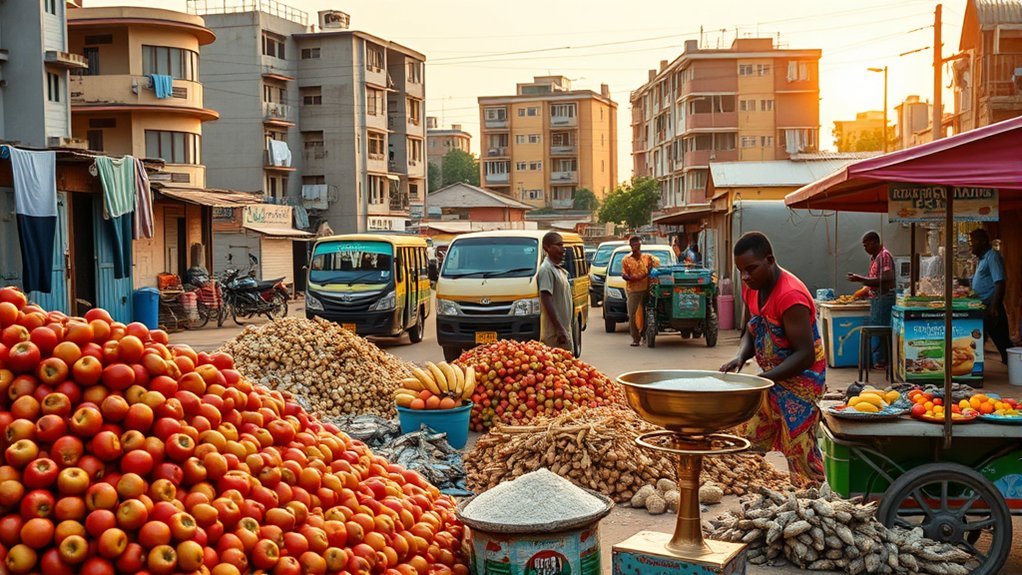
The cost of living in Ghana in 2026 runs about GH₵6,400–8,600 (~$545–$735) a month for a single person living simply, and about GH₵16,000–18,500 (~$1,365–$1,580) for a comfortable single life in central Accra. A couple should plan on roughly GH₵18,400–22,900 (~$1,570–$1,955). These figures use the Bank of Ghana rate of about GH₵11.71 per US dollar (October 2, 2026). Rent is the biggest swing factor. A one-bedroom in central Accra averages about GH₵7,990 (~$682) a month, while one outside the center averages about GH₵3,270 (~$280). Landlords also tend to ask for many months of rent upfront, so your first-month cash need is much higher than your monthly budget. Below you’ll find Accra and national rents, the new October 2026 utility tariffs, food and transport prices, taxes, permits, and sample budgets.
Quick Answer
- Single person: GH₵6,400–8,600 (~$545–$735) on a lean budget; GH₵16,000–18,500 (~$1,365–$1,580) for a comfortable one in central Accra.
- Couple: GH₵18,400–22,900 (~$1,570–$1,955) a month in a central Accra one-bedroom.
- Family of four: about GH₵18,500–33,700 (~$1,580–$2,880) before school fees, depending on location and lifestyle.
- Rent, one-bedroom: about GH₵2,880–3,270 (~$246–$280) outside the center and GH₵6,360–7,990 (~$543–$682) in the center, national average to Accra.
- Utilities: about GH₵865–905 (~$74–$77) a month for an 85 m² apartment; home broadband adds about GH₵500 (~$43).
- Electricity (from October 1, 2026): GH₵2.04 per kWh for 31–300 kWh a month, plus a GH₵10.73 service charge.
- Minimum wage 2026: GH₵21.77 a day, or about GH₵566 (~$48) for a 26-day working month.

Come Eat offers 100 approachable recipes designed to make everyday cooking more enjoyable, nourishing, and sustainable. With a focus on flavorful meals and practical preparation, this hardcover cookbook is ideal for home cooks looking for inspiration for salads, sides, and main dishes. Author Melissa Ben-Ishay shares recipes that encourage consistent, feel-good eating without sacrificing taste.

This hardcover cookbook offers fast, approachable recipes designed for busy days and low-energy nights. Caroline Chambers focuses on simple, flavorful meals that help you get dinner on the table without overthinking it. It's a practical pick for home cooks who want quick weeknight inspiration and minimal-fuss cooking.

Velveeta Shells and Cheese Original Cup delivers a creamy, comforting mac and cheese experience in convenient single-serve cups. Made with real cheese and shelf-stable for easy storage, it’s a quick microwave meal or side that works for busy nights, kids’ meals, and snack cravings. Each cup includes shell pasta and cheese sauce for rich flavor with minimal prep.
Exchange Rate, Inflation, and Minimum Wage in 2026
Three numbers shape what Ghana costs you this year.
The exchange rate. The Bank of Ghana interbank rate was GH₵11.71 per dollar (mid rate) on October 2, 2026, little changed from about GH₵11.64 in late July. The same day, one euro bought about GH₵13.18 and one British pound about GH₵15.49. The cedi has been fairly steady through 2026, but it has a long history of sharp swings, so dollar earners should keep a buffer.
Inflation. The Ghana Statistical Service reported annual consumer price inflation of 5.0% in August 2026, up from 4.6% in July. Food inflation was about 3.0%, while non-food inflation rose to about 6.8% as higher oil prices pushed up transport and utility costs. That is a big change from 2025, when the World Bank puts average inflation at 14.2%, and from the 20%+ rates of earlier years. Older guides that assume double-digit price growth now overstate how fast costs are rising.
The minimum wage. The national daily minimum wage is GH₵21.77, effective January 1, 2026, according to WageIndicator. For a 26-day working month that is about GH₵566 (~$48). Most formal-sector jobs in Accra pay well above this, but the gap between local wages and expat-style costs is wide.
At GH₵11.71 per dollar, $1,000 a month equals about GH₵11,710. That covers a lean or mid-range life in Ghana, but not a central Accra apartment plus a car, imported groceries, and private schooling.
Cost of Living by City
Accra is the most expensive place to live in Ghana and the only city with a large sample of price reports. The table uses crowd-sourced averages from Numbeo (Accra updated August 27, 2026; national figures updated September 9, 2026). Treat them as planning benchmarks, not quotes.
| Area | 1-Bed, City Center | 1-Bed, Outside Center | 3-Bed, City Center | 3-Bed, Outside Center | Basic Utilities (85 m²) |
|---|---|---|---|---|---|
| Accra | GH₵7,991 (~$682) | GH₵3,273 (~$280) | GH₵12,767 (~$1,090) | GH₵5,504 (~$470) | GH₵865 (~$74) |
| Ghana average | GH₵6,356 (~$543) | GH₵2,877 (~$246) | GH₵12,234 (~$1,045) | GH₵4,880 (~$417) | GH₵905 (~$77) |
A few patterns stand out:
- Accra has the country’s main concentration of embassies, multinational employers, international schools, and imported retail. That drives up rents in districts such as Cantonments, Airport Residential Area, Labone, Ridge, Osu, and East Legon.
- Central rents jump fast. A central Accra one-bedroom costs about 2.4 times one outside the center. Living farther out saves rent but can add hours of traffic and higher fuel or ride-hailing costs.
- Kumasi, the second city, has too few recent rent reports for a reliable average. Older crowd-sourced data put a one-way local fare there at about GH₵6, against GH₵17.50 in Accra, and a cheap restaurant meal at less than half the Accra price.
- Takoradi, Cape Coast, Tamale, Ho, and Koforidua are generally cheaper for housing, but there is little reliable city-level data. Check local listings in person before you commit.
Housing: Rent, Neighborhoods, and Advance Payments
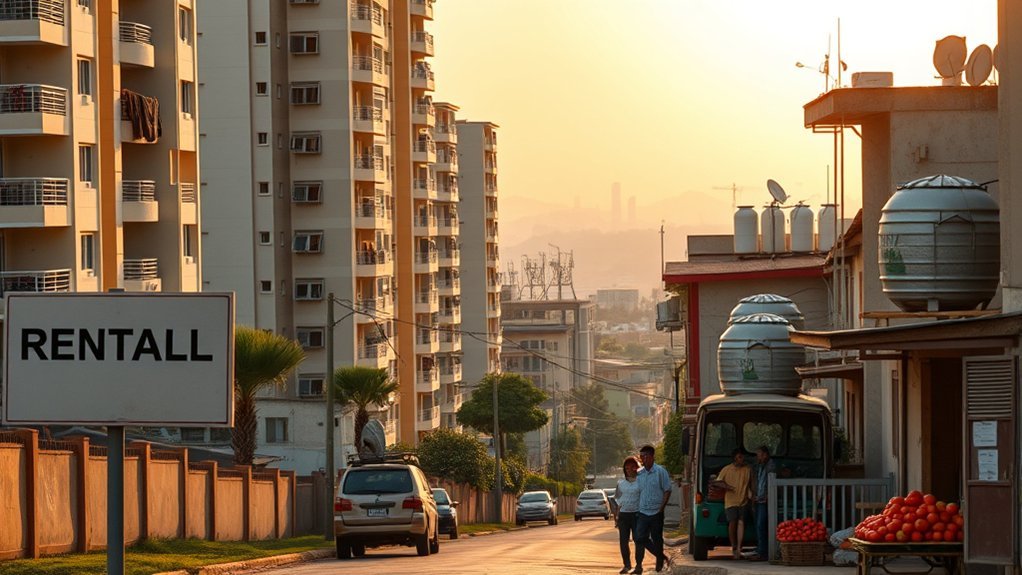
Housing is the largest part of almost every Accra budget. The averages above are for unfurnished long-term rentals. Furnished and serviced apartments in premium districts often cost far more, and many are priced in US dollars.
Accra Neighborhoods and What They Cost
- Premium areas: Cantonments, Airport Residential Area, Ridge, and Labone. Close to embassies, offices, and international schools. Expect the top end of the central range and above.
- Popular mid-to-upper areas: Osu, East Legon, and Dzorwulu. Good restaurants and services, heavy traffic at peak hours.
- Lower-cost options: outer suburbs such as Spintex, Tema, Adenta, Kasoa, and Madina. Rent is closer to the outside-center average, but commutes into central Accra can be long.
Rent Advance and Tenancy Rules
The biggest shock for newcomers is the advance. Many Accra landlords ask for one to two years of rent upfront. Ghana’s Rent Act (Act 220) limits advance rent to six months for longer tenancies and one month for monthly tenancies, but larger demands remain common in practice. Before you pay:
- Get the tenancy agreement in writing, with the rent, advance period, and who pays for repairs.
- Pay by traceable transfer and keep receipts.
- Confirm the landlord or agent actually controls the property.
- Ask a local lawyer to review any deal that requires more than six months upfront.
A one-year advance on an average outside-center Accra one-bedroom is about GH₵39,300 (~$3,350). Six months is about GH₵19,600 (~$1,675).
What to Check Before You Sign
Compare more than the monthly rent. Check water supply and storage tanks, electricity reliability and any backup inverter or generator, internet coverage, flood history and road access, security and parking, and whether service charges are included. A cheaper home that needs tanker water, a generator, and long ride-hailing trips can end up costing more.
Utilities, Internet, and Phone
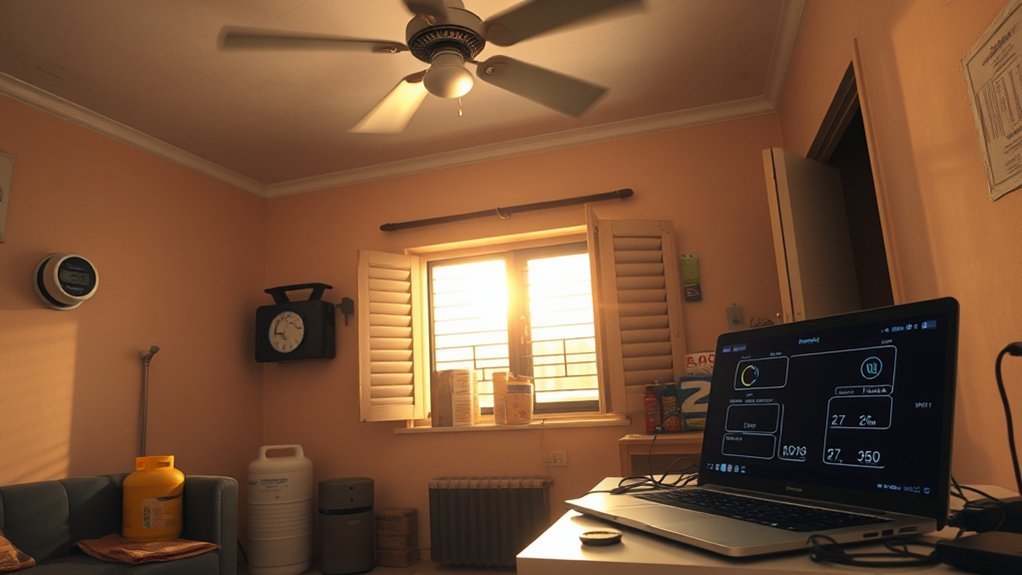
Basic utilities (electricity, cooling, water, and waste) for an 85 m² apartment average about GH₵865 (~$74) a month in Accra and about GH₵905 (~$77) nationally. Heavy air-conditioner use is the main reason some households pay two or three times that.
The Public Utilities Regulatory Commission (PURC) resets tariffs every quarter. Its fourth-quarter 2026 tariff notice sets these residential rates from October 1, 2026:
| Service | Band | Rate | Approx. USD |
|---|---|---|---|
| Electricity | Lifeline, 0–30 kWh | GH₵0.90 per kWh | $0.08 |
| Electricity | 31–300 kWh | GH₵2.04 per kWh | $0.17 |
| Electricity | 301 kWh and above | GH₵2.69 per kWh | $0.23 |
| Electricity | Service charge | GH₵10.73 a month | $0.92 |
| Water | 0–5 m³ | GH₵5.99 per m³ | $0.51 |
| Water | Above 5 m³ | GH₵10.59 per m³ | $0.90 |
| Water | Service charge | GH₵10.00 a month | $0.85 |
At these rates, 200 kWh of electricity costs roughly GH₵420 (~$36) a month before levies, and 10 m³ of water costs about GH₵93 (~$8). Many homes use prepaid meters, so you top up credit instead of receiving a bill.
Other monthly connections in Accra:
- Home broadband (60+ Mbps): about GH₵500 (~$43) on average.
- Mobile plan with 10 GB+ data: about GH₵226 (~$19).
- Extras some tenants pay: bottled or tanker water, generator fuel, inverter batteries, and compound security fees.
Food: Groceries and Dining Out
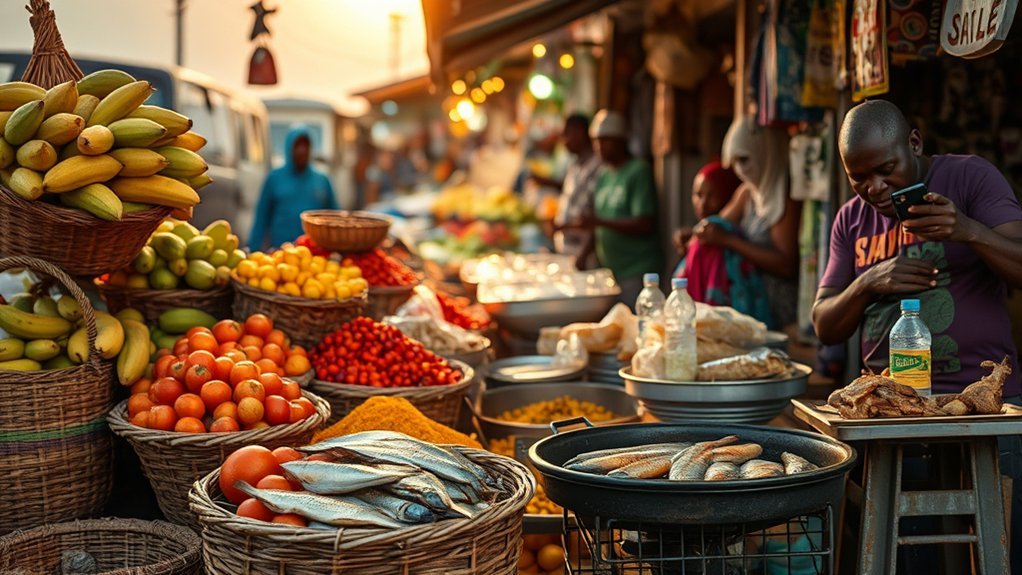
A single person who cooks mostly local food spends about GH₵1,500–2,000 (~$128–$171) a month on groceries. A comfortable mixed diet with some imported goods runs closer to GH₵2,500–3,000 (~$213–$256). Couples should plan on about GH₵4,000–5,000. Markets such as Makola in Accra are cheapest for produce, fish, and spices. Supermarkets cost more, especially for imported brands, cheese, and wine.
Average Accra prices (crowd-sourced, August 2026):
| Item | Typical Cost (GH₵) | Approx. USD |
|---|---|---|
| Milk (1 liter) | 42.75 | $3.65 |
| Bread (1 lb loaf) | 17.43 | $1.49 |
| Rice (1 lb) | 16.68 | $1.42 |
| Eggs (12) | 31.01 | $2.65 |
| Chicken fillets (1 lb) | 38.51 | $3.29 |
| Beef (1 lb) | 52.71 | $4.50 |
| Tomatoes (1 lb) | 19.17 | $1.64 |
| Bananas (1 lb) | 7.59 | $0.65 |
| Local cheese (1 lb) | 63.34 | $5.41 |
| Mid-range bottle of wine | 84.01 | $7.17 |
Milk, cheese, and other dairy are expensive because much of it is imported. Local staples such as rice, yams, plantain, cassava, beans, eggs, and seasonal fruit keep bills down.
Eating out ranges from very cheap street food (waakye, kenkey with fish, jollof) to Western-priced restaurants in Osu and Airport City. Common Accra prices:
- Meal at an inexpensive restaurant: about GH₵94 (~$8.05)
- Three-course dinner for two at a mid-range restaurant: about GH₵600 (~$51)
- Fast-food combo meal: about GH₵122 (~$10.45)
- Cappuccino: about GH₵52 (~$4.45)
- Domestic draft beer (pint): about GH₵22 (~$1.85)
Transportation and Fuel
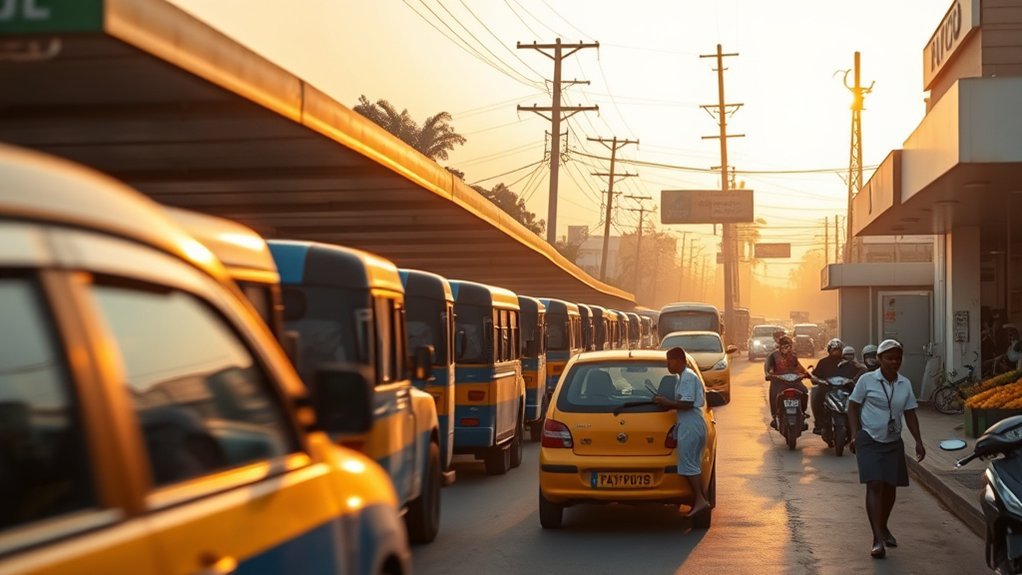
Most people in Ghana get around by tro-tro (shared minibus), shared taxi, and ride-hailing. There is no metro, and Accra traffic is heavy at peak hours, so where you live matters as much as how you travel.
- Local one-way fare: about GH₵17.50 (~$1.49) in Accra on average. Short tro-tro hops cost less.
- Regular commuting: about GH₵475 (~$41) a month for daily public transport.
- Taxis: about GH₵20 (~$1.70) to start plus about GH₵24 (~$2.05) per mile. Fares are usually agreed before the trip.
- Ride-hailing: widely used in Accra and Kumasi. Prices rise with traffic and demand, and daily use can cost several times more than tro-tros.
- Gasoline: about GH₵15.50 per liter (~$1.33, or about $5.00 per gallon) in Accra, based on August 2026 crowd-sourced prices.
Fuel prices change twice a month. Retailers set them under the pricing windows overseen by the National Petroleum Authority (NPA), so check the current window before you budget. A driver using 50 liters a month at GH₵15.50 spends about GH₵775 (~$66) on fuel, before insurance, repairs, and parking.
Healthcare and Insurance Costs
Ghana has a public National Health Insurance Scheme (NHIS) plus private clinics and hospitals. Quality and access vary sharply between Accra or Kumasi and rural areas.
- Free Primary Healthcare: the Ministry of Health launched the program on April 15, 2026, in 150 underserved districts, with nationwide rollout targeted for 2026–2028. It covers screening for hypertension, diabetes, and cancer, maternal and child care, immunization, and treatment of common illnesses such as malaria at CHPS compounds, health centers, and polyclinics.
- NHIS: still needed for referrals and specialist care at district, regional, and teaching hospitals. Coverage depends on active membership, the facility, and the benefits list, so not every test or medicine is free.
- Private care: most expats use private clinics in Accra and pay consultation, lab, and medicine fees separately. Ask for an estimate before non-emergency treatment.
- International cover: the UK Foreign Office notes that medical facilities are poor outside towns and that serious treatment may require medical evacuation. Make sure your insurance covers evacuation.
Malaria is present across the country, so budget for prevention and treatment, and keep a health reserve even with insurance.
Schools and Childcare

School choice can make education either a small expense or the largest one after rent.
- Public schools: basic education is tuition-free, and the government runs a Free Senior High School policy. Families still pay for uniforms, books, transport, and meals. Classes are in English.
- Local private schools: fees vary widely, from modest termly fees at neighborhood schools to several thousand cedis a term at established ones. Ask for the full written fee schedule.
- Private preschool: about GH₵5,450 (~$465) a month for full-day care in Accra, based on crowd-sourced averages.
- International schools: crowd-sourced data puts international primary school at about GH₵219,400 (~$18,740) a year in Accra.
Top schools charge more. Lincoln Community School’s 2026–2027 fees range from $16,985 a year for pre-kindergarten to $29,589 for grades 11 and 12, plus a $2,000 annual maintenance fee, a $200 application fee, and a one-time registration fee of up to $10,000. At GH₵11.71 per dollar, grades 1–5 tuition of $25,001 plus maintenance equals about GH₵316,200 a year. Fees are set in dollars, so cedi costs move with the exchange rate.
Taxes: VAT and Income Tax
- VAT and levies: the standard VAT rate is 15%, plus the National Health Insurance Levy (2.5%) and GETFund Levy (2.5%), for a combined 20% on most goods and services. It is included in shelf prices.
- Tax residency: you are a resident if you are in Ghana for 183 days or more in any 12-month period. Non-residents pay a flat 25% on Ghana-source employment income.
- Social security: employees pay 5.5% of salary to SSNIT and employers pay 13%.
Resident income tax rates, per PwC’s Ghana tax summary (reviewed March 2026):
| Monthly Chargeable Income (GH₵) | Annual Chargeable Income (GH₵) | Rate |
|---|---|---|
| First 490 | First 5,880 | 0% |
| Next 110 | Next 1,320 | 5% |
| Next 130 | Next 1,560 | 10% |
| Next 3,167 | Next 38,000 | 17.5% |
| Next 16,000 | Next 192,000 | 25% |
| Next 30,520 | Next 366,240 | 30% |
| Above 50,000 | Above 600,000 | 35% |
Example: on a gross salary of GH₵10,000 a month, SSNIT takes GH₵550 and income tax about GH₵1,960, leaving take-home pay of about GH₵7,490 (~$640).
Salaries vs. Cost of Living
Local pay is low compared with expat-style costs. Crowd-sourced averages put typical net salaries at about GH₵2,050 (~$175) a month in Accra and GH₵2,890 (~$247) nationally, though professional and multinational jobs pay much more. The minimum wage works out to about GH₵566 (~$48) a month.
That gap explains why so many Ghanaians share housing, live outside central areas, cook at home, and travel by tro-tro. It also means:
- A foreigner earning a typical local salary will struggle in central Accra. Remote workers paid in dollars, euros, or pounds have far more room.
- Household help, tailoring, and local services are cheap by Western standards.
- Imported goods, cars, international schooling, and private healthcare cost about the same as, or more than, in the US or Europe.

This daily devotional helps parents pray purposefully for their children through a full year of Scripture readings, reflections, and guided prayer prompts. Written to encourage faithful family discipleship, it offers practical, biblically grounded support for parents who want to shape their prayers around God's Word. A foreword by Sinclair B. Ferguson adds trusted theological insight and encouragement.

This hardcover book celebrates the art of gathering with inspiring table settings, thoughtful traditions, and practical ideas for hosting memorable meals. Written by Shea McGee, it offers beautiful design inspiration alongside approachable guidance for creating warm, welcoming spaces for family and friends. It's a charming resource for anyone who loves entertaining, home styling, and making everyday moments feel special.

This CUCKOO Micom rice cooker makes everyday meals easier with fuzzy logic cooking that helps deliver consistently fluffy rice and grains. With multiple menu options, a delay timer, keep warm setting, and versatile steaming and multi-cook functions, it is well suited for preparing rice, porridge, soups, and stews for small to medium households. The non-stick inner pot and customizable My Mode settings add convenience and flexibility for a variety of tastes and textures.
Visas, Permits, and Entry Requirements
US citizens need a visa before arriving. The US State Department notes that all visitors must hold a valid entry visa issued by a Ghanaian mission, and that all travelers 9 months or older must show proof of yellow fever vaccination at entry. You can bring in or take out up to $10,000 in cash. ECOWAS citizens can enter visa-free.
To live or work in Ghana long-term you need a residence or work permit from the Ghana Immigration Service. Its official fee schedule (effective May 15, 2025) lists:
| Permit | ECOWAS Nationals | Other Nationals |
|---|---|---|
| Work and residence permit (companies) | $647 | $1,293 |
| Work permit (missionaries/NGOs) | $388 | $388 |
| Dependant residence permit | GH₵259 | GH₵388 (~$33) |
| Student residence permit | GH₵194 | GH₵259 (~$22) |
| Re-entry permit (multiple) | $129–$194 | |
| Visitor permit extension | GH₵26–65 per month | |
People of African descent can apply for the Right of Abode, which costs GH₵1,940–3,879 in GIS fees. Rules and fees change, so confirm the current list with GIS or your nearest Ghanaian embassy before you apply.
Safety and Practical Tips
Ghana is one of the more stable countries in West Africa, but crime and regional unrest still affect where and how you live. The US State Department rates Ghana at Level 2 (exercise increased caution, issued July 7, 2026) because of crime, and asks travelers to reconsider travel to some northern border areas. The UK Foreign Office advises against all but essential travel to the Bawku Municipality in the Upper East region.
For daily life, that means:
- Choose housing with secure gates or a compound guard, especially in Accra.
- Avoid highway travel at night, when robberies are more common.
- Watch for card skimming. Use ATMs inside banks or malls and check statements often.
- Use mobile money (MoMo), which is widely accepted and reduces the need to carry cash.
One-Time Setup Costs
Budget for these before your first month:
- Visa and permits: an entry visa, then a work and residence permit of $1,293 for most non-ECOWAS company employees, plus GH₵388 for each dependant.
- Yellow fever vaccination: required for entry.
- Rent advance: often 6–24 months of rent upfront. For an outside-center Accra one-bedroom, that is GH₵19,600–78,600 (~$1,675–$6,710).
- Furnishing: unfurnished rentals often lack appliances, curtains, and sometimes kitchen fittings.
- Backup power and water: an inverter, generator, or storage tank if the home lacks one.
- School registration: up to $10,000 per child at top international schools.
- Health cover gap: international insurance with evacuation cover for your first months.
Sample Monthly Budgets
These budgets combine the averages above, in Ghana cedis. Lean budgets assume an outside-center one-bedroom, local food, and tro-tros. Comfortable and couple budgets assume a central Accra one-bedroom.
| Expense | Single, Lean | Single, Comfortable (Accra) | Couple (Accra) | Family of Four |
|---|---|---|---|---|
| Rent | 2,900–3,300 | 7,990 | 7,990 | 5,500–12,770 (3-bed) |
| Utilities | 600–865 | 865–1,200 | 1,000–1,500 | 1,500–2,500 |
| Internet + mobile | 230–730 | 730 | 950 | 950 |
| Groceries | 1,500–2,000 | 2,500–3,000 | 4,000–5,000 | 5,000–7,000 |
| Eating out + leisure | 400–700 | 1,500–2,000 | 2,000–3,000 | 1,500–3,000 |
| Transport | 475 | 800–1,500 | 1,500–2,500 | 2,000–3,500 |
| Health reserve or cover | 300–500 | 800–1,200 | 1,000–2,000 | 2,000–4,000 |
| Gym | 0 | 840 | 0 | 0 |
| Total (GH₵) | 6,400–8,600 | 16,000–18,500 | 18,400–22,900 | 18,500–33,700 |
| Total (USD) | $545–$735 | $1,365–$1,580 | $1,570–$1,955 | $1,580–$2,880 |
Family of four: the low end assumes a three-bedroom outside central Accra, local food, and public schools. The high end assumes a central three-bedroom, a car, and private health cover. Numbeo’s crowd-sourced estimate for an Accra family of four is about GH₵33,350 (~$2,850) a month before rent, which reflects an expat-style basket with more imported goods. International school for two children adds roughly GH₵36,600–52,700 (~$3,125–$4,500) a month on top.
Single person: Numbeo’s Accra estimate for one person is about GH₵8,950 (~$764) a month before rent. Add a central one-bedroom and you reach the comfortable column.
Leisure, Fitness, and Entertainment
Leisure is where budgets drift most. Accra averages:
- Gym membership: about GH₵840 (~$72) a month, with simple local gyms much cheaper and hotel clubs much more.
- Cinema ticket: about GH₵150 (~$13).
- Beer at a local spot: about GH₵15–22 (~$1.30–$1.85).
- Free or cheap options: beaches along the coast, Aburi gardens, local football, and street-food evenings.
A modest leisure budget of GH₵500–1,500 a month is realistic. Regular nights out in Osu, imported drinks, and ride-hailing home can push it into several thousand cedis.
Money-Saving Tips
- Live near work or school. In Accra traffic, a cheaper home far away can cost more once fuel and time are counted.
- Negotiate the advance. Push for six months or less, as the Rent Act allows, and get it in writing.
- Watch air-conditioning use. Electricity above 300 kWh a month is billed at a higher rate.
- Shop at markets for produce, fish, and grains, and buy local brands instead of imports.
- Use tro-tros and shared taxis for daily trips, and save ride-hailing for nights and long distances.
- Use mobile money to avoid card fees and reduce skimming risk.
- Keep a currency buffer. If you earn abroad, cedi swings can change your budget quickly.
How Ghana Compares With Nearby Countries
Ghana sits in the middle of West Africa’s range. Its rents are lower than in Côte d’Ivoire, while its utilities are cheaper than in the CFA franc countries next door. The table uses crowd-sourced national averages, converted to US dollars (updated September–October 2026).
| Country | 1-Bed, City Center | 1-Bed, Outside Center | Basic Utilities |
|---|---|---|---|
| Ghana | $543 | $246 | $77 |
| Côte d’Ivoire | $679 | $347 | $166 |
| Nigeria | $474 | $290 | $71 |
| Burkina Faso | $343 | $232 | $179 |
| Togo | $260 | $122 | $147 |
Burkina Faso and Togo figures come from very few contributors, so treat them as rough guides. For more detail, see our guides to the cost of living in Ivory Coast, where Abidjan rents run higher than Accra’s, the cost of living in Togo next door to the east, and our Burkina Faso living cost guide to the north. Further along the coast, compare living expenses in Benin and monthly costs in Liberia.
Frequently Asked Questions
How much money do you need to live in Ghana per month?
A single person needs about GH₵6,400–8,600 (~$545–$735) a month for a simple life, and about GH₵16,000–18,500 (~$1,365–$1,580) for a comfortable one in central Accra. A couple should budget about GH₵18,400–22,900 (~$1,570–$1,955), and a family of four about GH₵18,500–33,700 (~$1,580–$2,880) before school fees.
Is $1,000 a month enough to live in Ghana?
Yes, for a lean or mid-range life. At GH₵11.71 per dollar, $1,000 is about GH₵11,710, which covers an outside-center apartment, local food, and public transport with room to spare. It is not enough for a comfortable central Accra lifestyle, which costs about GH₵16,000–18,500 a month.
How much is rent in Accra in 2026?
A one-bedroom apartment averages about GH₵7,990 (~$682) a month in central Accra and about GH₵3,270 (~$280) outside the center. A three-bedroom averages about GH₵12,770 (~$1,090) centrally and GH₵5,500 (~$470) outside. Many landlords also ask for 6–24 months of rent upfront.
What is the minimum wage in Ghana in 2026?
The national daily minimum wage is GH₵21.77, effective January 1, 2026. For a 26-day working month that is about GH₵566, or roughly $48.
Do Americans need a visa to live in Ghana?
Yes. US citizens need an entry visa issued by a Ghanaian mission before arrival, plus proof of yellow fever vaccination. To live or work long-term you also need a residence or work permit from the Ghana Immigration Service. A company work and residence permit costs $1,293 for non-ECOWAS nationals.
Is Accra more expensive than other Ghanaian cities?
Yes. Accra has the highest rents, the most international schools, and the most imported goods in Ghana. Kumasi, Takoradi, Cape Coast, and Tamale are generally cheaper for housing and local transport, but reliable price data for those cities is limited.
Conclusion
Ghana is affordable for anyone who lives like a local, and it gets expensive quickly once you add a central Accra apartment, air conditioning, imported food, a car, and international schooling. In 2026 inflation has cooled to about 5% and the cedi has been steady near GH₵11.7 per dollar, so budgets are easier to plan than in recent years. A single person can live simply on about $545–$735 a month, or comfortably in central Accra for about $1,365–$1,580. Choose your neighborhood first, since rent and commute drive most of the difference, and set aside cash for the large rent advance that most landlords expect.
Sources
- Bank of Ghana – daily interbank FX rates (October 2, 2026)
- Ghana Statistical Service – consumer price index, August 2026
- Trading Economics – Ghana inflation breakdown
- World Bank – Ghana country data
- WageIndicator – Ghana minimum wage 2026
- PURC – Q4 2026 electricity and water tariffs
- National Petroleum Authority – ex-pump prices
- Numbeo – Accra and Ghana crowd-sourced prices (August–September 2026)
- Ministry of Health – Free Primary Healthcare
- Lincoln Community School – 2026–2027 fees
- PwC – Ghana individual income tax rates
- PwC – Ghana social security, VAT, and levies
- Ghana Immigration Service – fees and charges
- Ghana Immigration Service – permits and visas
- US State Department – Ghana travel advisory
- UK FCDO – Ghana travel advice

This heartfelt memoir blends laugh-out-loud honesty with tender reflections on love, loneliness, and the unexpected healing power of rescue dogs. Isabel Klee shares her journey fostering pups in the city while navigating dating and self-discovery, offering an intimate, relatable story for readers who enjoy emotional, character-driven narratives. It is a warm, engaging read about opening your heart and finding connection in surprising places.

The COOK'S CHOICE XL Better Breader Bowl makes coating chicken, fish, vegetables, and more fast, tidy, and consistent. Its extra-long tray helps prevent overcrowding, while the integrated sifter promotes even coverage with less waste. Designed for easy cleanup and convenient storage, it is a practical choice for home cooking, air frying, frying, and outdoor meal prep.

These colorful answer buzzers turn lessons, review games, and family activities into lively game-show style challenges that boost participation and make learning more interactive. Each buzzer has a distinct sound to clearly identify who buzzed in first, while the durable, palm-sized design makes them easy for kids and adults to use in classrooms, homeschools, and group settings.