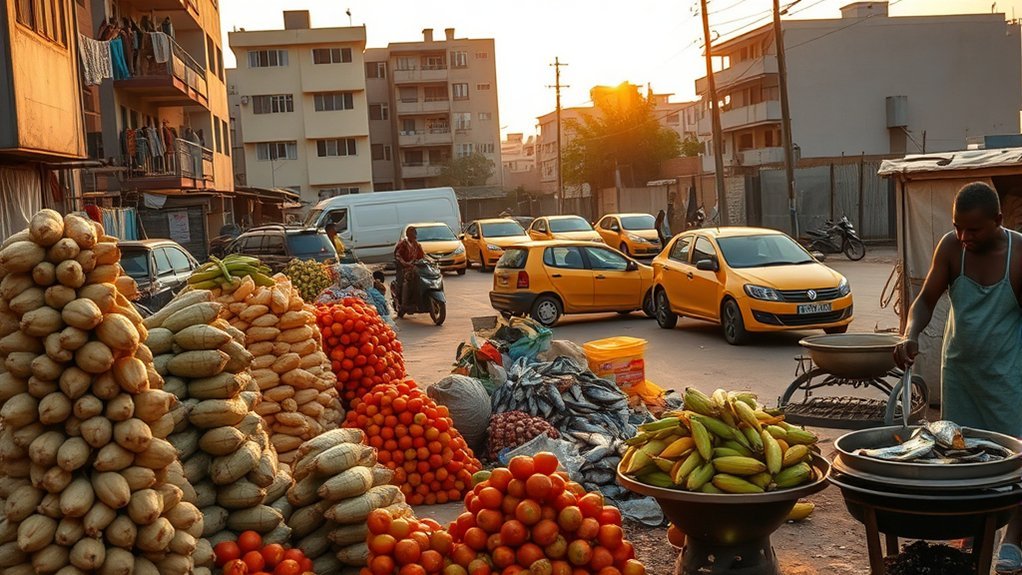
The cost of living in Ivory Coast (Côte d’Ivoire) in 2026 is about 670,000–860,000 CFA francs (~$1,150–$1,480) a month for a single person in Abidjan, including a one-bedroom apartment. A family of four should plan on roughly 2.26–3.19 million CFA (~$3,880–$5,485) before international school fees. These figures use the Central Bank of West African States (BCEAO) rate of about 582 CFA per US dollar on October 2, 2026. Rent is the biggest swing factor: a one-bedroom averages about 202,000 CFA outside central Abidjan and about 395,000 CFA in the center. Prices are lower than in the United States, but they are high compared with local wages. The minimum wage is 75,000 CFA (~$129) a month. Below you’ll find rents, food, utilities, transport, healthcare, taxes, visas, and sample budgets.
Quick Answer
- Single person in Abidjan: about 467,000 CFA (~$800) a month before rent; 670,000–860,000 CFA (~$1,150–$1,480) with a one-bedroom apartment.
- Family of four: about 1.68 million CFA (~$2,880) before rent; 2.26–3.19 million CFA (~$3,880–$5,485) with a three-bedroom apartment.
- Rent, one-bedroom: about 202,000 CFA (~$345) outside the center; about 395,000 CFA (~$680) in the center.
- Utilities: about 97,000 CFA (~$165) a month for an 85 m² apartment, mostly electricity for air conditioning; internet adds about 19,000 CFA (~$33).
- Transport: about 550 CFA per bus or shared-taxi ride, or about 25,000 CFA (~$43) a month.
- Minimum wage: 75,000 CFA (~$129) a month (SMIG).
- Currency: the West African CFA franc (XOF), fixed at 655.957 CFA per euro.

This daily devotional helps parents pray purposefully for their children through a full year of Scripture readings, reflections, and guided prayer prompts. Written to encourage faithful family discipleship, it offers practical, biblically grounded support for parents who want to shape their prayers around God's Word. A foreword by Sinclair B. Ferguson adds trusted theological insight and encouragement.

This hardcover cookbook offers fast, approachable recipes designed for busy days and low-energy nights. Caroline Chambers focuses on simple, flavorful meals that help you get dinner on the table without overthinking it. It's a practical pick for home cooks who want quick weeknight inspiration and minimal-fuss cooking.

SET is a fast-paced family card game that challenges players to spot patterns and make matches by color, shape, shading, or number. Easy to learn yet mentally engaging, it works well for solo play, group game nights, travel, and classroom fun. Its quick rounds and educational value make it a favorite for kids, teens, and adults alike.
Currency, Exchange Rate, and the Economy
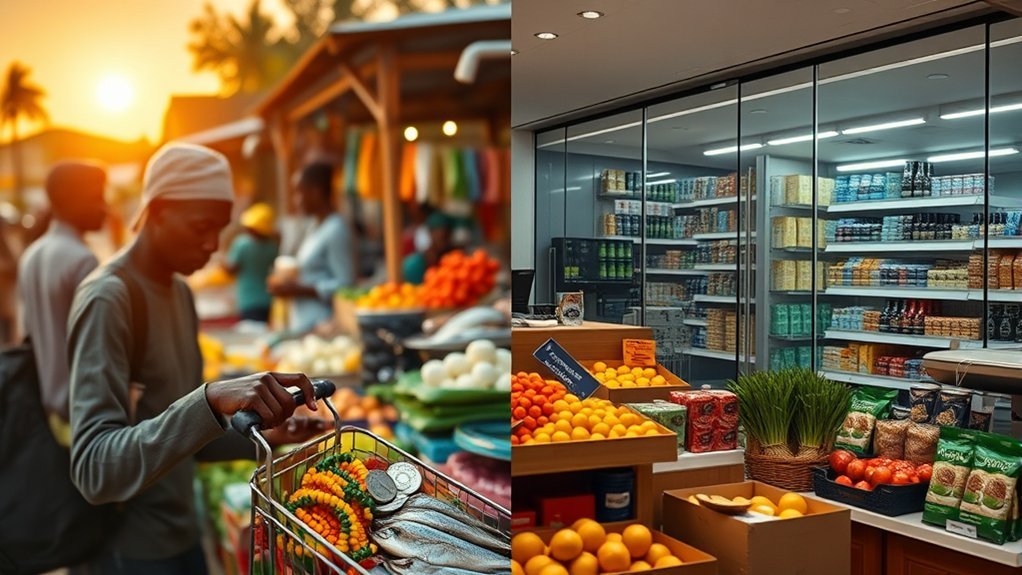
Côte d’Ivoire uses the West African CFA franc (XOF), shared with seven other countries in the West African Economic and Monetary Union. The CFA franc is pegged to the euro at a fixed 655.957 CFA per euro. It is not pegged to the dollar, so its dollar value moves whenever the euro moves against the dollar.
The exchange rate. On October 2, 2026, the BCEAO’s transfer rate table listed the US dollar at 578.75 CFA (buy) and 585.75 CFA (sell). This guide uses a midpoint of about 582 CFA per dollar. In late July 2026 the rate was closer to 577, so a 670,000 CFA budget now costs a dollar earner slightly less than it did in the summer.
A quick check: 100,000 CFA is about $172 at today’s rate, or about €152 at the fixed euro peg.
The economy. Côte d’Ivoire is one of the fastest-growing economies in Africa. According to the World Bank’s country overview, GDP grew about 6.3% in both 2024 and 2025, and inflation fell to about 0.1% in 2025. The World Bank expects growth of around 5.8% in 2026 if tensions in the Middle East keep energy prices high. Strong growth hasn’t closed the gap between Abidjan’s rents and what most local workers earn, which is why living costs feel very different depending on whether you’re paid locally or from abroad.
Cost of Living in Abidjan at a Glance
Abidjan is the country’s economic capital and its largest city, and it’s where nearly all reliable price data comes from. Yamoussoukro is the official political capital, but it is much smaller and has very little published price data. The table below uses crowd-sourced averages for Abidjan, updated October 2, 2026 from 280 price reports over the past year.
| Expense | Average (CFA) | Approx. USD |
|---|---|---|
| 1-bedroom, city center | 395,481 | $680 |
| 1-bedroom, outside center | 202,125 | $347 |
| 3-bedroom, city center | 1,514,444 | $2,602 |
| 3-bedroom, outside center | 580,444 | $997 |
| Basic utilities (85 m²) | 96,667 | $166 |
| Home internet (60+ Mbps) | 19,444 | $33 |
| Mobile plan with data | 14,286 | $25 |
| Monthly transit pass | 25,000 | $43 |
| Average net salary | 126,795 | $218 |
Data for other Ivorian cities, such as Bouaké, San-Pédro, Yamoussoukro, and Korhogo, is too thin to publish reliable averages. In general, rents are lower outside Abidjan, but so is access to international schools, private clinics, imported goods, and fast internet.
Housing and Rent in Abidjan

Rent is the largest cost for most newcomers. Averages hide a very wide range: central one-bedrooms have been reported anywhere from about 150,000 to 676,000 CFA, depending on the building, furnishing, backup power, security, and parking.
Popular Neighborhoods
Abidjan is a sprawling city split by the Ébrié Lagoon, and each commune has its own price level and feel:
- Plateau: the business district, with offices, banks, and ministries. It’s busy by day and quiet at night, with limited housing.
- Cocody (including Riviera and Deux Plateaux): the main residential choice for expats and diplomats. It has embassies, international schools, restaurants, and some of the city’s highest rents.
- Marcory and Zone 4: south of the lagoon, popular for restaurants, nightlife, and furnished apartments. Rents are high in the best streets.
- Bingerville: east of Cocody, quieter and greener, with lower rents but longer commutes.
- Yopougon, Abobo, and Koumassi: large, densely populated communes where most local families live. Rents are much lower, but infrastructure and services are more basic.
No district is uniformly safe or unsafe. Visit the exact street and building at different times of day before you sign.
Deposits and Advance Rent
Up-front payments can strain a budget more than the monthly rent. Côte d’Ivoire’s 2019 Construction and Housing Code limits what a landlord can demand. According to the government’s public-service guide to residential leases, a landlord may not demand more than two months of rent as advance payment and deposit (caution), and breaking the rule can bring a 200,000 CFA fine. Landlords may review rent every three years, and a tenant can’t be evicted for non-payment without a court order.
Some landlords and agents still ask for more, so read the lease carefully and keep receipts. To be safe, budget for up to four months of rent in move-in cash, plus any agency fee. For a central one-bedroom at about 395,000 CFA, that’s roughly 1.58 million CFA (~$2,715). For a one-bedroom outside the center at about 202,000 CFA, it’s about 808,500 CFA (~$1,390).
Never send a deposit based only on photos or messages. Visit the property, confirm the landlord or agent is genuine, and get a written lease and receipts for every payment.
What to Check Before You Rent
- Power and water: ask how often outages happen and whether the building has a generator or water tank.
- Air conditioning: check the age and number of units, since cooling drives most of the electricity bill.
- Flooding: heavy rains, especially from May to July, cause floods and landslides in parts of Abidjan. Ask neighbors whether the street floods and whether ground-floor units have taken water.
- Security: look at guards, gates, lighting, and locks.
- Commute: drive or ride the route at rush hour. Traffic on Abidjan’s bridges can turn a short trip into an hour or more.
Food: Groceries and Dining Out
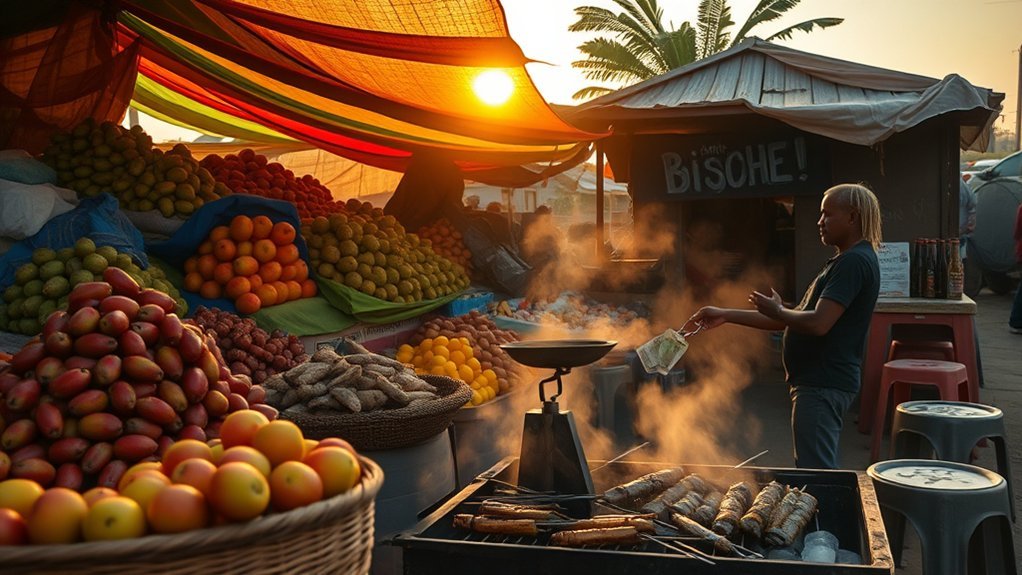
Food is cheap if you eat local staples and expensive if you buy imported brands. Local produce, rice, plantains, cassava (attiéké), fish, and chicken are affordable at markets. Imported cheese, wine, cereals, and dairy can cost as much as in Europe.
Average Abidjan prices in October 2026, based on crowd-sourced data:
| Item | Typical Cost (CFA) | Approx. USD |
|---|---|---|
| Milk (1 liter) | 1,199 | $2.06 |
| White bread (1 lb loaf) | 278 | $0.48 |
| White rice (1 lb) | 309 | $0.53 |
| Eggs (12) | 1,312 | $2.25 |
| Chicken fillets (1 lb) | 1,550 | $2.66 |
| Beef (1 lb) | 1,546 | $2.66 |
| Tomatoes (1 lb) | 624 | $1.07 |
| Local cheese (1 lb) | 6,804 | $11.69 |
| Mid-range bottle of wine | 3,000 | $5.15 |
Eating out is where Abidjan can be very cheap or very expensive:
- Meal at a maquis or inexpensive restaurant: about 1,500 CFA (~$2.60)
- Three-course dinner for two at a mid-range restaurant: about 40,000 CFA (~$69)
- Fast-food combo meal: about 6,000 CFA (~$10)
- Cappuccino: about 1,100 CFA (~$1.90)
- Local draft beer (pint): about 600 CFA (~$1.05)
Maquis, the open-air restaurants serving grilled fish, chicken, and attiéké, are the best value. Restaurants aimed at expats in Zone 4, Cocody, and Plateau charge European-level prices.
Utilities, Internet, and Phone
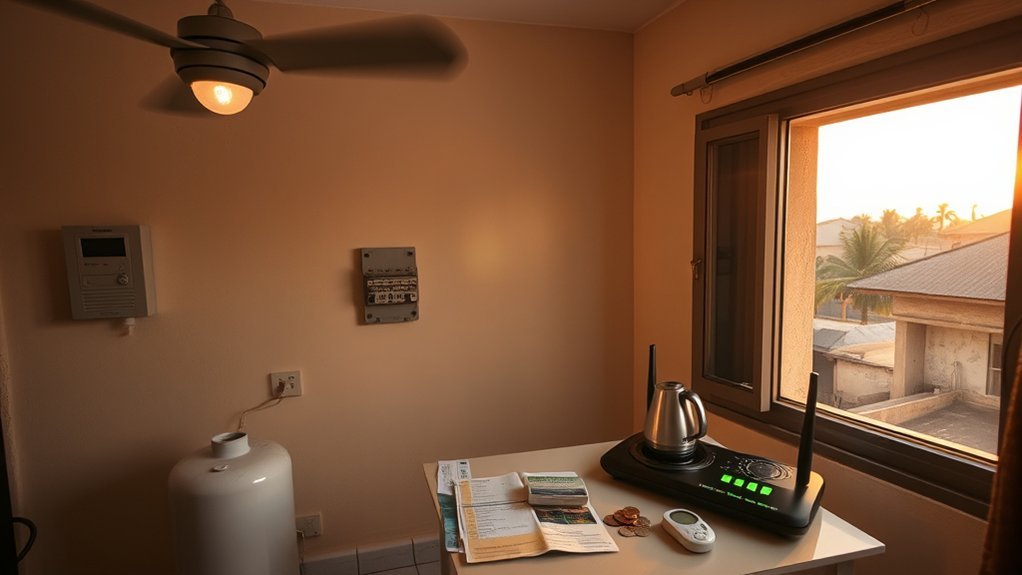
Basic utilities (electricity, water, and garbage) for an 85 m² apartment average about 97,000 CFA (~$165) a month in Abidjan. Reported bills range widely, from about 50,000 to 270,000 CFA, because air conditioning is the single biggest factor. A household that cools several rooms all day will pay near the top of that range.
- Electricity: supplied by CIE, mostly on prepaid meters. Ask whether the unit has its own meter and how much the previous tenant paid.
- Water: supplied by SODECI and often billed separately. Some buildings include water in service charges.
- Home internet (fiber, 60+ Mbps): about 19,000 CFA (~$33) a month on average, with plans from about 15,000 to 35,000 CFA.
- Mobile plan with data: about 14,000 CFA (~$25) a month. Orange, MTN, and Moov are the main networks.
If you work online, keep a mobile-data backup. Fiber service can drop during storms or power cuts.
Transportation and Getting Around
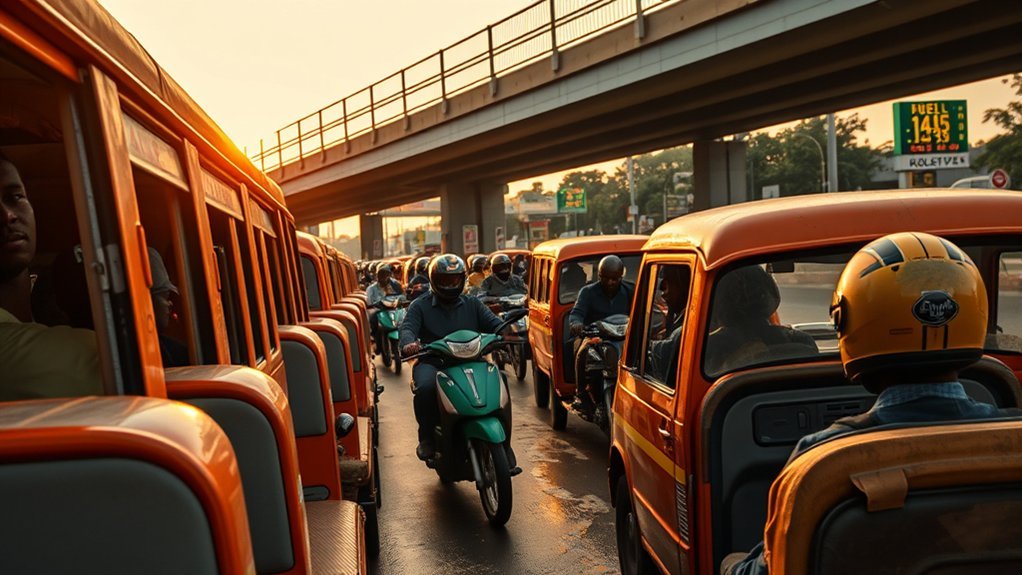
Getting around Abidjan is cheap but slow. Traffic across the lagoon bridges is heavy at rush hour.
- SOTRA buses, water buses, gbakas, and woro-woros: city buses, lagoon ferries, minibuses, and shared taxis. A ride averages about 550 CFA (~$0.95). A regular commuter spends about 25,000 CFA (~$43) a month.
- Taxis and ride-hailing: metered orange taxis and ride-hailing apps are widely used. Crowd-sourced data puts the starting fare around 1,000 CFA and about 1,600 CFA per mile. Agree on the fare or check the app estimate before you leave.
- Gasoline: about 857 CFA per liter (~$5.57 per gallon), based on crowd-sourced reports. Pump prices are set by the government and reviewed regularly.
- Cars: imported cars are expensive, and insurance, parking, and repairs add up. Many expats use a driver instead of driving themselves.
A daily taxi commute can easily cost more than 100,000 CFA a month, so where you live relative to work matters a lot.
Healthcare and Insurance Costs
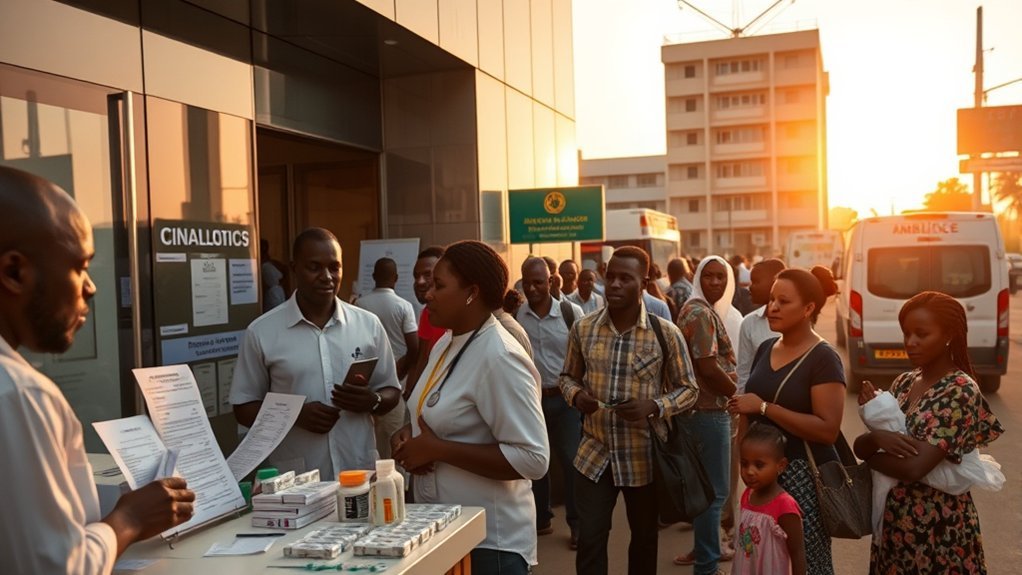
Healthcare costs depend far more on your insurance than on the price of a routine visit.
- Public coverage (CMU): Côte d’Ivoire’s Universal Health Coverage, run by the national health insurance fund (CNAM), is meant to cover residents for basic care at a low monthly contribution. It doesn’t replace private insurance for expats, since coverage, waiting times, and facility quality vary.
- Private clinics: Abidjan has private clinics and hospitals with good general care, mostly in Cocody, Plateau, and Marcory. Some require payment before treatment or admission.
- International insurance: most expats carry an international health plan that includes medical evacuation, because complex cases are often treated abroad.
The US State Department notes that medical care outside Abidjan is limited, medicine shortages can occur, and many providers expect payment up front. Medicare does not cover care abroad.
Also budget for vaccinations, malaria prevention, and prescriptions. Proof of yellow fever vaccination is required to enter the country.
Schools and Childcare
- Private preschool or kindergarten: about 212,000 CFA (~$365) a month, full day, with reported fees from about 150,000 to 300,000 CFA.
- International primary school: about 2.72 million CFA (~$4,680) a year per child on average. Reported fees range from about 800,000 to 8 million CFA, and the top schools in Cocody charge far more than the average.
- Public schools: taught in French, with large class sizes. Most expat families choose private or international schools.
For a family with two children in an average international school, tuition alone adds about 454,000 CFA (~$780) a month. Registration fees, uniforms, books, transport, and meals are usually extra.
Salaries and the Minimum Wage

The gap between local pay and Abidjan rents is the most important fact about living costs in Côte d’Ivoire.
- Minimum wage (SMIG): 75,000 CFA (~$129) a month. As noted in an International Labour Organization brief, it rose from 60,000 CFA in January 2023 under Decree No. 2022-986.
- Average net salary in Abidjan: about 127,000 CFA (~$218) a month, according to crowd-sourced averages. This is a rough estimate, not an official national figure.
At those wages, a one-bedroom outside the center takes more than a full average salary. This is why most local workers share housing, live with family, or rent in lower-cost communes like Yopougon and Abobo.
For expats: international employers often add housing, school, transport, and health benefits to the base salary. When you compare an offer, check whether it’s quoted gross or net, in CFA or euros, and which costs the employer pays directly.

This hardcover edition by Eric Metaxas offers a compelling look at the origins of the United States during the Colonial Period. It blends historical narrative with engaging storytelling, making it appealing for readers interested in American history, early nation-building, and the ideas that shaped the country. A strong choice for history enthusiasts, students, and anyone exploring the foundations of the nation.

Come Eat offers 100 approachable recipes designed to make everyday cooking more enjoyable, nourishing, and sustainable. With a focus on flavorful meals and practical preparation, this hardcover cookbook is ideal for home cooks looking for inspiration for salads, sides, and main dishes. Author Melissa Ben-Ishay shares recipes that encourage consistent, feel-good eating without sacrificing taste.

This hardcover book celebrates the art of gathering with inspiring table settings, thoughtful traditions, and practical ideas for hosting memorable meals. Written by Shea McGee, it offers beautiful design inspiration alongside approachable guidance for creating warm, welcoming spaces for family and friends. It's a charming resource for anyone who loves entertaining, home styling, and making everyday moments feel special.
Taxes: VAT and Income Tax
- VAT (TVA): the standard rate is 18%. A reduced 9% rate applies to some items, such as milk, infant food, and certain rice and pasta.
- Tax on salaries: since a 2023 reform, salaries are taxed under a single progressive scale. Monthly income up to 75,000 CFA is taxed at 0%, then 16% up to 240,000 CFA, 21% up to 800,000 CFA, 24% up to 2.4 million CFA, 28% up to 8 million CFA, and 32% above that, as summarized in PwC’s Côte d’Ivoire tax summary.
- Tax residency: residents are taxed on worldwide income.
If you’re paid by a foreign employer while living in Abidjan, get advice from a local accountant on whether you need to register and file in Côte d’Ivoire.
Visas and Residence
Most non-ECOWAS visitors, including US, UK, and Canadian citizens, need a visa. Côte d’Ivoire uses an e-visa system that must be approved before you fly. According to the official SNEDAI e-visa page, a three-month multiple-entry visa costs 73 euros (about 47,900 CFA, or ~$82), including bank fees. You also need proof of yellow fever vaccination, at least one blank passport page, and a passport valid for six months beyond your arrival date.
To live in Côte d’Ivoire long term, foreigners need a resident card (carte de résident), issued by ONECI. The government’s public-service portal lists the fee as 300,000 CFA (~$515) for most nationalities and 150,000 CFA for French nationals. Work permits are arranged through the employer. Rules and fees change, so confirm them before you travel.
Safety and Practical Risks
The US State Department’s travel advisory, last issued February 18, 2026, rates Côte d’Ivoire Level 2: Exercise Increased Caution, citing crime, terrorism, unrest, health risks, and piracy in nearby waters. It advises against travel to the northern border region, where armed groups linked to al-Qaeda operate near Burkina Faso and Mali.
Abidjan itself is the country’s most developed city, and many expats live there comfortably. Practical steps:
- Avoid political rallies and large demonstrations.
- Don’t display expensive phones, watches, or large amounts of cash.
- Use registered taxis or ride-hailing apps at night.
- Choose housing with guards, good lighting, and secure parking.
- Keep copies of your passport, visa, and insurance documents.
Security costs, such as a guarded building or a driver, can add to your budget, so factor them in when you compare apartments.
One-Time Setup Costs
Budget for these before your first month:
- E-visa: 73 euros (~$82) for three months, multiple entry.
- Resident card: 300,000 CFA (~$515) for most nationalities.
- Advance rent and deposit: legally capped at two months of rent, but budget for up to four months to be safe, or roughly 808,500–1.58 million CFA (~$1,390–$2,715) for a one-bedroom.
- Temporary housing: a few weeks in a furnished apartment or hotel while you search.
- Furnishing and appliances: many long-term rentals are unfurnished. Air conditioners, a fridge, and a water heater are the big items.
- Health insurance: an international plan with evacuation cover should start before you arrive.
- Vaccinations: yellow fever is mandatory, and doctors usually recommend others.
Sample Monthly Budgets
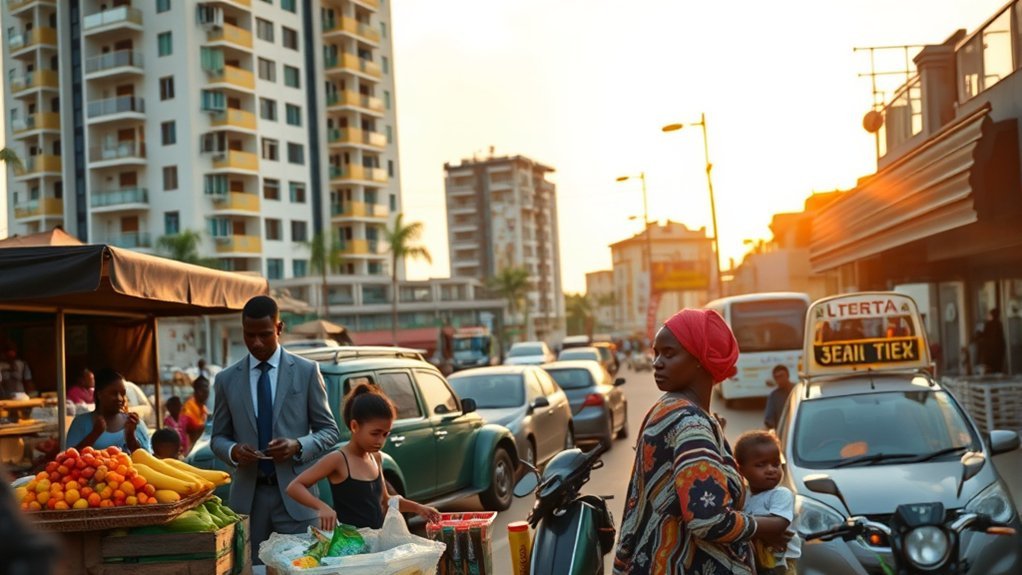
These budgets combine crowd-sourced estimates of everyday spending (food, transport, utilities, and other living costs) with average Abidjan rents.
| Household | Before Rent (CFA) | Rent (CFA) | Total (CFA) | Total (USD) |
|---|---|---|---|---|
| Single, 1-bed outside center | 466,994 | 202,125 | about 669,000 | ~$1,150 |
| Single, 1-bed city center | 466,994 | 395,481 | about 862,000 | ~$1,480 |
| Family of four, 3-bed outside center | 1,677,483 | 580,444 | about 2,258,000 | ~$3,880 |
| Family of four, 3-bed city center | 1,677,483 | 1,514,444 | about 3,192,000 | ~$5,485 |
These totals don’t include international school fees, international health insurance, a car, or flights home. Two children in an average international school add about 454,000 CFA (~$780) a month, which pushes the family budget to roughly 2.71–3.65 million CFA (~$4,660–$6,265).
A single person who lives like a local, rents a modest room or studio in a lower-cost commune, eats at maquis and markets, and uses shared taxis can spend far less than these estimates. A household with a furnished apartment in Cocody, imported groceries, a driver, and private schools can spend far more.
Money-Saving Tips
- Live near work. Saving an hour of traffic each day is worth more than a slightly cheaper apartment across the lagoon.
- Buy local. Rice, plantains, fish, fruit, and attiéké from markets cost a fraction of imported supermarket goods.
- Eat at maquis. A full meal costs about 1,500 CFA.
- Manage the air conditioning. Cooling only the bedroom at night can cut the power bill sharply.
- Negotiate the lease. Know the legal limits on advance rent and deposits, and ask for everything in writing.
- Watch the euro-dollar rate. The CFA franc moves with the euro, so dollar earners gain when the dollar strengthens.
How Ivory Coast Compares With Nearby Countries
Abidjan is one of the more expensive cities in West Africa, especially for expat housing. To the east, the cost of living in Ghana is a useful comparison for an English-speaking alternative with a similar coastal climate. To the west, our Monrovia budget guide for Liberia and the living expenses in Guinea show lower local prices but thinner services. To the north, compare what it costs to live in Burkina Faso and monthly costs in Mali, both of which also use the CFA franc but face more serious security problems.
Frequently Asked Questions
How much money do you need to live in Ivory Coast per month?
A single person in Abidjan needs about 670,000–860,000 CFA (~$1,150–$1,480) a month, including a one-bedroom apartment. A family of four needs about 2.26–3.19 million CFA (~$3,880–$5,485) before international school fees.
How much is rent in Abidjan?
A one-bedroom apartment averages about 395,000 CFA (~$680) a month in the city center and about 202,000 CFA (~$345) outside it. A three-bedroom averages about 1.51 million CFA (~$2,600) in the center and about 580,000 CFA (~$1,000) outside it.
What is the minimum wage in Ivory Coast?
The minimum wage (SMIG) is 75,000 CFA (~$129) a month. It rose from 60,000 CFA in January 2023. Crowd-sourced data puts the average net salary in Abidjan at about 127,000 CFA (~$218) a month.
What currency does Ivory Coast use?
Côte d’Ivoire uses the West African CFA franc (XOF), which is fixed at 655.957 CFA per euro. In early October 2026, one US dollar was worth about 582 CFA.
How much can a landlord ask up front in Abidjan?
Under the 2019 Construction and Housing Code, a landlord may not demand more than two months of rent as advance payment and deposit. Breaking the rule can bring a 200,000 CFA fine. Some landlords ask for more, so get a written lease and receipts.
Is Ivory Coast safe for expats?
The US State Department rates Côte d’Ivoire Level 2: Exercise Increased Caution and advises against travel to the northern border region. Many expats live comfortably in Abidjan by choosing secure housing, avoiding demonstrations, and using registered taxis at night.
Conclusion
Côte d’Ivoire costs less than the United States, but Abidjan isn’t cheap compared with local incomes. A single person should budget about 670,000–860,000 CFA a month with rent, and a family of four about 2.26–3.19 million CFA before school fees. Housing, air conditioning, private healthcare, and international schools drive most of the difference. Plan for up to four months of rent in move-in cash, visit apartments in person, and check the euro-dollar rate before you set your budget.
Sources
- BCEAO – exchange rates for transfers, October 2, 2026
- World Bank – Côte d’Ivoire overview
- Service Public Côte d’Ivoire – residential leases
- Service Public Côte d’Ivoire – resident card
- SNEDAI – Côte d’Ivoire e-visa
- International Labour Organization – social dialogue brief (minimum wage)
- PwC – Côte d’Ivoire individual income tax
- PwC – Côte d’Ivoire VAT and other taxes
- US Department of State – Côte d’Ivoire travel advisory
- Numbeo – Abidjan (crowd-sourced averages, updated October 2, 2026)

The Vornado 630 uses signature Vortex air circulation to move air throughout the room for more effective cooling and improved comfort. With three-speed manual controls and an adjustable tilt head, it lets you direct airflow and fine-tune performance for bedrooms, living rooms, or home offices. Built for whole-room circulation with efficient, high-velocity airflow, it also includes support backed by a multi-year replacement promise.

This compact Bible study guide helps readers explore Scripture with clarity and confidence. Written by Matt Whitman, it offers a fast, approachable companion for understanding key themes, context, and practical insights from the Bible. Its paperback format makes it easy to carry, reference, and use for personal study or group discussion.

Experience J.R.R. Tolkien's legendary Middle-earth saga in a compact hardcover boxed set that brings together The Hobbit and The Lord of the Rings. This deluxe collection is ideal for readers who want a portable, collectible edition of the classic fantasy adventures, making it perfect for gifting, re-reading, and building a treasured library. The boxed presentation adds display appeal while the hardcovers offer lasting durability for years of enjoyment.