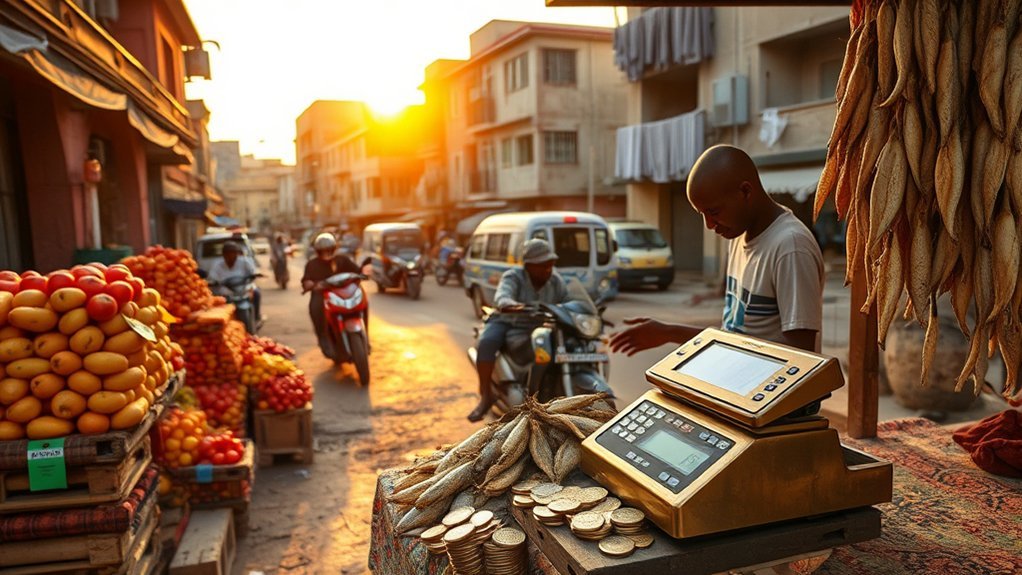
The cost of living in Benin in 2026 runs about XOF 280,000–330,000 (~$475–$560) a month for a single person living simply, and about XOF 630,000–780,000 (~$1,080–$1,335) for a comfortable single life in a furnished apartment in Cotonou. A couple renting a furnished two-bedroom near the beach should plan on roughly XOF 1.1–1.4 million (~$1,850–$2,450). These figures use an exchange rate of about XOF 584 per US dollar (October 2, 2026). Rent is the biggest swing factor. A local-style one-bedroom in Akpakpa or Abomey-Calavi can cost around XOF 100,000 (~$170), while furnished apartments in Fidjrossè and Haie Vive list for XOF 400,000 to over 2 million. This guide covers the Republic of Benin in West Africa, not Benin City in Nigeria.
Quick Answer
- Single person: XOF 280,000–330,000 (~$475–$560) on a lean, local-style budget; XOF 630,000–780,000 (~$1,080–$1,335) for a comfortable one in Cotonou.
- Couple: XOF 1.1–1.4 million (~$1,850–$2,450) a month in a furnished two-bedroom.
- Family of four: about XOF 1.1–1.2 million (~$1,875–$2,065) before school fees; about XOF 1.64–1.75 million (~$2,720–$2,905) with two children in international school.
- Rent, one-bedroom: crowd-sourced averages for Cotonou are about XOF 98,000–105,000 (~$167–$180) unfurnished. Furnished one-bedrooms and studios in expat areas run XOF 200,000–500,000 (~$340–$855).
- Fuel: XOF 725 per liter of gasoline since May 1, 2026.
- Mobile data: the cheapest unlimited monthly plan now costs XOF 15,100 (~$26).
- Minimum wage: XOF 52,000 (~$89) a month, unchanged since January 2023.
Currency, Inflation, and Minimum Wage in 2026
Three numbers shape what Benin costs you this year.
The currency. Benin uses the West African CFA franc (XOF), which is pegged to the euro at a fixed rate of 655.957 francs per euro. That means the franc moves against the dollar only when the euro does. The European Central Bank’s euro reference rate was $1.1225 on October 2, 2026, which works out to about XOF 584 per US dollar. If you earn in euros, your budget doesn’t move at all.
Inflation. Prices in Benin are flat. The national statistics institute, INStaD, reported that consumer prices in July 2026 were unchanged from a year earlier, and the 12-month average inflation rate was 0.5%, according to its July 2026 consumer price bulletin. Food prices were 2.8% lower than a year before, while transport was up 11.3% because of the fuel price increase in May. In August, prices fell another 0.3% from July.
The minimum wage. The SMIG (salaire minimum interprofessionnel garanti) is XOF 52,000 a month. The government raised it by 30% in a decision announced in December 2022, effective January 2023, and we found no newer increase. That equals about $89 a month.
At about XOF 584 per dollar, a $1,000 monthly income equals roughly XOF 584,000, more than 11 times the minimum wage.
Cost of Living by City
Cotonou is the economic capital and the most expensive city. Porto-Novo is the official capital, about 40 km east. Abomey-Calavi sits just north of Cotonou and is home to the main university campus. Prices drop as you move north to Bohicon, Abomey, and Parakou. The table uses 2026 relocation-guide estimates for a typical one- or two-bedroom rental and a full monthly budget. Treat them as rough guides, since data outside Cotonou is thin.
| City | Typical Monthly Rent | Monthly Budget (Single) | Notes |
|---|---|---|---|
| Cotonou | XOF 175,000–350,000 (~$300–$600) | ~$1,000–$1,800 | port, airport, most jobs and services |
| Abomey-Calavi | from XOF 100,000 (~$171), new unfurnished 1-bed | below Cotonou | fast-growing suburb, university town |
| Porto-Novo | XOF 117,000–205,000 (~$200–$350) | ~$600–$900 | official capital, quieter |
| Abomey | XOF 88,000–146,000 (~$150–$250) | ~$500–$700 | historic royal city, 150 km inland |
| Bohicon | XOF 70,000–117,000 (~$120–$200) | ~$450–$600 | trading hub next to Abomey |
| Parakou | XOF 58,000–105,000 (~$100–$180) | ~$400–$550 | largest northern city, lowest rents |
Housing: Rent in Cotonou Neighborhoods
Rents by Neighborhood
Cotonou has two rental markets. Local families rent unfurnished “chambre salon” units (a bedroom and a living room) or small apartments. Foreigners and diaspora returnees tend to rent furnished apartments in the 12th arrondissement, which includes Haie Vive, Cocotiers, Cadjèhoun, and Fidjrossè. Crowd-sourced averages updated October 2, 2026 put an unfurnished one-bedroom at about XOF 105,000 (~$180) in the center and XOF 97,500 (~$167) outside it. A three-bedroom averages XOF 350,000 (~$599) in the center and XOF 240,000 (~$411) outside. These come from a small number of reports, so use them as a floor.
Furnished listings from mid-2025 to October 2026 show what the expat market charges:
| Area | Unit Type | Monthly Rent (XOF) | Approx. USD |
|---|---|---|---|
| Haie Vive | new furnished 3-bedroom apartment | 2,000,000 | $3,425 |
| Haie Vive | 5-bedroom villa, expat standard | 1,500,000–3,500,000 | $2,565–$5,990 |
| Fidjrossè | furnished studio | 200,000–350,000 | $340–$600 |
| Fidjrossè | furnished 2-bedroom (“3 pièces”) | 400,000–750,000 | $685–$1,285 |
| Fidjrossè | furnished 3-bedroom (“4 pièces”) | 650,000–1,000,000 | $1,110–$1,710 |
| Fidjrossè | 4-bedroom villa | 450,000–1,200,000 | $770–$2,055 |
| Cadjèhoun | studio, 35–55 m² | 150,000–280,000 | $255–$480 |
| Houéyiho | furnished 1-bedroom (“2 pièces”) | 220,000 | $375 |
| Akpakpa | one-bedroom | 88,000–128,000 | $150–$220 |
| Abomey-Calavi | new unfurnished 1-bedroom | 100,000 | $171 |
Sources: expat.com listings (checked October 2026), a June 2026 Cotonou real-estate market review by Kolonell for the villa and Cadjèhoun ranges, and an April 2026 relocation guide for Akpakpa. Haie Vive is the priciest area. Akpakpa, east of the lagoon, is busier and cheaper.
Short stays cost far more. Furnished apartments in Cotonou also list at XOF 15,000–35,000 (~$26–$60) per night, which adds up to well over a monthly lease.
Deposits and the 3-Month Rule
Benin’s rental law, Law No. 2018-12 of July 2, 2018, caps the security deposit (caution) at three months of rent. On July 23, 2026, the government spokesman publicly restated that limit in response to complaints about rising rents. He said landlords may not demand six months in advance, extra guarantees for water and electricity, or “painting deposits,” and that tenants can report violations to the police.
In practice:
- Plan for up to three months of rent upfront, plus the first month, before you get the keys.
- Get a written lease and a receipt for every payment.
- Ask whether water and electricity meters are in your name or shared with the landlord. Shared meters often lead to disputes.
Utilities, Internet, and Phone
Basic utilities (electricity, water, and garbage) for an 85 m² apartment average about XOF 86,700 (~$148) a month in Cotonou, according to crowd-sourced data. Air conditioning drives most of that. Without it, bills are much lower.
Electricity (SBEE). SBEE, the national power distributor, bills by consumption tranche. The current household grid was set by Decree No. 2020-328 and took effect in January 2021. Daabaaru reported the rates as follows. We found no newer published grid.
| Customer Type / Tranche | Rate per kWh (XOF) | Notes |
|---|---|---|
| Subsidized, first 20 kWh | 86 | social tranche (was 78) |
| Subsidized, 20–50 kWh | 109 | small households |
| Subsidized, higher tranche | 111 | as reported |
| Non-subsidized, 50–250 kWh | 125 | typical apartment |
| Non-subsidized, above 250 kWh | 148 | homes with air conditioning |
On top of the energy charge, bills add a fixed monthly charge, 18% VAT, a rural electrification levy of XOF 3 per kWh, and an electricity tax of XOF 2 per kWh. Under that grid, a household using 60 kWh paid XOF 10,330 (~$18) a month. A home running an air conditioner for part of the day can easily use 300 kWh or more, which at the 125–148 rates plus taxes comes to roughly XOF 45,000 (~$77) or more.
According to Benin’s national energy compact with the World Bank, about 42.6% of households had electricity access in 2024, with a target of 70% by 2030.
Water (SONEB). SONEB supplies piped water in towns and cities. Many households also buy bottled or sachet water for drinking.
Cooking gas. Since May 1, 2026, a 12.5 kg gas bottle refill costs XOF 10,000 (~$17), a 6 kg bottle XOF 4,500 (~$7.70), and the small 3 kg bottle XOF 2,000, according to the government’s May 2026 petroleum price decision.
Internet and Mobile Plans
Benin has three mobile operators: MTN Bénin, Moov Africa Bénin, and Celtiis, the state-owned operator. The regulator, ARCEP Bénin, sets a floor and ceiling on data prices per megabyte. In August 2026, MTN and Moov dropped their XOF 5,000 and XOF 10,000 unlimited monthly plans, which caused a public outcry. Home fiber prices fell in 2025 after Canal Box entered the market, as Ecofin reported.
| Service | Monthly Price (XOF) | Approx. USD | Date |
|---|---|---|---|
| Unlimited mobile data, MTN / Moov (entry tier) | 15,100 | $26 | Aug 2026 |
| Unlimited mobile data, higher tiers | up to 30,000+ | $51+ | Aug 2026 |
| Canal Box fiber, 50 Mbps | 15,000 | $26 | Apr 2025 |
| Canal Box fiber, 200 Mbps | 30,000 | $51 | Apr 2025 |
| Celtiis fiber, 20 Mbps / 50 Mbps | 14,900 / 24,900 | $26 / $43 | Apr 2025 |
| Fiber installation (Canal Box, Celtiis) | 10,000 one-time | $17 | Apr 2025 |
Crowd-sourced averages put home broadband at about XOF 28,300 (~$48) and a mobile plan at about XOF 20,000 (~$34) a month in Cotonou. Mobile money is widely used to pay bills, rent, and taxis.
Food: Groceries and Dining Out
Local staples are cheap, and prices have been falling. INStaD’s market tracking for August 2026, reported by La Nouvelle Tribune, showed maize down 25% and local rice down 10% from a year earlier. Imported goods, dairy, and cheese cost much more.
| Item | Typical Cost (XOF) | Approx. USD | Source |
|---|---|---|---|
| Local rice (1 kg) | 485 | $0.83 | INStaD, Aug 2026 |
| Imported rice (1 kg) | 521 | $0.89 | INStaD, Aug 2026 |
| Maize (1 kg) | 138 | $0.24 | INStaD, Aug 2026 |
| Fresh tomatoes (1 kg) | 494 | $0.85 | INStaD, Aug 2026 |
| Yam for pounding (1 kg) | 506 | $0.87 | INStaD, Aug 2026 |
| Milk (1 liter) | 1,767 | $3.02 | crowd-sourced, Oct 2026 |
| Bread (1 lb loaf) | 646 | $1.11 | crowd-sourced, Oct 2026 |
| Eggs (12) | 1,600 | $2.74 | crowd-sourced, Oct 2026 |
| Chicken (1 lb) | 1,429 | $2.45 | crowd-sourced, Oct 2026 |
| Beef (1 lb) | 1,376 | $2.35 | crowd-sourced, Oct 2026 |
| Cheese (1 lb) | 2,495 | $4.27 | crowd-sourced, Oct 2026 |
| Domestic beer (0.5 liter, store) | 700 | $1.20 | crowd-sourced, Oct 2026 |
A single person who cooks mostly with market produce can eat well on about XOF 80,000 (~$137) a month. Shopping at supermarkets for imported cheese, cereal, wine, and European brands can push that to XOF 120,000 (~$205) or more.
Eating out is cheap if you eat local. Street food and small “maquis” restaurants cost a fraction of restaurant prices. Crowd-sourced averages for Cotonou:
- Meal at an inexpensive restaurant: about XOF 3,000 (~$5.10)
- Three-course dinner for two at a mid-range restaurant: about XOF 21,000 (~$36)
- Fast-food combo meal: about XOF 5,500 (~$9.40)
- Cappuccino: about XOF 3,000 (~$5.10)
- Soft drink: about XOF 600 (~$1.00)
Coffee-shop drinks and imported food are where Cotonou feels expensive. A cappuccino costs as much as a full restaurant meal.
Transportation and Getting Around
Cotonou has no metro. Most people get around by zemidjan (also called “zem”), the yellow-shirted moto-taxis. Ride-hailing apps such as Gozem offer moto and car rides with the fare shown before you book. Fuel prices rose by XOF 30 per liter on May 1, 2026, which the government linked to Middle East tensions.
| Item | Cost (XOF) | Approx. USD | Notes |
|---|---|---|---|
| Zemidjan, short ride | 200–500 | $0.35–$0.85 | negotiate before you ride |
| Shared taxi, per seat | 300–1,000 | $0.50–$1.70 | fixed routes |
| Private taxi | 2,000–10,000 | $3.40–$17 | depends on distance |
| Intercity bus | 2,000–8,000 | $3.40–$13.70 | e.g., Cotonou to Parakou |
| Gasoline (1 liter) | 725 | $1.24 (~$4.70/gallon) | official pump price since May 1, 2026 |
| Diesel (1 liter) | 750 | $1.28 | official pump price since May 1, 2026 |
| New Toyota Corolla | about 14,000,000 | $23,960 | crowd-sourced, Oct 2026 |
Zemidjan, taxi, and bus ranges come from a January 2026 Benin transport guide by Le Mag Voyage, published before the May fuel increase, so expect fares at the upper end now.
A commuter taking two zem rides each workday spends roughly XOF 10,000–20,000 (~$17–$34) a month. Road accidents involving moto-taxis are common, so many foreigners prefer app-booked car rides or a car with a driver for longer trips.
Healthcare and Insurance Costs
Public care is cheap but stretched. The UK government’s travel health advice for Benin (updated December 2025) calls medical facilities poor, especially in rural areas, and advises insurance that covers treatment and repatriation. Most foreigners use private clinics in Cotonou, such as Clinique Mahouna, Polyclinique Atinkanmey, and the medical centers around Haie Vive. The main public referral hospital is CNHU-HKM in Cadjèhoun.
Typical prices reported by a July 2026 Cotonou healthcare guide (iCotonou):
| Service | Public (CNHU) | Private Clinic |
|---|---|---|
| General consultation | XOF 1,000–3,000 (~$2–$5) | XOF 10,000–25,000 (~$17–$43) |
| Specialist consultation | XOF 3,000–6,000 (~$5–$10) | XOF 20,000–40,000 (~$34–$68) |
| CT scan | XOF 40,000–60,000 (~$68–$103) | XOF 60,000–100,000 (~$103–$171) |
| Standard childbirth | low, regulated rate | XOF 150,000–400,000 (~$255–$685) |
ARCH health insurance. ARCH (Assurance pour le Renforcement du Capital Humain) is the government’s flagship social protection program. Its health insurance component started as a pilot in 2019 and has been rolled out commune by commune. The poorest households, identified through a national social register, get care at partner hospitals without paying, as the government explained when it expanded to Kandi, Banikoara, Tchaourou, and Ouessè in 2022. The government is also working on a broader mandatory health insurance scheme, with updates published as recently as December 2025.
What foreigners should budget. ARCH is designed for Beninese households, not expats. Plan on international health insurance with medical evacuation, plus cash for private clinic visits and pharmacy costs. Budget for routine costs such as malaria tests and medicines, which are common in a tropical climate.
Schools and Childcare
- International primary school: about XOF 3,250,000 (~$5,560) a year per child, based on crowd-sourced averages. Registration fees are extra.
- Private preschool or kindergarten: about XOF 76,700 (~$131) a month, full day.
- Public schools: classes are in French. Public primary school is free.
For a family with two children in international school, tuition alone adds about XOF 540,000 (~$925) a month.
Taxes: VAT, Income Tax, and Social Security
- VAT (TVA): 18%, included in shelf prices and added to utility bills.
- Salary tax (ITS): Benin taxes monthly salaries on a progressive scale under Article 125 of the General Tax Code. The bands are 0% up to XOF 60,000, 10% from XOF 60,001 to 150,000, 15% from XOF 150,001 to 250,000, 19% from XOF 250,001 to 500,000, and 30% above XOF 500,000. Small broadcasting levies are added in March (XOF 1,000) and June (XOF 3,000).
- Social security (CNSS): employees pay 3.6% of salary toward pensions. Employers pay 6.4% for pensions, 9% for family benefits, and 1–4% for work-injury coverage, according to France’s social security liaison body, CLEISS.
Remote workers paid from abroad should check their home country’s tax rules and get local advice if they stay long term.
Visas and Residence
Most visitors apply online through Benin’s official e-visa portal. The fees published on evisa.bj are:
- 30 days, single entry: €50 (XOF 32,798, ~$56)
- 30 days, multiple entries: €75 (XOF 49,197, ~$84)
- 90 days, multiple entries: €100 (XOF 65,596, ~$112)
Applying through an embassy costs €10 more for each type. Use only the official .bj portal, since third-party sites add markups. Citizens of countries with exemption agreements, including many West African states, can enter without a visa.
To live in Benin beyond a visa’s validity, you need a residence card (carte de séjour) from the immigration authorities. Ask your employer or the immigration office for current requirements and fees.
Yellow fever vaccination is recommended. Benin’s e-visa portal says vaccination cards are no longer checked at entry points, but the government can bring checks back during health emergencies, so carry your card.
Sample Monthly Budgets
These budgets combine the figures above, in CFA francs. The lean budget assumes a local-style one-bedroom in Akpakpa or Abomey-Calavi, no air conditioning, market shopping, and zem rides. The comfortable and couple budgets assume furnished apartments in Fidjrossè or Cadjèhoun with air conditioning.
| Expense | Single, Lean | Single, Comfortable | Couple | Family of Four |
|---|---|---|---|---|
| Rent | 88,000–128,000 | 200,000–350,000 | 400,000–750,000 | 240,000–350,000 (unfurnished 3-bed) |
| Utilities and cooking gas | 35,000–45,000 | 87,000 | 100,000 | 137,000 |
| Internet + mobile | 15,000 | 30,000 | 45,000 | 60,000 |
| Groceries | 80,000 | 120,000 | 200,000 | 350,000 |
| Eating out + leisure | 30,000 | 75,000 | 120,000 | 80,000 |
| Transport | 20,000 | 40,000 | 60,000 | 80,000 |
| Health (insurance share + visits) | 10,000 | 50,000 | 100,000 | 150,000 |
| Gym | — | 28,000 | 56,000 | — |
| Total (XOF) | 278,000–328,000 | 630,000–780,000 | 1,081,000–1,431,000 | 1,097,000–1,207,000 |
| Total (USD) | $475–$560 | $1,080–$1,335 | $1,850–$2,450 | $1,875–$2,065 |
Family of four: the column assumes an unfurnished three-bedroom at crowd-sourced averages and a car for school runs. International school for two children adds about XOF 540,000 a month, for a total of roughly XOF 1.64–1.75 million (~$2,720–$2,905).
Health line: the lean budget covers only occasional cash visits. The other columns assume a share of an international policy plus private clinic visits.
Money-Saving Tips
- Rent unfurnished on a long lease. Unfurnished local apartments cost a fraction of furnished expat units, and you can furnish them over time.
- Know the 3-month deposit cap. Landlords can’t legally ask for more than three months’ deposit.
- Look beyond the beach. Akpakpa, Abomey-Calavi, and Porto-Novo cost much less than Fidjrossè or Haie Vive.
- Shop at markets. Dantokpa market in Cotonou and neighborhood markets beat supermarket prices for produce, grains, and fish.
- Limit air conditioning. Electricity rates jump above 250 kWh a month, and cooling is what pushes bills there.
- Compare internet offers. Fiber plans start around XOF 15,000 a month.
How Benin Compares With Nearby Countries
Benin shares the CFA franc with its neighbors Togo, Burkina Faso, and Niger, so prices there move with the same euro peg. Togo is the closest match in size and lifestyle. See our guide to the cost of living in Togo for a direct comparison, and our Burkina Faso budget guide for the Sahel. Nigeria, just east of Porto-Novo, uses the naira, and its prices swing with that currency. Compare with our Nigeria monthly expenses guide and the cost of living in Ghana, another popular coastal base in West Africa.
Frequently Asked Questions
How much money do you need to live in Benin per month?
A single person needs about XOF 280,000–330,000 (~$475–$560) a month for a simple, local-style life, and about XOF 630,000–780,000 (~$1,080–$1,335) for a comfortable life in a furnished Cotonou apartment. A couple in a furnished two-bedroom should budget about XOF 1.1–1.4 million (~$1,850–$2,450).
Is $1,000 a month enough to live in Benin?
Yes. At about XOF 584 per dollar, $1,000 is roughly XOF 584,000. That covers a comfortable single life in Cotonou if you rent a modest furnished studio or an unfurnished apartment. It is tight for a furnished beachfront apartment in Fidjrossè or anything in Haie Vive.
What currency does Benin use?
Benin uses the West African CFA franc (XOF). It is fixed at 655.957 francs per euro, so its value against the US dollar moves with the euro. In early October 2026, $1 bought about XOF 584.
How much is rent in Cotonou in 2026?
Crowd-sourced averages put an unfurnished one-bedroom at about XOF 98,000–105,000 (~$167–$180). Furnished studios in Fidjrossè list for XOF 200,000–350,000, furnished two-bedrooms for XOF 400,000–750,000, and new furnished apartments in Haie Vive for up to XOF 2 million. Deposits are legally capped at three months.
What is the minimum wage in Benin in 2026?
The SMIG is XOF 52,000 a month (about $89). It has been at that level since January 2023, after a 30% increase.
How much does a Benin e-visa cost?
On the official evisa.bj portal, a 30-day single-entry e-visa costs €50 (about $56), a 30-day multiple-entry visa €75 (about $84), and a 90-day multiple-entry visa €100 (about $112).
Conclusion
Benin is one of the more affordable places to live in coastal West Africa, and 2026 has been a stable year. Prices are flat, food staples are cheaper than a year ago, and the CFA franc’s euro peg protects euro earners from currency swings. The main pressures are fuel, which rose in May, and mobile data, after operators dropped their cheapest unlimited plans in August. A single person can live simply for about $500 a month, or comfortably in Cotonou for $1,100–$1,350. Your housing choice drives the difference. Budget for private health insurance from day one.
Sources
- European Central Bank – euro reference rate (USD), October 2, 2026
- INStaD – consumer price index, July 2026
- Benin Web TV – INStaD consumer prices, August 2026
- La Nouvelle Tribune – market food prices, August 2026
- AllAfrica – 30% SMIG increase to XOF 52,000
- Government of Benin – Law No. 2018-12 on residential leases
- La Nouvelle Tribune – government restates the 3-month deposit limit, July 2026
- Daabaaru – SBEE electricity tariffs (Decree 2020-328)
- World Bank – Benin National Energy Compact (Mission 300)
- Benin Web TV – petroleum and cooking gas prices from May 1, 2026
- Koaci – fuel price increase, May 2026
- Benin Web TV – end of XOF 5,000 and 10,000 unlimited data plans, August 2026
- Ecofin Agency – Benin fixed internet prices, April 2025
- GOV.UK – Benin travel health advice
- Government of Benin – ARCH health insurance expansion
- Government of Benin – health insurance updates
- DGI Benin – General Tax Code
- CLEISS – social security contributions in Benin
- evisa.bj – entry visa costs
- evisa.bj – vaccination card checks at entry points
- Other sources: crowd-sourced cost-of-living averages (October 2, 2026); expat.com listings; Kolonell (June 2026); OpenShores (April–May 2026); Le Mag Voyage (January 2026); iCotonou (July 2026)