
The average cost of living in Nigeria ranges from ₦450,000 to ₦850,000 ($300–$580 USD) per month for a single individual and ₦1,800,000 to ₦3,200,000 ($1,200–$2,150 USD) per month for a family of four. Housing and groceries consume 60% to 70% of total household budgets. Costs vary dramatically between economic hubs like Lagos and Abuja compared to secondary cities like Ibadan or Enugu.
| Expense Category | Single Individual (Monthly Range) | Family of Four (Monthly Range) |
|---|---|---|
| Housing (Monthly Equiv.) | ₦50,000 – ₦150,000 ($33 – $100) | ₦250,000 – ₦800,000 ($165 – $530) |
| Groceries & Food | ₦60,000 – ₦100,000 ($40 – $67) | ₦150,000 – ₦250,000 ($100 – $165) |
| Utilities & Power (Grid + Fuel) | ₦25,000 – ₦50,000 ($17 – $33) | ₦60,000 – ₦150,000 ($40 – $100) |
| Transport & Commute | ₦20,000 – ₦50,000 ($13 – $33) | ₦60,000 – ₦120,000 ($40 – $80) |
| Healthcare & Misc | ₦15,000 – ₦35,000 ($10 – $23) | ₦50,000 – ₦120,000 ($33 – $80) |
| Estimated Total Range | ₦170,000 – ₦385,000+ ($113 – $256+) | ₦580,000 – ₦1,440,000+ ($386 – $955+) |
What Is the Cost of Living in Nigeria?
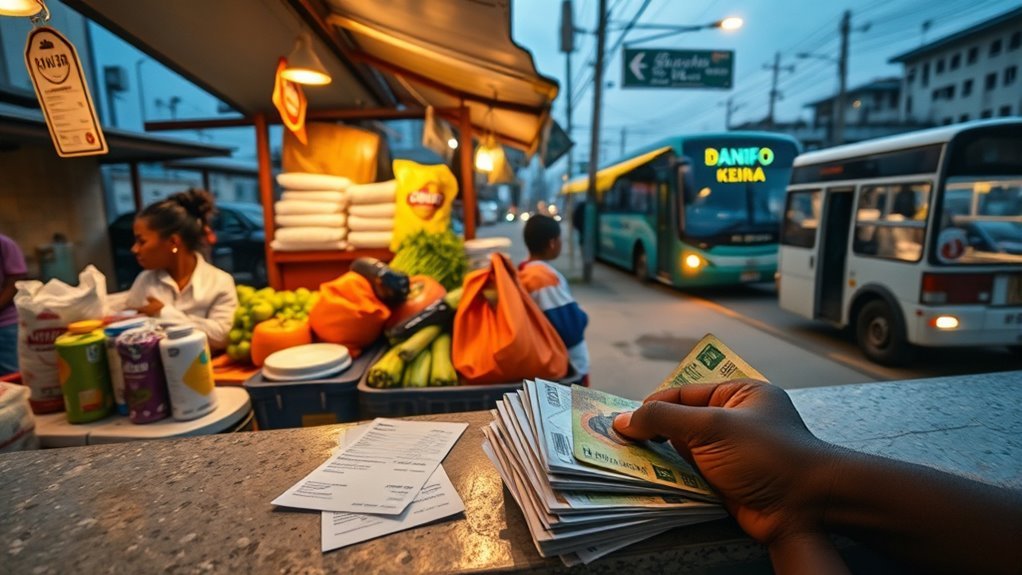
The cost of living in Nigeria varies widely by city and lifestyle, but for most households, housing and food take the biggest share of the budget. Monthly baseline expenses reflect ongoing macroeconomic factors, including foreign exchange shifts, local inflation, and fuel price adjustments.
In urban Nigeria, housing and food consume over 60% of average monthly household spending, with auxiliary power generation representing a primary hidden expense.
A typical family of four spends approximately ₦150,000 to ₦250,000 monthly on groceries, while utility bills—including grid electricity, generator fuel, and estate dues—add ₦60,000 to ₦150,000 depending on power reliability in your zone.
Public intracity transportation remains comparatively affordable at ₦200 to ₦500 per ride, though regular ride-hailing services average ₦800 to ₦2,500 per trip.
Housing Costs and Upfront Rent in Nigeria’s Major Cities
Housing is the largest structural expense after food in Nigeria, and rental prices vary significantly across regions. In suburban Lagos Mainland, an entry-level one-bedroom flat costs roughly ₦600,000 to ₦1,800,000 annually (averaging ₦50,000 to ₦150,000 monthly equivalent). Prime locations like Lekki Phase 1, Victoria Island, or Abuja Central Business District demand $3,000 to $15,000+ USD per year for modern apartments.
| City / District | 1-Bedroom Flat (Annual Base) | 2-Bedroom Flat (Annual Base) | Est. Estate Dues (Monthly) |
|---|---|---|---|
| Lagos (Mainland Suburbs) | ₦600,000 – ₦1,800,000 | ₦1,200,000 – ₦3,000,000 | ₦15,000 – ₦35,000 |
| Lagos (Island Prime) | ₦2,500,000 – ₦6,000,000+ | ₦4,500,000 – ₦12,000,000+ | ₦50,000 – ₦150,000 |
| Abuja (FCT Central / Phase 1) | ₦2,000,000 – ₦5,000,000 | ₦3,500,000 – ₦9,000,000 | ₦30,000 – ₦100,000 |
| Ibadan / Enugu | ₦350,000 – ₦800,000 | ₦700,000 – ₦1,800,000 | ₦5,000 – ₦20,000 |
By comparison, regional centers like Ibadan and Enugu offer significantly lower housing costs, with comparable two-bedroom units ranging from ₦700,000 to ₦1,800,000 per year.
The Upfront Payment Rule: Landlords in Nigeria typically require 1 to 2 years of rent upfront. Furthermore, tenant acquisition costs require budgeting for additional legal fees (10%), agency commission (10%), and refundable caution deposits (5–10%), adding roughly 25% to 30% above the base rent price when moving in.
Food Prices and Grocery Budget Breakdown
Food expenses consume a major portion of a monthly budget in Nigeria. Cooking at home remains the most cost-effective approach, with a family of four requiring ₦150,000 to ₦250,000 monthly for a diet centered around local staples.
- Staple Basket (Rice, Beans, Yam, Garri, Vegetable Oil): ₦70,000 – ₦120,000 / month
- Proteins (Meat, Fish, Eggs): ₦40,000 – ₦80,000 / month
- Local Dining (Bukkas / Street Food): ₦1,200 – ₦2,500 per meal
- Mid-Range Restaurant Dining: ₦8,000 – ₦20,000 per meal per person
Shopping at local open-air markets in secondary cities like Kano, Ibadan, or Enugu offers savings compared to commercial supermarkets in Lagos or Abuja.
Transportation, Electricity, Internet, and Healthcare Costs
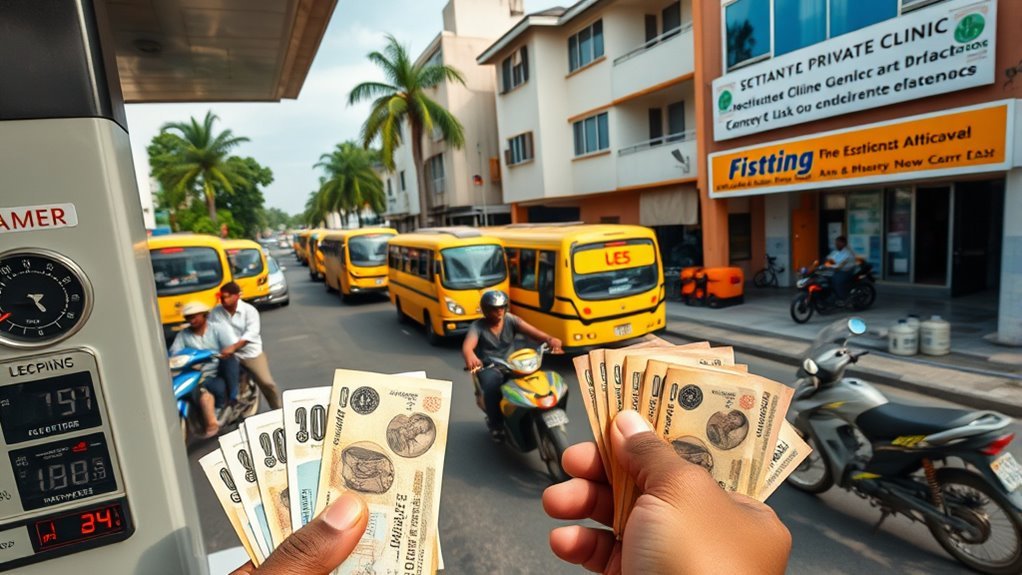
Monthly utility and service expenses in Nigeria involve managing both public infrastructure and private backup systems:
- Grid Electricity (Band A Tariff): ₦30,000 – ₦70,000/month for high-uptime residential zones.
- Auxiliary Power (Generator Petrol/Diesel or Solar Inverter): ₦30,000 – ₦100,000+/month depending on power outage frequency.
- Broadband & Data: High-speed home fiber or Starlink internet runs approximately ₦38,000 to ₦50,000 monthly, while standard mobile data packages cost ₦10,000 to ₦25,000.
- Public vs Private Healthcare: Public hospital consultations run ₦2,000 to ₦5,000, while private clinic visits range from ₦15,000 to ₦40,000. Comprehensive individual Health Maintenance Organization (HMO) plans cost ₦50,000 to ₦150,000 annually.
Is Nigeria Affordable for Expats and Locals?
Affordability in Nigeria depends on currency denomination and location. For expats and remote professionals earning in foreign currency (USD, EUR, GBP), Nigeria offers strong relative purchasing power, though premium gated housing, international schooling, and dual-power infrastructure raise lifestyle spending quickly.
For local earners, managing living expenses requires careful budgeting, bulk market purchases, and choosing residential districts that balance commuting distances with moderate rent prices.
Frequently Asked Questions
How Much Does It Cost to Live in Nigeria for a Month?
A single person living in Nigeria typically needs ₦450,000 to ₦850,000 ($300–$580 USD) per month including modest housing, groceries, utilities, and transportation. A family of four generally requires ₦1,800,000 to ₦3,200,000 ($1,200–$2,150 USD) per month depending heavily on city choice, housing standard, and generator power usage.
Is $10 USD a Lot in Nigeria?
No, $10 USD (roughly ₦14,000–₦15,000) is modest in urban Nigeria. It covers 2 to 3 casual meals at a local bukka, standard intracity rideshare fares, or basic daily groceries, but it does not stretch far for accommodation or Western-style dining.
What Can I Cook With 2000 Naira in Nigeria for Dinner?
With ₦2,000, you can cook a simple single-serve meal such as rice and beans with local tomato pepper sauce, or a small pot of plain jollof rice. Rising food inflation makes ₦2,000 tight for multi-person meals or heavy meat protein.
How Much Is Rent in Nigeria in US Dollars?
Standard entry-level one-bedroom flats in suburban major cities run $400–$1,200 USD per year (₦600,000–₦1,800,000), while prime one-to-two-bedroom apartments in Lagos Island or Abuja Central cost $3,000–$12,000+ USD annually. Landlords typically require 1 to 2 years of base rent paid upfront.
Conclusion
Planning a sustainable budget in Nigeria requires factoring in base costs alongside structural expenses like upfront annual rent, electricity tariffs, auxiliary power generation, and internet access. By comparing cities carefully and planning for move-in capital requirements, both locals and expats can build a reliable financial roadmap for living in Nigeria.