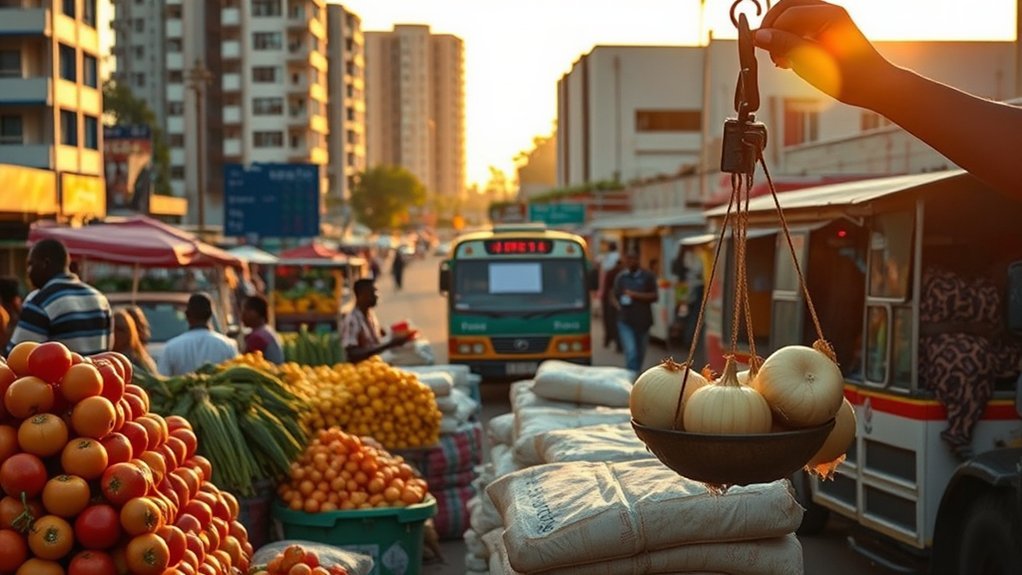
The cost of living in Kenya in 2026 is about KSh 57,500–84,000 (~$445–$645) a month for a single person living simply outside central Nairobi or in a smaller city such as Kisumu, and about KSh 132,000–178,000 (~$1,015–$1,370) for a comfortable single life in Nairobi. A couple in Nairobi should plan on roughly KSh 193,000–266,000 (~$1,485–$2,050), and a family of four KSh 254,000–402,000 (~$1,955–$3,100) before school fees. Dollar figures use the Central Bank of Kenya rate of about KSh 129.76 per US dollar (October 2, 2026). Rent is the biggest variable. A one-bedroom outside central Nairobi averages about KSh 28,000 (~$215), while one in the center averages about KSh 58,000 (~$445). Below you will find city rents, utilities, food, transport, taxes, healthcare, schools, visas, and sample budgets.
Quick Answer
- Single person: KSh 57,500–84,000 (~$445–$645) on a lean budget; KSh 132,000–178,000 (~$1,015–$1,370) for a comfortable life in Nairobi.
- Couple: KSh 193,000–266,000 (~$1,485–$2,050) a month in Nairobi.
- Family of four: KSh 254,000–402,000 (~$1,955–$3,100) before international school fees.
- Rent, one-bedroom in Nairobi: about KSh 28,125 ($217) outside the center and KSh 57,853 ($446) in the center.
- Utilities: about KSh 8,035 ($62) a month for an 85 m² apartment; home internet adds about KSh 4,538 ($35).
- Gasoline: about KSh 205 a liter in Nairobi.
- Wages: the average take-home salary in Nairobi is about KSh 62,026 ($478); the minimum wage for general workers in major cities is KSh 16,114 ($124).
Exchange Rate, Inflation, and Wages in 2026
Three numbers shape what Kenya costs you this year.
The exchange rate. The Central Bank of Kenya listed the US dollar at KSh 129.76 on October 2, 2026, with the euro at KSh 146.40 and the pound at KSh 171.62. The shilling has been steady for more than a year, moving less than 1% against the dollar, so dollar budgets have held their value. The Central Bank Rate is 8.75%, unchanged since April 2026.
Inflation. Annual inflation rose to 6.8% in September 2026 from 6.6% in August, the highest level since early 2024, according to Trading Economics inflation data. Food and drink prices rose 9.5% and transport 15.6% from a year earlier, while housing and utility costs rose only 3.2% thanks to cheaper electricity.
Wages. The statutory minimum wage for general workers in Nairobi, Mombasa, Kisumu, Nakuru, and Eldoret is KSh 16,114 ($124) a month from January 2026, up from KSh 15,202 in 2025. Crowd-sourced data puts average take-home pay at about KSh 62,026 ($478) in Nairobi. Many Kenyans work in the informal sector and earn less.
A central Nairobi one-bedroom costs about as much as an average take-home salary. Most local workers live in outer estates, share housing, or commute from satellite towns.
Cost of Living by City
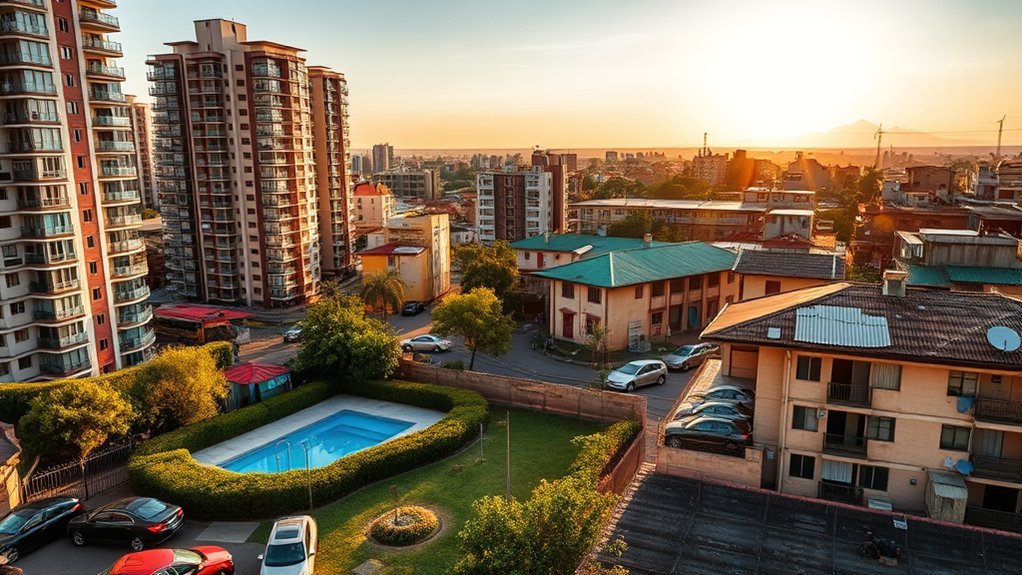
Nairobi is the most expensive place to live in Kenya and has the best data. The table uses crowd-sourced averages from Numbeo. Mombasa, Kisumu, and Nakuru have few recent reports, so treat those rows as rough guides.
| City | 1-Bed, City Center | 1-Bed, Outside Center | Basic Utilities (85 m²) | Data Updated |
|---|---|---|---|---|
| Nairobi | KSh 57,853 ($446) | KSh 28,125 ($217) | KSh 8,035 ($62) | Oct 2026 |
| Mombasa | KSh 30,000 ($231) | KSh 19,800 ($153) | — | Jun 2026 |
| Kisumu | KSh 20,000 ($154) | KSh 18,000 ($139) | KSh 7,889 ($61) | Jun 2026 |
| Nakuru* | KSh 29,000 ($223) | KSh 18,000 ($139) | KSh 8,035 ($62) | Nov 2025 |
| Kenya average | KSh 38,074 ($293) | — | — | Oct 2026 |
*Nakuru figures come from only three recent contributors.
A few patterns stand out:
- Nairobi rents vary hugely by neighborhood. Westlands, Kilimani, Lavington, Karen, and Runda are popular with expats and cost the most. A central three-bedroom averages about KSh 145,625 ($1,122), while one outside the center averages about KSh 65,553 ($505).
- Mombasa on the coast is cheaper, with central one-bedrooms around KSh 30,000. A single person’s non-rent costs average about KSh 64,081 ($494), slightly below Nairobi. Air conditioning can push power bills up.
- Kisumu and Nakuru have the lowest rents of the main cities, often under KSh 20,000 for a one-bedroom outside the center, but fewer international schools, private hospitals, and flights.
- Rural areas are far cheaper for housing, but jobs, healthcare, and reliable internet are harder to find.
Housing: Rent and Renting as a Foreigner
Most Nairobi apartments for foreigners sit in gated compounds with security guards, backup water tanks, and often a generator. These features add to rent and service charges but matter for comfort and safety.
What to Check Before You Sign
- Deposit and advance rent. Landlords usually ask for a refundable deposit, often one or two months’ rent, plus the first month up front.
- Service charge. Many compounds charge a monthly fee for security, cleaning, and common areas. Ask if it is included.
- Water supply. Water rationing affects parts of Nairobi. Check for storage tanks and a borehole.
- Power backup. Outages happen. A shared generator or solar backup is worth paying for if you work from home.
- Security. Look for a staffed gate, perimeter wall, and good lighting. Visit the area at night before you commit.
Buying Property
Apartment prices in Nairobi average about KSh 170,975 ($1,318) per square meter in the center and KSh 116,262 ($896) outside it, based on crowd-sourced data. Foreigners can hold land on leasehold terms but not freehold, so get advice from a Kenyan lawyer and do a land search before paying anything.
Utilities, Internet, and Phone

Basic utilities (electricity, water, and garbage) for an 85 m² apartment average about KSh 8,035 ($62) a month in Nairobi and about KSh 7,889 in Kisumu. Nairobi’s mild climate means you rarely need heating or air conditioning, which keeps bills down. Electricity is usually prepaid through tokens bought with M-Pesa.
Other monthly connections:
- Home internet (60+ Mbps): about KSh 4,538 ($35). Fiber is widely available in Nairobi’s main suburbs.
- Mobile plan with 10 GB+ of data: about KSh 1,967 ($15.16). Safaricom and Airtel are the main networks. Registration requires your passport.
- M-Pesa: mobile money is used for almost everything, from rent to taxis to market stalls. Register for it when you get your SIM.
- Gym membership: about KSh 6,542 ($50) a month in Nairobi.
Food: Groceries and Dining Out
A single person who cooks most meals spends about KSh 15,000–30,000 (~$115–$230) a month on groceries, depending on how much imported food they buy. Local produce, ugali flour, beans, and sukuma wiki (greens) are cheap. Imported cheese, cereal, and wine are expensive.
Average Nairobi prices in October 2026:
| Item | Typical Cost (KES) | Approx. USD |
|---|---|---|
| Milk (1 liter) | 114 | $0.88 |
| Bread (1 lb loaf) | 65 | $0.50 |
| Rice (1 lb) | 112 | $0.86 |
| Eggs (12) | 223 | $1.72 |
| Chicken fillets (1 lb) | 376 | $2.90 |
| Beef (1 lb) | 370 | $2.85 |
| Local cheese (1 lb) | 627 | $4.83 |
Open-air markets such as City Market and Marikiti in Nairobi, and neighborhood vegetable stalls, beat supermarket prices for produce. Supermarket chains like Naivas, Quickmart, and Carrefour are best for packaged goods.
Eating out ranges from very cheap to Western prices:
- Meal at an inexpensive restaurant: about KSh 500 ($3.85) nationally and KSh 800 ($6.17) in Nairobi
- Three-course dinner for two at a mid-range restaurant: about KSh 4,500 ($35) in Nairobi
- Cappuccino: about KSh 343 ($2.64)
- Domestic beer (pint): about KSh 300 ($2.31)
A plate of githeri, chapati and beans, or nyama choma at a local spot costs a fraction of a meal in Westlands or Kilimani restaurants.
Transportation and Getting Around

Matatus (shared minibuses) and buses are the backbone of public transport. A one-way trip costs about KSh 100 ($0.77) on average, though fares change with route, time of day, and rain. A daily commuter typically spends about KSh 4,000–6,000 (~$30–$45) a month.
- Ride-hailing: Uber and Bolt are widely used and are the safest choice at night. Taxis start around KSh 200.
- Boda bodas: motorcycle taxis are cheap and fast in traffic but carry a high accident risk.
- Gasoline: about KSh 205 per liter in Nairobi ($1.58; about $5.97 per gallon). Pump prices are set monthly by the Energy and Petroleum Regulatory Authority.
- Intercity travel: the Madaraka Express (SGR) train links Nairobi and Mombasa, and domestic flights connect the main cities.
Expats in Nairobi who use ride-hailing for most trips should budget about KSh 10,000–15,000 (~$75–$115) a month. Traffic is heavy, so living near work saves both time and money.
Healthcare and Insurance Costs
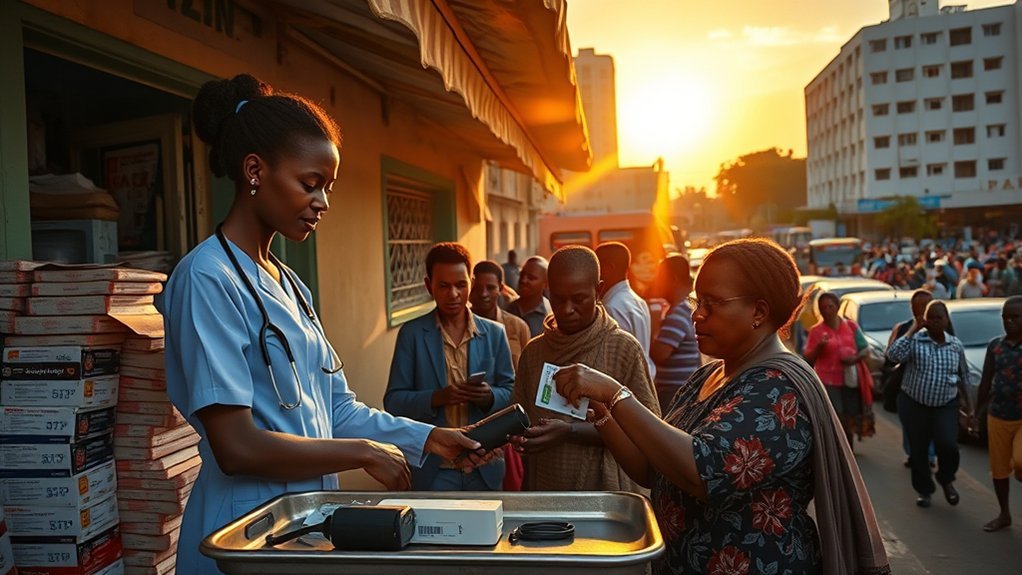
Kenya replaced the old NHIF with the Social Health Insurance Fund (SHIF) in October 2024. Employees contribute 2.75% of gross monthly salary, according to PwC’s Kenya summary of other taxes. The Social Health Authority says all residents of Kenya, including non-citizens, can register.
- Private hospitals: Nairobi has well-equipped private hospitals, and most expats use them. Ask for prices up front, since bills can climb fast without insurance.
- Public hospitals: cheaper but often crowded and short of staff and supplies.
- Private insurance: most expats carry a local or international plan with medical evacuation cover. Premiums depend on age, cover, and existing conditions, so get several quotes.
- Planning allowance: the budgets below set aside KSh 2,000–15,000 a month per adult for SHIF, insurance, and out-of-pocket costs.
Schools and Childcare
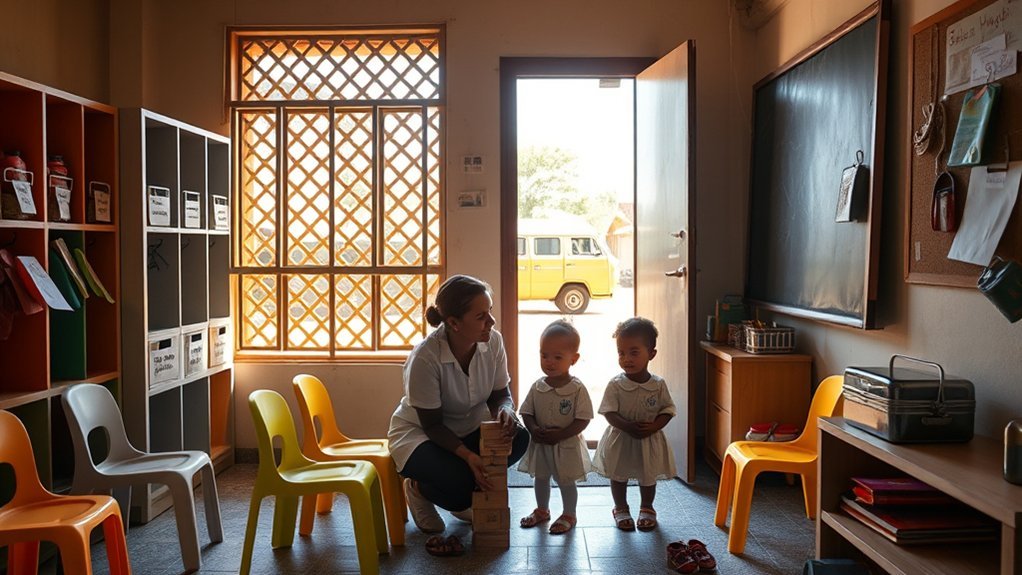
- International primary school: about KSh 1,596,944 ($12,307) a year per child on average in Nairobi, based on crowd-sourced data. The top British, American, and IB schools charge well above this, plus one-time entry fees.
- Private preschool or kindergarten: about KSh 32,286 ($249) a month in Nairobi, full day.
- Public schools: tuition-free primary and day secondary education, but classes are large and resources are limited.
- Childcare: many families hire a house help or nanny. Pay must at least meet the legal minimum wage for domestic workers.
Two children in an average Nairobi international school add about KSh 266,157 ($2,051) a month in tuition.
Salaries and Taxes

- Income tax (PAYE): 10% on the first KSh 24,000 a month, 25% on the next KSh 8,333, 30% up to KSh 500,000, 32.5% up to KSh 800,000, and 35% above that. Residents get a monthly personal relief of KSh 2,400, according to PwC’s Kenya personal income tax summary.
- Payroll deductions: SHIF at 2.75%, the Affordable Housing Levy at 1.5%, and NSSF pension contributions of up to KSh 6,480 a month since February 2026. SHIF and the housing levy are now deductible for income tax.
- VAT: 16% on most goods and services.
- Tax residency: residents are taxed on worldwide employment income and Kenyan-source income; non-residents only on Kenyan income.
A Nairobi worker earning the average take-home pay of about KSh 62,026 cannot comfortably rent alone in the center. Many share housing or live in outer estates such as Kasarani, Ruaka, or Rongai. Foreigners on expat packages usually receive housing and school allowances on top of salary.
Visas, Residence, and Safety
Most visitors need an Electronic Travel Authorisation (eTA) before travel, applied for on the official Kenya eTA portal. Processing usually takes three working days, and the government recommends applying at least two weeks ahead. Citizens of East African Community states and some other countries are exempt. Your passport needs six months’ validity and two blank pages.
To work or live in Kenya long term, you need a work permit or residence permit through the eFNS immigration portal. The US State Department notes that work permit applications should be submitted six to eight weeks before travel, from your home country.
The US State Department Kenya advisory is Level 2, “Exercise Increased Caution” (July 28, 2026), because of crime, kidnapping, terrorism, unrest, health, and road safety. It says do not travel to Eastleigh and Kibera in Nairobi, several northeastern counties near Somalia, Lamu, parts of the coast north of Malindi, and some northwestern border areas. The UK FCDO (updated September 4, 2026) also advises against travel to the Somalia border region.
One-Time Setup Costs
Budget for these before your first month:
- Deposit and first month’s rent: about KSh 116,000–174,000 (~$895–$1,340) for a central Nairobi one-bedroom with a one- or two-month deposit.
- Furnishing: unfurnished units often lack appliances. Furnished apartments cost more but save setup money.
- Backup power and water: a small solar kit or water storage, if the building lacks them.
- SIM card and M-Pesa: cheap to set up and essential from day one.
- Health insurance: travel or international cover until a local plan starts.
- Permits: work or residence permit fees, which depend on the permit class.
Sample Monthly Budgets
These budgets combine the averages above. The lean budget assumes a one-bedroom outside central Nairobi, or a city like Kisumu or Mombasa. The others assume Nairobi. Health figures are planning allowances, not quoted premiums.
| Expense (KES) | Single, Lean | Single, Comfortable | Couple | Family of Four |
|---|---|---|---|---|
| Rent | 18,000–28,000 | 45,000–60,000 | 58,000–80,000 | 65,500–145,600 |
| Utilities | 5,000–8,000 | 8,000–10,000 | 10,000–12,000 | 12,000–15,000 |
| Internet + mobile | 6,500 | 6,500 | 8,500 | 11,000 |
| Groceries | 15,000–20,000 | 25,000–30,000 | 45,000–55,000 | 70,000–85,000 |
| Eating out + leisure | 4,000–6,000 | 15,000–25,000 | 25,000–35,000 | 20,000–30,000 |
| Transport | 4,000–6,000 | 10,000–15,000 | 15,000–25,000 | 20,000–35,000 |
| Health allowance | 2,000–4,000 | 8,000–15,000 | 16,000–30,000 | 30,000–50,000 |
| Gym | — | 6,500 | — | — |
| Clothing + personal | 3,000–5,000 | 8,000–10,000 | 15,000–20,000 | 25,000–30,000 |
| Total (KES) | 57,500–84,000 | 132,000–178,000 | 193,000–266,000 | 254,000–402,000 |
| Total (USD) | $445–$645 | $1,015–$1,370 | $1,485–$2,050 | $1,955–$3,100 |
Family of four: two children in an average international school add about KSh 266,157 ($2,051) a month, pushing the total to roughly KSh 520,000–668,000 (~$4,005–$5,150).
Cross-check: Numbeo’s crowd-sourced basket puts a single person’s non-rent costs at about KSh 75,660 ($583) in Nairobi and KSh 67,481 ($520) nationally. Adding a central Nairobi one-bedroom gives about KSh 133,500, inside the comfortable range above.
Money-Saving Tips
- Live near work. Nairobi traffic makes long commutes costly in both time and fares.
- Look beyond the expat suburbs. Areas such as Ruaka, Kileleshwa’s edges, or South C can offer secure compounds for less.
- Shop at markets for produce, and buy local brands.
- Use matatus for routine trips in daylight, and ride-hailing at night.
- Pay with M-Pesa to avoid card fees and carry less cash.
- Buy electricity tokens in bulk and use energy-efficient appliances, since power is prepaid.
- Negotiate allowances. Housing, school, and medical benefits are worth more than a small raise.
How Kenya Compares With Nearby Countries
Kenya sits in the middle of the range for East Africa. The table uses Numbeo’s national crowd-sourced averages from September and October 2026.
| Country | Single Person, Excl. Rent | 1-Bed, City Center |
|---|---|---|
| Kenya | $520 | $293 |
| Tanzania | $437 | about TSh 1.1 million |
| Uganda | $471 | $448 |
| Ethiopia | $732 | $646 |
For more detail, see our guides to the cost of living in Tanzania, whose coast and safari areas draw many of the same visitors, and living costs in Uganda, where Kampala rents are lower. To the north, compare our Ethiopia cost of living guide and the cost of living in South Sudan. Our Rwanda expense guide covers another popular East African base.
Frequently Asked Questions
How much money do you need to live in Kenya per month?
A single person needs about KSh 57,500–84,000 (~$445–$645) a month for a simple life outside central Nairobi or in a smaller city, and about KSh 132,000–178,000 (~$1,015–$1,370) for a comfortable one in Nairobi. A couple in Nairobi should budget about KSh 193,000–266,000 (~$1,485–$2,050).
Is $1,000 a month enough to live in Kenya?
Yes, for a single person. At about KSh 130 per dollar, $1,000 is roughly KSh 130,000. That covers a modest one-bedroom in Nairobi, utilities, groceries, and transport. It is tight if you want a central apartment in Westlands or Kilimani with frequent dining out and private insurance.
How much is rent in Nairobi in 2026?
A one-bedroom averages about KSh 57,853 (~$446) in central Nairobi and KSh 28,125 (~$217) outside the center. A three-bedroom averages about KSh 145,625 (~$1,122) in the center and KSh 65,553 (~$505) outside it, based on crowd-sourced data from October 2026.
Is $100 a lot of money in Kenya?
It is about KSh 13,000. That covers most of a month of groceries for one person cooking at home, or two to three weeks of matatu commuting, but not rent in Nairobi.
What is the minimum wage in Kenya in 2026?
The minimum wage for general workers in Nairobi, Mombasa, Kisumu, Nakuru, and Eldoret is KSh 16,113.75 (~$124) a month from January 2026. Average take-home pay in Nairobi is about KSh 62,026 (~$478).
Can a US citizen live in Kenya?
Yes. US citizens need an eTA to visit, and a work permit or residence permit to live or work there long term. The US State Department advises applying for a work permit six to eight weeks before travel, from your home country.
Conclusion
Kenya can be very affordable or fairly expensive, depending on where and how you live. Local food, matatus, and utilities are cheap, while secure housing in Nairobi’s expat suburbs, private healthcare, and international schools push costs up. A single person can live simply for about $445–$645 a month outside central Nairobi, or comfortably in the capital for about $1,015–$1,370. The shilling has been stable, but inflation is rising, so build in a buffer, choose your neighborhood with safety and commute in mind, and check current travel advice before you move.
Sources
- Central Bank of Kenya – exchange rates and Central Bank Rate, October 2026
- Trading Economics – Kenya inflation, September 2026
- Trading Economics – Kenya minimum wage 2026
- Trading Economics – Central Bank Rate
- Numbeo – Kenya, Nairobi, Mombasa, Kisumu, Nakuru, Tanzania, Uganda, Ethiopia (crowd-sourced averages)
- PwC – Kenya personal income tax
- PwC – Kenya SHIF, housing levy, NSSF, and VAT
- Social Health Authority
- Kenya eTA – general information
- US State Department – Kenya travel advisory
- US State Department – Kenya country information
- UK FCDO – Kenya travel advice
- World Bank – Kenya data