
The cost of living in India in 2026 runs about ₹28,600–₹37,600 (~$300–$390) a month for a single person living simply in a city such as Chennai, Hyderabad, or Kolkata, and about ₹53,800–₹69,000 (~$560–$720) for a comfortable single life in central Bengaluru or Pune. Central Mumbai costs far more: a one-bedroom there alone averages about ₹59,200 (~$617). A couple should plan on roughly ₹63,800–₹89,800 (~$665–$935), and a family of four about ₹89,600–₹1,26,200 (~$935–$1,315) before school fees. These figures use the Reserve Bank of India reference rate of about ₹96 per US dollar (October 1, 2026). Rent is the biggest swing factor, and the gap between cities is huge. Below you’ll find city-by-city rents, food and fuel prices, the 2026 income tax slabs, healthcare and school costs, salaries, and sample budgets.
Quick Answer
- Single person: ₹28,600–₹37,600 (~$300–$390) on a lean budget; ₹53,800–₹69,000 (~$560–$720) for a comfortable one in central Bengaluru or Pune.
- Couple: ₹63,800–₹89,800 (~$665–$935) a month in a big-city one- or two-bedroom.
- Family of four: about ₹89,600–₹1,26,200 (~$935–$1,315) before private school fees.
- Rent, one-bedroom: about ₹8,600 (~$90) outside the center and ₹13,600 (~$142) in the center on average nationwide; ₹34,300–₹59,200 (~$357–$617) in Mumbai.
- Utilities: about ₹2,900–₹5,900 (~$31–$61) a month for an 85 m² apartment, depending on the city and air conditioning; broadband adds about ₹650–₹1,000.
- Petrol (October 1, 2026): ₹102.12 per liter in Delhi; diesel ₹95.20.
- Typical net salary: about ₹42,000 (~$440) a month nationally, and ₹57,500–₹1,16,000 in the big tech and finance cities, based on crowd-sourced averages.

Come Eat offers 100 approachable recipes designed to make everyday cooking more enjoyable, nourishing, and sustainable. With a focus on flavorful meals and practical preparation, this hardcover cookbook is ideal for home cooks looking for inspiration for salads, sides, and main dishes. Author Melissa Ben-Ishay shares recipes that encourage consistent, feel-good eating without sacrificing taste.

This daily devotional helps parents pray purposefully for their children through a full year of Scripture readings, reflections, and guided prayer prompts. Written to encourage faithful family discipleship, it offers practical, biblically grounded support for parents who want to shape their prayers around God's Word. A foreword by Sinclair B. Ferguson adds trusted theological insight and encouragement.

This hardcover book celebrates the art of gathering with inspiring table settings, thoughtful traditions, and practical ideas for hosting memorable meals. Written by Shea McGee, it offers beautiful design inspiration alongside approachable guidance for creating warm, welcoming spaces for family and friends. It's a charming resource for anyone who loves entertaining, home styling, and making everyday moments feel special.
Exchange Rate, Inflation, and Interest Rates in 2026
Three numbers shape what India costs you this year.
The exchange rate. The Reserve Bank of India’s reference rate was ₹95.99 per US dollar on October 1, 2026, along with ₹108.62 per euro and ₹127.22 per British pound. The rupee has weakened this year, so dollar, euro, and pound earners get more for their money than older guides suggest.
Inflation. Consumer price inflation rose to 4.82% in August 2026, up from 4.44% in July, and food inflation reached about 5.95%, according to official data summarized by Trading Economics. Higher energy prices and the weaker rupee drove much of the increase, and restaurant and hotel prices rose faster than average. Inflation is still inside the RBI’s 2–6% target band.
Interest rates. The RBI’s policy repo rate is 5.25%. Lower rates than in past years help people with home and car loans.
At about ₹96 per dollar, $1,000 a month equals roughly ₹96,000. That covers a comfortable single life almost anywhere in India except central Mumbai.
Cost of Living by City
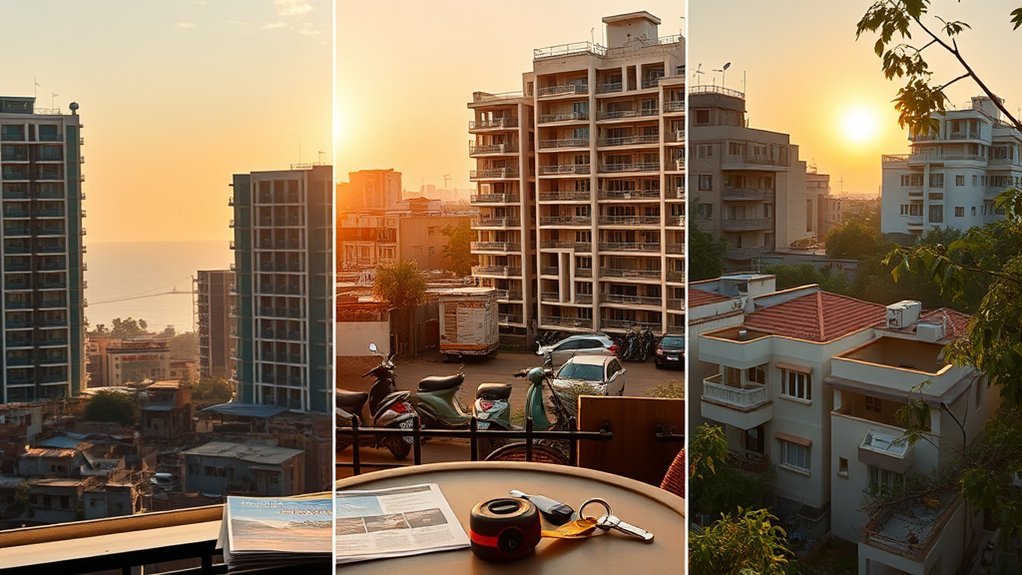
Rents vary more between Indian cities than any other expense. The table uses crowd-sourced averages from Numbeo (updated October 1–3, 2026). Bengaluru, Mumbai, Delhi, and Pune have the most price reports.
| City | 1-Bed, City Center | 1-Bed, Outside Center | 3-Bed, Outside Center | Basic Utilities (85 m²) |
|---|---|---|---|---|
| Mumbai | ₹59,227 (~$617) | ₹34,263 (~$357) | ₹85,789 (~$894) | ₹5,874 (~$61) |
| Bengaluru | ₹29,720 (~$310) | ₹16,675 (~$174) | ₹45,240 (~$471) | ₹2,934 (~$31) |
| Delhi | ₹25,923 (~$270) | ₹14,860 (~$155) | ₹37,885 (~$395) | ₹4,043 (~$42) |
| Pune | ₹24,531 (~$256) | ₹15,786 (~$164) | ₹39,071 (~$407) | ₹3,848 (~$40) |
| Hyderabad | ₹21,857 (~$228) | ₹12,438 (~$130) | ₹31,631 (~$330) | ₹3,341 (~$35) |
| Chennai | ₹17,067 (~$178) | ₹9,714 (~$101) | ₹29,143 (~$304) | ₹3,647 (~$38) |
| Kolkata | ₹14,765 (~$154) | ₹9,125 (~$95) | — | ₹5,061 (~$53) |
| India average | ₹13,642 (~$142) | ₹8,598 (~$90) | ₹19,970 (~$208) | ₹3,574 (~$37) |
A few patterns stand out:
- Mumbai is in a league of its own. A central one-bedroom costs about twice as much as in Bengaluru, and a central three-bedroom averages about ₹1.85 lakh (~$1,930).
- Bengaluru, Delhi, and Pune sit in the middle. Rents in tech corridors and central business districts run well above these averages.
- Hyderabad and Chennai offer big-city jobs with noticeably lower rents.
- Kolkata has the lowest rents of the major metros and the cheapest public transport, with a monthly pass of about ₹300.
- Tier-two cities such as Coimbatore, Bhopal, Vadodara, and Bhubaneswar are cheaper still, but job options are narrower.
Housing: Rent and Move-In Costs
Housing is usually the largest and most variable part of an Indian budget. The averages above are for long-term rentals. Furnished apartments, gated communities with pools and gyms, and serviced apartments cost more.
What to Expect When Renting
- Security deposits: typically several months of rent, and in some cities much more. Bengaluru is known for especially large deposits.
- Brokerage: agents often charge a fee, commonly up to one month’s rent.
- Maintenance charges: apartment societies add a monthly fee for security, cleaning, lifts, and common areas. Ask whether it is included in the rent.
- Lease terms: 11-month agreements are common, with an annual rent increase built in.
Do not transfer a deposit based only on photos or chat messages. Verify the owner or agent, read the written agreement, and record the condition and inventory of the flat before paying.
A Bengaluru one-bedroom outside the center at ₹16,675 a month can still require ₹1–2 lakh or more upfront once a large deposit, brokerage, and setup costs are added.
Utilities, Internet, and Phone
Basic utilities (electricity, water, cooking gas, and waste) for an 85 m² apartment average about ₹3,574 (~$37) a month nationwide. They run highest in hot, humid Mumbai and Kolkata, where air conditioning is common, and lowest in milder Bengaluru.
Mobile data and home internet are among the cheapest in the world:
- Home broadband (60+ Mbps): about ₹671 (~$7) on average; ₹640–₹990 in the big cities.
- Mobile plan with 10 GB+ data: about ₹337 (~$3.50).
- Power backup: in areas with frequent outages, an inverter and battery adds a one-time cost and a small monthly running cost.
Food: Groceries and Dining Out
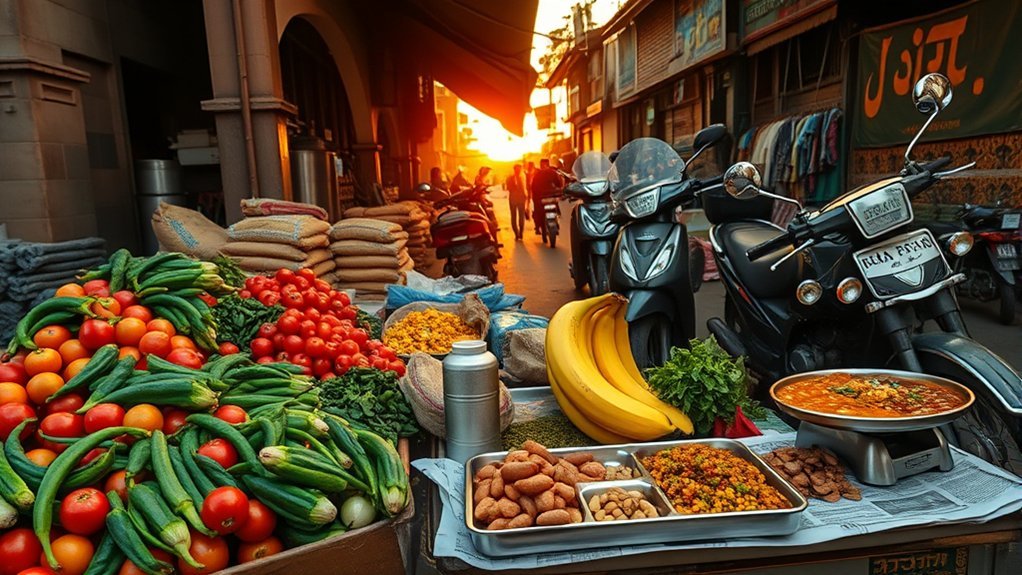
A single adult who cooks most meals spends roughly ₹7,000–₹12,000 (~$73–$125) a month on groceries. Couples should plan on ₹15,000–₹20,000, and a family of four ₹25,000–₹32,000. Local markets and kirana stores are cheapest for produce and staples, while supermarkets, quick-commerce apps, and imported brands cost more.
Average national prices (crowd-sourced, October 2026):
| Item | Typical Cost (₹) | Approx. USD |
|---|---|---|
| Milk (1 liter) | 62 | $0.65 |
| Bread (1 lb loaf) | 41 | $0.43 |
| Rice (1 lb) | 28 | $0.29 |
| Eggs (12) | 88 | $0.91 |
| Chicken fillets (1 lb) | 125 | $1.30 |
| Apples (1 lb) | 85 | $0.88 |
| Tomatoes (1 lb) | 21 | $0.22 |
| Potatoes (1 lb) | 15 | $0.16 |
| Onions (1 lb) | 17 | $0.18 |
Vegetables, lentils, rice, and local fruit are very cheap. Imported cheese, olive oil, breakfast cereals, and wine are where grocery bills climb.
Eating out ranges from street food and simple thalis to Western-priced restaurants. National averages:
- Meal at an inexpensive restaurant: about ₹200 (~$2.10), rising to ₹300–₹500 in Bengaluru, Pune, and Mumbai
- Three-course dinner for two at a mid-range restaurant: about ₹1,000 (~$10.40)
- Fast-food combo meal: about ₹353 (~$3.70)
- Cappuccino: about ₹163 (~$1.70)
- Domestic beer (pint, at a bar): about ₹180 (~$1.90)
Transportation and Fuel
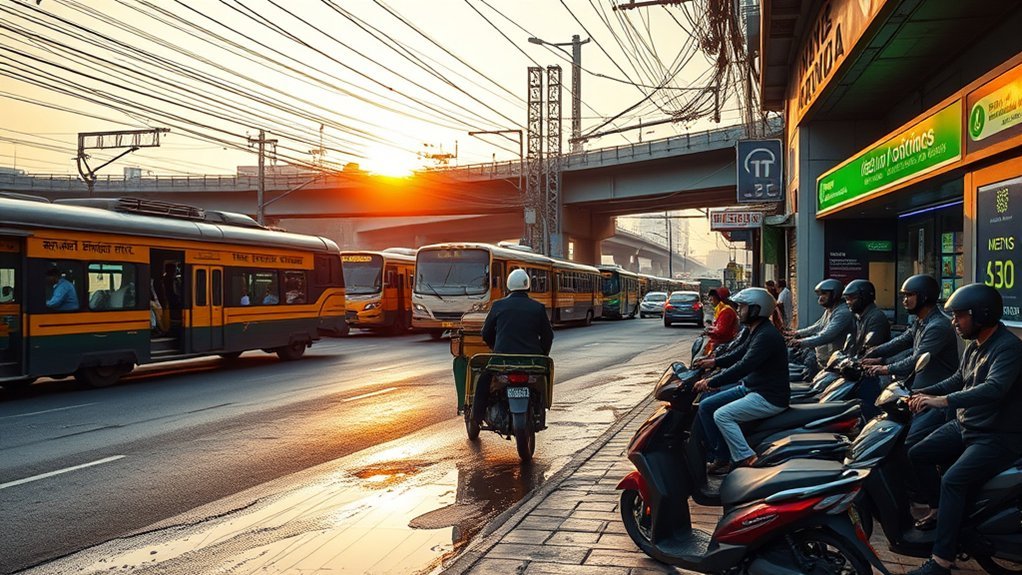
Public transport is cheap, but how far it gets you depends on the city. Mumbai’s suburban trains, Delhi’s metro, and Kolkata’s buses and metro cover a lot of ground. In other cities, many people combine metro or bus rides with auto-rickshaws and ride-hailing.
- One-way local ticket: about ₹25 nationally; ₹15–₹50 depending on the city.
- Monthly pass: about ₹800 nationally; ₹300 in Kolkata, ₹650 in Mumbai, and ₹1,450–₹1,500 in Bengaluru, Delhi, Hyderabad, and Pune.
- Taxis and ride-hailing: taxi fares start around ₹100. Daily ride-hailing can easily cost ₹5,000–₹10,000 a month.
- Fuel: PPAC’s price data shows petrol at ₹102.12 per liter and diesel at ₹95.20 in Delhi on October 1, 2026 (about $1.06 and $0.99). Prices differ by state because of local taxes.
Many people use two-wheelers to beat traffic. Budget for insurance, servicing, and parking on top of fuel. Cars are the most expensive option once loan payments, insurance, parking, and tolls are counted.
Healthcare and Insurance Costs
India has a mixed system of low-cost public hospitals and private clinics and hospitals. Most middle-class families and expats use private care, which is affordable by Western standards but adds up for serious treatment.
- Out-of-pocket costs: the Health Ministry’s National Health Accounts for 2021–22 found that out-of-pocket payments made up 39.4% of total health spending, down from 64.2% in 2013–14.
- Health insurance: private family-floater policies are widely sold. The regulator, IRDAI, advises checking waiting periods, exclusions, co-payments, room-rent limits, network hospitals, and cashless-claim rules before you buy.
- Routine care: a healthy adult might set aside ₹1,500–₹4,000 a month for consultations, medicines, tests, and an emergency reserve.
Foreigners should carry international or Indian private health insurance from day one, with medical evacuation cover if you plan to travel to remote areas.
Schools and Childcare
- Public schools: government schools are free or very cheap, but quality and language of instruction vary widely by state.
- Private schools: most middle-class families use private English-medium schools. Fees range from modest to very high, plus admission fees, transport, books, and uniforms.
- Preschool: full-day private preschool averages about ₹5,400 (~$57) a month nationwide and ₹9,800–₹11,300 (~$102–$117) in Bengaluru, Delhi, and Mumbai.
- International schools: crowd-sourced data puts international primary school at about ₹1.6 lakh (~$1,640) a year nationally, ₹2.2 lakh in Delhi, ₹3.1 lakh in Bengaluru, and ₹4.8 lakh (~$5,015) in Mumbai. The best-known international schools charge much more.
For families, school fees can change the required income more than groceries, utilities, or transport combined.
Taxes: GST and Income Tax
- GST: goods and services fall mainly into two slabs, 5% and 18%, with a 40% rate on certain luxury and “sin” goods, according to PwC’s India tax summary. GST is included in shelf prices.
- Default tax regime: the new (alternate) regime applies unless you opt for the old one. It offers lower rates but few deductions.
- Zero tax up to ₹12 lakh: a full rebate means residents with taxable income up to ₹12 lakh (~$12,500) a year pay no income tax. Salaried workers also get a ₹75,000 standard deduction.
- Cess and surcharge: a 4% health and education cess applies to tax due, and a surcharge applies above ₹50 lakh.
New-regime slab rates, per PwC’s individual tax summary:
| Annual Taxable Income (₹) | Rate |
|---|---|
| 0–4,00,000 | 0% |
| 4,00,001–8,00,000 | 5% |
| 8,00,001–12,00,000 | 10% |
| 12,00,001–16,00,000 | 15% |
| 16,00,001–20,00,000 | 20% |
| 20,00,001–24,00,000 | 25% |
| Above 24,00,000 | 30% |
Example: on a salary of ₹15 lakh a year, taxable income after the standard deduction is ₹14.25 lakh. Tax comes to ₹93,750, or ₹97,500 with cess, which is about ₹8,125 a month. Tax residents are taxed on worldwide income, so talk to a tax adviser if you have income abroad.

LIQUI MOLY Cera Tec is a ceramic-based engine oil additive designed to reduce friction and wear in petrol and diesel engines. It mixes easily with compatible motor oils, helps protect against metal-to-metal contact, and can improve smoother engine performance while supporting lower fuel consumption. Suitable for engines, transmissions, pumps, and compressors, it is built to handle extreme temperatures and long service intervals.

Velveeta Shells and Cheese Original Cup delivers a creamy, comforting mac and cheese experience in convenient single-serve cups. Made with real cheese and shelf-stable for easy storage, it’s a quick microwave meal or side that works for busy nights, kids’ meals, and snack cravings. Each cup includes shell pasta and cheese sauce for rich flavor with minimal prep.

Die With Zero offers a fresh perspective on personal finance by encouraging readers to use money intentionally to create memorable life experiences instead of simply accumulating wealth. Written by Bill Perkins, this book combines practical guidance with a motivating philosophy to help readers align spending, saving, and life goals for a more fulfilling future.
Salaries vs. Cost of Living
Crowd-sourced averages put typical take-home pay at about ₹42,000 (~$440) a month nationally. Pay is much higher in the main professional hubs:
- Hyderabad: about ₹1,16,400 (~$1,215)
- Pune: about ₹1,12,800 (~$1,175)
- Bengaluru: about ₹87,300 (~$910)
- Mumbai: about ₹73,400 (~$765)
- Chennai: about ₹63,200 (~$660)
- Delhi: about ₹57,500 (~$600)
- Kolkata: about ₹36,800 (~$385)
Official data shows how far most households are from these numbers. The government’s Household Consumption Expenditure Survey 2023–24 put average monthly spending per person at ₹6,996 in cities and ₹4,122 in rural areas. Minimum wages are set by each state and vary by skill level, according to WageIndicator.
In short, a professional salary in Hyderabad, Pune, or Bengaluru covers a comfortable life with room to save. In Mumbai, rent eats a much bigger share of the same pay.
Visas and Safety
Visas. US citizens and many other nationals can apply online for an e-Tourist visa valid for 30 days, one year, or five years. The one- and five-year versions allow multiple entries but limit each calendar year to 180 days in India. Working or living in India long-term requires the right visa, such as an employment visa, from an Indian mission abroad. People of Indian origin may qualify for an Overseas Citizen of India (OCI) card.
Safety. The US State Department rates India at Level 2 (exercise increased caution) because of crime and terrorism, and advises against travel to Jammu and Kashmir (except eastern Ladakh), the India-Pakistan border area, parts of central and eastern India, and Manipur. The UK Foreign Office gives similar advice. Most major cities are home to large expat communities and are safe with ordinary precautions.
One-Time Setup Costs
Budget for these before your first month:
- Rental deposit and brokerage: often several months of rent, plus up to one month’s rent in brokerage.
- Furnishing: unfurnished flats usually lack appliances, curtains, and sometimes light fittings.
- Air conditioners and water purifiers: standard purchases in most homes.
- Two-wheeler or car: optional, but common outside the best-served metro corridors.
- School admission fees: private schools often charge one-time admission and development fees.
- Health insurance: buy cover before you arrive or as soon as you land.
Sample Monthly Budgets
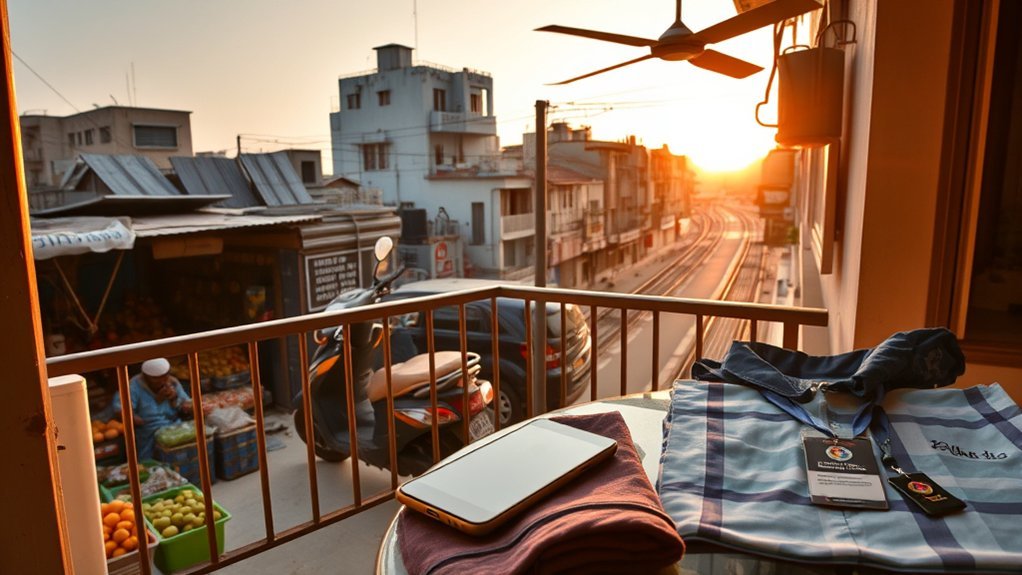
These budgets combine the averages above, in rupees. The lean budget assumes a one-bedroom outside the center in Chennai, Hyderabad, or Kolkata. The comfortable and couple budgets assume Bengaluru or Pune. The family budget assumes a three-bedroom outside the center in Bengaluru, Pune, or Hyderabad.
| Expense | Single, Lean | Single, Comfortable | Couple | Family of Four |
|---|---|---|---|---|
| Rent | 9,700–12,400 | 24,500–29,700 | 25,000–35,000 | 31,600–45,200 |
| Utilities | 3,300–3,600 | 3,000–4,000 | 4,000–5,000 | 5,000–6,000 |
| Internet + mobile | 1,100 | 1,400 | 1,800 | 2,000 |
| Groceries | 7,000–9,000 | 10,000–12,000 | 15,000–20,000 | 25,000–32,000 |
| Eating out + leisure | 3,000–5,000 | 8,000–12,000 | 10,000–15,000 | 6,000–10,000 |
| Transport | 1,000–1,500 | 3,000–5,000 | 4,000–7,000 | 6,000–10,000 |
| Health cover + reserve | 1,500–2,000 | 2,500–3,500 | 4,000–6,000 | 6,000–9,000 |
| Personal, household help, other | 2,000–3,000 | 1,400 (gym) | — | 8,000–12,000 |
| Total (₹) | 28,600–37,600 | 53,800–69,000 | 63,800–89,800 | 89,600–1,26,200 |
| Total (USD) | $300–$390 | $560–$720 | $665–$935 | $935–$1,315 |
Mumbai: swap in a central Mumbai one-bedroom at about ₹59,200 and the comfortable single budget rises to roughly ₹88,500–₹98,500 (~$920–$1,025).
Family of four: Numbeo’s national estimate for a family of four is about ₹98,500 (~$1,025) a month before rent, and ₹1.1–1.3 lakh in the big metros, which reflects a higher-spending household. Private or international school fees come on top.
How City and Lifestyle Affect Your Budget

Lower rent does not automatically make a city the best choice. Weigh salary levels, commute times, air quality, climate and air-conditioning needs, healthcare access, schools, and language. A ₹15,000 apartment far from work can cost more than a ₹20,000 one near a metro line once daily ride-hailing is added.
Money-Saving Tips
- Live near a metro or suburban rail line and use monthly passes instead of daily ride-hailing.
- Shop at local markets for vegetables, fruit, and staples, and limit imported brands.
- Negotiate the deposit and maintenance charges, and get every term in writing.
- Use the new tax regime math. If your taxable income is close to ₹12 lakh, structuring pay well can bring your tax to zero.
- Buy health insurance early, before pre-existing condition waiting periods start to bite.
- Consider Hyderabad, Chennai, or Pune if you want big-city jobs with lower rents than Mumbai.
How India Compares With Nearby Countries
India is cheap by world standards but not the cheapest in South Asia. The table uses crowd-sourced national averages converted to US dollars (updated July–October 2026).
| Country | 1-Bed, City Center | 1-Bed, Outside Center | Single Person, Excl. Rent |
|---|---|---|---|
| India | $142 | $89 | $286 |
| Sri Lanka | $344 | $146 | $449 |
| Pakistan | $139 | $77 | $361 |
| Bangladesh | $89 | $46 | $352 |
| Nepal | $133 | $66 | $317 |
Everyday spending outside rent is lowest in India among these countries, while Bangladesh and Nepal have cheaper rents. For more detail, see our guides to the cost of living in Pakistan, the cost of living in Bangladesh, and our Sri Lanka living cost guide. In the Himalayas, compare monthly costs in Nepal and living expenses in Bhutan.
Frequently Asked Questions
How much money do you need to live in India per month?
A single person needs about ₹28,600–₹37,600 (~$300–$390) a month for a simple life in a city such as Chennai or Hyderabad, and about ₹53,800–₹69,000 (~$560–$720) for a comfortable one in central Bengaluru or Pune. A couple should budget about ₹63,800–₹89,800 (~$665–$935), and a family of four about ₹89,600–₹1,26,200 (~$935–$1,315) before school fees.
Is $1,000 a month enough to live in India?
Yes, for one person almost anywhere. At about ₹96 per dollar, $1,000 is roughly ₹96,000, which covers a comfortable single life in Bengaluru, Pune, Hyderabad, Delhi, or Chennai. In central Mumbai it covers a one-bedroom and a modest lifestyle, but not much more.
How much is rent in Mumbai in 2026?
A one-bedroom apartment averages about ₹59,200 (~$617) a month in central Mumbai and about ₹34,300 (~$357) outside the center. A three-bedroom averages about ₹1.85 lakh (~$1,930) centrally and ₹85,800 (~$894) outside.
Which Indian city is cheapest to live in?
Among the major metros, Kolkata and Chennai have the lowest rents, with one-bedrooms outside the center averaging about ₹9,100–₹9,700. Kolkata also has the cheapest transit pass at about ₹300 a month. Tier-two cities such as Coimbatore and Bhopal can be cheaper still.
How much income tax do you pay in India?
Under the default new regime, residents with taxable income up to ₹12 lakh a year pay no income tax thanks to a full rebate, and salaried workers also get a ₹75,000 standard deduction. Above that, rates rise from 15% to 30%, plus a 4% cess.
Can Americans live in India?
Yes, with the right visa. A one- or five-year e-Tourist visa allows multiple visits but caps each calendar year at 180 days. To work or live in India full time, you need a long-term visa such as an employment visa, or an OCI card if you are of Indian origin.
Conclusion
India supports a huge range of budgets, and your city and rent decide most of the total. A single person can live simply on about $300–$390 a month in Chennai, Hyderabad, or Kolkata, or comfortably for $560–$720 in central Bengaluru or Pune, while central Mumbai roughly doubles the rent. With the rupee near ₹96 per dollar and inflation under 5%, foreign earners get strong value in 2026. Choose your neighborhood first, budget for a large deposit, and add private health insurance and school fees if they apply.
Sources
- Reserve Bank of India – reference rates and repo rate (October 1, 2026)
- Trading Economics – India CPI inflation, August 2026
- Numbeo – India, Mumbai, Bengaluru, Delhi, Pune, Hyderabad, Chennai, and Kolkata crowd-sourced prices (October 2026)
- Petroleum Planning & Analysis Cell – retail fuel prices
- Ministry of Health – National Health Accounts 2021–22
- IRDAI – health insurance information
- MoSPI – Household Consumption Expenditure Survey 2023–24
- PwC – India individual income tax
- PwC – India GST rates
- WageIndicator – India minimum wages
- Government of India – e-Visa information
- US State Department – India travel advisory
- UK FCDO – India travel advice

This hardcover cookbook offers fast, approachable recipes designed for busy days and low-energy nights. Caroline Chambers focuses on simple, flavorful meals that help you get dinner on the table without overthinking it. It's a practical pick for home cooks who want quick weeknight inspiration and minimal-fuss cooking.

This CUCKOO Micom rice cooker makes everyday meals easier with fuzzy logic cooking that helps deliver consistently fluffy rice and grains. With multiple menu options, a delay timer, keep warm setting, and versatile steaming and multi-cook functions, it is well suited for preparing rice, porridge, soups, and stews for small to medium households. The non-stick inner pot and customizable My Mode settings add convenience and flexibility for a variety of tastes and textures.

SET is a fast-paced family card game that challenges players to spot patterns and make matches by color, shape, shading, or number. Easy to learn yet mentally engaging, it works well for solo play, group game nights, travel, and classroom fun. Its quick rounds and educational value make it a favorite for kids, teens, and adults alike.