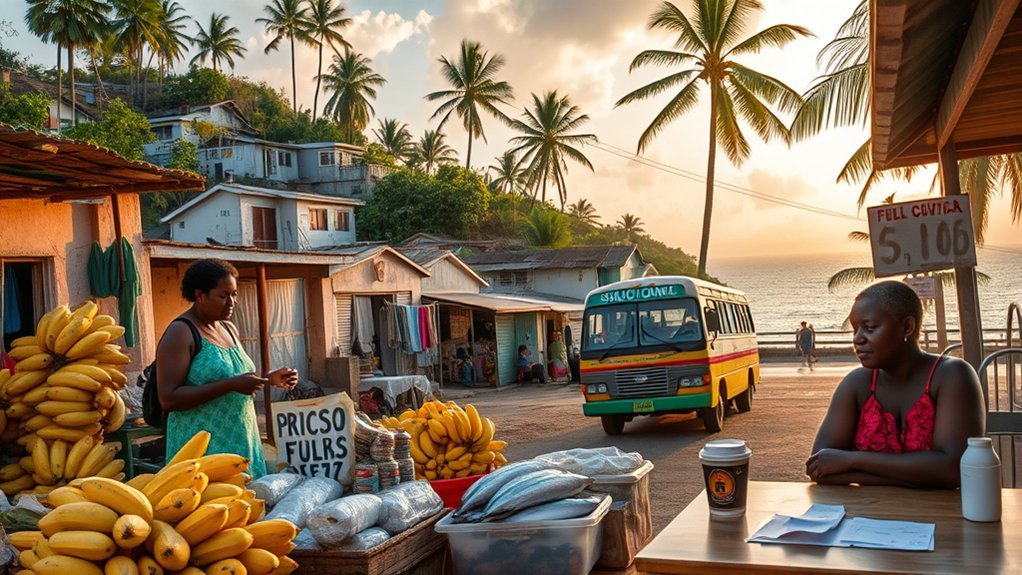
The cost of living in the Solomon Islands in 2026 is about SBD 9,000–11,500 (~$1,120–$1,430) a month for a single person living simply in Honiara, and SBD 15,800–19,200 (~$1,960–$2,380) for a more comfortable expat lifestyle with air conditioning and imported food. A couple should plan on roughly SBD 19,900–23,800 (~$2,460–$2,950), and a family of four on SBD 33,500–39,100 (~$4,150–$4,840) before international school fees. These figures use the Central Bank of Solomon Islands rate of about SBD 8.08 per US dollar (October 7, 2026). Rent and electricity are the big costs. Power in Honiara costs SBD 7.25–8.19 per kWh, very high by world standards, so a cooled apartment can run a larger power bill than its grocery bill. Price data for this country is thin, so treat every number below as a planning range and get local quotes before you commit.
Quick Answer
- Single person: SBD 9,000–11,500 (~$1,120–$1,430) on a lean budget; SBD 15,800–19,200 (~$1,960–$2,380) for a comfortable one.
- Couple: SBD 19,900–23,800 (~$2,460–$2,950) a month in Honiara.
- Family of four: SBD 33,500–39,100 (~$4,150–$4,840) before international school fees.
- Rent, one-bedroom: about SBD 4,250 (~$525) outside the center and SBD 4,780 (~$590) in central Honiara, on crowd-sourced averages.
- Electricity: SBD 7.25–8.19 per kWh (October 2026), so 150 kWh costs about SBD 1,100–1,160 (~$135–$145).
- Home fiber internet: from SBD 399 (~$49) a month.
- Bus fare: about SBD 3 (~$0.37) per ride in Honiara.
- Minimum wage: SBD 8 an hour, or about SBD 1,390 (~$170) a month full time.
Exchange Rate, Inflation, and Wages in 2026
Three numbers frame the budget in 2026.
The exchange rate. The Central Bank of Solomon Islands (CBSI) listed 1 SBD at 0.1237 US dollars on October 7, 2026, or about SBD 8.08 per dollar. The Solomon Islands dollar is managed against a basket of currencies, so it moves slowly. It sat at the same level in July 2026. That makes dollar budgets more predictable than in countries with free-floating currencies.
Inflation. Prices rose quickly in the first half of 2026 as global fuel prices jumped. CBSI data shows headline inflation climbed from 0.6% in January to 4.6% in June, then eased to 3.7% in August 2026. The National Statistics Office put 2025 annual inflation at 3.4%. The IMF’s July 2026 review projects average inflation of 5.4% for 2026, driven by fuel, and growth slowing to 2.6%.
Wages. The minimum wage is SBD 8 an hour for most workers and SBD 7.20 in fishing and agriculture. It has not changed since August 2019. A full-time minimum wage worker earns about SBD 1,390 (~$170) a month. Crowd-sourced data puts the average net salary at about SBD 3,740 (~$465) a month, and the IMF estimates 2025 GDP per capita at US$2,092. Most expats in Honiara work for aid agencies, embassies, mining, or construction firms and are paid in foreign currency with housing included.
A comfortable expat budget of SBD 16,000 a month is more than 11 times the full-time minimum wage. Imported goods and expat-standard housing are priced for a small, well-paid market.
Overview of Living Costs in the Solomon Islands
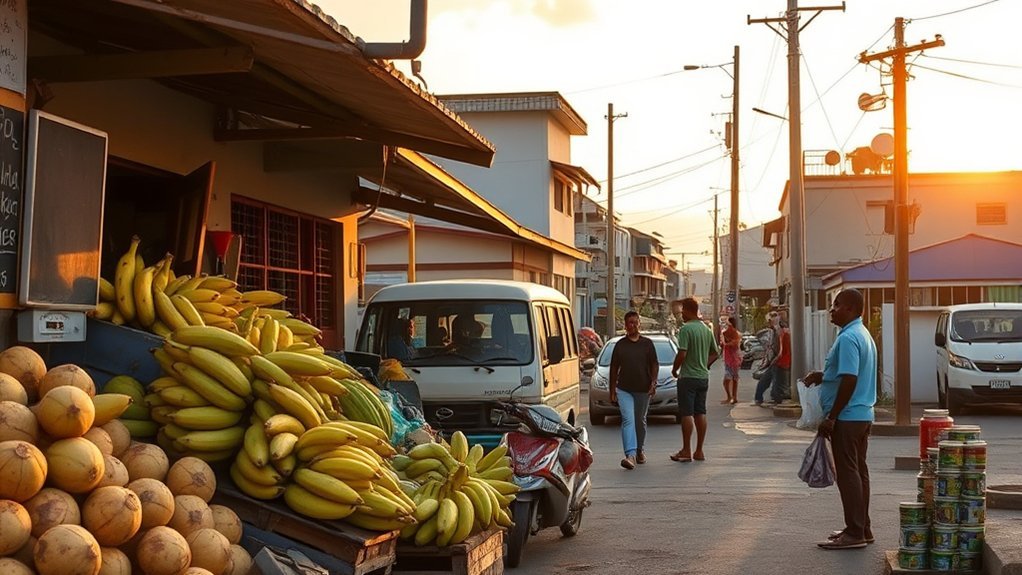
The Solomon Islands is a country of about 900 islands, and nearly everything a newcomer buys is shipped in. Fuel, power, imported food, and expat-standard rentals cost as much as or more than in Australia. Local food, bus fares, and market produce are cheap.
Most price data comes from Honiara, on Guadalcanal, which is where most foreigners live. Auki, Gizo, and other provincial towns have fewer shops, less reliable power and internet, and limited health care. Rent may be lower there, but freight, boat travel, and backup power often cancel the savings.
The data behind this guide is thin. The main crowd-sourced database for the country had only 113 price entries from nine contributors in the 12 months to December 2025. A second database models costs from just Honiara and Auki. Where the two agree, we use the figure. Where they differ, we give a range.
Rent and Housing in Honiara
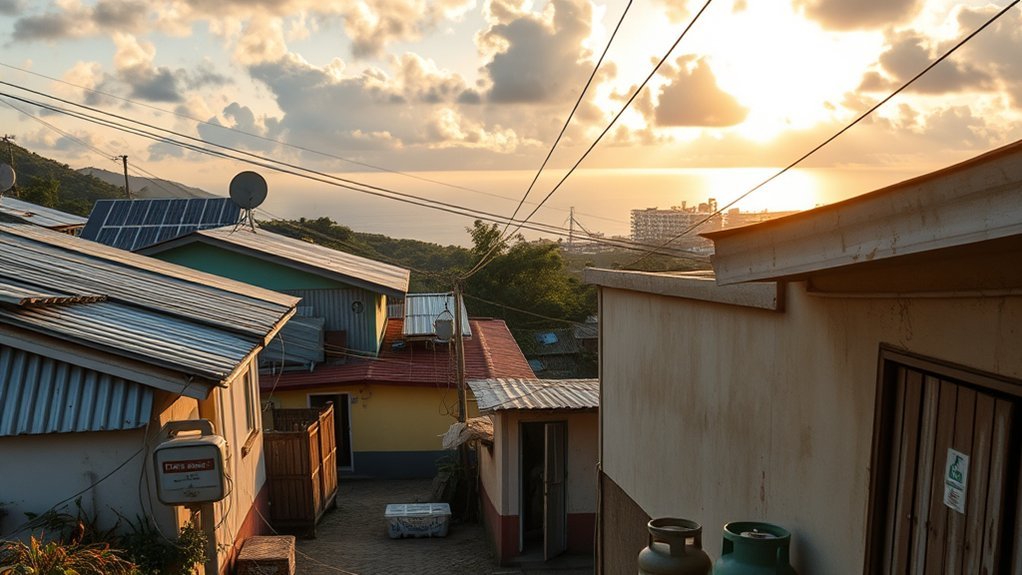
Housing is the largest cost for anyone not given a house by an employer. The table shows crowd-sourced averages from late 2025, the most recent available. The ranges are wide because few apartments are listed and quality varies a lot.
| Home Type | Average Rent (SBD/month) | Approx. USD | Reported Range (SBD) |
|---|---|---|---|
| 1-bed, city center | 4,780 | $590 | 3,500–12,000 |
| 1-bed, outside center | 4,250 | $525 | 3,500–4,750 |
| 3-bed, city center | 12,900 | $1,595 | 5,000–40,000 |
| 3-bed, outside center | 11,000 | $1,360 | 4,000–18,000 |
A few points to keep in mind:
- Expat-standard homes are scarce. Secure, furnished houses with water tanks and backup power in areas such as Tasahe, Lengakiki, and the hills above the city center rent at the top of these ranges.
- Cheaper homes exist in eastern and western Honiara, but many lack security, reliable water, or screens.
- Buying is rarely an option. Most land is customary land held by clans, and foreigners face limits on owning it. Most newcomers rent.
- Mortgage rates are high, around 16% on crowd-sourced data, which also pushes rents up.
Questions to Ask Before Signing a Lease
- Is electricity, water, rubbish collection, security, or internet included?
- Who pays for repairs, plumbing, storm damage, and pest control?
- How much deposit or advance rent is required, and when is it refunded?
- Is there a water tank, a generator or solar backup, and surge protection?
- Which mobile networks work inside the house?
- Are air conditioning, mosquito screens, and kitchen appliances included?
Utilities, Internet, and Phone
Electricity is the cost that surprises most newcomers. Solomon Power (SIEA) runs mostly on imported diesel, and its tariff includes a fuel charge that changes with oil prices. Its October 2026 tariff sheet lists these residential rates:
| Monthly Use | Rate per kWh (SBD) | Approx. USD per kWh |
|---|---|---|
| Under 100 kWh | 7.25 | $0.90 |
| 100–200 kWh | 7.74 | $0.96 |
| Over 200 kWh | 8.19 | $1.01 |
Each rate is a non-fuel charge plus a fuel charge of SBD 4.39. The fuel charge was SBD 2.91 in May 2026 and SBD 4.89 in June, so bills can swing by a quarter or more within a few months.
What that means for a monthly bill:
- Low use, no air conditioning (150 kWh): about SBD 1,100–1,160 (~$135–$145).
- One air conditioner running at night (400 kWh): about SBD 3,100–3,300 (~$385–$405).
- All basic utilities for an 85 m² apartment (power, water, garbage): crowd-sourced reports range from SBD 1,000 to 6,000, with an average near SBD 4,330 (~$535). That average reflects expat homes with air conditioning.
Other monthly connections:
- Home fiber internet: Our Telekom advertises fiber-to-the-home plans from SBD 399 (~$49) a month with unlimited data. Fiber only reaches parts of Honiara. Crowd-sourced reports for fast unlimited broadband average about SBD 820 (~$100).
- Mobile plan with 10 GB or more of data: about SBD 190 (~$24) on average, with reports from SBD 100 to 400. Our Telekom and bmobile are the two main networks.
- Drinking water: tap water is not safe to drink in many areas. Budget for a filter or bottled water, about SBD 9.40 (~$1.17) for 1.5 liters.
Food: Groceries and Dining Out
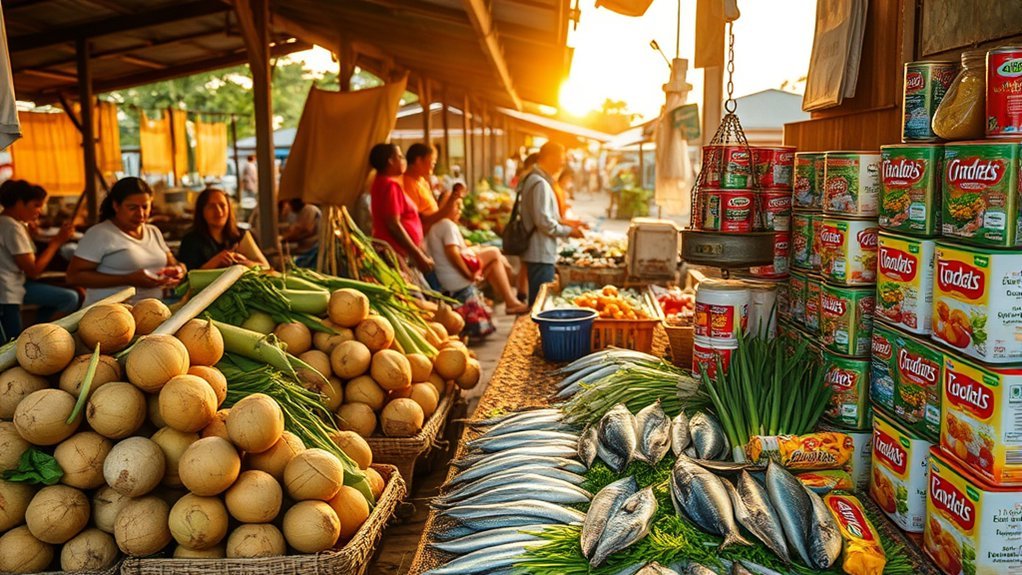
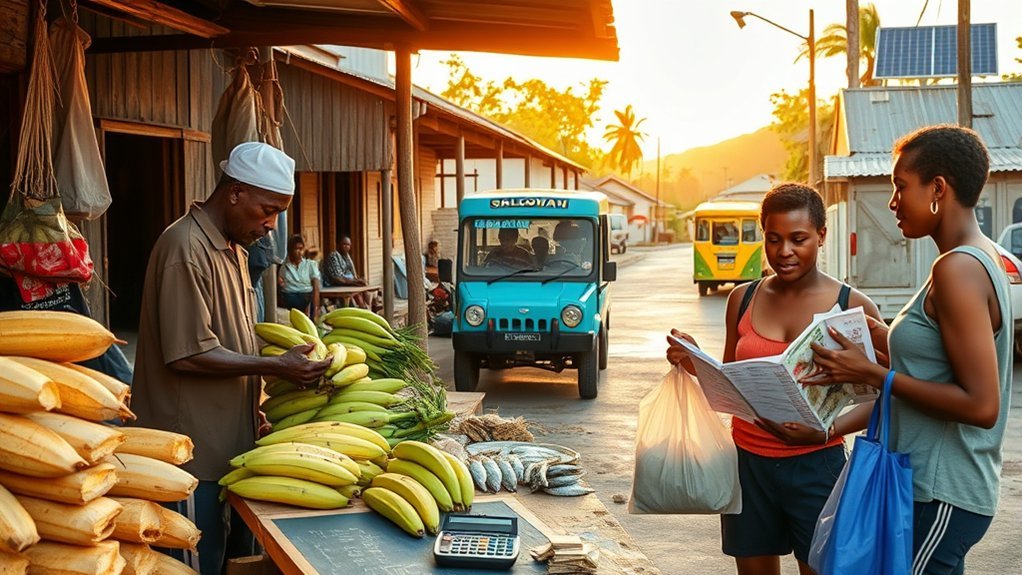
Your grocery bill depends on how much you buy at the Honiara Central Market versus the supermarkets. Fish, root crops, bananas, greens, and seasonal fruit are cheap at the market. Rice is a staple and is exempt from goods tax. Dairy, meat, cheese, and packaged foods are mostly imported from Australia and Asia and cost more than in Australia.
Typical supermarket prices from crowd-sourced reports (late 2025):
| Item | Typical Cost (SBD) | Approx. USD |
|---|---|---|
| Milk (1 liter) | 22.43 | $2.78 |
| White bread (1 lb loaf) | 10.95 | $1.36 |
| Rice (1 lb) | 5.73 | $0.71 |
| Eggs (12) | 46.65 | $5.77 |
| Chicken fillets (1 lb) | 29.48 | $3.65 |
| Beef (1 lb) | 53.43 | $6.61 |
| Local cheese (1 lb) | 25.85 | $3.20 |
| Bananas (1 lb) | 9.98 | $1.24 |
| Tomatoes (1 lb) | 13.15 | $1.63 |
| Domestic beer (0.5 liter bottle) | 14.20 | $1.76 |
Eggs are a good example of the import premium: a dozen costs close to $6. A single person who cooks at home and shops at the market can spend about SBD 2,000–2,500 (~$250–$310) a month. Add SBD 1,000 or more if you rely on imported brands.
Eating Out and Entertainment
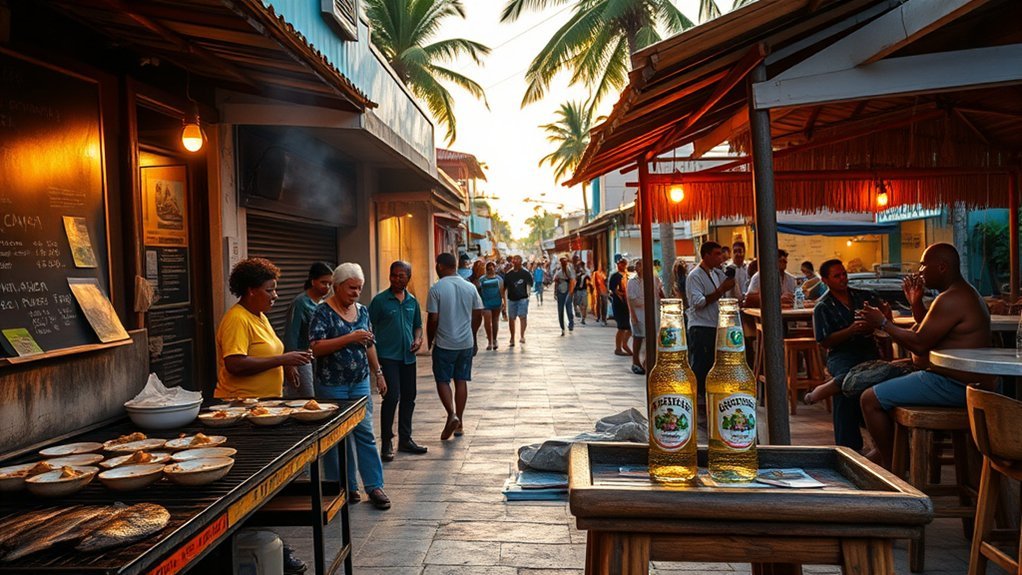
Simple local meals of fish, rice, and greens are cheap. Hotel restaurants and Western-style cafés in Honiara are priced for visitors. Restaurant meals carry a 10% sales tax.
- Meal at an inexpensive restaurant: about SBD 50 (~$6.20)
- Three-course dinner for two at a mid-range restaurant: about SBD 525 (~$65)
- Fast-food combo meal: about SBD 100 (~$12.40)
- Cappuccino: about SBD 27 (~$3.35)
- Domestic draft beer (pint): about SBD 22.50 (~$2.80)
- Gym membership: about SBD 225 (~$28) a month
Diving, island resorts, and domestic flights to Gizo or Munda are the main leisure costs. Set a separate budget for them.
Transportation and Getting Around
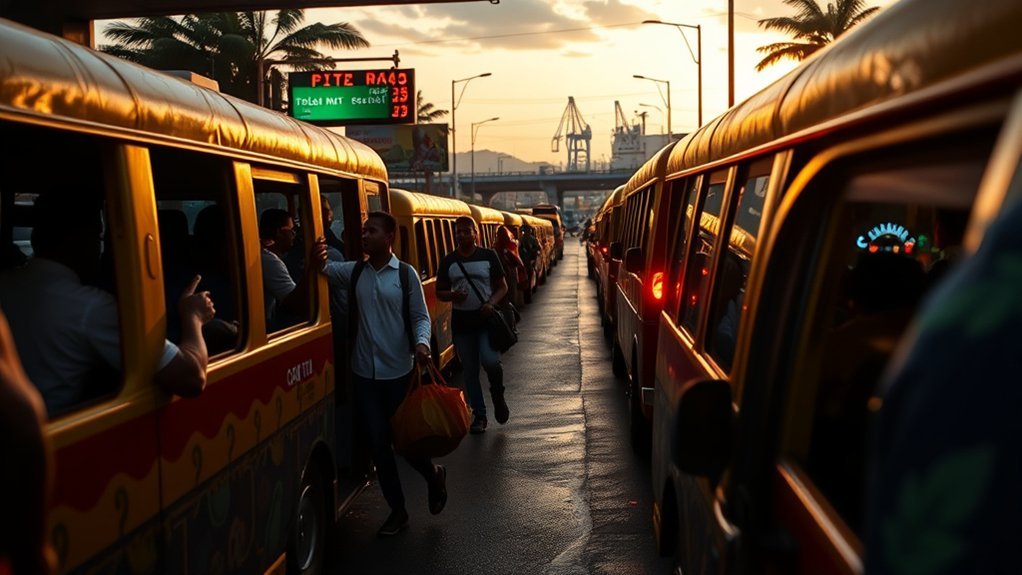
Honiara’s minibuses run along the main road and are the cheapest way to get around. Taxis are common. Many do not use meters, so agree on the fare first.
| Item | Typical Cost (SBD) | Approx. USD |
|---|---|---|
| Minibus ride, Honiara | 3–6 | $0.37–$0.74 |
| Regular bus use, monthly | 150–250 | $19–$31 |
| Taxi, short trip in town | about 10 to start, then about 10 per km | $1.24 + $1.24/km |
| Petrol (1 liter), May 2026 cap | 11.05 | $1.37 |
| Diesel (1 liter), May 2026 cap | 14.88 | $1.84 |
Fuel prices are set by the government’s Price Advisory Committee and changed sharply this year. In March 2026, petrol was capped at about SBD 8.86 a liter. After global oil prices jumped, the government raised the cap to SBD 12.45 for petrol and SBD 13.24 for diesel in late April. It then used a smoothing plan, setting petrol at about SBD 11.05 in May. Check the current pump price before you budget for a car.
Owning a car adds import duty, registration, insurance, and costly imported parts. Roads outside Honiara are limited, and most travel between islands is by boat or small plane. Inter-island ferries and flights are not included in the monthly budgets below, so add them if you need them.
Healthcare and Insurance
Health care is where the Solomon Islands differs most from richer countries. Public care at the National Referral Hospital in Honiara is low-cost for residents, but it is often short of staff, medicine, and supplies.
According to the US State Department:
- Facilities in Honiara and Auki are adequate but may be below US standards, and public clinics often lack basic supplies.
- Most providers accept cash only.
- Serious cases need evacuation to Australia or New Zealand, which can cost thousands of dollars.
- Malaria and dengue are widespread, and counterfeit medicines are common.
For these reasons, every foreign resident should carry international health insurance with medical evacuation cover. Premiums depend on age, plan, and nationality, so get quotes. The budgets below include an allowance of SBD 800–1,200 (~$100–$150) per adult a month as a placeholder. Older residents should expect to pay more. Also budget for malaria prevention, mosquito nets, and repellent.
Schools and Childcare
Families face the widest cost range because school choice matters so much. Crowd-sourced reports give these averages:
- International primary school: about SBD 18,670 (~$2,310) a year per child, with reports from SBD 10,000 to 26,000 (~$1,240–$3,220). Add enrollment fees, uniforms, books, and transport.
- Private full-day preschool: about SBD 1,000 (~$124) a month.
- Public and church schools: classes are in English, but resources and class sizes vary widely.
Choice is limited. Honiara has only a few schools that follow an international or Australian-style curriculum. Many expat families with older children use boarding schools or online schooling in Australia or New Zealand, which costs far more. Two children in an international primary school add about SBD 3,110 (~$385) a month.
Taxes: Goods Tax, Sales Tax, and Income Tax
The Solomon Islands does not yet have a VAT. Consumers pay two older taxes instead, according to the Inland Revenue Division:
- Goods tax: 15% on imported goods and 10% on locally made goods. Rice, medicines, and some other items are exempt.
- Sales tax: 10% on services such as telecommunications and restaurant meals.
- VAT plans: the government has drafted a 15% VAT to replace these taxes. In September 2026 the finance minister said the bill will still go to Parliament, but no start date has been set.
- Income tax: PAYE is deducted from wages. The tax-free threshold is SBD 30,080 a year (~$3,720), in place since 2020. Income above it is taxed at progressive rates rising to 40%.
- Pension fund: employees pay 5% of wages to the National Provident Fund, and employers pay 7.5%.
If you are paid by a foreign employer or have income in several countries, ask a local tax adviser about your residency status before you arrive.
Visas and Work Permits
US citizens, and visitors from many other countries, get a 30-day visitor permit on arrival at Henderson International Airport. Total stays cannot exceed 90 days in any 12-month period. You need a passport valid for six months, an onward ticket, and proof of funds. Cash of SBD 50,000 (~$6,190) or more must be declared on entry and exit.
A visitor permit does not allow work. The Ministry of Commerce, Industry, Labour and Immigration issues work permits to foreign workers and investors. Employers must show that no qualified local worker is available. Applicants normally apply from outside the country, and the ministry asks applicants to confirm the prescribed fee when they file. Fees are not posted online, so ask your employer or the ministry for current amounts. Most employers cover the work permit and residence permit for staff.
One-Time Setup Costs
Budget for these before your first normal month:
- Flights: most routes go through Brisbane, with some via Fiji, Port Moresby, or Vanuatu.
- Rental deposit and advance rent: often one to three months for expat housing, or SBD 5,000–15,000 (~$620–$1,860) for a one-bedroom.
- Furnishing an unfurnished home: appliances and furniture are imported, carry 15% goods tax, and cost more than in Australia.
- Household setup: water filter, mosquito nets, surge protectors, and a small generator or battery backup if the house has none.
- Health: travel-health consultation, vaccines, a supply of malaria medicine, and the first insurance premium.
- Freight: shipping household goods from Australia takes weeks and adds customs charges.
- Emergency reserve: enough cash for a flight out for each family member.
Sample Monthly Budgets
These budgets combine the prices above for Honiara. Rent uses crowd-sourced averages. Health uses the insurance allowance described above, not a quoted premium. All figures are in SBD per month.
| Expense | Single, Lean | Single, Comfortable | Couple | Family of Four |
|---|---|---|---|---|
| Rent | 3,500–4,250 | 4,800–6,000 | 4,800–6,000 | 11,000–12,900 |
| Electricity, water, garbage | 1,000–1,500 | 2,500–3,500 | 2,500–3,500 | 3,500–4,500 |
| Internet + mobile | 500–600 | 800–1,000 | 1,000–1,200 | 1,200–1,400 |
| Groceries | 2,000–2,500 | 3,000–3,500 | 5,000–6,000 | 8,000–9,500 |
| Eating out + leisure | 500–700 | 1,725 | 2,000 | 2,000 |
| Transport | 250–500 | 1,000–1,500 | 1,000–1,500 | 2,000–3,000 |
| Health insurance allowance | 800 | 1,200 | 2,400 | 4,000 |
| Other (clothes, household, phone credit) | 500–700 | 800 | 1,200 | 1,800 |
| Total (SBD) | 9,050–11,550 | 15,825–19,225 | 19,900–23,800 | 33,500–39,100 |
| Total (USD) | $1,120–$1,430 | $1,960–$2,380 | $2,460–$2,950 | $4,150–$4,840 |
Single, lean assumes a one-bedroom outside the center, little air conditioning, market shopping, and minibuses. Single, comfortable assumes a secure central apartment, air conditioning at night, imported groceries, taxis, and a gym. The family column assumes a three-bedroom house and a car or regular taxis. International school for two children adds about SBD 3,110 a month, bringing the family total to about SBD 36,600–42,200 (~$4,530–$5,220).
For comparison, one crowd-sourced database estimates a single person’s costs at about US$1,500 a month including rent, while another puts costs before rent at about SBD 9,440 (~$1,170). That gap shows how much lifestyle choices drive the total here.
Salaries and Purchasing Power
Local pay is low compared with the cost of an expat lifestyle:
| Measure | Monthly Amount (SBD) | Approx. USD |
|---|---|---|
| Minimum wage, full time (SBD 8/hour) | about 1,390 | $170 |
| Average net salary (crowd-sourced) | about 3,740 | $465 |
| GDP per capita, 2025 (IMF), per month | about 1,410 | $174 |
| Lean single budget (this guide) | 9,050–11,550 | $1,120–$1,430 |
Most Solomon Islanders live outside the cash economy for much of their food and housing. They grow crops, fish, and live on family land. That is why local households get by on incomes that would not cover a single expat’s rent. If you are offered a job, value the whole package: housing, flights, insurance, school support, and evacuation cover can be worth more than the cash salary.
Safety and Practical Notes
The US State Department rates the Solomon Islands at Level 2, “Exercise Increased Caution.” Points that affect your budget:
- Security: petty theft and break-ins are common in Honiara, and burglaries tend to rise before Christmas. Many expats pay for security guards or choose gated housing.
- Unrest: demonstrations can start with little notice. Keep an emergency fund and travel insurance that covers departure.
- Unexploded ordnance: World War II munitions remain around Honiara’s ridges, Tulagi, and parts of the Western Province.
- Banking: carry more than one card, keep some cash, and expect few ATMs outside Honiara.
Money-Saving Tips
- Negotiate housing into your contract. Employer-provided housing removes the largest and most uncertain cost.
- Manage your power use. At about SBD 8 per kWh, run air conditioning only at night and in one room. Ceiling fans cost far less.
- Shop at the Central Market. Fish, root crops, and fruit cost much less than imported food.
- Use minibuses. At SBD 3 a ride, they cost a fraction of daily taxis.
- Bring what is costly here. Electronics, good-quality kitchen items, sunscreen, and specialty medicines cost more locally.
- Get a prepaid power meter. It helps you track your electricity spending week by week.
- Watch fuel announcements. Prices change monthly, and electricity follows them.
How the Solomon Islands Compares With Nearby Countries
The Solomon Islands is one of the more expensive places in Melanesia for a foreigner, mainly because of housing and electricity. Its closest comparison is the cost of living in Papua New Guinea, where Port Moresby has similar security costs and a shortage of expat-standard housing. The cost of living in Fiji is usually lower for expats, with more supermarkets, housing, and private hospitals to choose from. In Polynesia, compare our guide to the cost of living in Samoa. Many Solomon Islands residents also travel to Brisbane for shopping and health care, so the cost of living in Australia is a useful reference for imported prices.
Frequently Asked Questions
How much does it cost to live in the Solomon Islands per month?
A single person needs about SBD 9,000–11,500 (~$1,120–$1,430) a month for a simple life in Honiara, and about SBD 15,800–19,200 (~$1,960–$2,380) for a comfortable one. A couple should budget about SBD 19,900–23,800 (~$2,460–$2,950).
How much does a family of four need in the Solomon Islands?
A family of four should plan on about SBD 33,500–39,100 (~$4,150–$4,840) a month in Honiara, including a three-bedroom house and health insurance. International school for two children adds about SBD 3,110 (~$385) a month.
How much is rent in Honiara?
Crowd-sourced averages put a one-bedroom at about SBD 4,780 (~$590) a month in the center and SBD 4,250 (~$525) outside it. A three-bedroom averages SBD 11,000–12,900 (~$1,360–$1,595). Secure, furnished expat homes cost more.
Why is electricity so expensive in the Solomon Islands?
Most power is made from imported diesel. Solomon Power’s October 2026 residential rates are SBD 7.25–8.19 per kWh (~$0.90–$1.01), including a fuel charge that changes with oil prices. An apartment with air conditioning can easily use SBD 3,000 of power a month.
What is the minimum wage in the Solomon Islands?
The minimum wage is SBD 8 an hour for most workers and SBD 7.20 in fishing and agriculture. It has been unchanged since August 2019. Full time, that is about SBD 1,390 (~$170) a month.
Does the Solomon Islands have VAT?
Not yet. Shoppers pay a 15% goods tax on imports, 10% on locally made goods, and a 10% sales tax on services such as restaurant meals. A 15% VAT has been drafted, but no start date has been set.
Can a visitor work in the Solomon Islands?
No. Visitors get a 30-day permit on arrival, with a total limit of 90 days in any 12 months, and it does not allow work. Foreign workers need a work permit from the Ministry of Commerce, Industry, Labour and Immigration, usually arranged by the employer before arrival.
Conclusion
The Solomon Islands is cheap for those who live like locals and expensive for those who want expat comforts. Bus fares, market food, and simple meals cost little. Rent for secure housing, imported groceries, and electricity at about SBD 8 per kWh push a comfortable single budget to roughly $1,960–$2,380 a month. Fuel-driven inflation in 2026 has made bills less predictable, and health care often means evacuation insurance on top of everything else. Settle your housing, insurance, and school arrangements in writing before you move, and keep a cash reserve for emergencies.
Sources
- Central Bank of Solomon Islands – exchange rates, October 7, 2026
- Central Bank of Solomon Islands – key data, headline inflation 2026
- Solomon Islands National Statistics Office – 2025 inflation
- IMF – 2026 Article IV consultation with Solomon Islands
- Solomon Power – tariff charges, October 2026
- Our Telekom – home broadband
- Solomon Islands Government – April 2026 fuel price increase
- SIBC – May 2026 fuel price smoothing
- WageIndicator – Solomon Islands minimum wage
- Inland Revenue Division – goods tax
- Inland Revenue Division – sales tax
- Solomon Times – tax-free threshold raised to SBD 30,080
- VATCalc – Solomon Islands VAT proposal
- US Department of State – Solomon Islands travel information
- Ministry of Commerce, Industry, Labour and Immigration – work permits
- Numbeo and Livingcost – Solomon Islands crowd-sourced price data (December 2025 and June 2026)