Author: Theo Ramirez
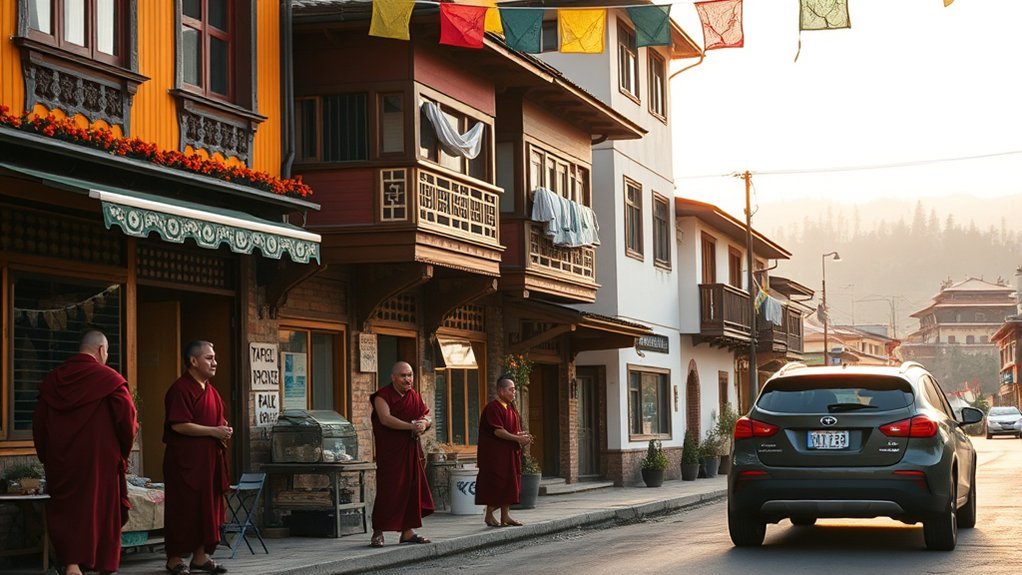
The cost of living in Bhutan in 2026 is low by US standards. A single person living simply in Thimphu can get by on about Nu 28,000–38,000 a month (roughly $295–$395), and a more comfortable lifestyle with a central apartment, taxis, and private insurance costs about Nu 58,000–81,000 ($600–$845). A couple should plan on Nu 66,000–96,000 ($685–$1,005). These figures use the ngultrum’s 1:1 peg to the Indian rupee and a rate of about Nu 96 per US dollar (early October 2026). Bhutan has very little public price data, so treat every number here as a planning range. Rent, imported goods, and your visa status shape the budget more than anything else. Below you’ll find Thimphu rents, grocery and restaurant prices, healthcare, the tourist fee, work permits, and sample budgets.
Quick Answer
- Single person, lean: Nu 28,000–38,000 (~$295–$395) a month in Thimphu, outside the center.
- Single person, comfortable: Nu 58,000–81,000 (~$600–$845) with a central apartment and private insurance.
- Couple: Nu 66,000–96,000 (~$685–$1,005) a month.
- Rent, one-bedroom in Thimphu: about Nu 8,300 (~$86) outside the center and Nu 12,250 (~$127) in the center.
- Utilities: about Nu 3,250 (~$34) a month; home internet adds about Nu 2,330 (~$24).
- Inflation: 5.51% in August 2026, down from 6.83% in July.
- Tourist fee: US$100 per night for most visitors (Nu 1,200 for Indian nationals), plus a US$40 visa fee. Long-term residents on work visas do not pay it as a living cost.

Die With Zero offers a fresh perspective on personal finance by encouraging readers to use money intentionally to create memorable life experiences instead of simply accumulating wealth. Written by Bill Perkins, this book combines practical guidance with a motivating philosophy to help readers align spending, saving, and life goals for a more fulfilling future.

This hardcover edition by Eric Metaxas offers a compelling look at the origins of the United States during the Colonial Period. It blends historical narrative with engaging storytelling, making it appealing for readers interested in American history, early nation-building, and the ideas that shaped the country. A strong choice for history enthusiasts, students, and anyone exploring the foundations of the nation.

Come Eat offers 100 approachable recipes designed to make everyday cooking more enjoyable, nourishing, and sustainable. With a focus on flavorful meals and practical preparation, this hardcover cookbook is ideal for home cooks looking for inspiration for salads, sides, and main dishes. Author Melissa Ben-Ishay shares recipes that encourage consistent, feel-good eating without sacrificing taste.
Currency, Inflation, and What the Data Can Tell You
The exchange rate. The ngultrum (Nu) is pegged to the Indian rupee at par, and rupees circulate widely alongside it. That means the ngultrum moves with the rupee against the dollar. The rupee traded at about 96.1 per dollar on October 2, 2026, according to Exchange-Rates.org’s 2026 history, compared with about 89.9 in early January. If you earn in dollars, your money now goes about 7% further than at the start of the year. All conversions in this guide use Nu 96 per US dollar.
Inflation. The National Statistics Bureau (NSB) reported year-on-year inflation of 5.51% in August 2026, down from 6.83% in July. In July, food prices were up 5.66% and non-food prices 8.16%. Because Bhutan imports most of its manufactured goods and much of its food from India, Indian prices and transport costs feed directly into local shelves.
The data problem. Bhutan has a population of under 800,000 and very few public price reports. The crowd-sourced averages used in this guide come from about five contributors and 60 entries over the past year. They are useful for orientation, not for signing a lease. Always get a direct quote for rent, school fees, and insurance.
Bhutan’s headline prices are low, but foreigners often pay more than locals for furnished housing, imported food, and health coverage. Build your budget from real quotes, not national averages.
How Bhutan Compares With the United States
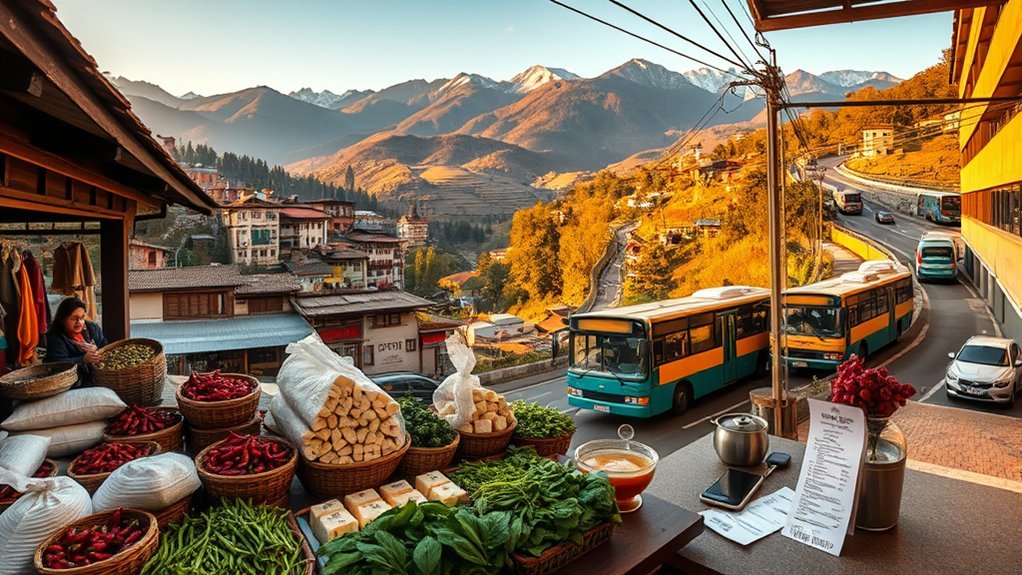
Crowd-sourced comparisons published in mid-2026 put Bhutan’s overall living costs roughly 60–85% below those of the United States, depending on the method. The gap is widest for rent, local food, and buses. It narrows for imported goods, electronics, cars, and gym memberships, which cost close to or above US prices once import duties and transport are added.
Here is how typical Thimphu prices look in dollars:
| Item | Bhutan (Nu) | Approx. USD |
|---|---|---|
| 1-bed apartment, Thimphu center | 12,250 | $127 |
| Meal at an inexpensive restaurant | 250 | $2.60 |
| Monthly bus pass | 500 | $5.20 |
| Gasoline (1 liter) | 71 | $0.74 ($2.80 per gallon) |
| Gym membership (monthly) | 4,500 | $47 |
| Average monthly net salary | 30,400 | $316 |
The salary line matters. Local pay is low, so a cost index alone does not tell you whether you can live well. Someone earning a US salary remotely or through an international employer will find Bhutan cheap. Someone moving to a local salary needs to compare that pay directly against rent and food.
Cost of Living by City
Thimphu, the capital, is the only city with regular crowd-sourced price reports. Figures were last updated in September 2026.
| Area | 1-Bed, Center | 1-Bed, Outside Center | 3-Bed, Center | 3-Bed, Outside Center |
|---|---|---|---|---|
| Thimphu | Nu 12,252 (~$127) | Nu 8,304 (~$86) | Nu 18,343 (~$191) | Nu 14,979 (~$156) |
| Bhutan average | Nu 11,452 (~$119) | Nu 8,235 (~$86) | Nu 17,026 (~$177) | Nu 14,125 (~$147) |
Other towns have no reliable published averages. In general:
- Thimphu has the most jobs, schools, hospitals, and shops, and the highest rents. Newer apartment blocks with heating and reliable water cost more than older buildings.
- Paro, home to the international airport, is quieter. Rents are usually a little lower, but much of the housing near the valley floor is aimed at tourism.
- Phuentsholing sits on the Indian border. Many residents shop in the Indian town of Jaigaon next door, which keeps grocery and household costs down.
- Gelephu in the south is the site of the planned Gelephu Mindfulness City, a special economic zone. Watch for rent changes there as projects start.
Housing and Utilities
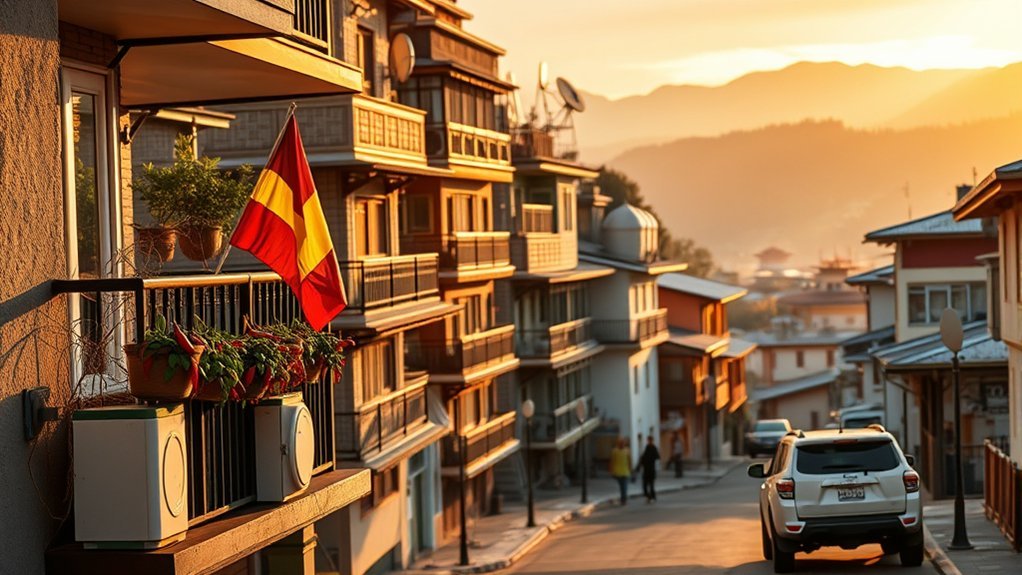
Rent is Bhutan’s biggest advantage for newcomers. A one-bedroom outside central Thimphu averages about Nu 8,300 (~$86) a month, and a three-bedroom about Nu 15,000 (~$156). Furnished apartments built to Western standards, with insulation, good heating, and a backup water tank, can cost two or three times the averages. Many employers that hire foreigners, such as international agencies, NGOs, and schools, provide or subsidize housing, so ask about it before you negotiate pay.
Before signing, check:
- How the apartment is heated in winter, since Thimphu nights drop below freezing from December to February
- Whether water supply is continuous or rationed, and whether there is a storage tank
- Who pays for electricity, water, and garbage collection
- Whether the landlord wants several months of rent in advance
Utilities. Basic utilities (electricity, water, and garbage) for a mid-size apartment average about Nu 3,250 (~$34) a month in Thimphu. Bhutan generates nearly all of its power from hydropower, so household electricity is cheap. Bills climb in winter if you heat with electric heaters, and some homes use bukhari wood stoves or LPG heaters instead.
Internet and phone. Home broadband of 60 Mbps or more averages about Nu 2,330 (~$24) a month. The crowd-sourced average for a mobile plan with data is about Nu 3,460 (~$36), but prepaid top-ups from Bhutan Telecom or TashiCell can cost much less for light users.
Buying property is generally not an option for foreigners. Plan to rent for the whole of your stay.
Food: Groceries and Dining Out
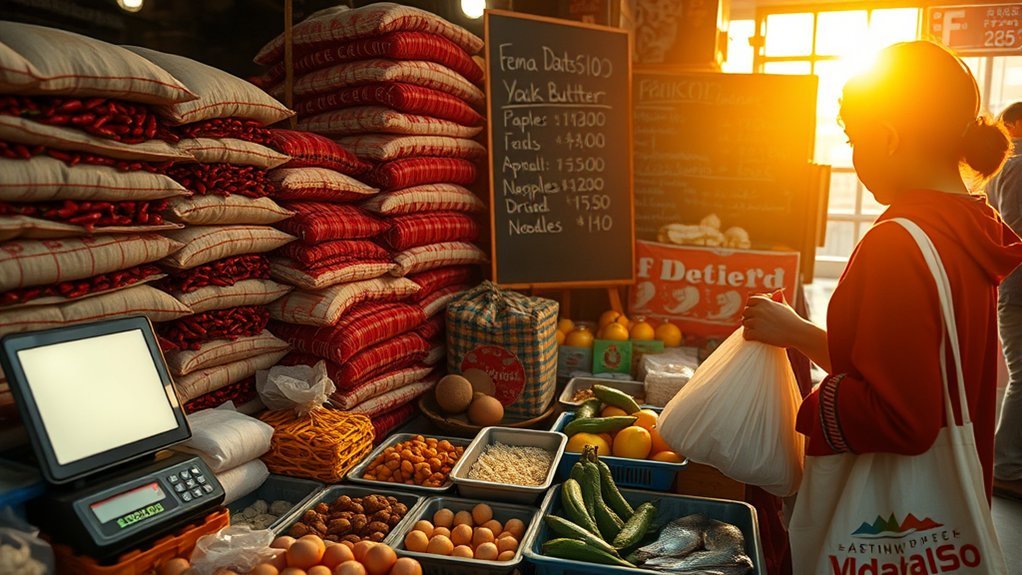
Local staples are cheap. Imported goods are not. Average national grocery prices from September 2026 crowd-sourced data:
| Item | Typical Cost (Nu) | Approx. USD |
|---|---|---|
| Milk (1 liter) | 77.50 | $0.81 |
| Bread (1 lb loaf) | 71 | $0.74 |
| Rice (1 lb) | 43 | $0.45 |
| Eggs (12) | 151 | $1.57 |
| Chicken fillets (1 lb) | 164 | $1.71 |
| Beef (1 lb) | 164 | $1.71 |
| Apples (1 lb) | 108 | $1.13 |
| Potatoes (1 lb) | 25 | $0.26 |
| Onions (1 lb) | 30 | $0.31 |
| Bottled water (1.5 liters) | 30 | $0.31 |
A single person who cooks with local rice, vegetables, cheese (datshi), chilies, and meat can eat well on about Nu 9,000–12,000 (~$95–$125) a month. Imported cereals, wine, chocolate, coffee, and packaged Western foods can double that.
Eating out is one of the cheapest parts of life in Bhutan:
- Meal at an inexpensive restaurant: about Nu 250 (~$2.60)
- Three-course dinner for two at a mid-range restaurant: about Nu 1,350 (~$14)
- Fast-food combo meal: about Nu 475 (~$4.95)
- Cappuccino: about Nu 123 (~$1.28)
- Domestic beer (pint): about Nu 250 (~$2.60)
Entertainment and Leisure
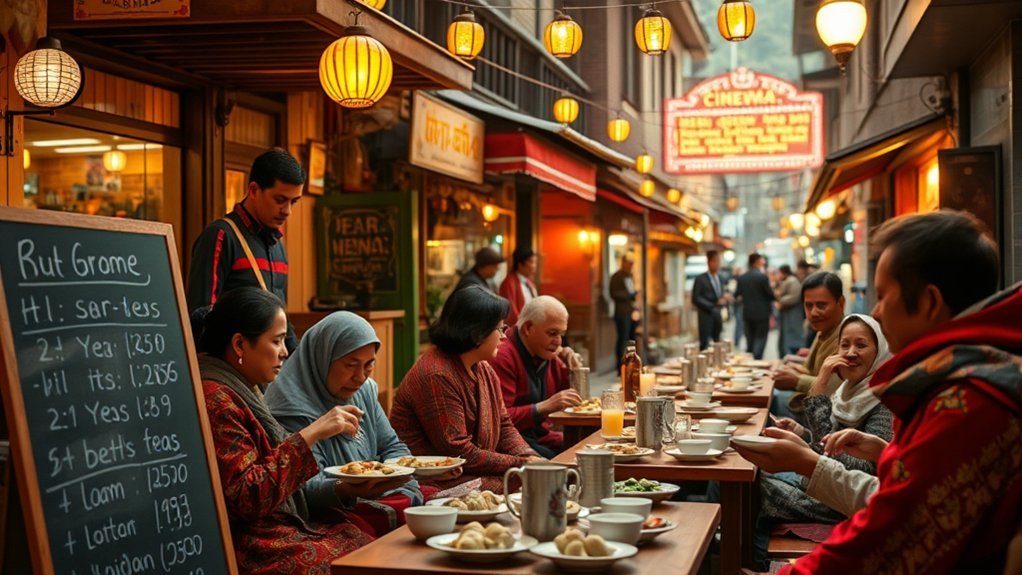
Nightlife in Bhutan is low key. Social life centers on restaurants, cafés, small bars, karaoke, archery matches, and festivals (tshechus), which are free to attend. A cinema ticket costs about Nu 300 (~$3), and a gym membership about Nu 4,500 (~$47) a month, which is high compared with local rent. Hiking is free, though park and trekking permits apply on some routes.
Transportation and Fuel
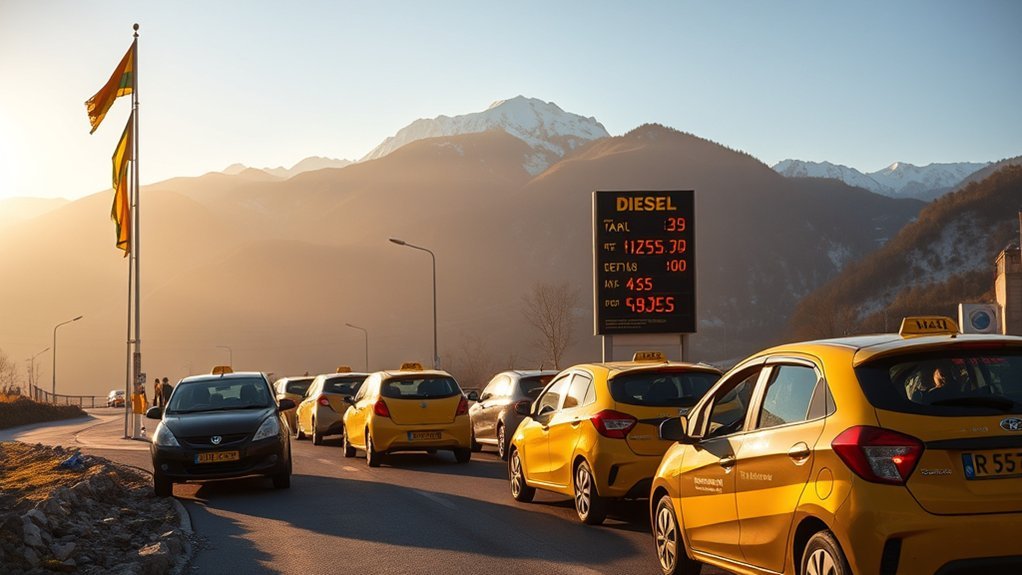
Bhutan has no railways or domestic rideshare giants, so you get around by bus, taxi, or private car.
- City buses in Thimphu: about Nu 75 (~$0.78) for a one-way ticket, or Nu 500 (~$5.20) for a monthly pass.
- Taxis: the starting fare is about Nu 75. Taxis are common and many residents use them daily. Budget Nu 4,000–6,000 (~$40–$60) a month if you rely on them.
- Gasoline: about Nu 71 per liter (~$2.80 per gallon), since fuel comes from India at Indian-linked prices.
- Intercity travel: roads are narrow and winding. Thimphu to Phuentsholing takes about five to six hours by road, and trips to the east can take days.
Cars carry heavy import taxes, so buying one costs far more than the fuel suggests. Most newcomers rely on buses and taxis.
Healthcare and Insurance
Bhutan’s constitution provides free basic public health services for its citizens. Foreigners should not assume the same. Visitors generally pay for treatment, and long-term workers should check what their employer or visa sponsor covers.
According to the UK government’s Bhutan health advice, the Jigme Dorji Wangchuck National Referral Hospital in Thimphu offers surgery and emergency care, but hospitals outside the capital generally provide only basic care. Complex conditions often require evacuation to India or Thailand. That makes international health insurance with evacuation cover essential.
Plan on:
- International health insurance: priced by age and coverage. The budgets below assume Nu 6,000–10,000 (~$60–$105) a month for one adult under 60. Replace this with your own quote.
- Evacuation cover: make sure the policy covers air evacuation to India or Thailand.
- Medicines: common drugs are available in Thimphu, often imported from India. Bring a supply of anything specialized.
Schools and Childcare
Public schools in Bhutan teach mainly in English and are free for citizens. Foreign children usually attend private schools. Crowd-sourced averages put a full-day private preschool at about Nu 4,350 (~$45) a month and international-style primary school at about Nu 55,000 (~$575) a year. These figures come from a handful of reports, and fees at the few schools that serve expatriate families can be much higher. Ask each school for a written fee schedule, including admission, transport, uniforms, and meals.

This hands-on sorting toy helps toddlers build color recognition, counting, sorting, and food identification through imaginative pretend play. It includes realistic fruit and vegetable pieces along with color-coded baskets, supporting early math skills, vocabulary development, and healthy food awareness. Designed for little hands, this versatile set grows with children from simple matching activities to preschool learning and farmers market role play.

This CUCKOO Micom rice cooker makes everyday meals easier with fuzzy logic cooking that helps deliver consistently fluffy rice and grains. With multiple menu options, a delay timer, keep warm setting, and versatile steaming and multi-cook functions, it is well suited for preparing rice, porridge, soups, and stews for small to medium households. The non-stick inner pot and customizable My Mode settings add convenience and flexibility for a variety of tastes and textures.

This hardcover cookbook offers fast, approachable recipes designed for busy days and low-energy nights. Caroline Chambers focuses on simple, flavorful meals that help you get dinner on the table without overthinking it. It's a practical pick for home cooks who want quick weeknight inspiration and minimal-fuss cooking.
Taxes
Bhutan’s tax system changed in recent years. The Department of Revenue and Customs now administers a Goods and Services Tax under the GST Act, as amended in 2026, and new personal income tax rates under the Income Tax Act of Bhutan 2025. Rates and exemptions were still being refined in 2026, so check the department’s latest public notifications before you plan. Foreign employees normally have income tax deducted by their employer. Your home country’s tax rules still apply, and US citizens file US returns wherever they live.
Visas, Work Permits, and the Tourist Fee
Tourists. Most foreign visitors pay a Sustainable Development Fee (SDF) of US$100 per adult per night, according to Bhutan’s official visa page, plus a one-time US$40 visa fee. The official tourism FAQs list US$50 per night for children aged 6–11, no fee for children under 6, and Nu 1,200 per night for Indian nationals. A 24-hour SDF waiver for the border towns of Samtse, Phuentsholing, Gelephu, and Samdrup Jongkhar runs from June 2026 through August 2027. Over a 30-day month, the SDF alone would add up to US$3,000 (about Nu 288,000), several times any budget in this guide. That is why living in Bhutan as a long-term tourist is not realistic.
Working in Bhutan. To live in Bhutan long term, most foreigners need a job offer and a work permit. The Department of Immigration’s work-permit page says you first need approval from the Department of Labour. The employer and employee each sign an undertaking, and you need a medical fitness certificate, including a drug test, from a government-certified doctor in Bhutan. Other routes include student and dependent visas. There is no retirement or digital nomad visa.
One-Time Setup Costs
- Flights: only Drukair and Bhutan Airlines fly into Paro, mostly from Delhi, Kolkata, Bangkok, Kathmandu, and Singapore. Fares are higher than on competitive routes.
- Visa fee: US$40, plus SDF for any nights before your work visa takes effect.
- Rent in advance: landlords often ask for one to three months up front.
- Medical fitness certificate for the work permit.
- Winter gear and heaters: warm clothing, an electric heater, and thick bedding if the apartment lacks them.
- Furniture and kitchen items if the home is unfurnished.
- Emergency fund for medical evacuation or flights home.
Sample Monthly Budgets
These budgets combine the Thimphu figures above. They assume you already hold a work visa and do not pay the SDF.
| Expense (Nu) | Single, Lean | Single, Comfortable | Couple |
|---|---|---|---|
| Rent (1-bed) | 8,300 | 12,250–20,000 | 12,250–18,350 |
| Utilities | 3,250 | 3,250–4,500 | 3,500–5,000 |
| Internet + mobile | 2,300–3,500 | 5,800 | 5,800–7,000 |
| Groceries | 9,000–12,000 | 14,000–18,000 | 20,000–26,000 |
| Eating out + leisure | 3,000–5,000 | 8,000–12,000 | 10,000–15,000 |
| Transport | 500–1,500 | 4,000–6,000 | 4,000–7,000 |
| Health coverage | 2,000–4,000 | 6,000–10,000 | 10,000–18,000 |
| Gym | — | 4,500 | — |
| Total (Nu) | 28,350–37,550 | 57,800–80,800 | 65,550–96,350 |
| Total (USD) | $295–$390 | $600–$840 | $685–$1,005 |
Family of four: crowd-sourced averages put a family’s monthly spending at about Nu 134,600 (~$1,400) before rent, a figure that likely includes private schooling and imported goods. Add a three-bedroom in Thimphu at Nu 15,000–18,300 and the total comes to roughly Nu 149,500–152,900 (~$1,555–$1,590). A family cooking mostly local food and using public schools would spend much less.
Tips for Saving Money in Bhutan
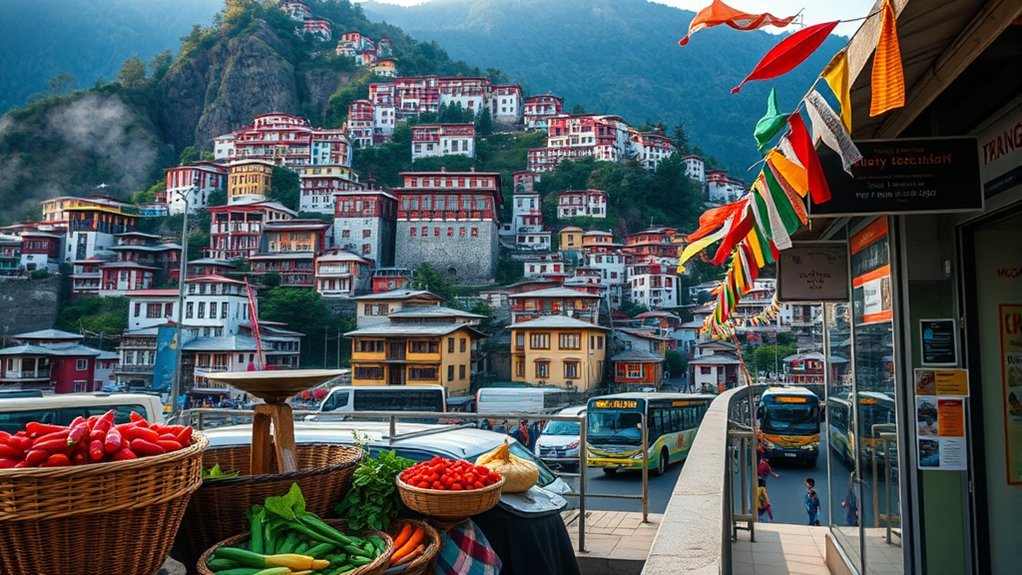
- Negotiate housing into your contract. Many employers of foreigners offer housing or an allowance.
- Eat local. Red rice, ema datshi, seasonal vegetables, and local dairy are far cheaper than imports.
- Use the weekend market. Thimphu’s Centenary Farmers’ Market has the best produce prices.
- Use buses for regular routes and save taxis for nights and bad weather.
- Buy household goods in bulk on trips to Phuentsholing or India.
- Insulate before winter. Heavy curtains and rugs cut heating costs.
- Keep a rupee buffer. The ngultrum follows the rupee, so dollar earners gain when the rupee weakens and lose when it strengthens.
How Bhutan Compares With Nearby Countries
Bhutan’s local prices look a lot like those in its neighbors, but its entry rules are much stricter. The cost of living in India is similar for food and fuel, with far more housing choice and easier visas. Our Nepal living cost guide shows a similar Himalayan lifestyle at comparable prices, and Kathmandu has a larger expat community. For more South Asian options, see the cost of living in Bangladesh and our Sri Lanka expat budget guide.
Frequently Asked Questions
How much does it cost to live in Bhutan per month?
A single person living simply in Thimphu needs about Nu 28,000–38,000 (~$295–$395) a month. A comfortable lifestyle with a central apartment, taxis, and private insurance costs about Nu 58,000–81,000 (~$600–$845). A couple should budget about Nu 66,000–96,000 (~$685–$1,005).
Is Bhutan cheaper than the United States?
Yes, by a wide margin for rent, local food, and transport. Crowd-sourced comparisons put overall costs roughly 60–85% below the US. Imported goods, cars, and gym memberships are much closer to US prices, and local salaries are low, averaging about Nu 30,400 (~$316) a month.
How much is rent in Thimphu?
A one-bedroom apartment averages about Nu 12,250 (~$127) a month in central Thimphu and about Nu 8,300 (~$86) outside the center. A three-bedroom costs about Nu 15,000–18,300 (~$156–$191). Furnished, Western-standard apartments cost more.
Why does it cost $100 a day to visit Bhutan?
Bhutan charges most foreign adult visitors a Sustainable Development Fee of US$100 per night, plus a one-time US$40 visa fee. Children aged 6–11 pay US$50, and Indian nationals pay Nu 1,200 per night. The fee funds development and conservation. It applies to tourists, not to foreigners living in Bhutan on work visas.
Can foreigners live in Bhutan?
Yes, but usually only with a job. Foreigners generally need Department of Labour approval, an employment visa, and a work permit, which requires a medical fitness certificate from a doctor in Bhutan. Student and dependent visas also exist. There is no retirement or digital nomad visa.
Is healthcare free in Bhutan for foreigners?
Free basic public healthcare is a constitutional right for Bhutanese citizens, but foreigners should not count on it. Visitors generally pay for treatment, and complex cases often require evacuation to India or Thailand. International health insurance with evacuation cover is essential.
Conclusion
Bhutan is one of the cheapest places in Asia for rent, local food, and buses. A single person can live simply on about $295–$395 a month in Thimphu, or comfortably on $600–$845. The harder part is getting there. The US$100 nightly tourist fee rules out long stays as a visitor, so most foreigners live in Bhutan through a job and a work permit. Public price data is thin, so get real quotes for housing, school, and insurance, and use the ranges here as a starting point.
Sources
- National Statistics Bureau of Bhutan – Consumer Price Index, August 2026
- National Statistics Bureau – CPI August 2026 release
- Exchange-Rates.org – USD to INR history, 2026
- Department of Tourism, Bhutan – visa and SDF
- Department of Tourism, Bhutan – SDF FAQs
- Department of Immigration, Bhutan – work permit requirements
- Department of Revenue and Customs, Bhutan – GST and income tax notifications
- UK Foreign, Commonwealth & Development Office – Bhutan health advice
- Numbeo – Bhutan and Thimphu (crowd-sourced averages, September 2026)

This combo kit helps women trying to conceive track fertile days and check for pregnancy with convenient at-home testing. The ovulation strips help monitor LH surge progression and are easy to read, while the pregnancy strips provide quick results with simple line interpretation. Designed for ease of use and dependable family planning support, it offers a practical way to stay on top of your fertility journey.

This heartfelt cookbook shares the kitchen wisdom of a Korean mom alongside 100 family recipes that bring comforting, authentic flavors to your table. Blending personal stories with practical guidance, it offers home cooks approachable ways to explore Korean cooking with confidence. The hardcover format and trusted editorial guidance make it a beautiful and reliable addition to any cookbook collection.

This kid-friendly cookbook helps young chefs build confidence in the kitchen with more than 100 recipes designed for fun, learning, and delicious results. Created by America's Test Kitchen Kids, it offers approachable instructions, helpful guidance, and a wide range of dishes that make cooking and eating an engaging family activity.