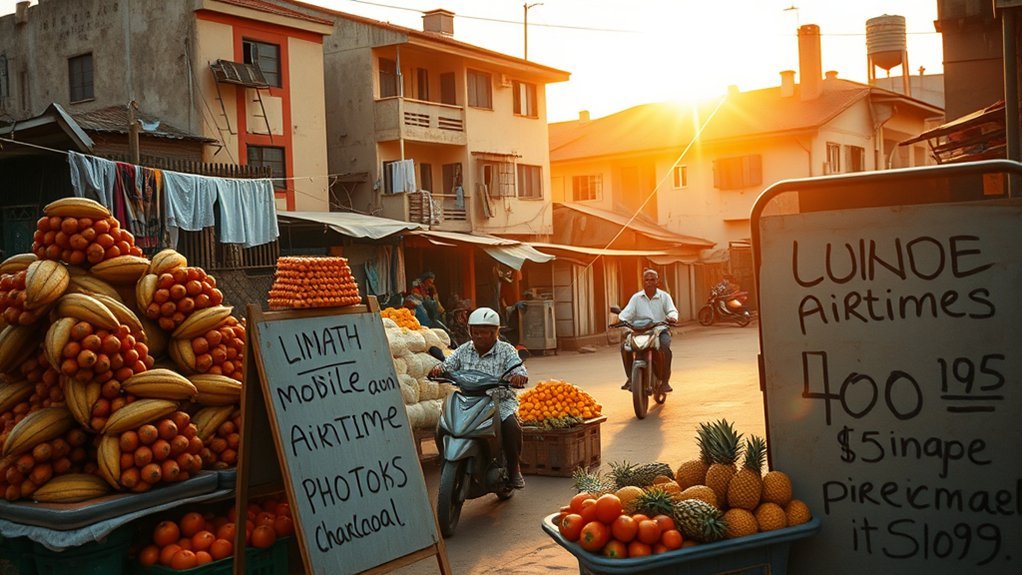
For 2026, a practical starting budget for one adult in Uganda is roughly $650–$1,000+ per month including ordinary rent, although Kampala and higher-end lifestyles can cost more. Livingcost’s June 2026 model estimates about $643 per month for one person nationwide and $697 in Kampala, including rent. Wise’s 2026 Kampala benchmark is higher at about $1,006. These are planning estimates, not guaranteed budgets: prime furnished housing, a private car, imported food, private healthcare, and international schooling can raise costs substantially.
Last updated: September 7, 2026. Uganda uses the Ugandan shilling (UGX). Dollar figures below are useful for comparison, but exchange rates and consumer prices change. This guide separates modelled cost estimates, crowdsourced price data, and official Uganda statistics so you can see what each number actually represents.
Quick Answer
- One person: Livingcost’s June 2026 model estimates about $643 per month in Uganda and $697 in Kampala, including rent.
- Family of four: The same model estimates about $1,528 nationwide and $1,649 in Kampala, including rent. Private schooling and private healthcare can add substantially more.
- Kampala rent: Wise reports about $483 per month for a one-bedroom in the city centre and $204 outside the centre.
- Food: Wise estimates groceries near $149 per person monthly, while Numbeo’s May 2026 Kampala data lists an inexpensive restaurant meal near UGX 10,000.
- Transport: Kampala relies heavily on commuter taxis, boda-bodas, buses, and other pay-per-trip options rather than one unified public transport system.
- Main budget risks: Housing standard, international schooling, private healthcare, imported goods, car use, and financing costs can move your budget far above a simple national average.
2026 Uganda Cost of Living Snapshot
| Budget Item | 2026 Benchmark | Source / Context |
|---|---|---|
| One person, Uganda | $643/month including rent | Livingcost, June 2026 model |
| One person, Kampala | $697/month including rent | Livingcost, June 2026 model |
| Family of four, Uganda | $1,528/month including rent | Livingcost, June 2026 model |
| Family of four, Kampala | $1,649/month including rent | Livingcost, June 2026 model |
| Kampala one-bedroom, city centre | About $483/month | Wise 2026 benchmark |
| Kampala one-bedroom, outside centre | About $204/month | Wise 2026 benchmark |
Do not treat these figures as one official Uganda budget. Livingcost uses a cost model, while sources such as Numbeo and Expatistan depend heavily on submitted market prices. Expatistan’s September 2026 Kampala estimate is notably higher than Livingcost’s and warns that it is based on only a few data points. The safest approach is to use several dated sources and then price your own housing, transport, healthcare, and school choices.
Cost of Living in Uganda: 2026 Overview

Uganda remains inexpensive by international price comparisons, but a low national index does not mean every foreign resident can maintain the same lifestyle cheaply. Numbeo’s 2026 country ranking gives Uganda a Cost of Living Index of 27.0. That index is useful for comparing countries, not for deciding exactly how much cash your household needs each month.
Numbeo’s 2026 ranking also shows low local purchasing power. This matters because prices that look inexpensive to someone earning foreign income can still be high relative to local earnings.
The strongest 2026 budget benchmarks do not agree perfectly. Livingcost estimates $643 per month for one person in Uganda including rent, while Wise places its Kampala benchmark at about $1,006. Rather than choosing one figure and calling it “the” cost of living, use the lower figure as a basic model and the higher figure as a reminder that housing standard and lifestyle matter.
A useful Uganda budget is a range, not one magic number. Start with current housing costs, then add food, utilities, transport, healthcare, and any school fees.
Housing and Utilities: Rent, Mortgages, and Bills

Rent is the biggest variable in a Kampala budget. Wise’s 2026 data puts a one-bedroom apartment at about $483 per month in the city centre and $204 outside the centre. A three-bedroom apartment averages about $1,175 in the centre and $407 outside it.
Numbeo’s May 2026 Kampala sample shows the same large location gap in local currency: about UGX 1.89 million for a one-bedroom in the centre and UGX 746,000 outside it. Three-bedroom averages were roughly UGX 4.44 million in the centre and UGX 1.41 million outside. Because these are crowdsourced averages with wide reported ranges, check the actual neighborhood and property before signing a lease.
Furnished housing can follow a different market. Expatistan’s September 2026 Kampala data lists a furnished 45 m² studio at about UGX 1.25 million in a normal area and UGX 2.82 million in an expensive area, but Expatistan explicitly warns that its estimate uses only a few data points. Treat it as a market signal rather than a guaranteed rental rate.
For utilities, Numbeo’s May 2026 Kampala data reports roughly UGX 303,333 per month for basic utilities in an 85 m² apartment and about UGX 144,444 for broadband internet of 60 Mbps or more. Provider-specific pricing can be lower or higher. For example, MTN Uganda lists a 60 Mbps WakaNet package at UGX 130,000 per month.
Electricity is also usage-based. Uganda’s Electricity Regulatory Authority approved an average domestic tariff of UGX 779.4 per kWh for July through September 2026, with separate tariff blocks and support rates for qualifying usage. Check the current tariff when estimating a high-power household rather than relying only on a generic utility average.
Borrowing is expensive, but one percentage should not be treated as the national mortgage rate. Numbeo’s May 2026 Kampala data lists a 20-year fixed mortgage indicator of about 20.75%. By comparison, Uganda’s Ministry of Finance reported that the weighted average rate on shilling-denominated lending fell to 16.93% in June 2026. Actual mortgage offers depend on the lender, borrower, property, down payment, and term.
Before buying, compare an actual mortgage quote with your expected rent, maintenance, fees, and how long you plan to remain in the property. Renting can offer more flexibility, but it is not automatically the better financial choice for every household.
Food, Groceries, and Eating Out Prices
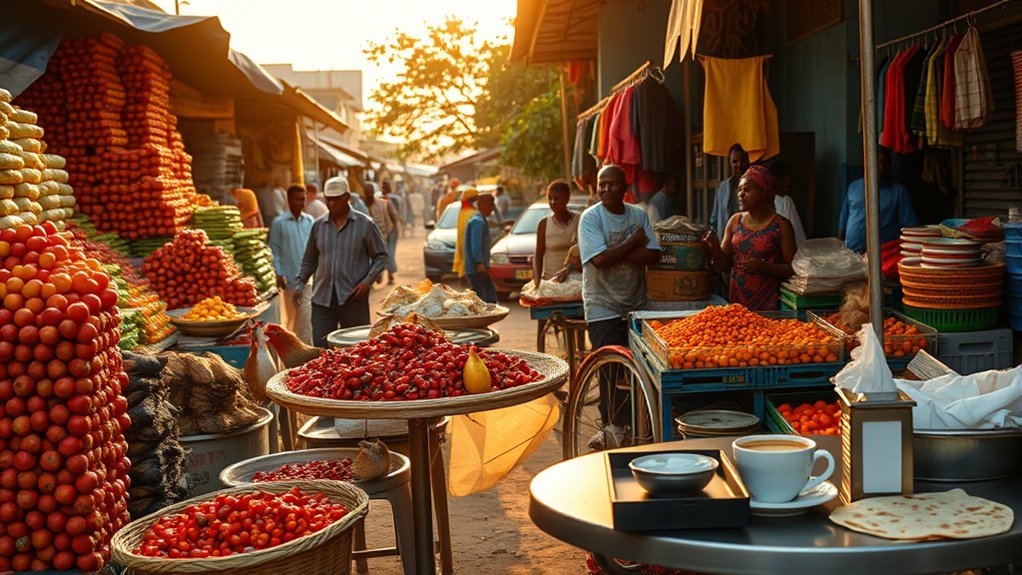
Food can be inexpensive when you buy local produce and cook at home. Wise’s 2026 Uganda data estimates monthly groceries at about $149 per person. Imported foods, specialty products, and frequent international-style dining can move the total well above that figure.
Numbeo’s May 2026 Kampala submissions list an inexpensive restaurant meal at about UGX 10,000 and an equivalent fast-food combo at roughly UGX 30,784. Everyday grocery examples include milk near UGX 2,950 per litre, a 500 g loaf of bread near UGX 3,608, rice near UGX 4,955 per kilogram, and 12 eggs near UGX 5,908.
Local markets and home cooking usually keep food spending lower; imported products and international restaurants are the main ways a food budget rises quickly.
The best way to estimate your own grocery bill is to price the foods you actually eat. A monthly “average” based on local staples may be too low for someone who regularly buys imported cereal, cheese, packaged snacks, or specialty dietary products.
Transportation, Connectivity, and Local Travel Costs
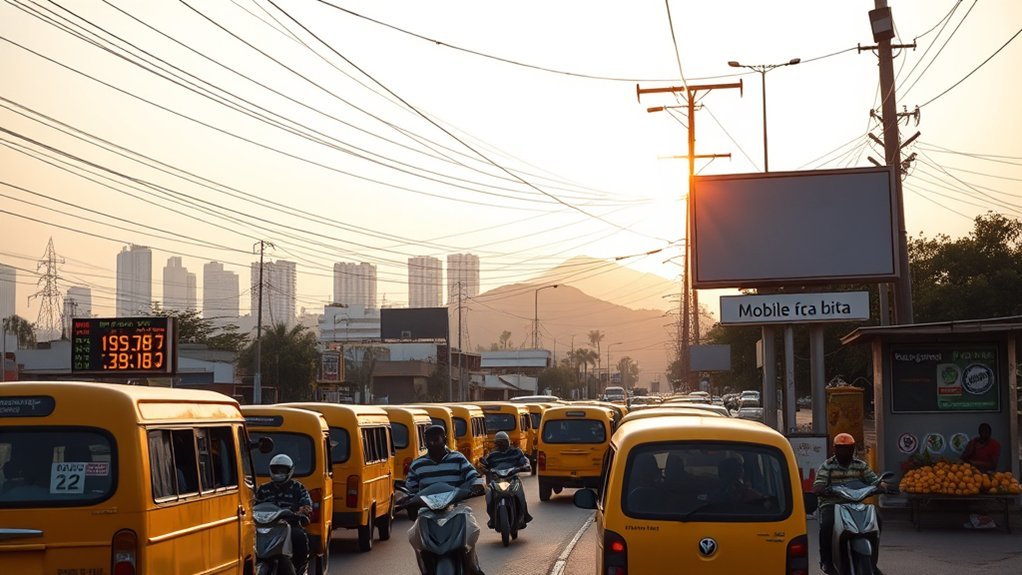
Kampala transport is generally pay-per-trip and fragmented rather than built around one universal city transit pass. Kampala Capital City Authority describes a system dominated by commuter taxis and boda-bodas, while ongoing reforms aim to improve regulation and mobility.
Numbeo’s May 2026 crowdsourced data lists a generic one-way local transport fare of about UGX 3,500. It also lists a monthly-pass figure, but this should not be interpreted as proof of one citywide unlimited pass that works across Kampala’s privately operated taxis, boda-bodas, and other services. Actual fares depend on route, traffic, time, and transport type.
Private driving became significantly more expensive during 2026. On August 31, 2026, tracked gasoline pricing was about UGX 6,538 ($1.73) per litre. If you own a car, budget for fuel plus parking, maintenance, repairs, insurance, and traffic-related fuel use rather than comparing fuel alone with a taxi fare.
| Mode / Cost | Current Planning Reference | What to Know |
|---|---|---|
| Local transport | ~UGX 3,500 one way | Crowdsourced generic fare; route prices vary |
| Commuter taxi / matatu | Pay per trip | Major part of Kampala’s fragmented transport system |
| Boda-boda | Variable | Depends on route, traffic, and operator/app |
| Gasoline | UGX 6,538/L | Tracked price on August 31, 2026 |
| Broadband | ~UGX 144,444/month | Numbeo 60+ Mbps benchmark; provider offers vary |
For current policy context, see KCCA’s 2026 public transport reform update. For current fuel budgeting, recheck the pump price shortly before calculating a long commute because fuel prices can change faster than rent or internet plans.
Income, Salaries, and Practical Budget Examples
Do not confuse an expat-style cost database with the income of a typical Ugandan worker. Numbeo’s May 2026 Kampala submissions estimate an average monthly net salary around UGX 731,250. Uganda Bureau of Statistics, however, reports median monthly cash earnings of UGX 200,000 for people in paid employment in 2023/24. Those figures measure different populations and should not be compared as though they were the same statistic.
The gap helps explain why a foreign-currency salary can make Kampala feel inexpensive while the same prices may be difficult for a locally paid household. It also explains why a central apartment that looks affordable by U.S. or European standards can exceed the earnings of many local workers.
- Lower-cost single-person benchmark: Livingcost’s June 2026 Kampala model is about $697 per month including rent. Reaching a similar total generally requires ordinary housing and controlled discretionary spending.
- Broader Kampala benchmark: Wise’s 2026 model is about $1,006 per month. This is a more conservative starting point for someone who wants more flexibility in housing, food, and services.
- Family benchmark: Livingcost estimates about $1,649 per month for a family of four in Kampala including rent, but international school fees and private healthcare can raise the real household requirement substantially.
Use these as planning scenarios rather than salary recommendations. Build your own budget from your actual rent quote, food habits, commute, medical needs, and household size.
Costs Many Uganda Budgets Miss
International School and Childcare
Families should price schooling separately from ordinary living costs. Numbeo’s May 2026 Kampala sample lists private full-day preschool or kindergarten near UGX 883,785 per month per child. International primary school tuition averages roughly UGX 40.1 million per year, with an extremely wide reported range. These are crowdsourced figures, so get a direct fee schedule from the specific school before making a relocation decision.
Healthcare and Insurance
Generic cost-of-living databases do not tell you what your preferred private medical care or international insurance policy will cost. If you want private hospitals, specialist access, international cover, or medical evacuation benefits, obtain a policy-specific quote and add it separately to your monthly budget.
Visa and Work Permission
A low monthly budget does not by itself give a foreign national the right to live or work in Uganda. Uganda’s Directorate of Citizenship and Immigration Control states that tourist visas and work permits are separate categories. Its tourist visa guidance covers short visits, while its work permit guidance says a work permit allows the applicant to live and work in Uganda and is sponsored by an organization or company.
Lease and Move-In Costs
Your first month can cost more than your normal monthly budget. Deposits, advance rent, furnishings, utility setup, internet installation, moving expenses, and household equipment depend on the lease and provider. Confirm each item in writing before paying.
How These 2026 Uganda Cost Estimates Were Built
This guide intentionally uses more than one source because no single public database measures every Uganda household accurately.
- Livingcost: used for modelled national and Kampala household totals.
- Wise: used as a second 2026 consumer-cost benchmark and for rent comparisons.
- Numbeo: used for recent crowdsourced Kampala prices such as rent, utilities, food, transport, schooling, salary, and mortgage indicators.
- Uganda Bureau of Statistics: used for the official median paid-employment earnings measure.
- Electricity Regulatory Authority: used for current regulated electricity tariffs.
- Uganda Ministry of Finance: used for current average shilling lending-rate context.
- KCCA and Uganda Immigration: used for transport-system and immigration context.
Crowdsourced databases can contain small samples and wide ranges. Official statistics can also describe a different population or an earlier survey period. Read the source label before comparing two numbers.
If you are comparing Uganda with another East African option, see our cost of living in Kenya guide for a separate Nairobi and Kenya breakdown.
Frequently Asked Questions
How Much Does It Cost to Live in Uganda?
For 2026 planning, one person can use roughly $650–$1,000+ per month including ordinary rent as a starting range. Livingcost estimates $643 nationwide and $697 in Kampala including rent, while Wise’s Kampala benchmark is about $1,006. Your housing standard, transport, healthcare, and imported goods can move the total higher.
How Much Is Rent in Kampala in 2026?
Wise’s 2026 Kampala data puts a one-bedroom apartment near $483 per month in the city centre and $204 outside it. A three-bedroom averages about $1,175 in the centre and $407 outside. Furnishing, security, neighborhood, building quality, and lease terms can change the price substantially.
What Is the Average Income in Uganda in US Dollars?
There is no single “average income” figure that represents everyone. Numbeo’s May 2026 Kampala data estimates average net salary at UGX 731,250 per month, while Uganda Bureau of Statistics reports median monthly cash earnings of UGX 200,000 among people in paid employment for 2023/24. The measures use different populations and methods, so they should not be treated as interchangeable.
Is Public Transport Expensive in Kampala?
Basic pay-per-trip transport is inexpensive by many international standards. Numbeo’s May 2026 data lists a generic local one-way fare near UGX 3,500. Kampala’s system is fragmented and relies heavily on commuter taxis and boda-bodas, so actual fares depend on route, traffic, and transport type rather than one universal citywide pass.
Can an American Move to Uganda?
Yes, a U.S. citizen can relocate to Uganda if they meet the applicable immigration requirements. A tourist visa is not a substitute for permission to work. Uganda’s immigration authority states that work permits allow foreign applicants to live and work in Uganda and require an organization or company sponsor, depending on the permit category.
Is Uganda Cheap to Live In?
Uganda is inexpensive in international price comparisons: Numbeo’s 2026 Cost of Living Index is 27.0. However, local purchasing power is also low, and Kampala housing, imported goods, private healthcare, international schooling, or car ownership can make an individual household much more expensive than the country index suggests.
Is Uganda a Good Place to Live?
That depends on your priorities. Cost is only one part of the decision. Compare your expected housing, commute, healthcare, schooling, income source, immigration status, and preferred neighborhood before deciding whether Uganda fits your household.
Conclusion
Uganda can offer low everyday costs, but a reliable 2026 budget should not start with one universal “comfortable living” number. For a single adult, roughly $650–$1,000+ per month is a useful starting range, while Livingcost’s Kampala family benchmark is about $1,649 including rent before major extras such as international schooling.
Start with an actual housing quote, then add food, utilities, transport, healthcare, schooling, and immigration-related costs. If you will drive, recheck fuel prices; if you will work locally, compare your offer with Uganda wage data rather than an expat cost model. That approach will give you a much more realistic answer than a national index alone.