The cost of living in Botswana in 2026 is about P7,500–P8,000 (~$545–$575) a month for a single person living simply, and about P12,900–P13,500 (~$935–$975) for a comfortable single life in Gaborone, the capital. A couple should plan on roughly P15,900–P17,700 (~$1,150–$1,285). These figures use an exchange rate of about P13.82 per US dollar (October 2, 2026). Rent is low by international standards, but fuel, electricity and imported goods all got more expensive this year. Inflation hit 10.7% in June 2026 before easing to 9.3% in August. Below you’ll find rents by city, utility and fuel prices, healthcare, taxes, visa fees and sample budgets.
Quick Answer
- Single person: P7,500–P8,000 (~$545–$575) on a lean budget; P12,900–P13,500 (~$935–$975) for a comfortable Gaborone life.
- Couple: P15,900–P17,700 (~$1,150–$1,285) a month.
- Family of four: P23,200–P26,400 (~$1,680–$1,910) before international school fees.
- Rent, one-bedroom: about P2,760–P3,060 (~$200–$221) outside the center; P3,910–P4,930 (~$283–$356) in the center.
- Utilities: about P825 (~$60) a month for an 85 m² apartment; home fiber from P379 (~$27).
- Petrol: P18.21 per liter (~$1.32) since July 7, 2026.
- Minimum wage: P9.06 an hour in most sectors; P1,500 a month for domestic and farm workers.
Exchange Rate, Inflation, and Wages in 2026
Three numbers shape what Botswana costs you this year.
The exchange rate. One US dollar bought about P13.82 on October 2, 2026, according to ValutaFX’s daily USD/BWP history. The pula has moved between about P13.04 (January 29) and P14.31 (July 20) per dollar this year. The Bank of Botswana manages the pula against a basket of currencies dominated by the South African rand, so the pula tends to follow the rand more than the dollar.
Inflation. Prices rose fast in 2026. Annual inflation was 3.9% in December 2025, then climbed to a peak of 10.7% in June 2026 after a jump in world oil prices. Statistics Botswana’s July 2026 CPI release put inflation at 9.4%, with transport alone adding 5.2 percentage points. August came in at 9.3%. Transport costs were up 19.7% from a year earlier, food 5.9%, and housing and utilities 4.8%. The Bank of Botswana raised its policy rate by 2 percentage points to 5.5% on April 30, 2026, and held it there in August.
Wages. Botswana sets minimum wages by sector. Under the current order, summarized by WageIndicator’s Botswana minimum wage page, most sectors (construction, retail and wholesale, hotels and restaurants, manufacturing, road transport and security) pay at least P9.06 an hour. That works out to roughly P1,750–P1,900 (~$127–$137) a month for full-time hours. Domestic workers and farm workers have a monthly minimum of P1,500 (~$109). Crowd-sourced data puts the average monthly take-home pay at about P11,550 (~$835), but pay varies widely between government, mining, banking and informal work.
At P13.82 per dollar, the typical take-home salary of about P11,550 equals roughly $835 a month. A central Gaborone one-bedroom would take more than 40% of that.
Cost of Living by City
Gaborone has the most jobs, apartments, private clinics, international schools and shops, and it has the most price data. Other towns have far fewer reports, so the table below uses crowd-sourced averages from Numbeo (updated October 2, 2026) for Gaborone and for the country as a whole.
| Area | 1-Bed, City Center | 1-Bed, Outside Center | 3-Bed, City Center | 3-Bed, Outside Center |
|---|---|---|---|---|
| Gaborone | P4,927 (~$356) | P3,060 (~$221) | P7,483 (~$541) | P4,790 (~$347) |
| Botswana average | P3,910 (~$283) | P2,758 (~$200) | P6,918 (~$501) | P4,468 (~$323) |
Here is what to expect in other towns:
- Francistown, the second city, usually rents for less than Gaborone. Only a handful of price reports exist; one contributor in 2025 put a central three-bedroom at about P5,750 (~$416).
- Maun and Kasane are safari and tourism hubs. Furnished homes aimed at lodge staff and visitors can cost as much as Gaborone, while local rentals are cheaper but hard to find. There is not enough recent data to give a reliable average.
- Mogoditshane, Tlokweng and Mmopane sit just outside Gaborone. Rents are lower, but you will spend more time and fuel commuting.
- Smaller towns such as Palapye, Serowe and Lobatse have lower rents but fewer private clinics, slower internet options and longer trips to big supermarkets.
Price the commute before you pick a cheaper town. With petrol at P18.21 a liter, a daily 40 km round trip in a small car costs about P1,100–P1,300 a month in fuel alone.
Housing: Rent and Buying Property
What Rent Covers
Housing is the biggest monthly expense for most people. Before you sign, ask whether water, electricity, refuse collection, security, garden service and internet are included. A slightly higher rent that includes several of these can be cheaper than a low rent with separate bills. Many homes in Gaborone sit in walled compounds with a guard or electric fence; that security is usually built into the rent.
Upfront Rental Costs
The first month costs much more than the rent alone. Expect to pay:
- One month’s rent in advance.
- A security deposit, often equal to one month’s rent.
- Connection fees for electricity (prepaid meters are common), water and internet.
- Furniture and appliances if the home is unfurnished.
For a P4,000 one-bedroom, that means about P8,000–P10,000 (~$580–$725) up front before furniture.
Buying Property as a Foreigner
Foreigners can buy some property, but the rules depend on the type of land. Under the government’s guidance on transferring land rights, a non-citizen needs the consent of the minister responsible for land management. Tribal land is mostly reserved for citizens. Non-citizens also pay higher transfer duty: 10% on purchases up to P2 million and 15% above that, compared with 5% for citizens on amounts over P1.5 million. Crowd-sourced data puts central apartment prices at roughly P2,580 per square foot (~$187), with mortgage rates around 11%.
Do not pay a property deposit until a Botswana lawyer has confirmed the title, the type of land right, the required consent and the transfer costs.
Utilities, Internet, and Phone
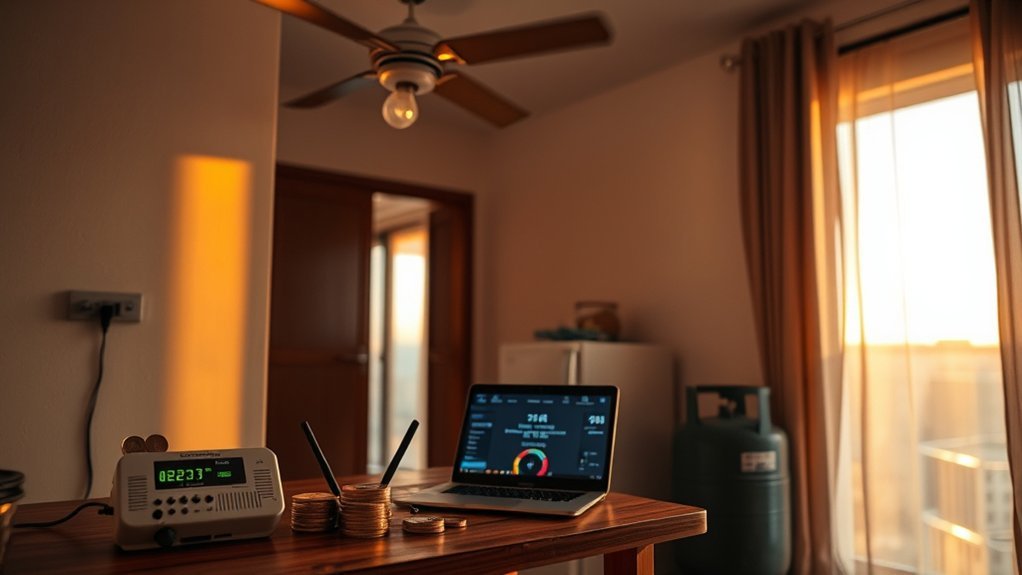
Basic utilities (electricity, water and refuse collection) for an 85 m² apartment average about P825 (~$60) a month, based on crowd-sourced data. Bills climb in large homes and in summer, when air conditioning runs for hours.
Electricity. Botswana Power Corporation asked for a 68% increase in domestic tariffs for 2026/27. The regulator approved much less: a uniform 9% tariff increase for all customers from August 1, 2026. BPC’s filing put the average domestic tariff at about P0.90 per kWh before the increase, so the average is now close to P0.98. Most homes use prepaid meters, so you buy units in advance by phone or at shops.
Internet and phone. BTC’s home fiber plans cost P379 (~$27) a month for 100 Mbps, P497 (~$36) for 150 Mbps and P547 (~$40) for 200 Mbps. Mascom and Orange sell competing fiber and wireless plans, and coverage depends on your street. A mobile plan with calls and 10 GB or more of data averages about P275 (~$20) a month.
| Service | Typical Monthly Cost | Approx. USD |
|---|---|---|
| Basic utilities, 85 m² | P825 | $60 |
| Home fiber, 100–200 Mbps | P379–P547 | $27–$40 |
| Mobile plan, 10 GB+ | P275 | $20 |
Food: Groceries and Dining Out
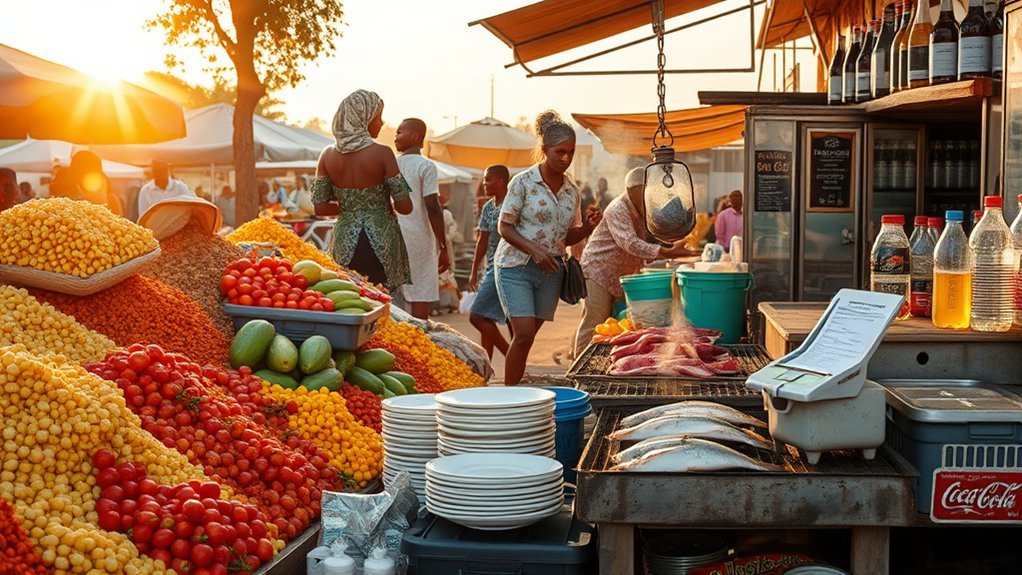
Botswana imports much of its food from South Africa, so grocery shelves look familiar to anyone who has shopped there, and prices track the rand. A single person who cooks most meals spends about P1,800–P2,500 (~$130–$180) a month. A family of four needs about P5,500 (~$400) or more.
Average national prices in October 2026 (crowd-sourced):
| Item | Typical Cost (BWP) | Approx. USD |
|---|---|---|
| Milk (1 liter) | 19.72 | $1.43 |
| Bread (500 g loaf) | 11.05 | $0.80 |
| Rice (1 kg) | 26.50 | $1.92 |
| Eggs (12) | 32.70 | $2.37 |
| Chicken fillets (1 kg) | 66.84 | $4.84 |
| Beef (1 kg) | 70.48 | $5.10 |
| Local cheese (1 kg) | 87.50 | $6.33 |
| Mid-range bottle of wine | 59.95 | $4.34 |
Beef is good value, since Botswana is a major cattle producer. Imported cheese, breakfast cereals and specialty items cost the most. Food inflation was 5.9% in August 2026, lower than overall inflation.
Eating out:
- Meal at an inexpensive restaurant: about P138 (~$10) nationally, P150 (~$11) in Gaborone
- Three-course dinner for two at a mid-range restaurant: about P400 (~$29)
- Fast-food combo meal: about P80 (~$5.80)
- Cappuccino: about P32 (~$2.30)
- Domestic draft beer (pint): about P26 (~$1.90)
Local takeaway plates of pap, seswaa (shredded beef) and vegetables cost far less than sit-down restaurants and are the cheapest way to eat out.
Transportation and Fuel
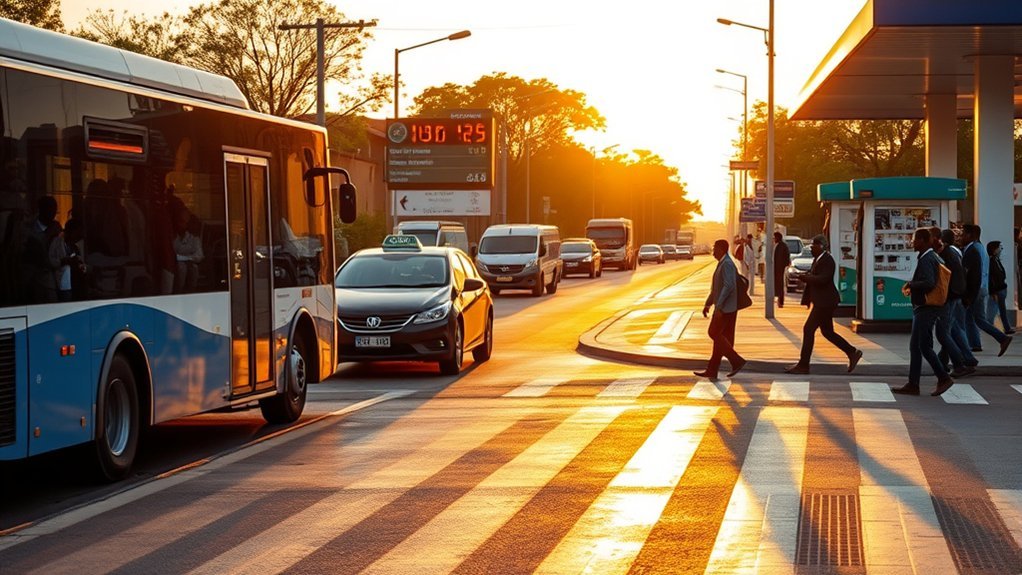
Fuel has been the biggest price story of 2026. In late March the regulator raised petrol by P5.05 a liter and diesel by P8.77 after world oil prices spiked, as Mmegi reported. Prices came partly back down on July 7, 2026, when the government’s Daily News announced a fuel price cut: unleaded 95 fell to P18.21 a liter (~$1.32) and diesel 50ppm to P20.93 (~$1.51). That is about $5.00 per US gallon for petrol.
| Mode | Typical Cost (BWP) | Approx. USD |
|---|---|---|
| Combi (minibus) or bus, one way | 8.50–9.50 | $0.61–$0.69 |
| Monthly transit pass | 410 | $30 |
| Taxi starting fare | 8 | $0.58 |
| Unleaded 95 petrol, per liter | 18.21 | $1.32 |
| Diesel 50ppm, per liter | 20.93 | $1.51 |
| New compact car (e.g., VW Polo) | about 275,000 | about $19,900 |
Gaborone has no rail or metro. Most people use combis (shared minibuses on fixed routes) and shared taxis, which are cheap but crowded at rush hour. Licensed taxis have blue number plates. Most expats and middle-income families own a car, because towns are spread out and public transport thins out at night. Budget for insurance, licensing, servicing and tires on top of fuel. Long-distance buses link Gaborone with Francistown, Maun and Johannesburg.
Healthcare and Insurance

Public clinics and hospitals charge citizens very little, but the UK government’s Botswana health advice warns that medicine shortages persist in public facilities, that private hospitals ask for payment up front, and that serious cases may need evacuation to South Africa. Most working expats and many middle-class locals join a medical aid scheme.
Medical aid prices. Bomaid, one of the largest schemes, lists 2026 plans for a principal member starting at:
| Plan | Monthly Cost From (BWP) | Approx. USD |
|---|---|---|
| Access | 309 | $22 |
| Comprehensive | 587 | $42 |
| Executive | 974 | $70 |
| Prestige | 1,634 | $118 |
Rates rise with age and each dependant. Botswana Public Officers Medical Aid Scheme (BPOMAS) covers government staff, and Pula Medical Aid Fund is another large option. Many employers pay part of the contribution.
International health insurance with evacuation cover is the safer choice for retirees and people without a local employer. The ambulance number is 997. Malaria is a risk in the north, including Maun, Kasane and the Okavango Delta, especially from November to April.
Schools and Childcare
Families face the widest spread of costs.
- Private preschool or kindergarten: about P1,970 (~$143) a month nationally, based on crowd-sourced data.
- International primary school: about P31,000 (~$2,245) a year per child on average, and about P34,560 (~$2,500) in Gaborone. Leading schools such as Westwood International, Maru-a-Pula and Northside charge more in the upper grades, plus enrollment fees, uniforms and transport.
- Public schools: teaching is in English and Setswana. Quality varies, and most expat families choose private schools.
For two children at an average international primary school, tuition adds about P5,170 (~$375) a month.
Taxes: VAT and Income Tax

- VAT: the standard rate is 14% and is included in shelf prices, according to PwC’s Botswana tax summary. Some basic foods are zero-rated. The 2026/27 budget plans to shorten that zero-rated list, so a few staples may get pricier.
- Tax residency: per BURS guidance for individuals, you are a tax resident if you have a permanent home in Botswana or spend at least 183 days there in a tax year (July to June).
- Income tax rates for residents: 0% on the first P48,000 (~$3,470) a year, then 5%, 12.5% and 18.75%, rising to 25% on income above P156,000 (~$11,290). Non-residents pay 5% from the first pula.
- Proposed top rate: the February 2026 budget proposed adding 2.5 points for income above P400,000 a year, for a top rate of 27.5%. Check whether it has been enacted before you plan a high salary.
| Annual Taxable Income (Resident) | Rate on This Band |
|---|---|
| P0–P48,000 | 0% |
| P48,001–P84,000 | 5% |
| P84,001–P120,000 | 12.5% |
| P120,001–P156,000 | 18.75% |
| Over P156,000 | 25% |
These bands are from PwC’s Botswana personal income tax page, last reviewed in January 2026. Employers deduct tax through PAYE. If you earn foreign income, get advice from a Botswana tax adviser.
Visas and Residence Permits
US, UK and most EU and Commonwealth citizens can visit without a visa. The US State Department’s Botswana page says US citizens can stay up to 90 days visa-free, with a passport valid for at least six months and three blank pages. Visitors may not stay more than 90 days in a calendar year without permission.
| Permit | Government Fee | Approx. USD | Notes |
|---|---|---|---|
| Residence permit (dependants, people 65+, students, and others) | P1,500 | $109 | about 30 working days; proof of support required |
| Work permit | varies | — | needed for paid work; usually applied for by the employer |
| Permanent residence | P3,000 | $217 | usually 5 years of lawful residence; about 56 working days |
Details are on the government’s residence permit service page and its permanent residence page. Requirements include forms, a certified passport copy, a birth certificate, photos and proof that you can support yourself. Budget extra for certified copies, police clearance and courier fees.
One-Time Setup Costs
Budget for these before your first month:
- Residence permit: P1,500 (~$109) for listed categories, plus document costs.
- Rent in advance and deposit: usually two months’ rent, about P6,000–P10,000 (~$435–$725) for a one-bedroom.
- Furnishing an unfurnished home: roughly P15,000–P40,000 (~$1,085–$2,895), depending on new or secondhand.
- Car: about P275,000 (~$19,900) for a new compact; good used cars imported from Japan cost much less.
- Internet installation and SIM cards: small one-time fees, often waived on contracts.
- Health coverage gap: international or travel insurance until medical aid starts.
Sample Monthly Budgets
These budgets combine the averages above. They do not include debt payments, flights home or international school fees.
| Expense | Single, Lean | Single, Comfortable (Gaborone) | Couple | Family of Four |
|---|---|---|---|---|
| Rent | 2,758–3,060 | 4,927 | 3,060–4,927 | 4,790–7,483 |
| Utilities | 700–825 | 825 | 1,000 | 1,300 |
| Internet + mobile | 654 | 857 | 1,132 | 1,132 |
| Groceries | 1,800 | 2,500 | 4,000 | 5,500 |
| Transport | 410 | 900–1,500 | 2,500 | 3,000 |
| Eating out + leisure | 400 | 1,500 | 2,000 | 2,000 |
| Medical aid | 309 | 587 | 1,174 | 2,000–2,500 |
| Preschool (one child) | — | — | — | 1,970 |
| Other / buffer | 500 | 800 | 1,000 | 1,500 |
| Total (BWP) | P7,500–P8,000 | P12,900–P13,500 | P15,900–P17,700 | P23,200–P26,400 |
| Total (USD) | $545–$575 | $935–$975 | $1,150–$1,285 | $1,680–$1,910 |
Lean single: an apartment outside the center, combis instead of a car, the cheapest medical aid plan and mostly home cooking.
Comfortable single: a central Gaborone one-bedroom, fiber internet, a mix of car and taxis, and regular meals out.
Family of four: a three-bedroom, one car, medical aid for four people and one child in preschool. Two children at international primary school add about P5,170 a month, bringing the total to roughly P28,400–P31,600 (~$2,050–$2,285). Crowd-sourced estimates put a family’s monthly spending at about P26,600 (~$1,925) before rent, which reflects heavier car use and more imported goods.
Banking and Money
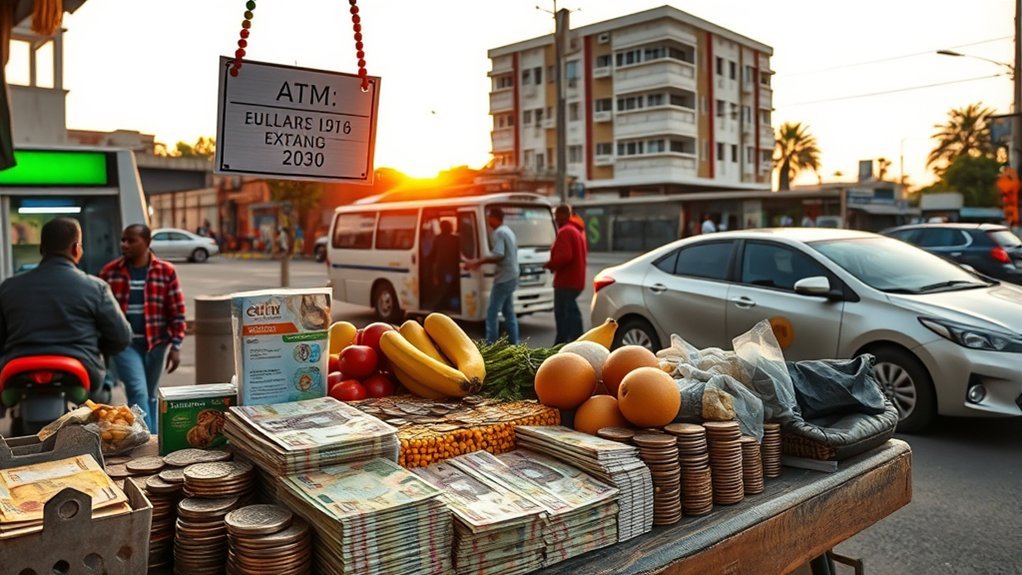
The Bank of Botswana’s list of licensed banks includes nine commercial banks: Absa, Access Bank, Bank Gaborone, Bank of Baroda, BBS Bank, First Capital Bank, First National Bank, Stanbic and Standard Chartered. Opening an account usually needs a passport, a residence or work permit and proof of address. Mobile money (Orange Money, MyZaka and Smega) is widely used for small payments and buying prepaid electricity.
Card payments work in supermarkets, malls and most restaurants, but keep some cash for combis, markets and rural areas. When you send money from abroad, compare how many pula actually arrive after fees and the exchange-rate spread.
Safety and Practical Tips
Botswana is one of the most stable countries in Africa, but crime is rising in the towns. The US government rates Botswana at Level 2: Exercise Increased Caution (June 2026) because of crime, and the UK’s safety advice says violent crime is increasing in Gaborone, Francistown and Maun. Practical steps:
- Choose housing with a wall, gate, burglar bars or a guard, and ask what security costs are in the rent.
- Avoid walking alone at night and use licensed taxis or a trusted driver.
- Watch for cattle, donkeys and wildlife on highways, especially after dark.
- Keep an emergency fund for medical deposits, because private hospitals want payment first.
- Expect occasional power and water interruptions and ask landlords about backup tanks or solar.
Money-Saving Tips
- Live just outside the center. A Gaborone one-bedroom outside the center saves about P1,870 (~$135) a month compared with a central one.
- Cook local food. Beef, maize meal, beans and seasonal vegetables are cheaper than imported brands.
- Use prepaid electricity wisely. Run water heaters on timers and limit air conditioning.
- Pick the right medical aid plan. A basic plan from about P309 a month can be enough for young, healthy people.
- Watch fuel prices. They changed sharply twice in 2026. A smaller car or carpooling cuts the biggest variable cost.
- Shop across the border. Some Gaborone residents buy large items in South Africa, but check customs allowances and VAT rules first.
How Botswana Compares With Nearby Countries
Botswana has some of the lowest rents in southern Africa, but everyday goods cost about the same as in its neighbors because so much is imported. The table uses crowd-sourced averages in US dollars from August–October 2026.
| Country | 1-Bed, City Center | Single Person, Costs Excluding Rent | Average Net Monthly Salary |
|---|---|---|---|
| Botswana | $283 | $527 | $835 |
| South Africa | $496 | $681 | $1,517 |
| Namibia | $524 | $680 | $1,015 |
| Zambia | $454 | $668 | $425 |
| Zimbabwe | $286 | $596 | $363 |
Read the South Africa cost of living guide if you are weighing Gaborone against Johannesburg or Pretoria, which have higher rents but more jobs and shops. Our guide to living costs in Namibia covers the other big desert country next door, where Windhoek rents run well above Gaborone. To the north, compare monthly expenses in Zambia and the cost of living in Zimbabwe, where salaries are much lower.
Frequently Asked Questions
How much money do you need to live in Botswana per month?
A single person can get by on about P7,500–P8,000 (~$545–$575) a month outside central Gaborone. A comfortable single life in Gaborone costs about P12,900–P13,500 (~$935–$975). A couple should plan on P15,900–P17,700 (~$1,150–$1,285), and a family of four about P23,200–P26,400 (~$1,680–$1,910) before international school fees.
Is Botswana cheap to live in?
Rent is cheap by international standards, with a one-bedroom outside the center averaging about P2,760 (~$200) nationally. Imported food, cars, private healthcare and international schools are expensive, and inflation ran at 9.3% in August 2026, so Botswana is moderate rather than cheap overall.
How much is rent in Gaborone in 2026?
Crowd-sourced averages from October 2026 put a one-bedroom at about P4,930 (~$356) in central Gaborone and about P3,060 (~$221) outside the center. A three-bedroom costs about P7,480 (~$541) in the center and P4,790 (~$347) outside it.
What is the minimum wage in Botswana?
Most sectors, including retail, construction, hospitality, manufacturing and security, have a minimum of P9.06 an hour. Domestic workers and farm workers have a monthly minimum of P1,500 (~$109).
What currency does Botswana use and what is the exchange rate?
Botswana uses the pula (BWP). On October 2, 2026, one US dollar bought about P13.82. In 2026 the rate has moved between about P13.04 and P14.31 per dollar.
Can foreigners live in Botswana long term?
Yes. US citizens can visit without a visa for up to 90 days, but staying longer requires a residence permit, which costs P1,500 (~$109) for several categories. Work needs separate approval. Permanent residence usually requires five years of lawful residence and costs P3,000 (~$217).
Conclusion
Botswana is still affordable for housing, but 2026 made daily life more expensive. Fuel jumped in March, electricity rose 9% in August, and inflation peaked at 10.7% before easing. A single person can live simply for about P7,500–P8,000 (~$545–$575) a month, or comfortably in Gaborone for about P12,900–P13,500 (~$935–$975). Choose your area first, since rent and commuting drive most of the difference, and budget for medical aid and a car if you will rely on one. Check fuel prices and the pula rate before you lock in a budget.
Sources
- ValutaFX – USD/BWP rate, October 2, 2026
- Statistics Botswana – Consumer Price Index, July 2026
- Trading Economics – Botswana inflation, August 2026
- Capmad – Bank of Botswana policy rate decision, August 2026
- WageIndicator – Botswana minimum wages
- Daily News (Government of Botswana) – fuel price cut, July 2026
- Mmegi – March 2026 fuel price increase
- BERA – electricity tariff adjustment for 2026/27
- BERA – BPC 2026/27 tariff application notice
- BTC – home broadband packages
- Bomaid – medical aid plans
- PwC Tax Summaries – Botswana VAT and transfer duty
- PwC Tax Summaries – Botswana personal income tax
- KPMG – Botswana 2026/27 budget tax measures
- Botswana Unified Revenue Service – income tax for individuals
- Government of Botswana – residence permit application
- Government of Botswana – permanent residence application
- Government of Botswana – transfer of land rights
- Bank of Botswana – licensed commercial banks
- US Department of State – Botswana travel information
- UK FCDO – Botswana health advice
- UK FCDO – Botswana safety and security
- Numbeo – crowd-sourced prices for Botswana, Gaborone, Francistown, South Africa, Namibia, Zambia and Zimbabwe (accessed October 2026)