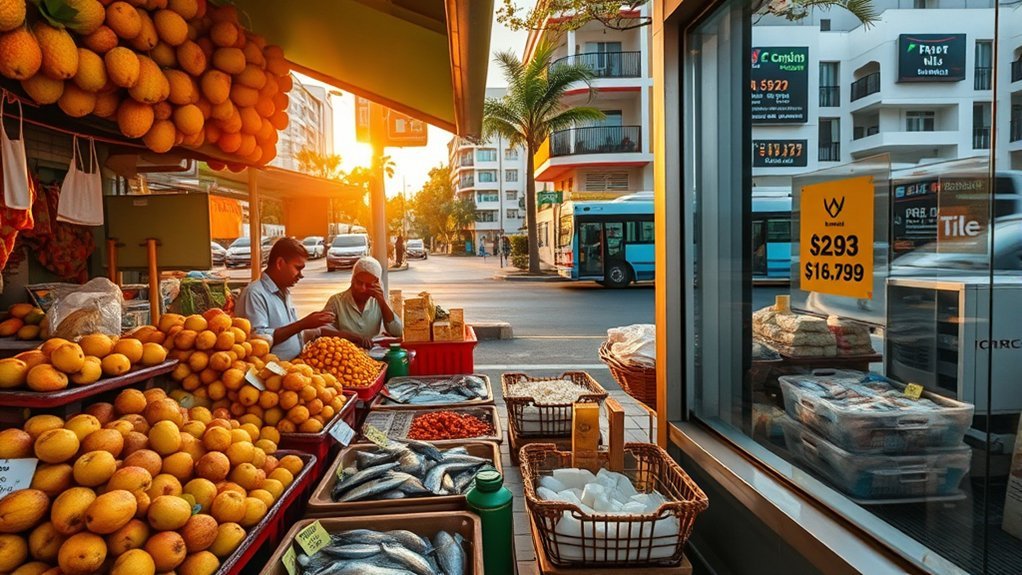
The cost of living in Mauritius in 2026 is roughly Rs35,000–50,000 per month for a careful single renter, Rs50,000–75,000 for a more comfortable single lifestyle, and Rs80,000–120,000 for a family of four before fee-paying school. Rent, car ownership, private healthcare, imported food, and international education are the biggest variables, so a coastal family with a car and school fees can spend far more.
Last updated: August 10, 2026. Rent, fuel, exchange-rate, wage, visa, healthcare, education, and inflation references were rechecked against current sources.
Quick Answer
For planning—not as an official minimum—use about Rs35,000–50,000 for a careful single renter, Rs50,000–75,000 for a more comfortable single lifestyle, and Rs80,000–120,000 for a family of four before fee-paying school. With one or two children in international education, plan for roughly Rs105,000–180,000 or more.
Key Takeaways
- A one-bedroom apartment may cost around Rs15,000 outside a central area or about Rs22,000 in a city center.
- A realistic grocery allowance is roughly Rs12,000–20,000 for one person or Rs25,000–40,000 for a family.
- Basic apartment utilities often fall near Rs1,500–4,850, but air conditioning, a pool, or a large house can raise the bill considerably.
- Public transport is inexpensive compared with owning a vehicle, while petrol, insurance, maintenance, and high car prices can add heavily to a monthly budget.
- Public and grant-aided education can be free, but international school fees may add Rs10,000–35,000 or more per child each month.
Currency note: The Bank of Mauritius indicative rates on July 27, 2026, placed one euro at roughly Rs53–55 and one U.S. dollar at about Rs47–48, depending on the transaction. Foreign-currency conversions below are rounded and will change over time.
How Much Does It Cost to Live in Mauritius Per Month?
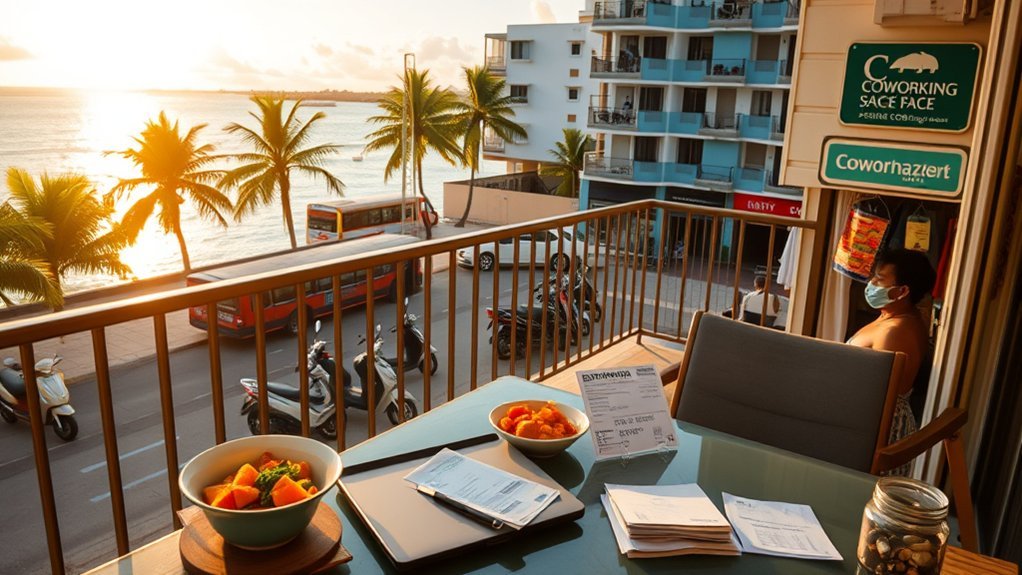
Your cost of living in Mauritius will depend more on lifestyle choices than on one national average. Official household data is useful for understanding how local residents spend money, but an expatriate may pay market rent, buy more imported products, use private healthcare, or enroll children in an international school.
The Statistics Mauritius Household Budget Survey found that average household consumption expenditure was Rs41,870 per month in 2023. Food and non-alcoholic drinks represented 25% of spending, transport 16%, and housing, water, electricity, gas, and other fuels 10%.
Those figures should not be treated as a ready-made expatriate budget. They include homeowners, subsidized services, households without private school fees, and people whose housing costs differ from current rental-market prices.
A family using public education and public transport may spend far less than a similar family renting a coastal home, running two cars, buying imported food, and paying international school fees.
| Household and lifestyle | Planning range per month | Approximate euro equivalent |
|---|---|---|
| Single person, modest lifestyle | Rs35,000–50,000 | About €650–€930 |
| Single person, comfortable lifestyle | Rs50,000–75,000 | About €930–€1,390 |
| Family of four, no international school | Rs80,000–120,000 | About €1,480–€2,220 |
| Family with one or two children in fee-paying school | Rs105,000–180,000+ | About €1,945–€3,335+ |

This daily devotional helps parents pray purposefully for their children through a full year of Scripture readings, reflections, and guided prayer prompts. Written to encourage faithful family discipleship, it offers practical, biblically grounded support for parents who want to shape their prayers around God's Word. A foreword by Sinclair B. Ferguson adds trusted theological insight and encouragement.

Die With Zero offers a fresh perspective on personal finance by encouraging readers to use money intentionally to create memorable life experiences instead of simply accumulating wealth. Written by Bill Perkins, this book combines practical guidance with a motivating philosophy to help readers align spending, saving, and life goals for a more fulfilling future.

This hardcover edition by Eric Metaxas offers a compelling look at the origins of the United States during the Colonial Period. It blends historical narrative with engaging storytelling, making it appealing for readers interested in American history, early nation-building, and the ideas that shaped the country. A strong choice for history enthusiasts, students, and anyone exploring the foundations of the nation.
What Changes a Mauritius Budget the Most?
Three costs can move the total quickly: housing location, fee-paying education, and car ownership. Current reported one-bedroom averages differ by about Rs7,000 per month between central and outside-center locations. Fee-paying school can add roughly Rs10,000–35,000 or more per child each month before extras. A car adds fuel at the official Rs64.25-per-litre petrol price plus insurance, road tax, servicing, tires, repairs, parking, and depreciation.
A useful stress test is to build a base budget for rent, food, utilities, and essential transport first. Then add school fees, a car, private healthcare, and premium housing as separate modules. This makes it easier to see which lifestyle choice is pushing your total above the basic planning range.
These are planning ranges rather than official minimums. Your actual total may fall outside them, especially if accommodation is supplied by an employer, you own your home, you live in a premium beachfront area, or you have major medical and education expenses.
Note: Mauritius recorded 4.1% headline inflation for the twelve months ending June 2026. Electricity, petrol, diesel, bread, cooking oil, and prepared foods were among the items contributing to recent price increases. Keep a 10–15% buffer above your expected monthly costs.
How Much Are Rent and Utilities in Mauritius?
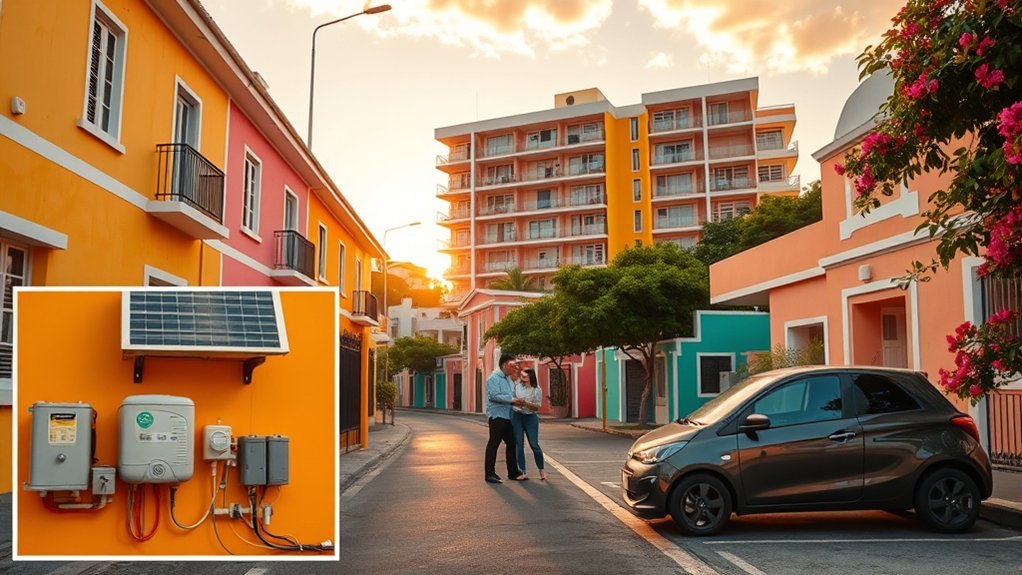
Housing is usually the largest monthly expense for a renter. Crowdsourced June 2026 market data puts a one-bedroom apartment at about Rs22,000 in a central area and Rs15,000 outside the center, with three-bedroom averages near Rs40,000 and Rs32,000 respectively. Actual rents vary by neighborhood, furnishing, lease length, condition, and coastal demand.
- One-bedroom outside a central area: approximately Rs8,000–25,000 per month
- One-bedroom in a central or popular area: approximately Rs12,000–33,000 per month
- Three-bedroom outside a central area: approximately Rs15,000–55,000 per month
- Three-bedroom in a central or desirable area: approximately Rs25,000–70,000 per month
- Large house, pool, or premium coastal property: often substantially above normal apartment prices
Long-term leases are usually better value than holiday rentals. Furnished homes in tourist-oriented or beachfront locations may carry a large premium, especially during high-demand periods.
Deposits and One-Time Move-In Costs
Do not budget only for the first month’s rent. A landlord or agency may request a security deposit, rent in advance, or an agency fee. A sensible relocation reserve is two to three months of rent, although the amount and refund conditions must be confirmed in the lease.
Other setup expenses may include furniture, appliances, utility connections, internet installation, household supplies, shipping, temporary accommodation, and transportation while searching for a permanent home.
Pro Tip: Ask whether the advertised rent includes water, gardening, pool maintenance, building fees, pest control, or internet. A property with a lower headline rent may cost more once these extras are added.
Electricity, Water, Internet, and Mobile Service
Current reported basic electricity, water, cooling, and waste costs for an apartment fall around Rs1,500–4,850 per month. Internet commonly adds about Rs1,200–2,000, while a mobile plan may cost roughly Rs350–1,000 or more, depending on data and calling allowances.
A large home, regular air-conditioning, electric water heating, a swimming pool, or several occupants can push electricity costs far above the normal apartment range. The Statistics Mauritius second-quarter 2026 CPI report also recorded higher electricity tariffs and cooking-gas prices.
Buying Property in Mauritius
Crowdsourced June 2026 market indicators put city-center apartment purchase prices around Rs175,000–250,000 per square metre and outside-center prices around Rs50,000–150,000 per square metre. These are reported market ranges, not official valuations; actual prices differ sharply by development, property condition, sea access, and foreign-buyer eligibility.
Warning: Non-citizens cannot assume they may purchase any residential property on the open market. The Economic Development Board states that qualifying local apartment purchases require prior approval, must be in condominium developments of at least ground plus two floors, and must meet a minimum purchase price of MUR 6 million; separate approved property schemes also exist. Obtain independent legal advice before paying a reservation fee or deposit.
Which Areas of Mauritius Cost More to Live In?
Location can change both rent and transportation expenses. Coastal districts, resort zones, beachfront developments, and short-term furnished properties often cost more than ordinary inland rentals. Grand Baie, Tamarin, Black River, and other popular expatriate areas may carry premiums for location, amenities, and tourism demand.
Inland or established residential areas may offer better value, but commuting costs can rise if your workplace, school, or preferred services are far away. Before signing a lease, compare the combined cost of rent, fuel, school travel, parking, and commute time.
A lower-rent home is not automatically cheaper if it requires a second car or long daily taxi trips.
How Much Do Groceries and Restaurants Cost in Mauritius?

Food costs depend on how much you cook, where you shop, and how often you buy imported meat, dairy, packaged goods, wine, and specialty products. Local vegetables, controlled staples, and market shopping can keep costs lower.
A reasonable monthly grocery budget is approximately:
- One person cooking most meals: Rs12,000–20,000
- Couple: Rs20,000–30,000
- Family of four: Rs25,000–40,000
- Import-heavy or premium diet: Rs40,000–50,000 or more
Typical 2026 retail and restaurant ranges include:
- Milk: roughly Rs50–100 per litre
- Eggs: roughly Rs60–145 per dozen
- Chicken fillets: approximately Rs100–400 per kilogram
- Inexpensive restaurant meal: approximately Rs150–600
- Fast-food combo: approximately Rs250–350
- Mid-range meal for two: approximately Rs1,200–4,000 before drinks
Some staple prices are controlled. The Ministry of Commerce price analysis listed a 400-gram baguette at Rs16 and onions and potatoes at Rs50 per kilogram in 2026.
Imported products are more exposed to freight costs and currency movements. Buying seasonal local produce, checking supermarket promotions, and combining supermarkets with local markets can reduce the grocery bill.
Pro Tip: Track four weeks of food spending before setting a permanent grocery limit. Separate groceries, takeout, restaurant meals, alcohol, and household cleaning products so you can see which category is driving the total.
How Much Do Transport, Healthcare, and Schooling Cost?

Public Transport, Fuel, and Car Ownership
Public buses and Metro Express can keep transportation costs low for people living near useful routes. Bus fares vary by route and distance, while Metro Express fares depend on the zones travelled and ticket type. Price your actual commute before fixing a monthly transport budget.
Car ownership is much more expensive. The official retail petrol price effective April 16, 2026 is Rs64.25 per litre. You must also budget for insurance, road tax, registration, servicing, tires, repairs, parking, and depreciation.
Vehicle purchase prices can make car ownership a large upfront commitment. Before buying, compare the full annual cost of ownership with public transport, taxis, ride services, or a smaller used vehicle.
Public and Private Healthcare
The Mauritian public health system is designed to provide universal health coverage, and the Ministry of Health and Wellness states that public services are provided at no end-user cost. However, non-citizens should confirm their eligibility, waiting arrangements, and access requirements rather than assuming that every service will be free in every situation.
Many expatriates maintain private health or travel insurance and use private clinics for faster access, a preferred doctor, private rooms, or services outside the public system. Premiums depend on age, medical history, deductible, geographic coverage, maternity benefits, and whether overseas treatment is included.
Private insurance premiums and out-of-pocket costs vary too widely for a single reliable national figure. Before relocating, obtain current quotes for your household and budget the premium, deductible or excess, routine private consultations, prescriptions, and any overseas-treatment or medical-evacuation cover you want.
Public, Private, and International Schools
Education is not automatically a Rs20,000 monthly expense for every child. Mauritius has state schools and private grant-aided secondary schools where education is free. The country also has private fee-paying and international schools offering different languages and curricula.
Fee-paying school costs may range from around Rs10,000 to Rs35,000 or more per child each month when annual tuition is divided across the year. Registration, deposits, uniforms, books, meals, activities, examination charges, and school transport may be separate.
The Ministry of Education explains the difference between grant-aided schools and private fee-paying institutions. Contact schools directly for current tuition and admission requirements.
Warning: Do not assume that public healthcare access, free schooling, or school placement will be identical for every immigration status. Confirm eligibility with the relevant ministry, school, insurer, and immigration authority before relying on these savings.
What Visa and Relocation Costs Should You Budget For?
Citizens of the United States and many other countries may be eligible for the Mauritius Premium Visa. According to the Economic Development Board, it permits a stay exceeding six months and up to one year and may be renewed.
Premium Visa applicants must show long-stay plans, accommodation evidence, and sufficient travel and health insurance. Their main business and source of income must remain outside Mauritius, and they may not enter the Mauritian labor market under that visa. The Economic Development Board also states that the Premium Visa has no processing fee.
Someone planning to take a local job, establish a qualifying business, invest, or retire under a residence program must review the appropriate occupation or residence permit instead.
Relocation costs may include:
- Visa, permit, document, translation, or professional-service charges
- Flights and temporary accommodation
- Shipping or replacing household goods
- Rental deposits and advance rent
- Vehicle purchase or rental
- School registration and deposits
- Health examinations and insurance premiums
- Emergency funds for delays or unexpected setup costs
A practical one-time relocation fund may equal three to six months of expected living expenses, separate from your normal emergency savings.

Q-tips Original Cotton Swabs are a versatile everyday essential for home, beauty, and first aid tasks. Made with 100% cotton and soft tips at both ends, they provide gentle care for sensitive skin while helping with makeup touch-ups, small cleaning jobs, and hard-to-reach spaces. Their trusted quality and recyclable packaging guidance make them a practical choice for daily use.

The COOK'S CHOICE XL Better Breader Bowl makes coating chicken, fish, vegetables, and more fast, tidy, and consistent. Its extra-long tray helps prevent overcrowding, while the integrated sifter promotes even coverage with less waste. Designed for easy cleanup and convenient storage, it is a practical choice for home cooking, air frying, frying, and outdoor meal prep.

This heartfelt memoir blends laugh-out-loud honesty with tender reflections on love, loneliness, and the unexpected healing power of rescue dogs. Isabel Klee shares her journey fostering pups in the city while navigating dating and self-discovery, offering an intimate, relatable story for readers who enjoy emotional, character-driven narratives. It is a warm, engaging read about opening your heart and finding connection in surprising places.
How Much Income Do You Need to Live Comfortably in Mauritius?

The salary needed for a comfortable life should cover regular bills, irregular annual expenses, and savings. A budget that uses every rupee for monthly expenses leaves no room for medical bills, travel, repairs, visa costs, or rising prices.
The National Minimum Wage (Amendment) Regulations 2026 increased the national minimum wage to Rs17,745 per month for a full-time worker from January 1, 2026. The latest official large-establishment earnings figure available during this August 2026 review was Rs45,794 per month in March 2025. That was a gross average for establishments employing at least ten people, not a universal take-home salary.
For planning purposes, consider the following net household-income targets:
| Lifestyle | Suggested net income | What it should cover |
|---|---|---|
| Single, modest | Rs45,000–55,000 | Outside-center rent, groceries, public transport, utilities, and a small savings margin |
| Single, comfortable | Rs60,000–80,000 | Better housing, more dining, private care, transport, leisure, and savings |
| Couple without children | Rs80,000–110,000 | One- or two-bedroom housing, shared bills, transport, healthcare, and savings |
| Family of four without fee-paying school | Rs100,000–140,000 | Family housing, food, transport, healthcare, activities, and a safety margin |
| Family using international school | Rs140,000–220,000+ | Higher tuition, school transport, family housing, healthcare, a car, and savings |
These income targets include room for savings and irregular expenses. A household with employer-paid housing, medical insurance, school fees, or a company car may need significantly less personal income.
Pro Tip: Keep three to six months of essential expenses in an accessible emergency fund. Maintain a larger reserve if your visa depends on overseas income, your household uses private healthcare, or you have children in fee-paying education.
How Can You Reduce Your Monthly Costs in Mauritius?
- Choose a long-term lease: Holiday and short-term furnished rentals usually cost more.
- Compare total location costs: Add rent, commuting, parking, fuel, and school transport before choosing an area.
- Use local markets: Seasonal produce and local staples are often cheaper than imported packaged foods.
- Control air-conditioning: Cooling a large home continuously can become a major electricity expense.
- Delay buying a car: Test bus, light-rail, taxi, and ride-service options before committing to a vehicle.
- Request full school fee schedules: Tuition may exclude registration, meals, uniforms, books, activities, and transport.
- Compare insurance coverage, not only premiums: Check exclusions, deductibles, overseas treatment, and pre-existing-condition rules.
- Maintain a currency buffer: People paid in euros, dollars, or pounds should allow for exchange-rate changes.
- Review spending after two months: Replace estimates with your actual rent, food, transport, and utility totals.
Sources
- Statistics Mauritius Household Budget Survey 2023 — household income, spending, and expenditure shares.
- Statistics Mauritius Consumer Price Index, Second Quarter 2026 — inflation and recent food, electricity, and transport price movements.
- Bank of Mauritius Indicative Exchange Rates — euro, U.S. dollar, and Mauritian rupee conversion guidance.
- Mauritius Ministry of Commerce Price Analysis — official controlled prices for fuel and selected staple goods.
- Mauritius Ministry of Health and Wellness — public healthcare system and universal health coverage information.
- Economic Development Board Mauritius Premium Visa — visa duration, insurance, income, and local-work conditions.
- Numbeo Mauritius Cost of Living — crowdsourced June 2026 rent, grocery, restaurant, school, and apartment-price ranges; used as a market indicator rather than an official statistic.
- State Trading Corporation Retail Prices — current official Mogas and Gas Oil retail prices.
- Economic Development Board Real Estate & Hospitality — non-citizen apartment eligibility and approved property routes.
- Mauritius Ministry of Education — Private Secondary Schools — grant-aided and fee-paying secondary-school categories.
- Mauritius Ministry of Labour — National Wage Consultative Council Legislation — 2026 minimum-wage regulations.
- Statistics Mauritius Survey of Employment and Earnings, March 2025 — average monthly earnings in large establishments.
- Metro Express Mauritius — My Journey — current fare-zone and ticket information.
Frequently Asked Questions
How much is rent in Mauritius per month?
Current reported ranges put a one-bedroom apartment around Rs8,000–25,000 outside a central area or Rs12,000–33,000 in a central or popular location. A three-bedroom home may range from about Rs15,000–55,000 outside the center or Rs25,000–70,000 in central areas, while premium coastal villas can be much more expensive.
Can Americans live in Mauritius?
Yes. U.S. citizens are among those eligible to apply for the Premium Visa. It allows a stay exceeding six months and up to one year and may be renewed. Applicants need suitable accommodation and health insurance, must earn primarily from outside Mauritius, and cannot enter the local labor market under that visa.
How much is a gallon of milk in Mauritius?
Regular milk often costs about Rs50–100 per litre. A U.S. gallon contains about 3.785 litres, making a gallon roughly Rs190–380. A typical midpoint is close to Rs260, but the price varies by brand, package, and store.
How much money do you need to retire comfortably in Mauritius?
A single retiree renting a modest apartment might plan for Rs45,000–60,000 per month. A more comfortable lifestyle with private healthcare, regular dining, a car, or coastal housing may require Rs60,000–90,000 or more. Retirement residence requirements and medical insurance should be budgeted separately.
Is Mauritius expensive for expatriates?
Mauritius can be affordable compared with many Western countries, but expatriate costs rise quickly with beachfront housing, imported food, private healthcare, international education, and car ownership. A local-style lifestyle using public services costs considerably less.
Is healthcare free for expatriates in Mauritius?
Mauritius operates a public healthcare system with services provided at no end-user cost, but non-citizens should confirm access and eligibility for their immigration status. Many expatriates also keep private insurance, and Premium Visa applicants must provide evidence of sufficient travel and health insurance.
How much does international school cost in Mauritius?
Fee-paying education may cost about Rs10,000–35,000 or more per child each month when annual tuition is divided across the year. Registration, deposits, uniforms, meals, books, transport, activities, and examination charges may be additional.
Conclusion
A careful single renter may live in Mauritius on approximately Rs35,000–50,000 per month, while a more comfortable single lifestyle may require Rs50,000–75,000. A family of four should generally plan for Rs80,000–120,000 before international school fees, or Rs105,000–180,000 or more when fee-paying education is included.
Rent, car ownership, private healthcare, imported food, and education create the largest differences between households. Build your budget in Mauritian rupees, verify current visa and service eligibility, allow for relocation costs, and keep a 10–15% buffer for inflation and unexpected expenses.

Advion Fire Ant Bait is a fast-acting insecticide bait designed to control imported fire ant colonies in as little as 24 to 72 hours. Its attractive formulation targets all life stages and can be applied as a broadcast or mound treatment in recreation, institutional, private service, and other noncrop areas.

First Saturday Lime is a natural outdoor pest deterrent designed to help protect gardens, yards, homes, and animal areas from unwanted insects. It can be applied around plants, building bases, lawns, and coops to help discourage pests while also reducing odors and moisture in barn and chicken coop environments.

This combo kit helps women trying to conceive track fertile days and check for pregnancy with convenient at-home testing. The ovulation strips help monitor LH surge progression and are easy to read, while the pregnancy strips provide quick results with simple line interpretation. Designed for ease of use and dependable family planning support, it offers a practical way to stay on top of your fertility journey.