Indonesia can be inexpensive compared with many Western countries, but there is no single national budget that fits Jakarta, Yogyakarta, Bali, and smaller cities. Housing, air-conditioning, imported food, private healthcare, visa costs, and schooling create the largest differences. This guide uses Indonesian rupiah first and treats U.S. dollar figures as dated estimates rather than fixed prices.
Quick Answer
A single person can plan on roughly Rp9 million to Rp18 million per month for a modest-to-comfortable life in many Indonesian cities. Popular Bali areas, premium apartments, imported food, private insurance, and frequent entertainment can push the budget above Rp25 million. Families may need Rp30 million or more before international-school tuition.
Key Takeaways
- Use rupiah for planning. U.S. dollar conversions can change quickly with the exchange rate.
- Rent is the biggest variable. Yogyakarta and Bandung are generally cheaper than Jakarta and high-demand parts of Bali.
- Local food and public transport are affordable, while imported goods, cars, private healthcare, and international schools raise costs sharply.
- A visitor visa does not automatically allow employment. Match the visa and stay permit to your actual activity.
- Tax residency, health coverage, school admission, and property rights require individual checks before a long-term move.
Note: The dollar examples in this guide use a rounded rate of Rp18,000 per $1. Bank Indonesia reported a JISDOR reference rate of Rp17,995 per $1 on July 27, 2026. Check the current Bank Indonesia reference rate before making a deposit, signing a lease, or transferring a large amount.
Average Monthly Living Costs in Indonesia
A practical monthly budget depends more on location and lifestyle than on a national average. A student-style budget in Yogyakarta can be far below an expat budget in Canggu, while a family paying international-school tuition may spend several times more than a couple without children.
| Household and lifestyle | Planning range per month | Approximate USD at Rp18,000/$1 | What it usually assumes |
|---|---|---|---|
| One person, lower-cost city | Rp9 million–Rp13 million | About $500–$720 | Simple apartment or room, local food, limited air-conditioning, public transport or occasional ride-hailing |
| One person, comfortable major-city life | Rp14 million–Rp22 million | About $780–$1,220 | Private apartment, mixed local and Western food, regular air-conditioning, gym and entertainment |
| One person, popular Bali area | Rp20 million–Rp35 million+ | About $1,110–$1,940+ | Higher-demand housing, frequent dining out, scooter or ride-hailing, wellness and leisure spending |
| Family of four, before international school | Rp30 million–Rp55 million+ | About $1,670–$3,060+ | Two- or three-bedroom housing, food, utilities, transport, routine healthcare, and family activities |
These are planning ranges, not guaranteed market prices. They are built around mid-2026 city data and allow room for expenses that basic price indexes often miss, such as deposits, visa renewals, insurance, domestic travel, furniture, and imported products.

Come Eat offers 100 approachable recipes designed to make everyday cooking more enjoyable, nourishing, and sustainable. With a focus on flavorful meals and practical preparation, this hardcover cookbook is ideal for home cooks looking for inspiration for salads, sides, and main dishes. Author Melissa Ben-Ishay shares recipes that encourage consistent, feel-good eating without sacrificing taste.

This hardcover cookbook offers fast, approachable recipes designed for busy days and low-energy nights. Caroline Chambers focuses on simple, flavorful meals that help you get dinner on the table without overthinking it. It's a practical pick for home cooks who want quick weeknight inspiration and minimal-fuss cooking.

This hardcover edition by Eric Metaxas offers a compelling look at the origins of the United States during the Colonial Period. It blends historical narrative with engaging storytelling, making it appealing for readers interested in American history, early nation-building, and the ideas that shaped the country. A strong choice for history enthusiasts, students, and anyone exploring the foundations of the nation.
What Changes Your Budget Most?
- Location: tourist zones and central business districts usually cost more than suburban neighborhoods or secondary cities.
- Housing style: a local unfurnished unit can cost far less than a serviced apartment, villa, or short-term rental marketed to foreigners.
- Electricity: frequent air-conditioning can raise monthly utilities considerably.
- Food: local markets and warungs keep costs low; imported groceries, alcohol, and Western restaurants do not.
- Children: international-school tuition can become the largest household expense.
- Healthcare: JKN access, employer benefits, private insurance, and medical-evacuation coverage produce very different budgets.
A $1,000 monthly budget is about Rp18 million at the July 2026 reference rate. That can support one person comfortably in many cities, but it may feel limited in premium Bali neighborhoods or for a family paying private-school fees.
Visas, Immigration, and Legal Requirements
Indonesia uses purpose-specific visa and stay-permit categories. The correct option depends on your nationality, planned activity, length of stay, employer or sponsor, age, and financial eligibility. Visa names and index codes can change, so use the Directorate General of Immigration visa directory rather than relying on an old blog or an agent’s informal description.
| Common route | General use | Key point |
|---|---|---|
| B1 Visa on Arrival | Tourism, family visits, meetings, and similar short visits for eligible nationalities | Initial stay is up to 30 days and can generally be extended once for another 30 days. The official fee is Rp500,000. |
| C-category single-entry visitor visa | Longer visits for an approved purpose | The permitted activity, initial stay, extension rules, sponsor requirement, and fee depend on the exact visa index. |
| Work-related ITAS/KITAS | Employment or another approved work activity | Usually requires employer involvement and compliance with both immigration and manpower rules. |
| E33G remote-worker second-home visa | Remote work performed for a company outside Indonesia | Applicants must meet the current documentary, income, and employment requirements shown by Immigration. |
| E33E or E33F elderly second-home route | Eligible foreign nationals age 55 or older | The one-year and five-year routes have different sponsor, fee, and financial requirements. |
Warning: Do not work for an Indonesian person or company on a tourist or ordinary visitor visa. Overstaying or using the wrong visa can lead to daily fines, detention, deportation, and a re-entry ban. Apply only through official government channels or a properly verified professional.
Include visa fees, extensions, sponsor or agent fees, document translation, insurance, and border trips in your relocation budget. A cheap monthly living estimate can become misleading when immigration costs are excluded.
Housing and Rental Market by City
Rent varies widely even within the same city. A modern furnished unit near offices, beaches, or nightlife can cost several times more than a basic unit outside the center. The mid-2026 figures below are crowdsourced asking-price benchmarks, so use them to screen neighborhoods rather than to set a final lease budget.
| Location | One bedroom, center | One bedroom, outside center | Data note |
|---|---|---|---|
| Yogyakarta | About Rp3.83 million | About Rp2.83 million | May 2026 crowdsourced average |
| Bandung | About Rp3.85 million | About Rp3.25 million | May 2026 crowdsourced average |
| Jakarta | About Rp6.32 million | About Rp3.56 million | June 2026 crowdsourced average |
| Denpasar | About Rp6.78 million | About Rp2.85 million | June 2026 crowdsourced average |
| Bali, broad high-demand sample | About Rp18.23 million | About Rp11.57 million | June 2026 island-wide sample heavily influenced by tourist markets |
City-Center Rents
Central apartments usually cost more because they reduce commuting time and offer easier access to offices, malls, hospitals, and entertainment. In Jakarta, a three-bedroom city-center apartment averaged about Rp20.38 million per month in June 2026, while the broad Bali sample was much higher. Luxury towers and villas can exceed these figures by a wide margin.
Suburbs and Outskirts
Outer neighborhoods often provide more space for less money, but compare the savings with commute time, flood risk, road access, internet reliability, and ride-hailing availability. A cheaper lease is not always cheaper overall if you need a car or spend several hours commuting each day.
Pro Tip: Before paying a deposit, ask for the total move-in amount, payment schedule, service charge, electricity arrangement, water charge, internet status, maintenance responsibility, inventory list, early-termination terms, and deposit-return process in writing.
Short-term rentals are convenient but often carry a premium. Long leases may reduce the monthly rate, although some landlords request several months or a full year in advance. Never transfer a large deposit until you have verified the property, landlord or authorized agent, contract, and payment recipient.
Transportation: Public Transport and Private Vehicles
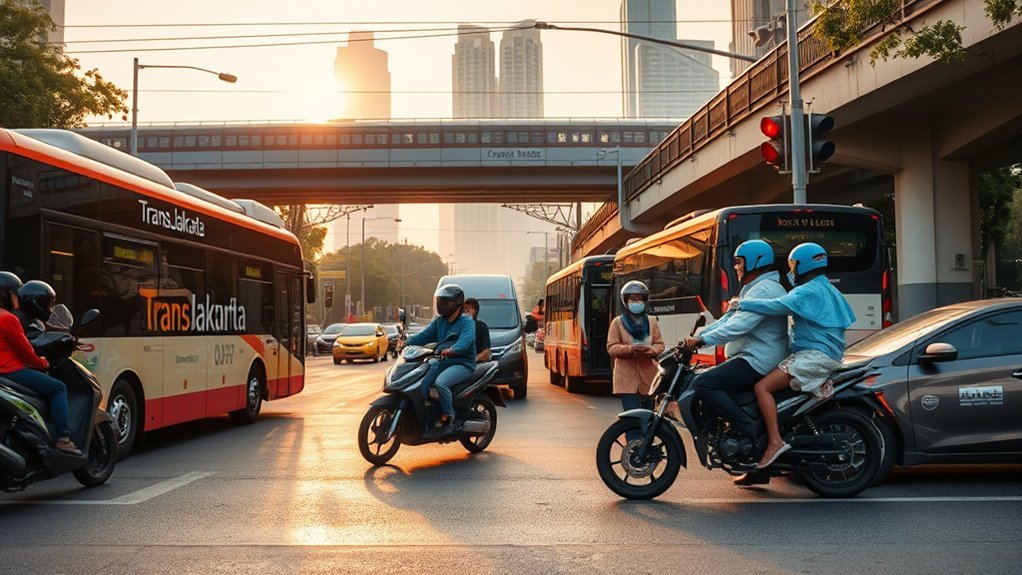
Transportation can be inexpensive if you live near a reliable route. Jakarta has the country’s strongest mix of bus rapid transit, MRT, LRT, and commuter rail, while coverage is more limited in many other cities and islands.
Public Transport Options
- TransJakarta: the regular fare is commonly Rp3,500 per trip, including many long routes.
- MRT Jakarta: fares currently range from Rp3,000 to Rp14,000 depending on the stations used.
- Local buses and trains: prices vary by city, operator, route, and distance.
- Ride-hailing: Gojek and Grab are convenient, but fares change with distance, demand, weather, tolls, and vehicle type. A fixed nationwide per-kilometer claim is not reliable.
A frequent public-transport user in Jakarta may spend only a few hundred thousand rupiah per month. Someone relying on daily ride-hailing, airport trips, or long suburban commutes can spend several million.
Owning Private Vehicles
A scooter may be cheaper to rent and run than a car, but the real cost includes fuel, maintenance, parking, insurance, protective equipment, licensing, and accident risk. In Jakarta’s May 2026 crowdsourced data, gasoline averaged about Rp12,689 per liter. Car purchase prices and financing costs are high relative to local incomes.
Warning: A foreign driver needs the correct license for the vehicle class. A home-country license alone may not be recognized; an International Driving Permit or Indonesian license may be required. Wear a certified helmet, confirm rental insurance, and check that your travel or health policy covers motorcycle use.
For many newcomers, public transport, licensed taxis, ride-hailing, or a car with a driver is simpler than immediate vehicle ownership. Test your normal commute before signing a long lease or buying a vehicle.
Food and Grocery Expenses
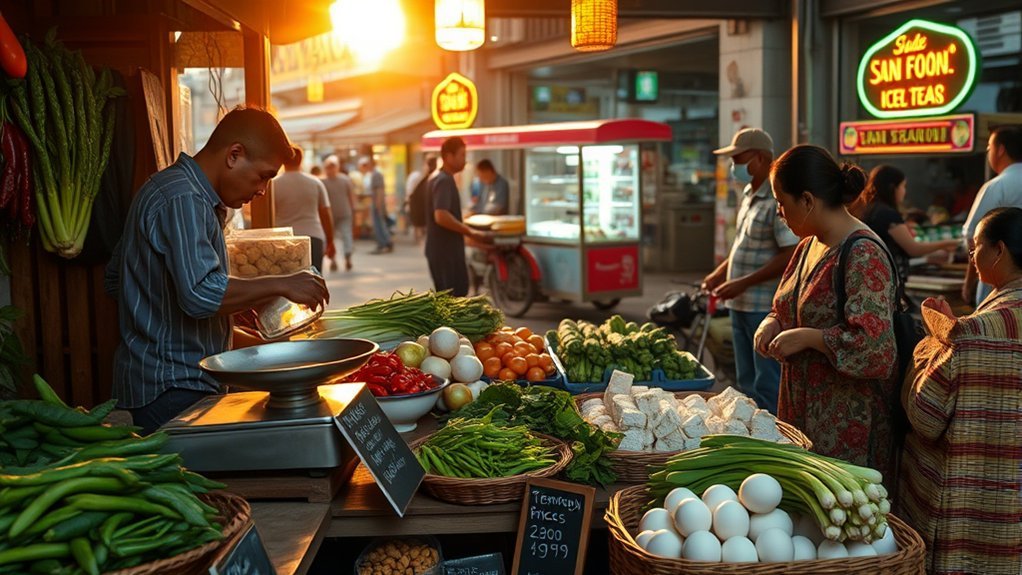
Food can remain one of the most affordable parts of life in Indonesia when you eat local dishes and buy seasonal produce. A one-person planning allowance of roughly Rp2.5 million to Rp5 million per month can cover a local-to-mixed diet, while frequent Western dining, delivery, imported dairy, specialty products, and alcohol can push spending much higher.
| Item | Mid-2026 example | What affects the price |
|---|---|---|
| Inexpensive restaurant meal | About Rp20,000 in Yogyakarta, Rp25,000 in Bandung, and Rp32,500 in Denpasar | Neighborhood, tourist demand, restaurant type, and delivery fees |
| White rice, 1 kg | About Rp13,700–Rp16,700 in the compared cities | Variety, brand, market, and region |
| Eggs, 12 | Roughly Rp22,000–Rp26,000 | Size, store, and local supply |
| Mid-range dinner for two | Often Rp150,000–Rp500,000 before drinks | City, cuisine, venue, and alcohol |
Local warungs, neighborhood markets, and home cooking offer the best value. Imported products can cost far more than comparable local items because of transport, taxes, cold-chain requirements, and retail positioning.
Healthcare and Health Insurance Options
Indonesia combines the national JKN program with private clinics and hospitals. BPJS Kesehatan reported 284,337,094 JKN participants as of April 30, 2026, replacing the article’s outdated claim that coverage was about 82% of the population. Foreign nationals who work in Indonesia for at least six months are included in the mandatory social-security framework, but enrollment and benefits depend on employment and residence status.
| Option | Budget effect | Main trade-off |
|---|---|---|
| JKN/BPJS pathway | Lower direct cost when eligible and properly enrolled | Referral pathways, facility availability, waiting times, and language support vary |
| Private local care | Pay per visit or through local insurance | Faster access may cost more, especially for specialists, imaging, and hospital stays |
| International insurance | Premium varies sharply by age, deductible, benefits, and medical history | Broader networks and evacuation coverage can be expensive |
Before moving, compare inpatient limits, outpatient care, chronic-condition exclusions, maternity coverage, prescription benefits, direct billing, waiting periods, and emergency evacuation. Some complex cases may require transfer to another city or country, but this is not automatic for every serious procedure.
Note: This cost guide is not medical advice. Confirm coverage directly with BPJS Kesehatan, your employer, hospital, and insurer before relying on a plan.
Education and Schooling Costs for Expats

Schooling can transform a moderate household budget into a high one. The original claim that public schools are automatically free for expatriate children and that private schools cost only $30–$400 per year is not dependable. Admission to the national system follows current central and local rules, and children transferring from foreign or international systems may need document review, grade conversion, or subject matriculation.
International-school fees vary by city, grade, curriculum, facilities, and enrollment charges. Mid-2026 crowdsourced primary-school estimates ranged from roughly Rp24 million to Rp120 million per year in Yogyakarta, Rp60 million to Rp150 million in Denpasar, and Rp84 million to Rp400 million in Jakarta. Application fees, capital levies, transport, uniforms, meals, devices, and activities may be extra.
- Check admission eligibility: ask the school which passport, stay permit, previous records, translations, and assessments are required.
- Request the full fee schedule: tuition alone may not show the true annual cost.
- Confirm the teaching language and curriculum: national, Cambridge, International Baccalaureate, and other programs have different pathways.
- Budget for annual increases: do not assume the first-year fee will remain unchanged.
The Ministry of Primary and Secondary Education’s school-admission guidance explains that students coming from overseas schools must meet the applicable general and route-specific requirements.

This heartfelt cookbook shares the kitchen wisdom of a Korean mom alongside 100 family recipes that bring comforting, authentic flavors to your table. Blending personal stories with practical guidance, it offers home cooks approachable ways to explore Korean cooking with confidence. The hardcover format and trusted editorial guidance make it a beautiful and reliable addition to any cookbook collection.

This heartfelt memoir blends laugh-out-loud honesty with tender reflections on love, loneliness, and the unexpected healing power of rescue dogs. Isabel Klee shares her journey fostering pups in the city while navigating dating and self-discovery, offering an intimate, relatable story for readers who enjoy emotional, character-driven narratives. It is a warm, engaging read about opening your heart and finding connection in surprising places.

These colorful answer buzzers turn lessons, review games, and family activities into lively game-show style challenges that boost participation and make learning more interactive. Each buzzer has a distinct sound to clearly identify who buzzed in first, while the durable, palm-sized design makes them easy for kids and adults to use in classrooms, homeschools, and group settings.
Entertainment, Sports, and Lifestyle Expenses
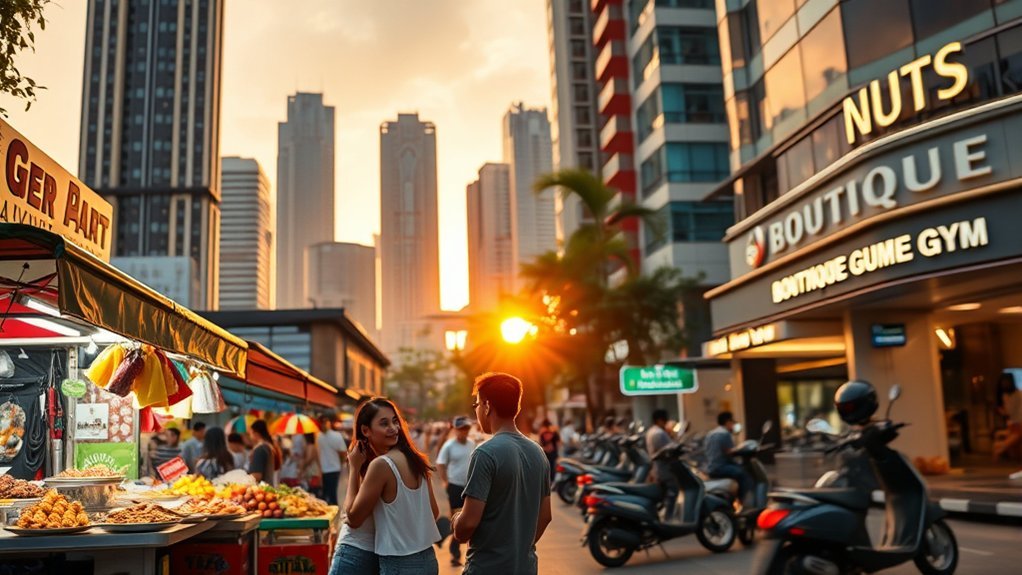
Everyday leisure can be affordable, but lifestyle spending is easy to underestimate in tourist and expat areas. Jakarta’s May 2026 crowdsourced averages were about Rp52,500 for a cinema ticket and Rp425,000 per month for a standard fitness club. Premium gyms, beach clubs, spas, diving, golf, coworking memberships, and weekend flights can add millions of rupiah.
| Category | Practical budgeting approach |
|---|---|
| Cinema and casual outings | Set a weekly allowance and include snacks, parking, and ride-hailing |
| Gym or classes | Compare monthly, annual, and drop-in rates before committing |
| Outdoor activities | Hiking and beaches may be low-cost, but guides, park fees, equipment, and transport are extra |
| Wellness and tourism | Prices vary from local services to luxury resort packages |
A realistic budget should include the activities you actually plan to do, not only rent and groceries. This is especially important for Bali, where a low-cost local meal can sit beside expensive international dining and resort-style entertainment.
Taxes, Banking, and Cost-Saving Tips
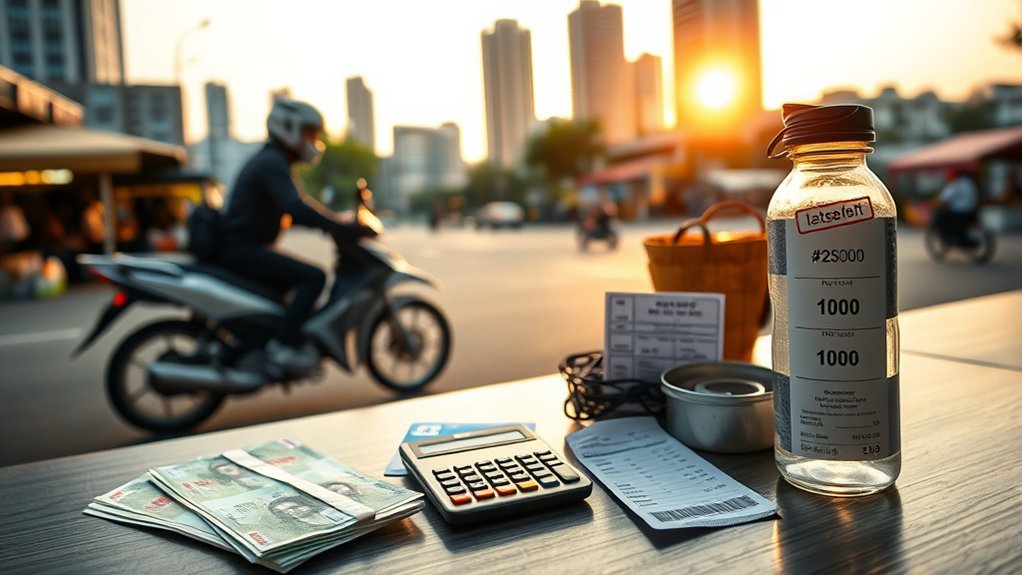
Tax rules depend on residency, income source, treaty position, employment, and the nature of your work. A foreign national can become an Indonesian domestic tax subject by residing in Indonesia, being present for more than 183 days within a 12-month period, or showing an intention to reside under the applicable rules.
The current progressive individual income-tax rates apply to taxable income, not automatically to gross income:
| Taxable-income band | Rate |
|---|---|
| Up to Rp60 million | 5% |
| Above Rp60 million to Rp250 million | 15% |
| Above Rp250 million to Rp500 million | 25% |
| Above Rp500 million to Rp5 billion | 30% |
| Above Rp5 billion | 35% |
The draft’s statement that foreign residents earning under Rp4.8 billion face a top rate of about 30% was inaccurate and omitted the 35% band. Tax treaties, foreign-source income rules, deductions, employer withholding, and special provisions can change the final result.
Warning: This section is general information, not tax or legal advice. Long-term residents, remote workers, business owners, and people with income in more than one country should obtain advice based on their facts.
A local bank account can simplify rent, payroll, bills, QRIS payments, and transfers, but each bank sets its own identity, address, tax-number, and stay-permit requirements. E-wallet access may also depend on a local phone number and verification level.
Practical Cost-Saving Tips
- Budget in rupiah: convert foreign income only after allowing for exchange-rate movement and transfer fees.
- Choose the neighborhood before the apartment: a higher rent near work may cost less than a distant unit plus daily transport.
- Use local markets and products: imported brands can carry a large premium.
- Track electricity: set sensible air-conditioner temperatures and check whether the unit uses prepaid power.
- Compare annual and monthly leases: include deposits, service charges, cleaning, repairs, and furnishing.
- Use public transport where practical: combine it with occasional ride-hailing instead of defaulting to a private car.
- Price insurance before moving: age and medical history can materially change the budget.
Buying Property in Indonesia
There is no useful single answer to “How much does a house cost in Indonesia?” Prices depend on land status, city, neighborhood, building quality, title, and foreign-buyer eligibility. Mid-2026 crowdsourced apartment prices in Jakarta averaged about Rp53.65 million per square meter in the center and Rp25.87 million outside it. Denpasar averages were about Rp42.05 million and Rp13.64 million per square meter, but individual developments can differ greatly.
Foreign nationals generally do not receive the same freehold land ownership rights as Indonesian citizens. Government Regulation No. 18 of 2021 provides routes involving rights such as Hak Pakai and qualifying apartment ownership, subject to immigration status, property type, location, minimum-price rules, and other conditions.
Warning: Never use an informal nominee arrangement to bypass ownership rules. Before paying a reservation fee or deposit, use an independent Indonesian lawyer and a properly appointed land deed official or notary to verify the title, seller, taxes, permits, encumbrances, and foreign-buyer eligibility.
Frequently Asked Questions
Can U.S. citizens move to Indonesia?
Yes. U.S. citizens can enter or live in Indonesia when they qualify for the correct visa and stay permit. A B1 Visa on Arrival is suitable for eligible short visits, not long-term employment. Longer stays may use a visitor, work, family, investor, remote-worker, or elderly second-home route depending on the person’s purpose and eligibility.
Is $1,000 a lot in Indonesia?
At a rounded July 2026 rate, $1,000 is about Rp18 million. That can support one person comfortably in Yogyakarta, Bandung, or a modest part of Jakarta. It is less generous in premium Bali areas and usually does not cover a family’s international-school tuition, high-end housing, and private insurance.
Can one person live in Indonesia on $500 a month?
It may be possible in a lower-cost city with simple housing, local food, limited air-conditioning, and careful transport spending. It is not a dependable budget for central Jakarta, popular Bali neighborhoods, frequent Western dining, major medical costs, or repeated visa and travel expenses.
How much does a house cost in Indonesia in U.S. dollars?
There is no national price because land, houses, and apartments differ by title and location. As a rough apartment benchmark, Jakarta’s mid-2026 city-center average was about Rp53.65 million per square meter, or roughly $2,980 at Rp18,000 per $1. Foreign buyers must also check legal eligibility and title structure before comparing prices.
Is it cheap for an American to live in Indonesia?
Many local expenses are lower than in the United States, especially local meals, public transport, and basic services. The comparison changes when the household chooses imported food, Western-style housing, a private car, international schools, frequent flights, or comprehensive international health insurance.
Which Indonesian cities are usually cheaper for expats?
Yogyakarta, Bandung, Malang, Solo, and many secondary cities can offer lower housing costs than central Jakarta or high-demand Bali areas. The best value still depends on job location, climate, healthcare access, school needs, internet quality, and transport.
Conclusion
Indonesia can offer a comfortable lifestyle at a moderate cost, but the headline budget depends on where and how you live. A single person may spend about Rp9 million to Rp22 million per month in many cities, while popular Bali areas and family life can cost much more. Build your plan in rupiah, verify the visa, include insurance and tax obligations, and compare neighborhoods using total costs rather than rent alone.
Sources
- Directorate General of Immigration: Indonesia visa directory — current visa categories, permitted activities, eligibility, stay periods, and official fees.
- Bank Indonesia: JISDOR — official USD/IDR reference-rate snapshot used for the dollar examples.
- Directorate General of Taxes: individual income-tax calculation and tax-residency determination — progressive rates and domestic-tax-subject tests.
- BPJS Kesehatan — current JKN participation and healthcare-system information.
- Government Regulation No. 18 of 2021 — land, apartment, management, and foreign property-right framework.
- Numbeo Jakarta, Yogyakarta, Bandung, Denpasar, and Bali — mid-2026 crowdsourced rent, food, transport, utility, school, and leisure benchmarks.

This compact electric kettle quickly boils up to 1 liter of water with 1500 watts, making it ideal for tea, French press coffee, and fast hot water needs. The BPA-free glass carafe features easy-to-read markings, a wide opening for simple cleaning, and a built-in mesh filter to help keep mineral scale out of your cup. With auto shutoff, boil-dry protection, and cordless serving, it offers a convenient and stylish way to heat water for smaller kitchens, dorms, and apartments.

Feel Good Gluten Free is a cookbook by Becky Excell designed to make gluten-free cooking approachable, satisfying, and full of flavor. It offers recipe ideas for everyday meals and special treats, helping home cooks enjoy a wider variety of dishes without gluten. This hardcover edition is ideal for anyone seeking reliable gluten-free inspiration from a trusted author.

This combo kit helps women trying to conceive track fertile days and check for pregnancy with convenient at-home testing. The ovulation strips help monitor LH surge progression and are easy to read, while the pregnancy strips provide quick results with simple line interpretation. Designed for ease of use and dependable family planning support, it offers a practical way to stay on top of your fertility journey.