The cost of living in Rwanda in 2026 runs about RWF 1.05–1.22 million (~$710–$825) a month for a single person living simply in Kigali, and about RWF 1.7–1.96 million (~$1,155–$1,325) for a comfortable central lifestyle. A couple should plan on roughly RWF 2.16–2.58 million (~$1,460–$1,745), and a family of four about RWF 3.5–4.3 million (~$2,375–$2,905) before international school fees. These figures use an exchange rate of about RWF 1,477 per US dollar (October 6, 2026). Rent is the biggest variable, and prices are rising fast: urban inflation hit 15.7% in August 2026, led by transport, housing, and food. Below you’ll find Kigali rents, utility tariffs, fuel and bus fares, healthcare, taxes, visa fees, and sample budgets.
Cost of Living in Rwanda: Quick Answer
- Single person: RWF 1.05–1.22 million (~$710–$825) on a lean budget; RWF 1.7–1.96 million (~$1,155–$1,325) for a comfortable one in central Kigali.
- Couple: RWF 2.16–2.58 million (~$1,460–$1,745) a month.
- Family of four: about RWF 3.5–4.3 million (~$2,375–$2,905) before school fees; about RWF 5.8–6.6 million (~$3,960–$4,490) with two children in international school.
- Rent, one-bedroom in Kigali: about RWF 612,000 (~$414) outside the center and RWF 984,000 (~$666) in the center (crowd-sourced averages).
- Utilities: about RWF 124,000 (~$84) a month for an 85 m² apartment; home internet adds about RWF 31,000 (~$21).
- Bus fares in Kigali: RWF 182–855 (~$0.12–$0.58) per ride, based on distance.
- Petrol: RWF 2,938 (~$1.99) per liter since April 2026.
Exchange Rate, Inflation, and Wages in 2026
Three numbers shape what Rwanda costs you this year.
The exchange rate. Bank of Kigali quoted the US dollar at RWF 1,472 buying and RWF 1,482 selling on October 6, 2026, according to its published exchange rates. This guide uses the midpoint, about RWF 1,477 per dollar. The Rwandan franc tends to weaken slowly against the dollar each year, which softens local price increases for people paid in foreign currency.
Inflation. This is the big story of 2026. The National Institute of Statistics of Rwanda (NISR) reported urban inflation of 15.7% in August 2026, up from 14.5% in July, in its August 2026 CPI report. Transport prices were up 24.2% from a year earlier, housing, water, electricity, and fuels were up 20.4%, and food was up 16.3%. Meat (36.7%) and vegetables (24.7%) rose fastest. Many online price lists, including older versions of this guide, lag behind these increases.
Wages. Rwanda has no modern national minimum wage. The only general rate on the books is RWF 100 a day, according to WageIndicator, a figure dating from the 1970s that no longer reflects real pay. Sector-based minimum wages have been discussed for years but are not in force. In practice, local pay is low. Employees in the 2025 Labour Force Survey sample reported average cash income of about RWF 81,000 (~$55) a month (unweighted survey data). Crowd-sourced averages for Kigali, which lean toward office and professional jobs, show an average net salary of about RWF 408,000 (~$276).
A comfortable expat budget in Kigali is roughly 15 to 20 times what a typical Rwandan employee earns in cash each month. Rwanda feels affordable mainly to people paid in foreign currency.
Rent in Kigali
Most foreigners in Rwanda live in Kigali, and most price data comes from there. The table uses crowd-sourced averages updated on October 2, 2026. They are based on a few hundred entries from a few dozen contributors, so treat them as a rough guide. They also lean toward the modern, secure apartments most expats rent.
| Property | City Center (RWF/month) | Outside Center (RWF/month) |
|---|---|---|
| 1-bedroom apartment | 983,872 (~$666) | 611,746 (~$414) |
| 3-bedroom apartment | 2,039,896 (~$1,381) | 1,257,795 (~$852) |
Kigali spreads across hills, and each area has its own price level:
- Nyarutarama, Kiyovu, and Kacyiru are the most expensive. They have embassies, larger houses, and many international residents.
- Kimihurura and Kibagabaga are popular mid-to-upper options with good access to the center and the airport road.
- Remera, Kimironko, and Kicukiro have more local housing, busy markets, and lower rents. Many newer apartments here cost well below the averages above.
- Secondary cities such as Musanze, Huye, and Rubavu are cheaper than Kigali. There is too little reliable data to publish averages, so check local listings or ask agents before you move.
Renting as a Foreigner
Foreigners can rent freely. Landlords commonly ask for rent in advance, sometimes several months at once, plus a deposit. Many expat-oriented listings are quoted in US dollars, while local listings use francs. Ask whether the price includes furniture, a guard, garbage collection, water, and a backup water tank. Visit at night and after rain, since some roads on the hills are unpaved and turn muddy.
Utilities, Internet, and Phone
Basic utilities (electricity, water, and garbage) for an 85 m² apartment average about RWF 124,000 (~$84) a month in Kigali. Kigali’s mild climate means most homes don’t need heating or air conditioning, which keeps power bills down.
Electricity is prepaid through the national utility, REG, and you top up with a meter code. The RURA residential tariff in force since October 1, 2025, is tiered:
| Monthly Use | Rate per kWh (RWF, before VAT) | Approx. USD |
|---|---|---|
| 0–20 kWh | 89 | $0.06 |
| 21–50 kWh | 310 | $0.21 |
| Above 50 kWh | 369 | $0.25 |
At these rates, 150 kWh a month costs about RWF 48,000 before tax and about RWF 56,600 (~$38) with 18% VAT. A single person in a small apartment who cooks with gas often uses less.
Other monthly costs:
- Home internet (60+ Mbps): about RWF 31,000 (~$21). Fiber is available in much of Kigali; coverage outside the city is patchier.
- Mobile plan with 10 GB+ data: about RWF 10,300 (~$7). MTN and Airtel are the two main networks, and mobile money is used everywhere.
- Water: billed by WASAC on a tiered monthly tariff. Supply can be irregular in some hill neighborhoods, so many houses have a storage tank.
- Cooking gas: most apartments use bottled LPG. Prices follow fuel costs, which rose sharply in 2026.
Food: Groceries and Dining Out
A single person who cooks most meals spends roughly RWF 200,000–250,000 (~$135–$170) a month on groceries. Local produce, beans, rice, potatoes, and bananas are cheap. Imported cheese, cereal, wine, and packaged foods cost much more, and food inflation was 16.3% in August 2026, so expect prices to keep climbing.
Average prices in Kigali (crowd-sourced, October 2026):
| Item | Typical Cost (RWF) | Approx. USD |
|---|---|---|
| Milk (1 liter) | 1,233 | $0.83 |
| White bread (1 lb loaf) | 1,403 | $0.95 |
| White rice (1 lb) | 872 | $0.59 |
| Eggs (12) | 2,409 | $1.63 |
| Chicken fillets (1 lb) | 3,074 | $2.08 |
| Beef (1 lb) | 3,039 | $2.06 |
| Local cheese (1 lb) | 2,822 | $1.91 |
| Bananas (1 lb) | 522 | $0.35 |
| Tomatoes (1 lb) | 706 | $0.48 |
| Potatoes (1 lb) | 333 | $0.23 |
| Mid-range bottle of wine | 15,000 | $10.16 |
Kimironko Market is the best-known place for fresh produce in Kigali. Supermarkets in the city center stock imported brands at higher prices.
Eating out is affordable if you stick to local places. A buffet lunch of rice, beans, plantains, vegetables, and meat is a common local option. Other typical prices:
- Meal at an inexpensive restaurant: about RWF 4,000 (~$2.71)
- Three-course dinner for two at a mid-range restaurant: about RWF 45,000 (~$30.50)
- Fast-food combo meal: about RWF 10,000 (~$6.80)
- Cappuccino: about RWF 3,600 (~$2.40)
- Domestic beer (pint): about RWF 1,500 (~$1.00)
Transportation and Getting Around
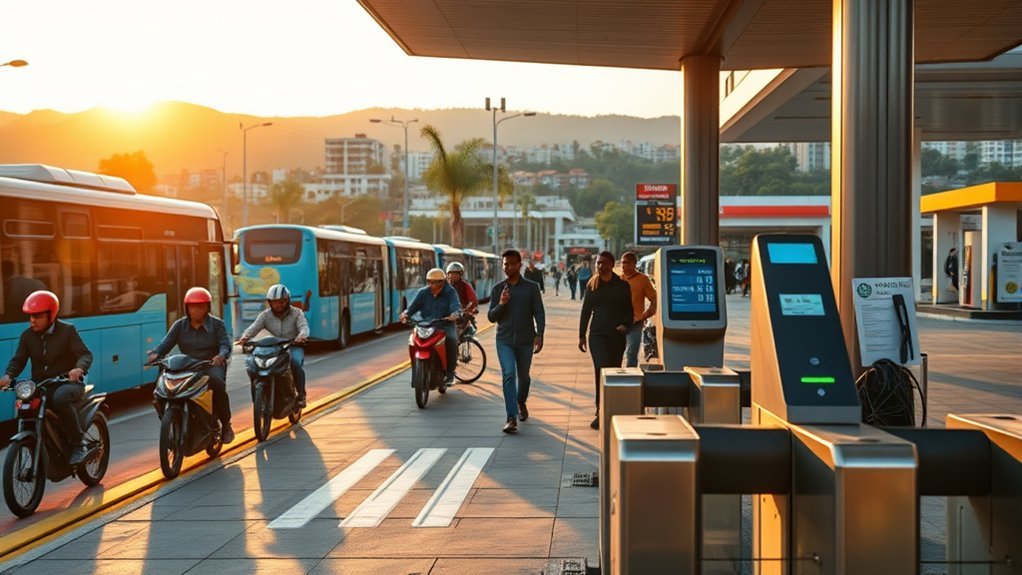
Kigali’s buses use a distance-based fare system introduced in December 2024. Fares run from RWF 182 for 1–2 km to RWF 855 for about 25 km, according to East African Business Times. You pay with a prepaid Tap&Go card. The government kept bus fares unchanged in 2026 despite higher fuel prices, and it added peak-hour bus-only lanes in April 2026. Ridership rose about 15% after the changes, KT Press reported in June 2026.
| Item | 2026 Cost (RWF) | Approx. USD |
|---|---|---|
| Kigali bus ride (1–2 km) | 182 | $0.12 |
| Kigali bus ride (about 25 km) | 855 | $0.58 |
| Kigali (Nyabugogo) to Musanze bus | 3,821 | $2.59 |
| Taxi starting fare (crowd-sourced) | about 4,000 | $2.71 |
| Petrol, per liter (since April 17, 2026) | 2,938 | $1.99 |
| Diesel, per liter (since June 6, 2026) | 2,927 | $1.98 |
Fuel became much more expensive this year. RURA raised petrol from RWF 2,303 to RWF 2,938 a liter on April 17, 2026, a 27.6% jump, KT Press reported. Diesel was then raised to RWF 2,927 in June 2026. RURA reviews pump prices regularly, so check the latest notice before you budget for a car.
Other transport notes:
- Motorcycle taxis (motos): the fastest way across town for short trips. Agree on the fare before you start or book through an app, and wear the helmet the driver provides.
- Ride-hailing and taxis: app-based cars, many of them electric, are common in Kigali. They cost more than motos but are better at night or in rain.
- Daily commute: two bus rides each workday cost roughly RWF 8,000–37,000 (~$5–$25) a month, depending on distance.
- Cars: imported vehicles carry high taxes, and fuel now costs about $7.50 a gallon. Most single newcomers manage without one.
Healthcare and Insurance Costs

Rwanda has near-universal health coverage through a mix of public schemes. Kigali has the country’s best private clinics and hospitals. For complex surgery or specialist care, many expats are referred to Nairobi or further abroad, so evacuation cover matters.
Community-based health insurance (Mutuelle de Santé). RSSB’s CBHI scheme covers most Rwandans. Annual premiums per person depend on household income:
| Category (household monthly income) | Annual Premium per Person (RWF) | Approx. USD |
|---|---|---|
| I – no income | 0 (government pays) | $0 |
| II – below RWF 30,000 | 3,000 (plus 1,000 subsidy) | $2.03 |
| III – RWF 30,001–60,000 | 5,000 | $3.39 |
| IV – RWF 60,001–120,000 | 8,000 | $5.42 |
| V – above RWF 120,000 | 20,000 | $13.54 |
Treatment at public health facilities starts at about RWF 200 a visit. The scheme is built for residents in the national social registry. Most foreigners rely on other cover.
Employer cover. Formal-sector employees often join RSSB’s medical scheme. Contributions total 15% of basic salary (7.5% each from employee and employer), and RSSB pays 85% of covered costs. Private employers need at least seven staff to join. Employees also pay 0.5% of net salary toward CBHI.
Private insurance. Expats usually carry a local private plan or international health insurance with evacuation cover. Costs vary widely by age, insurer, and plan, so get quotes before you arrive. The sample budgets below assume roughly RWF 60,000–120,000 (~$40–$80) a month per adult for local private cover.
Schools and Childcare
School choice drives family budgets more than anything else.
- International primary school: crowd-sourced data puts the average at about RWF 14.0 million (~$9,500) a year per child. Leading schools in Kigali charge more, plus registration, transport, and uniforms.
- Private preschool or kindergarten: about RWF 167,000 (~$113) a month, full day.
- Public and private Rwandan schools: far cheaper. Lessons are taught mainly in English and Kinyarwanda, class sizes are large, and quality varies.
For two children in international school, tuition alone adds about RWF 2.34 million (~$1,585) a month.
Taxes: VAT, Income Tax, and Social Security
VAT is 18% and is included in shelf prices, according to PwC Worldwide Tax Summaries. Many basic foods are exempt.
Pay As You Earn (PAYE) is withheld monthly by employers. The personal income tax bands have not changed for years:
| Monthly Taxable Income (RWF) | Approx. USD | Rate |
|---|---|---|
| 0–60,000 | $0–$41 | 0% |
| 60,001–100,000 | $41–$68 | 10% |
| 100,001–200,000 | $68–$135 | 20% |
| Above 200,000 | Above $135 | 30% |
Because the top rate starts so low, almost all of a professional salary is taxed at 30%. On a gross salary of RWF 1 million (~$677), PAYE is about RWF 264,000 (~$179) a month.
Social security (RSSB):
- Pension: 6% from the employee and 6% from the employer since January 2025. The total rises to 14% in 2027 and reaches 20% by 2030.
- Maternity leave: 0.3% each from employee and employer.
- Occupational hazards: 2% paid by the employer.
- CBHI: 0.5% of the employee’s net salary.
If you will become a tax resident or earn income from abroad, get advice from a Rwandan tax adviser early.
Visas and Residence Permits
Rwanda is one of the easiest African countries to enter. Many nationalities get a visa on arrival or a free visa waiver. The main visitor options from the Directorate General of Immigration and Emigration are:
| Visa | Fee (USD) | Validity | Notes |
|---|---|---|---|
| Visa waiver (VE-1) | Free | 30 or 90 days | 90 days for waiver countries; 30 days for AU, Commonwealth, and Francophonie nationals |
| Holiday visa (V1), single entry | $50 | 30 days | free for waiver nationals; available on arrival |
| Holiday visa (V1), multiple entry | $70 | 90 days | available on arrival |
| Job search visa (V4) | $50 | 90 days | apply before arrival |
| East Africa Tourist Visa (V11) | $100 | per agreement | covers Rwanda, Kenya, and Uganda |
EAC citizens enter free for up to six months. To live or work in Rwanda long-term, you need a residence permit. Categories include employment, business investor, entrepreneur, dependent, study, and permanent permits, all applied for online through Irembo. Fees and documents differ by category, so check the official permit pages before you apply.
One-Time Setup Costs
Budget for these before your first month:
- Visa or permit fees: $50–$70 to enter on a visitor visa, plus residence permit fees if you stay long-term.
- Rent in advance and deposit: landlords often ask for several months up front. At RWF 612,000 a month, three months is about RWF 1.84 million (~$1,245).
- Furnishing: unfurnished homes may lack a stove, fridge, or water heater. Furnished units save setup costs but rent for more.
- SIM card, Tap&Go card, and meter top-ups: small amounts, but plan for them in week one.
- Health insurance: international or travel cover for the first months, until a local plan starts.
Sample Monthly Budgets
These budgets combine the Kigali averages above. Figures are in RWF. Utilities for a small apartment are often below the 85 m² average, so the lean column uses a range.
| Expense | Single, Lean | Single, Comfortable | Couple |
|---|---|---|---|
| Rent (1-bed) | 612,000 (outside center) | 984,000 (center) | 984,000 (center) |
| Utilities | 80,000–124,000 | 124,000 | 124,000 |
| Internet + mobile | 41,000 | 41,000 | 52,000 |
| Groceries | 200,000–250,000 | 250,000–300,000 | 450,000–550,000 |
| Eating out + leisure | 60,000–100,000 | 150,000–250,000 | 250,000–400,000 |
| Transport | 25,000–40,000 | 60,000–100,000 | 100,000–150,000 |
| Health cover / buffer | 30,000–50,000 | 60,000–120,000 | 120,000–240,000 |
| Gym | — | 39,000 | 79,000 |
| Total (RWF) | 1.05–1.22 million | 1.7–1.96 million | 2.16–2.58 million |
| Total (USD) | $710–$825 | $1,155–$1,325 | $1,460–$1,745 |
Family of four: crowd-sourced data puts a family’s monthly costs at about RWF 2.25 million (~$1,520) before rent. Add a three-bedroom outside the center (RWF 1.26 million) or in the center (RWF 2.04 million), and the total is about RWF 3.5–4.3 million (~$2,375–$2,905). International school for two children pushes that to roughly RWF 5.8–6.6 million (~$3,960–$4,490).
Living like a local: many Rwandan households live on a small fraction of these budgets by renting simple homes in outer neighborhoods, cooking local staples, and walking or taking buses. Newcomers who do the same can spend much less, but most expats pay for extra security, reliable water, and imported goods.
Leisure and Daily Life

Leisure in Kigali can be cheap if you enjoy cafes, walks, and weekend trips by bus. Typical costs:
- Gym membership: about RWF 39,000 (~$27) a month; hotel gyms and boutique studios cost more.
- Cinema ticket: about RWF 5,000 (~$3.40).
- Weekend trips: Lake Kivu and Musanze are a few hours away by bus. Gorilla trekking permits are expensive, so most residents treat them as a once-in-a-while splurge.
A few things are different here. Plastic bags are banned, so bring reusable bags. On the last Saturday morning of each month, Umuganda community work closes many shops and limits traffic until about midday. Kigali is widely seen as one of the safest and cleanest cities in Africa, with low street crime. Still, check your government’s travel advice for areas near the borders with the Democratic Republic of the Congo and Burundi.
Money-Saving Tips

- Look beyond the expat hills. Remera, Kimironko, and Kicukiro often have newer apartments well below Nyarutarama or Kiyovu rents.
- Negotiate the advance. Offer a longer lease in exchange for paying fewer months up front or a lower monthly rent.
- Shop at markets. Buy produce at Kimironko or neighborhood markets and save imported goods for treats.
- Use buses and motos. With petrol near $2 a liter, a car is now a luxury for most single newcomers.
- Watch your power tier. Electricity above 50 kWh a month costs four times the first tier, so efficient appliances pay off.
- Plan for inflation. With urban prices up 15.7% in a year, build a 10–15% buffer into any budget made from older price lists.
How Rwanda Compares With Nearby Countries
Rwanda is not the cheapest country in East Africa, mainly because modern housing in Kigali is pricey. A comfortable single life in Kigali costs about the same as in Nairobi; see our guide to the cost of living in Kenya. Neighboring Uganda is usually a little cheaper for everyday costs, as our cost of living in Uganda guide shows, and the same is true of much of Tanzania outside the main expat areas (see the cost of living in Tanzania). Next door, the cost of living in Burundi is lower on paper but comes with currency and supply problems. Kinshasa and other big cities in the Democratic Republic of the Congo are far more expensive for foreigners than Kigali.
Frequently Asked Questions
How much money do you need to live in Rwanda per month?
A single person in Kigali needs about RWF 1.05–1.22 million (~$710–$825) a month for a simple life in an apartment outside the center, and about RWF 1.7–1.96 million (~$1,155–$1,325) for a comfortable central lifestyle. A couple should budget about RWF 2.16–2.58 million (~$1,460–$1,745), and a family of four about RWF 3.5–4.3 million (~$2,375–$2,905) before international school fees.
Is $1,000 a month enough to live in Kigali?
Yes, for one person living simply. At about RWF 1,477 per dollar, $1,000 is roughly RWF 1.48 million. That covers an apartment outside the center, local groceries, buses and motos, and a small health buffer. It is tight for a central furnished apartment with regular restaurant meals, taxis, and private insurance.
How much is rent in Kigali in 2026?
Crowd-sourced averages updated in October 2026 put a one-bedroom apartment at about RWF 984,000 (~$666) a month in the city center and about RWF 612,000 (~$414) outside it. A three-bedroom averages about RWF 2.04 million (~$1,381) in the center and RWF 1.26 million (~$852) outside. These figures lean toward expat-standard housing; simpler local units cost less.
What is the average salary in Rwanda?
Local pay is low compared with expat budgets. In the 2025 Labour Force Survey sample, employees reported average cash income of about RWF 81,000 (~$55) a month. Crowd-sourced data for Kigali, which leans toward office jobs, shows an average net salary of about RWF 408,000 (~$276).
What is the minimum wage in Rwanda in 2026?
Rwanda has no updated national minimum wage. The only general figure on the books is RWF 100 a day, set in the 1970s, and it is far below what any worker is actually paid. In practice, pay is set by the market and by sector.
Do I need a visa to live in Rwanda?
Many nationalities can enter visa-free or get a visa on arrival. A 30-day single-entry holiday visa costs $50 and a 90-day multiple-entry visa costs $70. To live and work long-term you need a residence permit from the Directorate General of Immigration and Emigration, such as an employment, investor, or dependent permit.
Is Rwanda cheaper than Kenya?
Day-to-day local costs are similar, but expat-standard housing in Kigali tends to cost a bit more than comparable housing in Nairobi. A comfortable single life costs about $1,155–$1,325 a month in Kigali versus about $1,015–$1,370 in Nairobi.
Conclusion
Rwanda is affordable for people paid in foreign currency, but 2026 has pushed prices up quickly. Urban inflation is above 15%, petrol rose 27.6% in April, and food and housing costs are climbing. A single person can live simply in Kigali for about $710–$825 a month, or comfortably in the center for about $1,155–$1,325. Families should plan on $2,375–$2,905 before international school. Choose your neighborhood first, since rent drives most of the difference, and add a buffer for inflation and exchange-rate changes before you commit.
Sources
- Bank of Kigali – exchange rates, October 6, 2026
- NISR – Consumer Price Index, August 2026
- NISR – Labour Force Survey 2025, monthly cash income of employees
- WageIndicator – minimum wage in Rwanda
- RURA – electricity end-user tariff notice, October 2025
- KT Press – petrol price increase, April 2026
- The Kenya Times – Rwanda diesel price revision, June 2026
- East African Business Times – Kigali distance-based bus fares
- KT Press – bus ridership and fuel measures, June 2026
- RSSB – Community-based health insurance scheme
- RSSB – Medical scheme
- PwC Worldwide Tax Summaries – Rwanda personal income tax
- PwC Worldwide Tax Summaries – Rwanda VAT and social security
- Directorate General of Immigration and Emigration – visitor visas
- Directorate General of Immigration and Emigration – residence permits
- Numbeo – Kigali (crowd-sourced averages, October 2026)