

Quick Answer: Cost of Living in Peru in 2026
Last updated: September 7, 2026. Lima rent, utilities, transport, exchange-rate references, health-plan pricing, education costs, and U.S. entry/residency guidance were rechecked against current 2026 sources.
The cost of living in Peru depends heavily on the city, neighborhood, housing choice, healthcare, and schooling. In Lima, a single person renting a one-bedroom can use roughly S/.3,178–S/.4,534 ($947–$1,352) per month as a 2026 planning range when current non-rent living costs are combined with an average apartment outside or inside the city center. A family of four using a three-bedroom can land around S/.9,187–S/.11,348 ($2,739–$3,383) before international-school tuition and major private healthcare expenses.
Exchange-rate note: USD equivalents below use a reference rate of about S/.3.354 per US$ on September 7, 2026. Exchange rates move daily, so sol-denominated prices are the more stable comparison.
- A single person’s ordinary Lima living costs are about $586 per month before rent in current 2026 cost data.
- Average one-bedroom Lima rent is about S/.2,569 in the city center and S/.1,212 outside the center.
- A family of four has ordinary non-rent costs of about $2,099 before adding a three-bedroom apartment, schooling, or major private healthcare.
- Basic utilities for an 85 m² Lima apartment average about S/.228 monthly; home internet averages about S/.86.
- A regular monthly public-transport benchmark is about S/.91, while the Metropolitano charges S/.3.20 for the trunk route and S/.3.50 for an integrated trunk-and-feeder trip.
- Private health plans vary widely by age and coverage. Current advertised entry prices include RIMAC Salud Flexible from S/.182 per month and Pacífico Salud Esencial from S/.6.18 per day.
- Arequipa and Trujillo can offer cheaper housing than Lima, but there is no reliable rule that every expense will be 20–40% lower.

This hardcover cookbook offers fast, approachable recipes designed for busy days and low-energy nights. Caroline Chambers focuses on simple, flavorful meals that help you get dinner on the table without overthinking it. It's a practical pick for home cooks who want quick weeknight inspiration and minimal-fuss cooking.

Die With Zero offers a fresh perspective on personal finance by encouraging readers to use money intentionally to create memorable life experiences instead of simply accumulating wealth. Written by Bill Perkins, this book combines practical guidance with a motivating philosophy to help readers align spending, saving, and life goals for a more fulfilling future.

Come Eat offers 100 approachable recipes designed to make everyday cooking more enjoyable, nourishing, and sustainable. With a focus on flavorful meals and practical preparation, this hardcover cookbook is ideal for home cooks looking for inspiration for salads, sides, and main dishes. Author Melissa Ben-Ishay shares recipes that encourage consistent, feel-good eating without sacrificing taste.
2026 Lima Budget Snapshot
| Expense | 2026 Planning Benchmark |
|---|---|
| Single person, excluding rent | About S/.1,965 ($586) |
| 1-bedroom rent outside center | About S/.1,212 ($361) |
| 1-bedroom rent in city center | About S/.2,569 ($766) |
| Single renter total | About S/.3,178–S/.4,534 ($947–$1,352) |
| Family of four, excluding rent | About S/.7,040 ($2,099) |
| 3-bedroom rent outside center | About S/.2,148 ($640) |
| 3-bedroom rent in city center | About S/.4,308 ($1,284) |
| Family total before private school | About S/.9,187–S/.11,348 ($2,739–$3,383) |
| Basic utilities, 85 m² apartment | About S/.228 ($68) |
| Home internet, 60 Mbps+ | About S/.86 ($26) |
| Regular monthly public-transport pass | About S/.91 ($27) |
How these totals were calculated: the single and family ranges combine current 2026 non-rent Lima living-cost estimates with current average one-bedroom or three-bedroom rents. They are planning benchmarks, not minimum-income requirements or guaranteed budgets. Your real total may be lower with shared/local housing or higher with Miraflores or San Isidro rent, imported food, private healthcare, international schooling, frequent taxis, or regular travel.
Monthly Living Expenses by City and Lifestyle
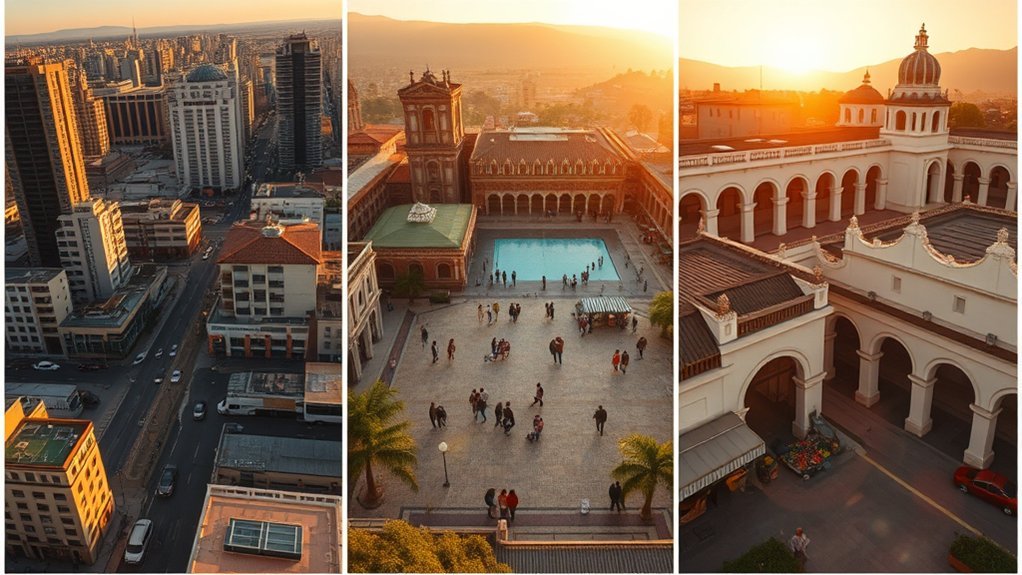
Lima is normally the most useful benchmark for international residents because it has the largest rental market and the strongest current price sample. Current 2026 data puts ordinary spending for one person at about $586 before rent. Add about S/.1,212 for an average outside-center one-bedroom or S/.2,569 for a central one-bedroom.
Housing can be cheaper in secondary cities. Numbeo’s 2026 samples put an outside-center one-bedroom at about S/.812 in Arequipa and S/.1,033 in Trujillo, versus about S/.1,212 in Lima. The city-center averages are roughly S/.1,218 in Arequipa, S/.1,463 in Trujillo, and S/.2,569 in Lima.
Do not apply one nationwide discount percentage to every expense. Rent may fall substantially outside Lima while internet, fuel, imported food, private healthcare, or particular services may not fall by the same amount. Cusco also has a relatively thin crowdsourced sample, so its precise city averages should be treated cautiously.
Local income provides useful context. Numbeo’s June 2026 Lima sample reports an average monthly net salary of about S/.2,166. That is below the planning total for a single person renting alone, so Peru may feel inexpensive to someone earning in U.S. dollars or euros while remaining costly relative to many locally paid salaries.
Housing: Rent, Utilities, and Buying Property

Housing is usually the largest variable in a Lima budget. Current June 2026 data puts a one-bedroom apartment at about S/.2,569 per month in the city center and S/.1,212 outside the center. Three-bedroom apartments average about S/.4,308 in the center and S/.2,148 outside. See the current Numbeo cost of living data.
Basic utilities for an 85 m² apartment average about S/.228 per month. Actual electricity use can move the bill above or below that figure, especially with larger homes and heavy appliance use.
If you are comparing Lima with a secondary city, focus on actual rent listings rather than a generic national percentage. Current outside-center one-bedroom benchmarks are roughly S/.812 in Arequipa and S/.1,033 in Trujillo.
For buyers, a per-square-meter benchmark is safer than claiming that a particular type of home always starts at a specific dollar amount. Numbeo’s June 2026 Lima sample puts apartment purchase prices at about S/.7,994 per m² in the city center and S/.4,804 per m² outside the center. District, building age, parking, security, condition, title history, and exact location can move an individual property’s price substantially.
Before committing to either a lease or purchase, compare the full housing cost: rent or mortgage, building fees, utilities, commute, furnishings, security, repairs, and any upfront payments required by the agreement.
Food and Dining: Markets, Groceries, and Restaurants

Food can remain one of the more manageable parts of a Lima budget if you combine home cooking with inexpensive local meals. Current 2026 data puts groceries at roughly $202 per month for one person as a broad Lima benchmark.
Numbeo’s June 2026 sample lists an inexpensive restaurant meal at about S/.15 and a three-course mid-range meal for two at about S/.120. These are city averages, not guaranteed menu prices.
Local mercados can lower the cost of produce, meat, and basic staples compared with shopping only in premium supermarkets, but the saving varies by product, season, and district. Imported brands, specialty foods, alcohol, delivery orders, and frequent dining in Miraflores or San Isidro can push a food budget higher.
A useful way to plan is to separate groceries from restaurant spending rather than assuming eating out is always cheaper than cooking. Set a weekly grocery target first, then add a separate amount for cafés, menú-style lunches, delivery, and higher-priced dinners.
Transportation, Internet, and Mobile Costs
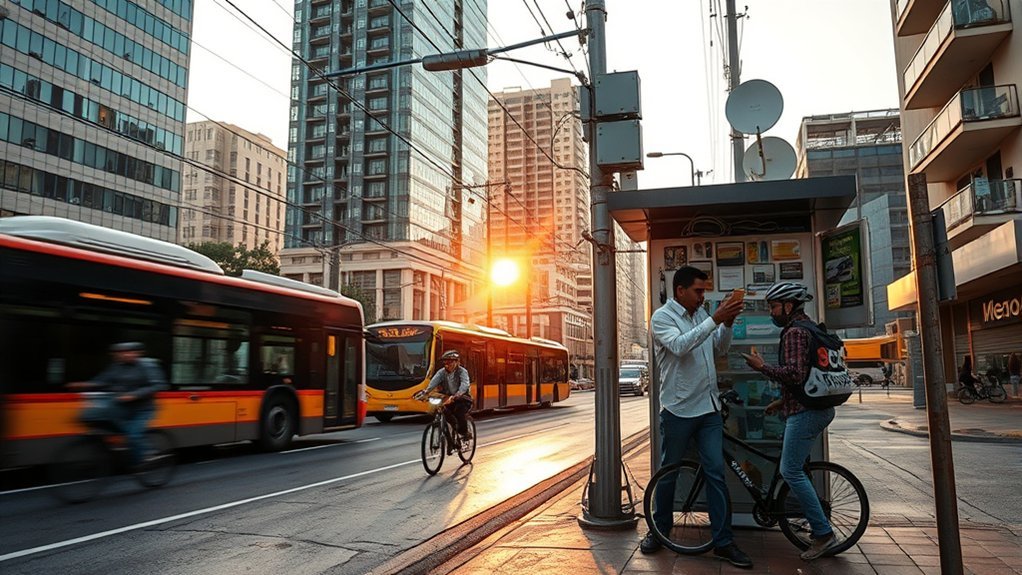
Lima public transportation remains inexpensive compared with housing. Numbeo’s June 2026 sample puts an ordinary one-way local-transport ticket at about S/.2.35 and a regular monthly public-transport pass at about S/.91.30.
The Metropolitano uses its own fare structure. The Autoridad de Transporte Urbano para Lima y Callao (ATU) states that the regular trunk fare is S/.3.20, while an integrated trunk-plus-feeder journey is S/.3.50. Certain 2026 integrated routes also use the S/.3.50 total fare.
Taxi and ride-hailing prices vary by distance, demand, congestion, time, and service, so a single citywide “short ride” price is not reliable enough for a monthly budget. If you expect to use apps frequently, track a normal workweek of rides and multiply that by four rather than relying on a generic fare estimate.
Car ownership costs more than public transit. Current Lima data puts gasoline around S/.4.90 per liter, before insurance, parking, maintenance, and depreciation.
Connectivity is relatively predictable. A broadband connection of 60 Mbps or faster averages about S/.86 monthly, while a mobile plan with calls and 10GB or more of data averages about S/.53. Remote workers should still confirm fiber availability and real speeds at the exact apartment before signing a lease.
Education and Childcare Costs
Education can be one of the largest extra expenses for families using private or international schools. Numbeo’s June 2026 Lima sample puts private full-day preschool or kindergarten at about S/.628 per child per month.
International primary-school tuition averages about S/.45,748 per child per year in the same dataset. Actual tuition varies widely by school and may not include enrollment charges, uniforms, transport, meals, devices, activities, or other fees.
Public-school education is free in Peru, and the Ministry of Education reaffirmed for the 2026 school year that enrollment in public schools cannot be conditioned on a payment. Families should still compare individual schools based on available places, commute, language needs, facilities, schedule, and the child’s support requirements.

This heartfelt cookbook shares the kitchen wisdom of a Korean mom alongside 100 family recipes that bring comforting, authentic flavors to your table. Blending personal stories with practical guidance, it offers home cooks approachable ways to explore Korean cooking with confidence. The hardcover format and trusted editorial guidance make it a beautiful and reliable addition to any cookbook collection.

This undergarment waist pouch helps protect your identity by blocking RFID readers from accessing information on compatible cards and passports. Its five-pocket layout keeps cash, cards, tickets, receipts, and travel documents organized and close to your body, while the breathable back panel and adjustable strap support comfortable wear beneath or over clothing.

This daily devotional helps parents pray purposefully for their children through a full year of Scripture readings, reflections, and guided prayer prompts. Written to encourage faithful family discipleship, it offers practical, biblically grounded support for parents who want to shape their prayers around God's Word. A foreword by Sinclair B. Ferguson adds trusted theological insight and encouragement.
Healthcare, Insurance, and Leisure Expenses
Private health-insurance costs vary substantially by age, benefits, provider network, deductibles, waiting periods, and medical history, so a universal S/.200–400 range is too simple.
As of September 2026, RIMAC advertises its Salud Flexible product from S/.182 per month and lists S/.45 consultations at affiliated clinics. Pacífico advertises its Salud Esencial plan from S/.6.18 per day. Higher-tier plans can cost much more, and the advertised starting price may not match the premium quoted for your age or desired coverage.
Before choosing a policy, compare inpatient coverage, outpatient coverage, emergency treatment, oncology, maternity if relevant, deductibles, coinsurance, waiting periods, pre-existing-condition rules, and the clinics available near your home.
For leisure, Numbeo’s current Lima sample puts a gym membership at roughly S/.108 per month and an international-release cinema ticket at about S/.22.50. Dining, nightlife, domestic flights, tours, and weekend trips should be budgeted separately because they can vary far more than these everyday leisure costs.
Visa, Residency, and Upfront Moving Costs
Short-term entry and long-term residence are different issues. Current U.S. State Department guidance says U.S. citizens do not need a tourist visa for stays of 90 days or less, although Peruvian immigration officials determine the authorized stay at entry. A tourist stay does not automatically give you long-term residence or work rights.
For long-term residence, use the immigration category that fits your situation and verify the requirements directly with Peru’s Superintendencia Nacional de Migraciones. Categories can include work, family, investment, study, and Rentista residence. For the foreign-source Rentista route, Migraciones currently requires evidence of at least US$1,000 in permanent net monthly income, along with the other required documentation.
Your first few months can also cost more than your normal monthly budget. Plan separately for any rental deposit or advance payment required by your contract, basic furniture and household setup, document legalization or apostilles, immigration fees, local transport while apartment hunting, insurance deductibles or waiting periods, and school enrollment costs where applicable.
Frequently Asked Questions
Can a US Citizen Live in Peru?
Yes, but long-term residence requires the appropriate immigration status. Current U.S. guidance says U.S. citizens do not need a tourist visa for stays of 90 days or less. To live in Peru long term, check the relevant residence category with Peru’s Migraciones rather than treating tourist entry as residence. See the U.S. State Department travel page for Peru.
How Much Money Do I Need to Live Comfortably in Peru?
There is no single nationwide number. For Lima, a single renter can use roughly S/.3,178–S/.4,534 ($947–$1,352) per month as a practical 2026 starting range, depending mainly on whether the one-bedroom apartment is outside or inside the center. A more premium neighborhood, frequent dining out, taxis, private healthcare, or regular travel can push the total higher.
How Much Is the Average Rent in Peru?
Rent varies sharply by city and district. In Lima, current average one-bedroom rent is about S/.2,569 in the city center and S/.1,212 outside it. Three-bedroom apartments average about S/.4,308 in the center and S/.2,148 outside. Arequipa and Trujillo currently show lower one-bedroom averages than Lima.
Is Peru a Cheap Place to Live?
Peru can be inexpensive for someone earning in U.S. dollars or another stronger foreign currency, especially outside Lima’s premium neighborhoods. It is less accurate to call the country universally cheap for local earners: the current Lima net-salary benchmark is only about S/.2,166 per month, below the planning cost of renting alone.
Is Arequipa Cheaper Than Lima?
Housing is generally cheaper in current datasets. An outside-center one-bedroom averages about S/.812 in Arequipa versus about S/.1,212 in Lima. However, do not assume every expense is lower by the same percentage; compare housing, food, healthcare, transport, and internet separately.
Sources and Methodology
This guide uses current 2026 planning data rather than treating any single crowdsourced number as a guaranteed price. The main consumer-cost benchmarks were checked against Numbeo’s June 2026 Lima, Arequipa, and Trujillo datasets and Wise’s 2026 Lima cost-of-living data. September 2026 Expatistan figures were used as an additional cross-check rather than as the sole source because methodologies and samples differ.
Transportation fares were checked against 2026 guidance from the Autoridad de Transporte Urbano para Lima y Callao. Public-school enrollment guidance was checked against Peru’s Ministry of Education. Private health-plan starting prices were checked against current RIMAC and Pacífico listings. U.S. entry guidance was checked against the U.S. Department of State, and long-term Rentista requirements were checked against Peru’s Superintendencia Nacional de Migraciones.
Because rents, insurance premiums, exchange rates, tuition, restaurant menus, and individual household spending change over time, recheck the largest expenses before signing a lease, choosing a school, buying insurance, or relocating.
Conclusion
The cost of living in Peru can still be attractive, but the useful number is the budget for your city and lifestyle rather than a national headline average. In Lima, rent creates the largest difference: a single renter can use roughly S/.3,178–S/.4,534 per month as a starting range, while a family of four renting a three-bedroom may be closer to S/.9,187–S/.11,348 before international schooling and major private-healthcare expenses.
Start by choosing your city and neighborhood, then price the exact type of apartment you need. Add normal food, utilities, transport, internet, healthcare, education, and leisure costs. Finally, budget separately for moving expenses and confirm your immigration category before making a long-term commitment.

This versatile cookware set equips home cooks with essential pots, pans, and a steamer insert for everyday meals and larger gatherings. The aluminum-encapsulated base promotes quick, even heating, while Cool Grip handles and tight-fitting glass lids support comfortable, controlled cooking. Designed for stovetop, oven, broiler, and dishwasher use, it offers reliable performance across a wide range of recipes.

Nautica Blue is a fresh, energetic men's eau de toilette inspired by the open ocean and the great outdoors. It delivers a strong, casual scent that suits everyday wear while bringing a clean, invigorating feel to your fragrance routine. Packaged as a spray for easy application, it is a versatile choice for men who enjoy sporty, refreshing cologne.

This bestselling Christian devotional by Rick Warren helps readers explore life’s meaning through practical, faith-centered guidance. With thoughtful daily reflections and scripture-based insights, it encourages spiritual growth, purpose, and a deeper relationship with God. Its approachable format makes it a trusted choice for personal devotion or group study.
