
Professional welding prices vary because a quick bench repair, a mobile gate repair, and code-regulated structural work require very different amounts of time, equipment, preparation, and documentation. A realistic budget must include more than the minutes spent running a weld bead. Setup, cutting, cleaning, materials, travel, finishing, inspection, and minimum service charges can all affect the final bill.
Quick Answer
Professional welding commonly costs $60–$125 per hour in the U.S. Small jobs may still be billed at a one- or two-hour minimum, while mobile work can add travel and setup charges. Materials, preparation, access, metal type, finishing, inspection, and code requirements determine the final project price.
Key Takeaways
- A practical national planning range is about $60–$125 per hour, but local prices can fall outside that range.
- Minimum charges often matter more than the hourly rate on small repairs.
- Mobile, structural, specialty-alloy, precision, and inspected work usually costs more than a routine shop repair.
- Ask whether preparation, materials, travel, cleanup, finishing, permits, and inspection are included.
- Compare the total scope and qualifications—not just the lowest hourly number.
At a Glance
| Typical Hourly Billing | About $60–$125 per hour for many professional welding services |
| Small-Job Minimum | Commonly one or two labor hours, depending on the provider |
| Common Home-Project Range | Approximately $250–$900, with much larger custom work costing more |
| Main Cost Drivers | Preparation, labor time, materials, travel, access, finishing, inspection, and code requirements |
Welder Hourly Rates and Minimum Charges
Current consumer cost guides place professional welding labor at roughly $60–$125 per hour for many U.S. projects. This is a planning range rather than a guaranteed national rate. Location, job type, access, urgency, equipment, and qualifications can move a quote below or above it.
A customer billing rate is not the same as a welder’s paycheck. According to the U.S. Bureau of Labor Statistics, the national median wage for employed welders, cutters, solderers, and brazers was $25.84 per hour in May 2025. A contractor’s billed rate must also cover equipment, maintenance, insurance, administration, nonbillable travel, shop expenses, consumables, taxes, and profit.
The lowest hourly rate is not always the lowest total price. A well-equipped welder who completes the job correctly in two hours may cost less than a cheaper provider who needs four hours and creates rework.

These Stanley MaxSteel straight aviation snips are built for clean, controlled cutting through sheet metal and other tough materials. Serrated cutting edges help prevent slippage for more accurate results, while the double pivot action delivers increased cutting power with less effort. Designed for dependable performance, they are a practical choice for metalworking, HVAC tasks, and general workshop use.

This Lasko pedestal fan delivers powerful, widespread airflow with three quiet speed settings to help keep bedrooms, living rooms, and home offices comfortable. Its adjustable height up to 54 inches, tilt-back head, oscillation, and included remote make it easy to direct cooling exactly where you need it. Built-in safety features and simple no-tool assembly add convenience and peace of mind for everyday indoor use.

Meguiar’s Ultimate Compound is designed to remove stubborn stains, bird dropping marks, oxidation, light scratches, and swirl marks from automotive paint. Its advanced abrasive technology helps restore a smoother, clearer finish without scouring clear coats, making it a reliable choice for paint correction before waxing. Use it by hand or with a dual action polisher to prepare your vehicle for a brilliant final shine.
How Minimum Charges Work
Many welding businesses use a minimum service charge, especially for repairs that take only a few minutes to weld. The minimum may equal one or two hours of labor or may appear as a separate service-call, setup, or mobilization fee.
A minimum can cover:
- Scheduling and reviewing the job
- Loading or preparing equipment
- Travel to and from the site
- Cleaning and fitting the joint
- Machine setup and testing
- Welding, inspection, and cleanup
- Billing and other administrative time
Ask for the minimum amount in writing and confirm whether travel, setup, materials, and cleanup are included. A provider should not describe a fixed $40, $60, or $75 amount as a universal industry standard because local business models differ.
Hourly, Flat-Rate, and Unit Pricing
Welders may charge in several ways:
- Hourly: Common for uncertain repairs, troubleshooting, demolition, or work where hidden damage may be discovered.
- Flat project price: Useful when the design, materials, dimensions, finish, and site conditions are clearly defined.
- Minimum service price: Common for small repairs that would otherwise produce too little billable time.
- Per linear foot: Sometimes used for repetitive seams, railings, fencing, and production work.
- Per pound or per unit: More common in fabrication and repeat-production settings.
- Time and materials: Labor is billed for actual time, while materials and outside services are added separately.
Note: A flat price offers budget certainty only when the scope is clear. For corroded, cracked, painted, or previously repaired metal, a time-and-materials quote may be more realistic because the full condition is not visible until work begins.
Factors That Influence Welding Costs
The welding process is only one part of the estimate. The final price depends on the complete sequence required to produce an acceptable result.
Preparation and Fit-Up
Preparation can take longer than welding. The fabricator may need to remove paint or rust, cut out a failed section, grind away an old weld, straighten parts, bevel thick material, align the joint, build a temporary fixture, or create a replacement piece.
Poor fit-up increases welding time and can cause distortion, burn-through, cracking, or an unacceptable finished appearance. Photos help with an initial estimate, but an in-person inspection may reveal additional preparation.
Access and Welding Position
A joint that is easy to reach on a workbench is generally faster than a weld located overhead, underneath a vehicle, inside equipment, next to a combustible surface, or high above the ground. Restricted access may require scaffolding, a lift, confined-space procedures, fire watch, shielding, or partial disassembly.
Material Thickness and Joint Design
Thin sheet metal requires careful heat control to avoid warping and holes. Thick material may require beveling, preheating, several weld passes, controlled interpass temperatures, and more filler metal. Joint length alone therefore does not determine cost.
Required Quality and Documentation
A decorative bracket and a load-bearing connection do not have the same requirements. Structural, pressure, transportation, or industrial work may require qualified procedures, qualified welders, traceable materials, inspection records, or nondestructive testing.
The current AWS D1.1/D1.1M:2025-AMD1 Structural Welding Code—Steel addresses procedure qualification, welder qualification, fabrication, inspection, and acceptance for applicable structural steel work. It is not automatically required for every repair; the contract, drawings, governing code, engineer, or authority having jurisdiction determines what applies.
Finishing and Appearance
Specify the required finish before accepting a quote. A weld left as deposited costs less than one that must be ground smooth, blended, polished, painted, powder coated, plated, or prepared for galvanizing. Cosmetic work can add substantial labor even when the joint is small.
Urgency and Scheduling
Emergency, after-hours, weekend, shutdown, or rush work may include premium charges. Seasonal demand and major construction schedules can also affect lead times. Ask whether the quoted price assumes standard scheduling or expedited service.
Material Expenses and Consumables
A welding estimate may include base metal, filler wire or electrodes, shielding gas, flux, grinding discs, cutting wheels, sanding products, drill bits, fasteners, primer, paint, and other supplies. Some businesses include routine consumables in the labor rate, while others list them separately.
Consumables and Supplies
Consumable prices depend on the process, alloy, package size, brand, local supplier, and quantity used. A national weekly spending figure is not useful because a one-person repair shop and a production fabricator consume supplies at very different rates.
| Cost Category | Examples | How It May Be Billed |
|---|---|---|
| Base material | Plate, tube, pipe, angle, sheet, replacement sections | Actual quantity, full stock length, or fabricated-part price |
| Filler and shielding | Wire, rods, electrodes, flux, argon, carbon dioxide, mixed gas | Included in labor, charged by usage, or included as a supply fee |
| Preparation supplies | Cutting wheels, grinding discs, brushes, solvents, abrasives | Included, itemized, or charged through a shop-supplies percentage |
| Finishing materials | Primer, paint, polishing products, coating services | Separate line item or subcontracted service |
Materials are sometimes purchased in full stock lengths or packages even when the project uses only part of them. Ask whether you are paying for the full item, the amount used, or a marked-up material allowance—and whether leftover material becomes yours.
Gas and Welding Wire
Gas and filler costs vary by process. MIG and flux-cored work may use continuously fed wire. TIG commonly uses separate filler rods and shielding gas. Stick welding uses individual electrodes and may not require an external shielding-gas cylinder.
Gas-cylinder ownership, rental, exchange, delivery, and handling policies also vary. A quote may include these expenses within the shop rate instead of listing them separately. The clearest estimate identifies whether filler, shielding gas, and ordinary shop supplies are included.
Pro Tip: Do not compare material markups in isolation. A fabricator who stocks the correct grade, verifies compatibility, and prevents a second supplier trip may provide better value than a lower-markup shop that orders the wrong material or delays the job.
How Metal Type Affects Pricing
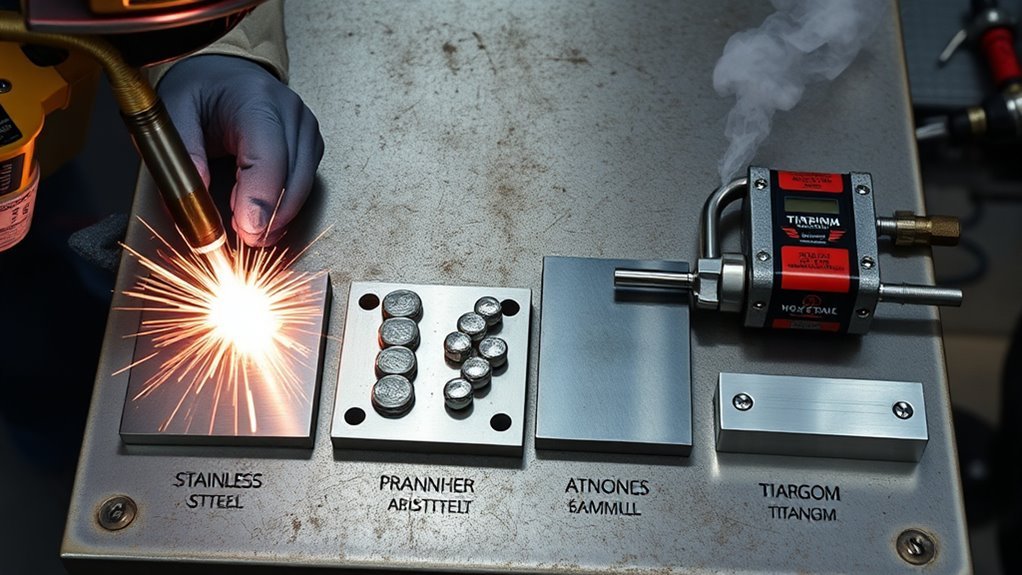
Metal type affects the price of the stock, filler material, preparation, equipment, heat control, and skill required. Stainless steel or aluminum may cost more than common mild-steel work, but there is no dependable universal multiplier that applies to every job.
| Metal | Typical Pricing Effect | Why |
|---|---|---|
| Mild steel | Often the most economical common option | Widely available, familiar processes, and broad filler selection |
| Stainless steel | Often higher than comparable mild-steel work | Material price, cleanliness, filler selection, distortion control, finishing, and fume controls |
| Aluminum | Often higher for repair and precision work | Oxide removal, contamination control, heat transfer, equipment setup, and repair uncertainty |
| Cast iron | Highly job-dependent | Crack behavior, contamination, preheat, cooling control, machining, and risk of further damage |
| Specialty alloys | Custom quote | Special filler, procedures, shielding, qualification, testing, and limited availability |
Grade matters as much as the broad metal category. The welder may need the alloy designation, thickness, service temperature, loading, coating, and operating environment before selecting a compatible filler and procedure.
Warning: Welding can create hazardous fumes, gases, ultraviolet radiation, hot metal, sparks, and fire risks. Coatings, plated surfaces, stainless steel, and chromium-containing alloys can add serious exposure hazards. OSHA requires appropriate controls in covered workplaces, including ventilation under specified conditions. Structural, pressurized, fuel-containing, confined-space, or load-bearing repairs should be handled by qualified professionals using the required safety and inspection procedures.
Typical Costs for Repairs and Small Jobs
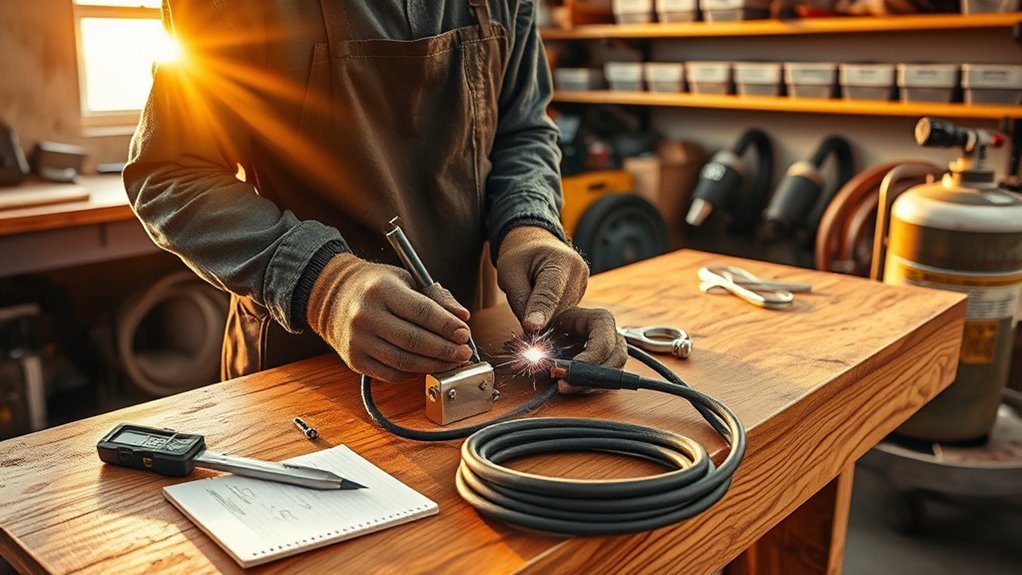
According to Angi’s 2026 consumer cost guide, many home welding projects fall between approximately $250 and $900, with an average near $500. Small repairs may be around $100–$250, while large structures and custom fabrication can run from hundreds to several thousand dollars. These are planning estimates, not fixed prices for every location or job.
| Project Size | Planning Range | Examples |
|---|---|---|
| Small repair | About $100–$250 | Single crack, small bracket, short patch, or minor item repair |
| Medium project | About $250–$700 | Gate section, railing repair, several joints, or moderate fabrication |
| Large or custom work | About $700–$2,500+ | Large gate, long railing section, custom assembly, or structural component |
Damage, access, design, materials, finish, engineering, and local labor conditions can place a project outside these ranges.
Minimum Service Fees
A five-minute weld does not normally produce a five-minute invoice. The provider still has to inspect the item, prepare the joint, set up the machine, protect nearby surfaces, complete the weld, check the result, and clean the work area.
Before hiring a welder, confirm:
- The minimum service price or minimum number of labor hours.
- When billable time begins.
- Whether travel and setup are included.
- Whether preparation, grinding, and cleanup are included.
- How materials and shop supplies are billed.
- Whether the estimate can change if hidden damage is found.
Typical Hourly Ranges
Use $60–$125 per hour as a broad starting point for many professional welding services. Routine shop work may remain near the lower or middle portion of the local market, while mobile, emergency, precision, structural, or inspected work may be higher.
Do not assume that TIG, MIG, stick, or flux-cored welding has one national hourly price. The process affects productivity and skill requirements, but the complete job controls the quote.
Material Cost Add-Ons
Material add-ons may include more than the replacement piece. The quote may also cover filler metal, gas, abrasives, fasteners, temporary fixtures, primer, paint, supplier delivery, cutting, and material handling.
Supplying your own metal can reduce a markup in some cases, but ask first. The fabricator may reject material with an unknown grade, wrong thickness, unsuitable coating, severe corrosion, contamination, or no traceability for regulated work.
Pricing for Different Welding Processes
Welding processes influence cost by changing deposition speed, preparation, cleanup, equipment, shielding, access, and operator skill. They should not be treated as fixed national rate categories.
| Process | Common Strength | Possible Cost Effect |
|---|---|---|
| MIG/GMAW | Fast production on many common fabrication jobs | High productivity can reduce labor time on suitable work |
| TIG/GTAW | Precise heat and filler control | Slower travel and detailed preparation can raise labor cost |
| Stick/SMAW | Portable field work and outdoor use | Electrode changes and slag cleanup may add time |
| Flux-Cored/FCAW | High deposition on structural and heavier work | Productivity may help, but wire, fumes, cleanup, and qualification affect cost |
| Submerged Arc/SAW | High-volume industrial seams | Usually priced as industrial fabrication rather than a household hourly service |
The fabricator should select the process based on the metal, joint, position, service conditions, specifications, and required quality—not simply the process with the lowest advertised hourly rate.
Mobile Welding vs. Shop Rates
Mobile welding is convenient when an item is fixed in place, too large to transport, or needed for ongoing operations. However, the service may cost more because the welder must transport equipment and work around conditions that are easier to control in a shop.
Travel and Setup Fees
A mobile quote may include mileage, drive time, fuel, equipment loading, generator use, gas-cylinder transport, extension leads, traffic, tolls, parking, site orientation, permits, access equipment, and setup.
Ask whether travel is billed:
- As a flat service-area fee
- By mile
- By drive time
- As part of a minimum charge
- Within the quoted project price
Remote sites, difficult access, long travel distances, or a second trip for unexpected materials can increase the bill.
In-Shop Cost Advantages
Bringing a portable item to a welding shop can reduce or eliminate travel charges. The shop may also have better fixtures, cranes, ventilation, cutting tools, positioners, material inventory, and power supplies.
A controlled shop environment can improve productivity and reduce weather delays, contamination, wind-related shielding problems, and rework. Ask whether the item can be removed and transported safely before choosing mobile service.
On-Site Equipment Limitations
Field conditions can limit available power, shielding from wind, positioning, lighting, ventilation, lifting, and access to heavy fixtures. The welder may need a generator, engine-driven machine, temporary shelter, fire blankets, exhaust equipment, scaffolding, or a lift.
Some precision work is better completed in a shop even when mobile welding is technically possible. Discuss tolerances, finish, distortion, inspection, and access before deciding.
Estimating Job Time and Labor Costs
A useful estimate breaks the job into separate tasks instead of multiplying weld length by an hourly rate.
Estimated total = labor or minimum charge + materials + travel/setup + preparation + finishing + inspection or permit costs.
Labor time may include:
- Inspection and measurement
- Design, drawings, or engineering review
- Material pickup and cutting
- Removal of paint, rust, contamination, or old welds
- Fit-up, alignment, clamping, and fixturing
- Preheat or temperature control
- Welding and repositioning
- Grinding, blending, or polishing
- Inspection, testing, and corrections
- Primer, paint, coating, or reassembly
- Cleanup and disposal
- Travel and site setup
For example, a repair estimated at three labor hours with a $90 hourly rate has a $270 labor base. If the provider adds $80 in materials, $60 for travel, and $90 for grinding and paint preparation, the estimated total becomes $500. A minimum charge could replace the calculated labor amount on a smaller job.
Note: An estimate is not always a fixed bid. Ask whether the amount is firm, a range, or time-and-materials—and what conditions allow the price to change.

Post-it Super Sticky Easel Pads are designed to keep ideas visible and organized during meetings, training sessions, brainstorming, and project planning. The large premium paper resists marker bleed-through and sticks securely to many surfaces, then repositions without surface damage. A sturdy backcard and portable handle make them easy to move between rooms and use with most easel stands.

This hair straightener combines a ceramic coating with keratin and almond oil to help create smoother, shinier styles while reducing heat-related damage. With five temperature settings, a Turbo Boost mode, and a Pro+ 185°C option, it offers flexible styling control for different hair needs. A heat-proof case, temperature lock, and included plug adapter add convenience for everyday use and travel.

This heartfelt memoir blends laugh-out-loud honesty with tender reflections on love, loneliness, and the unexpected healing power of rescue dogs. Isabel Klee shares her journey fostering pups in the city while navigating dating and self-discovery, offering an intimate, relatable story for readers who enjoy emotional, character-driven narratives. It is a warm, engaging read about opening your heart and finding connection in surprising places.
Licensing, Insurance, and Overhead Considerations
There is no single nationwide license that applies to every welding business and every type of job. State and local rules may require a contractor license, business registration, specialty classification, permit, inspection, or other credential depending on the work.
For structural or load-bearing work, ask who is responsible for:
- Engineering and approved drawings
- Applicable welding code or project specification
- Welder and procedure qualifications
- Material documentation
- Special inspection or nondestructive testing
- Building permits and final approval
AWS certification, qualification to a specific welding procedure, a contractor license, and approval by a building department are different things. One does not automatically replace the others.
Insurance and overhead also affect a legitimate business’s rate. Depending on the work, costs may include general liability, commercial auto, workers’ compensation, equipment coverage, bonding, shop rent, utilities, maintenance, calibration, training, certification, and administration.
Ask for proof of insurance when the work could damage property, create a fire hazard, affect a structure, or expose other people to risk.
Tips for Getting Accurate Welding Quotes
The quality of the information you provide directly affects the accuracy of the quote. Send clear photos from several angles and include a ruler or known object for scale.
Provide the following details when available:
- Dimensions and quantity
- Metal type, grade, and thickness
- Location of the crack or joint
- Whether the item is painted, plated, galvanized, oily, or rusty
- How the part is loaded or used
- Whether it can be transported to a shop
- Available electrical power and site access
- Required appearance and finish
- Drawings, tolerances, or code requirements
- Preferred completion date
Ask each bidder to separate or clearly address:
- Labor rate or fixed labor price
- Minimum charge
- Travel and mobilization
- Materials and material markup
- Preparation and removal of failed metal
- Grinding, polishing, painting, or coating
- Permit, engineering, and inspection costs
- Tax and payment schedule
- Warranty or correction policy
- Conditions that can change the price
Pro Tip: Ask every bidder to quote the same written scope. An hourly rate from one business cannot be compared fairly with a fixed price from another unless both include the same preparation, materials, travel, finish, and inspection.
Ways to Lower Welding Costs Safely
- Bring portable items to the shop: This may eliminate travel and mobile setup charges.
- Provide clear dimensions and photos: Better information reduces uncertainty and unnecessary contingency.
- Bundle several small repairs: One visit may cost less than several minimum service calls.
- Choose standard materials and sizes: Readily available stock can reduce sourcing and fabrication time.
- Clear safe access: Remove unrelated objects and identify utilities, but do not grind, cut, or strip hazardous coatings unless qualified to do so.
- Avoid unnecessary rush service: Flexible scheduling can reduce premium charges.
- Agree on the finish: A functional weld costs less than a fully blended, polished, and coated repair.
- Approve drawings before fabrication: Late design changes can create scrap and rework.
Do not reduce costs by skipping required engineering, qualifications, ventilation, fire protection, inspection, or compatible materials. A failed structural or safety-critical repair can cost far more than proper work.
Warning Signs in a Welding Quote
Use caution when a provider:
- Gives a firm price without asking about dimensions, metal, access, or condition
- Cannot explain what the minimum charge includes
- Uses a process-specific national rate chart as the entire estimate
- Will not provide a written scope for a large project
- Cannot identify the applicable qualification or code when one is required
- Plans to weld over paint, oil, heavy rust, or an unknown coating without preparation
- Dismisses ventilation, fire prevention, or nearby combustible materials
- Requests full payment before material is ordered or work begins without a clear contract
- Offers no process for hidden damage, change orders, inspection, or corrections
A low quote is not automatically unsafe, and a high quote is not automatically better. Compare scope, experience, qualifications, communication, scheduling, and total price.
Frequently Asked Questions
How much does welding cost per hour?
Many professional welding services cost about $60–$125 per hour. Local rates may be lower or higher, and small jobs often have a minimum charge equal to one or two labor hours. Mobile, structural, precision, emergency, and inspected work may cost more.
Why does a small welding repair have a minimum charge?
The business must inspect the item, prepare the joint, set up equipment, complete and check the weld, clean the area, and handle scheduling and billing. For mobile work, the minimum may also cover travel and equipment transport.
Do welders offer warranties or guarantees on their work?
Policies vary. Some welders provide written workmanship coverage, while others limit corrections when the base metal is cracked, corroded, contaminated, overloaded, or previously repaired. Ask what is covered, how long coverage lasts, what is excluded, and who pays for removal, transport, finishing, or related damage.
Can welding fumes affect indoor air quality and health?
Yes. Welding can produce hazardous fumes and gases, and stainless steel or other chromium-containing alloys can create hexavalent chromium exposure. Appropriate ventilation, source capture, respiratory protection when required, coating identification, and other controls should be selected by qualified personnel under applicable safety rules.
Are permits required for structural welding projects?
They may be. Requirements depend on the jurisdiction, structure, repair scope, adopted building code, contract documents, and engineering requirements. Contact the local building department before starting regulated work and confirm who will obtain permits and arrange inspections.
How do seasonal demand changes affect welding availability?
Lead times may increase during busy construction periods, agricultural seasons, plant shutdowns, storm recovery, or other local demand spikes. Emergency or expedited work may carry a premium. Request quotes early when the project has a fixed deadline.
Can I supply my own metal to reduce the price?
Possibly, but obtain approval first. The welder may need a specific grade, thickness, condition, or material certificate. Unknown, coated, contaminated, corroded, or incompatible metal may be rejected or may increase preparation and risk.
Can I finance a large welding or fabrication job?
Some fabrication businesses offer deposits, milestone payments, third-party financing, or staged production, but availability and terms vary. Review interest, fees, cancellation rules, ownership of materials, change-order terms, inspection milestones, and final-payment conditions before signing.
Conclusion
Professional welding commonly costs about $60–$125 per hour, but the hourly number is only one part of the bill. Minimum charges, travel, preparation, materials, access, finishing, engineering, inspection, and code requirements can change the total substantially.
For small work, ask what the minimum charge includes. For larger or safety-critical work, provide drawings and material details, verify qualifications and insurance, confirm the applicable specifications, and compare written scopes from several providers. A clear quote should explain both the price and the work required to produce a safe, acceptable result.
Sources
- Angi — Welding Cost Guide — current hourly rates, minimum charges, project-size estimates, materials, travel, and preparation costs.
- HomeAdvisor — Welding Cost Guide — hourly billing, minimum labor charges, material billing, and shop-versus-mobile considerations.
- U.S. Bureau of Labor Statistics — May 2025 Occupational Wage Data — employee wage context for welders, cutters, solderers, and brazers.
- American Welding Society — AWS D1.1/D1.1M:2025-AMD1 — structural steel procedure, welder qualification, fabrication, inspection, and acceptance requirements.
- OSHA — Welding, Cutting, and Brazing Requirements — ventilation, labeling, and workplace welding-safety requirements.
- OSHA — Hexavalent Chromium — health risks associated with welding stainless steel and other chromium-containing alloys.

This versatile cookware set equips home cooks with essential pots, pans, and a steamer insert for everyday meals and larger gatherings. The aluminum-encapsulated base promotes quick, even heating, while Cool Grip handles and tight-fitting glass lids support comfortable, controlled cooking. Designed for stovetop, oven, broiler, and dishwasher use, it offers reliable performance across a wide range of recipes.

The WORX 20V JAWSAW is a uniquely safe cordless chainsaw designed with a fully enclosed bar and chain that retracts when not in use, helping protect the user during storage and operation. It cuts branches up to 4 inches thick, features auto-tension and automatic chain lubrication for smoother performance, and is lightweight enough for overhead trimming. The included battery works across the WORX Power Share platform, making it a versatile choice for yard cleanup and tree maintenance.

Q-tips Original Cotton Swabs are a versatile everyday essential for home, beauty, and first aid tasks. Made with 100% cotton and soft tips at both ends, they provide gentle care for sensitive skin while helping with makeup touch-ups, small cleaning jobs, and hard-to-reach spaces. Their trusted quality and recyclable packaging guidance make them a practical choice for daily use.
