

Welding school can cost a few thousand dollars for a focused public-college certificate or more than $25,000 for some private programs with mandatory fees. The final price depends on the credential, school, residency status, equipment requirements, and whether you must pay for housing or give up work hours. Compare the total program price and your net cost after aid—not tuition alone.
Last updated: August 10, 2026. Published school prices and federal-aid rules were rechecked for this update.
Quick Answer
Published U.S. welding-program benchmarks range from about $3,800 for some focused public-college certificates to roughly $24,000–$30,000 for certain private programs with required fees. These are examples, not a national average. Your actual welding school cost depends on residency, program length, required gear, living expenses, and financial aid. Always compare the current total program cost for your start date and your net price after grants and scholarships.
Key Takeaways
- There is no reliable single national average because programs, residency rates, fees, and credentials differ widely.
- A short certificate may cost only a few thousand dollars, while some private welding and pipefitting programs exceed $25,000 with fees.
- Ask whether lab fees, consumables, protective gear, books, testing, and registration are included.
- Grants, scholarships, employer assistance, veteran benefits, paid training, and qualifying Workforce Pell programs can reduce your out-of-pocket cost.
- Compare completion, supervised booth time, employer connections, local wages, and debt—not price alone.
Cost at a Glance
| Focused certificate example | $3,860 at Hennepin Technical College for listed 2025–2026 MIG or TIG occupational certificates |
| Public-college diploma example | $13,268 for Hennepin Technical College’s listed 2025–2026 welding diploma |
| Private-school examples | $24,175 for a professional welding program and $29,675 with pipefitting in Tulsa Welding School’s posted May–September 2025 enrollment schedule; request a current quote for a new start date |
| Possible extra costs | Books, PPE, tools, lab and technology fees, certification tests, transportation, housing, childcare, and lost work income |
| 2026 federal-aid update | Since July 1, 2026, qualifying short-term workforce programs may be approved for Workforce Pell; eligibility must be confirmed for the specific program |
How Much Does Welding School Cost?
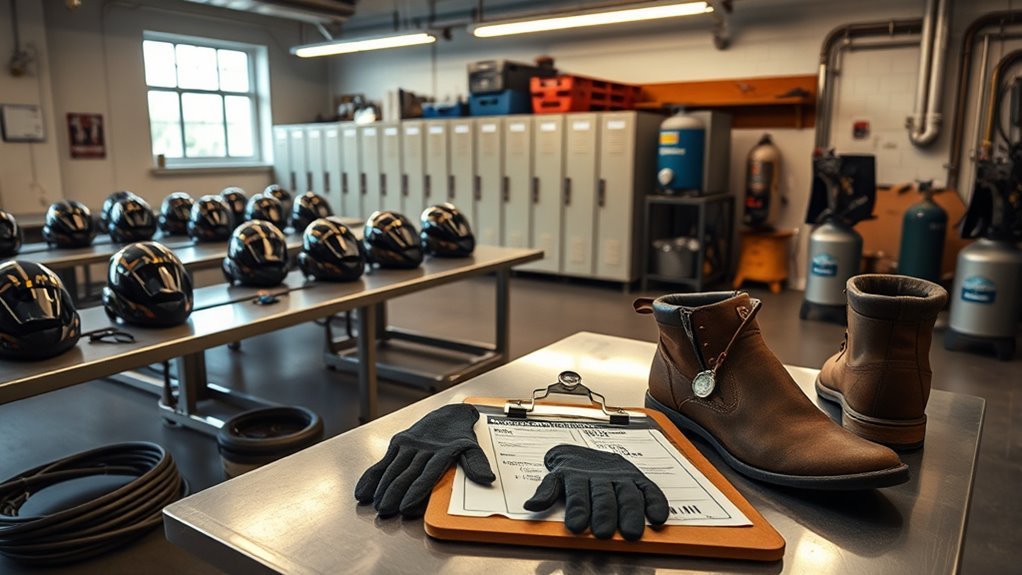
There is no dependable national average that tells every student what welding school will cost. Public colleges may charge different rates for in-district, out-of-district, and out-of-state students. Private trade schools often use one program price but add required fees for labs, books, gear, technology, or insurance.
Published prices show how wide the range can be. For the 2025–2026 academic year, Hennepin Technical College lists several focused welding certificates at $3,860 and its welding diploma at $13,268.
At the higher end, Tulsa Welding School’s posted cost schedule for enrollments from May 1 through September 30, 2025, listed a $24,175 total program cost for professional welding and $29,675 for welding with pipefitting. Those figures included more than tuition, but future students must request a current written quote because enrollment-period prices change.
As of this August 10, 2026 review, those school pages still provide useful published benchmarks, but their stated academic-year or enrollment-period dates matter. Do not assume an older published figure is the price you will receive for a new start date.
The most useful number is not the advertised tuition. It is your net cost after grants and scholarships, including every required fee and living expense.

This daily devotional helps parents pray purposefully for their children through a full year of Scripture readings, reflections, and guided prayer prompts. Written to encourage faithful family discipleship, it offers practical, biblically grounded support for parents who want to shape their prayers around God's Word. A foreword by Sinclair B. Ferguson adds trusted theological insight and encouragement.

Die With Zero offers a fresh perspective on personal finance by encouraging readers to use money intentionally to create memorable life experiences instead of simply accumulating wealth. Written by Bill Perkins, this book combines practical guidance with a motivating philosophy to help readers align spending, saving, and life goals for a more fulfilling future.

This interactive sentence building set helps children practice early reading, writing, and grammar through hands-on play. Color-coded word cards, photo cards, and punctuation pieces make it easy to build simple sentences while reinforcing capitalization, parts of speech, and sentence structure. It is a versatile learning tool for homeschool and classroom use, with included game ideas and teaching suggestions to support multiple skill levels.
Tuition, Total Program Cost, and Net Price
Schools may use several cost terms that sound similar but mean different things:
- Tuition: The charge for instruction or enrolled credit or clock hours.
- Mandatory fees: Lab, technology, registration, insurance, testing, or activity charges that you cannot avoid.
- Total program cost: Tuition plus the mandatory school charges and, at some schools, required books or gear.
- Cost of attendance: A financial-aid estimate that may include tuition, fees, books, housing, food, transportation, and personal expenses.
- Net price: What remains after grants and scholarships are subtracted. Loans do not reduce the price because they must be repaid.
Pro Tip: Ask each school for a written, itemized estimate for your exact start date. Make sure it shows tuition, every mandatory fee, required equipment, testing charges, and the amount of grants or scholarships—not just the maximum aid you might receive.
How Long Does Welding School Take? Program Types and Lengths

Welding education ranges from short process-specific courses to two-year degrees. The longest or most expensive option is not automatically the best. Choose the shortest program that provides enough supervised booth time and teaches the processes local employers use.
Short Certificate Programs
A focused certificate may cover one process, such as shielded metal arc welding, gas metal arc welding, flux-cored arc welding, or gas tungsten arc welding. Some programs last one term, while broader certificates can run several months or longer.
These programs can be a practical choice when you need one specific skill or already have shop experience. Check whether the certificate includes blueprint reading, cutting, fabrication, safety, and weld testing or only basic practice.
Diploma Programs
Diploma programs commonly provide more shop time and cover several processes. They may also include metallurgy, layout, blueprint reading, inspection basics, and pipe or structural work.
A diploma can cost more than a narrow certificate, but the extra cost may be useful when nearby employers expect applicants to work with several welding processes.
Associate Degrees
An associate degree normally includes welding courses plus general education. It often takes about two academic years for a full-time student, although part-time study takes longer.
The degree may be useful for students interested in fabrication, quality control, supervision, technical sales, or eventually transferring to another program. However, employers hiring production welders may place more weight on a practical weld test than on the degree title.
Bachelor’s and Advanced Programs
Four-year programs are more likely to focus on welding engineering, materials, manufacturing, management, or welding engineering technology than basic entry-level welder training. Most production-welding jobs do not require a bachelor’s degree.
Note: A school certificate proves that you completed a program. It is not automatically the same as an employer qualification, state or local license, or code-based welder certification.
Additional Expenses: Tools, Supplies, and Living Costs

Tuition is only one part of a welding-school budget. Required books, protective clothing, hand tools, consumables, testing, transportation, and living expenses can materially change the final amount.
Tools and Equipment Costs
Equipment requirements vary too much for one reliable national estimate. Before buying anything, request the school’s current required-equipment list and ask which items are supplied in the lab.
A student kit may include:
- an approved welding helmet and safety glasses;
- leather gloves, jacket, sleeves, or apron;
- flame-resistant clothing and work boots;
- pliers, clamps, wire brushes, chipping tools, soapstone, and measuring tools;
- books, calculators, or blueprint-reading materials;
- respiratory or hearing protection when required by the school’s hazard assessment.
Do not assume you need to buy or rent a personal welding machine. Most training programs use school-owned lab equipment. A home machine should be considered only when the program specifically requires one and you have a suitable electrical supply, ventilation system, fire-safe work area, and qualified supervision.
Warning: Welding can expose you to intense arc light, fumes, hot metal, fire, and electrical hazards. Practice only in a properly equipped and ventilated area while using the PPE and procedures required by your instructor.
Fees, Books, and Consumables
Ask whether the advertised price includes:
- lab and shop fees;
- metal, electrodes, wire, gas, grinding discs, and torch consumables;
- registration and technology fees;
- accident insurance;
- books or digital course materials;
- a required gear package;
- practice coupons and final qualification tests;
- retesting when a student does not pass the first test.
Mandatory fees can add thousands of dollars at some private schools. Compare schools by total program cost rather than tuition alone.
Housing and Living Expenses
Housing may be your largest variable if you cannot commute from home. Build a monthly budget for rent, utilities, food, transportation, parking, childcare, health coverage, and personal expenses.
Also include opportunity cost. A daytime program may reduce the number of hours you can work. An evening or part-time option may take longer but allow you to keep more income.
Certification and Testing Fees
Some schools include one or more weld tests in the program price. Others charge separately for test materials, facility time, inspection, application processing, or retesting.
For the AWS Certified Welder program, the AWS price list effective January 1, 2026 lists a $70 Certified Welder application fee. The hands-on Certified Welder exam itself does not have one universal AWS price; AWS directs candidates to contact the individual Accredited Testing Facility for its testing and retesting charges.
Ask for the exact name and scope of every included credential. A phrase such as “certification preparation” does not necessarily mean the certification test or application fee is included.
How to Compare Welding Schools
A low-cost program can be a good value when it provides enough supervised practice and matches local jobs. A more expensive program may make sense when it includes significantly more booth time, several processes, pipe training, employer access, or required equipment. The school should be able to document those differences.
One useful comparison is cost per supervised booth hour. Divide your net direct training cost by the number of documented hours you will spend welding under supervision. Use that number alongside class size, equipment access, completion results, and job relevance; a low cost per hour does not prove the instruction is better.
Cost per supervised booth hour = net direct training cost ÷ documented supervised welding hours.
Before paying an application fee or deposit, ask:
- What is the full price for my start date? Request tuition, fees, books, gear, testing, and estimated living costs.
- How many hours will I weld? Separate real booth time from lecture, online work, and demonstrations.
- Which processes, metals, and positions will I practice? Match them to local job postings.
- Are consumables included? Ask whether practice materials are limited.
- What credentials are included? Get the full credential name, code, process, position, and test cost.
- How are placement numbers calculated? Ask whether part-time, unrelated, temporary, and self-employed work counts.
- What happens if I withdraw? Read the cancellation, refund, and loan-return policy before signing.
- Will credits transfer? Obtain a written answer from the school that would receive them.
- Which employers recruit here? Ask for recent examples rather than a general claim about industry partnerships.
- Can I tour the lab? Look at booth availability, ventilation, equipment condition, class size, and safety practices.
The Federal Trade Commission’s vocational-school guidance also recommends checking licensing, accreditation, program costs, financial aid, completion information, and job-placement claims before you commit.
Note: Accreditation and federal-aid eligibility are related but not identical. Confirm that the school and your specific program participate in the aid program you plan to use. Do not rely only on an admissions representative’s verbal statement.
Financial Aid, Scholarships, and Payment Options

Financial aid can reduce the amount you pay upfront, but each type of funding works differently. Start by confirming the program’s eligibility and completing the required applications early.
Federal Student Aid explains that students must meet eligibility requirements and enroll in an eligible program to receive federal aid.
Workforce Pell for Short-Term Programs
Federal aid rules changed on July 1, 2026. The new Workforce Pell pathway allows Pell Grant eligibility for students enrolled in approved eligible workforce programs, including qualifying short-term training programs. A short welding course does not qualify automatically. The program must meet federal eligibility rules and go through the required approval process.
Before counting Workforce Pell in your budget, ask the school whether your exact welding program has been approved as an eligible workforce program. Verify the answer through official financial-aid documentation rather than assuming that the school’s other programs qualify.
Federal Student Aid’s Workforce Pell implementation guidance confirms the July 1, 2026 effective date.
Grants and Scholarships
Grants and scholarships normally do not have to be repaid when you meet their conditions. Possible sources include the federal government, state workforce agencies, schools, foundations, local employers, trade groups, and community organizations.
Ask whether a scholarship is renewable, whether it applies to fees and tools, and what happens if you withdraw or fail to meet attendance requirements.
Federal and Private Loans
Loans can cover a funding gap, but they increase the program’s long-term cost through interest and fees. Compare the amount borrowed with realistic entry-level wages in your area.
Review federal options before considering private education loans. Private loans may have fewer borrower protections and may require a co-signer.
Payment Plans and Employer Assistance
A school payment plan can spread charges across a term, but ask about enrollment fees, late fees, automatic withdrawals, and what happens if you leave the program.
Some employers reimburse approved training or hire entry-level workers and provide on-the-job instruction. Requirements may include maintaining a certain grade, completing the program, or remaining with the company for a set period.
Apprenticeships and Paid Training
A paid apprenticeship or employer training program may lower education costs because you earn wages while learning. Availability varies by region and employer. Compare the training schedule, starting wage, benefits, required service, and recognized credentials with the cost of full-time school.
Certifications and Career Outcomes

Completing welding school does not automatically qualify you for every welding job. Employers may require a practical test based on the process, material, position, thickness, procedure, or code used in their work.
The AWS Certified Welder program is performance-based. AWS states that candidates complete a welder performance qualification test at an accredited testing facility. The specific requirements depend on the welding process, base material, welding position, and code used for the test, so one qualification is not a universal license for every welding application.
Before enrolling, ask whether the school provides:
- preparation for the processes used by local employers;
- practice under realistic time and quality requirements;
- code- or procedure-specific qualification testing;
- test documentation that employers can verify;
- resume, interview, and job-search assistance;
- access to apprenticeships, internships, or employer testing days.
The May 2025 national BLS table lists a median hourly wage of $25.84 and an annual mean wage of $56,760 for welders, cutters, solderers, and brazers. Local pay can be higher or lower.
The Bureau of Labor Statistics May 2025 national wage table should be treated as a broad benchmark, not a promised starting wage. Experience, location, shift, overtime, union status, industry, travel, and qualification requirements all affect actual earnings.

Stay organized with a durable 1-subject notebook set designed for school, note-taking, and digital study support. The college ruled pages resist ink bleed, tear out cleanly, and work with the Five Star Study App to create flashcards and sync notes to Google Drive. Tough pockets, a water-resistant cover, and Spiral Lock wire help protect your work throughout the year.

This heartfelt memoir blends laugh-out-loud honesty with tender reflections on love, loneliness, and the unexpected healing power of rescue dogs. Isabel Klee shares her journey fostering pups in the city while navigating dating and self-discovery, offering an intimate, relatable story for readers who enjoy emotional, character-driven narratives. It is a warm, engaging read about opening your heart and finding connection in surprising places.

These colorful answer buzzers turn lessons, review games, and family activities into lively game-show style challenges that boost participation and make learning more interactive. Each buzzer has a distinct sound to clearly identify who buzzed in first, while the durable, palm-sized design makes them easy for kids and adults to use in classrooms, homeschools, and group settings.
Factors That Impact Return on Investment
A program’s return depends on more than its tuition. Calculate your expected net cost, compare it with realistic local wages, and consider how quickly you can complete training and obtain relevant work.
Calculate Your Net Cost
Use this basic formula:
Net education cost = tuition + mandatory fees + required gear + testing + added living costs + lost income − grants − scholarships − employer or veteran assistance.
Do not subtract loans. Loans change when you pay, not how much the education ultimately costs.
Estimate a Simple Break-Even Period
Compare the income you realistically expect after training with the income you would likely earn without the program.
Simple break-even period = net education cost ÷ expected annual increase in earnings.
For example, a $10,000 net cost divided by a realistic $5,000 annual earnings increase equals a simple two-year payback before taxes, loan interest, unpaid time, or other costs. This is a planning estimate, not a guarantee.
Local Industry Demand
Review current job listings within commuting distance. Count how often employers request each process, position, material, shift, travel level, and credential.
Then compare those requirements with the program’s course list and lab hours. A pipe-focused program may be a poor investment in an area where most openings involve production MIG welding. A short fabrication certificate may be too narrow where employers require pipe or pressure work.
Certification and Specialization
Specialized training can improve access to certain jobs when employers actually need that skill. However, labels such as pipe, aerospace, robotic, or underwater welding do not guarantee a particular salary.
Confirm that the program teaches the prerequisite skills, includes enough practice, and has recent employer connections in that specialty. Underwater welding, for example, also involves commercial-diving training and risks that a standard welding program does not cover.
Career Advancement Pathways
Long-term advancement may involve fabrication, fitting, inspection, quality control, robotics, supervision, estimating, teaching, or technical sales. Some paths require additional experience, credentials, or education after entry-level welding school.
An associate degree may offer more general education and technical breadth, while a focused certificate may help you enter the workforce sooner. Choose based on the jobs you want rather than assuming the longer credential always produces a better return.
Welding School Red Flags
- The school will not provide an itemized price before you sign.
- Admissions staff discuss only monthly loan payments instead of total debt.
- Job-placement claims do not explain which graduates, jobs, or time period were counted.
- The school promises a salary or guaranteed job.
- “Certification” is advertised without naming the issuing body, code, procedure, or test.
- The lab tour shows too few booths, poor ventilation, damaged equipment, or limited practice material.
- Staff pressure you to enroll immediately or discourage you from comparing schools.
- Refund, withdrawal, and credit-transfer rules are difficult to obtain in writing.
Warning: Do not sign an enrollment agreement based only on a promised starting salary, maximum financial-aid figure, or verbal job-placement claim. Read the full agreement and financing documents first.
Frequently Asked Questions
How long does welding school take?
Welding-school length depends on the credential. A narrow process-specific certificate may take one term or several months, while broader diploma programs can take longer and an associate degree commonly takes about two academic years of full-time study. Compare actual supervised welding hours, not duration alone.
Can welding school be free?
Your out-of-pocket cost can sometimes fall to zero when grants, scholarships, employer assistance, veteran benefits, or paid training cover the full eligible cost. Since July 1, 2026, some approved short-term workforce programs may also qualify for Workforce Pell. Free training is not guaranteed, so verify your exact program and aid package in writing.
How much does AWS Certified Welder testing cost?
AWS’s price list effective January 1, 2026 lists a $70 Certified Welder application fee. The hands-on test price is set by the individual AWS Accredited Testing Facility, so candidates must contact the facility for its current testing and retesting charges.
Will employers reimburse tuition for welding training?
Some employers reimburse approved training or pay for specific qualification tests. Eligibility may depend on your job, grades, completion status, or agreement to remain with the company. Ask human resources for the written policy before enrolling.
Can I complete welding school part-time while working?
Yes. Some schools offer evening, weekend, or part-time schedules. Ask how often each course is offered, whether lab hours are fixed, and how part-time attendance affects aid, completion time, and total living costs.
Are online welding theory courses available?
Yes. Online or hybrid courses may cover safety, metallurgy, symbols, blueprint reading, and process theory. They cannot replace supervised booth practice or an in-person performance test when a job or credential requires you to demonstrate a weld.
Do welding schools offer job-placement assistance?
Many schools provide resume help, interview practice, employer contacts, or job leads. Assistance is not a job guarantee. Ask for the school’s written placement methodology, recent results, and examples of employers that hired graduates from your exact program.
Can veterans use GI Bill benefits for welding school?
Veterans and other eligible beneficiaries may use GI Bill benefits for approved non-college degree programs. The Department of Veterans Affairs advises students to verify the specific program and payment rules before enrolling.
Is a welding certificate the same as AWS certification?
No. A school certificate usually shows that you completed its curriculum. AWS Certified Welder status requires a performance qualification test at an accredited testing facility under specific procedures and requirements.
Is an expensive private welding school always better?
No. A higher price may include more lab time, equipment, processes, or career services, but price alone does not prove quality. Compare booth hours, class size, total cost, included tests, employer relationships, completion results, and local job requirements.
Conclusion
Welding school may cost only a few thousand dollars for a focused public program or more than $25,000 for private training with mandatory fees. The best choice is not automatically the cheapest or longest program. It is the option that gives you enough supervised practice, teaches skills local employers request, and leaves you with manageable net costs and debt.
Collect itemized quotes for your actual start date, verify grants and Workforce Pell or veteran-benefit eligibility, tour each lab, compare supervised welding hours, and check current local job requirements before enrolling. That process gives you a much clearer picture of value than any broad national price range.
Sources
- Hennepin Technical College Welding Program Costs — published 2025–2026 certificate, diploma, and tuition examples.
- Tulsa Welding School Tuition and Fees — published tuition, lab, gear, materials, technology, registration, and total program charges.
- U.S. Bureau of Labor Statistics, May 2025 National Employment and Wage Data — national wage estimates for welders, cutters, solderers, and brazers.
- Federal Student Aid Eligibility — general federal student-aid and eligible-program requirements.
- Federal Student Aid: Workforce Pell Effective Dates — July 1, 2026 implementation guidance for eligible workforce programs.
- American Welding Society Certified Welder Program — performance-test requirements, Accredited Testing Facilities, and credential scope.
- American Welding Society Certification and Education Price List — 2026 Certified Welder application pricing and ATF testing-price guidance.
- U.S. Department of Veterans Affairs: Non-College Degree Programs — GI Bill use for eligible non-college training programs.
- Federal Trade Commission: Choosing a Vocational School or Certificate Program — consumer guidance for evaluating career schools, costs, licensing, aid, and placement claims.

Experience J.R.R. Tolkien's legendary Middle-earth saga in a compact hardcover boxed set that brings together The Hobbit and The Lord of the Rings. This deluxe collection is ideal for readers who want a portable, collectible edition of the classic fantasy adventures, making it perfect for gifting, re-reading, and building a treasured library. The boxed presentation adds display appeal while the hardcovers offer lasting durability for years of enjoyment.

This hardcover cookbook offers fast, approachable recipes designed for busy days and low-energy nights. Caroline Chambers focuses on simple, flavorful meals that help you get dinner on the table without overthinking it. It's a practical pick for home cooks who want quick weeknight inspiration and minimal-fuss cooking.

The OXO Good Grips Mini Angled Measuring Cup makes liquid measuring easier with a patented angled surface that lets you read measurements from above, so you can fill accurately without lifting or adjusting. It includes clear standard and metric markings, plus tablespoon and ounce measurements for added convenience in everyday cooking and baking. Dishwasher safe and BPA free, it's a practical, easy-to-use kitchen tool for precise recipe prep.
