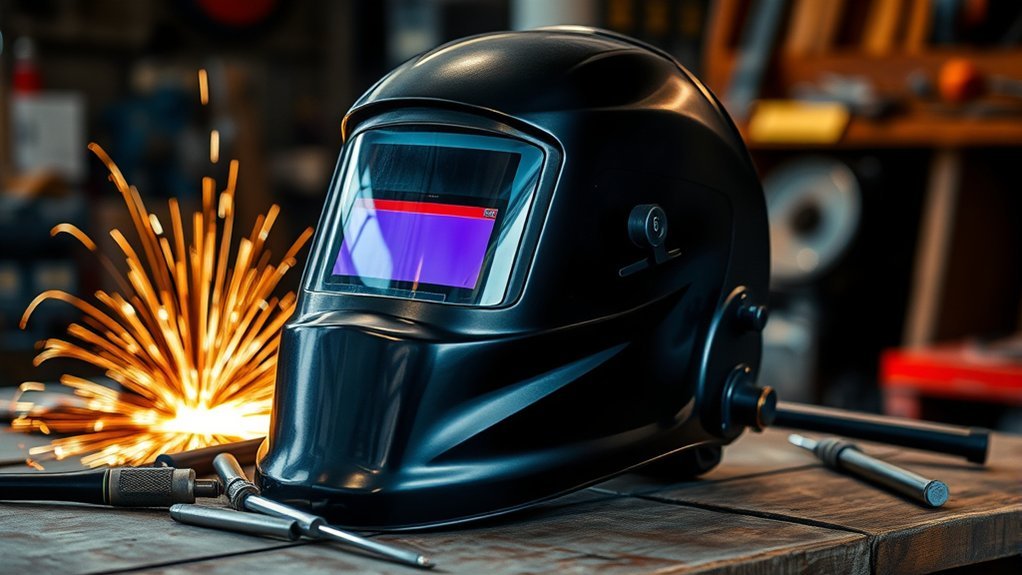
A welding hood, more commonly called a welding helmet, usually costs about $40 to $900 for a helmet-only product in the current U.S. market. Basic passive models sit at the low end, while professional auto-darkening helmets with better optics and headgear can reach several hundred dollars. Specialty curved-view or laser-rated helmets can cost about $850 to $1,750 or more, and complete powered air-purifying respirator (PAPR) welding systems can run about $1,650 to $2,900 or more.
Last updated: August 10, 2026. U.S. price examples, safety-standard references, welding-shade guidance, and manufacturer specifications were rechecked. Retail prices can change.
Quick Answer
Most helmet-only welding hoods cost about $40 to $900. Passive fixed-shade helmets are commonly about $40 to $130, entry auto-darkening helmets about $100 to $180, mid-range auto-darkening helmets about $180 to $350, and premium helmet-only models about $350 to $900. Specialty curved-view or laser-rated helmets can reach about $850 to $1,750+, while complete PAPR welding systems can cost about $1,650 to $2,900+.
Key Takeaways
- A basic passive helmet can be safe and affordable when it has the correct shade and required impact protection.
- Auto-darkening filters add convenience, but price rises with optical quality, viewing area, controls, sensors, headgear, and compatibility features.
- Keep helmet-only and PAPR prices separate: a PAPR-compatible helmet or headtop is not the same purchase as a complete blower, filter, battery, hose, and helmet system.
- Choose a lens shade for the welding process and arc current; do not assume that one shade works for every task.
- For most frequent hobby or shop welding, the practical value range is often around $180 to $350; spend more only when optics, comfort, specialty protection, or respiratory requirements justify it.
Overview of Welding Hood Pricing
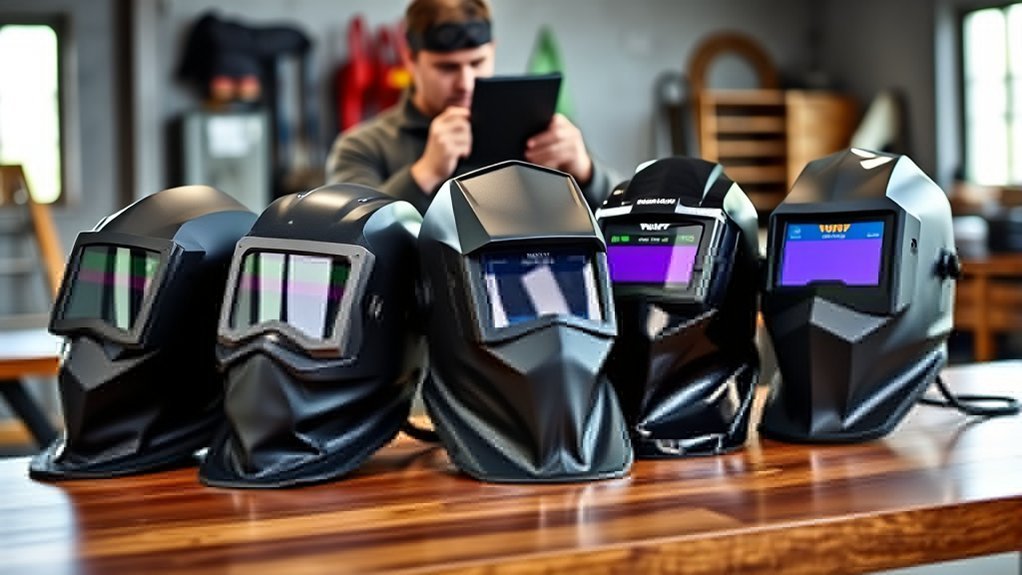
Current U.S. retail prices vary by seller, design, promotions, and included accessories. A useful way to compare costs is to separate ordinary helmet-only products from respiratory systems.
| Type | Typical Price | Best Fit |
|---|---|---|
| Passive fixed-shade helmet | About $40–$130 | Occasional welding, training, or welders who prefer a simple lens |
| Entry auto-darkening helmet | About $100–$180 | DIY users and light shop work |
| Mid-range auto-darkening helmet | About $180–$350 | Frequent welding, broader controls, better headgear, and larger lenses |
| Premium auto-darkening helmet | About $350–$900 | All-day professional use and demanding visibility or comfort needs |
| Specialty curved-view or laser-rated helmet | About $850–$1,750+ | Specialized processes that require purpose-built protection |
| Integrated PAPR welding system | About $1,650–$2,900+ | Workplaces where a properly selected powered respirator is required or preferred |
Verified U.S. Price Snapshot — August 10, 2026
These examples show why category ranges are more useful than a single “average” price. They are a dated market snapshot, not permanent MSRPs.
| Example | Price Checked | What It Shows |
|---|---|---|
| Lincoln Electric basic passive shade-10 helmet | $39.99 at Tractor Supply | Basic passive helmets can still start near $40. |
| Miller Classic 287803 auto-darkening helmet | About $120–$140 at Baker’s Gas | Established-brand entry ADFs sit around the low-$100s during current promotions. |
| Lincoln Electric VIKING 3350 black | $499 at RAM Welding Supply | Professional helmet-only models commonly reach the $400–$500 range. |
| Optrel Crystal 2.0 Black | $669 list price from Optrel | Premium optics can push a helmet-only product well above $500. |
| 3M Speedglas G5-02 curved ADF helmet | $1,742.68 at Grainger | Curved-view specialty helmets can cost far more than ordinary premium helmets. |
| Optrel Crystal 2.0 + e3000x PAPR system | $1,919 sale / $2,399 list at USAWeld | A complete PAPR package belongs in a separate cost category. |
How the ranges were set: The price bands above separate ordinary helmet-only products from specialty helmets and complete respiratory systems. They were checked against current U.S. manufacturer and retailer listings on August 10, 2026, then rounded into practical shopping ranges so temporary sales do not become false precision.
Older or distributor-specific models such as the Jackson Shadow HSL-1, Jackson Huntsman 930P, Lincoln VIKING 1740 and 1840, and Jackson Insight may still appear in listings. Their prices should be treated as temporary seller quotes rather than permanent category benchmarks.
Note: Sale prices, rebates, graphic designs, replacement-lens bundles, and discontinued stock can move a helmet above or below these ranges. Compare the exact model number and included components before judging value.
Factors Influencing Welding Hood Costs

The largest price differences usually come from the lens system, optical quality, viewing area, control range, comfort, replacement-part support, and compatibility with other protective equipment. Shell material matters, but it is not a reliable price category by itself.
Brand Reputation Importance
Established manufacturers often charge more because they offer documented specifications, replacement parts, technical support, and model-specific warranties. Brand reputation can reduce purchase risk, but a familiar logo does not automatically make every helmet suitable for every process.
Read the warranty for the exact model and part number. Miller currently lists a three-year warranty for its Classic Series auto-darkening helmets. Optrel lists two years for the Crystal 2.0, with an additional one-year extension when the product is registered within the stated period. Warranty terms can differ across generations and components, so do not apply one series warranty to every helmet carrying the same brand name.
| Brand | Common Market Position | What to Verify |
|---|---|---|
| Miller | Entry to premium | Lens series, viewing area, modes, and warranty |
| Lincoln Electric | Mid-range to premium | 4C lens model, optical rating, headgear, and warranty |
| Jackson Safety | Passive to premium | Exact ADF, shade range, sensor count, and warranty |
| 3M Speedglas | Mid-range to specialty and PAPR | ADF package, side windows, respiratory components, and consumables |
| ESAB and Optrel | Entry to premium or specialty | Optical class, light state, controls, process limits, and parts availability |
Features and Technology Impact
Auto-darkening filters cost more than passive lenses because sensors detect the arc and switch the filter from a light state to a selected welding shade. More expensive helmets may add a larger viewing field, external grind controls, multiple memory settings, low-amperage TIG sensitivity, more arc sensors, better color rendering, task lights, or hard-hat compatibility.
Optical-class numbers describe viewing quality, not the welding shade you need. For example, Optrel publishes EN 379 optical-class data for its Crystal 2.0, while other manufacturers use their own current ADF specifications. Compare the exact filter’s optical rating and shade range, then select the protective shade required for the process and arc current.
- Shade range: A wider range can support cutting, grinding, and different welding currents, but only when the manufacturer approves those modes.
- Sensor count and placement: More coverage can reduce blocked-sensor problems when welding out of position.
- Viewing area: A larger lens improves peripheral awareness but adds cost and sometimes weight.
- Headgear: Better balance, adjustment, and padding matter more during long shifts than decorative graphics.
- Low-amp TIG rating: Important for welders who need reliable switching at low current.
Material Quality Considerations
Most modern welding helmet shells, including many premium products, use engineered nylon or similar heat-resistant polymers. Leather hoods, fiberglass or fiber-shell helmets, carbon-fiber-look designs, and specialty laser products serve narrower needs, but they do not form a dependable low-to-high price ladder.
Judge material quality by heat resistance, impact compliance, shell coverage, weight, balance, and replaceable parts. A light nylon shell with a proven lens and comfortable headgear can be a better professional tool than a heavier specialty shell that does not fit the job.
Budget-Friendly Welding Hoods

Budget-friendly welding helmets generally cost about $40 to $180. Current passive examples start near $40 and can extend above $100, while entry auto-darkening helmets from established manufacturers commonly sit around $100 to $180.
A passive helmet can be a good value when you weld at a consistent process and shade, do not mind nodding the helmet down before striking the arc, and can maintain safe positioning. An entry auto-darkening model is easier for tack work and repeated starts because it allows you to position the torch while the lens is in its light state.
Do not buy on price alone. Confirm the product marking accepted by your workplace, the required shade range, replacement cover-lens availability, fit over primary safety eyewear, and enough shell coverage for your position. ANSI/ISEA Z87.1-2025 is the current voluntary consensus standard, while OSHA 29 CFR 1910.133 still lists specific incorporated editions and also permits protection the employer demonstrates is at least as effective.
The cheapest safe helmet is the least expensive model that fits correctly, meets the required protection standard, and provides the correct shade for your actual welding process.
Mid-Range Welding Hoods
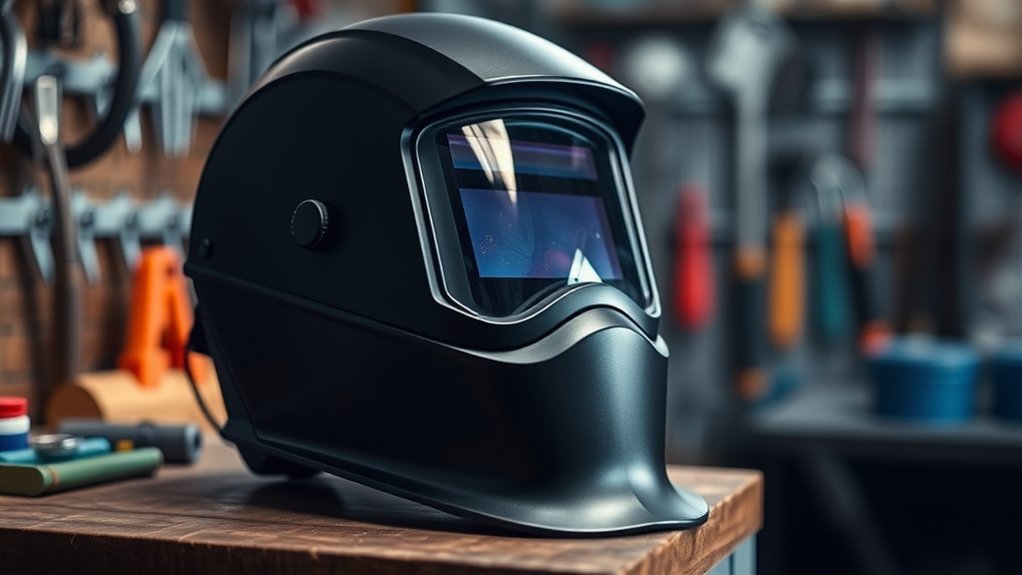
Mid-range welding helmets commonly cost about $180 to $350. This range is often the practical sweet spot for frequent hobbyists, students, fabrication shops, and professionals who do not need a specialized respiratory or curved-view system.
Typical improvements include:
- Variable welding shades and separate cut or grind modes
- Three or four arc sensors
- Adjustable sensitivity and delay
- Better headgear and weight distribution
- Larger viewing areas and improved color rendering
- Replaceable batteries, low-battery indicators, and easier access to cover lenses
Promotions can move the same model between price tiers. Current examples such as the Miller Classic around the low-$100s and Lincoln VIKING 3350 around the mid-$400s to $500 show why an old model price should not define a category. Compare the exact part number, lens, headgear, warranty, included cover lenses, and current selling price.
Premium Welding Hoods
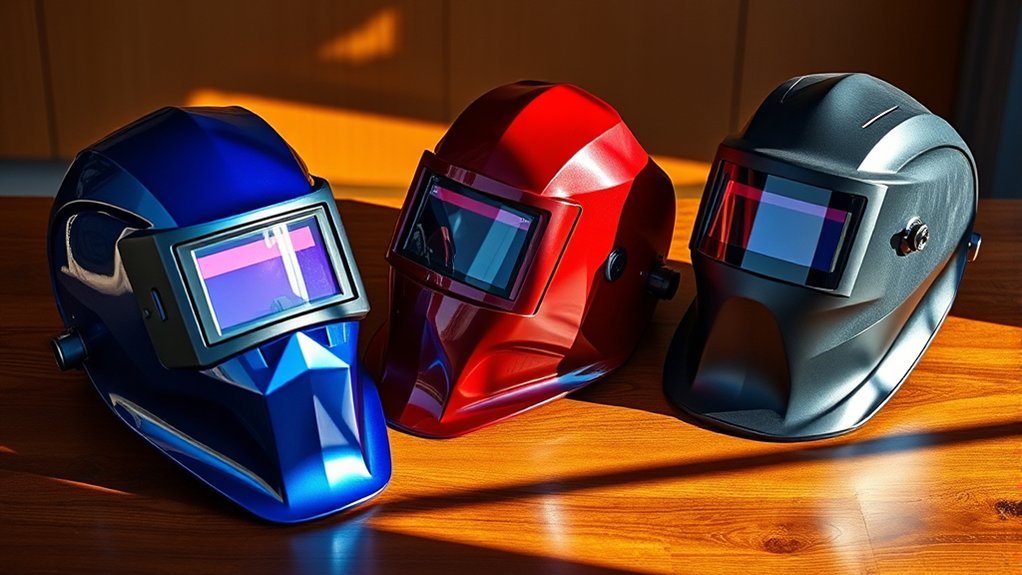
Premium helmet-only products usually cost about $350 to $900. They target welders who wear a helmet for long periods, switch between processes, need a large viewing area, or value refined headgear and controls. Current examples include the Lincoln VIKING 3350 around $425–$499 at major welding retailers and the Optrel Crystal 2.0 Black at a $669 list price.
At this level, the extra cost should buy measurable benefits: a documented optical class, a wider or clearer light state, consistent switching, suitable low-amp TIG performance, external controls that can be used with gloves, durable headgear, and readily available replacement parts.
Graphics alone do not make a helmet premium. Two helmets may use the same lens cartridge but carry different prices because of shell artwork. Check the exact ADF and headgear before paying more for appearance.
Pro Tip: Compare the cost of replacement outer cover lenses before buying. A clear view depends on changing scratched or spatter-damaged covers, and an uncommon lens shape can raise long-term ownership costs.
High-Tech Welding Hoods
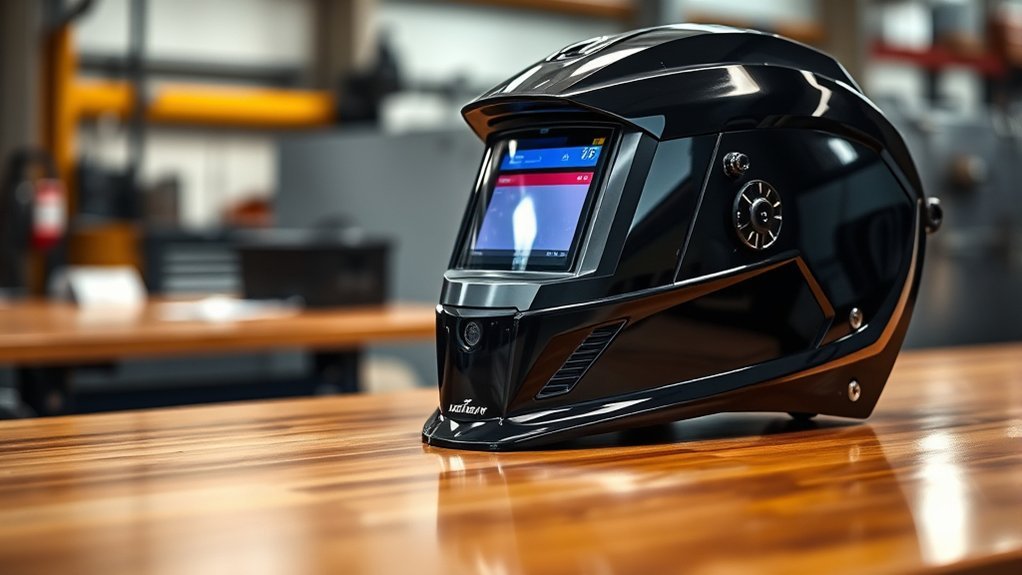
“High-tech” is not a separate safety class. It usually describes digital controls, advanced optics, larger viewing areas, multiple modes, memory settings, task lights, Bluetooth or connected features, curved filters, or integration with respiratory equipment.
Advanced Features Overview
- Digital auto-darkening controls: Make shade, sensitivity, and delay settings easier to repeat.
- True-color or enhanced-color lenses: Improve color perception in the light and dark states, depending on the model.
- Large or curved viewing areas: Increase peripheral vision but can make replacement lenses more expensive.
- External grind controls: Reduce helmet removal, but the user must remember to return the helmet to weld mode.
- Integrated hard-hat, hearing, or respiratory protection: Adds cost because the product becomes a multi-protection system rather than a simple helmet.
Price Comparison Analysis
Feature overlap is substantial. A helmet around $200 may offer a large lens and useful controls, while a $500 model may justify its price through better optical performance, comfort, warranty, or replacement support. Complete PAPR packages commonly start well above ordinary helmet prices because they add a blower, battery, filter, belt, breathing tube, and compatible headtop. A PAPR-compatible helmet sold by itself is not a complete respiratory system.
The original $199 Jackson Insight examples were seller-specific and no longer represent a stable market price. Likewise, an advertised discount from MSRP does not prove value; compare the actual selling price, included parts, and cost of consumables.
Brand Recommendations
Choose a brand that publishes complete specifications and supports replacement lenses, batteries, headgear, and warranty service. Miller, Lincoln Electric, Jackson Safety, 3M Speedglas, ESAB, and Optrel all offer models for different price levels, but the best brand depends on fit and process requirements.
Try the helmet on when possible. Check whether it stays up, drops smoothly, balances without excessive forehead pressure, clears your respirator or safety glasses, and gives enough neck and ear coverage in your normal welding position.
Specialty Welding Helmets and PAPR Systems

Specialty helmet-only products can cost about $850 to $1,750 or more when they use laser-specific protection or curved auto-darkening filters. Current examples include Optrel laser-welding helmets listed from $849 to $1,345 and the 3M Speedglas G5-02 curved ADF helmet listed around $1,742 by a major industrial supplier. Complete PAPR welding systems commonly land around $1,650 to $2,900 or more, depending on the headtop, blower, filter package, and retailer.
A PAPR can reduce exposure only to contaminants covered by the properly selected system and filters, and only when the complete respirator is approved, assembled, maintained, and used as required. For example, 3M’s G5-01 with Adflo PAPR is a NIOSH-approved system for high-efficiency particulate respiratory protection. A standard welding helmet—even an expensive one—does not provide respiratory protection by itself.
Warning: Welding fumes can contain metals and other hazardous substances. NIOSH notes that exposure varies with the welding process, consumables, base metal, and work environment, and confined-space welding can increase exposure. Do not assume that a helmet blocks fumes. Use ventilation and respiratory protection selected for the specific hazard, and follow workplace rules and the respirator manufacturer’s instructions.
High-end systems also bring ongoing costs for filters, prefilters, spark arrestors, batteries, breathing tubes, face seals, and other replaceable components. Include these costs before deciding whether a system fits your budget.
Popular Brands and Their Price Ranges
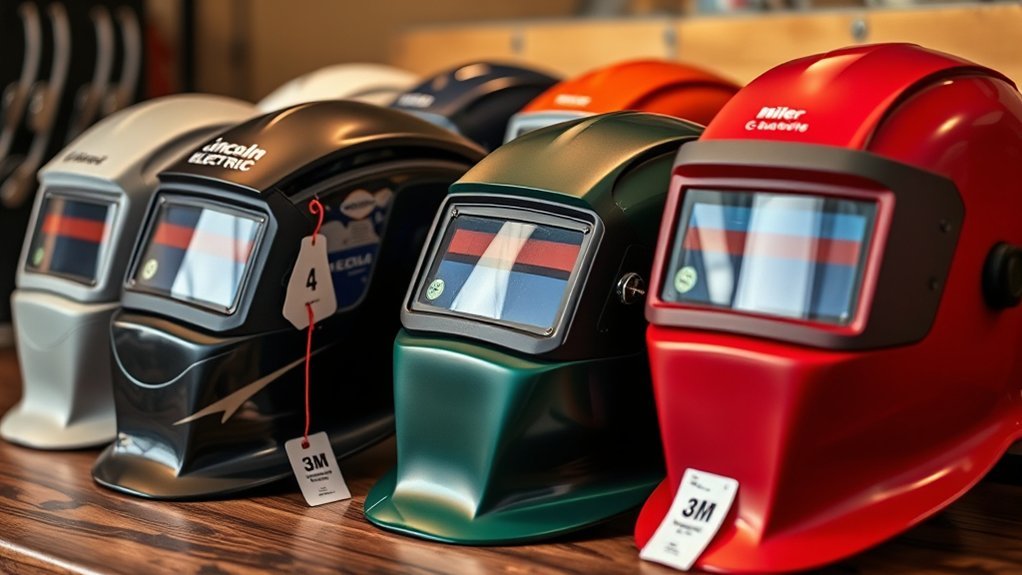
Popular brands cover overlapping price ranges, so it is more useful to compare model families than to label an entire brand “budget” or “premium.”
- Lincoln Electric: Known for VIKING auto-darkening helmets, 4C optics on selected models, and professional headgear features.
- Miller: Offers passive, entry auto-darkening, professional auto-darkening, and PAPR-compatible systems.
- Jackson Safety: Covers passive helmets, Insight auto-darkening models, and higher-end TrueSight products. Insight is a Jackson line, not a 3M product.
- 3M Speedglas: Offers auto-darkening helmets, curved-view models, and integrated Adflo PAPR systems.
- ESAB and Optrel: Offer entry, professional, premium, and specialty designs depending on the series.
Use price as a filter after confirming safety, fit, shade range, process compatibility, and replacement-part support.
Additional Welding Helmet Costs
The purchase price is only part of the total cost. Depending on the helmet, you may need:
| Item | Why It Matters |
|---|---|
| Outer and inner cover lenses | Scratches and spatter reduce visibility; replace covers before they become difficult to see through. |
| Batteries | Some ADFs use replaceable coin or AAA batteries; others combine solar assist with a battery. |
| Headgear and sweatbands | Wear parts affect fit, balance, and hygiene. |
| Magnifying or cheater lens | Useful for close work when the helmet supports the correct lens holder. |
| Hard-hat adapter or task light | May be required for the worksite or improve setup visibility. |
| PAPR filters and components | Respiratory systems have recurring filter, battery, seal, tube, and maintenance costs. |
Replacement parts can materially change total ownership cost. As one current example, Optrel lists a five-pack of Crystal 2.0 front cover lenses at $41.47, standard replacement headgear at $42.67, and an e3000x PAPR replacement battery at $231.93. Compare consumables for the exact helmet before deciding that two models with similar purchase prices cost the same to own.
Tips for Choosing the Right Welding Hood
Start with the work, not the price tag. Use this checklist:
- Identify the process and amperage. MIG, TIG, stick, flux-cored, plasma cutting, oxyfuel work, grinding, and laser welding have different protection needs.
- Select the correct shade range. Follow the helmet instructions and the applicable OSHA or workplace shade table. A darker shade is not automatically the correct shade.
- Check the safety marking. In the United States, confirm the product marking and certification accepted by your employer or worksite. ANSI/ISEA Z87.1-2025 is the current consensus-standard edition, while OSHA 1910.133 identifies the editions incorporated into its rule and allows equivalent protection when demonstrated by the employer.
- Confirm primary eye protection. A welding filter controls radiant energy, but welding also creates impact hazards. OSHA’s PPE selection guidance says welding helmets or faceshields should be used over primary eye protection such as protective spectacles or goggles.
- Test fit and balance. Make sure the helmet does not expose the face, neck, or ears and remains comfortable in the positions you use.
- Match ADF performance to the job. Check low-amp TIG rating, sensors, sensitivity, delay, switching modes, and operating-temperature limits.
- Check replacement support. Confirm that cover lenses, batteries, headgear, and the ADF are available at reasonable cost.
- Evaluate respiratory needs separately. A PAPR decision should come from a hazard assessment, not from helmet price alone.
Safety Standards and Shade Selection
OSHA 29 CFR 1910.133 requires filter lenses with a shade number appropriate for the work. The minimum shade changes with the process, electrode size where applicable, and arc current. The current ANSI/ISEA consensus-standard edition is ANSI/ISEA Z87.1-2025, but OSHA’s rule separately lists the consensus-standard editions incorporated into federal regulation.
| Process | Arc Current | OSHA Minimum Protective Shade |
|---|---|---|
| Shielded metal arc welding (SMAW) | Less than 60 A | 7 |
| SMAW | 60–160 A | 8 |
| Gas metal arc / flux-cored arc welding | 60–500 A | 10 |
| Gas tungsten arc welding (TIG/GTAW) | Less than 150 A | 8 |
| Gas tungsten arc welding (TIG/GTAW) | 150–500 A | 10 |
These are selected minimums from OSHA’s table, not a substitute for the full table or the helmet manufacturer’s instructions. OSHA also gives a rule of thumb: start darker, then move to a lighter shade that lets you see the weld zone without going below the listed minimum.
OSHA 29 CFR 1910.252 also requires helmets and hand shields to protect the face, neck, and ears from direct arc radiation and to use suitable filter and cover plates.
Grinding requires impact protection and a clear view of the work. Use a helmet’s grind mode only when the manufacturer approves that use, and wear the required safety glasses or goggles underneath. Do not weld while the helmet is left in grind mode.
Should You Buy a Used Welding Helmet?
A used passive shell can be a reasonable purchase if it is clean, structurally sound, correctly marked, and fitted with an undamaged approved lens. Used auto-darkening helmets require more caution because batteries, sensors, controls, seals, and the filter cartridge may be difficult to evaluate.
Avoid a used helmet when the shell is cracked, warped, heavily burned, drilled, painted over in a way that hides damage, missing identification markings, or fitted with an unknown lens. Replace deeply scratched cover plates, worn headgear, and any component that fails the manufacturer’s inspection or function test.
Frequently Asked Questions
How much should I spend on a welding helmet?
Spend for the work you actually do. About $40 to $130 can cover a simple passive helmet, $100 to $180 covers entry auto-darkening models, and roughly $180 to $350 is a practical range for frequent hobby or shop welding. Paying $350 to $900 can make sense for all-day professional use when better optics, headgear, controls, or support matter. Specialty laser, curved-view, and PAPR equipment belongs in higher price categories.
How long do welding hoods typically last?
There is no universal three- or five-year lifespan. A shell may last for years, while cover lenses, batteries, sweatbands, headgear, seals, and filters need earlier replacement. Stop using the helmet if the shell, lens, controls, sensors, or suspension are damaged or fail the manufacturer’s inspection and function checks.
Can I use a welding hood for grinding or cutting?
Only when the manufacturer approves the helmet and selected mode for that task. Grinding needs suitable impact protection and safety eyewear underneath. Cutting shade requirements vary by process. Never weld while an auto-darkening helmet is left in grind mode.
Are warranties available for welding hoods?
Yes, but coverage varies by model, component, and registration requirements. Miller currently lists three years for its Classic Series. Optrel lists two years for the Crystal 2.0, plus an additional year when registered within the stated period. Read the exact warranty for the current part number before buying.
What safety certification should I look for?
For U.S. work, confirm the product marking and certification accepted by your employer or worksite. ANSI/ISEA Z87.1-2025 is the current consensus-standard edition, while OSHA 1910.133 lists specific incorporated editions and allows equivalent protection when demonstrated by the employer. Other jurisdictions or worksites may require additional standards such as CSA Z94.3.
How do I properly maintain my welding hood?
Follow the manufacturer’s instructions. Keep the lens and sensors clean, replace damaged cover plates, inspect the shell and headgear, test the ADF before welding, replace batteries when needed, and store the helmet in a clean, dry place away from heat, moisture, and impact.
Is an auto-darkening helmet safer than a passive helmet?
Both can provide appropriate protection when they meet the required standard, use the correct shade, fit properly, and are in good condition. Auto-darkening mainly adds convenience and can help the welder keep the helmet down while positioning and striking the arc.
Does an expensive welding helmet protect me from fumes?
Not unless it is part of a properly selected respiratory-protection system. A standard passive or auto-darkening helmet protects the eyes and face from radiant energy and physical hazards but does not filter welding fumes. Ventilation and respiratory protection must be selected for the actual airborne hazard.
Conclusion
For most buyers, a realistic helmet-only welding hood budget is about $40 to $900. A basic passive helmet can be a sound choice for occasional, consistent work, entry auto-darkening models often sit around $100 to $180, and the $180 to $350 range is a practical sweet spot for frequent hobby or shop welding. Premium helmet-only products make sense when their optics, fit, controls, or support improve daily work enough to justify the higher price.
Do not confuse a premium helmet with respiratory protection. Specialty curved-view or laser-rated helmets can cost about $850 to $1,750+, while complete PAPR welding systems can reach roughly $1,650 to $2,900+ because they add powered breathing equipment and recurring consumables. Whatever your budget, choose the correct shade and accepted safety marking, wear required primary eye protection, inspect the helmet before use, and match the equipment to the actual welding and air-quality hazards.
Sources
- OSHA 29 CFR 1910.133: Eye and Face Protection — filter-lens shade selection, primary eye/face protection requirements, and incorporated consensus standards.
- OSHA 29 CFR 1910.252: Welding, Cutting, and Brazing — welding helmet coverage, filters, and cover plates.
- OSHA Subpart I Appendix B: PPE Selection Guidance — guidance on primary eye protection beneath welding helmets or faceshields.
- ANSI/ISEA Z87.1-2025 — current consensus-standard edition for occupational and educational eye and face protection devices.
- CDC/NIOSH: Welding Fumes and Manganese — welding-fume composition, exposure factors, and health risks.
- Miller: Classic Series Welding Helmets — current ADF features, shell material, viewing area, and three-year warranty.
- Optrel: Crystal 2.0 Black — current $669 list price, optics, specifications, warranty, and replacement-part prices.
- Optrel: Build Your Own PAPR — current e3000x blower and compatible headtop pricing.
- 3M Speedglas G5-02 — curved auto-darkening filter design and product features.
- 3M Speedglas G5-01 with Adflo PAPR — complete PAPR assembly, NIOSH approval, and included respiratory components.
- Tractor Supply: Lincoln Electric Welding Helmets — dated U.S. retail price examples for passive and entry auto-darkening helmets.
- Baker’s Gas: Welding Helmets — dated U.S. retail examples for Miller, Lincoln Electric, ESAB, and Optrel helmets.
- RAM Welding Supply: Lincoln Electric VIKING 3350 — dated U.S. retail price example.
- Grainger: 3M Speedglas G5-02 — dated U.S. retail price for the curved ADF helmet.
- USAWeld: Optrel Crystal 2.0 with e3000x PAPR — dated complete-system sale and list price.