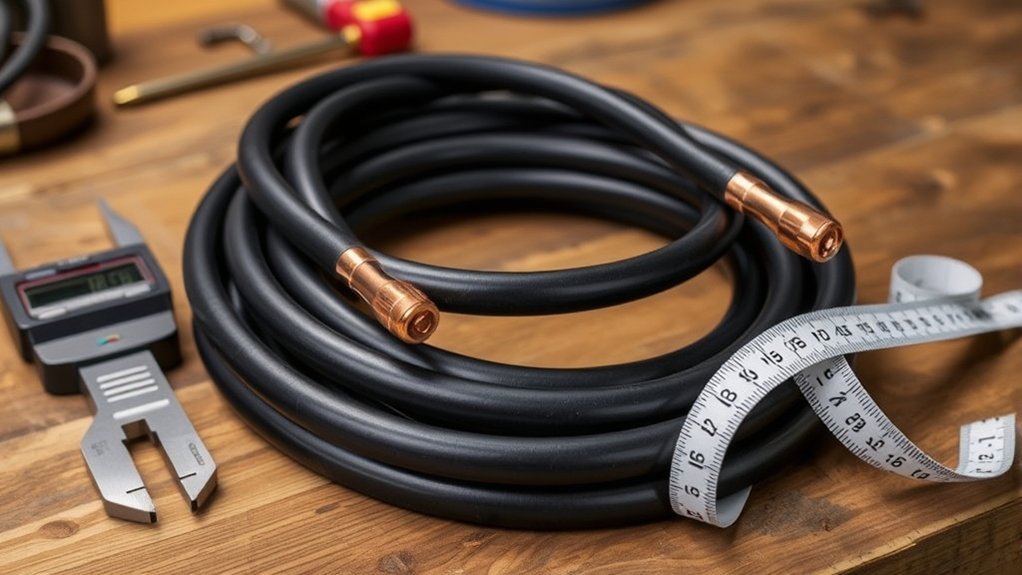
The 1/0 welding leads price depends on whether you buy raw cable or finished leads. As of October 2026, current Harris examples put raw Flex-A-Prene cable at $115 for 25 feet, $230 for 50 feet, and $460 for 100 feet. Matching preassembled single leads cost $135, $250, and $480. That works out to $4.60 per foot for the raw cable, with a $20 assembly premium at each matching length. Compare the total price, cost per foot, included connectors, conductor material, and cable specification before ordering.
Method: Prices were rechecked against public U.S. listings in October 2026. This is a price-and-specification comparison based on retailer, manufacturer and safety documentation; no hands-on durability testing is claimed.
Quick Answer
As of October 2026, raw 1/0 Flex-A-Prene copper welding cable costs about $115 for 25 feet to $2,300 for 500 feet in the current Harris examples. Preassembled single leads run about $135 for 25 feet to $480 for 100 feet. Raw cable is currently $4.60 per foot at each listed Harris length, while the matching finished single leads add $20 for installed hardware and assembly.
Key Takeaways
- Raw cable costs less than a finished lead because it does not include an electrode holder, work clamp, installed lugs, connector hardware, or assembly labor.
- Current Harris Flex-A-Prene examples cost $4.60 per foot at every listed length from 25 to 500 feet, so the larger spool does not currently lower the per-foot price.
- At 25, 50, and 100 feet, the current Harris preassembled single-lead examples cost $20 more than the same length of raw cable.
- A 600-volt jacket rating is not a universal welding-amperage rating. Welding-lead sizing depends on current, total circuit length, and duty cycle.
- Check the welder manual, connector size, copper conductor, jacket type, return policy, and delivered cost before ordering.
1/0 Welding Leads Cost at a Glance
| Length | Raw 1/0 Cable | Preassembled Single Lead | Assembly Premium |
|---|---|---|---|
| 25 ft | $115 | $135 | $20 |
| 50 ft | $230 | $250 | $20 |
| 100 ft | $460 | $480 | $20 |
These are same-supplier examples, which makes the comparison more useful than comparing unrelated products. If you need both a 25-foot electrode lead and a 25-foot work lead, two current $135 finished leads would total $270 before tax or any nonqualifying shipping charge. Buying 50 feet of raw cable instead costs $230, but you still need the holder, work clamp, lugs or connectors, insulation materials, and proper termination tools.
Understanding 1/0 Welding Cable, Leads, and Sets
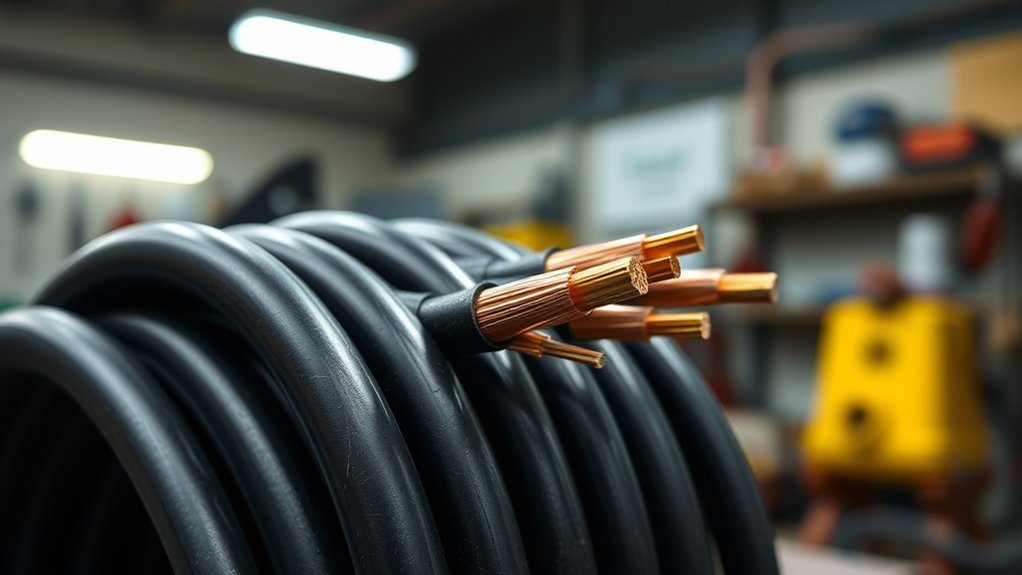
1/0 welding cable is the flexible insulated conductor sold by the foot or on a spool. A finished welding lead is that cable with an electrode holder, work clamp, lug, or machine connector installed. A complete lead set normally includes both the electrode lead and the work lead.
Welders often call the work lead a “ground lead,” but the work lead is the welding-current return path. It is not the same as the welding machine’s equipment-grounding conductor.
This distinction matters because a listing for 50 feet of raw cable is not directly comparable with a ready-to-use 50-foot electrode lead or a set containing two 25-foot leads. For other wire sizes and stick-welding sets, see our guides to stick welding lead costs and our welding lead cost by gauge guide.
Direct Wire describes its Flex-A-Prene cable as 600-volt cable made with 99.99% oxygen-free high-purity copper, fine 30 AWG stranding, and an EPDM jacket. The published operating range is -50°C to 105°C, and the product is listed as SAE J1127 and RoHS compliant. See the manufacturer specifications.
Note: Flex-A-Prene is a cable product name, not a separate insulation material. Its jacket is a proprietary EPDM compound.
Current 1/0 Welding Lead Prices by Length
The tables below use publicly listed U.S. prices rechecked on October 2026. Prices, promotions, taxes, and shipping can change, so confirm the checkout total before buying.
Raw 1/0 Flex-A-Prene Cable Prices
| Length | Current Price | Cost per Foot | Color Pricing |
|---|---|---|---|
| 25 ft | $115.00 | $4.60 | Red and black listed the same |
| 50 ft | $230.00 | $4.60 | Red and black listed the same |
| 100 ft | $460.00 | $4.60 | Red and black listed the same |
| 250 ft | $1,150.00 | $4.60 | Red and black listed the same |
| 500 ft | $2,300.00 | $4.60 | Red and black listed the same |
These figures come from the current Harris Welding Supplies 1/0 cable listings. For comparison, Wire & Cable Your Way currently lists 1/0 Class K welding cable at $4.90 per foot, including $1,225 for 250 feet and $2,450 for 500 feet. That is about $0.30 per foot above the current Harris Flex-A-Prene examples, although jacket construction, brand, specifications, availability, and delivered cost should be compared before treating the two products as interchangeable.
Preassembled Single-Lead Prices
| Finished Lead Length | Current Example Price | Typical Included Parts |
|---|---|---|
| 25 ft | $135.00 | Cable plus electrode holder or work clamp and installed lug |
| 50 ft | $250.00 | Cable plus electrode holder or work clamp and installed lug |
| 100 ft | $480.00 | Cable plus electrode holder or work clamp and installed lug |
The current assembled-lead listings also include complete sets and connector packages at higher prices. Always check whether a listing contains one lead or both leads.
One useful current comparison is the assembly premium. At 25, 50, and 100 feet, the matching Harris finished-lead examples are each $20 above the raw Flex-A-Prene cable price. For buyers who already own the correct termination equipment, raw cable may therefore be cheaper. For buyers without the correct crimper, holder, clamp, lugs, connector hardware, or assembly experience, the ready-made lead can be the simpler choice.
The cheapest listing is not always the lowest-cost setup. A raw cable price does not include the holder, clamp, connector, lugs, heat-shrink, crimping, or assembly time.
Comparing Suppliers and Cable Options
Compare products on the same basis. A useful supplier checklist includes:
- Product type: Raw cable, one assembled lead, or a complete pair.
- Conductor: Copper rather than copper-clad aluminum for a like-for-like welding comparison.
- Stranding and flexibility: Fine-strand Class K or extra-flexible Class M cable may cost more but can differ substantially in handling and flexibility.
- Jacket: EPDM or another welding-rated compound with suitable resistance to abrasion, oils, weather, and heat.
- Terminations: Electrode holder, work clamp, lug, Dinse connector, Tweco/Lenco-style connector, and connector size.
- Published specifications: Voltage, temperature range, outside diameter, standards, and manufacturer data.
- Delivered cost: Product price, shipping, tax, freight, and possible restocking fees.
Pro Tip: Ask for the exact connector series and pin size before ordering a finished lead. A high-quality lead still will not fit if its machine connector does not match your welder.
What Affects 1/0 Welding Lead Cost?

Length and Total Cable Quantity
Length is usually the largest cost driver. For a full setup, add the electrode lead and work lead together. Two 50-foot leads require 100 feet of cable, even though the welder is only about 50 feet from the work.
Conductor and Flexibility
High-purity copper, greater strand count, and extra-flexible construction can raise the price. These features can also make the lead easier to route, coil, and use in cold conditions.
Jacket and Environmental Rating
A durable welding-cable jacket must tolerate repeated flexing and shop exposure. Compare the manufacturer temperature range and resistance claims rather than assuming every black or red cable has the same construction.
Connectors, Clamps, and Assembly
A finished lead costs more because it includes hardware and labor. Heavy-duty electrode holders, higher-capacity work clamps, quick connectors, lugs, protective boots, and professional crimping can change the total significantly.
Color, Compliance, and Brand
Red and black versions are often priced the same within one product line, but that is not a universal market rule. RoHS or SAE compliance is a specification to verify, not proof that a product will always cost more.
How Do You Select 1/0 Cable by Amperage, Length, and Duty Cycle?
A product page may show a nominal ampacity, but weld-lead sizing requires three inputs: welding current, duty cycle, and total circuit length. Total circuit length is the electrode lead plus the work lead.
| Total Copper Cable in the Circuit | Examples Where 1/0 Is Large Enough in Miller’s Guide |
|---|---|
| 100 ft or less | Up to 400 A at 10–60% duty cycle; up to 300 A at 60–100% duty cycle |
| 150 ft | Up to 250 A |
| 200 ft | Up to 200 A |
| 250 ft | Up to 150 A |
| 350–400 ft | Up to 100 A |
These are guide examples, not a substitute for the chart in your welder manual. Review the Miller cable size guide and move to a larger cable if the manufacturer requires it or if the cable overheats.
Warning: Do not select a welding lead from a single advertised ampacity number alone. Undersized, damaged, poorly connected, or tightly coiled cable can overheat and create shock or fire hazards. Turn off the power before connecting leads and follow the welder manufacturer’s instructions.
Shipping Costs and Return Considerations

Shipping policies are retailer-specific. The current Harris policy says qualifying orders over $99 ship free to the Lower 48 states. Alaska, Hawaii, Puerto Rico, international, oversized, hazardous, freight, and special-handling orders may be excluded. Most orders are typically shipped within 48 hours, while custom orders, freight shipments, manufacturer drop ships, and backorders can take longer.
Large spools are heavy, so enter a physical delivery address and review the final checkout charge. P.O. Boxes may only work for small USPS-eligible items. Freight deliveries may require scheduling, and Harris states that the receiver is responsible for unloading truck-freight equipment.
For returns, the retailer currently provides a 30-calendar-day window for eligible unused products in original condition and packaging. Special-order, custom, installed, used, altered, damaged, or incomplete items may not qualify. Approved returns may be subject to a 20% restocking fee, and customers generally pay return shipping when the return is not caused by the seller. Read the current shipping and returns policy before ordering cut or assembled cable.
When Buying in Bulk Makes Sense
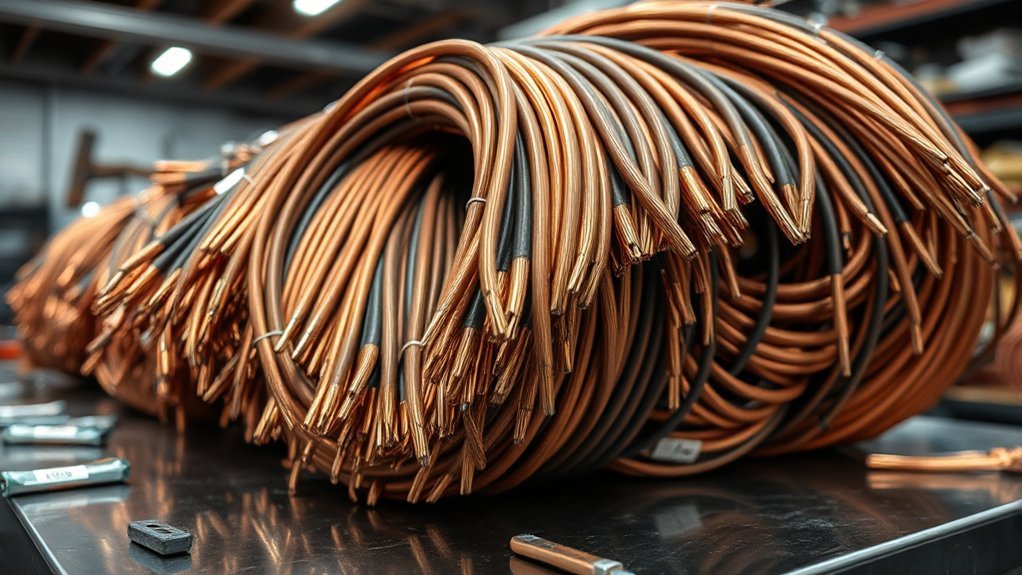
A large spool can be worthwhile for a shop that builds many leads, keeps repair stock, or needs several long runs. However, bulk buying does not guarantee a lower rate per foot. In the current Harris Flex-A-Prene examples above, every listed length costs $4.60 per foot.
The current Wire & Cable Your Way Class K listing also uses a flat $4.90-per-foot rate for the sampled lengths, including $1,225 for 250 feet and $2,450 for 500 feet. In these two current examples, the main reason to buy a larger spool is the amount of cable you need, not an automatic volume discount.
- Buy a spool when: You can use most of it, have the correct crimping tools, and need several custom lengths.
- Buy preassembled leads when: You need a ready-to-use cable, do not own proper termination tools, or want professionally installed hardware.
- Avoid overbuying when: The leftover cable may sit unused, the connector standard may change, or the return policy excludes cut or custom cable.
How to Evaluate Customer Reviews
There is no reliable universal rating for all 1/0 welding leads. Reviews belong to specific sellers, lengths, connector packages, and cable brands. This guide therefore does not use an overall customer-star score as evidence that one 1/0 cable is universally better than another.
Use reviews to look for repeated patterns rather than one overall score. Useful details include:
- Flexibility in cold weather and during repeated coiling.
- Jacket cuts, abrasion, cracking, or unusual stiffness.
- Connector fit and whether the connection stays cool.
- Electrode-holder grip, work-clamp contact, and spring strength.
- Crimp quality, loose lugs, or exposed conductor at the termination.
- Whether the delivered conductor and length match the listing.
Tips for Choosing the Right 1/0 Welding Lead
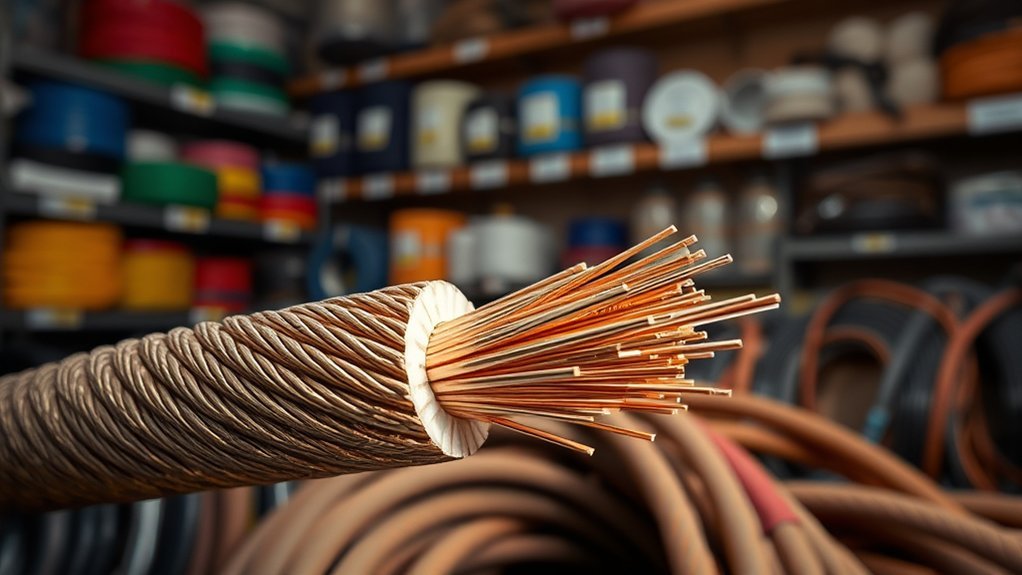
- Read the welder manual: Confirm the required cable size for your amperage, duty cycle, and total circuit length.
- Measure both sides: Add the electrode lead and work lead lengths together for sizing.
- Choose raw cable or an assembly: Include the cost of holders, clamps, connectors, lugs, boots, and crimping.
- Verify the conductor: Look for a clearly stated copper conductor and manufacturer data.
- Match the connector: Confirm Dinse, Tweco/Lenco-style, lug-hole size, or direct-stud connection before purchase.
- Check environmental needs: Compare temperature, oil, abrasion, weather, and flame-resistance specifications.
- Review policies: Cut cable and custom assemblies may have stricter return rules.
- Inspect before every use: Look for cuts, exposed conductor, loose lugs, hot connections, and damaged holders or clamps.
Welding Lead Safety, Care, and Replacement
For construction work, OSHA 29 CFR 1926.351(b)(1) requires arc welding and cutting cables to be completely insulated, flexible, and capable of handling the maximum current required by the work while accounting for duty cycle. See OSHA 29 CFR 1926.351.
For general-industry workplaces, OSHA 29 CFR 1910.254 requires connections to be checked before welding, the work lead to be firmly attached, and coiled welding cable to be spread out to prevent serious overheating and insulation damage. It also states that cable with damaged insulation or exposed bare conductor must be replaced and that cable lengths must be joined with connecting means intended for that purpose. Review OSHA 29 CFR 1910.254 and any other rules that apply to your workplace.
There is no dependable fixed three-to-five-year service life. A lightly used, properly stored lead may last longer, while a lead dragged over sharp edges or run hot may fail much sooner. Replace or professionally evaluate a lead when you find exposed copper, deep cuts, burned insulation, recurring hot spots, loose terminations, brittle jacket material, or unreliable arc performance.
Frequently Asked Questions
How much does 1/0 welding cable cost per foot?
In the Harris Flex-A-Prene examples checked October 2026, raw 1/0 welding cable costs $4.60 per foot from 25 through 500 feet. Wire & Cable Your Way lists a different 1/0 Class K product at $4.90 per foot. Compare construction, specifications, shipping, and final checkout cost rather than assuming every 1/0 cable is interchangeable.
Are there first-time buyer discounts for 1/0 welding leads?
Some sellers run sales, email offers, or account promotions, but there is no standard first-time discount. Treat any discount as temporary and compare the delivered price after shipping and tax.
Can 1/0 welding leads be customized?
Yes. Many welding-cable suppliers offer cut-to-length assemblies with a chosen electrode holder, work clamp, lug, or machine connector. Confirm the cable size, total length, polarity identification, connector standard, and return policy before approving a custom order.
What is the return policy for 1/0 welding leads?
Policies vary. Harris currently gives eligible unused products a 30-calendar-day return window, but custom, special-order, used, installed, altered, damaged, or incomplete products may not qualify. Return shipping may apply, and approved returns may be subject to a 20% restocking fee.
Are warranties available for 1/0 welding leads?
Warranty coverage depends on the cable manufacturer, hardware brand, assembler, and seller. Do not assume that a generic defect warranty covers wear, cuts, overheating, incorrect sizing, or damaged connectors. Read the product-specific terms before purchase.
How long do 1/0 welding leads last?
There is no fixed lifespan. Service life depends on current, duty cycle, heat, flexing, abrasion, storage, connector quality, and inspection. Replace a lead based on condition and safety, not age alone.
Is 1/0 welding cable suitable for a 200-amp welder?
Often yes, but length and duty cycle control the answer. Miller’s guide shows 1/0 copper as suitable for 200 amps at a total circuit length of 200 feet. Shorter circuits may use a smaller cable, while longer circuits require a larger size. Always follow the chart in the welder manual when it differs.
What is the difference between Class K and Class M 1/0 welding cable?
Class K and Class M describe conductor stranding and flexibility rather than the AWG size itself. Class K commonly uses fine 30 AWG strands and is a practical general-purpose welding choice. Class M uses finer stranding for greater flexibility and can be useful where the lead is moved or bent frequently. Compare the exact manufacturer’s construction, approvals, jacket, temperature rating, and welder requirements before substituting one cable for another.
Is 1/0 the same as 0 gauge?
Yes. In common cable naming, 1/0 AWG is also called 0 AWG or “one-aught.” Check the listing carefully because 1 AWG, 1/0 AWG, and 2/0 AWG are different sizes.
Conclusion
Current 1/0 welding-lead costs depend on what the listing includes. As of October 2026, the sampled Harris Flex-A-Prene raw cable runs from $115 for 25 feet to $2,300 for 500 feet, or $4.60 per foot. Finished single leads cost $135 for 25 feet, $250 for 50 feet, and $480 for 100 feet. In those matching examples, professional assembly adds $20 per lead. Buy raw cable when you have the correct termination hardware and tools; choose a finished lead when avoiding cutting, crimping, and connector assembly is worth the added cost. In either case, confirm total circuit length, duty cycle, connector fit, copper construction, shipping, and return terms before ordering.
Sources
- Direct Wire Flex-A-Prene Industrial Welding Cable — conductor, jacket, temperature, voltage, and compliance specifications.
- Miller Cable Size Guide — cable sizing by amperage, total circuit length, and duty cycle.
- OSHA 29 CFR 1926.351 — construction requirements for welding cables and connectors, including insulation, flexibility, current capacity, and duty cycle.
- OSHA 29 CFR 1910.254 — general-industry welding cable connection, coiling, inspection, and damaged-cable requirements.
- Harris Welding Supplies 1/0 Welding Cable — current raw-cable price examples by length and color.
- Harris Welding Supplies 1/0 Welding Cable Leads — current assembled single-lead and complete-set price examples.
- Wire & Cable Your Way 1/0 Welding Cable Class K — current comparison pricing for cut-to-length and spool cable.
- Harris Welding Supplies Shipping and Returns — shipping thresholds, exclusions, return eligibility, 30-day window, and restocking terms.