Welding lead cost depends on the cable gauge, combined length of the electrode and work leads, conductor class, insulation, connectors, and whether the set is assembled for you. Based on U.S. online listings checked July 28, 2026, bare Class K cable commonly runs about $1.42–$9.17 per foot from 6 AWG through 4/0, while extra-flexible Class M cable is roughly $2.78–$12.43 per foot. Prices can change with copper markets, supplier inventory, color, cut length, and shipping.
Quick Answer
Expect welding cable alone to cost about $1.40–$12.50 per foot. A basic 50-foot circuit may cost about $190–$330 after adding a holder, work clamp, and connectors. Long 2/0 or 4/0 leads, Class M cable, professional terminations, and reels can push a complete setup beyond $1,000.
Key Takeaways
- Calculate length using the electrode lead plus the work lead, not just the distance from the welder to the joint.
- Cable size must account for output amperage, duty cycle, circuit length, ambient temperature, and voltage drop.
- Class K is usually the lower-cost choice; Class M uses finer stranding and normally provides greater flexibility.
- A cable’s Class K or Class M designation does not by itself prove that the finished product is UL Listed or CSA certified.
- Budget separately for the holder, work clamp, lugs, machine connectors, professional crimping, shipping, and an optional reel.
Note: Prices in this guide are U.S. online list-price snapshots accessed July 28, 2026. They exclude tax and may exclude shipping, cutting, crimping, and assembly charges.
Understanding Welding Cable Types and Gauges
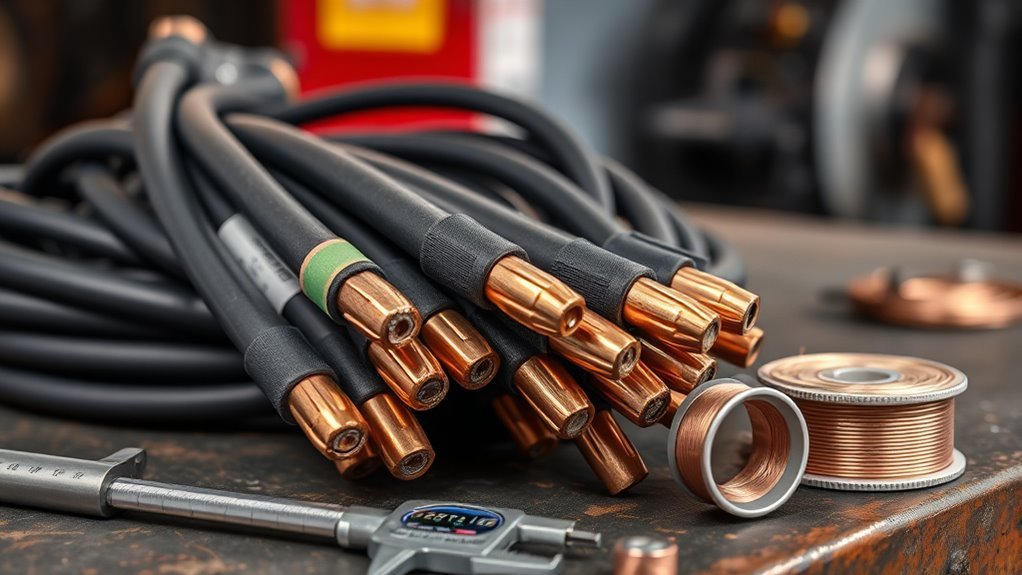
A stick-welding circuit normally has two flexible conductors. The electrode lead connects the power source to the electrode holder, while the work lead connects the power source to the work clamp. Welders commonly call the work clamp a “ground clamp,” but the work lead is part of the welding-current circuit and is not the same as the building’s equipment-grounding conductor.
Welding cable sizes commonly range from 6 AWG through 4/0 AWG. A lower AWG number means a larger conductor, and sizes become “aught” sizes after 1 AWG: 1/0, 2/0, 3/0, and 4/0. Larger copper conductors have lower resistance but cost more, weigh more, and are harder to handle.

This daily devotional helps parents pray purposefully for their children through a full year of Scripture readings, reflections, and guided prayer prompts. Written to encourage faithful family discipleship, it offers practical, biblically grounded support for parents who want to shape their prayers around God's Word. A foreword by Sinclair B. Ferguson adds trusted theological insight and encouragement.

The DeLonghi Water Filter helps reduce scale buildup and unwanted impurities that can affect your coffee machine's performance and taste. Its active carbon and ion-exchange technology helps improve brew consistency, maintain flavor, and reduce the need for frequent descaling. Designed as an OEM authorized replacement part, it fits select DeLonghi models for reliable everyday maintenance.

This long barrel curling iron is designed to create soft curls and waves while helping hair stay smooth, hydrated, and shiny. Its moisture-focused heat technology and NanoIonic MX help lock in moisture, seal the cuticle, and support long-lasting styles with less frizz. The extended barrel and adjustable heat settings make it easy to style long hair or hard-to-reach sections with comfort and control.
What Class K and Class M Mean
| Feature | Class K | Class M |
|---|---|---|
| Typical strand construction | Fine-stranded copper, commonly built with approximately 30 AWG individual strands | Extra-fine copper stranding, commonly using approximately 34 AWG individual strands |
| Flexibility | Very flexible and suitable for most shop, mobile, and repair work | Usually more flexible, especially for repeated movement or cold-weather handling |
| Typical cost | Lower | Higher because of the finer stranding and product construction |
| Certification | Product-specific; do not assume a listing from the conductor class | Product-specific; many industrial products carry UL, CSA, or other approvals, but the label must be checked |
| Best fit | Cost-conscious general welding use | Frequent flexing, tight routing, cold environments, or a specification calling for Class M |
Prysmian’s Super Vu-Tron specification, for example, identifies an ASTM B172 Class M conductor and separately lists product approvals, temperature range, oil resistance, weather resistance, and flame-performance details. Always verify each of those properties on the cable print legend or datasheet.
Warning: Do not select welding cable from a generic ampacity number alone. Follow the cable-size table in the welding power source’s manual and account for maximum output, duty cycle, total circuit length, temperature, and connection losses.
Inspect the full length of both leads before use. Look for cuts, hard or cracked insulation, exposed copper, overheated sections, loose lugs, damaged connector covers, and broken strain relief. Clean dirty connection surfaces and replace components that cannot safely carry the required current.
Price Range by AWG: 6 AWG to 4/0 AWG
The table below summarizes sampled online prices for bare copper welding cable. Class K figures are based mainly on the current Nassau National Cable Class K listings. Class M figures use current listings from Nassau Electrical and Wire America.
| Cable size | Class K price/ft | Class M price/ft | Cost and handling note |
|---|---|---|---|
| 6 AWG | About $1.42–$1.53 | About $2.78–$2.86 | Lightest and least expensive size in this comparison |
| 4 AWG | About $2.24–$2.26 | About $3.58 | A common step up when more current or length is required |
| 2 AWG | About $2.86 | About $4.20–$4.48 | Popular for medium-output portable and shop equipment |
| 1 AWG | About $3.38 | About $5.53 | More copper, weight, and connector capacity required |
| 1/0 AWG | About $4.25 | About $6.18–$7.48 | Often used for longer or higher-output circuits |
| 2/0 AWG | About $5.97 | About $7.98–$8.22 | Heavy and increasingly costly to ship and terminate |
| 3/0 AWG | About $6.54–$6.90 | About $9.98 | Commonly reserved for high-current or long-run applications |
| 4/0 AWG | About $8.25–$9.17 | About $12.43 | Highest material, handling, connector, and shipping cost in this table |
These are retail snapshots, not guaranteed prices. Some listings have minimum cut lengths, color surcharges, reel requirements, or separate shipping charges.
Ampacity and Cost
Thicker cable generally supports more current with less resistance, but there is no single safe ampacity number that applies to every welding setup. Published values can change with insulation temperature, ambient temperature, conductor construction, duty cycle, airflow, installation method, allowable voltage drop, and whether the figure comes from a welding-machine chart or a general electrical table.
For example, Southwire lists a 405 A reference value for one 4/0 welding cable and states that the value should not be used as the final selection value. Nexans publishes separate normal and 90°C ampacity figures, which further shows why an isolated chart number can be misleading.
| Sizing input | Why it matters |
|---|---|
| Maximum welding current | The cable, holder, clamp, and connectors must safely carry the expected current. |
| Duty cycle | Longer welding time within each cycle creates more heat than occasional short welds. |
| Total circuit length | Resistance and voltage drop rise as the combined electrode and work-lead length increases. |
| Ambient conditions | High heat, tightly bundled cable, confined routing, and direct sun can reduce cooling. |
| Insulation rating | Temperature, oil, abrasion, weather, and flame ratings differ among products. |
| Connection resistance | Loose, dirty, undersized, or damaged connections create heat and voltage loss. |
Pro Tip: If the electrode lead is 50 feet and the work lead is 25 feet, use 75 feet as the circuit length when reading a manufacturer’s welding-cable chart, unless the manual explicitly says otherwise.
Size vs. Price
A simple preliminary budget is:
Total lead-set cost = combined cable length × cable price per foot + holder + work clamp + machine connectors or lugs + assembly labor + shipping + optional reel.
| Example | Cable calculation | Estimated accessories | Illustrative total |
|---|---|---|---|
| Short Class K setup 25-ft electrode + 25-ft work lead, 4 AWG |
50 ft × about $2.24 = $112 | About $80–$220 | About $190–$330 |
| Medium Class K setup 50-ft electrode + 50-ft work lead, 2 AWG |
100 ft × about $2.86 = $286 | About $100–$250 | About $386–$536 |
| Heavy Class M setup 50-ft electrode + 50-ft work lead, 2/0 |
100 ft × about $7.98–$8.22 = $798–$822 | About $125–$300 | About $923–$1,122 |
These examples are budgeting tools, not cable-size recommendations. Confirm the required gauge in the welder’s manual before ordering.
Class K Vs. Class M Cable Cost Comparison
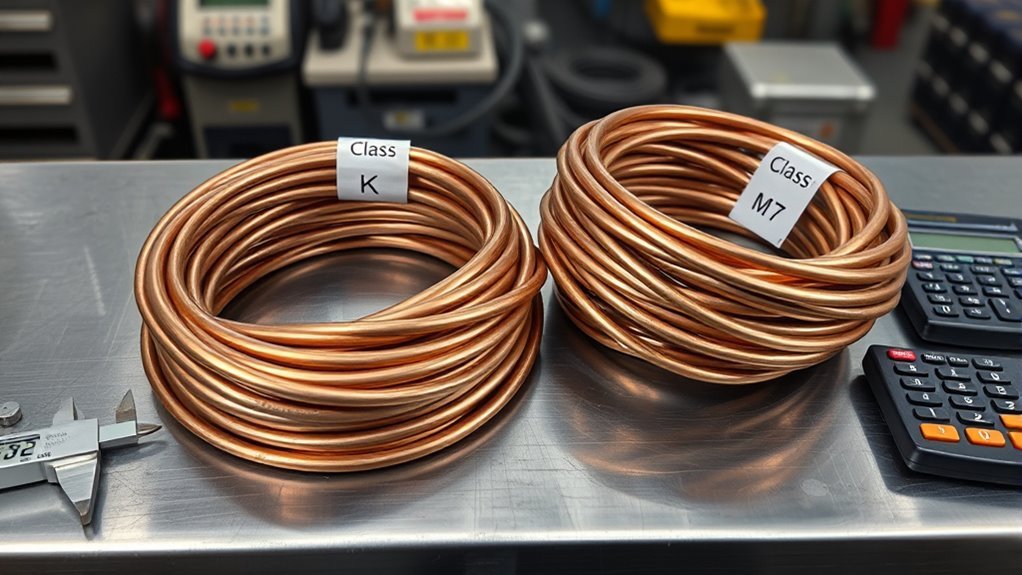
Class K cable generally gives the best balance of flexibility and price for everyday welding. It is commonly used for shop machines, service trucks, equipment repair, battery connections, and temporary power applications when the product is approved for that use.
Class M cable normally carries a noticeable premium because it contains more, finer copper strands. That construction improves bending and handling, particularly where the lead is moved repeatedly, routed through tight spaces, or used in cold conditions.
- Choose Class K when the welder’s manual permits it and cost, weight, and general flexibility are the main priorities.
- Choose Class M when extra flexibility, frequent movement, a severe environment, or a project specification justifies the added cost.
- Check the print legend for conductor material, voltage, temperature, oil, sunlight, abrasion, flame, and agency-listing information.
- Do not assume all orange cable is Class M or that all black cable is Class K. Color alone does not establish construction or approval.
- Verify bare copper if the job, connector, or manufacturer’s chart assumes copper conductors. Do not substitute a different conductor material without recalculating size and confirming termination compatibility.
Note: “UL/CSA cable” is not a separate conductor class. Class K or Class M describes strand construction; UL, CSA, MSHA, RoHS, and other markings describe separate product approvals or compliance claims.
Cost Breakdown: Spool Pricing Vs. Per-Foot Pricing
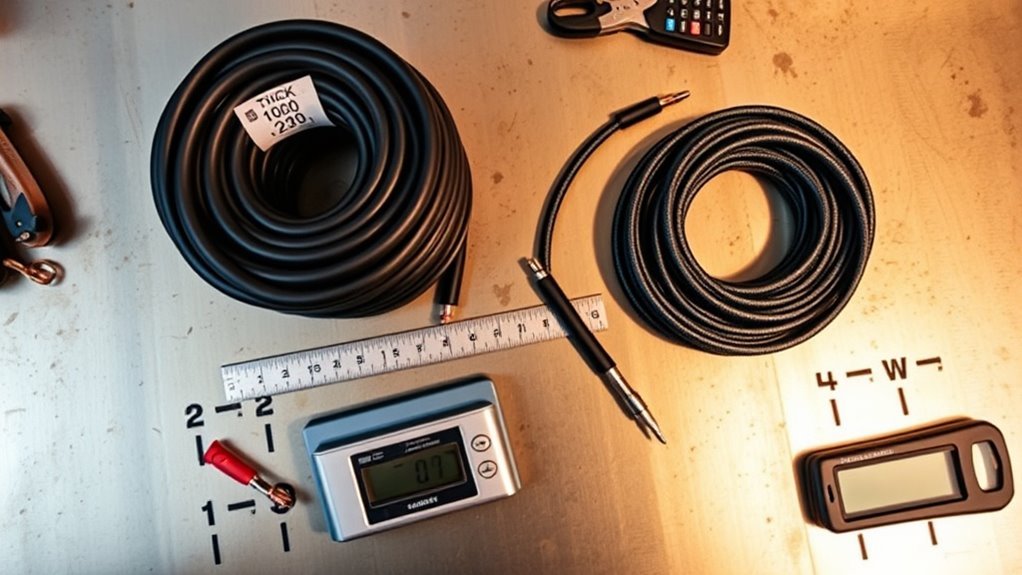
Buying a full spool can lower the rate per foot, but the discount is not automatic. Some sellers charge nearly the same rate for a standard spool and a cut length, while others discount larger reels enough to offset part of the shipping or cutting cost.
| Product example | Spool price | Effective rate | Comparison |
|---|---|---|---|
| 6 AWG Class K, 250 ft | About $355 | About $1.42/ft | Approximately equal to the sampled cut-length rate |
| 6 AWG Class M, 250 ft | About $705 | About $2.82/ft | Slightly below the sampled $2.86 cut-length rate |
| 1/0 Class K, 1,000 ft | About $3,900.40 | About $3.90/ft | Below the sampled $4.25 cut-length rate |
Compare the following before choosing a spool:
- The total footage you will realistically use
- Minimum cut length and reel-cut charges
- Whether multiple colors are needed for identification
- Storage space and reel-handling equipment
- Shipping weight or freight charges
- The cost of lugs, connectors, heat-shrink, crimping, and testing
- Whether unused cable can be returned
Extra-flexible and branded cable may be available only in certain colors or spool lengths. Inventory changes frequently, so temporary “out of stock” notices should not be treated as a permanent market condition.
Pro Tip: Measure the actual route before ordering, including bends, machine movement, strain relief, and a modest service allowance. Excess lead adds cost, weight, resistance, and storage problems.
Electrode Holders and Their Price Points
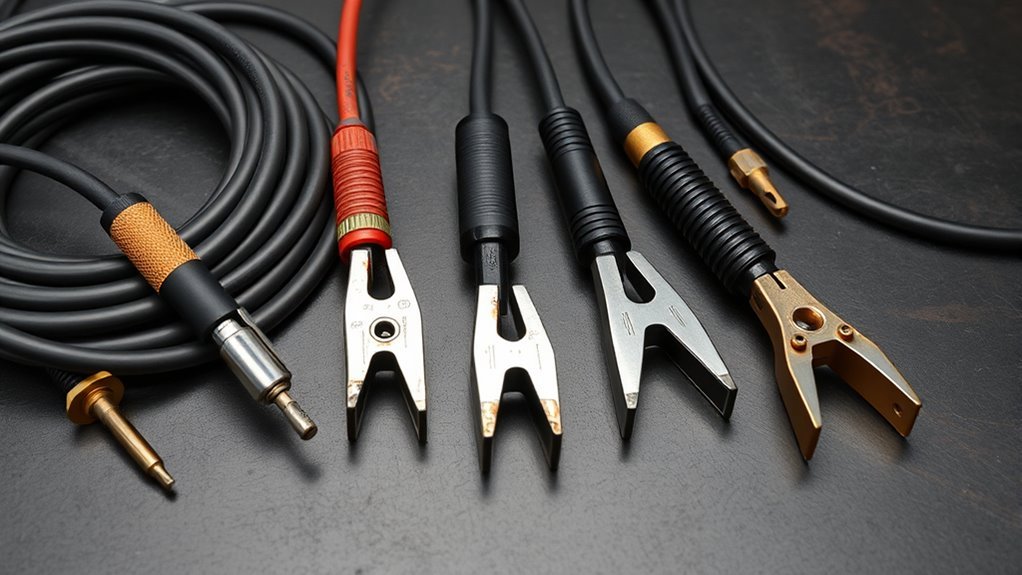
An electrode holder must match the expected welding current, duty cycle, electrode diameter, cable size, and connection method. A larger advertised amp rating does not automatically make a holder more comfortable or suitable for every job.
Common Holder Types
- Tong-style holders: A durable, familiar design with multiple electrode positions.
- Ergonomic holders: Shaped to reduce hand strain during repeated electrode changes and longer welding sessions.
- Fully insulated holders: Designed to shield current-carrying components and reduce accidental contact.
- Holder-and-cable assemblies: Include a short whip lead and usually a machine connector, reducing the number of components that must be assembled.
- Heavy-duty holders: Built for larger electrodes, larger cable, higher current, or more demanding duty cycles.
Amp Rating Impact
Read the complete rating, including duty cycle and maximum electrode size. For example, the Lincoln T300 is rated at 300 A at a 60% duty cycle, while the Tweco WS200E13 assembly is rated at 200 A at a 100% duty cycle. These are different use cases despite the larger number on the Lincoln holder.
| Model | Key rating | Sample price | Best use |
|---|---|---|---|
| Lincoln T300 | 300 A at 60% duty cycle; for DC welding | About $75.60–$89.95 across sampled sellers | Medium-duty stick welding with electrodes up to the model’s specified diameter |
| Tweco T-316 ergonomic holder | 250 A; accepts cable up to the listed 2/0 size | About $49.48 | Light- to medium-duty work where grip comfort matters |
| Tweco A316 | 250 A; supports cable up to 2/0 | About $62.95 | Professional holder-only replacement |
| Tweco WS200E13 assembly | 200 A at 100% duty cycle; 13-ft No. 2 cable and 50 mm Dinse-style plug | About $76.75–$82.99 | Ready-made whip lead for compatible machines |
Price vs. Brand
Brand reputation can matter, but the model’s actual construction is more important than its logo. Compare the holder’s duty-cycle rating, insulation, spring protection, jaw design, electrode capacity, cable-size range, replacement parts, and connection method.
Budget holders may be adequate for occasional low-amperage work, but a weak spring, undersized contact area, exposed conductive parts, or loose cable connection can create resistance and heat. A premium model is worthwhile when its specifications, comfort, rebuildability, or duty-cycle rating solve a real problem.
Ground Clamps: Magnetic and Traditional Options
A reliable work clamp provides a low-resistance return path through the welding circuit. The clamp must be rated for the expected current and attached to clean conductive metal. Paint, mill scale, rust, oil, spatter, and a weak spring can reduce contact quality and create heat or an unstable arc.
| Clamp | Rating | Sample price | Main advantage |
|---|---|---|---|
| Magswitch magnetic work clamp | 300 A | About $48.52–$71.99 across sampled sellers | Fast attachment to suitable flat or round ferrous surfaces |
| Tweco GC-300 mechanical clamp | 300 A; cable capacity through 3/0 | About $51–$98 across sampled suppliers | Strong mechanical grip and broad contact area |
| Tweco GC-200 or similar mechanical clamp | Commonly 200 A | Usually below comparable 300 A professional clamps | Lower cost for properly matched light-duty circuits |
| High-capacity magnetic clamps | 600–800 A models | About $186–$331 in current manufacturer listings | Quick setup for high-current fabrication where the surface is suitable |
Magnetic clamps work only on suitable ferrous material and still require a clean contact surface. A traditional clamp is often the safer choice on dirty, irregular, thin, coated, or nonmagnetic workpieces. Place the work clamp as close to the weld area as practical while keeping the current path away from bearings, electronic components, and unintended joints.
Connectors, Adapters, and Lugs Pricing Guide
Machine connectors and lugs must match the cable size, welding current, duty cycle, polarity arrangement, and the receptacle on the power source. Common systems include Dinse-style plugs, Tweco-style positive-cam connectors, Lenco cam connectors, threaded studs, and bolted copper lugs.
| Connector | Cable/rating information | Sample price |
|---|---|---|
| Lenco LC-40 male and female set | 1/0–2/0 cable; listed by the seller at 350 A | About $20.50–$23.50 |
| Tweco 2-MPC full connection | 1/0–3/0 cable; listed at 450 A and 80 V | About $38.65 |
| Dinse-style plug | Available in multiple plug sizes and cable ranges; the plug and panel socket must match | Varies by plug size, brand, and current rating |
| Copper lug or stud terminal | Must match conductor size, stud diameter, barrel type, and crimping system | Varies by copper size, plating, hole size, and package quantity |
Before ordering connectors:
- Confirm the machine receptacle type and physical dimensions.
- Verify the connector’s cable-size range.
- Match or exceed the required welding-current and duty-cycle rating.
- Use the manufacturer’s specified strip length, screw torque, or crimp die.
- Cover exposed conductive parts with the correct insulated housing or heat-shrink system.
- Pull-test the termination and inspect it for movement before use.
- Do not force together connectors that merely look similar.
Warning: Disconnect and de-energize the welding power source before installing or servicing leads. Large cable lugs require the correct crimping equipment and die. A poorly crimped or loose termination can overheat even when the cable itself is adequately sized.

This RENPHO smart scale helps you monitor weight, BMI, body fat, and 13 total body metrics with easy app sync for ongoing health tracking. It connects to popular fitness platforms, supports unlimited users, and includes Baby Mode for infants or pets, making it a versatile choice for families. Built with precise sensors and durable tempered glass, it offers reliable daily measurements and progress insights in the RENPHO Health app.

This retractable car window shade helps block UVA and UVB rays to make rides more comfortable and protected for passengers. It includes a White Hot heat alert that turns white when the car is too hot, plus dual installation options for a secure fit in many vehicles. The safe-view mesh supports visibility while helping reduce glare, and the easy one-push retraction makes it simple to use when needed.

This Milwaukee SHOCKWAVE socket adapter set is designed to convert drill and impact driver output for use with sockets, making it a versatile addition to any tool kit. Built for durability and repeated use, the adapters are engineered to deliver reliable performance on demanding fastening tasks. The compact 3-piece set covers common drive sizes for everyday repair and maintenance work.
Lead Reel and Assembly Costs
A lead reel improves storage and deployment but adds several hundred dollars before any cable is installed. Reel capacity also falls as cable diameter increases, so a reel advertised for 150 feet of 1/0 may hold less 2/0 or 4/0 cable.
| Reel | Listed capacity | Sample price |
|---|---|---|
| Diamond FBD10BLK fixed-base double reel | Up to 150 ft on each reel for the stated compatible cable size | About $356.00 |
| Diamond SBD10BLK swivel-base double reel | Up to 150 ft on each reel for the stated compatible cable size | About $358.55 |
The small price difference between these two sampled models means mounting and workflow may matter more than purchase price. A swivel base helps when the cable is pulled in different directions; a fixed base reduces movement and may suit a permanent truck or shop installation.
Assembly costs depend on cable length, conductor size, holder, clamp, machine connectors, lugs, heat-shrink, and labor. At the sampled Class K rate of $5.97 per foot, a 100-foot 2/0 circuit contains about $597 of cable before accessories. A 200-foot circuit contains about $1,194 of cable before the holder, clamp, connectors, reel, labor, and shipping.
A short preassembled whip can be much cheaper. The 13-foot Tweco WS200E13 holder-and-cable assembly was listed at approximately $76.75–$82.99. Check its Dinse plug size, cable gauge, amperage, and duty-cycle rating before assuming it fits your machine.
Do not weld with a long cable left tightly wound on a storage reel unless the reel and cable system is specifically designed and rated for that operating condition. Spread or pay out the required cable to reduce heat buildup.
How Brand and Features Affect Total Cost
Brand affects price, but the most important cost drivers are measurable specifications and the amount of copper in the system.
| Cost driver | Effect on price | What to check |
|---|---|---|
| Cable gauge | Larger conductors contain more copper and cost substantially more | Welder manual, total circuit length, duty cycle, and voltage drop |
| Class K or Class M | Class M normally carries a flexibility premium | Stranding standard and actual handling requirements |
| Insulation | Cold, oil, abrasion, sunlight, weather, and flame performance can increase cost | Temperature range and environmental ratings |
| Certification | Listed or specified industrial products may cost more | Required UL, CSA, MSHA, or project-specific marking |
| Connectors and assembly | Professional lugs, plugs, crimping, and testing add cost | Connector compatibility, torque, crimp die, insulation, and strain relief |
| Lead reel | Common professional double reels add roughly $350 or more | Cable capacity, current isolation, mounting, brake, and airflow |
| Shipping | Heavy copper cable may trigger high parcel charges or freight | Delivered total, free-shipping threshold, reel fees, and return terms |
Premium Miller, Lincoln, Tweco, Lenco, Prysmian, Southwire, Kalas, and similar products may cost more than generic alternatives. Pay the premium when it provides a verified advantage such as a required listing, better cold flexibility, a higher duty-cycle rating, replaceable parts, a compatible connector, or dependable local support.
How to Choose the Right Welding Leads
- Read the power source manual. Find the welding-output cable table for your model.
- Identify the highest current and duty cycle you will actually use. Do not size only for a typical low-amperage job if the machine will regularly run higher.
- Add both lead lengths. Combine the electrode-lead and work-lead footage.
- Choose the conductor size from the manufacturer’s chart. Move to a larger cable if the manual requires it for your current and circuit length.
- Choose Class K or Class M. Use Class M only when its additional flexibility or a project specification justifies the premium.
- Verify the environment. Match the cable’s temperature, abrasion, oil, sunlight, weather, and flame characteristics to the workplace.
- Match every component. Holder, clamp, connector, lug, and reel ratings should be compatible with the cable and welding current.
- Compare delivered cost. Include cutting, crimping, heat-shrink, labor, shipping, reel charges, and returns.
- Inspect the finished assembly. Check polarity, connector engagement, insulation, strain relief, mechanical tightness, and abnormal heating during initial use.
Pro Tip: Longer is not always better. Extra cable adds resistance, weight, cost, trip hazards, and storage difficulty. Buy the shortest practical circuit that still allows safe machine placement and movement.
Inspection, Maintenance, and Replacement
OSHA’s arc-welding equipment requirements call for properly made connections, a firmly attached work lead, clean magnetic-clamp contact surfaces, and replacement of cables with damaged insulation or exposed conductors. OSHA also says coiled welding cable should be spread out before use to avoid overheating and insulation damage.
- Inspect the cable, holder, clamp, connector covers, and strain relief before each work period.
- Remove metal particles and spatter from magnetic-clamp contact surfaces.
- Clean rust, paint, oil, and scale from the work-clamp attachment point.
- Check set screws, lugs, cam connectors, and Dinse-style plugs for looseness.
- Feel for abnormal heat at connectors after a controlled initial weld.
- Do not wrap an electrode cable around your body.
- Keep the electrode holder where it cannot contact people, cylinders, fuel containers, or conductive objects when unattended.
- Use insulated connectors made for the cable size and service conditions.
- Keep unapproved repairs and splices away from the holder end and follow the applicable workplace rule.
- Take damaged or defective equipment out of service until its safety has been restored.
Warning: Welding circuits can cause burns, fire, electric shock, and equipment damage. Follow the power source and cable manufacturers’ instructions and all workplace electrical and hot-work procedures. Repairs and high-current terminations should be completed by a qualified person using the correct components and tools.
Sources
- OSHA 29 CFR 1910.254: Arc Welding and Cutting — cable inspection, connections, damaged insulation, work leads, and coiled-cable safety.
- OSHA 29 CFR 1926.351: Arc Welding and Cutting — duty cycle, cable condition, connectors, splices, and work-return requirements.
- Prysmian Super Vu-Tron Welding Cable — ASTM B172 Class M construction, flexibility, temperature range, and product approvals.
- Southwire Royal Excelene Welding Cable — construction, temperature rating, packaging, and reference-ampacity limitations.
- American Welding Society: Addressing Welding-Circuit Voltage Drop — lead length, cable condition, gauge, and connection resistance.
- Nassau National Cable Class K Listings — July 2026 retail price snapshots for 6 AWG through 4/0 cable.
Frequently Asked Questions
How does cable insulation color affect price and safety?
Standard colors may cost the same, while special colors or small production runs can cost more. Color helps identify leads and improve visibility, but it does not prove the cable’s gauge, conductor class, temperature rating, polarity, or certification. Read the printed cable markings and datasheet.
Are warranty and return policies included in cost estimates?
Not automatically. The listed price normally covers the product only. Cut cable, custom assemblies, installed lugs, and special-order reels may be nonreturnable. Review the warranty term, return window, restocking fee, shipping responsibility, and exclusions before ordering.
What are typical welding-lead shipping and handling fees?
There is no dependable universal range. Shipping depends on cable gauge, footage, reel weight, destination, service speed, and the seller’s free-shipping threshold. Long 2/0–4/0 orders may be expensive to ship and can require freight. Compare the delivered checkout total rather than price per foot alone.
Do custom-length pre-made leads cost more?
Usually. A custom assembly includes measuring, cutting, stripping, lugs or plugs, crimping or set-screw installation, insulation, strain relief, and sometimes electrical or mechanical testing. The higher price may be worthwhile when the supplier guarantees connector compatibility and workmanship.
How do heat and cold affect long-term welding-cable cost?
Cold can make unsuitable insulation stiff and more likely to crack, while excessive heat accelerates insulation aging and increases conductor temperature. Choose cable whose printed temperature and environmental ratings cover the jobsite. Better cold flexibility or heat resistance may cost more initially but reduce handling problems and premature replacement.
What size welding lead do I need?
Use the cable-size chart in the welding power source’s manual. Match the gauge to maximum welding current, duty cycle, and the combined length of the electrode and work leads. Increase cable size when the manufacturer’s chart requires it for a longer circuit or higher output.
Should the electrode and work leads use the same gauge?
They are commonly the same gauge because both carry welding current. A manufacturer may permit a different arrangement for a specific machine or circuit, but the work lead, clamp, and every connection must still carry the required current. Do not reduce the work-lead size without approved sizing guidance.
Is welding cable the same as battery cable?
They can look similar, but their strand construction, insulation, flexibility, voltage rating, temperature range, and approvals may differ. Use cable specified for the welding application and verify that its conductor material, insulation, and terminations match the equipment manufacturer’s requirements.
Conclusion
Welding leads can cost less than $200 for a short, light-duty setup or more than $1,000 for long, heavy, extra-flexible leads with professional connectors and a reel. The cable gauge and total circuit length create most of the cost, while Class M construction, high-capacity accessories, assembly labor, and shipping add further expense.
Start with the welding power source’s cable-size chart, add the electrode and work-lead lengths together, and then select cable, holders, clamps, and connectors that meet the required current and duty cycle. Class K is normally the economical general-purpose option. Pay more for Class M, premium insulation, branded accessories, or a reel only when those features provide a clear performance, compliance, or workflow benefit.

Build the upgraded Graze Kai II Ryusei-Go from Gundam Iron-Blooded Orphans in a detailed 1/144 scale model kit. This pre-colored plastic kit offers an authentic assembly experience for fans and collectors, with official Bluefin Distribution branding for added confidence. Pair it with the Long Distance Transport Booster for a dynamic display inspired by the series.

This DEWALT 20V MAX combo kit delivers reliable drilling and fastening power in a compact, jobsite-ready package. The lightweight drill/driver and impact driver are built to fit into tight spaces, while integrated LED work lights help improve visibility in dim areas. With two batteries, a charger, and a storage bag included, it is a convenient solution for professionals and DIY users alike.

These Stanley MaxSteel straight aviation snips are built for clean, controlled cutting through sheet metal and other tough materials. Serrated cutting edges help prevent slippage for more accurate results, while the double pivot action delivers increased cutting power with less effort. Designed for dependable performance, they are a practical choice for metalworking, HVAC tasks, and general workshop use.