In 2026, a practical welding kit in the United States typically costs about $400 to $900 for a basic stick or flux-core setup and about $700 to $1,800 for a gas MIG setup. Aluminum-capable AC/DC TIG and professional multiprocess systems cost more because the machine, gas equipment, torches, controls, and electrical needs can be more demanding. The safest budget starts with the welder, then adds everything required to operate it for your material, process, and workspace.
Last updated: August 10, 2026. Machine-price bands and process assumptions were spot-checked against current U.S. retailer and manufacturer listings, and safety guidance was checked against current OSHA/NIOSH pages.
Scope: This guide prices the equipment needed for a usable welding setup. It does not estimate paid welding labor, formal training, certification, or business startup costs. For a broader startup budget, see welding startup costs.
Quick Answer
A practical welding kit usually costs about $400 to $900 for a basic stick or flux-core setup, $700 to $1,800 for a gas MIG setup, $1,300 to $4,500 or more for an aluminum-capable AC/DC TIG setup, and roughly $2,000 to $6,000 or more for a professional multiprocess package.
Welding Kit Cost at a Glance
| Setup | Practical Starter Budget | Best Fit |
|---|---|---|
| Stick or flux-core | About $400 to $900 | Lowest-cost practical start, outdoor repairs, basic steel work |
| Gas MIG | About $700 to $1,800 | Garage fabrication, auto-body work, general steel projects |
| DC TIG/stick | About $700 to $2,200 | Steel and stainless TIG plus portable stick work |
| AC/DC TIG | About $1,300 to $4,500+ | Precision steel, stainless, and aluminum work |
| Multiprocess | About $900 to $5,000+ | Mixed fabrication and users who need several processes |
| Professional or engine-driven | About $3,500 to $12,000+ | Field service, construction, mobile repair, and production work |

Aegend Swim Goggles are designed to help swimmers enjoy a clear, comfortable, and secure fit in the pool. Built for adults and youth, they aim to reduce leaking and provide full eye protection for training, recreation, and water sports. Their versatile design makes them a practical choice for men and women looking for dependable swim eyewear.

This Milwaukee SHOCKWAVE socket adapter set is designed to convert drill and impact driver output for use with sockets, making it a versatile addition to any tool kit. Built for durability and repeated use, the adapters are engineered to deliver reliable performance on demanding fastening tasks. The compact 3-piece set covers common drive sizes for everyday repair and maintenance work.

This hardcover cookbook offers fast, approachable recipes designed for busy days and low-energy nights. Caroline Chambers focuses on simple, flavorful meals that help you get dinner on the table without overthinking it. It's a practical pick for home cooks who want quick weeknight inspiration and minimal-fuss cooking.
Key Takeaways
In Short
- A machine-only price is not the total cost of a usable welding kit.
- Basic stick and flux-core setups are usually the least expensive ways to start.
- MIG and TIG budgets rise when you add shielding gas, a cylinder, regulators, torches, or aluminum accessories.
- Input power, duty cycle, material thickness, process capability, warranty, and local service matter more than brand name alone.
- Welding equipment has no universal 6- or 12-month replacement schedule. Inspect it, maintain it, and replace damaged parts according to the manufacturer’s instructions.
How These Welding Kit Costs Were Estimated
These are planning ranges for new equipment in the United States, not fixed quotes. The comparison starts with current welding-machine categories and manufacturer package information, then adds the equipment a process may require: leads or a gun or torch, PPE, consumables, shielding-gas hardware when needed, metal-preparation tools, workspace safety items, and electrical work when the selected machine cannot use the existing supply.
This method matters because two machines with similar advertised output can create very different total budgets. Package contents, input power, duty cycle, aluminum capability, warranty support, and local gas-cylinder policies can all change the final cost.
The cheapest advertised welder may not be the cheapest working setup once you add PPE, consumables, gas, accessories, and suitable electrical service.
Overview of Welding Equipment Types
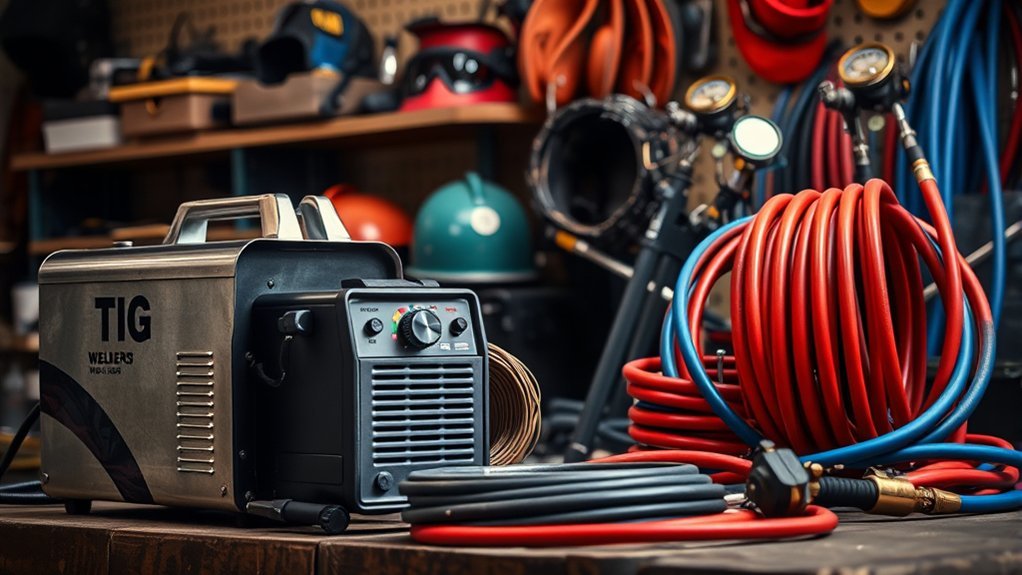
The main arc-welding choices for home shops and small fabrication work are MIG, flux-core, TIG, stick, and multiprocess machines. The informal terms MIG, TIG, and stick correspond to GMAW, GTAW, and SMAW. Each process has different equipment, skill, material, and operating-cost requirements. A useful starting point is the Miller guide to choosing a first welder, which explains why no single process fits every job.
| Process | Best Fit | Typical Cost Position | Important Extras |
|---|---|---|---|
| Stick | Outdoor repairs, thicker steel, farm work, and less-than-perfect surfaces | Usually one of the lowest machine costs | Electrodes, electrode holder, work lead, chipping hammer, and wire brush |
| Flux-core | Beginner projects, outdoor work, and steel repair without bottled shielding gas | Low to moderate | Flux-core wire, contact tips, nozzle parts, and cleanup tools |
| MIG | General fabrication, auto-body work, thin-to-medium steel, stainless steel, and some aluminum setups | Moderate | Wire, shielding gas, cylinder, regulator, tips, nozzles, and sometimes a spool gun |
| TIG | Precise, clean welds on thin material, stainless steel, and aluminum when the machine provides the required AC capability | Moderate to high | Torch, tungsten, collets, cups, filler rods, shielding gas, regulator, and often a foot control |
| Multiprocess | Users who need several processes from one power source | Low-cost hobby models to high-end professional systems | Some advertised processes require separate torches, guns, pedals, regulators, or consumables |
MIG is often easier for a new operator to learn because the machine continuously feeds the wire. TIG offers excellent heat and puddle control but requires more coordination and setup. Stick equipment can be simple and portable, while multiprocess machines reduce the number of power sources you need. However, a multiprocess label does not guarantee that every torch, gun, pedal, or gas component is included.
Note: Aluminum capability must be checked carefully. A MIG machine may require a compatible spool gun or push-pull system. A TIG machine generally needs AC output for conventional TIG welding on aluminum; a DC-only TIG function is not the same thing.
Factors Affecting Welding Equipment Costs
Welder type matters, but it is only one part of the price. Two machines that advertise the same maximum amperage can have very different duty cycles, input requirements, included accessories, arc controls, service support, and material capabilities.
Machine Type and Output Capability
Entry-level inverter stick and flux-core machines can be inexpensive, while larger transformer machines, pulsed systems, engine-driven welders, and industrial power sources can cost several thousand dollars. Maximum amperage alone does not tell you how well a machine will perform. Compare the rated output, duty cycle, recommended material thickness, process range, and manufacturer specifications.
Input Power, Duty Cycle, and Material
- Input voltage: A 120-volt machine is convenient for light work, while many higher-output welders need 240-volt service. Some are dual-voltage.
- Duty cycle: This shows how long the machine can weld at a stated output during a test period before it must cool. Compare duty cycle at the amperage you expect to use, not only the maximum-amperage number.
- Material and thickness: Thin auto-body steel, 1/4-inch plate, stainless tubing, and aluminum each create different process and accessory needs.
- Polarity and AC/DC output: These affect which electrodes, wires, and TIG applications the machine can support.
- Portability: Lightweight inverter machines often cost more than basic transformer designs with similar nominal output, but they may be easier to move and store.
Follow the machine manual for circuit size, plug type, grounding, extension-cord limits, generator compatibility, and installation. OSHA’s arc welding and cutting requirements also state that equipment must be selected, installed, operated, and maintained safely and that manufacturer instructions should be followed.
Brand Reputation, Warranty, and Service
Established manufacturers may charge more, but the brand name itself does not prove that a machine is the best value. Compare the written warranty, local repair network, replacement-part availability, gun and torch compatibility, consumable availability, manual quality, and whether the seller is authorized. For example, Hobart publishes a 5/3/1 industrial warranty structure, while Miller publishes its own True Blue warranty terms. Coverage varies by product and component, so read the exact policy before buying.
Additional Features and Included Accessories
Features that can increase price include dual-voltage input, high-frequency TIG start, AC balance, pulse controls, synergic settings, memory programs, digital displays, spool-gun support, push-pull compatibility, built-in gas solenoids, better wire-drive systems, higher duty cycles, and software-updatable controls.
The package contents can matter as much as the power source. A machine may include leads and a gun but exclude shielding gas, a cylinder, PPE, welding wire, a TIG torch, or an aluminum gun. Official product pages for machines such as the Miller Multimatic 215 and Lincoln Electric POWER MIG 215 MPi packages show how bundle contents and optional process packages change the real purchase cost.
How Much Does a Welding Kit Cost?
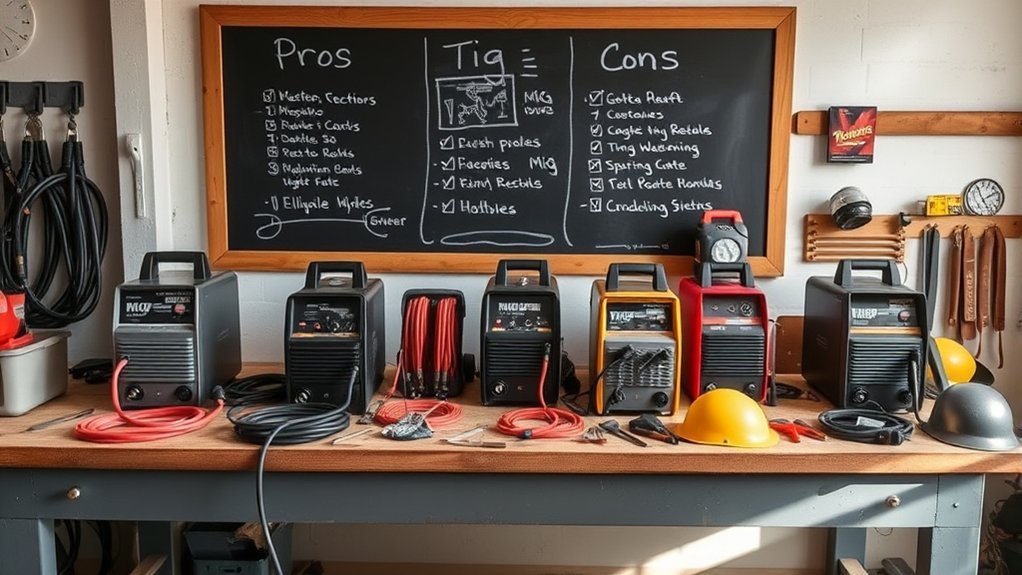
The ranges below are budgeting estimates for new equipment in the United States. They are not fixed prices. Sales, taxes, shipping, local gas-cylinder policies, brand, output, and package contents can move the final total substantially.
| Setup Type | Typical Machine Price | Practical All-In Starter Budget | Common Use |
|---|---|---|---|
| Compact stick or flux-core | About $120 to $600 | About $400 to $900 | Basic repairs, learning, outdoor steel work |
| 120V or dual-voltage MIG | About $300 to $1,300 | About $700 to $1,800 | Garage fabrication, light repair, auto-body work |
| DC TIG/stick | About $250 to $1,500 | About $700 to $2,200 | Steel and stainless TIG, portable stick work |
| AC/DC TIG | About $700 to $3,500+ | About $1,300 to $4,500+ | Precision steel, stainless, and aluminum work |
| Multiprocess | About $330 to $3,500+ for common shop models | About $900 to $5,000+ | Mixed fabrication and users who need several processes |
| Professional or engine-driven system | About $2,500 to $10,000+ | About $3,500 to $12,000+ | Field service, construction, mobile repair, and production work |
Current listings show why one narrow range cannot cover the whole market. Retail welding-machine categories include low-cost compact inverters, midrange 120- and 240-volt machines, AC/DC TIG units, multiprocess models, and engine-driven systems. Manufacturer examples also show package pricing differences: Lincoln Electric lists the POWER MIG 215 MPi power source and higher-priced aluminum and TIG packages separately.
Pro Tip: Build a complete shopping list before comparing machines. A slightly higher-priced package that includes the correct regulator, leads, torch, gun, or pedal may cost less than a cheaper power source that requires several separate purchases.

This grill brush and scraper makes it easier to remove stubborn residue from grill grates with three rows of tightly woven stainless-steel bristles and a sharp built-in scraper. The long reinforced handle helps keep hands away from heat while providing strong leverage for thorough cleaning across the entire grill surface. Designed for safer, longer-lasting use, it suits many grill types including charcoal, smoker, porcelain, infrared, and more.

Coghlan's Magnetic Bear Bell helps alert bears and other wildlife to your presence while hiking, walking, or exploring outdoors. The built-in magnetic silencer lets you quiet the bell when it is not needed, and the hook-and-loop closure makes it easy to attach to clothing, boots, hats, packs, or pet collars. It is a simple safety accessory designed to add peace of mind on the trail.

This Ultra PRO bundle provides layered protection for standard trading cards with clear rigid toploaders and soft inner sleeves. It helps guard against bending, scratches, and dust while keeping cards visible for display, storage, shipping, and everyday handling. Ideal for collectors who want a reliable way to protect and organize valuable cards.
Three Practical Welding Kit Budget Paths
- Lowest-cost safe start: Choose compact stick or self-shielded flux-core when your priority is basic steel work, portability, and avoiding a shielding-gas cylinder at the start.
- General garage setup: Choose gas-capable MIG when you expect frequent light fabrication, cleaner wire-feed welding, or auto-body work and can support the required gas and power setup.
- Precision or aluminum path: Choose AC/DC TIG when aluminum TIG and fine heat control are priorities, or choose a compatible MIG machine with the correct aluminum wire-feed system for faster aluminum fabrication.
Do not choose by process label alone. Confirm the exact machine includes—or is compatible with—the gun, torch, pedal, regulator, spool gun, drive rolls, and input-power arrangement your projects require.
MIG and Flux-Core Costs
Compact flux-core machines are often the least expensive wire-feed option because they can operate without an external shielding-gas cylinder. A gas-capable MIG setup costs more because you may need a cylinder, gas fill or lease, regulator, hose, solid wire, contact tips, and nozzles. Aluminum MIG can add the cost of a spool gun or push-pull system if the machine supports one.
TIG and Stick Costs
Stick machines can offer a low entry price, but electrodes, leads, and preparation tools still belong in the budget. TIG costs vary more widely. A basic DC TIG/stick inverter may be affordable for steel and stainless work, while an AC/DC TIG system for aluminum can cost much more. Confirm whether the package includes a torch, foot pedal or hand control, regulator, gas hose, and starter consumables.
Hidden and Ongoing Costs
| Cost Area | What to Budget For |
|---|---|
| Safety gear | Welding helmet, safety glasses, gloves, flame-resistant clothing, hearing protection, and suitable footwear |
| Consumables | Wire, electrodes, filler rods, tungsten, tips, nozzles, diffusers, cups, collets, liners, and anti-spatter products |
| Shielding gas | Cylinder purchase, deposit or lease, regulator, hose, and refills; policies and prices vary by supplier and region |
| Metal preparation | Angle grinder, discs, wire brushes, clamps, magnets, saws, and measuring tools |
| Workspace | Welding table, cart, screens, fire extinguisher, local exhaust ventilation, and safe material storage |
| Electrical work | Correct receptacle, circuit, wiring, disconnect, or electrician work when the selected machine cannot use the existing supply |
| Maintenance | Liners, drive rolls, cable repairs, cooling-system service, filters, batteries, lenses, and replacement wear parts |
Considerations When Purchasing Welding Equipment
Start with the work you need to complete, not with the highest amperage or the longest feature list. The right machine should match your material, thickness, joint type, location, available power, skill level, and expected workload.
- Define the projects: List the metals and thicknesses you expect to weld most often.
- Choose the process: Decide whether MIG, flux-core, TIG, stick, or a combination best fits those projects.
- Check the power supply: Confirm voltage, phase, circuit, plug, and generator requirements from the manual.
- Compare rated output: Review duty cycle and output at realistic working amperage.
- Audit the package: Confirm every included gun, torch, lead, regulator, cable, pedal, adapter, and consumable.
- Price the complete setup: Add PPE, gas, cylinder arrangements, consumables, preparation tools, ventilation, and electrical work.
- Evaluate support: Check warranty terms, service locations, parts, and consumable availability.
- Plan for growth: Buy enough capability for likely near-term projects, but do not pay for advanced functions you will not use.
Warning: Welding creates electric-shock, fire, burn, ultraviolet-radiation, hot-metal, compressed-gas, and fume hazards. Use appropriate eye and face protection, cover exposed skin, remove or protect fire hazards, keep suitable fire-extinguishing equipment available, and provide adequate ventilation. Never weld on a container that held a flammable or toxic substance unless it has been properly cleaned, ventilated, and tested by qualified personnel.
OSHA requires suitable eye and face protection and provides minimum filter-shade guidance for welding operations in 29 CFR 1910.133. Its welding standards also address PPE, fire prevention, ventilation, equipment condition, and safe operation. NIOSH notes that welding fumes can contain metals such as manganese and that confined-space welding can significantly increase exposure, so ventilation and exposure control are part of the equipment decision, not optional afterthoughts.
Buying New, Buying Used, or Renting
Buy new when warranty coverage, current safety features, predictable condition, and easy parts support matter most. Buy used only after checking the serial number, input requirements, case damage, fan operation, cables, connectors, wire drive, torch or gun condition, controls, error codes, and weld output. Ask to run the machine under load rather than accepting a power-on demonstration.
Renting can make sense for a one-time job, a process you rarely use, or a machine you want to test before buying. Rental listings may exclude leads, PPE, gas, or accessories, so confirm the full package and local daily, weekly, delivery, damage-waiver, and consumable charges. Companies such as United Rentals and some Home Depot Tool Rental locations list welders for rent.
Financing and Total Cost
Some dealers and retailers offer installment plans or promotional financing. Compare the annual percentage rate, fees, deferred-interest terms, required down payment, and total amount paid. Financing a durable professional machine may fit a business cash-flow plan, but financing consumables or an oversized hobby machine can turn a manageable purchase into a costly long-term obligation.
What a Complete Welding Kit Should Include
Starter kits, student safety packs, ready-paks, and machine bundles can be convenient, but their contents are not standardized. One package may contain only PPE, while another may include a power source, gun, leads, regulator, and sample consumables. Compare the contents line by line rather than assuming that the word “kit” means ready to weld.
What You Need Before the First Weld
| Buy Before Welding | Add When a Project Requires It |
|---|---|
| Correct welder and leads/gun/torch; helmet and eye protection; gloves and flame-resistant clothing; correct consumables; safe work surface; fire protection; shielding-gas equipment when the process requires it | Larger welding table, cart, premium fixturing, spool gun or push-pull equipment for aluminum, optional remote controls, water cooler, and other process-specific upgrades |
This split prevents a common budgeting mistake: cutting essential safety or process hardware to afford accessories that do not help the first project.
Core Machine Components
- Welding power source with the correct input plug or adapter
- Work lead and clamp
- MIG gun, TIG torch, or electrode holder as required
- Correct drive rolls, liner, contact tips, nozzles, cups, collets, and connectors
- Regulator and gas hose when shielding gas is required
- Foot pedal or remote amperage control when needed for the TIG setup
- Owner’s manual, setup chart, and warranty documentation
Personal Protective Equipment
- Welding helmet with a suitable shade range
- Safety glasses with side protection worn under the helmet when impact hazards are present
- Process-appropriate welding gloves
- Flame-resistant jacket, sleeves, or clothing that covers exposed skin
- Hearing protection and suitable boots
- Respiratory protection only when selected and used as part of an appropriate hazard assessment and respiratory-protection program
Tools, Consumables, and Workspace Items
- Correct wire, rods, electrodes, tungsten, and shielding gas
- Clamps, magnets, pliers, chipping hammer, wire brush, and measuring tools
- Angle grinder and process-appropriate grinding or flap discs
- Welding table or noncombustible work surface
- Fire extinguisher, welding screens, and fume-control equipment
- Secure upright cylinder storage or cart when compressed gas is used
Buying a bundle can save time and may reduce cost, but only when the components match your machine and work. A low-priced pack filled with the wrong wire size, unsuitable gloves, an incompatible torch, or an inadequate helmet is not good value.
Frequently Asked Questions
What are the best brands for welding kits?
Lincoln Electric, Miller, Hobart, ESAB, Forney, Everlast, and other manufacturers offer machines for different budgets and applications. There is no single best brand for every buyer. Compare the exact model’s output, duty cycle, included accessories, warranty, service network, parts availability, and consumable compatibility.
Can I rent a welding kit instead of buying one?
Yes. Rental can be practical for one-time repairs, temporary field work, or testing a process before buying. Confirm whether leads, a gun or torch, PPE, shielding gas, cylinders, delivery, and consumables are included because rental packages differ by location and machine.
Are there financing options for expensive welding kits?
Some manufacturers, dealers, and retailers offer financing or installment plans. Review the APR, fees, deferred-interest conditions, payment schedule, and total repayment amount. A low monthly payment can still produce a high total cost.
How often should I replace welding equipment?
There is no universal 6- or 12-month replacement interval for a welding machine. Inspect cables, insulation, connectors, clamps, torches, guns, regulators, hoses, lenses, and PPE before use. Stop using defective equipment, replace damaged cables or wear parts, and follow the manufacturer’s inspection and maintenance schedule. Repairs to electrical welding equipment should be performed by qualified personnel.
Do welding kits come with warranties?
Many new welding machines include a limited manufacturer warranty, but coverage periods and exclusions vary by component. Torches, guns, batteries, engines, accessories, and consumables may have different terms. Buy from an authorized seller, register the machine when required, and keep the receipt and serial-number records.
What is the cheapest practical welding setup for a beginner?
A compact stick or flux-core setup is often the least expensive practical starting point because it can avoid the initial cost of a shielding-gas cylinder. Budget for a safe helmet, safety glasses, gloves, protective clothing, consumables, preparation tools, clamps, and a fire extinguisher rather than buying the machine alone.
Is a multiprocess welder always cheaper than separate machines?
Not always. One multiprocess power source can save space and reduce duplicate equipment, but optional TIG torches, pedals, spool guns, regulators, and process-specific consumables can raise the total. Separate machines may provide better duty cycle or specialized controls for frequent production work.
Can I start welding for under $500?
Sometimes. The low end of a compact stick or self-shielded flux-core setup can fit near a $500 budget when the machine is inexpensive and your workspace already has suitable power and basic preparation tools. Do not cut the helmet, eye protection, gloves, protective clothing, consumables, or fire protection just to hit a lower total.
Is MIG or stick welding cheaper to start?
Stick is usually cheaper to start because it does not require a wire-feed system or shielding-gas cylinder. Self-shielded flux-core can also keep startup cost down. Gas MIG usually costs more at the beginning because the setup may need a cylinder, regulator, hose, solid wire, tips, and nozzles.
Do welding kits include shielding gas and a cylinder?
Not necessarily. Bundle contents are not standardized. A gas-capable machine may include a regulator and hose but still exclude the shielding gas and cylinder. Check the package list and your local supplier’s cylinder purchase, exchange, deposit, or lease policy before calculating the final setup cost.
Conclusion
A reliable welding kit is more than a welder in a box. Basic starter setups can remain affordable, but gas equipment, PPE, consumables, workspace safety, and electrical requirements quickly change the real total. Start by naming the metal, thickness, and location of your most common projects. Then choose the process, confirm the available input power, and price every required accessory before comparing packages. That sequence makes it easier to avoid both an undersized machine and a bundle filled with extras you do not need.
Sources
- The Home Depot welding-machine listings — current examples showing the wide spread between compact, TIG, multiprocess, and engine-driven machine prices.
- Lincoln Electric POWER MIG 215 MPi — manufacturer MSRP and package differences for machine-only, aluminum, and TIG configurations.
- Miller: Buying Your First Welder — process selection, common uses, and tradeoffs among MIG, TIG, flux-core, and stick.
- OSHA welding, cutting, and brazing standards — applicable safety standards for PPE, fire prevention, ventilation, and welding operations.
- OSHA 29 CFR 1910.254 — arc-welding equipment selection, installation, operation, inspection, and maintenance.
- NIOSH: Welding Fumes and Manganese — welding-fume composition, exposure concerns, and confined-space risk.
- Miller: Duty Cycle—What It Is and Why It’s Important — duty-cycle definition and why the rated amperage matters.
- Miller: Common TIG Welding Problems — AC use and oxide-cleaning behavior when TIG welding aluminum.
- Hobart 5/3/1 Industrial Warranty — current warranty framework and service support.
- Miller True Blue Warranty — current warranty program and service support.

The DeLonghi Water Filter helps reduce scale buildup and unwanted impurities that can affect your coffee machine's performance and taste. Its active carbon and ion-exchange technology helps improve brew consistency, maintain flavor, and reduce the need for frequent descaling. Designed as an OEM authorized replacement part, it fits select DeLonghi models for reliable everyday maintenance.

This retractable car window shade helps block UVA and UVB rays to make rides more comfortable and protected for passengers. It includes a White Hot heat alert that turns white when the car is too hot, plus dual installation options for a secure fit in many vehicles. The safe-view mesh supports visibility while helping reduce glare, and the easy one-push retraction makes it simple to use when needed.

This combo kit helps women trying to conceive track fertile days and check for pregnancy with convenient at-home testing. The ovulation strips help monitor LH surge progression and are easy to read, while the pregnancy strips provide quick results with simple line interpretation. Designed for ease of use and dependable family planning support, it offers a practical way to stay on top of your fertility journey.