As of August 2026, welding mask cost for a good helmet for general U.S. use is usually about $80 to $250. Basic passive helmets can cost about $40 to $95, while professional auto-darkening helmets commonly reach roughly $250 to $550. A complete welding PAPR is a separate respiratory-protection system and can cost around $1,800 to $2,800 or more, depending on the helmet, blower, battery, filter package, and included accessories.
Quick Answer
A good welding helmet usually costs about $80 to $250 for general-purpose use. Basic passive helmets can cost about $40 to $95, entry auto-darkening helmets about $40 to $120, and professional auto-darkening models roughly $250 to $550. Complete welding PAPR packages are a different category and can run around $1,800 to $2,800 or more.
Key Takeaways
- Most hobbyists and occasional welders can find a capable auto-darkening helmet for $80 to $150.
- Frequent welders often benefit from spending $150 to $300 for better headgear, more sensors, improved clarity, and easier controls.
- Professional helmets with large viewing areas, advanced arc detection, premium optics, and long warranties commonly cost $250 to $550.
- A welding helmet is not automatically a respirator. Representative complete welding PAPR packages checked in August 2026 were roughly $1,800 to $2,800 or more.
- Choose the correct protection, shade range, fit, and replacement-part support before comparing graphics or optional technology.
How Much Does a Good Welding Mask Cost?

Welding helmet prices vary because the category includes everything from a simple fixed-shade hood to a professional helmet with digital controls, premium optics, task lighting, hard-hat compatibility, or a powered respirator.
The following ranges are practical U.S. budgeting estimates updated in August 2026. Retail prices, rebates, graphics, and included accessories can change quickly, so compare the exact model or part number before buying.
| Helmet category | Typical price | Best suited for |
|---|---|---|
| Passive fixed-shade helmet | $40–$95 | Occasional welding with one process and a consistent amperage range |
| Entry auto-darkening helmet | $40–$120 | Beginners, students, home repairs, and light fabrication |
| Mid-range auto-darkening helmet | $120–$250 | Frequent hobby use, farm work, maintenance, and general shop welding |
| Professional auto-darkening helmet | $250–$550 | Daily welding, low-amperage TIG, out-of-position work, and long shifts |
| Specialty or confined-space helmet | $100–$500+ | Pipe, overhead, hard-hat, laser, or restricted-access applications |
| Welding PAPR system | $1,800–$2,800+ | Work requiring an approved powered respiratory-protection system |
How these prices were checked: Category ranges are budgeting estimates, while named-model examples were rechecked against current U.S. retailer or distributor listings on August 10, 2026. This guide does not claim hands-on testing. Prices can change with rebates, graphics, lens packages, and included PAPR hardware.
Note: A temporary sale price does not define a helmet’s normal market tier. Compare the complete model number, included lens, headgear, warranty, accessories, and replacement-part availability.
Factors Influencing Welding Helmet Costs

The brand name affects price, but the lens, headgear, shell, controls, and accessory system usually explain more of the difference. Focus on the following features.
- Passive or auto-darkening lens: A passive lens remains at one fixed shade. An auto-darkening filter changes from a light state to a selected welding shade when its sensors detect an arc.
- Shade range: A wider range can support welding, cutting, and grinding, but the helmet must still provide the correct minimum shade for the process and amperage.
- Arc sensors: Additional sensors can improve detection when one sensor is blocked by a pipe, fixture, workpiece, or welding position.
- Low-amperage TIG performance: Not every low-cost auto-darkening filter responds reliably to a very low-current TIG arc. TIG users should check the manufacturer’s minimum TIG rating.
- Optical quality: Better optics can reduce distortion, inconsistent shading, and color cast. Do not compare “true color” marketing alone; review the complete optical specification.
- Viewing area: A larger window improves peripheral visibility but adds lens size, weight, and cost.
- Headgear and balance: More adjustment points, better padding, and balanced weight can matter more than graphics during a long shift.
- Controls: External grind controls, digital menus, memory settings, auto-shade systems, task lights, and Bluetooth features increase cost.
- Replaceable parts: A helmet with readily available cover lenses, batteries, sweatbands, headgear, and shells may cost less to own over time.
- Warranty and support: Premium lenses often include longer warranties, but the exact coverage varies by brand and model.
The best-value helmet is the least expensive model that provides the required protection, responds reliably to your welding process, fits comfortably, and has replacement parts you can obtain.
Types of Welding Helmets and Their Price Ranges
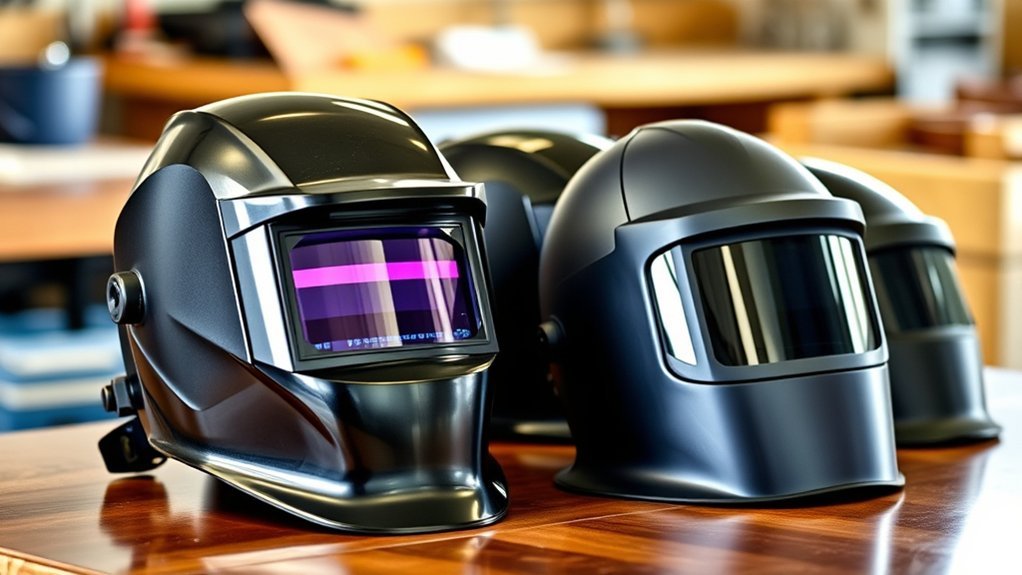
Passive Fixed-Shade Helmets: About $40 to $95
A passive helmet uses a fixed filter shade, commonly shade 10 on general arc-welding models. It has no arc sensors, electronic controls, or switching delay.
Passive helmets remain useful when you repeatedly perform the same process at a similar amperage. They are simple, durable, and inexpensive. However, you must lower the helmet before striking the arc, and one fixed shade may not suit every welding or cutting task.
Entry Auto-Darkening Helmets: About $40 to $120
Entry auto-darkening helmets are no longer restricted to the $199-and-up price tier. Current listings include models near $40 to $60, although build quality, headgear comfort, control accuracy, and low-amperage response vary.
This tier can work well for a beginner who performs basic MIG, flux-core, or stick welding. Check the safety markings, variable-shade range, sensitivity control, delay control, battery system, and replacement-cover-lens availability before purchasing.
Mid-Range Auto-Darkening Helmets: About $120 to $250
Mid-range helmets commonly add a larger viewing area, better-balanced headgear, more arc sensors, improved color and clarity, easier controls, and more reliable performance across different welding positions.
This is often the best value tier for a person who welds regularly but does not need premium digital features or an integrated respiratory system.
Professional Auto-Darkening Helmets: About $250 to $550
Professional models are designed for daily use. Depending on the model, they may include four or more arc sensors, large viewing areas, low-amperage TIG capability, multiple operating modes, premium headgear, memory settings, task lighting, auto-shade controls, and longer lens warranties.
Current August 2026 examples show how much the same premium tier can vary by model, shell graphic, seller, and rebate. Compare the exact part number and included lens rather than treating one advertised price as the permanent value of a product family.
Welding PAPR Systems: About $1,800 to $2,800 or More
A powered air-purifying respirator uses a battery-powered blower to draw air through approved filters or cartridges and deliver it to the wearer’s breathing zone. The package may include the helmet, auto-darkening filter, blower, battery, belt, hose, charger, and filters.
A complete PAPR package should not be compared directly with a standard welding helmet. For example, current 3M Speedglas G5-03 Pro Adflo packages checked in August 2026 were listed around $1,786 to $1,950, while other complete welding PAPR configurations can exceed $2,700. Treat these as price snapshots, not permanent market prices.
Warning: A welding helmet does not automatically provide respiratory protection. Welding fumes can contain hazardous metals and gases. Use ventilation and respiratory equipment selected for the actual exposure, workplace assessment, and applicable respiratory-protection program. A particulate filter does not protect against every gas or vapor.
Affordable Welding Helmet Options
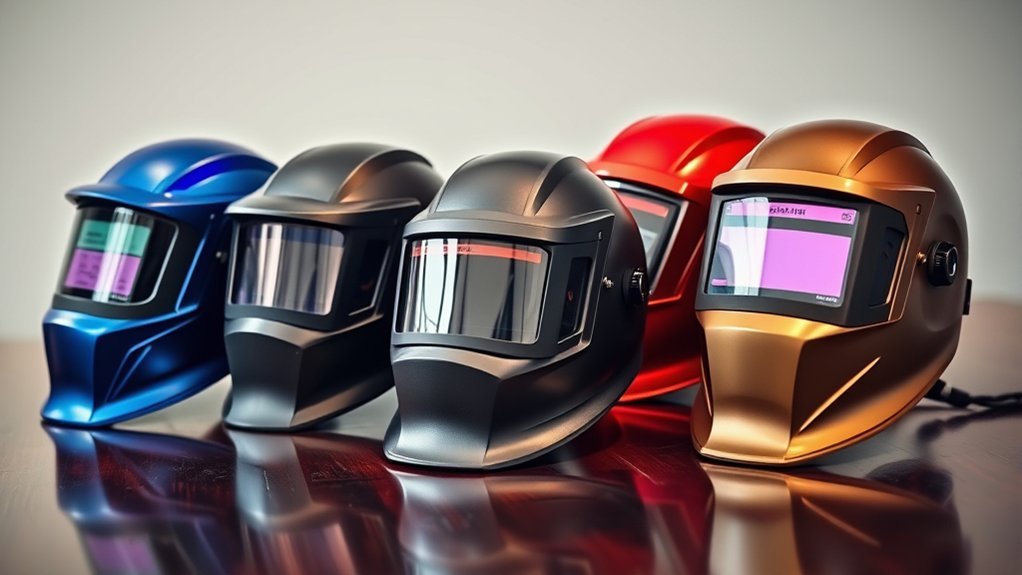
A limited budget does not require buying an unsafe helmet. It does require checking the complete specification instead of selecting a product only because it has a colorful shell or a fast-sounding switching-speed claim.
Budget-Friendly Choices Available
Representative U.S. prices rechecked on August 10, 2026 included:
- RIDGID RWH-FS-10 fixed-shade helmet: approximately $39.98.
- Lincoln Electric K2800-1 basic passive helmet: approximately $67.98.
- Antra RF161218 auto-darkening helmet: approximately $56.61.
- Jackson Halo X HLX 100 passive helmet: approximately $81.95 at one welding supplier.
These figures are snapshots, not permanent price promises. Model numbers, shell graphics, rebates, and stock status can change, so use the exact part number when comparing one seller with another.
Essential Features to Consider
| Feature | What to verify |
|---|---|
| Safety marking | Appropriate ANSI/ISEA Z87.1 marking for the intended U.S. workplace use, plus any employer-required certification |
| Shade range | The range covers your process and amperage without going below the required minimum shade |
| Sensitivity and delay | Controls are easy to set and remain consistent in your work environment |
| TIG rating | The stated minimum amperage is suitable for your lowest-current TIG work |
| Headgear | The helmet stays in position without excessive pressure on the forehead or neck |
| Consumables | Correct inside and outside cover lenses are readily available |
Pro Tip: Try on the helmet while wearing the safety glasses, respirator, hood, or hearing protection you normally use. A low-priced helmet that pinches, slips, or conflicts with other PPE is not a good value.
What Do You Get for $120 to $250?
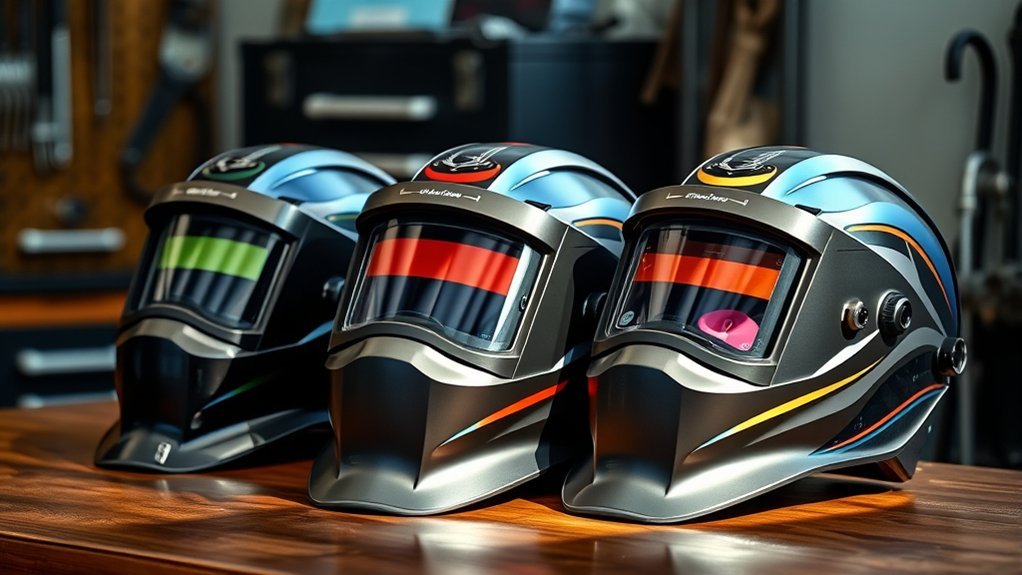
For many welders, the $120 to $250 tier provides the best balance between price and daily usability. You can often obtain better headgear, a larger lens, additional arc sensors, variable sensitivity, adjustable delay, and a dedicated grind mode without paying for premium connectivity or respiratory equipment.
Key Features Overview
- Three or four arc sensors: Helpful for pipe, fixture, and out-of-position work where the arc may be partially blocked.
- Variable welding shade: Useful when switching between processes or amperage ranges.
- Grind mode: Lets you use a clear or light state for grinding when the helmet is specifically rated and configured for that use.
- Replaceable battery: Makes power-system maintenance easier on many models.
- Improved headgear: Reduces pressure points and helps distribute weight.
- Better cover-lens access: Makes cleaning and replacement quicker.
Price Comparison Insights
Older price lists commonly named Jackson Huntsman 930P, 490P, 411P, 451P, and 430P helmets as mid-range options. Those model-specific prices should not be treated as current market benchmarks because availability and model generations change.
Compare a current helmet’s specification rather than assuming an older product name still occupies the same price tier. A newer $150 helmet may include features that once appeared only on a $300 model, while a specialty passive leather helmet can cost more than an electronic entry model.
Premium Welding Helmets for Professionals
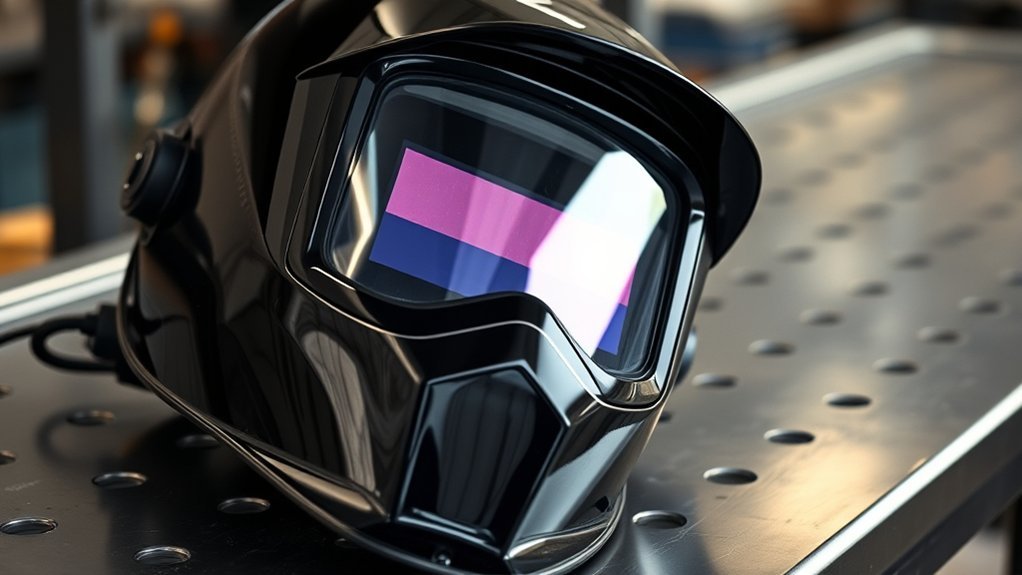
Premium helmets are intended for welders who spend substantial time under the hood or need reliable performance in difficult applications. Their value usually comes from comfort, visibility, arc detection, low-amperage response, control access, and service support rather than appearance.
Features commonly found in the $250 to $550 tier include:
- Large auto-darkening viewing areas
- Four or more arc sensors
- Improved optical clarity and more natural color
- Low-amperage TIG ratings
- Weld, cut, grind, and specialty sensing modes
- External mode controls
- Memory or automatic sensitivity settings
- Task lights or light-kit compatibility
- More adjustable headgear
- Three-to-five-year lens warranties on selected models
Representative August 2026 listings included about $482 for a Miller Digital Infinity ClearLight 4x Black model 296786, $472.50 for a Lincoln VIKING 3350 Black K3034-4, and about $482 for a Lincoln VIKING 3350 ADV Black K3034-5 at one major welding supplier. Graphics and promotions can push otherwise similar configurations higher or lower.
A premium helmet is most likely to justify its cost when you weld daily, perform low-current TIG work, weld out of position, work around obstructions, or experience neck fatigue and visibility problems with a basic helmet.
What Do Current Professional Welding Helmets Cost?
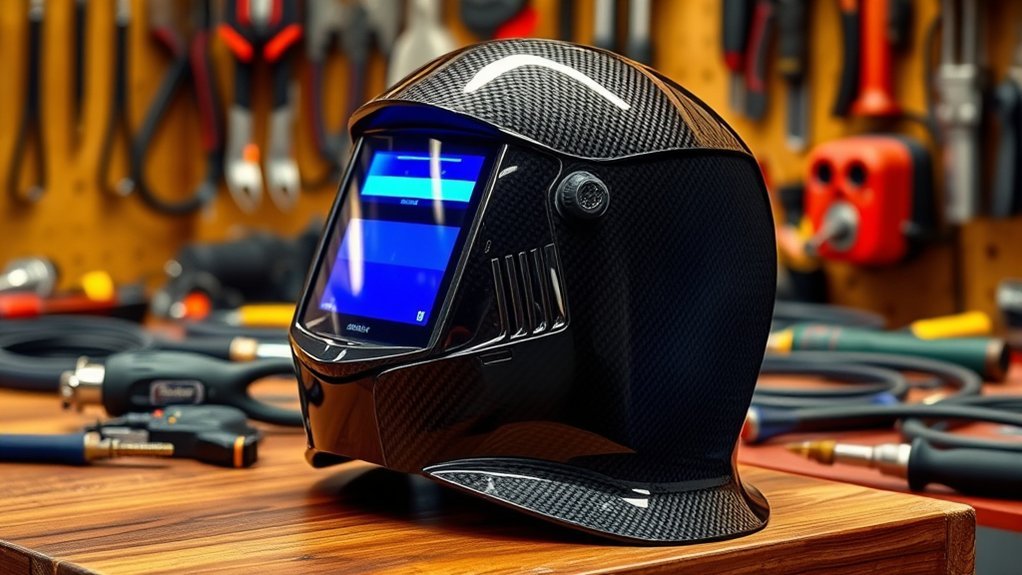
Advanced technology can improve convenience, but every feature should solve a real problem. Digital controls are not automatically safer than well-designed analog controls, and Bluetooth does not replace correct shade selection or inspection.
| Representative model | Notable features | August 2026 price snapshot |
|---|---|---|
| Jackson Insight digital ADF helmet | Variable shade and digital controls | About $235–$249 |
| Miller Digital Infinity ClearLight 4x | Large viewing area, four sensors, multiple modes, low-amp TIG support | About $482 |
| 3M Speedglas G5-03 Pro | Large viewing area, multiple lens configurations, cut and grind modes | About $460–$509, depending on ADF configuration |
| Lincoln Viking 3350 | Large lens, four sensors, external grind control, low-amperage TIG rating | About $472.50 |
| Lincoln Viking 3350 ADV | Task light, auto-shade, digital interface, advanced connectivity | About $482 for black; graphics can exceed $515 |
Retailer spreads can be substantial, especially when a model has multiple shell graphics, lens packages, rebates, or bundled accessories. Always compare the full part number because a helmet shell without an ADF can look similar to a complete helmet listing.
Note: Switching-speed figures should not be used as the only measure of quality. Reliable arc detection, correct shade, optical consistency, fit, and compliance markings are equally important.
Popular Brands and Their Price Points

Miller, Lincoln Electric, 3M Speedglas, Jackson Safety, Hobart, Forney, and other established brands sell helmets across different tiers. Brand reputation can help with warranty support and replacement parts, but the logo alone does not show whether a particular model fits your work.
- Jackson Safety: Offers passive helmets, digital auto-darkening models, and specialty designs. Current Insight examples were listed around $235 to $249, depending on the shell and seller.
- Lincoln Electric: Offers basic passive helmets, entry auto-darkening models, and professional VIKING products. A VIKING 3350 Black K3034-4 was listed around $472.50, while the 3350 ADV Black K3034-5 was about $482 at one major supplier.
- Miller: Offers entry, performance, elite, and professional auto-darkening product families. A Digital Infinity ClearLight 4x Black 296786 listing was about $482.
- 3M Speedglas: Focuses heavily on professional optics, modular protection, and PAPR-compatible systems. Current G5-03 Pro helmet prices varied by lens configuration, while complete Adflo PAPR packages cost much more.
- Hobart and Forney: Compete across entry and mid-range retail channels. Compare the exact model, included lens, controls, and parts support rather than assuming the brand fixes the price tier.
Older references to a Speedglas G5-02 at $898 or a universal Miller and Lincoln range up to $2,899 blur the difference between a helmet, a specialty assembly, and a complete respiratory package. Compare like with like.
Shopping for other gear? See our guides to the welding hood cost, welding helmet prices and welding glove prices.
Accessories That Affect Overall Costs
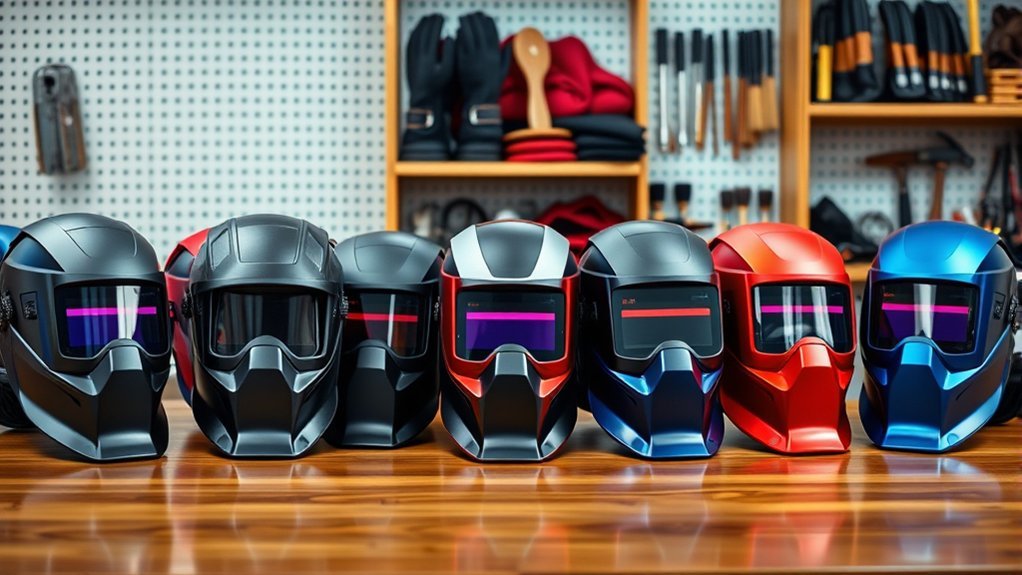
The purchase price is only part of the cost. Cover lenses, batteries, sweatbands, headgear, task lights, hard-hat adapters, magnifying lenses, and respiratory components may need replacement or addition.
Replacement Lenses and Parts
Common ownership expenses include:
- Outside and inside cover lenses: Usually sold as model-specific singles or multipacks. Check the exact size and part number before assuming a low-cost generic plate will fit.
- Replacement batteries: Many auto-darkening helmets use replaceable coin cells, but the battery type and replacement procedure are model-specific.
- Headgear: A complete replacement headgear assembly can cost much more than sweatbands or pads, so include it in long-term ownership comparisons.
- Sweatbands and pads: These are lower-cost wear items on many models and can restore comfort without replacing the helmet.
- Task lights and adapters: Price and compatibility vary by helmet family; verify that the accessory is approved for the exact shell or headgear.
- Auto-darkening filter: A complete replacement ADF can be one of the most expensive parts, so confirm availability before buying an uncommon helmet.
Passive lenses are inexpensive, but they must be the correct size and shade. Never install an unapproved lens, improvised cover plate, or mismatched electronic filter.
Respiratory Protection Systems
A PAPR system adds recurring costs for filters, cartridges, prefilters, spark arrestors, batteries, chargers, belts, breathing tubes, seals, and cleaning supplies. Representative complete welding PAPR packages checked in August 2026 were around $1,800 to $2,800 or more, not a few hundred dollars.
PAPRs are reusable respirators that use a blower to draw air through the appropriate filter or cartridge. The filter must match the hazard. Loose-fitting and tight-fitting systems also have different fit-testing requirements and assigned protection characteristics.
Respiratory PPE should be selected as part of a proper hazard assessment. Local exhaust ventilation and source capture remain important because a respirator should not be used as a substitute for feasible engineering controls.
How Much Should You Spend on a Welding Helmet?
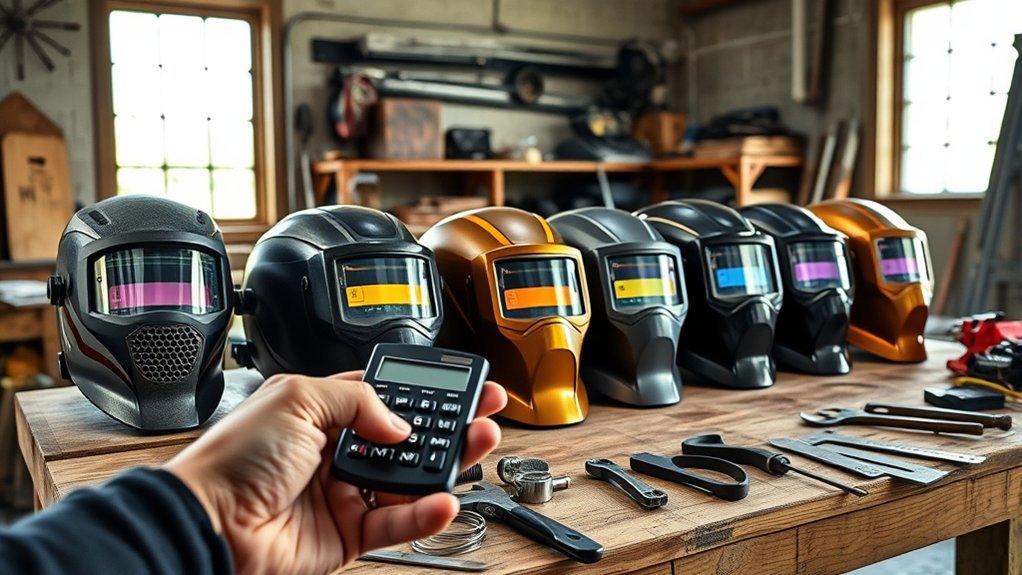
Choose a Budget by Use Case
| User | Practical budget | Priorities |
|---|---|---|
| First-time student | $60–$140 | Correct markings, simple controls, variable shade, replaceable cover lenses, comfortable fit |
| Occasional home welder | $80–$180 | Reliable auto-darkening, grind mode, sensitivity and delay controls |
| Frequent fabrication or farm use | $150–$300 | Better headgear, more sensors, larger view, durable shell, accessible controls |
| Professional MIG or stick welder | $250–$500 | Long-shift comfort, large lens, four or more sensors, warranty and parts support |
| Low-amperage TIG welder | $200–$550 | Verified minimum TIG rating, reliable sensing, optical clarity and adjustable delay |
| Worker requiring powered respiratory protection | $1,800–$2,800+ | Approved complete system, hazard-specific filters, battery life, airflow, service parts and employer program |
Check the Safety Markings
For U.S. occupational and educational use, look for appropriate eye and face protection markings and follow the employer’s PPE requirements. ANSI/ISEA Z87.1-2025 is the newest consensus edition, but OSHA 29 CFR 1910.133 currently incorporates ANSI Z87.1-2010, 2003, and 1989 (R-1998), or allows protection the employer can demonstrate is at least as effective. Check the applicable workplace rule instead of treating one printed standard year as the only buying test.
Also verify that the helmet protects the face, neck, and ears from the intended radiant-energy and spark exposure. A small lens mounted in an unsuitable shell is not enough.
Warning: Wear suitable safety glasses with side protection or goggles beneath the welding helmet when required for impact hazards. A welding helmet protects the face and filters radiant energy, but it should not be treated as the only eye protection for grinding fragments, slag, wire-wheel debris, or other flying particles.
Select the Correct Shade
The correct filter shade depends on the process, electrode size, plate thickness, and arc current. OSHA’s general-industry guidance lists different minimum shades for stick, MIG, flux-core, TIG, plasma, brazing, soldering, gas welding, and oxygen cutting.
For example, OSHA minimums for many arc-welding applications range from shade 7 to shade 11, while carbon arc welding may require shade 14. Start with a shade that is too dark to see the weld zone, then move to a lighter shade without going below the required minimum.
Consult the current OSHA table, your employer’s procedure, and the helmet manufacturer’s instructions instead of assuming shade 10 is correct for every job.
Avoid Common Buying Mistakes
- Do not assume every auto-darkening helmet is suitable for low-amperage TIG.
- Do not confuse a replacement shell with a complete helmet and ADF.
- Do not buy an unknown lens when correct replacement cover plates are unavailable.
- Do not use grind mode for welding.
- Do not select a lighter shade merely because the weld puddle is difficult to see.
- Do not assume “solar powered” means the helmet never needs a battery.
- Do not pay extra for Bluetooth, graphics, or a task light before confirming fit and lens performance.
- Do not treat a helmet-mounted fan as an approved respirator unless the complete system carries the required approval.
Inspect the Helmet Before Every Use
Check the shell, lens retainers, inside and outside cover plates, headgear, controls, sensors, seals, batteries, and ADF operation. Clean the sensors and cover lens so spatter and dirt do not interfere with arc detection or visibility.
Replace the helmet or affected approved component when:
- The shell is cracked, burned through, badly warped, or no longer provides coverage.
- The ADF fails its test, flickers, remains light during welding, or changes shade unpredictably.
- The cover plate is so scratched, pitted, cloudy, or spatter-damaged that visibility is reduced.
- The headgear no longer holds the helmet securely.
- Battery corrosion or liquid damage has affected the electronics.
- The manufacturer no longer supports the helmet and safe, approved replacement parts are unavailable.
There is no universal three-to-five-year replacement rule for every welding helmet. Condition, use, storage, heat exposure, maintenance, and manufacturer instructions determine service life.
Frequently Asked Questions
What is the average lifespan of a welding mask?
There is no reliable universal lifespan for a complete welding helmet. A well-maintained shell may remain usable for years, while cover lenses, batteries, headgear, seals, and electronic filters may need earlier replacement. Inspect the helmet before use and replace any component that is damaged, unsupported, or fails the manufacturer’s functional test.
Can I replace the lens on my welding helmet?
You can normally replace the inside and outside cover plates. Many helmets also allow replacement of the passive filter lens or complete auto-darkening filter. Use only the correct size and manufacturer-approved or explicitly compatible part. Follow the manual so the lens retainers, seals, and protective plates are installed in the correct order.
Which safety certification should a welding helmet have?
For U.S. use, look for appropriate ANSI/ISEA Z87.1 markings and confirm that the product is acceptable for your workplace and application. ANSI/ISEA Z87.1-2025 is the newest consensus edition, while OSHA 29 CFR 1910.133 currently incorporates older Z87.1 editions or equivalent protection. The applicable workplace rule and welding process still determine the necessary protection and filter shade.
How do I properly maintain my welding helmet?
Clean the shell and cover lens with materials approved by the manufacturer. Keep the arc sensors clear, replace scratched cover plates, check the headgear and lens retainers, test the auto-darkening function, inspect batteries for leakage, and store the helmet away from excessive heat, moisture, impact, and direct contamination.
What are the best welding helmet features for a beginner?
A beginner should prioritize appropriate safety markings, a variable shade suitable for the planned processes, simple sensitivity and delay controls, comfortable adjustable headgear, replaceable cover lenses, clear instructions, and a dependable warranty. Grind mode and four sensors are useful but should come after fit and correct protection.
Are cheap auto-darkening welding helmets safe?
A low price does not automatically make a helmet unsafe, but you should verify its markings, manufacturer identity, instructions, shade range, replacement parts, warranty, and performance for your process. Avoid products with vague certification claims, no traceable model number, or no compatible cover lenses.
What is the difference between a passive and auto-darkening welding helmet?
A passive helmet uses one fixed dark filter shade, so you usually raise or lower the hood as you position the electrode or torch. An auto-darkening helmet stays in a lighter state until its sensors detect an arc, then switches to the selected welding shade. Passive helmets are simpler and cheaper; auto-darkening models are more convenient for frequent starts, tacks, and process changes.
How much should a beginner spend on a welding helmet?
About $80 to $150 is a practical beginner budget for a dependable auto-darkening helmet with variable shade, adjustable sensitivity and delay, replaceable cover lenses, and usable headgear. A properly marked $60 helmet can still be suitable, while a $300 model may be unnecessary for occasional basic welding.
Conclusion
Most people do not need a $500 welding helmet, and a complete welding PAPR should not be treated as the normal price of a helmet. For general home, school, maintenance, or fabrication work, expect to spend about $80 to $250 for a good auto-darkening model. Professional welders may benefit from a $250 to $550 helmet, while representative complete PAPR packages checked in August 2026 were roughly $1,800 to $2,800 or more.
Start with the required protection and shade range. Then compare fit, arc detection, low-amperage performance, viewing area, controls, replacement parts, and warranty. A properly selected $100 helmet is a better purchase than an uncomfortable $500 helmet that does not suit your process.
Sources
- OSHA 29 CFR 1910.133: Eye and Face Protection — minimum welding filter shades and eye-protection requirements
- International Safety Equipment Association: ANSI/ISEA Z87.1-2025 Update — current U.S. eye and face protection consensus standard
- Miller: Selecting the Right Welding Helmet — arc sensors, shade controls, viewing area, and helmet-selection considerations
- NIOSH: Powered Air-Purifying Respirators — PAPR operation, filter classes, fit testing, and limitations
- NIOSH: Welding Fumes and Manganese — health risks and welding-fume exposure information
- 3M Speedglas Care and Maintenance Resources — model-specific inspection, cleaning, and maintenance instructions
- Home Depot: RIDGID RWH-FS-10 — August 2026 passive-helmet price snapshot
- Home Depot: Lincoln Electric K2800-1 — August 2026 passive-helmet price snapshot
- Home Depot: Antra RF161218 — August 2026 auto-darkening price snapshot
- Harris Welding Supplies: Jackson helmets — August 2026 Halo X and Insight price snapshots
- Welder Supply: Miller Digital Infinity 296786 — August 2026 professional-helmet price snapshot
- American Welding Supply: Lincoln VIKING 3350 K3034-4 — August 2026 professional-helmet price snapshot
- Baker’s Gas: 3M Speedglas G5-03 Pro Adflo PAPR 45-1101-30TW — August 2026 complete PAPR price snapshot