Welding gun cost for a replacement MIG gun usually runs about $200–$300 for a light-duty model, $350–$750 for a genuine 200- to 300-amp production gun, and $700–$1,500 or more for heavy-duty, fume-extraction, or specialized assemblies. Push-pull and water-cooled aluminum guns can exceed $3,000. Your final cost depends on duty cycle, cable length, connector type, cooling, and consumable system.
Quick Answer
Most buyers should budget $200–$750 for a replacement MIG gun. Light-duty guns sit near the low end, while 250- to 300-amp shop guns cost more. Specialized push-pull, water-cooled, robotic, and fume-extraction guns may run from roughly $1,000 to over $4,000 before accessories.
Key Takeaways
- The best value is usually the lowest-cost gun that meets your real amperage and duty-cycle needs.
- A gun’s rating may change with the shielding gas, so compare the full rating—not amperage alone.
- Confirm the power pin, trigger connection, liner, wire range, cable length, and feeder compatibility before buying.
- Contact tips, nozzles, diffusers, liners, downtime, and repairs can matter more than a small difference in purchase price.
- Used guns can save money, but damaged cables, overheated necks, worn power pins, and missing parts can erase the savings.
Note: This guide focuses on MIG/GMAW gun assemblies. TIG torches, plasma torches, electrode holders, and complete welding machines use different price ranges and compatibility rules. Prices are approximate U.S. planning ranges as of July 2026, not quotes from a single price list, and can change by cable length, connector, stock number, seller, tax, and shipping. For related costs, see our guides to MIG welding equipment cost, welding consumables cost, and welding torch cost.
Welding Gun Cost: Price Ranges for Entry-Level Guns
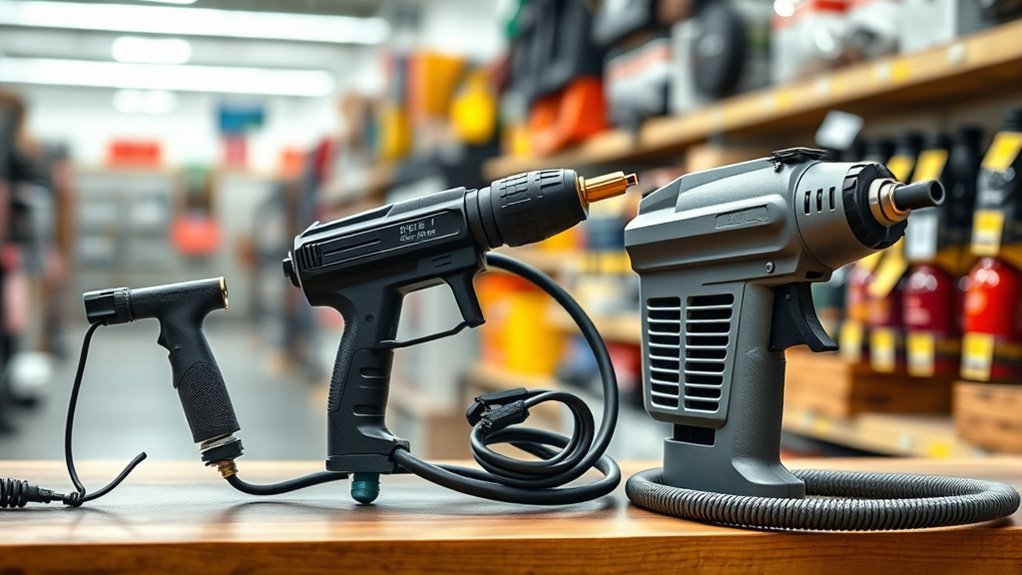
Entry-level MIG guns are generally air-cooled replacement guns for home, farm, auto-body, maintenance, and light fabrication work. Genuine brand-name models commonly start around $200–$300. Aftermarket replacements may cost less, while longer cables, uncommon rear connectors, and premium consumables raise the price.
| Gun Type | Typical Planning Range | Best Fit |
|---|---|---|
| Used light-duty gun | About $75–$250 | Budget replacement after inspection and testing |
| New light-duty air-cooled gun | About $200–$350 | Occasional thin-gauge and short-weld work |
| 200- to 300-amp production gun | About $350–$750 | Repair shops and general fabrication |
| Heavy-duty or specialty manual gun | About $700–$1,500+ | High-amperage, self-shielded, or fume-extraction work |
| Push-pull or advanced water-cooled gun | About $2,500–$4,000+ | Long-reach aluminum and demanding production |
For light work, do not buy on price alone. Compare the warranty, cable length, trigger quality, liner range, replacement-part supply, and whether the gun uses consumables that your local supplier carries. A cheap gun with hard-to-find tips or a proprietary connector can cost more over time.
Mid-Range Welding Guns: Features and Costs
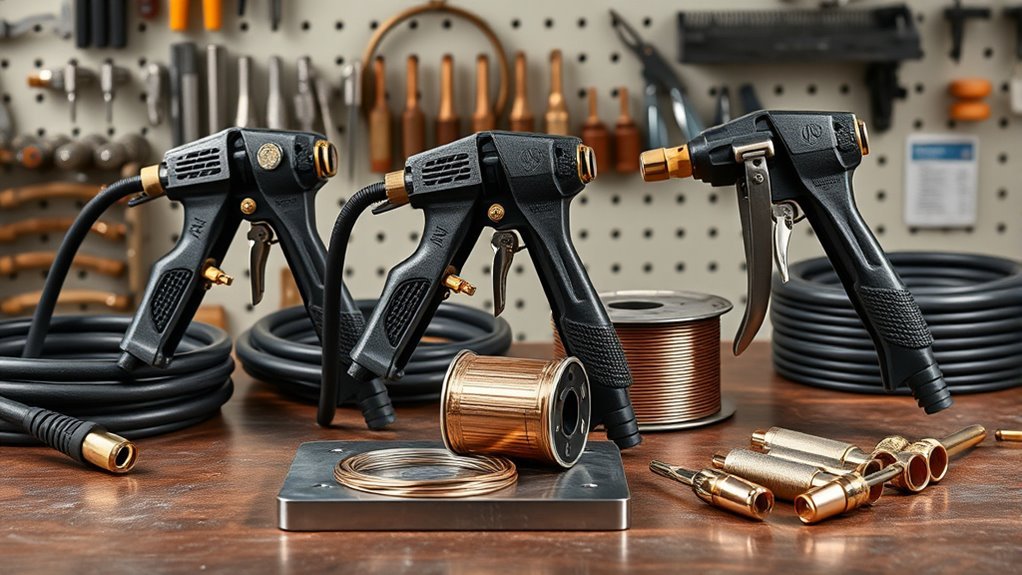
In the $350–$750 range, you will find many genuine 200- to 300-amp air-cooled guns built for repair shops and production work. These models usually offer stronger cables, more durable handles, better strain relief, replaceable necks or front-end parts, and established consumable systems.
Performance and Duty Cycle
Duty cycle tells you how long a gun can operate at its stated amperage under defined test conditions. A 60% duty cycle means six minutes of welding during a 10-minute period, followed by cooling time. Always read the complete rating because the percentage can change with shielding gas, cable length, wire size, and product configuration.
Representative manufacturer ratings show why a blanket “60–100%” claim is too broad:
| Example | Published Rating | What It Means |
|---|---|---|
| Tweco Fusion 180 | 180 amps at 20% duty cycle | Best for shorter welds and lighter work |
| Bernard BTB 200-amp model | 200 amps at 60% with mixed gas | Suitable for moderate shop use when matched to the process |
| Miller MDX-250 | 250 amps at 60% with mixed gas; 100% with CO2 | The gas condition changes the usable rating |
| Lincoln Magnum PRO 250L | 250 amps at 100% with mixed gas | Built for sustained medium-duty production |
The ratings in the table come from the manufacturers’ published sheets listed in the sources and were not re-checked in this update, so confirm them for your exact stock number. Choose a gun that can handle your normal load with some margin, but avoid oversizing it without a reason. A much larger gun can be heavier, stiffer, and more tiring to use. Miller’s MIG gun selection guidance also warns that buying more amperage than the job needs can add cost and operator fatigue.
The best gun is not the one with the highest amp rating. It is the lightest, most serviceable gun that safely meets your actual welding load.
Cooling and Neck Options
Most replacement MIG guns below about $750 are air-cooled. They use ambient air, shielding gas, and copper in the power cable to shed heat. They do not contain an active radiator or pump.
A water-cooled system circulates coolant through the gun and return lines. It requires a compatible cooler, hoses, fittings, and maintenance. Water-cooled cables can be lighter and more flexible at high amperage, but the full system costs more and introduces leak, pump, and coolant-service points. Manufacturer guidance places common air-cooled MIG guns in roughly the 150- to 600-amp class and water-cooled systems in roughly the 300- to 600-amp class.
Neck design also affects price and usability. Fixed necks are simple and durable. Rotatable or replaceable necks improve access and make repairs easier. Flexible necks help in tight joints but may cost more and require closer inspection. Check the available neck angles, length, insulation, nozzle clearance, and whether the neck can be replaced without changing the complete cable assembly.
Compatibility and Accessories
A gun can match the welder’s amperage and still fail to fit the machine. Confirm all of the following before ordering:
- Power pin or rear connector: The mechanical and electrical connection must match the feeder or use an approved adapter.
- Trigger plug and control wiring: The trigger circuit must match the machine.
- Wire diameter and type: Match the liner, contact tip, drive system, and gun rating to solid or cored wire.
- Cable length: Longer cables improve reach but can increase drag and feeding problems, especially with soft wire.
- Gas and cooling: Confirm the shielding-gas path and, for water-cooled guns, the cooler capacity and fittings.
- Consumable family: Verify the exact tip, diffuser, nozzle, insulator, neck, and liner series.
Pro Tip: Photograph the old gun’s stock number, rear connector, trigger plug, and front-end parts before shopping. Match the machine model and gun stock number—not just the brand name or advertised amperage.
Professional and Industrial Gun Pricing

Professional manual MIG guns commonly fall between $400 and $1,200, depending on amperage, cable length, connector, consumables, and configuration. Heavy self-shielded flux-cored guns, fume-extraction guns, and water-cooled assemblies can cost more. These bands overlap with the table above because stock number, cable length, and connector change the price.
Push-pull guns are a separate price class. They use a motor in the gun to help feed aluminum and other soft wires over longer distances. Current genuine push-pull assemblies can exceed $3,000, and a complete system may also need a compatible feeder, controller, cooler, or power source.
Robotic and fixed-automatic guns are also sold as systems rather than simple hand-gun replacements. Mounting hardware, collision protection, cable management, reamers, wire-cutting equipment, controls, and integration labor can push the total far beyond the gun’s purchase price.
Cost Differences by Brand and Model
Brand affects price, but the stock number and configuration matter more. Two guns from the same product family can have different cable lengths, power pins, necks, wire ranges, and consumable systems. Those differences can change the price by hundreds of dollars.
Brand Price Ranges
As a planning guide, light-duty Tweco-style guns often sit near the low end of the genuine-brand market, while 250- to 300-amp models from Miller, Lincoln, Bernard, and Tweco commonly occupy the middle range. Premium self-shielded, fume-extraction, water-cooled, and push-pull models sit much higher.
Do not assume one brand is always cheaper. A direct-fit gun may save the cost and complexity of an adapter. A more expensive gun may also share contact tips and nozzles with equipment already in your shop, reducing inventory and ordering mistakes.
Model Features Impact
The following features cause most of the price difference between models:
- Amperage and duty cycle: More copper, stronger insulation, and higher thermal capacity usually cost more.
- Cable length: A 15- or 25-foot assembly generally costs more than a 10-foot gun.
- Cooling: Water-cooled guns need coolant lines and a separate cooling system.
- Wire feeding: Push-pull motors and controls add major cost.
- Fume extraction: Extraction shrouds, hoses, and airflow design add parts and service needs.
- Neck and handle design: Rotatable necks, ergonomic handles, swivels, and tool-free service features may raise the purchase price.
- Connector and consumable system: Standardized parts can lower long-term inventory cost even when the gun costs more upfront.
Warranty and Support
Warranty coverage is not uniform across brands or regions. It may also treat the gun body, cable, trigger, and wear parts differently. Contact tips, nozzles, liners, and other normal-wear parts are usually excluded.
- Miller’s current warranty language lists MDX Series MIG guns in its one-year category, subject to the written terms and exclusions.
- Lincoln publishes separate warranty statements by product and region; verify the exact gun stock number and purchase country before relying on a duration.
- Bernard coverage depends on the product and configuration, with separate terms for components and normal-wear parts.
- ESAB’s U.S. Tweco warranty page currently lists 30 days for professional MIG guns and Fusion MIG guns, while cooler coverage differs.
The warranty periods above were taken from the manufacturer pages listed in the sources when this article was prepared and were not re-checked in this update, so confirm the current terms. Keep the invoice, record the serial or stock number, register the product when offered, and confirm who pays freight and labor. A short warranty backed by strong local parts support may still be more useful than a longer warranty that requires shipping the gun away.
Accessories and Consumables That Add to Cost
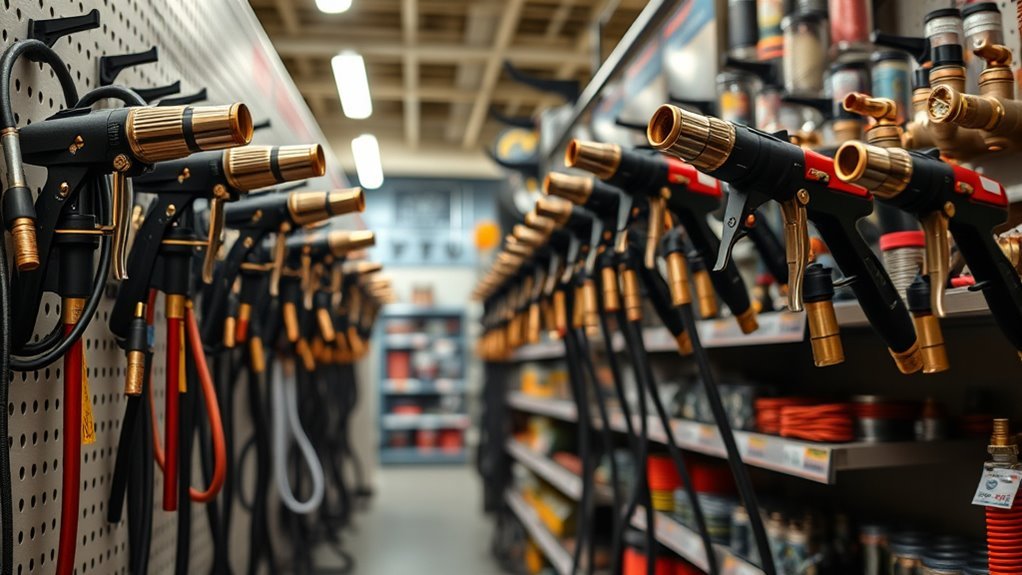
The gun is only one part of the budget. Normal-wear parts include contact tips, nozzles, diffusers, liners, insulators, O-rings, necks, trigger components, and strain-relief parts. Prices vary by brand and package quantity, but these approximate planning ranges, which are not quoted from a single price list, are more realistic than assuming every part costs less than $10:
| Item | Typical Cost | Cost Driver |
|---|---|---|
| Contact tips | About $2–$6 each in multipacks | Material, bore, thread, and package size |
| Nozzles | About $15–$35 each | Bore, recess, coating, and attachment style |
| Diffusers or tip holders | About $10–$30 each | Gun family and duty class |
| Liners | About $25–$70 | Wire range, material, and cable length |
| Neck or conductor tube | About $40–$150+ | Angle, length, cooling, and model |
PPE is a separate welding-safety expense, not a gun accessory. Budget for a suitable helmet or hand shield, safety glasses, flame-resistant clothing, gloves, hearing protection where needed, and ventilation or fume control appropriate to the work. OSHA requires eye protection for arc welding and protective clothing based on the job’s hazards.
Warning: Disconnect and lock out the welding power source as required, close the gas supply, and let the gun cool before servicing it. Never weld with damaged insulation, exposed conductors, leaking coolant lines, or a loose power connection. Follow the equipment manual and applicable workplace safety rules.
How Cooling Systems and Neck Options Affect Price
Cooling and neck choices affect both purchase price and operating cost. A basic fixed-neck air-cooled gun is usually the least expensive and easiest to maintain. Rotatable or replaceable necks cost more but can reduce awkward wrist positions and make a damaged front end cheaper to repair.
Water cooling raises the system price because you are buying more than a gun. The setup may include a cooler, pump, radiator, reservoir, coolant, supply and return hoses, and compatible connections. It can support high-amperage production with a lighter cable, but leaks or blocked coolant flow can cause expensive damage.
Choose water cooling only when the welding load, operator comfort, or production schedule justifies it. For many repair and general-fabrication shops, a correctly rated air-cooled gun is simpler and more economical.
Buying New vs. Refurbished or Used Guns
A new gun provides known specifications, full-length parts, current documentation, and the best chance of warranty support. Refurbished guns can offer a useful middle ground when a reputable seller replaces wear parts, performs a load test, and provides a written return policy.
Used guns may sell for around $75–$250, but this is a rough estimate, listings vary, and condition matters more than age. Before buying, inspect:
- the full cable for cuts, crushed areas, hard spots, heat damage, and exposed conductor;
- the neck, diffuser, and power pin for discoloration, looseness, cross-threading, or arcing;
- the trigger, swivel, strain relief, and connector for damage;
- the liner path for rust, debris, kinks, and incorrect trimming;
- the exact cable length, wire range, consumable family, and rear connection;
- coolant fittings and leak history on water-cooled models; and
- a return policy that allows a feed and load test.
Note: A low-cost used gun is not a bargain if it needs a cable assembly, neck, liner, trigger, and front-end kit. Price those parts before agreeing to the purchase.
Long-Term Ownership Costs and Maintenance
The gun itself does not meaningfully determine the welder’s electricity use; the power source, welding output, process, and arc time do. The gun’s long-term cost comes mainly from consumables, replacement parts, labor, and downtime.
Use this simple ownership formula:
Annual gun cost = purchase cost spread over service life + tips + nozzles + liners + repairs + maintenance labor + downtime.
Set maintenance by condition and arc time rather than relying only on a calendar. A practical routine includes:
- Before each shift: Check the cable, trigger, neck, nozzle, contact tip, gas path, and rear connection.
- During use: Clean spatter without damaging the nozzle or diffuser and investigate repeated burn-back or erratic feeding.
- When feed quality changes: Inspect the contact tip, liner, drive rolls, inlet guide, and cable routing.
- At liner replacement: Follow the gun maker’s trimming and installation procedure exactly.
- For water-cooled guns: Check coolant level, flow, hoses, fittings, and the cooler’s maintenance schedule.
Keep a repair log by gun stock number. If one model uses far more tips, liners, or labor than the others, that record gives you a better buying signal than the original purchase price.
How to Choose the Right Gun Within Your Budget
Start with the job, not the brand. Use this order:
- Identify the process: Gas-shielded MIG, gas-shielded flux-cored, self-shielded flux-cored, aluminum, or another wire process.
- Record normal amperage and arc-on time: Choose a duty cycle that covers the real workload with reasonable margin.
- Match the wire: Confirm type, diameter, liner, contact tip, and feeding method.
- Confirm machine fit: Match the power pin, trigger plug, feeder, gas path, and cooling system.
- Choose cable length carefully: Buy enough reach without adding unnecessary drag, weight, and cost.
- Check parts support: Price tips, nozzles, liners, necks, triggers, and adapters before buying.
- Compare total cost: Include expected consumables, repair time, downtime, warranty, and return terms.
| Application | Typical Budget | Priority |
|---|---|---|
| Hobby and light repair | $200–$350 new | Correct connector, low weight, common consumables |
| General fabrication | $350–$750 | Duty cycle, strain relief, serviceable front end |
| Heavy production | $700–$1,500+ | Thermal capacity, ergonomics, parts uptime |
| Long-reach aluminum | $2,500–$4,000+ for the gun | Push-pull compatibility and feeder controls |
Pro Tip: If two guns meet the same duty cycle, choose the one that feels better in the operator’s hand and uses parts already stocked in the shop. Reduced fatigue and faster service can repay a modest price difference.
Common Welding Gun Buying Mistakes
- Comparing amperage without checking duty cycle and shielding-gas conditions.
- Buying a gun before confirming the rear connector and trigger plug.
- Choosing an unnecessarily long cable that increases drag and feed resistance.
- Using a standard MIG gun for soft aluminum wire when a spool or push-pull gun is needed.
- Assuming a water-cooled gun includes the cooler and all hoses.
- Ignoring the price and local availability of tips, nozzles, liners, and adapters.
- Buying a used gun without a load test or return policy.
When to Repair or Replace a Welding Gun
Repair the gun when the problem is limited to normal service parts such as a contact tip, nozzle, diffuser, liner, trigger, neck, or replaceable strain relief. Replacement usually makes more sense when the main cable is burned, crushed, repeatedly arcing, or expensive to replace; when the connector no longer fits available machines; or when several major parts are worn at once.
For a frequently used production gun, compare repair cost with downtime. A complete replacement kept in stock can be cheaper than waiting for parts while a welder sits idle.
Frequently Asked Questions
Are welding guns compatible with robotic welding systems?
Not automatically. Robotic cells normally use purpose-built robotic or fixed-automatic guns with the correct mounting, cable management, collision protection, controls, and safety integration. A standard hand-held MIG gun should not be treated as a drop-in robotic torch.
Do warranty terms differ by country or region?
Yes. Coverage can vary by purchase country, seller authorization, product category, and local law. Check the written warranty for the exact stock number and region before buying, and keep proof of purchase.
Can I finance or lease a welding gun purchase?
Some dealers offer installment financing, especially for expensive push-pull guns, feeders, or complete systems. Leasing is more common for larger equipment packages than for a basic replacement gun. Compare the total financed cost, fees, return terms, and warranty before agreeing.
Are safety certifications included with the gun purchase?
Do not assume they are. The box may include a manual, declaration, conformity mark, or test documentation, depending on the model and market. Ask the manufacturer or authorized dealer for the exact certificate required by your employer, contract, or jurisdiction.
Do welding guns require special insurance for commercial use?
There is usually no insurance policy required for the gun by itself. A welding business may need general liability, property or equipment coverage, workers’ compensation, commercial auto, or hot-work-related coverage based on its operations and local rules. Ask a licensed insurance professional about the business, not just the tool.
Can any MIG gun fit any MIG welder?
No. The power pin, trigger connection, gas path, wire range, feeder design, and amperage rating must match. Approved adapters exist for some combinations, but an adapter does not correct every electrical, control, or feeding mismatch.
How long should a MIG gun last?
There is no fixed lifespan. A correctly rated gun can last years when the cable is protected, connections stay tight, liners are installed correctly, and wear parts are replaced as needed. Excess heat, dragging the cable, sharp bends, poor connections, and using the wrong duty cycle shorten service life.
Conclusion
Most buyers will find the best value between $200 and $750, but price is only the first filter. Match the gun to the machine, wire, gas, amperage, duty cycle, cable length, and operator. Then compare consumable cost, repairability, warranty, and local parts support. A correctly sized mid-range gun often costs less over its life than a cheaper gun that overheats, feeds poorly, or keeps the shop waiting for parts.
Sources
- OSHA 29 CFR 1910.252: Welding, Cutting, and Brazing — eye protection, protective clothing, ventilation, and welding safety requirements.
- Miller: MIG Gun Selection Factors — air- versus water-cooled systems, amperage ranges, ergonomics, push-pull guns, and compatibility.
- Miller MDX Series Specification Sheet — MDX-250 ratings, consumables, and configuration information.
- Lincoln Electric Magnum PRO 250L — manufacturer rating and intended application.
- Bernard BTB Semi-Automatic Air-Cooled MIG Guns — model ratings, wire ranges, cable lengths, and configuration choices.
- ESAB Tweco Warranty Coverage — current U.S. warranty periods for Tweco guns and related products.