
Welding consumable costs rise for more than one reason. Material prices, wages, freight, storage losses, equipment problems, unnecessary changeovers, and weld rework can all increase what you spend. The purchase price of a contact tip or spool of wire is only part of the bill. To control the total, track how each consumable affects uptime, labor, quality, and accepted production.
Quick Answer
Welding consumable costs increase when metal and labor prices move, supply lead times grow, parts wear too quickly, or poor wire feeding creates downtime and rework. Reduce the total by measuring cost per accepted part, fixing repeat failure causes, standardizing approved components, maintaining equipment, and storing filler metals correctly.
Key Takeaways
- Do not judge a consumable by unit price alone. Include changeover labor, downtime, scrap, rework, storage loss, and emergency purchasing.
- Copper prices matter most to copper-bearing parts and copper-coated wire. Other consumables follow steel, nickel, chromium, aluminum, flux ingredients, energy, packaging, and freight costs.
- Consumable-related downtime often points to a correctable problem such as poor liner installation, loose connections, incorrect sizing, excessive heat, contamination, or unsuitable drive-roll settings.
- Track a small set of repeatable metrics, including cost per accepted part, changeover minutes, tips per 100 pounds of wire, liner life, and consumable-related downtime.
- Never substitute filler metals or critical components without checking the welding procedure, code, customer specification, certificate, and manufacturer requirements.
At a Glance
| Time Required | One to two hours for an initial audit; ongoing tracking can be added to normal shift reporting. |
| Difficulty | Moderate. Purchasing, production, maintenance, and quality records must use consistent part and failure descriptions. |
| Tools Needed | Purchase history, production totals, arc-hour or wire-use data, downtime logs, maintenance records, scrap reports, and a spreadsheet or reporting system. |
| Cost | Usually low if existing records are usable. Controlled product trials may require extra inventory, inspection, and engineering time. |
Main Drivers Behind Rising Welding Consumable Costs
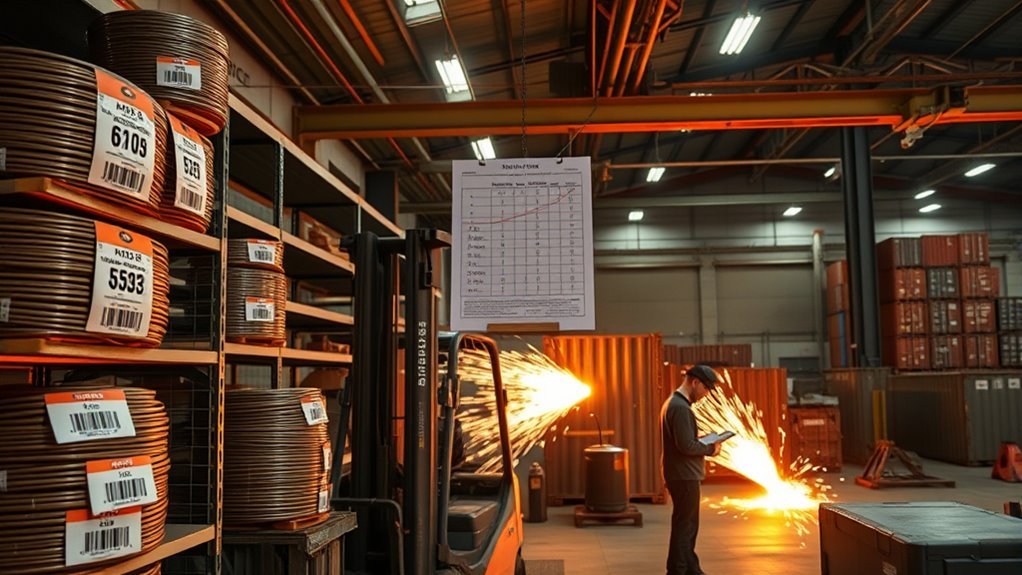
Raw-material and operating costs interact, but they do not affect every welding consumable in the same way. A useful review begins by separating the products you buy into clear groups:
- Filler metals: solid wire, metal-cored wire, flux-cored wire, TIG rod, stick electrodes, and submerged-arc wire.
- Front-end MIG consumables: contact tips, nozzles, diffusers, retaining heads, liners, and inlet guides.
- Process supplies: shielding gas, submerged-arc flux, anti-spatter products, backing materials, and purge supplies.
- Indirect shop supplies: abrasives, brushes, cleaning products, PPE, and packaging or waste-handling materials.
The price of each group can move for different reasons. Steel, copper, nickel, chromium, manganese, aluminum, alloying powders, energy, packaging, freight, tariffs, and supplier capacity can all affect landed cost. The Bureau of Labor Statistics metals producer-price data also show why shops should treat material prices as variable rather than assume a fixed annual increase.
Labor is another major factor. Higher wages and benefit costs make every inspection, changeover, troubleshooting stop, rework operation, and emergency purchase more expensive. The Employment Cost Index tracks changes in employer labor costs and provides a better external benchmark than an unsupported inflation estimate.
Purchase Price Is Not the Same as Total Cost
A low-priced part is not automatically the least expensive choice. The true cost includes everything that happens before, during, and after the part is used.
Note: A practical total-cost formula is: consumable purchases + related freight and duties + changeover labor + downtime burden + consumable-caused scrap or rework + storage loss + disposal cost, divided by the number of accepted parts or another stable production unit.
For example, a contact tip that costs less but needs twice as many replacements may increase both labor and lost production. A higher-priced tip may be cheaper overall if it lasts longer without affecting weld quality. The opposite can also be true in a light-duty application where the premium feature provides no measurable benefit.
How Downtime and Equipment Stops Inflate Costs

When welding equipment stops, the shop loses more than arc time. The operator may spend time diagnosing the fault, collecting replacement parts, trimming a liner, cleaning a nozzle, resetting parameters, making test welds, or waiting for maintenance. If the interruption causes a defect, the cost can also include grinding, repair welding, inspection, scrapped material, and schedule delay.
Idle time does not automatically wear out contact tips or liners. More often, a worn or incorrectly installed component causes the stop, or the operator replaces several parts while searching for the real problem. Improper liner sizing or trimming, contamination, sharp cable bends, loose electrical connections, unsuitable drive-roll pressure, and excessive heat can all shorten usable life or disrupt wire feeding. Manufacturer guidance recommends inspecting these conditions rather than treating every stoppage as proof that all front-end parts have failed.
| Metric | What It Reveals |
|---|---|
| Idle minutes | Lost output and the size of the opportunity to remove repeat stops. |
| Changeover time | Direct labor used to replace, set, and test a consumable. |
| Premature parts swap | Consumable waste caused by guess-based troubleshooting or unclear replacement standards. |
| Preventive tasks | Whether inspections, cleaning, tightening, and scheduled replacement reduce repeat failures. |
| Throughput | Whether more accepted parts are produced from the same labor and equipment time. |
| Tips per 100 pounds of wire | A normalized indicator of contact-tip use that can be compared by cell, shift, or application. |
| Liner life | Arc-hours or wire weight delivered before a verified liner replacement is needed. |
| Consumable-related downtime | The share of scheduled production time lost to tips, liners, nozzles, diffusers, wire, gas delivery, electrodes, or flux. |
| First-pass yield | Whether a consumable or feeding change improves production without increasing defects or rework. |
NIST manufacturing research associates more advanced maintenance practices with less downtime, shorter production time, and better product quality. The goal is not to replace every item on a rigid calendar. It is to identify predictable wear, inspect the system, and act before a known condition interrupts production.
The cheapest consumable is the one that produces the lowest verified cost per accepted part—not necessarily the one with the lowest purchase price.
Material Market Fluctuations and Their Impact

Commodity prices can move quickly, but the effect depends on the product. Copper-bearing contact tips and cables are exposed to copper costs. Many mild-steel solid MIG wires also use a thin copper coating to resist oxidation and support electrical conductivity. As explained in Miller’s comparison of solid and flux-cored wire, however, that does not make copper a primary ingredient in every welding wire, electrode, or flux.
Other products respond to different inputs:
- Carbon-steel filler metal is affected mainly by steelmaking inputs, alloy additions, drawing, coating, packaging, and freight.
- Stainless filler metal may be more sensitive to nickel, chromium, molybdenum, and other alloying costs.
- Aluminum wire and rod follow aluminum supply, processing, packaging, and handling costs.
- Flux-cored and metal-cored wires include a metal sheath and formulated core ingredients, adding manufacturing complexity.
- Stick electrodes and submerged-arc flux require controlled coatings or granular formulations, drying, packaging, and moisture protection.
- Shielding gas is affected by gas production, cylinder or bulk-system costs, energy, transportation, local supply, and contract terms.
Natural disasters, port interruptions, trade disputes, freight shortages, plant outages, and geopolitical events can reduce supply or extend lead times. The practical response is not to predict every event. It is to know which parts have long replenishment times, which have approved alternatives, and which would stop production if inventory reached zero.
Use Purchasing Controls That Match the Risk
- Compare landed cost, including freight, duties, brokerage, minimum quantities, packaging, and payment terms.
- Record supplier lead-time averages and late-delivery frequency instead of relying only on the quoted lead time.
- Use dual sourcing where qualification requirements and volume make it practical.
- Set quote-validity periods and review price-index clauses before signing longer contracts.
- Use blanket orders or staged releases when they reduce risk without creating excess inventory.
- Track emergency purchases separately because rush freight and unplanned substitutions can hide the real cost of a stockout.
- Large buyers may consider indexed contracts or approved financial hedging. Smaller shops usually gain more from staged purchases, supplier competition, and disciplined reorder points.
Labor, Changeovers, and Hidden Operational Expenses

Raw-material changes affect the price paid to a supplier, but labor and process losses often determine the larger operational result. A technician or operator may need to stop production, remove hot components, find the correct part, install it, verify alignment, adjust settings, and complete a test weld. Wage inflation increases the cost of every minute in that sequence.
Hidden expenses also appear when the shop:
- Stores several duplicate part numbers for the same application.
- Uses different consumable systems on otherwise similar guns or cells.
- Allows operators to select replacement parts without a clear standard.
- Changes liners, tips, or nozzles before confirming the failure.
- Runs out of approved products and pays for emergency freight.
- Uses damaged, damp, contaminated, rusty, or expired filler metal.
- Repeats inspection, grinding, or welding because of feeding or shielding problems.
- Schedules maintenance only after a breakdown.
If changeover frequency and labor involvement are not recorded, standard accounting may show only the invoice price. That can make a cheap product appear successful even when production, maintenance, or quality departments are absorbing its larger cost.
Calculate Cost Per Accepted Part
Choose a stable unit that matches the operation, such as accepted assemblies, feet of sound weld, pounds of deposited weld metal, arc-hours, or completed production lots. Then use the same unit throughout the trial.
Total consumable cost per accepted part = consumable purchase cost + attributable freight and duties + changeover labor + downtime cost + related scrap and rework + storage loss + disposal cost, divided by accepted parts.
Avoid assigning every production problem to the consumable. Compare the same joint, base material, equipment, parameters, operator conditions, inspection requirements, and production period whenever possible.
How to Diagnose Excessive Consumable Use
High usage is a symptom, not a root cause. Begin with the part that is being replaced and the reason recorded by the operator.
Contact Tips
Check for an incorrect bore size, poor tip-to-diffuser contact, loose threads, excessive amperage, poor duty-cycle matching, burnback, wire cast, contaminated wire, or an unstable feeding path. Replace the tip when its bore, threads, seating surface, electrical transfer, or arc stability no longer meets the process requirement—not simply because a fixed number of hours has passed.
Liners and Inlet Guides
Confirm that the liner matches the wire type and diameter. Inspect the trim length, installation method, contamination, cable bends, crushed areas, and the transition between the liner, power pin, and contact tip. Miller’s MIG consumable guidance notes that incorrect installation or trimming can contribute to bird-nesting, burnback, and erratic arc performance.
Nozzles and Diffusers
Look for excess spatter, blocked gas ports, damage from impact, poor fit, loose connections, incorrect recess or stickout, and unsuitable nozzle geometry. Cleaning may restore a usable nozzle, but a cracked, distorted, poorly fitting, or heavily damaged part should be replaced.
Wire, Electrodes, and Flux
Check package condition, rust, dirt, lubricant contamination, moisture exposure, storage temperature, handling damage, lot identity, and compatibility with the approved procedure. Do not assume that redrying or reconditioning is permitted. Follow the product data sheet and the applicable welding procedure.
Shielding Gas
Check leaks, loose fittings, damaged hoses, excessive flow settings, drafts, blocked nozzles, poor gun angle, and unnecessary purging. Increasing flow does not always improve shielding and may create turbulence or waste gas.
Warning: Do not replace a specified filler metal, shielding gas, flux, electrode classification, or critical consumable solely to reduce price. Confirm the WPS, code, customer specification, engineering approval, certificate requirements, warranty terms, and safety data before making a substitution.
Strategies to Manage and Reduce Consumable Spending

Start by treating consumables as controllable production inputs rather than unavoidable recurring losses. Measure usage, changeover labor, downtime, failure-driven replacements, and quality results so the largest cost sources become visible.
1. Establish a Baseline
Collect at least several representative weeks of purchasing, production, maintenance, downtime, and quality data. Longer periods may be needed for low-volume work. Record:
- Part number, supplier, unit cost, package quantity, and lot when traceability matters.
- Machine, cell, gun, process, wire type, diameter, and application.
- Replacement date and time.
- Reason for replacement.
- Minutes of production interruption.
- Wire weight, arc-hours, accepted parts, or another normalizing unit.
- Related scrap, repair, or inspection.
Do not combine planned replacement, verified wear, accidental damage, setup change, contamination, and troubleshooting replacement under one generic code. Separate reason codes make corrective action possible.
2. Standardize Approved Parts
Reduce unnecessary variation in tips, nozzles, diffusers, liners, and related hardware. Use a controlled approved-parts list that identifies the application, gun, wire size, duty cycle, and permitted alternatives. Standardization can reduce picking errors, duplicate inventory, training needs, and changeover time.
Do not standardize merely to reach the fewest possible part numbers. A high-amperage robotic cell and a low-duty-cycle repair bench may need different products even when they use the same wire diameter.
3. Correct Root Causes Before Changing Brands
Inspect drive rolls, guides, connections, gun cables, liner installation, contact-tip fit, gas delivery, cooling, grounding, and parameter stability. A new consumable brand will not correct a damaged feeder, unsuitable drive-roll pressure, a loose connection, or a sharply bent gun cable.
4. Use Preventive and Condition-Based Maintenance
Schedule inspection and cleaning around actual process demand. High-volume robotic welding may require frequent checks, while a lightly used manual station may need less attention. Manufacturer instructions should determine what can be cleaned, adjusted, redried, or replaced.
Useful tasks may include checking electrical connections, inspecting cables and hoses, cleaning the feeder area, confirming drive-roll condition, examining gas passages, inspecting consumables for wear, and cleaning a liner by the approved method. Never use a maintenance method that conflicts with the equipment manual or shop safety procedure.
5. Run Controlled Product Trials
Pilot an alternative in one suitable cell or application. Compare it with the current product under similar conditions. Track:
- Purchase and landed cost
- Arc-hours or wire delivered before replacement
- Changeover minutes
- Consumable-related downtime
- Wire-feeding stability
- Deposition rate and efficiency where relevant
- Spatter and cleanup time
- Porosity, discontinuities, repair, and first-pass yield
- Operator and maintenance feedback
- Cost per accepted part
A trial should last long enough to include normal variation. One unusually good or bad shift is not a reliable comparison.
Pro Tip: Place a labeled container at the cell for removed tips, nozzles, and diffusers during the trial. Review the parts with operators and maintenance staff. The wear pattern often reveals loose connections, overheating, impact damage, incorrect installation, or unnecessary replacement.
6. Improve Operator Engagement
Operators see feeding problems, spatter buildup, burnback, loose parts, and setup variation before those issues appear in purchasing reports. Include them in failure reviews and trials. Provide simple replacement standards with photos or examples so that “worn,” “damaged,” and “still usable” mean the same thing across shifts.
7. Review Results by Shift and Application
Report savings in operational units rather than only total monthly spend. Cost per accepted part, cost per arc-hour, tips per 100 pounds of wire, liner life, and downtime minutes make changes easier to compare when production volume rises or falls.
Storage, Inventory, and Supplier Controls
Protect Consumables From Storage Loss
Storage requirements vary by product. Keep solid wire clean, dry, protected from damage, and in its original packaging until needed. Protect front-end parts from dirt, impact, mixed bins, and incorrect identification.
Low-hydrogen electrodes, submerged-arc flux, and other moisture-sensitive products may require sealed packaging, heated storage, controlled exposure time, holding ovens, or manufacturer-approved redrying. Follow the product data sheet, welding procedure, and quality system. Do not apply one generic temperature or exposure limit to every electrode or flux.
Use FIFO and Lot Control
Use first-in, first-out inventory unless shelf life, project traceability, or manufacturer instructions require a more specific sequence. Clearly mark opened packages, lots, receipt dates, and storage status. Segregate damaged, wet, rusty, unidentified, or expired material until quality personnel decide whether it can be used.
Set Reorder Points From Actual Demand
A basic reorder point should cover expected use during replenishment plus safety stock for demand and lead-time variation. Review it when production schedules, supplier performance, minimum-order quantities, or approved alternatives change.
Avoid using the same safety-stock percentage for every item. A low-cost tip used in many cells may justify more coverage than a costly, slow-moving specialty filler metal. Track stockouts, excess inventory, obsolete stock, and emergency freight as separate costs.
Measure Supplier Performance
Price is only one supplier measure. Also review:
- On-time delivery
- Lead-time consistency
- Correct documentation and certificates
- Lot traceability
- Packaging condition
- Product consistency
- Technical support
- Response to quality problems
- Emergency availability
A supplier with a slightly higher quoted price may provide a lower total cost when deliveries, documentation, packaging, and product consistency are better.
A 30-, 60-, and 90-Day Cost-Reduction Plan
First 30 Days: Measure and Organize
- List all welding consumables and annual spending by category.
- Identify the highest-spend and highest-stockout items.
- Create consistent replacement and downtime reason codes.
- Record baseline cost per accepted part or another normal production unit.
- Check part-number duplication and unauthorized substitutions.
- Inspect storage conditions and damaged inventory.
Days 31–60: Correct Repeat Problems
- Review the cells with the highest consumable-related downtime.
- Inspect liners, drive rolls, cables, connections, gas delivery, cooling, and feeder setup.
- Standardize approved components where technically appropriate.
- Create simple replacement and inspection standards.
- Train operators and maintenance personnel on the new reason codes.
- Adjust preventive-maintenance tasks to actual failure patterns.
Days 61–90: Test and Sustain
- Run controlled trials on one or two high-value opportunities.
- Compare products by cost per accepted part, not unit price alone.
- Update reorder points and safety stock using actual demand and lead times.
- Review supplier performance and contract terms.
- Publish a short monthly dashboard.
- Confirm that savings did not increase defects, risk, or operator burden.
Environmental and Safety Costs
Discarded welding materials do not all receive the same regulatory treatment. A shop must identify its waste streams and determine whether each waste is hazardous under federal and applicable state rules. The EPA hazardous-waste generator summary explains the federal generator framework. Authorized states may impose additional or more stringent requirements.
Clean metal tips, nozzles, wire ends, and other parts may be suitable for scrap-metal recycling, subject to their condition and applicable rules. Grinding dust, contaminated absorbents, coatings, residues, used chemicals, or metal-bearing waste may require separate evaluation. Do not mix unknown wastes into a scrap container merely because they came from a welding operation.
Worker protection is a separate issue. OSHA welding guidance addresses hazards such as metal fumes, ultraviolet radiation, burns, electrical shock, and physical injuries. Ventilation, PPE, hot-work controls, housekeeping, and safe maintenance procedures remain necessary even when a discarded material is not regulated as hazardous waste.
Note: Review the safety data sheet, waste composition, contamination, recycling destination, and state requirements before assigning a disposal method. Keep waste and safety decisions documented.
Frequently Asked Questions
What environmental regulations affect welding consumable disposal costs?
EPA regulations under RCRA and applicable state programs may affect waste identification, accumulation, labeling, manifests, transport, treatment, recycling, and disposal. The exact requirements depend on the waste and the facility’s generator status. OSHA rules address worker exposure and safe handling but are not the primary hazardous-waste disposal system. Complete a waste determination instead of assuming that every used tip, rod, wire end, or nozzle is hazardous.
Are specialized coatings or treatments on consumables more expensive?
They often have a higher purchase price because they require added materials or processing. The added price is worthwhile only when the product measurably improves usable life, feeding, corrosion resistance, spatter control, weld quality, or uptime in the intended application. Use a controlled trial and compare total cost per accepted part.
How do warranty and certification requirements change consumable selection?
A welding procedure, code, customer specification, equipment warranty, or quality plan may require a particular classification, shielding gas, manufacturer approval, certificate of conformance, lot traceability, or storage method. A lower-priced substitute can create a much larger liability if it invalidates the approved procedure or required documentation. Obtain technical approval before changing a controlled product.
Can bulk purchasing lead to obsolescence or storage degradation?
Yes. A large purchase can become expensive when demand changes, a part number is discontinued, packaging is damaged, material absorbs moisture, wire rusts, certificates are lost, or inventory exceeds its permitted shelf life. Compare the purchase discount with carrying cost, storage risk, expected use, and supplier lead time. Use FIFO, lot control, protected storage, and realistic forecasts.
Do import tariffs and shipping delays affect consumable availability?
They can. The effect depends on the product’s origin, tariff classification, trade policy, shipping route, contract terms, and available domestic or alternative suppliers. Calculate landed cost rather than invoice price alone. For production-critical items, track lead-time variation, maintain justified safety stock, and qualify alternatives before a disruption occurs.
Which welding consumable cost metric should be tracked first?
Start with total consumable cost per accepted part or another stable production unit. Then add the metric most closely connected to the suspected problem, such as tips per 100 pounds of wire, liner life, changeover minutes, emergency purchases, or consumable-related downtime. Avoid relying on total monthly spend by itself because production volume may have changed.
When should a contact tip or liner be replaced?
Replace it when inspection or process performance confirms that it no longer meets the requirement. Warning signs can include bore wear, damaged threads, poor electrical contact, unstable feeding, repeated burnback, contamination, physical damage, or a verified loss of arc stability. First rule out loose connections, incorrect sizing, installation errors, unsuitable drive-roll settings, and cable-routing problems.
Are premium welding consumables worth the higher price?
Sometimes. A premium product may reduce changeovers, feeding problems, cleanup, or defects in a demanding application. It may offer little benefit in a low-duty-cycle station. Run a controlled comparison and include purchase cost, usable life, labor, downtime, quality, and accepted output before making the decision.
Conclusion
Rising welding consumable costs come from a combination of material prices, labor, freight, supply risk, storage loss, equipment condition, unnecessary replacement, and weld-quality problems. The strongest response is not a blanket switch to cheaper parts or larger inventory orders. It is a measured total-cost program.
Begin with one high-spend cell or consumable family. Record why parts are replaced, how long the change takes, how much production is lost, and whether quality changes. Correct feeding and maintenance problems, standardize approved parts, protect stored material, and compare supplier options by cost per accepted part. These steps make spending more predictable without trading away safety, compliance, or weld quality.
Sources
- U.S. Bureau of Labor Statistics — Producer Price Index for Metals and Metal Products — supports the discussion of changing metal input prices.
- U.S. Bureau of Labor Statistics — Employment Cost Index — supports the discussion of changing wages, benefits, and employer labor costs.
- National Institute of Standards and Technology — Manufacturing Machinery Maintenance — supports the relationship between maintenance, downtime, production time, and quality.
- Miller Electric — Choosing MIG Consumables to Optimize Productivity — supports liner, feeding-path, changeover, and productivity guidance.
- Miller Electric — Solid Wire Versus Flux-Cored Wire — supports the limited role of copper plating in many mild-steel solid wires.
- U.S. Environmental Protection Agency — Hazardous Waste Generator Regulatory Summary — supports waste-identification, handling, and generator-compliance guidance.