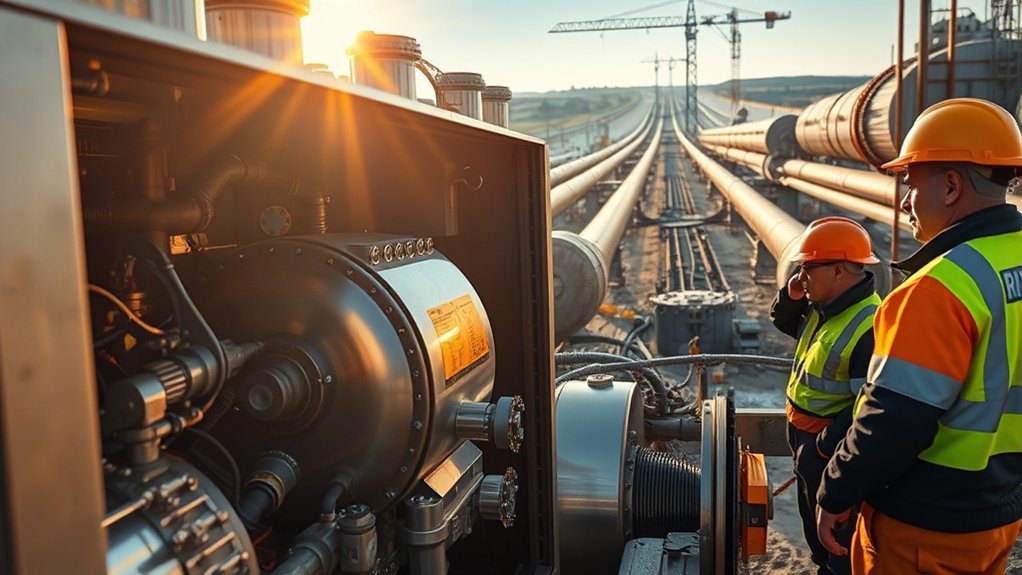
Pipeline welding generator cost is only part of the budget for a major field-equipment purchase. Current advertised U.S. prices for capable new engine-driven welders commonly start near $19,200 and can reach the mid-$30,000s, while larger machines, accessory packages, and premium dealer listings can exceed $40,000. The right choice depends on the qualified welding procedure, rated duty-cycle output, auxiliary power, fuel, weight, service access, and required accessories.
Quick Answer
A new welding generator suited to pipeline work generally costs about $19,200 to $34,300 for the base machine, based on advertised U.S. prices checked between July and October 2026. Heavy-duty units and complete packages may cost more than $40,000. Add leads, a feeder, trailer, remote controls, freight, tax, fuel, and maintenance.
Key Takeaways
- Compare rated output at the required duty cycle, not only the largest amperage printed in the product name.
- A lower machine price may exclude welding leads, a wire feeder, a remote, running gear, a trailer, or delivery.
- Diesel models are common for demanding remote work, but gasoline units may cost less and weigh less.
- Choose the generator around the approved welding procedure, jobsite power loads, transport limits, and local service support.
Warning: Engine exhaust contains carbon monoxide. Operate the machine outdoors with exhaust directed away from workers and building openings. When used near a building, the CDC recommends keeping a generator more than 20 feet from doors, windows, and vents. Follow the manufacturer’s manual, OSHA rules, the site safety plan, and the qualified welding procedure.
Welding Generator Cost Overview for Pipeline Work
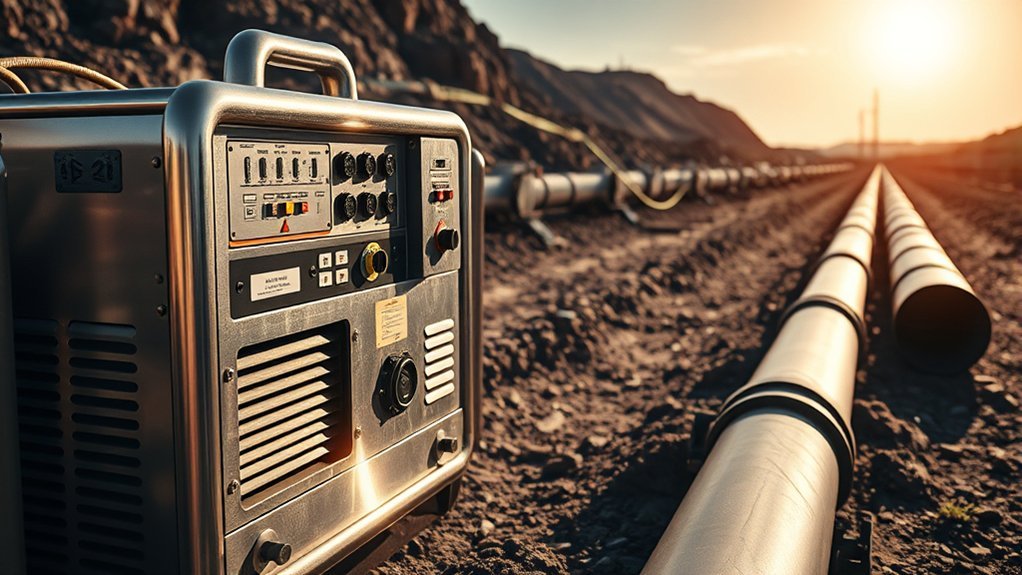
Pipeline jobs often use engine-driven welders because they provide welding current and auxiliary AC power where utility power is unavailable. Depending on the model and accessories, a unit may support Stick, DC TIG, MIG, flux-cored welding, gouging, mechanized welding, or two operators.
Do not assume that every “multi-process” machine includes a complete setup for every process. A wire feeder, TIG torch, remote, spool gun, polarity-reversing kit, or process-specific software may be optional. Confirm the exact machine number and package contents before comparing prices.
Based on current advertised U.S. listings checked between July and October 2026, representative base-machine prices run from about $19,176 for a Lincoln Maverick 325X to about $34,274 for a Miller Big Blue 450 Duo CST. Dealer prices, freight, taxes, stock, and promotions can change without notice.
Note: Treat online prices as dated examples, not universal market prices. Request written quotes using the exact model number, engine, emissions configuration, accessories, delivery location, and warranty terms.
What Changes the Total Cost?
The purchase price rises with welding output, duty cycle, diesel engine size, auxiliary power, multi-operator capability, digital controls, remote technology, emissions equipment, integrated air, and included accessories. A dedicated pipe mode or advanced pulse capability can also increase the price.
| Cost item | Why it matters |
|---|---|
| Base machine | Engine, welding output, generator output, controls, and standard receptacles. |
| Welding package | Leads, electrode holder, work clamp, remote, feeder, gun, torch, and consumables may be separate. |
| Mobility | Trailer, running gear, truck mounting, lifting hardware, cable racks, and weather protection add cost. |
| Delivery and ownership | Freight, tax, fuel, filters, fluids, batteries, tires, storage, security, and downtime affect lifetime cost. |
| Compliance and support | Engine-emissions configuration, warranty, parts availability, and local service coverage can outweigh a small price difference. |
Discounts shown against a manufacturer list price are not always cash rebates. Verify whether an offer is a dealer markdown, manufacturer rebate, financing incentive, trade-in credit, or package discount, and check the expiration date and eligibility rules.
New vs. Used Welding Generators
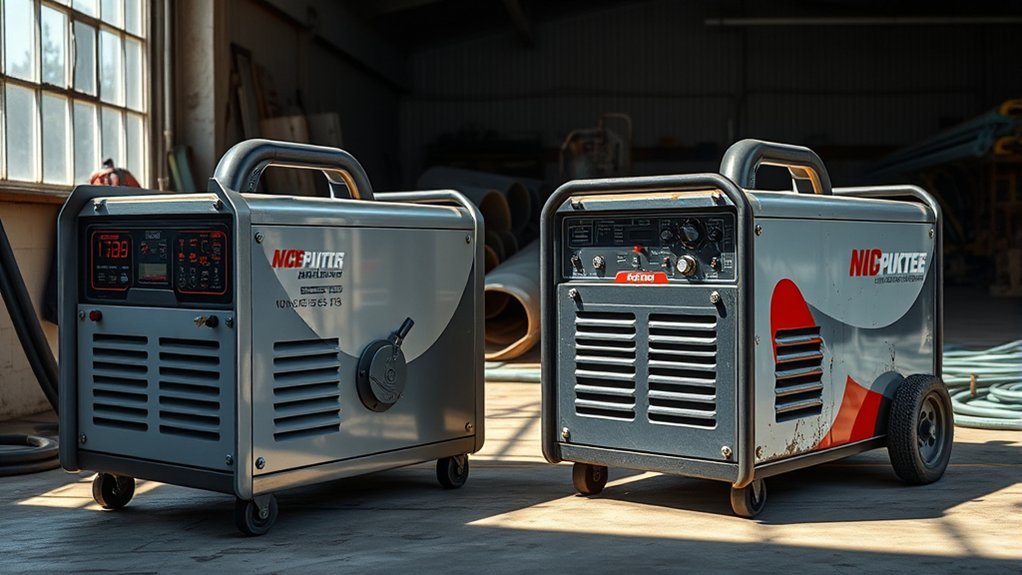
A new machine usually provides the latest controls, a known service history, current parts support, and clearer machine and engine warranty coverage. It also lets you order the exact engine, pipe mode, receptacles, remote technology, and accessory package needed for the job.
A used unit can lower the entry cost, but price alone does not show its condition. Before buying, inspect or test:
- Engine hours and service records: Compare the hour meter with documented oil, filter, coolant, belt, battery, and emissions-system service.
- Cold start and load performance: Start the engine cold, weld at a meaningful load, and test auxiliary outlets under load.
- Arc quality: Test the actual process and electrode required by the procedure, including pipe settings where applicable.
- Leaks and contamination: Check oil, coolant, fuel, exhaust, wiring, receptacles, controls, and evidence of water or dust entry.
- Cables and grounding: Replace damaged leads, connectors, electrode holders, and work clamps rather than treating them as minor cosmetic issues.
- Identity and support: Confirm the serial number, ownership, recalls or service notices, parts availability, and whether any warranty transfers.
Pro Tip: For a used machine, pay for an inspection and load test by a qualified engine-driven-welder technician. A cheap unit can become expensive if it needs an engine overhaul, generator repair, control board, emissions work, or missing accessories.
Current Engine-Driven Welder Price Examples
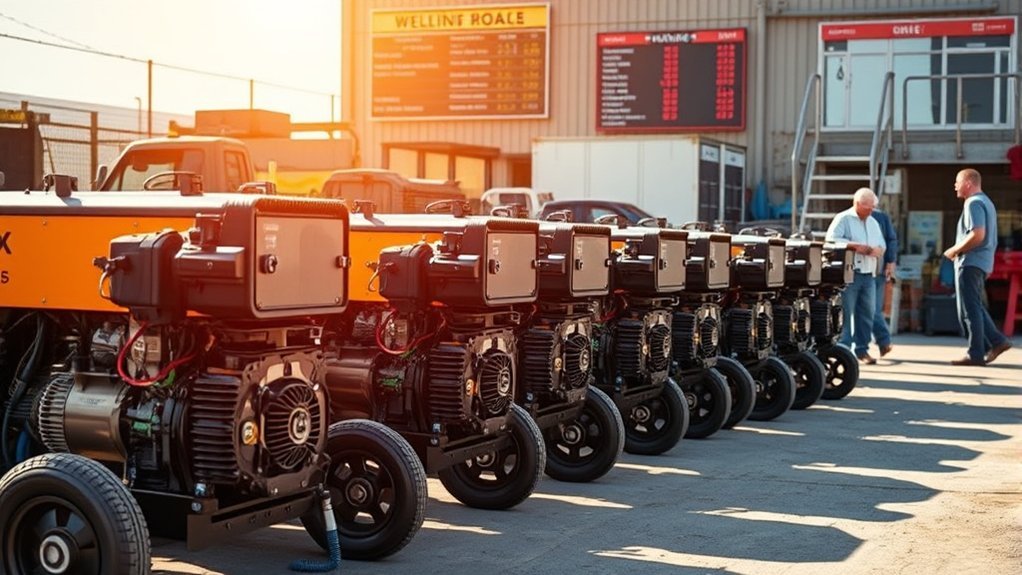
The table below is a dated market snapshot, not a permanent price list. It compares representative machines that can serve pipe or demanding field-welding work. Specifications are from manufacturer pages; advertised prices are from U.S. welding-equipment sellers and were checked between July and October 2026.
| Model | Relevant output | Advertised example | Best fit |
|---|---|---|---|
| Lincoln Maverick 325X | 325-amp class; 10 kW continuous single-phase power | $19,175.53 | Compact diesel field work and pipe-capable multiprocess use |
| Miller Trailblazer 330 Diesel | 330 A at 100% duty cycle; 10.5 kW continuous power | $20,945.00 | Mobile repair, structural, and process-pipe work |
| Lincoln Frontier 400X Pipe | Up to 400 A; 11 kW welding and auxiliary output; dedicated pipe mode | $28,622.15 | Transmission-pipeline and demanding right-of-way work |
| Miller Big Blue 450 Duo CST | 450 A maximum; 350 A at 100% duty cycle in single-output mode; 8.9 kW continuous single-phase power | $34,274 | Dual-operator productivity and heavy field welding |
Packages can cost much more than the base unit. One current Miller package listing for the Big Blue 450 Duo CST with highway running gear and accessories was listed above $43,000 in a July 2026 check, illustrating why quotes must use matching configurations.
Key Features to Compare Before Buying
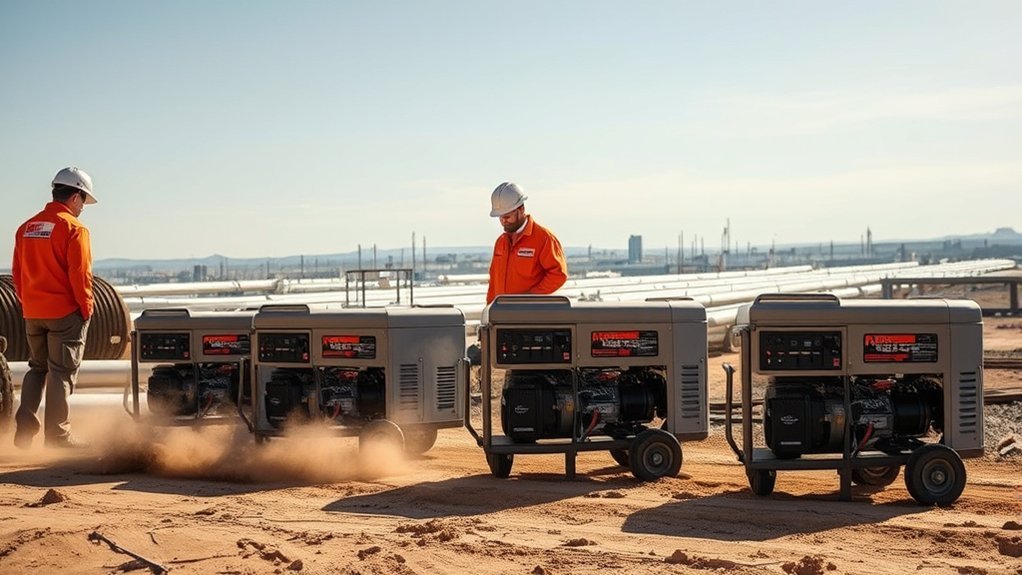
- Qualified welding process: Match the machine to the approved WPS, electrode or wire, polarity, progression, and pipe mode. Do not substitute a process because the machine can technically produce an arc.
- Rated output and duty cycle: Compare amperage and voltage at the required duty cycle and ambient rating. Maximum amperage is not the same as continuous working output.
- Arc characteristics: For cellulosic downhill pipe work, verify the specific pipe mode, dig control, open-circuit voltage, and electrode capability required by the procedure.
- Auxiliary power: Add the running and starting loads of grinders, lights, pumps, heaters, plasma cutters, feeders, and sensitive electronics. Check whether full auxiliary power remains available while welding.
- Fuel and emissions: Diesel is common for sustained remote work. Confirm the engine’s EPA configuration, fuel availability, cold-start aids, altitude limits, and any aftertreatment or service requirements.
- Portability and mounting: Review dry weight, dimensions, lift-eye rating, trailer options, truck payload, tie-down points, exhaust clearance, and service access.
- Remote controls and accessories: Verify connector type, compatible remotes and feeders, cable lengths, polarity requirements, and whether accessories are included.
- Safety and durability: Look for GFCI-protected receptacles where required, covered controls, shutdown protection, weather-resistant construction, secure grounding provisions, and lockable panels.
- Service network: Check local parts stock, technician experience, warranty process, engine support, and expected downtime.
Popular Brands and Current Models
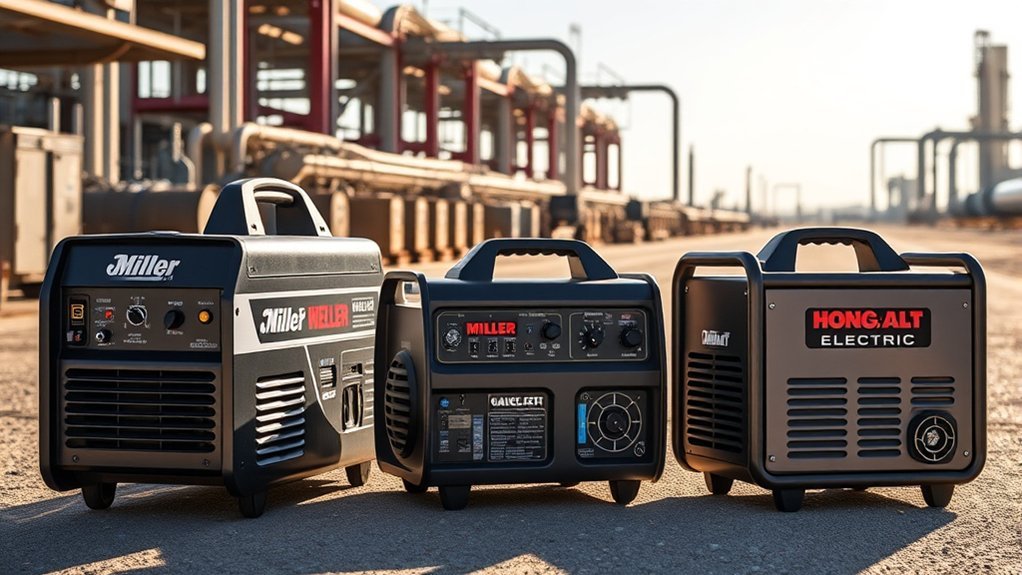
Lincoln Electric and Miller are widely represented in U.S. field-welding fleets, but the best model depends on the procedure, crew setup, dealer support, and total package cost. Compare exact product numbers rather than relying only on a series name.
Lincoln Electric
The Frontier 400X Pipe is a current pipeline-focused model with a dedicated pipe version, up to 400 amps, 11 kW of welding and auxiliary output, CrossLinc remote technology, memory settings, and auto start/stop. The Vantage 549 is a larger 500-amp machine with 11 kW of single-phase and 19 kW of three-phase auxiliary power for heavy field and multi-operator demands.
The older Vantage 441X is listed as discontinued by a major industrial supplier, so it should not be presented as a current lead recommendation. Used units may still be serviceable, but parts, warranty, emissions configuration, and price require case-by-case checking.
Miller
The Trailblazer 330 Diesel provides 330 amps at a 100% duty cycle and 10.5 kW continuous auxiliary power in a 611-pound package. It supports Stick, DC TIG, MIG, and flux-cored work with the appropriate accessories.
The Big Blue 450 Duo CST is a 1,064-pound diesel model designed for pipe and construction work. It can provide two separate 175-amp outputs or a single rated output of 350 amps at a 100% duty cycle, with a 450-amp maximum.
Long-Term Reliability and Maintenance Costs
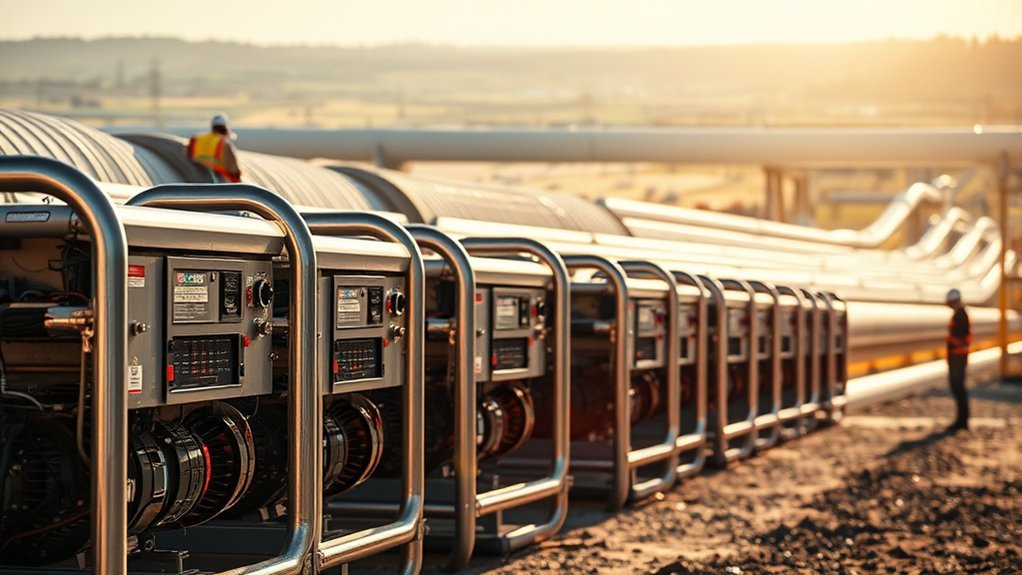
There is no reliable universal annual maintenance figure because cost depends on engine hours, environment, model, labor rates, fuel quality, transport, and repair history. Use the machine and engine manuals to build a service schedule by operating hours and calendar time.
- Before each shift: Check fuel, oil, coolant, leaks, air inlets, battery condition, cables, connectors, receptacles, guards, exhaust routing, and fire hazards.
- By engine hours: Service oil, filters, belts, coolant, spark plugs or glow-plug systems, and other items at the exact intervals in the manuals.
- Under severe conditions: Dust, heat, cold, long idle periods, and heavy loads may require shorter intervals.
- Track downtime: Record hours, faults, repairs, fuel use, parts, and labor so you can compare true cost per operating hour.
- Separate warranties: The welding generator and its engine may have different warranty providers, terms, and exclusions.
Miller states that the low-speed Mitsubishi S4L2 engine used in the Big Blue 450 Duo CST is designed to run 10,000 hours before major overhaul. That is a model-specific manufacturer statement, not a life expectancy for every diesel welding generator.
How to Select the Right Pipeline Welding Generator
1. Start With the Welding Procedure
Identify the approved process, electrode or wire, pipe diameter and wall thickness, polarity, amperage range, progression, preheat requirements, and expected arc time. Then select a machine that can deliver the required output at the needed duty cycle. A blanket rule such as “at least 400 amps” can oversize some jobs and still miss process-specific needs on others.
2. Confirm Every Required Process and Accessory
Check whether the model supports Stick, DC TIG, MIG, flux-cored, gouging, pulse, mechanized welding, or dual-operator use as required. Confirm which feeder, remote, torch, gun, cable, and software options are compatible. “Multi-process” does not mean all hardware is included.
3. Calculate Auxiliary Power
List each tool’s running watts and starting surge. Add loads that may run at the same time, then compare them with the generator’s continuous and peak ratings. Review the manual for simultaneous welding and generator-power limits, receptacle ratings, phase, voltage, frequency, and total harmonic distortion when sensitive electronics are involved.
4. Evaluate Portability and Jobsite Fit
Many pipeline-capable diesel units weigh 600 to more than 1,000 pounds before accessories. Confirm truck payload, trailer capacity, tongue weight, lifting method, tie-downs, cable storage, service clearance, and exhaust direction. A lighter model improves mobility only if it still meets the procedure and duty-cycle requirements.
| Check | Question to answer |
|---|---|
| Weight and dimensions | Can the truck, trailer, crane, or lift safely carry and position the complete package? |
| Access | Can technicians reach filters, drains, battery, radiator, and control panels after mounting? |
| Environment | Is the machine protected from standing water, dust loading, impact, theft, and recirculated exhaust? |
| Mobility hardware | Are the trailer, running gear, fenders, lights, brakes, cable racks, and tie-downs included and road-legal? |
5. Compare Total Delivered Cost
Request itemized quotes for the same configuration. Include the machine, engine option, welding leads, feeder, remote, trailer or running gear, freight, tax, setup, training, warranty, financing cost, and expected service parts. A lower sticker price may not be the lower installed cost.
6. Verify Safety, Grounding, and Compliance
OSHA requires suitable cables, connectors, grounding, eye protection, and ventilation for welding work. Pipelines carrying gas or flammable liquid must not be used as the welding ground return. Remove combustibles, control sparks, use the required PPE, provide ventilation, and follow confined-space rules where applicable.
Frequently Asked Questions
What are the best welding generator brands for beginners?
Lincoln Electric and Miller have broad U.S. dealer and service networks, but a beginner should choose by process, duty cycle, local support, and training rather than brand alone. For professional pipeline work, the operator must also follow the employer’s qualified welding procedure and safety program.
How many amps does a pipeline welding generator need?
There is no single minimum for every pipeline job. Use the amperage, voltage, polarity, electrode or wire, and duty cycle required by the approved welding procedure. Many field machines fall in the 300- to 400-amp class, while heavy gouging, mechanized work, or multiple operators may require more capacity.
Is diesel better than gasoline for pipeline welding?
Diesel is common for sustained, remote, high-duty work because many pipeline-focused machines use industrial diesel engines. Gasoline models can be lighter and less expensive. Compare fuel access, operating hours, cold weather, emissions rules, maintenance, noise, and payload before deciding.
How do I maintain a welding generator for long life?
Use the exact machine and engine manuals. Complete daily inspections, service fluids and filters by engine hours and calendar time, keep cooling and air passages clean, protect the unit from water and dust, test safety shutdowns, repair damaged cables, and keep a written maintenance log.
Can I rent a welding generator instead of buying one?
Yes (see also our guide to welding machine rental costs). Renting can make sense for short projects, backup capacity, or testing a model before purchase. Confirm the exact process package, leads, feeder, remote, trailer, insurance, hour limits, fuel policy, delivery charges, maintenance responsibility, and replacement support if the machine fails.
What safety features should I look for?
Useful features include GFCI-protected receptacles where required, engine shutdown protection, covered controls, secure grounding points, circuit protection, maintenance alerts, lockable panels, and clear lift and tie-down points. These features do not replace ventilation, PPE, fire prevention, cable inspection, or safe work procedures.
Are financing options available?
Many dealers offer installment financing, equipment leases, or commercial credit. Compare the cash price with the total financed cost, interest or factor rate, fees, down payment, term, early-payoff rules, insurance, tax treatment, and ownership at the end of the agreement.
Conclusion
A realistic budget for a new pipeline-capable welding generator starts around $19,000 and commonly reaches the mid-$30,000s before accessories, while large machines and complete packages can exceed $40,000. Choose by the qualified welding procedure, rated duty-cycle output, auxiliary loads, transport limits, fuel, safety, and service support. Get matching written quotes and compare total delivered and operating cost, not just the advertised machine price.
Sources
- Lincoln Electric Frontier 400X — pipeline-focused features, output, auxiliary power, and current model positioning.
- Miller Trailblazer 330 Diesel — rated welding output, generator power, weight, fuel, and supported processes.
- Miller Big Blue 450 Duo CST — dual-output ratings, maximum amperage, generator power, weight, and engine-life claim.
- OSHA 29 CFR 1926.351 — arc-welding cables, grounding, operating practices, and pipeline ground-return restrictions.
- OSHA 29 CFR 1926.353 — welding ventilation, confined-space controls, and eye protection.
- CDC Carbon Monoxide Poisoning Basics — generator exhaust and outdoor placement guidance.