Welder rental cost depends on amperage, fuel type, duty cycle, rental length, delivery, cables, consumables, and safety equipment. A small portable welder may fit a quick repair, while a diesel towable unit can cost far more once fuel, transport, and accessories are included. Use the ranges below as planning estimates, then confirm your local quote before booking.
Quick Answer
Quotes for small portable welders are commonly in the low hundreds of dollars per day, and higher-amp gas, diesel, or towable machines cost more. These are estimates, since rental companies price by location, so request a local quote. Weekly rentals often lower the effective daily cost. Always price the machine, leads, extension cables, fume extraction, PPE, fuel, delivery, pickup, and damage waiver together.
Key Takeaways
- A portable 180A to 200A welder usually costs less to rent than a 400A to 600A diesel or dual-operator unit, but the right choice depends on material thickness and runtime.
- Weekly pricing can beat daily pricing once a job runs more than three or four workdays, especially after delivery and setup are included.
- Leads, ground clamps, cable extensions, fume extractors, welding hoods, gas, wire, and electrodes may be separate charges, so ask for an all-in quote.
- For safe welding, budget for ventilation, eye and face protection, fire prevention, and a properly matched machine instead of choosing by rental price alone.
At a Glance
| Typical Rental Term | Daily, weekend, weekly, or monthly, depending on the provider and job length. |
| Difficulty | Moderate. You need to match amperage, process, power source, duty cycle, and safety controls. |
| Tools Needed | Welder, leads, ground clamp, stinger or torch, extension cable, PPE, fire extinguisher, ventilation or fume extraction, and consumables. |
| Cost | Plan for the welder rental plus delivery, fuel, leads, PPE, consumables, fume extraction, damage waiver, and possible cleaning or late-return fees. |
Types of Welding Machines Available for Rent

You will find rental welders across several capacities and price points. The best option depends on where you will weld, how long the arc will run, and whether the site has reliable power.
Small portable welders work for repairs, farm jobs, maintenance, gates, brackets, trailers, and light fabrication. Midrange gas-powered units give you more output for longer welds. Larger diesel towable units fit structural work, remote jobsites, industrial maintenance, and multi-operator setups.
Electric welders are useful when you have the right voltage and want cleaner operation without engine fuel. Engine-driven welders help when power is unavailable or unreliable.
| Welder Type | Best For | Budget Note |
| Portable 120V or 240V electric welder | Light shop work, repairs, thin material, and sites with power. | Usually lower rental cost, but may need extension cords, gas, or wire. |
| 180A to 250A gas-powered welder | Outdoor repairs, construction jobsites, farm work, and mobile maintenance. | Often a practical middle ground, but fuel and transport add cost. |
| 400A to 600A diesel or towable welder | Heavy plate, long welds, structural work, pipe work, and remote sites. | Higher rental, delivery, fuel, and waiver costs, but better for long shifts. |
| Specialty boom-lift or inverter unit | Aerial work, low-fume jobs, multi-process welding, and tighter access. | Confirm voltage, connectors, leads, and platform compatibility before renting. |
Evaluate rental equipment by output, duty cycle, fuel type, input power, portability, and accessory availability. Renting oversized gear wastes budget. Renting an undersized unit can slow the job and create poor weld quality.
Welder Rental Cost by Amp Rating
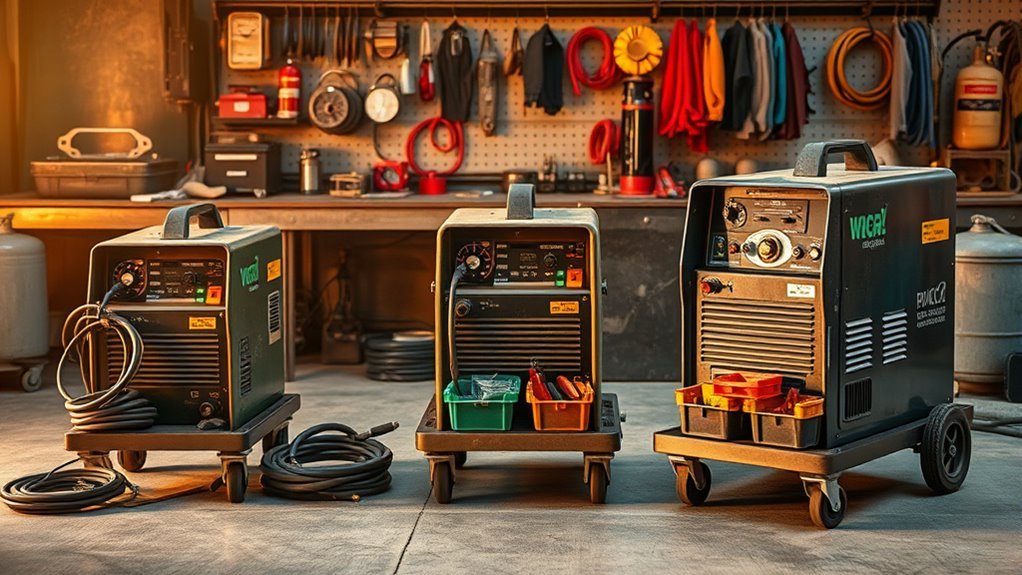
Use amp rating as a planning shortcut, not as the only pricing factor. Rental branches may price the same class differently by location, account, season, delivery distance, and rental length.
A small 180A to 200A unit usually handles light repair and thin to moderate material. A 250A class welder gives you more duty cycle and flexibility for heavier fabrication. A 400A to 600A diesel unit costs more to move and run, but it can support longer, hotter work on demanding sites.
The cheapest welder is not always the lowest-cost rental. If a small unit slows production or forces extra rental days, a higher-output machine may cost less overall.
| Amp Class | Typical Use | Cost Impact |
| 140A to 200A | Light repair, small brackets, home shop work, thin steel, and maintenance. | Usually the lowest daily rental class, but may have limited duty cycle. |
| 250A to 350A | General fabrication, jobsite repair, farm equipment, gates, trailers, and thicker steel. | Often the best balance of rental cost and capability. |
| 400A to 600A | Structural steel, heavy equipment repair, pipe, gouging, and long continuous welds. | Higher daily rate, transport cost, fuel cost, and possible damage waiver. |
| Dual-operator units | Two welders working from one machine on larger industrial jobs. | Costs more upfront but may reduce equipment count and transport time. |
When comparing rates, weigh the daily price against duty cycle, fuel, transportation, and downtime. A machine that finishes the welds in one day can be cheaper than a smaller unit that keeps you renting for three.
Gas, Diesel and Electric Welder Differences
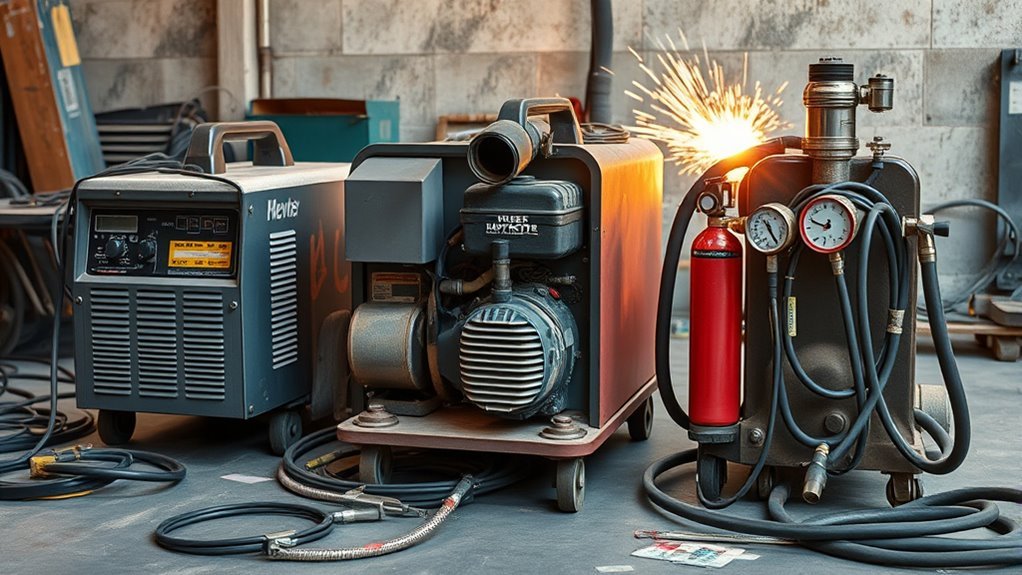
Choose the power source before you compare final quotes. Gas, diesel, and electric welders can all be the right rental, but each one changes your fuel budget, setup time, ventilation needs, and site restrictions.
Power Source Trade-Offs
Gas-powered welders work well for outdoor repairs and mobile jobs. They give you power where outlets are not available, but you need to budget for fuel and engine noise.
Diesel welders fit heavy work and longer shifts. They often handle high-output jobs better than smaller gas units, but delivery, fuel, and trailer access can raise the total rental cost.
Electric welders reduce fuel cost and exhaust concerns. They need stable power, the correct voltage, and the right plug or adapter. Some larger electric units may require three-phase power.
- Choose gas when you need portability for short outdoor work.
- Choose diesel when the job needs higher output and longer runtime.
- Choose electric when site power is reliable and emissions matter.
- Confirm plug type, input voltage, duty cycle, and lead length before pickup.
Fuel and Maintenance Needs
Fuel type changes operating cost. Gas models may need more frequent refueling on longer days. Diesel units usually support bigger jobs, but fuel usage, delivery, and service requirements can add up.
Electric welders avoid engine fuel, but they can still create downtime if site power is weak, the breaker is undersized, or the cord run is too long. Ask the rental provider what input power the exact unit requires.
Note: Engine-driven welders may also produce generator power for tools, lights, or grinders. That can reduce separate generator rentals, but only if the machine has the outlets and capacity your job needs.
When to Choose a Portable Vs Towable Welder
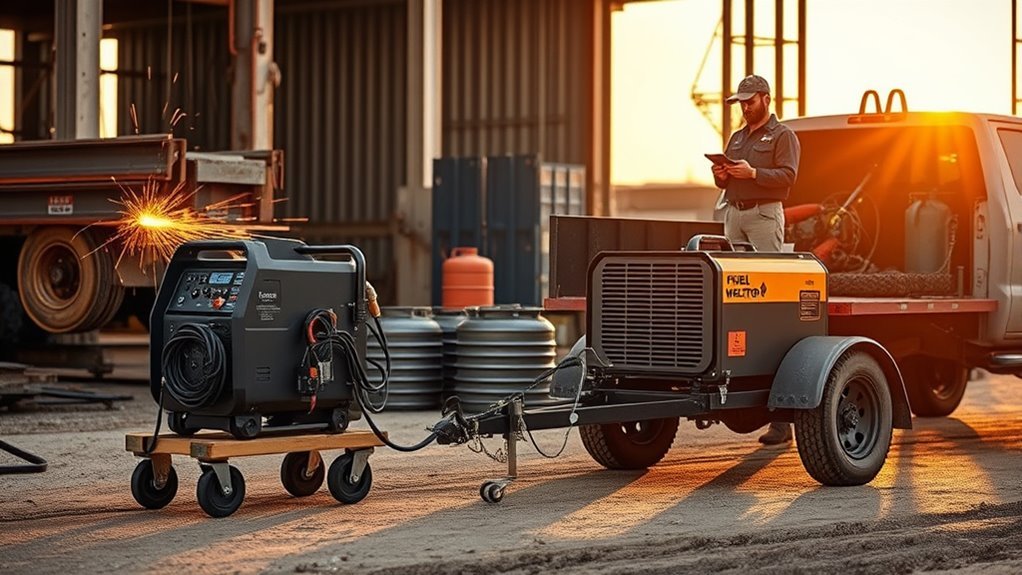
Pick a portable welder when access matters more than maximum output. Stairs, rooftops, tight shops, small repairs, and quick punch-list jobs often favor a compact machine.
Pick a towable welder when you need sustained output, longer duty cycle, high amperage, or remote power. It may cost more to deliver, but it can reduce refueling stops, setup delays, and work interruptions.
Job Mobility Needs
Walk the jobsite before renting. Check gates, ramps, trailer access, power availability, distance to the work, and where leads will run. If a towable unit cannot get close enough, you may spend extra on cable extensions or lose time moving materials.
- Check access constraints before you reserve the welder.
- Match output to the thickest material and longest welds.
- Include delivery, pickup, and towing needs in the quote.
- Plan crew logistics so the rented machine does not sit idle.
Power and Runtime
For quick repairs and light fabrication, a portable unit can give you the best value. For heavy structural work or extended shifts, a towable gas or diesel machine may finish faster and reduce downtime.
If the site has reliable shore power, compare an electric welder against an engine-driven unit. Electric can be cleaner and quieter, while engine-driven machines offer better independence from site power.
Welders for Aerial and Boom Lift Applications

If you need to weld at height, ask for a boom-lift-compatible setup. The right unit can reduce long lead runs, trip hazards, and awkward cable management.
Before renting for aerial work, confirm platform capacity, power source, lead routing, fall protection requirements, fire watch, and whether the rental provider allows that machine to be used from the lift.
- Confirm the welder’s weight and mounting method before using it on a platform.
- Ask whether the unit needs 220V, 240V, or three-phase input.
- Keep cables clear of walkways, ladders, controls, and pinch points.
- Use fume control when elevated welding happens indoors or near enclosed structures.
Warning: Do not weld from a lift without checking the lift manual, site rules, fall protection plan, fire prevention plan, and rental agreement. Arc welding also requires proper eye and face protection, and nearby workers may need shielding from arc rays.
Daily Vs Weekly Rental Pricing Strategies
Daily rentals work best when the job is short, the schedule is uncertain, or you only need the machine for one defined task. Weekly rentals often make more sense when setup, delivery, and production will stretch across several days.
Daily Rate Advantages
A daily rental keeps the upfront commitment low. It also lets you switch machines if the first unit is too small, too large, or wrong for the process.
Daily pricing can become expensive if the job slips. Track total days, delivery windows, standby time, and weather delays before you assume daily rental is cheaper.
- Use daily rental for one-day repairs and unpredictable tasks.
- Confirm the branch’s minimum rental period.
- Ask whether weekend hours count as one day or multiple days.
- Return the machine on time to avoid late fees.
Weekly Rate Savings
When your project runs more than three or four workdays, compare the weekly rate against daily pricing. A lower weekly price can also reduce the stress of rushing the job.
Use this simple formula before booking:
Estimated rental total = machine rate + leads + extensions + fume extraction + PPE + consumables + delivery + pickup + fuel + damage waiver + taxes and fees.
Surge and Discounts
Rental pricing can change during busy construction periods, storm recovery, shutdowns, and peak local demand. If timing is flexible, ask whether a weekday, weekend, or weekly rental gives you a lower total.
- Compare the effective per-day cost of daily and weekly terms.
- Ask about account pricing, contractor discounts, and bundle rates.
- Bundle leads, clamps, and fume extraction when it lowers the quote.
- Reserve early during busy seasons to avoid limited availability.
Essential Welding Accessories and Their Costs
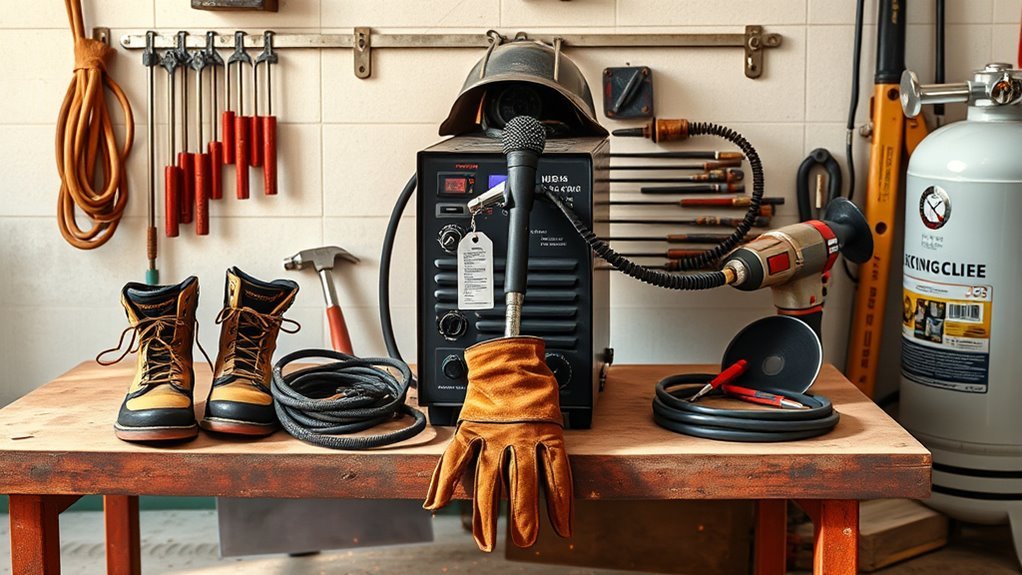
Safety and cost go hand in hand when renting welding accessories. The welder itself is only one line item. Leads, ground clamps, stingers, torches, cable extensions, hoods, gloves, jackets, screens, and fume extraction may be separate.
Major rental providers may list welders without leads included, so confirm what comes with the machine. If you need longer reach, ask for the lead length, extension cost, and voltage drop limits.
Budget the full welding setup, not just the machine. Missing leads, clamps, gas, wire, or PPE can delay the job and erase any savings from a cheaper rental.
Common Accessories to Price
- Welding leads and ground cables.
- Stinger, MIG gun, TIG torch, or wire feeder if needed.
- Extension cables rated for the machine and site conditions.
- Welding hood, gloves, jacket, sleeves, and safety glasses.
- Welding screens or blankets for nearby workers and combustibles.
- Fume extractor or local exhaust setup for indoor or confined work.
- Electrodes, wire, shielding gas, tips, nozzles, grinding discs, and anti-spatter.
Consumables are often purchased, not rented. Ask whether the rental counter sells a starter kit for your exact process and material.
Fume Extraction Options and Safety Considerations
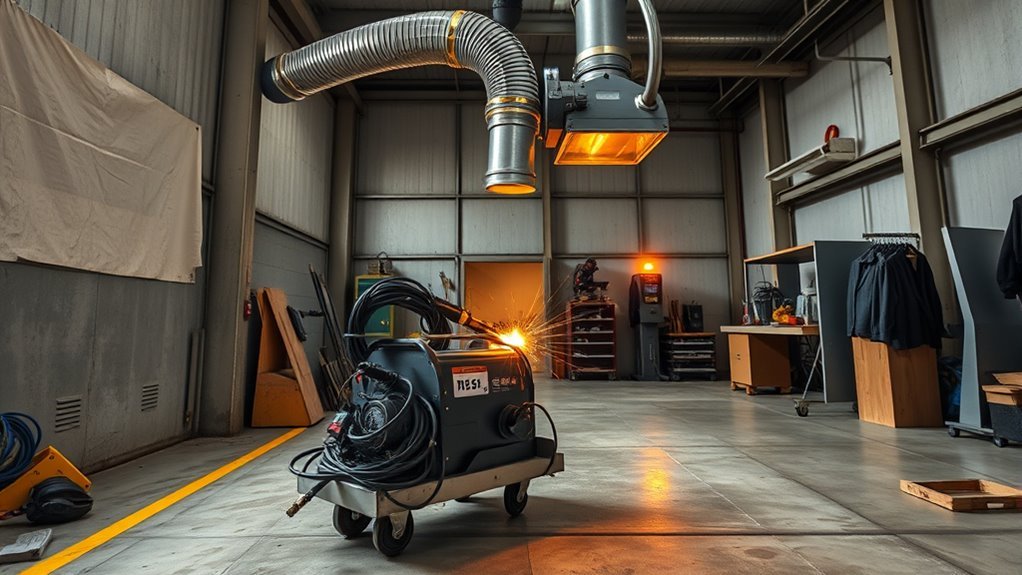
Welding fumes can contain harmful particulates and gases. Do not treat fume extraction as an optional add-on when you work indoors, in tight areas, around coated metals, near stainless steel, or where ventilation is limited.
OSHA’s welding standard covers ventilation, eye protection, fire prevention, and worker protection. The American Welding Society also explains that local exhaust systems use a capture device, ducting, and a fan to remove fumes near the source.
- Match extractor capacity to the workspace and welding process.
- Place the hood or capture device as close to the arc as practical.
- Verify filter type and replacement requirements before renting.
- Remember that filtration may not remove gases, so ask about fresh air and exhaust needs.
- Use proper PPE even when ventilation is present.
Warning: Welding on painted, galvanized, stainless, coated, or previously used containers can create serious fume, fire, or explosion hazards. Follow OSHA rules, use qualified supervision, and do not weld on containers unless they have been properly cleaned, vented, and approved for hot work.
Renting the right extractor can reduce health risk, improve comfort, and keep the job moving. It also helps you avoid the cost of stopping work because the site lacks required ventilation controls.
How Rental Duration Affects Total Cost
Rental duration affects every line item. The machine rate matters most, but accessories, fume extraction, damage waiver, and fuel also scale with time.
Start by estimating welding hours, not just calendar days. Then add setup, inspection, fitting, grinding, weather delay, and return logistics. A job that looks like one welding day can easily become a two-day rental once pickup and setup are included.
Hidden Costs to Check
- Delivery and pickup fees.
- Fuel charges or refueling requirements.
- Damage waiver or insurance requirements.
- Cleaning charges.
- Environmental or shop supply fees.
- Late-return penalties.
- Consumables, wire, gas, rods, tips, and grinding materials.
- Lead, clamp, cable, fume extractor, and PPE rentals.
Ask for a written quote that separates each fee. That makes it easier to compare suppliers and avoid surprises at return.
Tips for Saving Money on Welding Equipment Rentals
To lower your welding equipment rental cost, rent the smallest machine that safely and efficiently handles the work. Do not rent a high-output diesel unit for a short light repair, but do not under-rent if heavy welds will extend the job.
Compare options from providers like United Rentals welder rentals or Sunbelt Rentals engine-driven welders for local availability and current quotes.
- Get at least two local quotes when timing allows.
- Ask for daily, weekend, weekly, and monthly pricing.
- Bundle leads, clamps, extensions, and fume extraction when it lowers the total.
- Inspect the machine before signing to avoid damage disputes.
- Return the unit clean, fueled if required, and on time.
- Schedule pickup and delivery to avoid paying for idle days.
Pro Tip: Ask the rental provider to quote the welder as a complete welding package. A package quote can reveal whether leads, clamps, gas, PPE, and fume extraction are included or billed separately.
What to Ask Before Renting a Welder
Before you reserve the machine, call the rental branch with job details. The better your information, the less likely you are to rent the wrong welder.
- What material and thickness will you weld?
- Which process do you need: stick, MIG, TIG, flux-core, gouging, or multi-process?
- What amperage and duty cycle does the branch recommend?
- Are leads, ground clamps, stingers, torches, or wire feeders included?
- What input power or fuel does the machine require?
- Does the quote include delivery, pickup, fuel, taxes, and damage waiver?
- Are consumables included, sold separately, or unavailable from the branch?
- What happens if the unit fails during the rental?
- Is fume extraction needed for your location and material?
- What are the return deadline and late-fee rules?
If the job involves code welding, pressure piping, structural steel, stainless steel, confined spaces, or coated materials, involve a qualified welding professional before you rent equipment.
Renting Equipment Vs Hiring a Welding Service
Renting a welder makes sense when you already have a qualified operator, a clear scope, and a safe work area. Hiring a welding service may cost more per hour, but it can include labor, equipment, consumables, insurance, and experience.
Choose equipment rental when the job is simple, the operator is competent, and you can manage safety controls. Choose a welding service when the welds are structural, inspected, high-risk, or outside your team’s skill level.
| Rent the Welder If | Hire a Welding Service If |
| You have a trained operator and a basic repair or fabrication job. | The weld is structural, inspected, code-related, or safety-critical. |
| You can handle PPE, ventilation, fire watch, and consumables. | You need certified labor, liability coverage, or welding procedure control. |
| The job length is predictable and the rental can be returned on time. | The schedule is uncertain and downtime would cost more than hiring help. |
Glossary
- Amp rating (A)
- The maximum welding current a machine can deliver. Higher amps support thicker material and longer welds but usually cost more to rent.
- Duty cycle
- The percentage of a 10-minute period a welder can run at a stated output before it needs cooling time. Higher duty cycle helps on long welds and production work.
- Fume extractor
- A powered ventilation unit that captures welding fumes near the source and filters or exhausts the air.
- Leads
- Welding cables that connect the machine to the electrode holder, torch, or work clamp. Leads may not be included with every rental.
- Damage waiver
- An added rental charge that may reduce your financial exposure for accidental damage. It usually does not cover misuse, theft, or lost accessories.
Sources
- United Rentals welder rentals — backs up available welder classes and the need to confirm included leads and accessories.
- OSHA 29 CFR 1910.252 — backs up welding ventilation, eye protection, fire prevention, and hot-work safety guidance.
- American Welding Society Fact Sheet 36: Ventilation for Welding and Cutting — backs up local exhaust and fume-capture guidance.
Frequently Asked Questions
Can I rent a welding machine for a one-hour job?
Sometimes, but most rental providers still charge a minimum daily, half-day, or flat minimum fee. For a one-hour repair, compare a short rental against hiring a mobile welder because delivery, setup, leads, and consumables can make the rental less economical.
Do rental companies provide certified welding operators?
Equipment rental companies usually rent the machine, not the labor. Some industrial service providers can arrange certified welders separately. If the weld is structural, code-related, or inspected, confirm welder qualifications, insurance, and scope before work starts.
Are insurance and damage waivers required for welder rentals?
Many rental providers require proof of insurance or offer a damage waiver for an added charge. Read the terms carefully. Waivers may reduce accidental damage exposure, but they usually do not cover misuse, theft, missing leads, or lost accessories.
Can delivery and pickup be included in the welder rental price?
Yes, but it depends on the branch, distance, equipment size, and account terms. Ask for an all-in quote that includes delivery, pickup, fuel surcharge, taxes, environmental fees, and any trailer or loading requirements.
Do welder rentals include consumables like electrodes, wire, or shielding gas?
Usually not. Electrodes, wire, shielding gas, nozzles, tips, grinding discs, and anti-spatter are often purchased separately. Ask the rental provider whether they sell a consumable kit matched to the machine and welding process.
Is a diesel welder worth the higher rental cost?
A diesel welder can be worth it for heavy material, remote sites, long shifts, gouging, or multi-operator work. For small repairs or short welds, a lower-output portable electric or gas unit may cost less overall.
What safety equipment should I budget for with a welding rental?
Budget for a welding helmet or hand shield, safety glasses, gloves, flame-resistant clothing, hearing protection when needed, fire extinguisher, screens or blankets, ventilation, and fume extraction. The right setup depends on the welding process, material, location, and site rules.
Conclusion
When you rent a welder, the machine rate is only the starting point. A compact portable unit can be the most affordable choice for light repair, while a diesel towable or dual-operator welder can make more sense for heavy work, long shifts, or remote sites.
Compare daily and weekly terms, then add delivery, pickup, leads, clamps, cable extensions, fume extraction, PPE, consumables, fuel, damage waiver, and taxes. With a complete quote and the right machine size, you can keep the welding project safer, faster, and easier to budget.
If you expect to rent often, compare the cost with welding machine prices and used welder costs, or price a mobile welder instead.