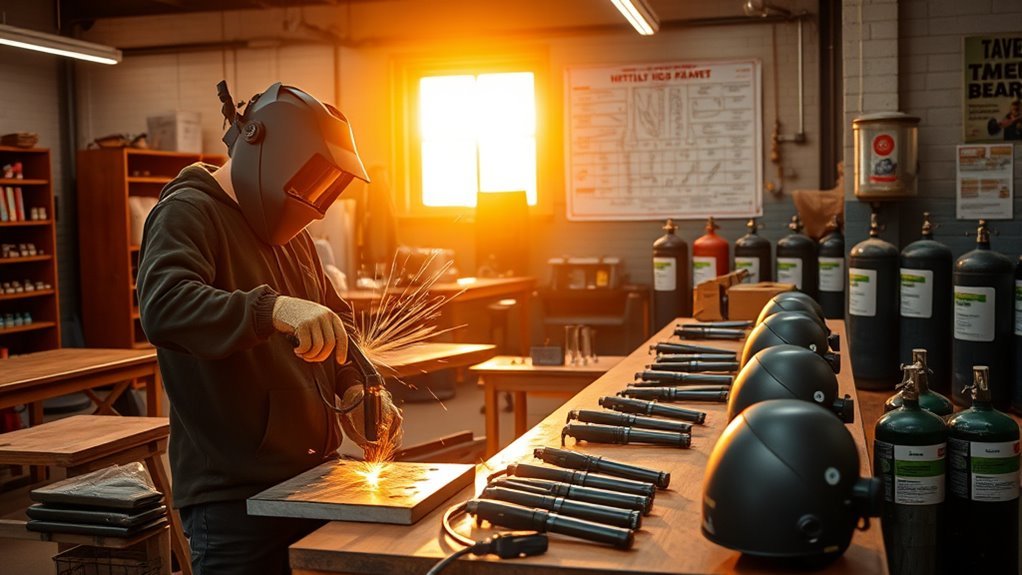
Welding classes cost a few thousand dollars at a public college and more than $20,000 at a private career school. The final price depends on program length, residency, required lab fees, protective gear, certification testing, transportation, and whether you must pay for housing. Compare the full cost of attendance, not tuition alone.
Quick Answer
Plan on roughly $5,000–$25,000 for many complete welding-school paths, although short public-college programs may cost less and private career programs may cost more. Add school fees, protective equipment, transportation, and living expenses. Certification is not one flat national fee: AWS charges an application fee, while the testing facility sets the practical-test price.
Key Takeaways
- Public two-year colleges are often the lowest-cost route, especially for in-district students.
- Private trade-school tuition can exceed $20,000, and some programs add large lab, technology, materials, or gear fees.
- Ask for a written cost sheet showing tuition, fees, books, PPE, consumables, testing, and living costs.
- A school completion certificate and an employer- or code-based welder qualification are not the same credential.
- Use grants, scholarships, WIOA, VA benefits, apprenticeships, and employer assistance before relying on private loans.
Note: The figures below are planning ranges, not guaranteed prices. Tuition and aid change by school, campus, residency, enrollment date, and personal eligibility. Always verify the current catalog, enrollment agreement, net price calculator, and financial-aid offer.
Average Welding Classes Cost by Program Type

A useful starting budget is about $5,000–$25,000 for tuition for a complete welding program. That is not a national price guarantee. Short public-college certificates may fall below the range, while longer private programs and occupational associate degrees can exceed it.
For context, the College Board reports average 2025–26 published tuition and fees of $4,150 per year for full-time, in-district students at public two-year colleges. That figure covers all programs, not welding specifically, and welding lab or course fees may be extra.
Private career-school pricing can be much higher. For example, the Hobart Institute of Welding Technology lists 2026 Pathway tuition of $23,700. Other schools may charge separate registration, lab, technology, textbook, accident-insurance, or equipment-package fees.
The cheapest tuition is not always the lowest total cost. A nearby program with included gear and a shorter commute may cost less overall than a lower-priced school that requires relocation.
Build a side-by-side comparison using the same categories for every school:
- Tuition: the charge for classroom and lab instruction.
- Mandatory school fees: registration, lab, technology, graduation, or student-service fees.
- Books and materials: textbooks, code books, metal coupons, filler metal, gas, tips, and other consumables.
- Personal protective equipment: helmet, safety glasses, gloves, flame-resistant clothing, boots, and hearing protection.
- Testing: school skills tests, employer qualification tests, or AWS application and testing-facility fees.
- Living and travel: housing, food, parking, fuel, public transit, and lost work hours.
Types of Schools and How Pricing Differs
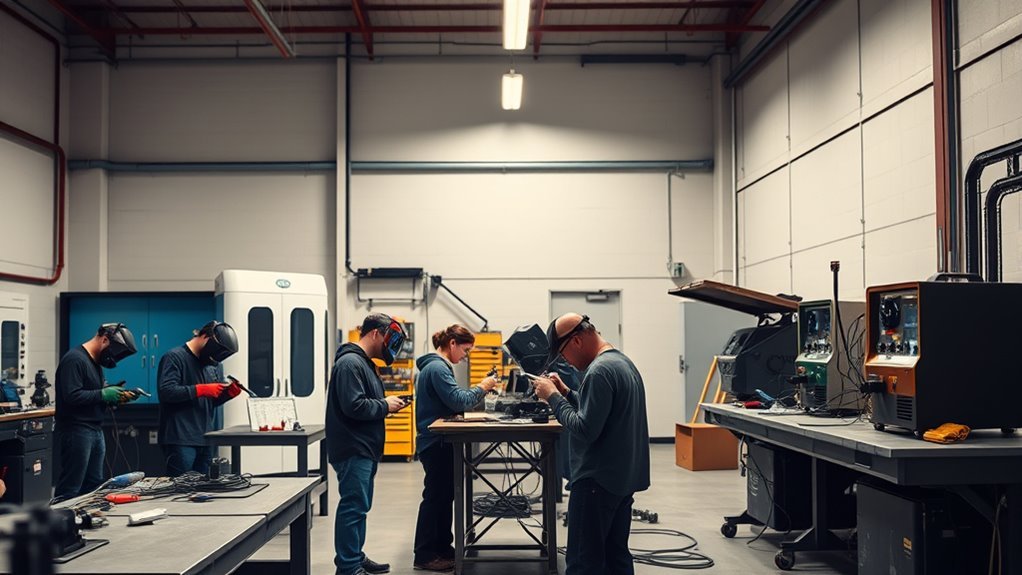
You can choose from community colleges, public technical colleges, private career schools, union or employer apprenticeships, adult-education courses, and limited online theory classes. The right option depends on your budget, schedule, career goal, and need for hands-on booth time.
| School or Training Type | Typical Strength | Cost Consideration |
|---|---|---|
| Community or public technical college | Lower in-district tuition, transferable credits, general education, and access to federal aid when eligible | May take longer and may add per-course lab fees |
| Private trade or career school | Accelerated schedules and concentrated hands-on training | Higher tuition; check every mandatory fee and cancellation policy |
| Registered apprenticeship | Paid work plus related instruction and a recognized credential | Competitive entry; the training may focus on one trade or employer need |
| Short continuing-education course | Low-commitment introduction or skill upgrade | May not provide enough booth hours or a job-ready credential |
| Online welding course | Theory, symbols, metallurgy, safety, and exam preparation | Cannot replace supervised hands-on welding practice or a performance test |
Before enrolling, verify the school and program rather than relying on advertising. Search the U.S. Department of Education accreditation database, review the school’s state approval, and compare cost, completion, debt, and earnings information through the College Scorecard when the institution appears there.
Pro Tip: Ask to tour the welding lab while classes are running. Count working booths, check ventilation and machine condition, and ask how many students share each booth. Hands-on access matters more than a long equipment list in a brochure.
Program Lengths and What They Cost

Program length affects both tuition and opportunity cost. A short course may get you into an entry-level role sooner, while a longer program may add blueprint reading, fabrication, metallurgy, inspection, pipe welding, robotics, or general education.
Certificate Program Costs
Certificate and diploma programs may last from several weeks to about a year. A reasonable planning range is roughly $3,000–$15,000 for tuition, but published prices can sit outside that range. Compare clock hours, lab hours, processes taught, and all mandatory fees.
A lower-priced bootcamp may be useful when you already have shop experience or need one process. A longer certificate may offer more time in SMAW, GMAW, FCAW, GTAW, cutting, fit-up, blueprint reading, and destructive or visual testing.
Before paying, ask:
- How many supervised booth hours will I complete?
- Which welding processes, positions, materials, and joint types are taught?
- Are consumables, code books, PPE, and qualification tests included?
- What percentage of students complete the program on time?
- Does the published job-placement rate include only welding jobs, and how is it calculated?
- What is the refund policy if I withdraw or the class is canceled?
Associate Degree Expenses
An associate degree usually takes about two academic years and combines welding with general education. Tuition at a public college is commonly charged per credit or per term, so residency status and course load matter. Using the 2025–26 public two-year national average as broad context, two full-time years of published tuition and fees would be about $8,300 before welding-specific fees, price increases, grants, or scholarships.
Private occupational associate programs can cost far more. Do not compare a private school’s total program price with only one year of public-college tuition. Put every option on the same timeline and include books, fees, tools, transportation, and living costs.
An associate degree may make sense when you want broader technical training, transferable credit, future advancement, or a path toward supervision, inspection, manufacturing technology, or additional education. It is not automatically required for an entry-level welding job. The Bureau of Labor Statistics lists a high school diploma or equivalent as the typical entry-level education, combined with technical and on-the-job training.
Tools, Equipment, and Supply Expenses
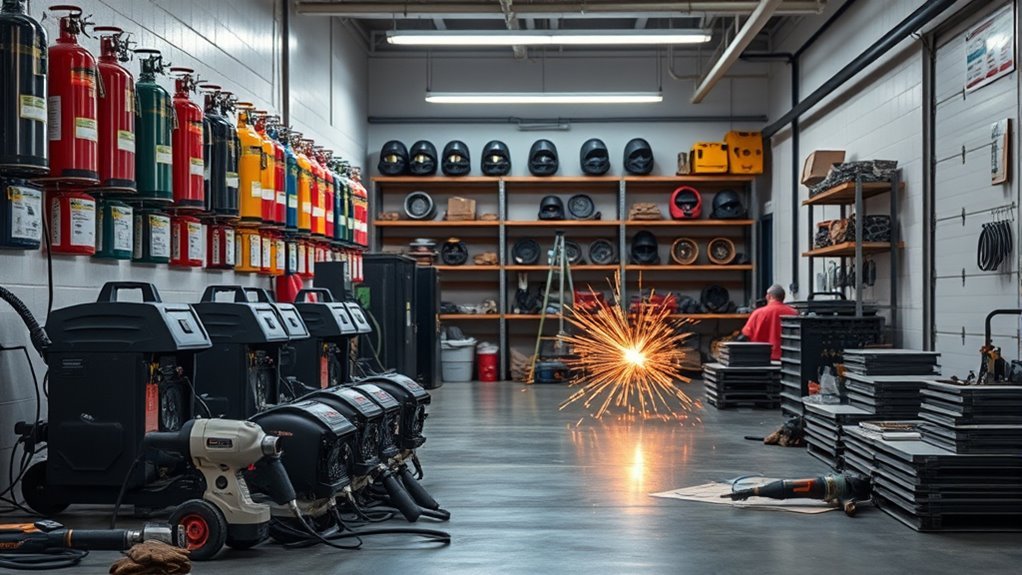
Plan a $500–$2,000 allowance for personal gear, hand tools, books, and consumables unless the school provides a detailed lower or higher estimate. This is a budgeting range, not a national average. Some programs include a gear package; others require you to buy nearly everything.
Common requirements include:
- Welding helmet with the shade range required by the course
- Safety glasses with side protection
- Welding gloves and work gloves
- Flame-resistant jacket, sleeves, or clothing
- Leather work boots that meet the school’s rules
- Hearing protection
- Chipping hammer, wire brush, pliers, soapstone, tape measure, and basic layout tools
- Textbooks, code books, notebooks, and calculator
- Replacement lenses, contact tips, nozzles, electrodes, wire, tungsten, and other consumables when not included
Warning: Do not buy a respirator or rely on a welding helmet as your only protection without the school’s hazard assessment and fit-testing rules. Welding fumes, ultraviolet radiation, burns, electric shock, fire, and confined-space hazards require proper ventilation, PPE, and supervised procedures. Review OSHA’s welding hazard guidance.
You usually do not need to buy a welding machine for school. Most programs provide machines and booths. Buy a practice welder only when the instructor confirms it is useful, your home electrical service can support it, and you have a code-compliant, ventilated, fire-safe work area.
For ongoing maintenance, budget according to the tools you actually own. Helmet lenses, batteries, gloves, contact tips, nozzles, grinding discs, and hand-tool replacements create recurring costs, but there is no reliable fixed yearly amount for every student or welder.
Housing and Living Costs During Training

Housing can exceed tuition, especially if you relocate for a private program. National rent ranges are too broad to predict your cost, so use the school’s official cost-of-attendance estimate and local listings for the exact campus.
On-Campus Housing Costs
Many community colleges and private welding schools do not operate traditional dorms. When housing is available, compare the full room-and-board price, meal-plan requirement, deposit, utilities, parking, move-in dates, and refund rules.
Ask the financial-aid office whether housing is included in the school’s cost of attendance. That figure can affect aid eligibility, but it does not mean the school will give you enough grants or loans to cover every expense.
Off-Campus Rent Estimates
Use current local listings rather than a national estimate. Price at least three realistic options near the campus, then add the security deposit, application fees, utilities, internet, parking, renter’s insurance, furniture, and commuting costs.
Shared housing can reduce cost, but check lease length against the program calendar. A 12-month lease can erase the savings of a nine-month program if you cannot sublet or end the lease early.
Daily Living Expenses
Create a monthly budget for food, transportation, phone, laundry, medical needs, childcare, and emergencies. Include lost income if the class schedule reduces your work hours.
- Housing and utilities: use the actual lease or school rate.
- Food: compare a meal plan with a realistic grocery budget.
- Transportation: include fuel, maintenance, parking, transit passes, or relocation travel.
- Personal costs: include phone, laundry, childcare, and basic health expenses.
- Emergency buffer: set aside money for a missed shift, car repair, tool replacement, or retest.
Certification and Testing Fees to Budget For
Do not assume every welding certification costs $300–$550. There is no single national test price. Under the AWS Certified Welder program, the accredited test facility sets the practical-test fee based on the process and qualification. AWS separately lists a $70 Certified Welder application fee effective January 1, 2026.
Also separate these three items:
- School certificate or diploma: proof that you completed the school’s curriculum.
- Welder performance qualification: proof that you passed a test for a particular process, position, material, thickness range, code, or procedure.
- Professional certification: a credential administered under a certifying body’s rules, such as the AWS Certified Welder program.
A qualification does not prove you are qualified for every welding job. Employers may require a new test using their procedure, code, material, or production conditions. Ask whether your tuition includes the test plate, inspection, destructive testing, AWS application, retest, and record maintenance.
AWS says Certified Welder status remains valid when continuity is maintained, including documentation that you continue using the process at the required interval. Budget for any applicable maintenance, renewal, or retesting costs and confirm the current rules directly with the certifying body.
Financial Aid, Scholarships, and VA/WIOA Assistance
Financial aid can lower your net cost, but the school and program must meet the rules for each funding source. Do not assume every short course or private welding school qualifies.
- FAFSA and federal aid: The FAFSA can open access to federal grants, work-study, and loans for eligible college, career-school, and trade-school programs. Confirm that the exact program participates in federal student aid.
- School and private scholarships: Compare eligibility, deadlines, renewal rules, attendance requirements, and whether the award reduces other aid.
- WIOA: Local American Job Centers may fund approved occupational training for eligible adults, dislocated workers, or other participants. Funding is not automatic, and the program may need to appear on the state Eligible Training Provider list. Start with the U.S. Department of Labor’s WIOA program information.
- VA education benefits: Eligible veterans, service members, and dependents may use GI Bill benefits for approved non-college-degree programs. Verify the school and program before enrolling through VA guidance for non-college degree programs.
- Apprenticeships: A registered apprenticeship can combine paid employment with related instruction. Search opportunities through Apprenticeship.gov and local unions or employers.
Pro Tip: Compare the net price after grants and scholarships, not the advertised tuition. A higher-priced school can cost less out of pocket if it offers more grant aid, while a low sticker price can become expensive after travel, housing, and lab fees.
Payment Plans, Loans, and Alternative Financing
Many schools offer installment plans, but terms vary. Request the written agreement and check the enrollment fee, payment dates, late fees, refund policy, and what happens if you miss a payment or withdraw.
| Option | What to Check |
|---|---|
| School payment plan | Enrollment fee, payment dates, late fees, withdrawal balance, and whether the plan covers tools or housing |
| Federal student loan | Program eligibility, annual and lifetime limits, interest, origination fee, and repayment options |
| Private education loan | APR, variable-rate risk, cosigner rules, fees, deferment, and limited hardship protections |
| Scholarship or grant | Eligibility, deadline, attendance or grade rules, and whether funds are refundable if you withdraw |
| Employer assistance | Preapproval, covered courses, grade requirement, reimbursement timing, service commitment, and repayment clause |
Warning: Avoid choosing a school because a lender says you are “approved.” Loan approval does not prove the program is affordable, accredited, eligible for the credential you need, or likely to produce enough income to repay the debt.
How to Compare Welding Schools Before Enrolling
Use the same checklist for every program so sales presentations do not hide cost or outcome differences.
- Define your target job. Structural fabrication, pipe, production, aerospace, shipyard, maintenance, and artistic welding may require different processes and qualifications.
- Verify the institution. Check accreditation, state authorization, complaint history, and federal-aid participation where relevant.
- Request the full price in writing. Include tuition, mandatory fees, gear, books, consumables, tests, retests, and graduation fees.
- Measure hands-on training. Ask for scheduled lab hours, student-to-booth ratio, machine availability, and instructor credentials.
- Check outcomes carefully. Ask how completion and placement rates are defined, which graduates are excluded, and how many placements are welding jobs.
- Talk to employers. Ask local fabrication shops, contractors, unions, and manufacturers which programs they hire from and which tests they require.
- Compare net cost and debt. Subtract grants and scholarships, then estimate the debt payment and total interest.
- Read the enrollment agreement. Review cancellation, refund, attendance, satisfactory-progress, leave, and grievance rules before signing.
Calculating Return on Investment for Welding School
Return on investment depends on your net cost, starting pay, time out of work, local demand, and whether the program helps you pass the qualifications employers actually request.
Use this simple calculation:
Break-even time = total net training cost ÷ monthly increase in after-tax income.
For example, if school, gear, testing, and lost wages cost you $12,000 and the training increases your take-home pay by $800 per month, the simple break-even point is about 15 months. This example does not include loan interest, future raises, unemployment, overtime, taxes, or benefits.
For wage context, the latest national Occupational Employment and Wage Statistics release reports a May 2025 median annual wage of $53,750 for welders, cutters, solderers, and brazers. A median is not an entry-level promise: half of workers earn less, and pay varies by location, industry, skill, shift, overtime, union status, and experience.
The current BLS Occupational Outlook Handbook projects 2% employment growth from 2025 to 2035 and about 40,300 openings per year, mainly from replacement needs. Check state and local wage data rather than assuming a national figure applies to your first job.
Run at least three scenarios:
- Conservative: lower starting wage, no overtime, slower placement, and full loan interest.
- Expected: realistic local starting wage, average placement time, and normal work hours.
- Upside: faster placement, shift differential, overtime, or a high-demand qualification you can document.
Do not use a school’s highest advertised salary as your expected income. Ask for recent graduate outcomes by campus and program, then compare them with BLS and state workforce data.
Frequently Asked Questions
Are prerequisite classes required before enrolling in a welding program?
Requirements vary. Many programs ask for a high school diploma or GED, minimum age, basic reading and math ability, placement testing, or an orientation. Advanced pipe, inspection, or code courses may require prior welding experience or completion of lower-level courses. Check the exact catalog and admissions policy.
Is workplace safety or accident insurance included during training?
It depends on the school. Some programs carry institutional coverage or charge a student accident-insurance fee, but coverage limits, deductibles, off-campus work, externships, and personal medical bills may be excluded. Read the policy and enrollment agreement instead of assuming you are fully covered.
Can an employer reimburse welding-school tuition?
Yes, some employers offer tuition assistance or reimbursement. You may need approval before enrolling, a minimum grade, proof of payment, continued employment, or a service commitment. Ask for the written policy and check whether you must repay the benefit if you leave early.
Are weekend or evening welding classes available?
Many community colleges and career schools offer evening, weekend, or part-time sections, but lab schedules can be limited. Confirm the total program length, make-up-lab policy, and whether every required course is offered during your preferred time slot.
What are the ongoing maintenance costs for personal welding tools?
There is no fixed annual amount. Costs depend on how often you weld and which tools you own. Common replacements include gloves, clear and shaded lenses, helmet batteries, contact tips, nozzles, grinding discs, wire brushes, and damaged hand tools. A student using school machines will usually spend less than someone maintaining a home shop.
Is welding school worth the cost?
It can be when the program provides enough hands-on practice, teaches the processes local employers need, has credible outcomes, and does not require unmanageable debt. Compare the net price with apprenticeship and employer-training options, then estimate your break-even time using a realistic local starting wage.
Can you learn welding completely online?
No. Online lessons can teach safety theory, symbols, metallurgy, process basics, and exam preparation, but welding is a performance skill. You still need supervised booth practice, feedback, safe equipment, ventilation, and hands-on testing.
Conclusion
Welding-school costs range widely, so focus on the total net price and the training you will actually receive. Public colleges may offer the lowest tuition, private schools may provide faster schedules, and apprenticeships may let you earn while learning. Verify accreditation, hands-on hours, fees, testing, outcomes, and refund terms before signing. Use grants, WIOA, VA benefits, scholarships, and employer help first, then borrow only what a realistic local starting wage can support.
Related guides: cost to learn welding, cost to study welding, and welding lessons cost.
Sources
- College Board, Trends in College Pricing 2025 Highlights — 2025–26 public two-year tuition and broader cost context.
- U.S. Bureau of Labor Statistics, May 2025 National Employment and Wage Data — current national median wage for welders, cutters, solderers, and brazers.
- U.S. Bureau of Labor Statistics, Occupational Outlook Handbook — entry education, work environment, job outlook, and projected openings.
- American Welding Society, 2026 Certification and Education Price List — Certified Welder application and maintenance fees.
- Federal Student Aid, 2026–27 FAFSA Steps — federal grants, work-study, and loans for eligible career and trade schools.
- U.S. Department of Labor, WIOA Workforce Programs — workforce and training services available through American Job Centers.