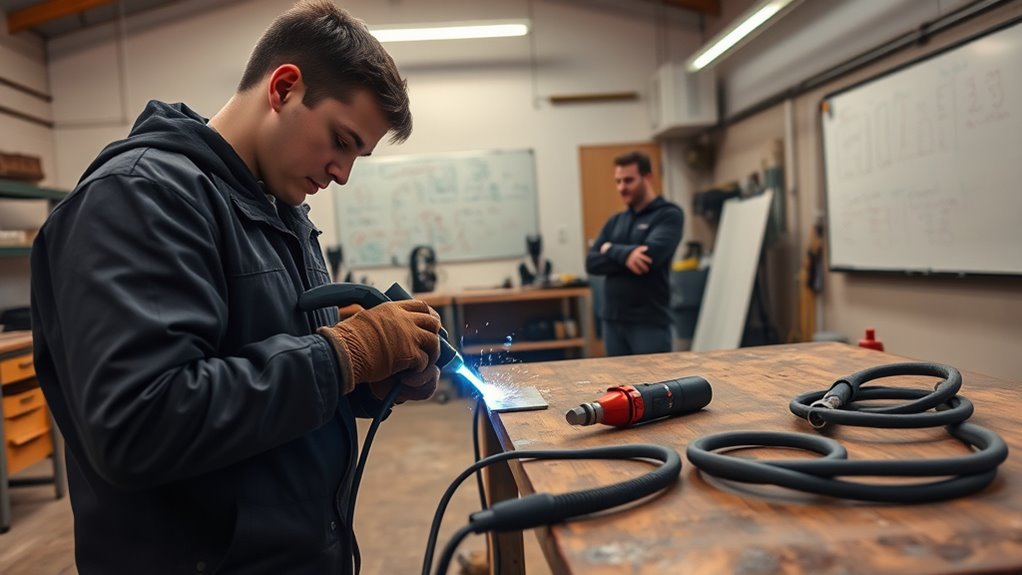
The cost to learn welding can run from a few hundred dollars for a basic introductory class to more than $20,000 for a longer certificate or associate program, based on prices schools publish. The amount you actually pay depends on the school, residency status, program length, included equipment, certification testing, and whether you need housing or give up work hours while training. Comparing the full cost, not tuition alone, helps you choose a practical path without taking on unnecessary debt.
Quick Answer
A reasonable planning range is about $300–$6,000 for a short course, $4,000–$15,000 for many certificate or diploma programs, and $10,000–$25,000 or more for an associate degree. Add tools, PPE, books, testing, transportation, and possible living costs.
Key Takeaways
- There is no single national welding school price; current official school estimates range from low-cost short courses to programs exceeding $20,000.
- Ask for an itemized total that includes tuition, lab fees, books, tools, PPE, consumables, certification tests, and retest charges.
- You usually do not need to buy a welding machine for school unless the program specifically requires one.
- FAFSA aid, AWS scholarships, employer sponsorship, workforce grants, GI Bill benefits, and paid apprenticeships may reduce your out-of-pocket cost.
- Judge value by hands-on booth time, employer-recognized skills, local job demand, and verified graduate outcomes, not by a school’s highest advertised salary.
How Much Does It Cost to Learn Welding?

Welding training prices vary widely because programs are built for different goals. A weekend class may teach basic safety and simple beads, while a full certificate can cover shielded metal arc welding, gas metal arc welding, flux-cored arc welding, gas tungsten arc welding, blueprint reading, fabrication, and qualification-test preparation.
The ranges below are useful for early budgeting, but they are not national averages. Always compare the current published cost for the exact program, campus, and residency category you are considering.
| Training Path | Typical Planning Range | Best Fit |
|---|---|---|
| Introductory or single-process course | About $300–$6,000 | Trying welding, improving one process, or meeting a narrow job requirement |
| Certificate or diploma | About $4,000–$15,000 | Entering the trade quickly with concentrated shop training |
| Associate degree | About $10,000–$25,000+ | Broader technical education, general education, and possible transfer options |
| Private intensive program | Often $15,000–$30,000+ | Fast, full-time training when the schedule and employer network justify the higher price |
School-published examples show why you should avoid relying on one blanket number. Anne Arundel Community College lists a $295 basic class and a $5,520 entry-level certificate. Salt Lake Community College lists an estimated total of $4,737 for its welding technical certificate. Lake Washington Institute of Technology lists estimated totals of $9,500 for an introductory certificate, $14,545 for a welding certificate, and $20,538 for an associate degree. These figures can change, were not re-confirmed at the time of this update, and may not include your transportation, housing, or lost work time. Check each school page for the current price.
Note: A school’s “cost of attendance” can include estimated housing, food, transportation, and personal expenses. That is different from the amount billed directly by the school.
Types of Welding Schools and Programs Compared

The right school type depends on how quickly you want to work, how much general education you want, and whether you need financial aid or transferable college credit.
| Option | Main Advantages | Watch For |
|---|---|---|
| Community or technical college | Often lower in-district tuition, credit-bearing courses, broader student services, and possible transfer options | Out-of-district rates, required general education, waitlists, and semester schedules |
| Private trade school | Compressed schedules, frequent start dates, and concentrated shop training | Higher tuition, private loans, aggressive salary claims, and limited transferability |
| Adult education or workforce center | Short, job-focused courses that may qualify for local workforce funding | Narrow curriculum and programs that may not qualify for federal student aid |
| Registered Apprenticeship | Paid work, structured on-the-job learning, related classroom instruction, and wage increases as skills grow | Competitive entry, employer-specific schedules, travel, and a longer path to completion |
| Online or hybrid theory | Flexible study for safety, symbols, metallurgy, math, and blueprint reading | Online lessons cannot replace supervised arc time, fit-up practice, destructive testing, or performance qualification |
A bachelor’s degree in welding engineering, welding engineering technology, or a related engineering field is a different educational path from entry-level welder training. It may be valuable for engineering, automation, inspection, or management roles, but it should not be mixed into a basic “welding school cost” comparison.
Typical Program Lengths and What They Cover
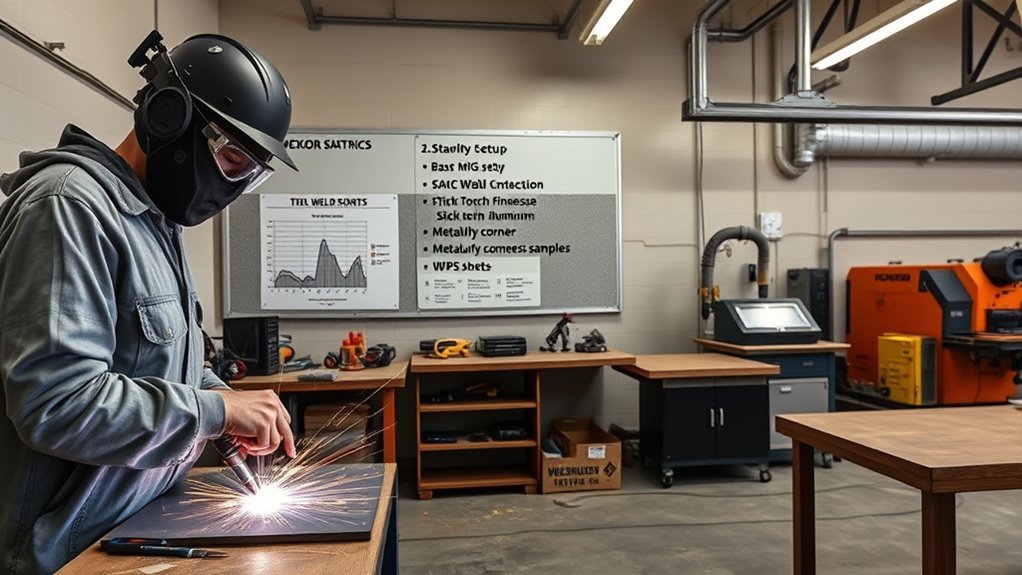
Program length affects tuition, lost work time, and how deeply you cover each process. A short course may be enough for a worker who needs one qualification. A beginner who wants broad employability usually needs more booth time and practice across several processes and positions.
| Program Type | Typical Length | Common Coverage |
|---|---|---|
| Short course | Days to several months | Safety, basic joints, and one process or skill |
| Certificate | Several months to about one year | Core welding processes, cutting, blueprint basics, fabrication, and test preparation |
| Diploma | About one year | More shop practice, theory, layout, metallurgy, and advanced positions |
| Associate degree | About two years | Advanced welding, fabrication, inspection concepts, general education, and sometimes robotics or automation |
Do not compare programs by calendar length alone. Ask how many scheduled lab hours you receive, how much time is spent waiting for a booth, which materials and positions you practice, and whether the program prepares you for the exact code or employer test used in your local market.
Breakdown of Tuition, Fees, and Supplies

The price on a school’s main page may show tuition only. Build a complete budget before you enroll:
Total welding school cost = tuition + mandatory fees + books + tools and PPE + consumables + certification tests + transportation + housing or food changes + lost earnings − grants, scholarships, and employer aid.
| Cost Category | Questions to Ask |
|---|---|
| Tuition and registration | Is the price per credit, clock hour, term, or entire program? Does residency change the rate? |
| Lab and technology fees | Are booth time, gases, metal, rods, wire, tips, and grinding supplies included? |
| Books and software | Can you rent, buy used, or use an included digital text? |
| Tools and PPE | Does the school provide a kit? Can you bring equivalent approved gear? |
| Certification testing | Which tests are included? Who pays for coupons, inspection, application, and retests? |
| Transportation and living costs | How often must you be on campus? Will night classes reduce lost wages or increase commuting costs? |
Pro Tip: Ask the school for a written, term-by-term cost sheet and the required tool list before paying a deposit. Compare the same categories across every school so a low tuition figure does not hide high lab, equipment, or testing charges.
Equipment, Tools, and Safety Gear Costs
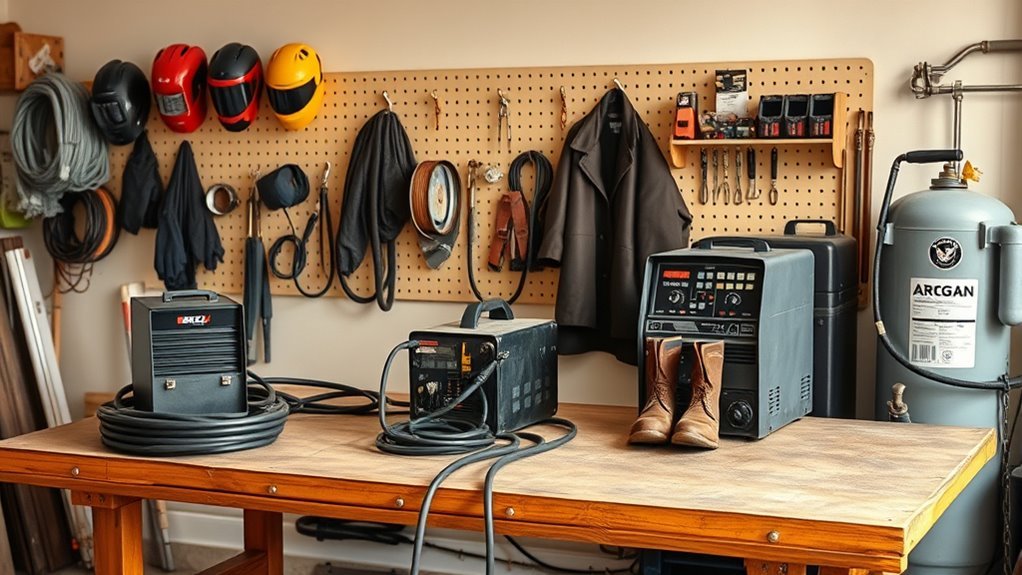
Many students spend roughly $500–$1,900 on required books, tools, clothing, and PPE, although some schools include part of the kit or let students use approved gear they already own. Your list may include:
- Auto-darkening or passive welding helmet with the required lens shade
- Safety glasses, hearing protection, and approved respirator when required
- Leather gloves, flame-resistant jacket or sleeves, cotton clothing, and work boots
- Chipping hammer, wire brush, welding pliers, clamps, soapstone, tape measure, square, and hand tools
- Grinding shields, replacement lenses, tips, nozzles, tungsten, rods, or wire if the program does not supply them
You normally do not need to buy a $500–$2,000 welding machine for school. Most programs provide machines in the lab. Buy one only when the official tool list requires it or when you have a safe, properly wired, well-ventilated practice area and know which process and input power you need.
Warning: Welding can expose you to fumes, ultraviolet radiation, burns, electric shock, noise, fire, and eye injuries. Training should include ventilation, fire prevention, cylinder handling, electrical safety, and correct PPE. Never treat a cheap helmet or improvised ventilation as a safe way to reduce costs.
Financial Aid, Scholarships, and Payment Options

You may be able to combine several funding sources. Start with money that does not need to be repaid, then compare payment plans and federal loans only for the remaining balance.
Scholarships and Grants
Complete the FAFSA early if the school and program participate in federal student aid. The FAFSA can be used to determine eligibility for federal grants, work-study, and federal student loans, and many states and schools also use it for their own aid.
The American Welding Society Foundation offers scholarships for welding students, including a Welder Training Scholarship for eligible certificate programs shorter than two years. Also check state workforce agencies, local manufacturers, unions, foundations, and the school’s financial aid office.
- Confirm that the exact welding program, not just the school, is eligible for the aid you expect.
- Apply for grants and scholarships before borrowing.
- Ask whether an award covers tuition only or can also pay for books, tools, and PPE.
- Track renewal rules, deadlines, attendance requirements, and satisfactory academic progress.
Federal Loan Options
Federal student loans have fixed interest rates and federal repayment protections, but borrowing still increases the true cost of training. Review the total amount borrowed, estimated monthly payment, and likely entry-level pay before accepting the full offer. A short certificate may not be eligible for federal aid even when other programs at the same school are eligible.
Use private education loans only after comparing the rate, whether it is fixed or variable, fees, cosigner requirements, hardship options, and total repayment cost.
Payment Plans and Employer Financing
School payment plans can spread tuition across a term, but check enrollment fees, late charges, automatic-withdrawal rules, and what happens if you withdraw. Employer tuition assistance, tool allowances, paid internships, union training, and workforce-development programs may lower your cost without creating long-term debt.
Paid Apprenticeships and Veteran Benefits
A Registered Apprenticeship is a paid job with structured on-the-job learning, related instruction, and wage increases as you gain skills. Availability depends on local employers, unions, and program sponsors, so search by location and occupation.
Eligible veterans, service members, and some dependents may use GI Bill benefits for approved non-college degree programs, apprenticeships, or on-the-job training. Verify the exact school and program in the VA GI Bill Comparison Tool before enrolling. VET TEC 2.0 is designed for approved high-technology training and should not be treated as general welding-school funding.
How to Compare Welding Schools Before Enrolling
A program can be inexpensive and still be poor value if students receive little booth time or leave without the skills local employers test. Ask each school the same questions:
- How many supervised lab hours are included? Ask how much of that time is actual welding rather than demonstrations, cleanup, or waiting for equipment.
- Which processes, materials, positions, and thicknesses are taught? Match the answer to local job postings.
- What is included in the published price? Get a written list of fees, PPE, tools, consumables, tests, and retests.
- Which credentials can you earn? Ask whether you are receiving a school certificate, an AWS certification, an employer qualification, or all three.
- What are the completion and placement numbers? Request the number of graduates, the number placed in welding-related work, the reporting period, and whether the figures were independently verified.
- What is the refund policy? Understand deposits, cancellation dates, attendance rules, and the amount owed if you leave early.
- Is the institution accredited, and do credits transfer? Accreditation can affect federal aid and transfer options, but it does not guarantee that another school or employer will accept every credit or credential.
- Which local employers recruit from the program? Ask for recent employer names, job titles, starting ranges, and required weld tests.
Red Flag: Be cautious when a school promises a guaranteed job, uses a six-figure specialty wage as the normal starting salary, pressures you to sign immediately, or will not provide an itemized cost and written refund policy.
For more detail, see our guides to welding training costs by program, welding school costs and ROI, AWS welding certification costs, and what it costs to study welding.
Certification, Licensing, and Exam Expenses
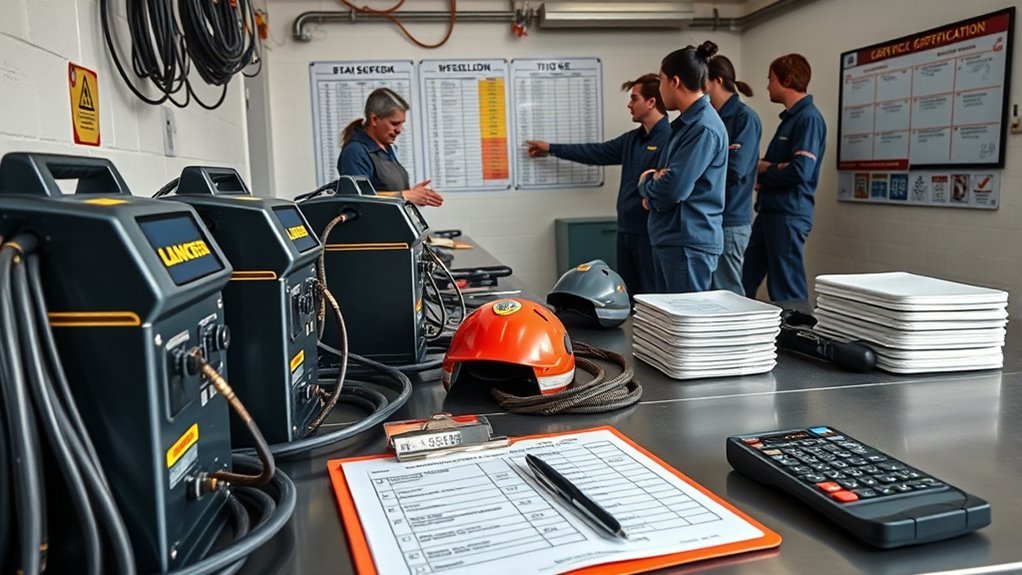
Welding school completion, welder certification, employer qualification, and contractor licensing are different things:
- School certificate or diploma: Shows that you completed the school’s curriculum.
- Welder certification or performance qualification: Shows that you passed a weld test under a specific code, process, material, position, and procedure.
- Employer qualification: An employer may require another test for its own procedure or project even when you already hold a credential.
- License: There is no universal national license that lets a welder perform every type of work. State or local contractor, business, inspection, or specialty rules may still apply.
Do not use a single estimate for every AWS Certified Welder test. AWS lists its Certified Welder application fee (confirm the current amount there), while the Accredited Test Facility sets the actual exam price. The total can change with the process, code, test coupon, inspection method, travel, and retests.
AWS Certified Welder credentials remain valid only when the required continuity is maintained. Ask the testing facility and employer which records, renewal steps, and costs apply to your qualification.
Return on Investment and Career Earnings

Welding can provide a solid return, but no school can guarantee a salary. The U.S. Bureau of Labor Statistics reported a median annual wage of $53,750 for welders, cutters, solderers, and brazers in May 2025. In May 2024, the lowest 10 percent earned less than $38,130, while the highest 10 percent earned more than $75,850. Pay varies by location, experience, industry, shift, overtime, travel, union status, and the difficulty of the work.
BLS projects about 40,300 openings per year from 2025 to 2035, largely because workers will change occupations or leave the labor force, even though total employment growth is projected at 2%.
Entry-Level Wage Expectations
Do not treat the national median as a guaranteed starting wage. New welders may begin below the median while they build speed, consistency, code qualifications, and fabrication experience. Compare recent local job postings and ask employers which processes, positions, shifts, and credentials affect starting pay.
Industry-Specific Salary Factors
Specialty trade contractors, repair and maintenance, manufacturing, shipyards, pipelines, power plants, and field construction can have different pay structures. Higher earnings may require travel, overtime, hazardous conditions, union membership, security clearance, advanced pipe skills, inspection credentials, or years of experience. Underwater welding is also commercial diving work and requires specialized diving training, medical fitness, and a different risk profile.
How to Calculate Your Payback Period
Use your expected local earnings rather than a school’s top salary example:
- Calculate your net training cost after grants, scholarships, employer aid, and required expenses.
- Estimate the realistic increase in annual take-home pay compared with your current path.
- Divide net training cost by that annual increase.
For example, a $9,000 net cost divided by a realistic $6,000 annual increase in take-home pay equals an estimated 1.5-year payback period. This is only a planning example; overtime, taxes, unemployment between jobs, tools, travel, and loan interest can change the result.
Frequently Asked Questions
Can I learn welding entirely online without hands-on practice?
No. Online instruction can teach safety, math, metallurgy, weld symbols, and blueprint reading, but you need supervised practice to control the arc, fit joints, correct defects, work in different positions, and pass a performance test.
Do employers accept self-taught welding skills without certification?
Some employers hire based on a practical weld test and work history, but many jobs require specific qualifications for the process, material, position, code, or customer. Strong self-taught skills can help, but recognized training and documented qualifications usually broaden your options.
What are the health risks of long-term welding work?
Risks can include metal-fume exposure, eye and skin damage from radiation, burns, electric shock, hearing loss, fire, and strains from awkward positions. Proper ventilation, hazard assessment, PPE, hearing protection, training, and medical guidance when respirators are required help reduce risk.
Can veterans get welding training benefits?
Eligible veterans, service members, and some dependents may use GI Bill benefits for approved college, non-college degree, apprenticeship, or on-the-job training programs. Confirm the exact welding program in the VA GI Bill Comparison Tool before enrolling.
Are there apprenticeships that pay while I train?
Yes. Registered Apprenticeships combine paid employment, on-the-job learning, classroom instruction, and wage increases as skills improve. Openings vary by region and may be listed under welding, pipefitting, ironworking, boilermaking, fabrication, or related trades.
Do I need to buy a welding machine for school?
Usually not. Most schools provide lab machines. Buy one only when it appears on the official required-equipment list or when you have confirmed the process, electrical supply, ventilation, fire protection, and safe practice space you need.
Is welding school worth the cost?
It can be worth it when the program provides substantial hands-on practice, teaches skills local employers need, has transparent costs and outcomes, and leaves you with manageable debt. A paid apprenticeship or lower-cost public program may offer better value than an expensive private school for some students.
Conclusion
Welding school may cost less than $1,000 for a basic class or more than $20,000 for a longer credential, but the sticker price does not tell the whole story. Compare hands-on hours, included gear, testing fees, aid eligibility, verified outcomes, and local employer requirements. The best program is the one that builds marketable skills at a total cost and debt level your realistic starting pay can support.
Sources
- U.S. Bureau of Labor Statistics: Welders, Cutters, Solderers, and Brazers — median pay, wage distribution, job outlook, and typical entry requirements.
- American Welding Society Certification and Education Price List — 2026 AWS application and program fees.
- AWS Certified Welder Program — test-facility pricing, performance testing, and certification continuity.
- Federal Student Aid: FAFSA Steps for Students — federal aid for eligible college, career-school, and trade-school programs.
- OSHA Welding, Cutting, and Brazing Hazards and Solutions — welding fumes, radiation, burns, electrical hazards, and PPE.
- U.S. Department of Veterans Affairs: Non-College Degree Programs — use of GI Bill benefits for approved vocational and technical training.