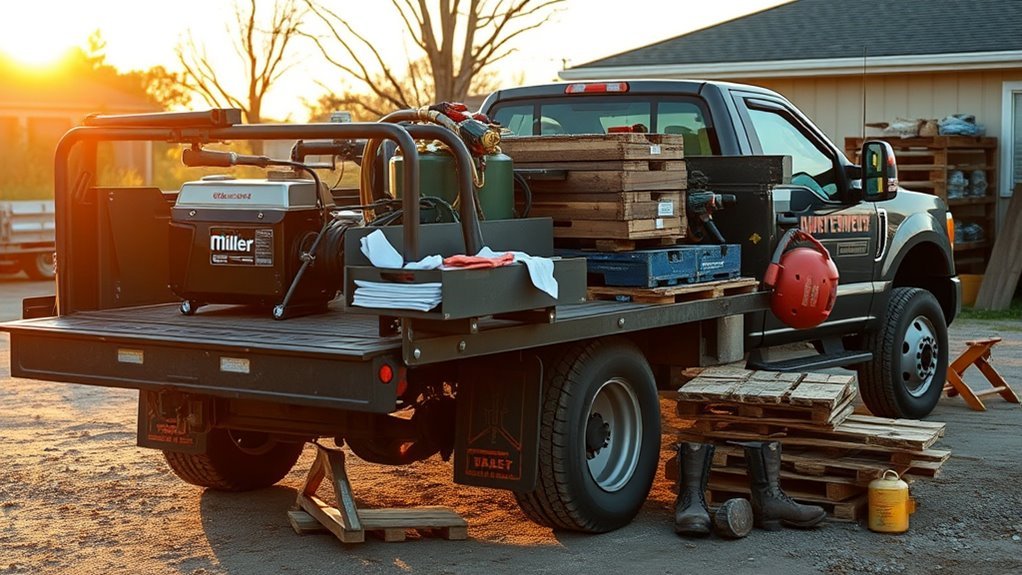
A mobile welding rig can be a simple pickup with a compact welder and hand tools, or a heavy-duty service truck carrying an engine-driven welder, gas cylinders, reels, a compressor, and cutting equipment. The final cost depends less on one national “average” and more on the work you plan to perform, the truck you already own, and the safety and insurance requirements attached to your jobs.
Quick Answer
Plan on roughly $10,000–$25,000 to equip a truck you already own, $30,000–$70,000 for a used-truck setup, or $65,000–$130,000+ for a new heavy-duty, professionally integrated rig. These are planning ranges, not a national price survey; specialty pipe, structural, or air-compressor rigs can cost more.
Key Takeaways
- The truck and engine-driven welder are usually the two largest purchases.
- Payload, axle ratings, cylinder securement, ventilation, and fire prevention must be designed before equipment is mounted.
- Insurance is quote-specific; avoid building a budget around one generic annual premium.
- Add a 10%–20% contingency and a separate cash reserve for fuel, consumables, repairs, and slow periods.
- Calculate break-even from monthly profit after operating costs, not from gross billed revenue.
At a Glance
| Time Required | Several days for a basic removable setup; several weeks for engineered mounting, wiring, racks, and inspection |
| Difficulty | Moderate to advanced; structural mounting, vehicle electrical work, and gas-cylinder storage may require qualified professionals |
| Tools Needed | Welder or welder-generator, leads, grinders, cutting tools, cylinders and regulators as needed, PPE, extinguisher, storage, and secure mounts |
| Cost | About $10,000–$130,000+ depending on whether the truck is already owned and how specialized the rig must be |
How Much Does a Mobile Welding Rig Cost?
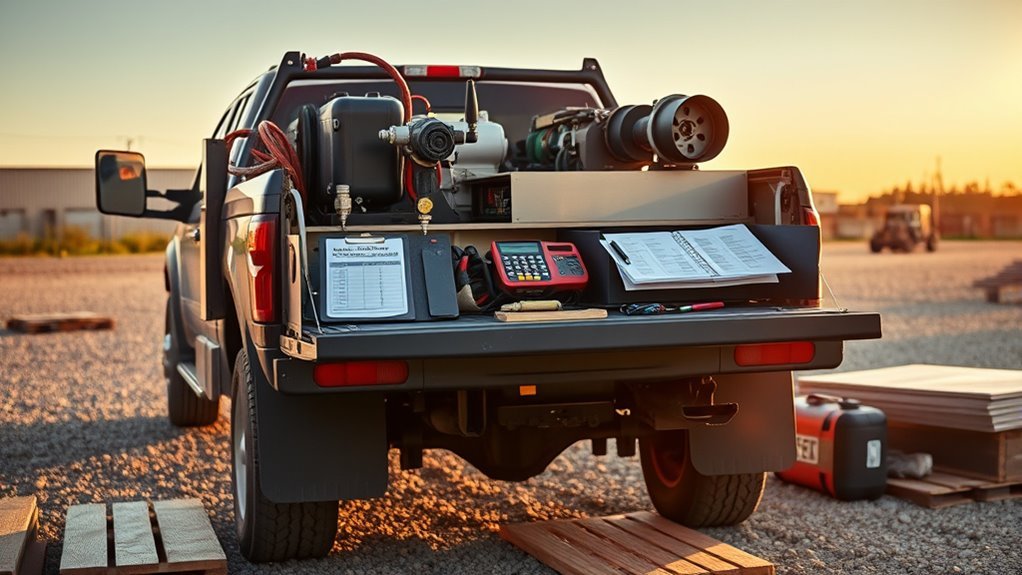
There is no reliable national survey showing what a fixed percentage of independent welders spend. A more useful approach is to price the rig by setup level and then obtain local quotes for the truck, machine, fabrication, insurance, and permits.
| Setup level | Planning range | Typical scope |
|---|---|---|
| Basic rig on a truck you own | $10,000–$25,000 | Compact or mid-size welder, leads, grinders, basic cutting gear, PPE, bottles or a bottle rack, and lockable storage |
| Used-truck professional setup | $30,000–$70,000 | Used heavy-duty truck, engine-driven welder, reels, larger tool inventory, fabricated mounts, lighting, and insurance deposits |
| New integrated service rig | $65,000–$130,000+ | New heavy-duty chassis, professional upfit, high-output or diesel welder-generator, compressor or Air Pak, reels, racks, and specialty tooling |
A current heavy-duty truck alone can consume much of the budget. For context, Chevrolet lists a 2026 Silverado HD commercial model with a starting MSRP in the mid-$40,000s before taxes, options, body equipment, and upfitting. A completed service truck can therefore move well beyond the base vehicle price.
Build a Line-Item Startup Budget
Separate capital purchases from first-year operating costs. A practical budget should include the following ranges:
- Welder or engine-driven welder-generator: roughly $2,000–$20,000+, depending on amperage, duty cycle, fuel type, auxiliary power, multiprocess capability, and whether an air compressor is built in.
- Leads, remotes, reels, feeders, and adapters: about $800–$5,000.
- Cutting and preparation tools: about $1,000–$8,000 for grinders, saws, a plasma cutter, torches, and accessories.
- Gas equipment: about $800–$4,000 for cylinders, regulators, hoses, flashback arrestors where required, and secure racks.
- Storage, mounting, wiring, lighting, and fabrication: about $2,000–$12,000+, depending on how much work is custom.
- PPE, fire protection, first aid, and jobsite barriers: about $500–$2,000 per operator for a complete initial setup.
- Licensing, registration, insurance deposits, and professional fees: highly location- and work-specific; obtain written quotes rather than using a single national allowance.
Add a 10%–20% contingency for freight, taxes, fittings, extra cable, replacement batteries, fabrication changes, and items that are easy to overlook. Keep a separate reserve for at least several months of fixed operating expenses.
Pro Tip: Price the jobs you intend to win before buying equipment. A rig for gates, farm repairs, and light fabrication does not need the same output, compressor capacity, or tooling as a pipeline, structural, heavy-equipment, or gouging rig.
Essential Welding Machines and Generator Capacity
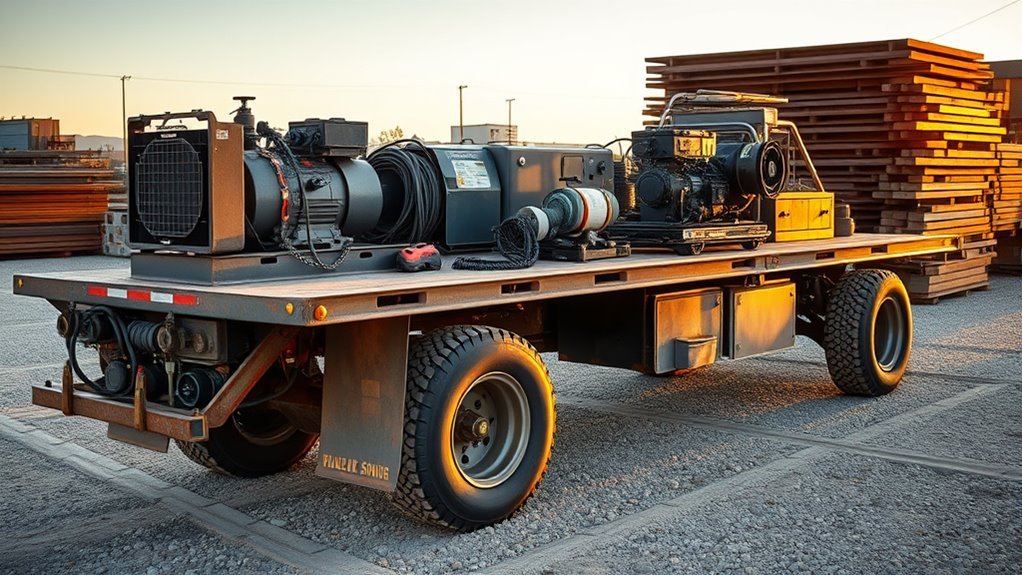
The core machine determines what work the rig can perform. Choose it by process, output, duty cycle, auxiliary power, service support, and total weight, not only by purchase price.
Choose the Welder by Job Type
- Light repair and fabrication: a portable inverter MIG, stick, or multiprocess welder may be enough if dependable generator or shore power is available.
- Field repair and construction: an engine-driven stick or flux-cored welder-generator reduces dependence on site power and can run grinders, lights, and selected tools.
- Pipe, structural, and heavy-equipment work: prioritize stable arc performance, high duty cycle, remote-control support, carbon-arc capability where needed, and proven local service access.
- Aluminum work: confirm spool-gun or wire-feeder compatibility and whether the machine provides the process and output required by the procedure.
For scale, Miller’s current Bobcat line includes work-truck engine-driven models with roughly 230–265 amps of output and about 9.5 kW of continuous single-phase generator power on selected units. Those specifications show why machine weight, fuel, airflow, and mounting space must be included in the truck plan.
Match Generator Output to the Load
Do not size a generator from the welder’s nameplate amperage alone. Check the welder manual for input voltage, phase, maximum input current, recommended branch protection, and generator requirements. Then add simultaneous loads such as a plasma cutter, compressor, grinder, lights, battery charger, or wire feeder.
Continuous watts matter more than a short surge rating. Leave headroom so voltage does not sag during arc starts or when motors start. If a separate generator powers an inverter welder, confirm that both manufacturers approve the combination and that the generator produces suitable voltage and frequency stability.
OSHA’s arc-welding standard requires equipment to be selected, installed, and operated safely for the work. Follow the machine manual for grounding, bonding, GFCI use, extension cords, ventilation, and service intervals.
Inspect Used Equipment Before Buying
- Run the machine cold and hot, test weld output through its range, and apply an auxiliary electrical load.
- Check engine hours, service records, oil leaks, compression or starting behavior, battery condition, and exhaust.
- Inspect receptacles, cables, lugs, insulation, panels, weld terminals, idle controls, and remote functions.
- Confirm that manuals, serial numbers, parts, and local service support are available.
- Price immediate maintenance, worn leads, tires, batteries, filters, and missing accessories before comparing it with a new unit.
Required Tools, Consumables, and Spare Parts
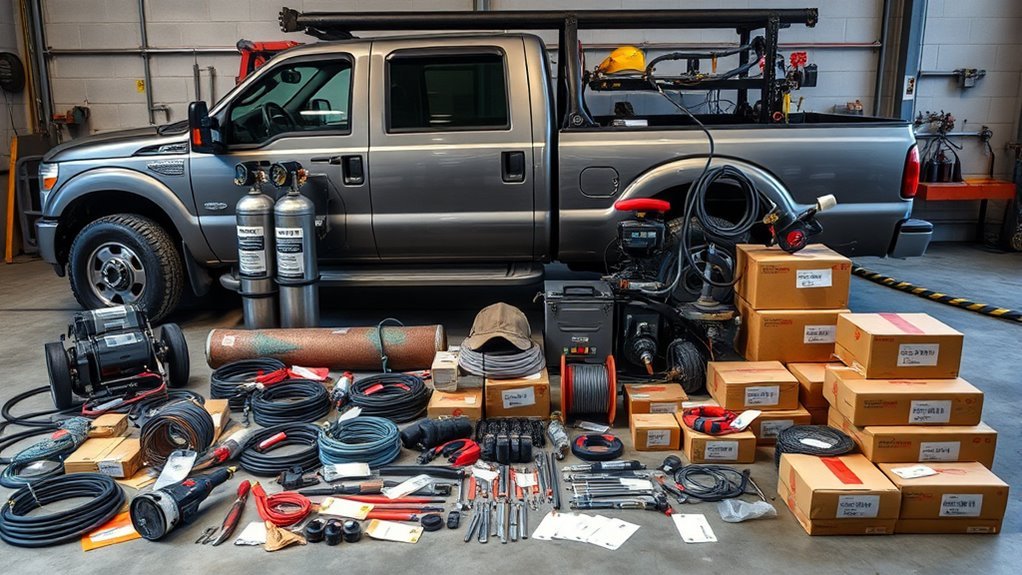
A functional rig needs more than a welder. The exact list depends on the process and customer base, but most mobile welders need cutting, preparation, measurement, clamping, material handling, fire protection, and replacement parts.
Essential Welding Tools
- Primary welder, leads, ground clamps, electrode holders, guns, torches, remotes, and process-specific accessories
- Angle grinders, wire wheels, flap discs, cutting discs, saws, and a plasma or oxy-fuel cutting system where appropriate
- Clamps, magnets, levels, squares, tape measures, soapstone, temperature crayons, gauges, and inspection tools
- Extension cords, distribution equipment, work lights, batteries, and chargers rated for the jobsite
- Fire extinguisher, fire blanket, screens, first-aid kit, spill supplies, cones, and warning barriers
- Lockable weather-resistant boxes, racks, drawers, and tie-down points
Compressors commonly add significant cost and weight. Before buying one, list the tools it must run and compare their required airflow at pressure. An integrated welder-compressor can save deck space, while separate machines may be easier to replace or use independently.
Consumables and Spares
Track rods, wire, tungsten, cups, nozzles, contact tips, shielding gas, fuel gas, oxygen, grinding media, batteries, filters, and PPE as recurring costs. Consumption varies too much by process and workload for one annual figure to be reliable.
Carry only the spares that prevent expensive downtime: common contact tips, diffusers, nozzles, O-rings, fuses, drive rolls, liners, gas fittings, hose repair parts, ground clamps, lugs, filters, and a backup grinder. Store filler metals and electrodes as required by their manufacturer or the applicable welding procedure so moisture and contamination do not ruin them.
Review inventory monthly and assign consumables to jobs. This makes estimates more accurate and shows which customers, materials, and processes produce the best margin.
Vehicle, Storage, Payload, and Rig Mounting Expenses
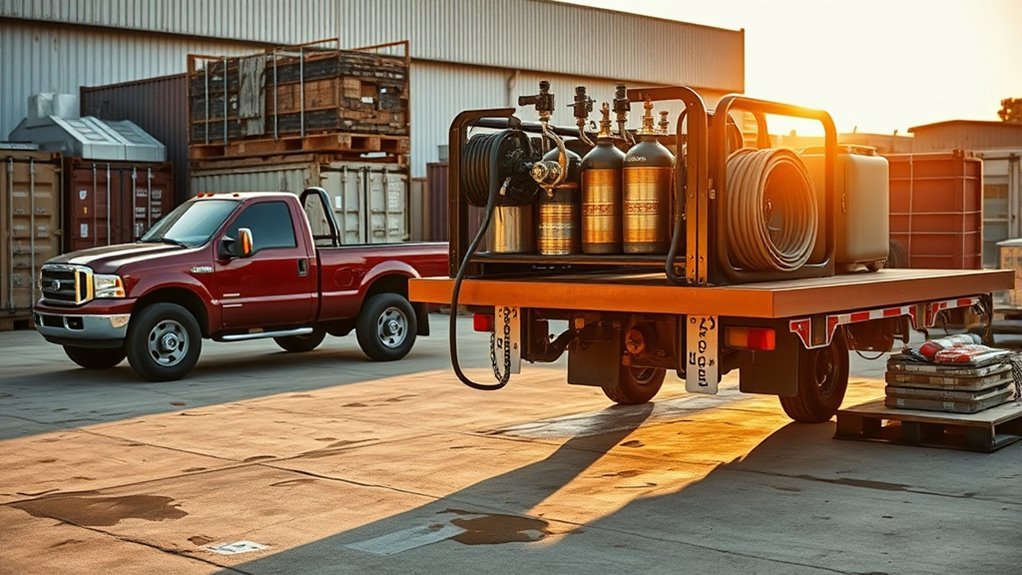
The right vehicle is determined by loaded weight, axle loading, bed or service-body space, towing needs, terrain, fuel availability, and the jobs you plan to reach. Do not assume that a heavy-duty badge automatically provides enough payload for a welder, bottles, tools, people, fuel, and trailer tongue weight.
Calculate Payload Before Mounting
Use the truck’s certification label, owner’s manual, and an actual scale weight. A practical check is:
Loaded truck weight = empty truck + people + fuel + welder + cylinders + tools + storage + materials + trailer tongue weight.
The result must stay within the vehicle’s gross vehicle weight rating, gross axle weight ratings, tire ratings, and any body-builder limits. Keep heavy equipment low and positioned so one axle or side is not overloaded.
Storage and Mounting
- Choose the layout: map the welder, reels, cylinders, toolboxes, compressor, fire extinguisher, and daily-access tools before drilling or welding.
- Use engineered mounts: account for vibration, impact, corrosion, manufacturer mounting points, service access, airflow, exhaust, and heat.
- Secure every item: equipment, cylinders, materials, and loose tools must not shift, roll, or leave the vehicle during braking or a collision.
- Protect the machine: maintain cooling clearances, prevent exhaust recirculation, and avoid enclosing fuel-powered equipment in an unventilated space.
- Plan theft control: use lockable boxes, hidden fasteners where practical, serial-number records, lighting, and suitable tools-and-equipment coverage.
For commercial vehicles operating in interstate commerce, FMCSA cargo-securement rules require cargo to be immobilized or secured with structures, blocking, bracing, tiedowns, or a combination. State and local rules may also apply to lighter vehicles and intrastate work.
Warning: Never mount equipment by guesswork. Overloaded axles, weak anchor points, blocked cooling air, hot exhaust near combustibles, or unsecured cylinders can create crash, fire, and insurance problems. Use the vehicle body-builder guide and qualified fabrication or upfitting help when the installation affects structure, brakes, suspension, fuel, or electrical systems.
Compressed-Gas Cylinder Transport
Compressed-gas rules depend on the work setting, gas, quantity, and transportation classification. On construction sites, OSHA 29 CFR 1926.350 requires valve caps during movement, secure vertical transport by powered vehicle, upright securement in use or storage, and separation of stored oxygen from fuel gas or combustibles unless an approved barrier is used.
DOT hazardous-material rules may permit specific cylinder orientations when cylinders are properly restrained, but they also impose packaging, marking, quantity, and training requirements in applicable situations. Verify the exact federal, state, and local requirements for your gases and vehicle. Do not carry leaking cylinders, leave regulators exposed during transport unless the approved carrier allows it, or store cylinders in an unventilated passenger compartment.
Safety Gear, PPE, and Compliance Costs
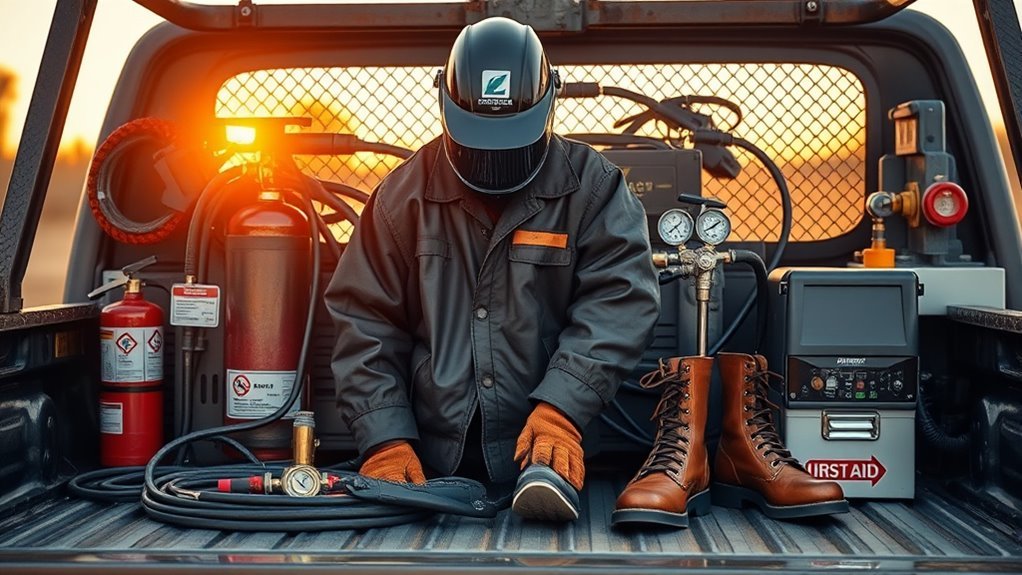
Build PPE and safety equipment from a documented hazard assessment. A typical mobile package may include an appropriate welding helmet and lenses, safety glasses, face shield, hearing protection, welding gloves, task-specific gloves, flame-resistant clothing, leather protection, safety footwear, respiratory protection where required, and high-visibility gear for roadside or active sites.
OSHA’s welding, cutting, and brazing standards cover fire prevention, ventilation, equipment, cylinders, and operating practices. Construction, shipyard, confined-space, respiratory, silica, hexavalent chromium, and client-specific rules may add requirements.
Respiratory Protection and Ventilation
A respirator is not a substitute for controlling fumes at the source. Evaluate base metal, coatings, consumables, ventilation, work position, and exposure duration. When an employer requires tight-fitting respirators, OSHA’s respiratory-protection standard requires a written program, medical evaluation before use, proper selection, training, maintenance, and fit testing before initial use and at least annually.
Replace filters, cartridges, lenses, gloves, clothing, and other PPE based on the hazard, condition, exposure, service-life information, and manufacturer instructions, not an arbitrary 6- to 24-month schedule.
Training, Qualification, and Hot Work
Training time cannot be reduced to one universal number. Operators need instruction for the specific equipment and hazards, while welder qualification depends on the code, process, position, material, thickness, and procedure required by the customer or authority having jurisdiction.
The AWS Certified Welder Program is performance-based and does not impose a general education or experience prerequisite. Passing one test does not automatically qualify a welder for every process or code.
Budget for fire extinguishers, screens, fire-watch time, hot-work permits, ventilation equipment, respirator evaluations and fit tests when applicable, equipment inspections, and customer-required orientation or site credentials.
Insurance, Licensing, and Regulatory Fees
There is no universal $12,000 annual insurance bill for mobile welders. Premiums depend on location, revenue, payroll, driving record, vehicle value, equipment value, welding specialty, hot-work exposure, claims history, coverage limits, deductibles, and whether employees or subcontractors are used.
Common policies include:
- General liability: third-party injury and property-damage claims, subject to policy terms and exclusions
- Commercial auto: the work truck and business driving
- Tools and equipment or inland marine: mobile tools and machines away from the shop
- Workers’ compensation: required in many situations when employees are hired, with rules varying by state
- Umbrella or excess liability: higher limits when contracts require them
- Professional, product, or completed-operations coverage: depending on design responsibility and the work produced
Many commercial customers ask for a certificate of insurance and may require $1 million or $2 million liability limits, additional-insured status, waiver language, or special endorsements. Those are contractual requirements, not a universal legal minimum for every welder.
Business licenses, contractor registration, sales-tax permits, zoning, fire-code approvals, hot-work permits, and trade or project credentials vary by location and job type. The U.S. Small Business Administration’s licensing guide recommends checking the federal, state, county, and city agencies that regulate your activity.
Note: Get insurance quotes before buying the truck. Some carriers restrict certain structural, oilfield, refinery, pressure, pipeline, or hot-tap work, and the available coverage can change the jobs you can accept.
Ongoing Operating and Maintenance Costs
Startup cost is only part of the budget. Track operating expenses by month and by job so they are included in your minimum charge, travel charge, hourly rate, or project price.
- Vehicle fuel and maintenance: fuel, oil, filters, tires, brakes, registration, inspections, repairs, and depreciation
- Welder-generator fuel and service: fuel, oil, filters, spark plugs, belts, batteries, coolant on liquid-cooled units, and scheduled service
- Consumables: filler metal, electrodes, shielding gas, oxygen and fuel gas, tips, nozzles, tungsten, abrasives, and cutting parts
- Insurance and administration: premiums, bookkeeping, software, phone, banking, tax preparation, and certifications
- Replacement reserve: funds for leads, reels, grinders, torches, regulators, compressors, and major machine or truck repairs
- Nonbillable time: quoting, travel, setup, cleanup, purchasing, maintenance, training, and collections
A rig is profitable only when the price of each job covers labor, travel, consumables, overhead, equipment replacement, taxes, and profit, not merely the time spent under the hood.
Use a Monthly Cost Sheet
Record miles, engine hours, machine hours, fuel, gas, consumables, repairs, insurance, and billable hours. Divide total overhead by realistic billable hours rather than total hours worked. Mobile businesses often have substantial travel and setup time that cannot be ignored.
Maintain a cash buffer for slow periods and a repair reserve tied to expected replacement cost. Preventive maintenance reduces surprise failures, but it does not eliminate the need for backup plans, rental access, or spare critical tools.
Financing Options and Cost-Saving Strategies
Equipment loans, vehicle loans, leases, credit-union financing, vendor programs, and business loans can spread startup costs, but the cheapest monthly payment is not always the lowest total cost. Compare the annual percentage rate, fees, down payment, collateral, prepayment terms, insurance requirements, and total interest.
Low-Cost Financing Routes
- Equipment financing: useful when the welder, compressor, or service body serves as collateral and has a predictable useful life.
- Commercial vehicle financing: separates the truck loan from smaller tool purchases and may offer terms suited to the vehicle.
- Credit-union or bank term loan: compare fixed and variable rates and confirm whether business-use equipment is eligible.
- SBA-backed financing: the SBA 7(a) program can support machinery, equipment, supplies, and working capital through participating lenders; eligibility, rates, collateral, and terms depend on the program and lender.
- Leasing or rental: useful for temporary specialty work or when utilization is uncertain, but calculate the full-term cost and end-of-lease obligations.
Do not assume a fixed 5%–10% loan rate. Business rates change with the market, term, credit profile, collateral, and lender. Use written offers dated close to the purchase decision.
Smart Gear Cost-Saving
- Start with the process and output needed for current customers, then add specialty tools when booked work justifies them.
- Buy used equipment only after a load test, service-history review, and repair-cost estimate.
- Choose common consumables, connectors, filters, and parts that are available locally.
- Use modular mounts and removable boxes when possible so the equipment can move to another truck.
- Compare an integrated welder-compressor with separate machines by weight, deck space, fuel use, redundancy, and repair downtime.
- Avoid financing accessories that do not create capacity, safety, speed, or billable value.
Tax Treatment of the Rig
Business-use vehicles, machines, tools, and equipment may be depreciated or qualify for current-year expensing when tax rules are met. The IRS Publication 946 explains depreciation and Section 179 treatment. Vehicle rules, business-use percentages, listed-property limits, recapture, financing, and entity structure can change the result, so keep purchase records and mileage or use logs and consult a qualified tax professional.
Projecting Return on Investment and Break-Even Timeline
Break-even should be based on operating profit, not gross revenue. First calculate the startup investment, then estimate realistic monthly sales and subtract fuel, consumables, insurance, vehicle costs, maintenance, financing, payroll, taxes, and other overhead.
Break-even months = total startup investment ÷ average monthly operating profit.
For example, a $20,000 setup producing $3,600 in average monthly operating profit would have a simple payback of about 5.6 months. The same setup producing only $1,500 in monthly operating profit would take about 13.3 months. Financing interest, taxes, major repairs, and changing workload can extend the actual timeline.
Set a Profitable Rate
A useful rate-planning formula is:
Required annual revenue = owner compensation + payroll costs + fixed overhead + variable job costs + equipment replacement reserve + target profit.
Divide that amount by realistic annual billable hours or jobs. Then add travel, materials, consumables, subcontractors, permits, special insurance, and customer-specific documentation as separate charges when appropriate.
Stress-Test the Plan
- Model conservative, expected, and strong sales scenarios.
- Reduce expected billable hours by 25% and check whether debt and fixed costs remain manageable.
- Add a major truck or welder repair and confirm that the reserve is adequate.
- Review the forecast quarterly and compare estimates with actual fuel, consumables, travel, and billable time.
A Practical Welding Rig Build Sequence
- Define the work: list processes, materials, thicknesses, site conditions, and customer requirements.
- Choose the power system: select the welder-generator or generator and inverter combination from actual load requirements.
- Weigh the plan: total every machine, cylinder, toolbox, person, material, and trailer load before choosing the chassis.
- Draw the layout: plan access, cooling, exhaust, securement, cylinder separation, cable routing, lighting, and maintenance space.
- Confirm rules and insurance: check licensing, permits, commercial vehicle rules, hazardous-material requirements, and policy restrictions.
- Fabricate and mount: use suitable materials, fasteners, anchor points, electrical protection, and corrosion control.
- Inspect and test: weigh the loaded truck, test each axle, load-test power equipment, inspect securement, and document serial numbers and maintenance schedules.
- Price the business: set rates from realistic billable hours and full operating cost before accepting work.
Frequently Asked Questions
How do seasonal fuel-price changes affect running costs?
Higher fuel prices increase travel and welder-generator costs, especially on distant jobs or when the machine idles for long periods. Track vehicle miles, engine hours, and fuel by job, then update travel charges or minimum service charges when costs move materially.
Can I convert an existing vehicle into a rig affordably?
Yes, when the vehicle has enough payload, axle capacity, bed space, braking capacity, and mechanical condition. Start with a removable, secure layout and the essential machine and tools. Do not proceed if the loaded plan exceeds the truck’s ratings or requires unsafe structural changes.
What do welding-equipment warranties usually cover?
Coverage varies by manufacturer and component. Many warranties cover defects in materials or workmanship for stated periods, while engines, batteries, accessories, wear items, misuse, contamination, and commercial rental use may have different terms or exclusions. Read the exact warranty and keep proof of purchase and service records.
How much training does a crew need for advanced welders?
There is no universal hour requirement. Training should cover the machine, process, materials, hazards, welding procedure, inspection criteria, and code or customer qualification needed for the job. Competence should be demonstrated through supervised practice and the required performance test, not assumed from hours alone.
Are there tax incentives for mobile welding businesses?
Eligible business equipment and vehicle costs may be deductible through depreciation, Section 179, or other provisions when current tax rules are met. The result depends on business use, property type, income, vehicle limits, and recordkeeping. Use current IRS guidance and professional tax advice.
Is a separate generator cheaper than an engine-driven welder?
It can be cheaper for light work and offers redundancy because the welder and generator can be replaced separately. An engine-driven welder is often more compact and convenient for frequent field work. Compare approved power compatibility, continuous output, fuel use, weight, noise, service access, and downtime.
How much cash reserve should a mobile welder keep?
A common planning goal is enough cash to cover several months of fixed business and personal obligations, plus a separate repair reserve for the truck and primary welder. The right amount depends on debt, seasonality, customer concentration, and how quickly backup equipment can be rented.
Conclusion
A practical mobile welding rig may cost about $10,000–$25,000 when you already own a suitable truck, while a used-truck professional setup often needs $30,000–$70,000. A new heavy-duty, fully integrated rig can reach $65,000–$130,000+. Treat those as planning ranges and replace them with written local quotes before financing.
Prioritize the machine and processes that match booked work, then verify payload, axle limits, cylinder storage, ventilation, fire prevention, cargo securement, licensing, and insurance. Keep a contingency and operating reserve, track every job’s real cost, and measure payback from profit after expenses. Careful design and disciplined records will protect both safety and margin.
Sources
- OSHA 1910 Subpart Q: Welding, Cutting and Brazing — general welding, cutting, fire-prevention, and equipment requirements
- OSHA 1926.350: Gas Welding and Cutting — compressed-gas cylinder movement, securement, use, and storage on construction sites
- Federal Motor Carrier Safety Administration Cargo Securement Rules — securement principles for commercial vehicles in interstate commerce
- U.S. Small Business Administration: Apply for Licenses and Permits — federal, state, county, and local licensing guidance
- U.S. Small Business Administration 7(a) Loans — eligible uses including machinery, equipment, supplies, and working capital
- IRS Publication 946: How to Depreciate Property — depreciation and Section 179 guidance for qualifying business property