Welding bed cost for a pipeline or rig-style bed is typically about $7,000–$8,400 for a professional base bed in builder prices we found, while one published weld-yourself flatbed system estimates about $2,000–$4,000 for the finished DIY bed. Major reels, finish work, camera or sensor relocation, hitch hardware, taxes, travel, and welding equipment can raise the total substantially.
Method: This guide compares publicly posted prices and included features from Bob King’s Truck Beds, Western Welding, and Double Diamond Fabrication, then separates bed cost from welding equipment, vehicle integration, and compliance costs. It does not claim hands-on testing of these beds.
Quick Answer
Builder pages we found put complete professional base beds at about $7,000–$8,400 before major upgrades: Bob King’s lists $7,000 for its South Texas bed and $8,000 for its North Texas bed, while Western Welding lists $7,800 for a single-rear-wheel bed and $8,400 for a dual-rear-wheel bed. Double Diamond Fabrication estimates about $2,000–$4,000 for its weld-yourself flatbed route. A heavily optioned bed can move well into the five figures before the welder, cylinders, tools, tax, and travel are added.
Key Takeaways
- The $550 figure often quoted online is an optional 1/4-round toolbox upgrade—not the price of a complete welding bed.
- Publicly listed professional base-bed prices currently run from about $7,000 to $8,400 across two builder price pages.
- A DIY flatbed kit can stay near $2,000–$4,000, but that normally excludes your labor, welding machine, cylinders, leads, and many welding-specific accessories.
- Using one builder’s current option list, an illustrative heavily optioned bed totals about $17,265 before tax, travel, welding equipment, cylinders, cable, tools, and specialty fabrication.
- Payload, axle ratings, cylinder securement, lighting, rear visibility, insurance, and state requirements must be checked before installation.
At a Glance
| Time Required | About 38–55 active hours for one published DIY kit; custom-shop scheduling and lead time vary |
| Difficulty | For the cited DIY kit, the maker says a beginning-level welder can complete it; custom-bed fabrication and upfitting skill requirements vary by design |
| Tools Needed | For the cited DIY kit: a welder adequate for 3/16-inch plate, metal saw, grinder, drill, clamps, measuring tools, PPE, and suitable lifting help or equipment |
| Cost | About $2,000–$4,000 for one published DIY route; $7,000–$8,400 for currently posted professional base beds; about $17,265 for the heavily optioned example in this guide before welding equipment and logistics |
How Much Does a Welding Bed Cost in 2026?
For a complete professional welding bed, the strongest current public benchmarks found in this update are $7,000–$8,400 for the base body. Bob King’s Truck Beds lists $7,000 for its South Texas style and $8,000 for its North Texas style, with installation and factory-bed removal included in the base price. Western Welding lists $7,800 for a single-rear-wheel bed and $8,400 for a dual-rear-wheel bed, also including installation. A DIY flatbed is a different purchase: Double Diamond Fabrication estimates about $2,000–$4,000 for its weld-yourself system after the kit, local steel, lights/wiring/decking, and finish. These are planning benchmarks, not national averages.
| Current Public Benchmark | Posted Price | Scope |
|---|---|---|
| Bob King’s South Texas bed | $7,000 base | Raw-metal custom bed; standard storage/lights; factory-bed removal and installation included |
| Bob King’s North Texas bed | $8,000 base | Raw-metal custom bed with contoured body styling; factory-bed removal and installation included |
| Western Welding SRW bed | $7,800 | Four under-bed boxes, skirting, LED lights, and installation |
| Western Welding DRW bed | $8,400 | Four under-bed boxes, skirting, fenders/steps, LED lights, and installation |
| Double Diamond DIY flatbed route | About $2,000–$4,000 total estimate | Kit plus locally sourced steel, lights/wiring/decking, and finish; labor and welding-specific equipment are separate |
What Factors Affect Welding Bed Cost?
The biggest cost question is whether you are pricing a complete truck bed, a weld-yourself flatbed kit, a used bed that needs modification, or only a list of accessories. Those are not comparable purchases.
A welding skid or “tub rig” is another path: it mounts the work package in or on the existing pickup bed instead of replacing the entire truck body. That can reduce the fabrication scope, but usable space, securement, payload, and service access differ, so skid prices should not be compared directly with full replacement-bed prices.
In 2026 listings, Bob King’s Truck Beds lists South Texas and North Texas welding-bed base prices at $7,000 and $8,000. The company says those raw-metal beds include standard storage features, LED lights, removal of the original bed, and installation, and it notes that metal surcharges can be adjusted weekly. Western Welding lists $7,800 for a single-rear-wheel bed and $8,400 for a dual-rear-wheel bed with four under-bed boxes, skirting, LED lights, and installation.
The realistic starting point for a professionally built welding bed is the complete base-body price—not the price of one toolbox, lid, reel, or coating option.
These posted prices are useful benchmarks, not universal market rates. Builders can change prices, apply metal surcharges, or quote differently for short beds, long beds, cab-and-chassis trucks, single rear wheels, dual rear wheels, unusual frame dimensions, or custom body lines.
- Bed type: DIY kit, used conversion, standard flatbed, or fully custom pipeline bed
- Truck fitment: make, model, model year, wheelbase, frame width, cab style, and single- or dual-rear-wheel configuration
- Storage: rear boxes, under-bed boxes, lead wells, rod storage, jack-stand storage, and dividers
- Work equipment: welder mount, bottle rack, reels, vise, receiver tubes, compressor, and hitch provisions
- Vehicle systems: taillights, license-plate light, backup camera, parking sensors, fuel filler, wiring, and trailer connections
- Finish: raw steel, primer, paint, powder coat, undercoating, or spray-on bedliner
- Logistics: taxes, travel, shipping, old-bed removal, installation, and downtime
Note: Price pages can change without notice. Save a dated copy of the quote and confirm what is included before paying a deposit.
Base Materials and Surcharges
Material matters, but a welding bed is not priced by steel weight alone. A professional quote also covers design, cutting, forming, fit-up, welding, grinding, box construction, hinges and latches, lighting, mounting, and liability for the finished body.
Steel Versus Aluminum
Steel is common for pipeline-style welding beds because it is widely available, straightforward to repair, and well suited to heavy custom fabrication. Bob King’s published construction description uses 3/16-inch plate for major bed surfaces and 12-gauge plate for many other parts. Steel adds weight, so payload must be calculated with the finished bed and equipment installed.
Aluminum can reduce body weight and preserve more payload, but material, joining, reinforcement, and repair costs can be higher. Do not assume an aluminum design can copy a steel design section-for-section; it should be engineered and fabricated for the chosen alloy and load path.
What a Base Price May Include
One builder’s base price may include installation, rear toolboxes, bottle storage, lead wells, rod storage, and lights. Another may quote only a bare body. Ask for a written scope that identifies:
- Bed material, thicknesses, structural members, and approximate finished weight
- Standard boxes, lead wells, bottle racks, latches, locks, seals, and drainage
- Removal and disposition of the factory pickup bed
- Mounting hardware and whether the bed is bolted to approved chassis locations
- Taillights, marker lights, license-plate lighting, wiring, and trailer-plug work
- Backup camera, parking-sensor, blind-spot-system, and fuel-filler work
- Primer, paint, undercoating, bedliner, and corrosion preparation
- Hitch, gooseneck, receiver, and safety-chain provisions
- Taxes, travel, freight, installation, and warranty terms
Warning: The bed, welder, cylinders, reels, leads, tools, fuel, occupants, and trailer tongue or pin weight all count against the truck’s ratings. Verify the finished truck’s actual axle weights and stay within the manufacturer’s GVWR, front GAWR, rear GAWR, tire ratings, and hitch ratings.
Common Surcharges
Metal surcharges can change with supplier pricing. Custom contours, unusual frame dimensions, dually fenders, specialty hinges, large formed panels, and one-off fixtures also add cost. Vehicle-specific work—such as moving a camera, adding a fuel filler, integrating a gooseneck ball, or retaining factory sensors—should be quoted separately so it does not appear as a surprise during installation.
Common Accessories and Their Prices
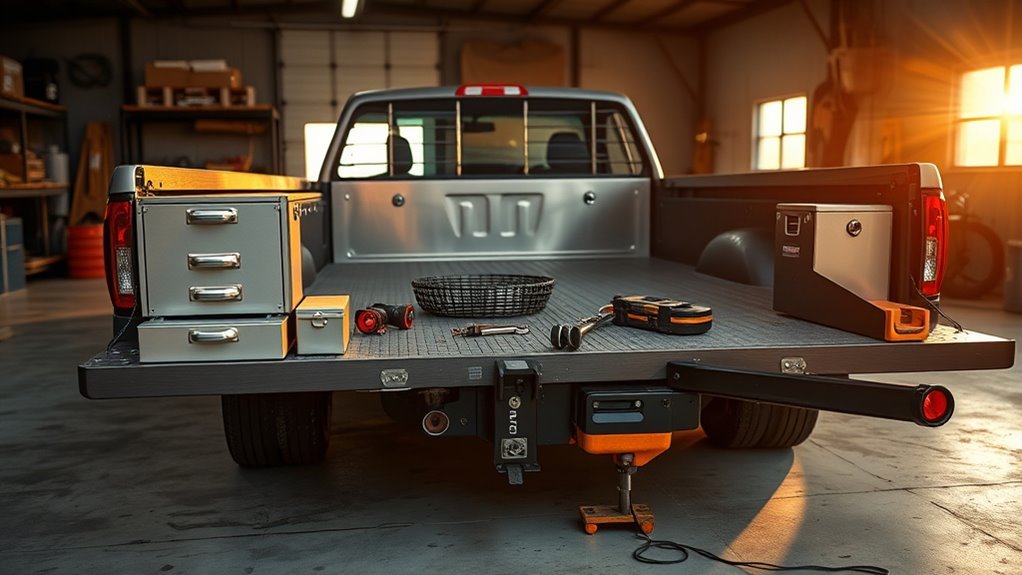
The figures below are vendor-specific list prices from Bob King’s welding-bed option page, as seen in 2026 and subject to change. They are useful for estimating option costs, but they are not universal industry averages.
Toolboxes and Holders
| Option | Posted Price | Budget Use |
|---|---|---|
| 1/4-round pipe toolbox upgrade | $550 | Upgrade from the builder’s standard rectangular rear boxes |
| Locking lead-well lid | $60 each | Secures lead-storage openings |
| Jack-stand box | $275 | Dedicated storage between rear boxes |
| Rear-toolbox divider | $100 each | Organizes tools, rod containers, and specialty gear |
| Ice-chest or water-cooler holder | $75 each | Bolts to the oxygen-rack area |
| Receiver-tube inset | $50 each | Accepts removable accessories such as a vise mount |
| Jack-stand mount | $20 each | External storage mount for a compatible stand |
| Wilton 6-inch vise | $400 | Bed-mounted or receiver-mounted workholding |
Choose storage around your actual work. A box that looks useful in a photo can block a reel, reduce deck space, interfere with a trailer, or add more weight than expected. List the dimensions and loaded weight of the welder, cylinders, leads, stands, consumables, and tools before locking in the layout.
Reels and Finishing
Reels improve setup speed and keep hose, cable, and remote-control cord off the deck, but they are among the most expensive accessories. The same public option page lists:
- Tidweld oxygen/acetylene reel with 150 feet of twin hose: $1,500
- Tidweld stinger reel without cable: $1,500
- Tidweld rheostat reel with three-conductor cord: $1,625
- Tidweld rheostat reel with four-conductor cord: $2,000
- Mounting plate for a Tidweld reel: $100
Confirm what is included. A reel price may exclude welding cable, connectors, installation labor, a mounting plate, or modifications needed to clear bottles and toolboxes.
Pro Tip: Mock up the bed with cardboard footprints for the machine, bottles, reels, boxes, vise, hitch opening, and service access. Fixing a layout on paper costs far less than moving a welded box or reel mount later.
Labor, Fabrication, and Installation Expenses
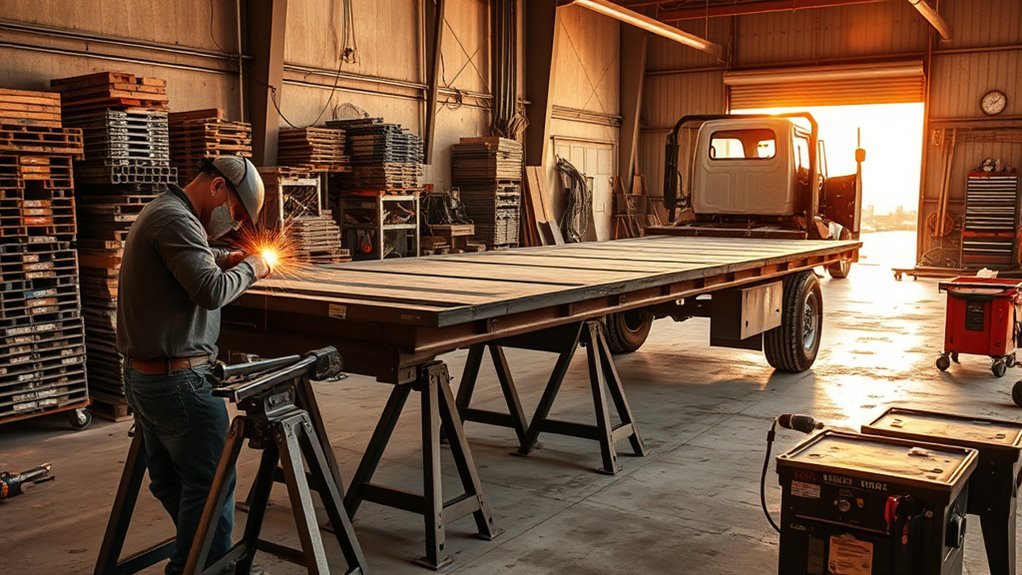
There is no reliable national hourly rate for a custom welding-bed build. Shop rates change by region, overhead, certification needs, tooling, material, and job complexity. A fixed written quote is usually more useful than multiplying a guessed hourly rate by guessed hours.
For a DIY reference point, Double Diamond Fabrication says an experienced fabricator can build its flatbed kit in about 30 hours and install it in 8–10 hours. It estimates about 40 build hours and 15 installation hours for a beginning-to-intermediate fabricator. Those times apply to that kit, not every custom welding bed.
Professional builders may include installation in the base price, but confirm all of the following:
- Removal of the factory bed and whether you keep it
- Frame inspection, mounting brackets, hardware, isolators, and torque checks
- Lifting equipment and shop supplies
- Wiring, lights, trailer connector, camera, sensors, and license-plate mounting
- Fuel-filler relocation and diesel-exhaust-fluid access where applicable
- Hitch, gooseneck, receiver, and safety-chain integration
- Final inspection, water-leak check, road test, and post-install retorque instructions
Hidden Costs That Commonly Change the Quote
- Travel and downtime: fuel, lodging, missed work, and a return trip for final fit or paint
- Taxes and freight: often absent from an advertised list price
- Old-bed handling: storage, transport, resale, or disposal
- Electrical work: camera extensions, sensors, connectors, work lights, relays, and battery protection
- Chassis or suspension work: only when approved and needed for the final load and use
- Equipment: engine-driven welder, compressor, cylinders, regulators, hoses, leads, grounding cable, and tools
- Documentation: inspection, registration, insurance review, and weight tickets where required
Pro Tip: Compare quotes line by line. A cheaper raw-steel bed may cost more after blasting, primer, paint, installation, wiring, camera work, hitch hardware, and travel are added.
Options for Finishing and Protection
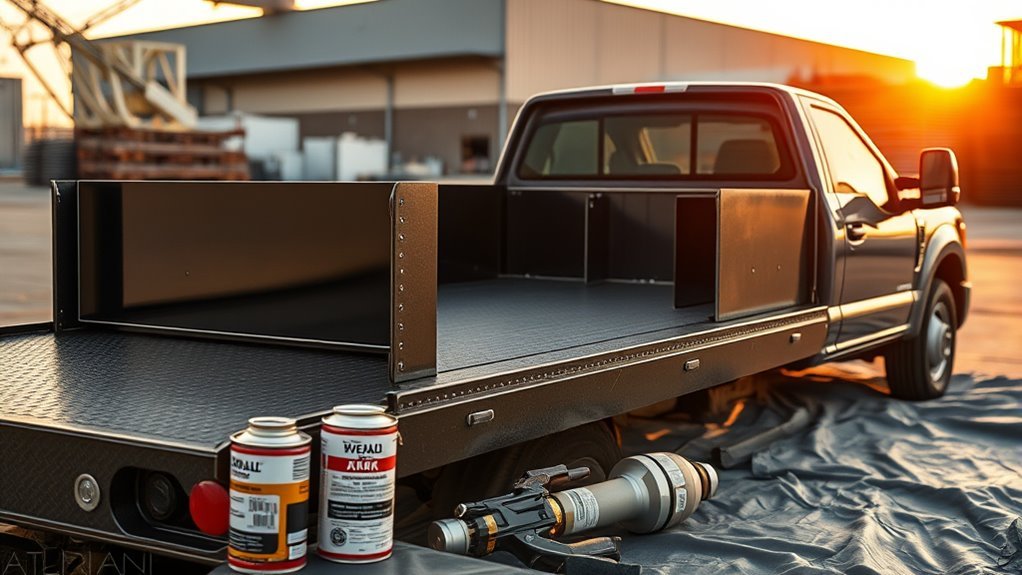
Raw steel is the lowest advertised configuration from some builders, but it must be protected promptly. Surface preparation determines how well the coating holds up around welds, seams, hinges, box interiors, and high-wear areas.
Bob King’s public option page lists these finish prices:
- Sandblast bed: $350
- Undercoat underside: $250
- Prime after blasting: $400
- Single-color paint: $1,200 for the listed basic paint process
- Topside Reflex bedliner: $600
- Bedliner on fenders and running boards: $350
These are one builder’s list prices, not nationwide averages. A durable sequence for a steel bed usually starts with cleaning or blasting, followed by the coating system specified by the paint or liner manufacturer. Ask how seams, enclosed cavities, drain paths, box interiors, and mounting contact points are protected.
How to Choose a Finish
- Primer only: lower initial cost, but it is not always intended as a long-term exposed finish.
- Paint: best when color match and repairability matter.
- Bedliner: useful on decks and impact areas, but damaged liner can hide corrosion if water enters beneath it.
- Undercoating: protects the underside when surface preparation and drainage are handled correctly.
- Powder coating: can be durable, but the entire bed may need removal or specialized repair if the coating is badly damaged.
Note: Ask whether the quoted finish includes blasting, bodywork, primer, seam treatment, box interiors, underside coverage, color matching, and touch-up material. “Paint included” can mean very different things.
Typical Cost Scenarios and Example Builds
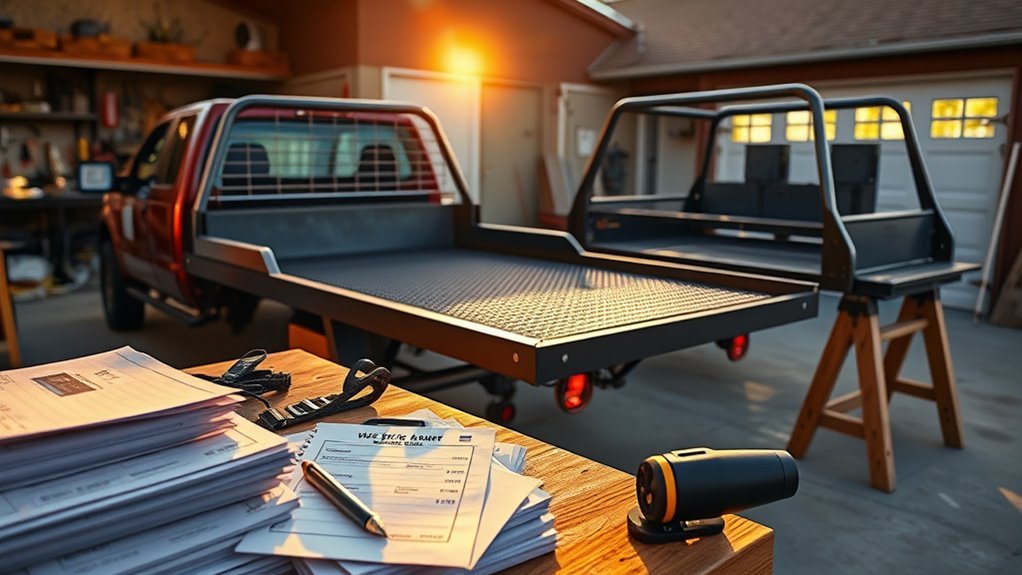
The examples below use publicly posted 2026 prices that can change. They show how the purchase path changes the total. They are planning examples—not binding quotes—and do not include the truck itself.
Basic Budget Build: DIY Flatbed Route
A sub-$5,000 build is possible when you fabricate the bed yourself and start with a flatbed kit rather than buying a finished custom welding body. Double Diamond Fabrication publishes the following estimate for its weld-yourself system:
| DIY Item | Published Estimate |
|---|---|
| Standard or skirted kit | $799–$1,249 |
| Locally sourced steel | About $700–$1,500 |
| Lights, wiring, and decking | About $600 |
| Finish | About $50 DIY to $1,500 professional |
| Published total | About $2,000–$4,000 |
This route normally excludes the value of your labor, welding-specific boxes and reels, the welding machine, cylinders, hoses, leads, tools, taxes, and vehicle-specific repairs. It also requires safe fabrication and lifting skills.
Midrange Professional Setup
A realistic professional setup begins with the complete bed price. Using Bob King’s posted South Texas base price and selected options gives this example:
- South Texas base bed: $7,000
- 1/4-round pipe-toolbox upgrade: $550
- Four locking lead-well lids: $240
- Jack-stand box: $275
- Sandblasting: $350
- Undercoating: $250
- Primer: $400
- Single-color paint: $1,200
Illustrative subtotal: $10,265 before tax, travel, reel systems, welding equipment, cylinders, and any truck-specific work not included in the quote.
Fully Loaded Custom
A heavily optioned bed can move well into the five figures before the welding machine and mobile-work equipment are added. One illustrative build using the same current public option list is:
- North Texas base bed: $8,000
- 1/4-round toolbox upgrade and four locking lids: $790
- Jack-stand box: $275
- Oxygen/acetylene, stinger, and three-conductor rheostat reels: $4,625
- Sandblast, undercoat, primer, paint, and topside bedliner: $2,800
- Backup camera and parking-sensor relocation: $300
- Gooseneck ball and fuel-filler hardware: $475
Illustrative subtotal: $17,265. Add tax, travel, extra cable or hose, connectors, the welder, cylinders, compressor, tools, and any specialty fabrication.
The right build is not automatically the most expensive one. A lighter, simpler layout that protects payload and keeps daily-use gear within reach can be more productive than a heavier layout filled with rarely used options.
How to Estimate Your Total Project Budget
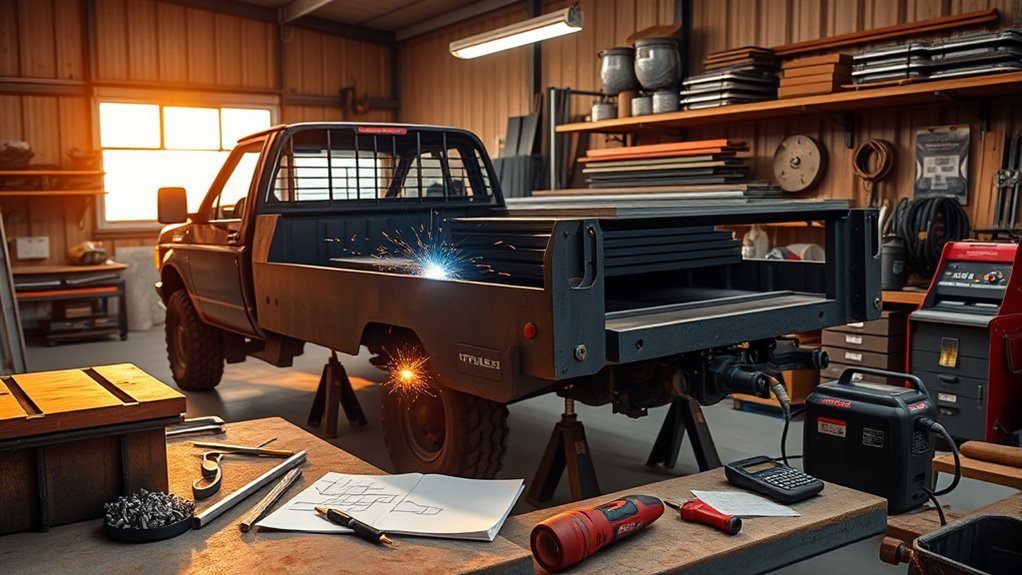
Build the budget from the truck outward. Do not start by adding accessory prices to an unknown base.
- Identify the truck exactly. Record the VIN, model year, make, model, cab, wheelbase, bed length, frame type, single- or dual-rear-wheel configuration, GVWR, and axle ratings.
- Define the work package. List the welder, cylinders, reels, leads, tools, fuel, compressor, hitch use, trailer loads, and storage needs.
- Set a payload limit. Weigh the truck before the build, estimate every permanent component, and leave practical capacity for people, consumables, and changing job loads.
- Request an itemized bed quote. Separate the base body, options, finish, installation, electrical work, hitch work, taxes, freight, and travel.
- Price welding equipment separately. A bed quote rarely includes the engine-driven welder, cylinders, regulators, hoses, welding cable, tools, or consumables unless the quote says so.
- Add a contingency. Set the reserve according to quote uncertainty, vehicle condition, and how much one-off fabrication is involved. A used-truck conversion or custom layout usually needs more reserve than a tightly scoped standard build.
- Confirm lead time, deposit, warranty, and change-order rules. Put every promise in writing before fabrication starts.
Simple Welding Bed Budget Formula
Total project budget = base bed or kit + structural options + storage and reels + finish + installation + vehicle-system work + hitch work + taxes/freight/travel + welding equipment + contingency.
| Budget Category | What to Include |
|---|---|
| Base body | Bed or kit, standard boxes, rack, lights, and included installation |
| Options | Toolboxes, lids, dividers, reels, vise, receivers, jack storage, and work lights |
| Finish | Blasting, primer, paint, undercoat, liner, and touch-up material |
| Truck integration | Mounting, wiring, camera, sensors, fuel filler, hitch, trailer connector, and license plate |
| Equipment | Welder, compressor, cylinders, regulators, hose, cable, tools, and consumables |
| Logistics | Tax, freight, travel, lodging, old-bed handling, downtime, and weight tickets |
| Contingency | Reserve based on quote uncertainty, vehicle condition, and the amount of one-off fabrication |
Safety, Payload, and Compliance Costs You Cannot Skip
A welding bed is part of a road vehicle and a work system. The cheapest design is not a bargain if it overloads the rear axle, leaves cylinders exposed, blocks required lights, weakens a hitch installation, or defeats a safety system.
Compressed-Gas Cylinder Storage
OSHA’s construction welding standard requires compressed-gas cylinders to be secured upright, with limited exceptions for brief hoisting or carrying. Use a rack that restrains each cylinder, protects valves and regulators, keeps fuel gas away from ignition sources, and allows safe access. Requirements can differ by workplace, cylinder status, carrier activity, and jurisdiction, so confirm the rules that apply to your operation.
Vehicle Ratings and Weight Distribution
Do not use rear-suspension upgrades as permission to exceed the truck manufacturer’s ratings. Weigh the completed truck by axle with normal equipment aboard. Keep the finished operating weight within GVWR, GAWR, tire, wheel, and hitch limits, and leave capacity for changing cargo and trailer load.
Lights, Camera, Sensors, and Hitch Work
Replacing a pickup bed can change lamp positions, license-plate lighting, rear visibility, camera placement, parking sensors, blind-spot hardware, and trailer connections. Federal Motor Vehicle Safety Standard No. 108 covers required lamps and reflective equipment. Have the upfitter preserve applicable safety functions and confirm state inspection rules.
Federal alterer certification requirements in 49 CFR 567.7 apply to certain alterations made before a vehicle’s first retail sale. After-sale modifications are also affected by state registration and inspection rules, insurance requirements, commercial-use rules, and the responsibilities of the installer. Ask the builder and your insurer what documentation is required for your truck and use.
NHTSA has specifically explained that replacing a pickup bed with a utility body or bed on a new vehicle can make the modifier an “alterer” under Part 567 when the work is done before first retail sale. For a related structural-cost topic, see our truck frame welding cost guide. If the project includes custom towing hardware, our hitch welding cost guide explains why manufacturer guidance and load ratings matter.
Warning: Do not weld directly to a truck frame, alter a hitch structure, relocate fuel-system parts, or disable factory safety equipment without the vehicle manufacturer’s upfitter guidance and a qualified installer. Frame and body requirements vary by truck.
Frequently Asked Questions
Can I finance or get a loan for a welding bed build?
Sometimes. A builder may offer financing, or you may use an equipment loan, business line of credit, secured vehicle loan, or other lender product. Approval, collateral, down payment, interest rate, fees, and tax treatment vary. Compare the total financed cost and confirm whether the loan covers only the bed or the welder and other equipment too.
Are there warranties or guarantees on custom welding beds?
Warranty coverage depends on the builder and component maker. Request written terms for structural workmanship, hinges and latches, paint or liner, lights, installed accessories, and corrosion. Check exclusions for overloading, off-road use, towing changes, customer modifications, missed inspections, and coating damage.
Do I need special permits or inspections for a welding bed?
There is no single nationwide “welding bed permit.” Requirements depend on when and how the vehicle is altered, your state’s registration and inspection rules, commercial use, vehicle weight, carried materials, and local workplace or fire rules. Check with the builder, state motor-vehicle agency, insurer, and the authorities that regulate your business before operating the truck.
How long does building a welding bed typically take?
For one published DIY flatbed kit, the maker estimates about 30 build hours plus 8–10 installation hours for an experienced fabricator, or about 40 build hours plus 15 installation hours for a beginning-to-intermediate fabricator. A custom shop’s calendar lead time can be much longer because of design work, material availability, paint scheduling, and its order backlog.
Can I convert an existing flatbed into a welding bed?
Yes, when the flatbed is structurally sound, correctly fitted to the truck, and suitable for the intended loads. A qualified fabricator should inspect corrosion, cracks, mounts, deck strength, weight distribution, cylinder restraints, lighting, hitch clearance, and access to vehicle systems before adding boxes, reels, or a machine.
Is steel or aluminum better for a welding bed?
Steel is common, repairable, and often less expensive to fabricate, but it is heavier and needs corrosion protection. Aluminum can save weight but may cost more and needs an alloy-appropriate design and welding process. The better choice depends on payload, environment, repair access, budget, and the builder’s experience.
Does the welding bed price include the welding machine?
Usually not. Public truck-bed prices normally cover the body and the features listed in the quote. The engine-driven welder, compressor, cylinders, regulators, hoses, leads, tools, and consumables are separate unless the seller clearly includes them.
Conclusion
Budget about $2,000–$4,000 for the published weld-yourself flatbed route when you already have the skills and major tools. For a professionally built welding bed, current public base prices are roughly $7,000–$8,400. The heavily optioned example in this guide reaches $17,265 before tax, travel, the welder, cylinders, compressor, cable, and tools. Build the quote around the exact truck, loaded weight, storage plan, safety systems, finish, installation, and equipment—not one attractive accessory price.
Related Welding Rig and Truck Cost Guides
\n
Sources
- Bob King’s Truck Beds — Welding Beds — current publicly posted base prices, standard construction, included features, and installation scope
- Bob King’s Truck Beds — Welding Bed Pricing — option, reel, finish, camera, sensor, hitch, and fuel-filler list prices
- Western Welding — Prices and Options — comparison pricing for installed single- and dual-rear-wheel custom beds
- Double Diamond Fabrication — Weld-Yourself Flatbed Kits — DIY kit, steel, finish, tool, and build-time estimates
- OSHA 29 CFR 1926.350 — gas-welding cylinder handling, upright securement, and related safety requirements
- eCFR 49 CFR 567.7 — federal responsibilities for qualifying vehicle alterations before first retail sale
- eCFR FMVSS No. 108 — required lamps, reflective devices, and associated equipment
- NHTSA Interpretation 2848o — explains alterer responsibilities when a pickup bed is replaced with a utility body or bed before first retail sale