
How to calculate welder electricity cost: use the machine’s input voltage and input current (not its welding output amps), apply power factor to get real kilowatts, multiply by actual arc-on and idle hours, then multiply the total kWh by your utility rate. A welder’s advertised output amperage does not tell you how much it draws from the wall, so you also need the phase, power factor and actual operating time.
Quick Answer
Use the welder’s input voltage and input current—not its welding output amps. Calculate real input kilowatts, multiply by measured arc-on and idle hours, and then multiply total kWh by your utility rate. A properly rated power analyzer that measures watts, power factor, and kWh provides the most reliable result.
Key Takeaways
- Use the input or primary-power ratings on the dataplate or manual. Do not use the machine’s maximum welding-output amperage.
- Volt-amps measure apparent power. Real power in kilowatts also depends on power factor.
- Duty cycle is a thermal operating limit, not proof of how many minutes you actually weld during a job.
- Add arc-on, idle, cooling, and auxiliary-equipment energy before calculating project cost.
- Use the variable energy rate and any applicable demand or time-of-use charges from your own utility tariff.
At a Glance
| Time Required | Quick for a nameplate estimate; longer if you log an entire job or shift |
| Difficulty | Moderate |
| Tools Needed | Welder dataplate or manual, calculator, timer or runtime log, utility bill, and an optional properly rated power analyzer |
| Cost | Free for a specification-based estimate; meter purchase, rental, or electrician fees vary |
Why Knowing Your Welder’s Electrical Consumption Matters
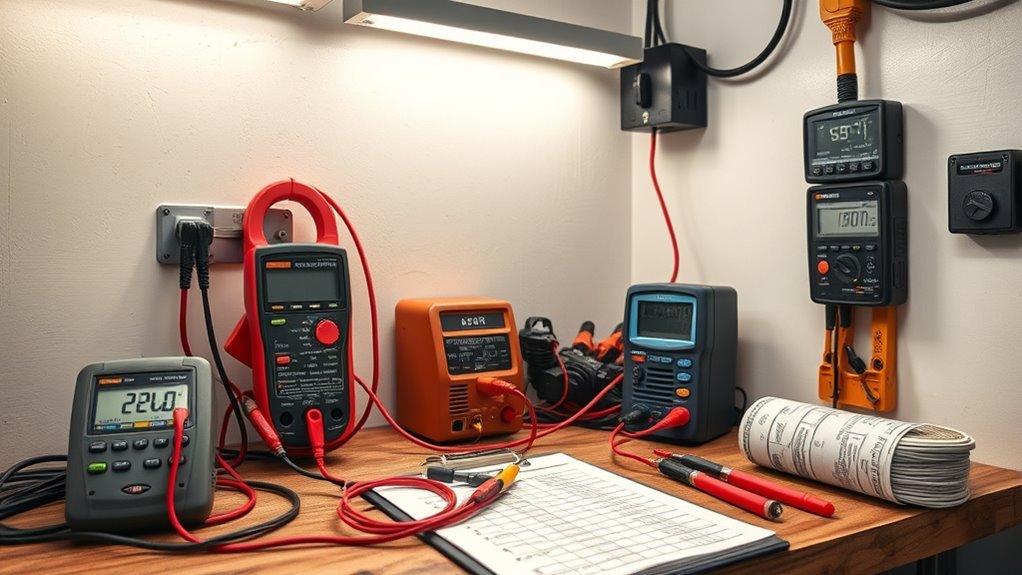
Electricity may not be the largest welding expense, but it still affects job costing, equipment planning, and shop overhead. A realistic energy estimate helps you:
- Price welding work more accurately
- Compare machines or welding processes
- Track energy use by job, cell, or shift
- Identify unnecessary idling and auxiliary loads
- Check whether a measured load has changed over time
- Plan work around time-of-use or demand charges
A sudden increase in measured input power can also support troubleshooting. It may point to a changed welding setup, blocked cooling airflow, a failing auxiliary device, poor input voltage, or another condition that deserves inspection. Power readings alone do not diagnose the fault, but they give you a useful comparison point.
The most useful energy estimate separates arc-on power, idle power, cooling time, and auxiliary equipment instead of treating the entire shift as full-load welding.
Read the Input Side of the Welder Dataplate
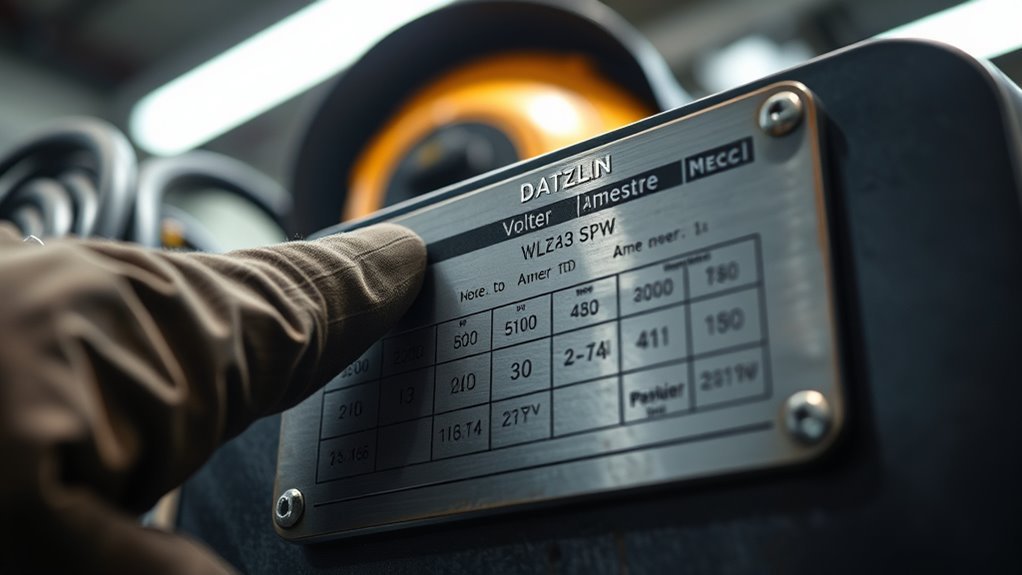
The dataplate and owner’s manual may show both input and output electrical values. Keep them separate.
Input ratings describe the power the machine receives from the building, generator, or energy-storage system. Look for input voltage, input phase, input frequency, input current, input kVA, or input kW.
Output ratings describe the welding circuit. These may include welding amperage, arc voltage, open-circuit voltage, and rated output at a stated duty cycle.
For example, a current Miller welder specification lists 120/240 V input separately from rated output such as 160 A at 22 V. The 160 A figure is welding output; it is not the current drawn from the 240 V supply.
| Dataplate Information | How to Use It |
|---|---|
| Input voltage | Use the voltage for the actual connection, such as 120, 208, 230, 240, 460, or 480 V. |
| Input phase | Determines whether to use the single-phase or three-phase formula. |
| Input current | Use rated or measured input current for the selected voltage and operating point. |
| Input kW or kVA | Use the manufacturer’s stated value when it clearly applies to the selected input voltage and rated output. |
| Welding output amps and volts | Use only when estimating output power. Do not substitute output current for input current. |
| Duty cycle | Use as a thermal operating limit at the stated welding output, not as automatic proof of hourly arc time. |
Warning: Do not open an electrical panel, remove machine covers, probe energized conductors, or modify a welder circuit unless you are qualified and equipped for that work. Electricity-cost calculations do not determine wire, breaker, receptacle, disconnect, generator, or service size. Follow the manufacturer’s instructions, applicable electrical codes, and a qualified electrician’s assessment.
Understand VA, kVA, kW, and kWh
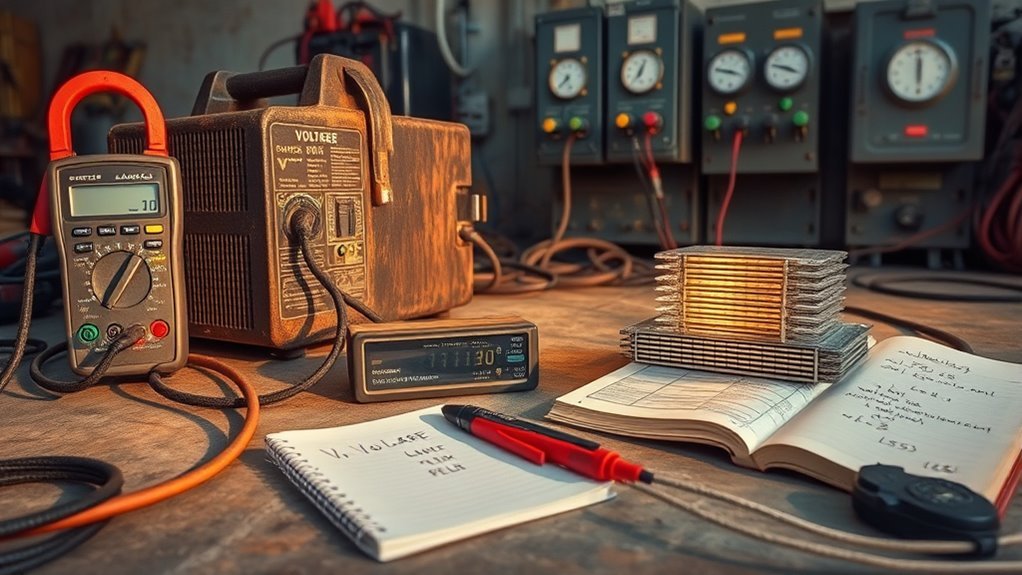
These electrical terms are related, but they do not mean the same thing:
- VA or volt-amps: Apparent power calculated from voltage and current.
- kVA: Apparent power in thousands of volt-amps.
- kW: Real input power doing work and producing losses inside the machine.
- Power factor: The ratio of real power in kW to apparent power in kVA.
- kWh: Energy equal to one kilowatt used for one hour.
- Efficiency: Useful welding-output power divided by real input power.
For an AC load, multiplying volts by amps gives apparent power, not necessarily billed real power. According to Fluke’s electrical definitions, real AC power also accounts for power factor.
Single-Phase Welder Formulas
Apparent power:
kVA = Input volts × Input amps ÷ 1,000
Estimated real input power:
kW = Input volts × Input amps × Power factor ÷ 1,000
Three-Phase Welder Formulas
For a reasonably balanced three-phase input using line-to-line voltage:
kVA = √3 × Input volts × Input amps ÷ 1,000
kW = √3 × Input volts × Input amps × Power factor ÷ 1,000
The value of √3 is approximately 1.732.
Note: If the manufacturer supplies input kW for the exact voltage and rated output you are using, start with that value. Do not apply power factor or efficiency a second time.
Account for Duty Cycle, Arc-On Time, Efficiency, and Idle Power

Duty Cycle Is a Thermal Limit
A welder’s duty cycle states how long it can weld at a specified output during a defined test period before it must cool. Miller explains duty cycle as a percentage of a 10-minute period. A 60% rating at a stated output means up to six minutes of welding followed by the required cooling time under the rating conditions.
That does not mean every user welds for 60% of every hour. Fit-up, repositioning, tacking, grinding, inspection, wire changes, and breaks often reduce actual arc time.
Use Actual Arc-On Time When Possible
Time the arc with a stopwatch, machine data logger, feeder counter, production record, or power analyzer. Divide arc-on minutes by 60 to convert them to hours.
For example:
- 30 minutes of arc time = 0.50 hour
- 18 minutes of arc time = 0.30 hour
- 6 minutes of arc time = 0.10 hour
Include Idle and Cooling Energy
A welder may still consume power while the arc is off. Fans, displays, control electronics, pumps, wire feeders, and cooling systems can continue running. Estimate these loads separately:
Total kWh = Arc-on kW × Arc-on hours + Idle kW × Idle hours + Auxiliary-equipment kWh
Use Efficiency Only When Starting From Output Power
If you have no useful input rating but know the actual arc voltage, welding current, and machine efficiency, you can make a rough input estimate:
Welding output kW = Arc volts × Welding amps ÷ 1,000
Estimated input kW = Welding output kW ÷ Efficiency
For example, 24 V × 180 A equals 4.32 kW of output power. At 85% efficiency, estimated real input power would be about 5.08 kW. This method is less reliable when arc voltage, current, and efficiency change throughout the job.
Pro Tip: Do not multiply full-load input by duty cycle and then multiply it again by an arc-on operating factor unless the two percentages describe separate, non-overlapping parts of the calculation. Otherwise, you may count the same downtime twice.
How to Calculate Welder Electricity Cost Step by Step
- Identify the input ratings. Record input voltage, phase, and input current or input kW for the voltage you use.
- Determine real input power. Use manufacturer input kW, a measured watt reading, or the correct single-phase or three-phase formula with power factor.
- Measure operating time. Separate arc-on time, idle or cooling time, and auxiliary-equipment time.
- Calculate energy. Multiply each power level in kW by its time in hours, then add the results.
- Calculate cost. Multiply total kWh by your variable electricity rate and add any project-specific demand or time-of-use cost when applicable.
Worked Example: Single-Phase Welder
Assume a single-phase welder operates from 240 V and draws 30 A during a representative weld. A suitable analyzer or manufacturer data gives a power factor of 0.85.
Step 1: Calculate apparent power
240 V × 30 A ÷ 1,000 = 7.20 kVA
Step 2: Calculate real arc-on input power
240 V × 30 A × 0.85 ÷ 1,000 = 6.12 kW
Step 3: Calculate arc-on energy
The arc runs for 30 minutes, or 0.50 hour:
6.12 kW × 0.50 hour = 3.06 kWh
Step 4: Add idle energy
Assume measured idle power is 0.10 kW for another 30 minutes:
0.10 kW × 0.50 hour = 0.05 kWh
Step 5: Find total energy
3.06 kWh + 0.05 kWh = 3.11 kWh
Step 6: Calculate cost
At an example energy rate of $0.14/kWh:
3.11 kWh × $0.14 = $0.44
This is the direct energy charge for the welder during that one-hour period. It does not include shielding gas, filler metal, labor, ventilation, compressed air, fixed utility charges, or possible demand charges.
Worked Example: Three-Phase Welder
Assume a balanced three-phase welder operates at 480 V, draws 20 A per line, and has a measured power factor of 0.90.
Real input power:
1.732 × 480 V × 20 A × 0.90 ÷ 1,000 = 14.96 kW
If the arc is on for 12 minutes, the arc-on time is 0.20 hour:
14.96 kW × 0.20 hour = 2.99 kWh
At $0.14/kWh, the direct arc-on energy cost is:
2.99 kWh × $0.14 = $0.42
Add measured idle and auxiliary loads to complete the job estimate.
Measure Actual Consumption Safely
Nameplate calculations are useful for planning, but a measurement captures real operating conditions. For meaningful results, use an instrument rated for the circuit that can record:
- True-RMS voltage
- True-RMS current
- Real power in watts or kilowatts
- Apparent power in VA or kVA
- Power factor
- Accumulated energy in kWh
- Peak or demand data when needed
A professional device such as a power-quality clamp meter measures watts, VA, power factor, and accumulated kWh separately. A basic current-only clamp does not provide the same information.
Measurement Procedure
- Confirm that the instrument, probes, leads, current range, voltage range, and category rating are suitable for the circuit.
- Have a qualified person make any connection that requires access to energized conductors.
- Record idle power before welding begins.
- Log representative welding at the normal process, material, wire or electrode, amperage, and voltage settings.
- Include cooling-fan operation after the arc stops.
- Record the total kWh for the full project or representative production cycle.
- Repeat the measurement if the process or output setting changes substantially.
For a small 120 V welder, a plug-in energy meter may be suitable only when its voltage, amperage, connector, duty, and safety ratings meet or exceed the equipment requirements. Do not connect a welder to an underrated household energy meter.
Calculate Hourly and Project Electricity Costs
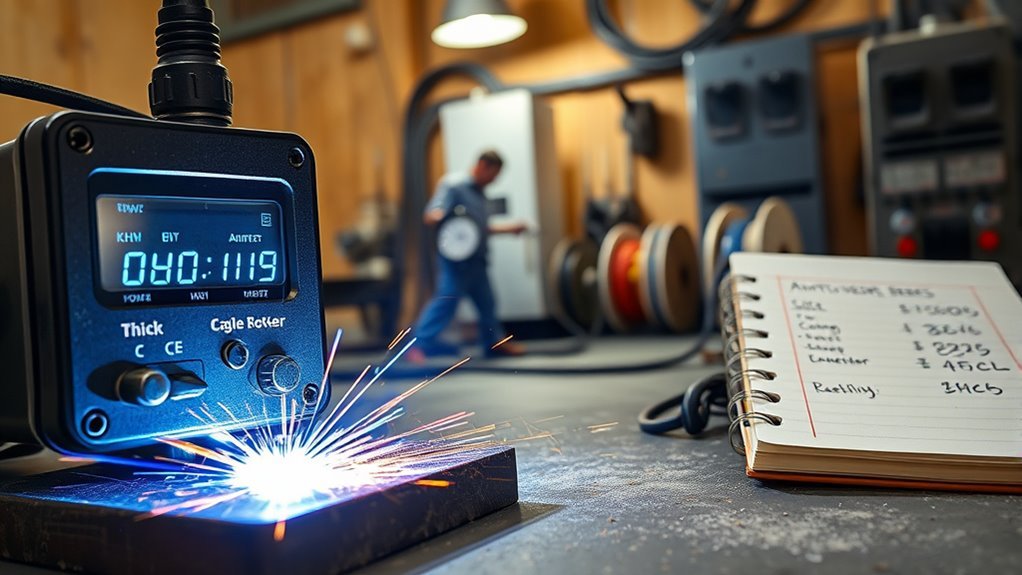
The basic variable energy-cost formula is:
Electricity cost = Total kWh × Energy rate per kWh
Use the variable rate from your own bill or tariff. Do not assume that a national average matches your shop. The U.S. Energy Information Administration publishes average retail electricity prices by state and customer class in its Electric Power Monthly; rates differ widely by customer class and location.
Hourly Cost
If a welder averages 4.5 kW over one clock hour:
4.5 kWh × $0.14/kWh = $0.63 per clock hour
Project Cost
If a project uses 18.6 kWh:
18.6 kWh × $0.14/kWh = $2.60 in direct energy charges
Monthly Cost
If the same work is completed 40 times per month:
18.6 kWh × 40 = 744 kWh
744 kWh × $0.14/kWh = $104.16 per month
Charges That May Need Separate Treatment
- Time-of-use pricing: Energy may cost more during peak periods and less during off-peak periods.
- Demand charges: Some commercial and industrial tariffs charge for the highest average kW reached during a defined interval.
- Power-factor charges: Some larger customers may pay an adjustment for poor power factor.
- Fixed charges: Customer, meter, or service fees usually do not change with one welding project.
- Taxes and riders: These may need to be included when you want an all-in marginal rate.
Read the tariff rather than assuming every listed charge applies. A short welding burst may affect a demand charge if it overlaps the utility’s demand interval, but it will not do so on every rate plan.
Troubleshoot Unexpected Power Readings
Measured Power Is Much Lower Than the Nameplate Estimate
- The dataplate value may be a maximum rather than normal operating current.
- The welding output may be well below the rated output.
- The article calculation may have assumed a power factor of 1.0.
- The meter may be displaying current or kVA instead of real kW.
- The measurement may not include all conductors or phases correctly.
Measured Power Is Higher Than Expected
- The actual welding setting may be higher than the assumed setting.
- Input voltage or current may be outside the expected range.
- Auxiliary equipment may have been included in the measurement.
- The cooling fan or water cooler may be running longer than expected.
- The power factor may differ from the assumed value.
- The instrument, lead placement, scaling, or phase setup may be incorrect.
The Utility Bill Does Not Match the kWh Estimate
- The bill may include fixed charges, taxes, riders, or demand charges.
- Other shop loads may operate at the same time.
- The billing period may not match the production log.
- The energy rate may change by time of day or usage tier.
- The project estimate may exclude ventilation, compressed air, lighting, or cooling equipment.
Ways to Reduce Welder Electricity Cost
- Turn off welders and auxiliary equipment during long shutdowns when the manufacturer permits it.
- Keep cooling passages, filters, and fans clean so the machine can cool normally.
- Complete fit-up, cleaning, and material staging before energizing the full welding cell.
- Use the correct process and settings rather than overwelding the joint.
- Repair compressed-air leaks and control fume extraction when those systems serve the welding operation.
- Schedule flexible work outside costly time-of-use periods when practical.
- Avoid starting several large loads during the same demand interval when the tariff penalizes peaks.
- Compare measured kWh per completed part, not only instantaneous amperage.
Frequently Asked Questions
Do different welding processes change electricity rates charged by utilities?
Utilities normally apply a tariff based on customer class, location, time, energy use, and demand—not whether the load is MIG, TIG, stick, or flux-cored welding. The processes can still use different amounts of electricity because their output settings, efficiency, duty cycle, deposition rate, and job time differ.
How do standby losses from idle welders affect monthly bills?
Idle controls, displays, fans, pumps, and cooling equipment can add kWh over time. Measure idle watts, multiply by total idle hours, and compare that result with arc-on energy. Automatic fan or sleep features can make idle consumption change during the same shift.
Can solar or battery systems power my welder efficiently?
They can when the complete system is designed for the welder’s input voltage, phase, real power, apparent power, current waveform, short-duration peaks, duty cycle, and operating time. Size the inverter and battery from input requirements, not welding-output amperage. Follow the welder and inverter manufacturers’ instructions and have a qualified designer review larger systems.
Should I size my shop electrical service for peak or average welding load?
Do not size a service, branch circuit, conductor, breaker, receptacle, or disconnect from an electricity-cost average. Electrical sizing must follow the machine instructions, simultaneous-load assumptions, applicable electrical codes, and local requirements. OSHA’s arc-welding requirements also address installation, disconnecting means, overcurrent protection, and primary current. Use a qualified electrician.
Do utility demand charges apply to sporadic welding operations?
They may apply when your commercial or industrial tariff includes a demand charge. A brief welding load can affect billed demand when it raises the average kW during the utility’s demand interval. Check the tariff for the interval length, ratchet provisions, seasonal rules, and billing method.
How many kWh does a welder use per hour?
There is no universal figure. A welder averaging 3 kW for one clock hour uses 3 kWh, while one averaging 12 kW uses 12 kWh. The average depends on input power, power factor, welding settings, actual arc time, idle power, cooling, and auxiliary equipment.
Related guides: for typical wattage ranges and generator sizing, see welder electricity use, costs and generator size; for a quick answer on welding power draw, see how much electricity welding uses; and to fold power into a full quote, see the general welding cost calculation guide.
Conclusion
To calculate welder electricity use, begin with the machine’s input ratings rather than its welding-output amperage. Convert the input data to real kW, record actual arc-on and idle time, add auxiliary loads, and multiply total kWh by the applicable utility rate. Use a properly rated power analyzer when you need job-level accuracy, and keep energy calculations separate from electrical circuit or service sizing.
Sources
- Miller — Duty Cycle: What It Is and Why It’s Important — supports the 10-minute duty-cycle definition and its role as a thermal operating limit.
- Miller — Millermatic 211 PRO Specifications — demonstrates the separation between input voltage and rated welding output.
- Fluke — Electrical Glossary — defines VA, kVA, kW, kWh, real power, and power factor.
- Fluke — 345 Power Quality Clamp Meter — documents separate measurement of watts, VA, power factor, and kWh.
- OSHA — 29 CFR 1910.254, Arc Welding and Cutting — supports installation, disconnect, overcurrent-protection, and primary-current safety guidance.
- U.S. Energy Information Administration — Electric Power Monthly — provides current electricity-price data by state and customer class.