How to hire welders: define the role first, benchmark local pay, recruit through several channels, run a job-related weld test, and verify credentials before you make an offer. National BLS data for May 2025 lists a median wage of $25.84 per hour for welders, cutters, solderers, and brazers, but local rates vary widely.
The best process matches each candidate to the exact welding process, material, position, code, and work environment your shop uses, and it plans for onboarding and retention from the start.
Quick Answer
To hire qualified welders, define the process, material, position, code, shift, and travel requirements first. Benchmark total compensation locally, write a specific job post, recruit through schools, apprenticeships, unions, referrals, and trade job boards, then use a safe, consistent weld test tied to the actual job and acceptance standard.
Key Takeaways
- Hire for a defined process, material, position, code, and production environment—not for “general welding” alone.
- Use current local wage data and compare total compensation, not base pay by itself.
- Treat Certified Welder and Certified Welding Inspector credentials as different qualifications.
- Base practical weld tests on the job, a written procedure, and clear acceptance criteria.
- Build apprenticeships, onboarding, training, and career steps into the hiring plan.
- Track time to fill, test pass rate, early turnover, rework, safety, and productivity after hire.
At a Glance
| Time Required | A few focused hours to define the role and test; recruiting time varies by location and skill level. |
| Difficulty | Moderate to high, especially for code work, pipe, aluminum, stainless, field work, or automated systems. |
| Tools Needed | Job analysis, wage data, job description, WPS or test instructions, test booth, PPE, scoring form, and verification checklist. |
| Cost | Advertising or recruiter fees, staff time, test coupons and consumables, paid test time where required, screening, onboarding, wages, benefits, and training. |
Why Competitive Pay Matters When You Hire Welders

Pay shapes the size and quality of your applicant pool, but one national salary figure cannot tell you what to offer. The national Occupational Employment and Wage Statistics table linked below reports a May 2025 mean wage of $27.29 per hour, or $56,760 per year, for welders, cutters, solderers, and brazers. The national median was $25.84 per hour. Local rates can be much higher or lower, so use these figures only as a starting point.
Compare your offer with current BLS national wage data, state and local OEWS data, recent job postings, union agreements where relevant, and what nearby employers offer for similar work.
Do not use one flat “welder rate” for every role. Build pay bands around measurable factors such as:
- Process: GMAW/MIG, GTAW/TIG, SMAW/Stick, FCAW, SAW, resistance, or robotic welding
- Material: carbon steel, stainless steel, aluminum, nickel alloys, or other specialty metals
- Position and joint: plate, pipe, groove, fillet, 3G, 4G, 5G, 6G, or production fixtures
- Code or customer requirements
- Fit-up, fabrication, blueprint reading, inspection, programming, or supervisory duties
- Shift, travel, field conditions, confined-space work, and overtime expectations
Show the pay range, benefits, shift premiums, overtime rules, travel terms, and progression criteria in the job post when required by state or local law. Even where disclosure is optional, clear ranges reduce mismatched applications and make offers easier to explain.
Understanding Local Labor Market Rates for Welding
Build a Local Wage Benchmark
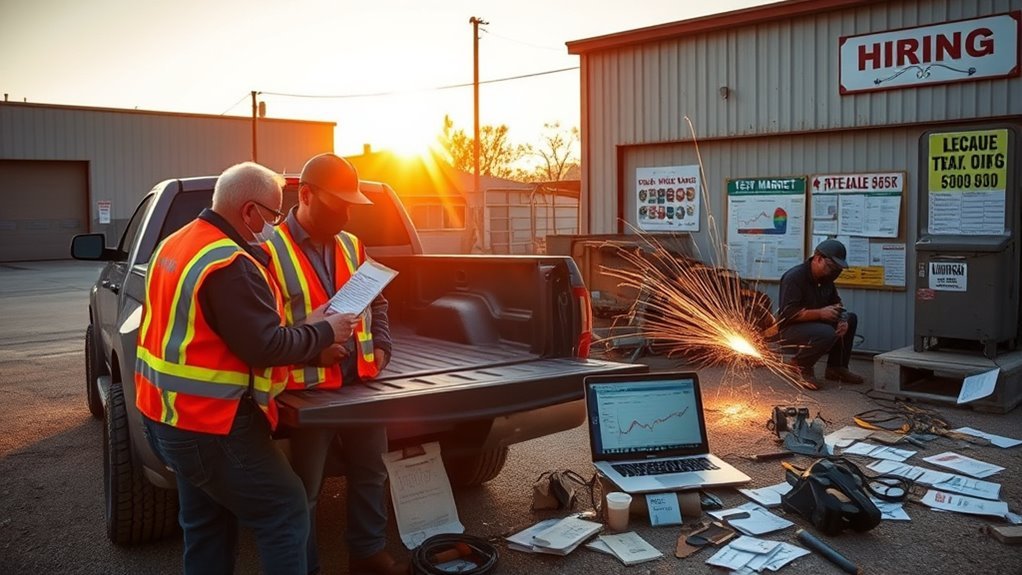
Use at least three sources instead of copying a single online average. Start with BLS state and metro data, then review current job ads that match your process and industry. Add information from staffing firms, schools, unions, trade associations, and recent applicants.
Compare like with like. A production MIG role in a climate-controlled shop is not the same labor market as a traveling pipe welder, aluminum TIG specialist, structural field welder, or robotic welding technician.
Create a simple benchmark sheet with these columns:
| Factor | What to Record |
|---|---|
| Location | State, metro area, commute radius, and travel expectations |
| Work scope | Process, material, position, thickness, code, and inspection level |
| Cash pay | Base rate, shift differential, overtime, per diem, and bonuses |
| Benefits | Health coverage, retirement, paid leave, tools, training, and certification support |
| Supply signal | Applicant volume, offer declines, vacancies, and time to fill |
Union, Nonunion, and Prevailing-Wage Work
Union and nonunion hiring can involve different wage schedules, referral systems, benefits, training arrangements, and work rules. Review the agreement or hiring-hall requirements that apply to the project rather than assuming one model is always cheaper or more flexible.
Some public projects require locally prevailing wages and fringe benefits. For example, the Davis-Bacon and Related Acts apply to covered federally funded or assisted construction contracts. A prevailing-wage requirement is not the same as a general “union labor quota.” Read the contract, wage determination, project labor agreement, and state or local rules before pricing the work.
Seasonal and Project Demand
There is no universal winter percentage for welding labor costs. Demand changes by region and industry. Outdoor construction may slow because of weather, while shutdowns, maintenance outages, shipyard work, energy projects, or urgent repairs can increase overtime and travel needs.
Track your own monthly data: open requisitions, offer acceptance, overtime, subcontractor use, weather delays, production backlog, and scheduled project starts. Use that record to plan temporary labor, cross-training, or early recruiting before a known peak.
Define the Welding Skills and Qualifications You Need

Start with the work, not a generic credential list. Review drawings, customer specifications, applicable codes, WPSs, production volume, inspection requirements, and the equipment the employee will use.
Certified Welder Is Not the Same as CWI
An AWS Certified Welder credential is performance-based and documents the process, material, position, and procedure covered by the test. AWS also requires continuity records to keep the certification active.
A Certified Welding Inspector credential is for inspection work. A CWI may inspect tests and manage qualification records, but the credential does not replace a welder performance qualification for the person making production welds.
Note: A wallet card or résumé line is not enough. Verify the credential, process, material, position, code, limitations, expiration or continuity status, and whether the qualification covers your actual work.
Create a Role-Specific Skill Matrix
| Requirement | Example | How to Verify |
|---|---|---|
| Process | GMAW and FCAW | Job history plus practical test |
| Material | A36 carbon steel or 6061 aluminum | Records and material-specific test |
| Position | 3G/4G plate or 6G pipe | Qualification range and test coupon |
| Documents | Drawings, symbols, WPS, traveler | Short written or hands-on exercise |
| Fabrication | Fit-up, tack, distortion control, grinding | Observed work sample |
| Safety | PPE, ventilation, hot work, cylinders | Orientation questions and observed behavior |
Write a Welding Job Description That Filters and Attracts

A strong job description helps qualified welders recognize the role and lets unqualified applicants screen themselves out. Use plain language and separate must-have skills from preferences.
Include:
- Job outcome: what the welder will build, repair, or maintain
- Processes and materials: exact welding methods, alloys, thickness range, and positions
- Standards: applicable code, customer specification, WPS, inspection, and documentation duties
- Fabrication duties: fit-up, cutting, grinding, layout, fixturing, blueprint reading, or robotic setup
- Work setting: shop, field, heights, confined spaces, temperature, noise, travel, and physical demands
- Schedule: shift, overtime, callout, weekend, and travel expectations
- Compensation: pay range, differentials, benefits, per diem, tools, and training support
- Selection process: interview, job-related weld test, credential verification, and screening steps
- Growth: skill bands, mentorship, lead roles, inspection paths, programming, or supervision
Do not require unrelated credentials or years of experience just because they are easy to list. A requirement should connect to an essential duty or a customer, code, safety, or contract need.
Pro Tip: Put the process, material, position, shift, location, and pay range in the first screenful of the posting. Those details matter more to a qualified welder than a long company introduction.
Recruiting Channels: Schools, Apprenticeships, Unions, Referrals, and Online Platforms

Use several channels at once. The best source depends on whether you need entry-level potential, an experienced journey-level worker, a rare process, or a short project assignment.
| Channel | Best Use | What to Offer |
|---|---|---|
| Technical schools and community colleges | New graduates, internships, and entry-level pipelines | Plant tours, instructor contact, paid work experience, and clear advancement |
| Registered Apprenticeship | Long-term workforce development | Paid work, mentorship, progressive wages, related instruction, and a recognized credential |
| Unions and hiring halls | Qualified labor for covered trades or projects | Accurate scope, duration, schedule, agreement terms, and site conditions |
| Employee referrals | Local experienced candidates | Simple referral rules and a documented bonus policy |
| Trade and general job boards | Broad reach and specialized searches | Specific keywords, pay, shift, location, and fast response |
| Veteran and workforce programs | Candidates with technical, safety, and team experience | A clear translation from military skills to civilian qualifications |
A Registered Apprenticeship Program combines paid work, progressive wage increases, structured on-the-job learning, mentorship, related instruction, and a portable credential. It is a workforce system, not just a short training class.
Screen and Interview Welding Candidates Consistently
Start With a Short Technical Screen
Ask the same core questions for each applicant:
- Which welding processes have you used in the last year?
- Which materials, thicknesses, joints, and positions did you weld?
- Which codes, WPSs, drawings, or inspection requirements applied?
- How much of the job involved fit-up, fabrication, repair, or production welding?
- Which machines, feeders, positioners, or robotic systems did you use?
- Are your qualifications current, and can you provide records for verification?
- Can you work the stated shift, travel, and site conditions?
Use the answers to decide whether the candidate should move to the practical test. Do not reject someone solely because their former employer used a different brand of machine if the core process knowledge transfers.
Use a Job-Related Practical Weld Test
A résumé cannot prove weld quality. A practical test can, but only when it matches the real job and is administered safely and consistently.
- Write the test scope. State the process, base metal, filler, joint, position, thickness, backing, shielding gas, and acceptance standard.
- Use a WPS or clear test instruction. Give each candidate the same essential information and reasonable setup time.
- Provide safe equipment and PPE. Inspect the booth, leads, torch, grounding, ventilation, cylinders, screens, and consumables before testing.
- Observe the full task. Score drawing or WPS use, fit-up, machine setup, tack placement, arc starts, travel, interpass cleaning, housekeeping, and shutdown.
- Inspect against the stated standard. Use visual inspection first. Add bend, break, macroetch, PT, MT, UT, or RT only when appropriate to the qualification or job and performed by qualified personnel.
- Record the result. Keep the test instruction, coupon identity, settings, observations, inspection result, evaluator, and final decision.
Warning: Do not use an invented score such as “85% visual/UT” as a universal pass mark. Weld acceptance is based on the applicable code, specification, WPS, drawing, or documented employer standard. OSHA welding rules also require controls for fire, fumes, radiation, electrical hazards, PPE, and ventilation.
| Assessment Area | Evidence | Decision Rule |
|---|---|---|
| Safety | PPE, booth check, cylinder handling, cable routing, hot-metal control | No critical unsafe act |
| Document use | Reads WPS, symbols, drawing, and traveler correctly | Meets job requirements |
| Setup and fit-up | Polarity, consumables, gas, parameters, joint preparation, alignment | Within written tolerance |
| Technique | Starts, stops, manipulation, cleaning, heat control, distortion control | Consistent with procedure |
| Weld result | Visual and any required destructive or nondestructive examination | Passes applicable acceptance criteria |
| Documentation | Coupon ID, parameters, inspection, evaluator, disposition | Complete and traceable |
Ask Behavioral Questions About Real Shop Work
Use short questions that require a specific example:
- Tell me about a weld that failed inspection. What did you find and change?
- Describe a time a drawing, WPS, or fit-up did not match the work. What did you do before welding?
- How have you handled a rushed job when the requested shortcut could affect quality or safety?
- Give an example of a difficult handoff between shifts and how you documented it.
- Describe a repair where heat input, sequence, or distortion was a concern.
- What maintenance checks do you perform before blaming the machine or consumables?
Score answers against the same rubric for all candidates. Look for safe judgment, clear communication, procedure use, ownership, and measurable results.
Verify Credentials, Work History, and Screening Records
Confirm credentials with the issuing body or approved record system. Review the exact qualification range and continuity rather than only the card title. Where the work is code-governed, have a qualified welding or quality professional review the documents.
Reference checks should focus on job-related facts such as dates, role, processes, attendance, safety, quality, and eligibility for rehire, subject to applicable law and employer policy.
If a third-party company provides a background report, follow the Fair Credit Reporting Act requirements for employers, including disclosure, authorization, and required notices. Apply screening criteria consistently and make them job-related.
Note: Employment tests must be job-related and used consistently. Provide reasonable accommodation in the application and testing process when required. Review federal, state, and local rules for test pay, background checks, pay transparency, medical inquiries, and record retention.
Offer Onboarding, Apprenticeships, Training, and Career Paths
Hiring does not end when the offer is accepted. A structured start helps the new welder learn your equipment, WPSs, quality system, documentation, and safety rules before working alone.
| Stage | Focus | Evidence of Readiness |
|---|---|---|
| First 30 days | Safety, equipment, WPSs, drawings, quality holds, material control, and documentation | Observed task sign-offs and no unresolved safety gaps |
| Days 31–60 | Normal production mix, fit-up, defect prevention, inspection feedback, and pace | Stable quality and documented coaching progress |
| Days 61–90 | Broader assignments, cross-training, troubleshooting, and independent work | Supervisor review against role standards |
Use skill levels that employees can see and understand. For example: trainee, welder I, welder II, senior welder, lead, robotic technician, welding inspector, or supervisor. Tie each step to written competencies, qualifications, safety performance, quality, and pay bands.
Registered apprenticeships are useful when the local market cannot supply enough ready-to-work welders. They provide structured work experience and instruction while creating a predictable internal pipeline. Pair each apprentice with trained mentors and protect mentor time in the production plan.
Calculate True Welder Labor Cost and Shop Billing Rates
Base wage is only one part of labor cost. Add payroll taxes, workers’ compensation, insurance, paid leave, health and retirement benefits, training, PPE, recruiting, and other employer-paid costs. Then spread those costs over realistic productive hours—not every paid hour.
For context, the BLS Employer Costs for Employee Compensation release shows how much of average employer compensation goes to benefits versus wages. That is an economy-wide average, not a welding-shop burden rate. Your actual mix may differ sharply by state, benefits, insurance, overtime, and workforce design.
Use these formulas:
- Hourly labor burden = annual employer-paid labor costs beyond wages ÷ productive labor hours
- Direct loaded labor cost = base wage + hourly labor burden
- Fully allocated hourly cost = direct loaded labor cost + shop overhead allocated per productive hour
- Billing rate at a target gross margin = fully allocated hourly cost ÷ (1 − target gross margin)
Example: if wage, burden, and allocated overhead total $58 per productive hour, a 25% target gross margin gives a billing rate of $58 ÷ 0.75 = $77.33 per hour. This is only a math example, not a recommended market rate.
Note: Markup and margin are not the same. Adding a 25% markup to $58 gives $72.50, which produces a 20% gross margin—not 25%.
Review the BLS Employer Costs for Employee Compensation for broad context, then use your payroll, insurance, benefit, attendance, and utilization records for the actual shop calculation.
Retention Strategies: Culture, Benefits, Scheduling, and Growth
Create a Safe, Predictable Workplace
Welders are more likely to stay when supervisors plan work, maintain equipment, enforce standards fairly, respond to quality problems without blame, and fix known safety hazards. Recognition helps, but daily working conditions matter more than occasional awards.
Use short feedback cycles: start-of-shift planning, documented training, prompt inspection feedback, and regular one-on-one check-ins. Ask why employees leave and separate preventable causes from normal turnover.
Make Compensation Easy to Understand
Publish the rules for pay progression, shift premiums, overtime, travel, per diem, tool programs, certification support, and bonuses. Audit pay equity and compression when new-hire rates rise faster than current employee rates.
Total rewards can include health insurance, retirement contributions, paid leave, predictable overtime, paid training, certification fees, boot or PPE allowances, tuition support, and referral bonuses. Offer only programs you can administer consistently.
Use Scheduling Options That Fit Production
Staggered start times, fixed shifts, compressed workweeks, voluntary overtime lists, and advance notice of schedule changes may widen the candidate pool. The best option depends on production flow, inspection coverage, fatigue risk, customer deadlines, and labor rules.
Remote work is generally not possible for hands-on welding. Some estimating, programming, documentation, purchasing, or quality-planning duties may be done remotely when the role allows it.
Track Hiring and Retention Metrics
| Metric | What It Can Reveal |
|---|---|
| Qualified applicants per opening | Whether pay, location, job requirements, or sourcing are limiting the pool |
| Interview-to-test and test-to-offer rates | Whether screening and test standards are aligned |
| Offer acceptance | Whether pay, schedule, travel, or hiring speed is competitive |
| 30-, 90-, and 365-day retention | Onboarding quality, job-preview accuracy, and supervisor issues |
| Repair and rework rate | Skill gaps, WPS control, fit-up, equipment, or inspection feedback problems |
| Safety events and near misses | Training, supervision, fatigue, housekeeping, or hazard-control gaps |
Use Estimation Tools to Connect Hiring With the Workload
A hiring plan should come from the production forecast. Estimate labor hours by process, position, skill level, shift, and month. Then compare required hours with available productive hours after leave, training, meetings, maintenance, rework, and normal downtime.
Your planning sheet should include:
- Backlog and expected project start dates
- Estimated welding, fit-up, inspection, and repair hours
- Current headcount and productive capacity by skill
- Overtime limits and fatigue controls
- Apprentice and mentor capacity
- Temporary labor or subcontractor lead time
- Recruiting, test, onboarding, and qualification costs
- Wage, burden, overhead, and target margin assumptions
- Contingency for schedule and productivity risk
Version-control the assumptions and compare estimate to actual after each job. That feedback improves both pricing and future hiring decisions.
Frequently Asked Questions
How do I verify weld quality on-site without destroying parts?
Start with visual inspection against the drawing, WPS, and applicable acceptance criteria. Use dye penetrant, magnetic particle, ultrasonic, or radiographic testing only when the method fits the material, defect type, code, and access. Procedures, equipment calibration, examiner qualification, records, and safety controls must meet the governing requirements. Radiography also involves radiation-control rules.
Can I use remote welding technicians or subcontractors?
Hands-on welding cannot be performed remotely, but estimating, programming, documentation, and some quality-planning work may be. A subcontractor can perform shop or field welding if the contract defines scope, codes, WPS responsibility, welder qualifications, inspection, traceability, schedule, insurance, change control, and record delivery. Also review worker-classification and site-control rules.
What insurance and liability coverage does a welding business need?
Coverage depends on the state, payroll, vehicles, contracts, shop operations, field work, and materials. Common policies may include workers’ compensation where required, general liability, commercial auto, property or equipment coverage, umbrella liability, and pollution or professional coverage when the exposure exists. Contract limits and additional-insured terms should be reviewed with a licensed broker and qualified adviser.
How do seasonality and weather affect welding labor costs?
There is no standard winter increase. Weather can reduce field productivity, add heating or shelter costs, delay inspection, and create overtime when schedules recover. Other industries may peak during shutdowns or maintenance seasons. Use your own monthly labor, overtime, delay, and productivity data instead of a universal percentage.
Are there tax incentives for hiring apprentices or veterans?
State apprenticeship credits, workforce funding, tuition support, and veteran programs vary by location and program. The federal Work Opportunity Tax Credit has had expiration dates and extensions, so check the U.S. Department of Labor page for its current status. Check current federal and state guidance before promising or claiming an incentive.
Should a pre-employment weld test be paid?
Payment rules depend on the facts and applicable federal, state, and local wage laws. Tell candidates in advance how long the test will take, whether it is paid, what PPE or documents to bring, and how the result will be used. Keep the test limited to evaluation rather than productive customer work.
What is the best way to verify an AWS welding credential?
Use the issuing organization’s current verification system and review the full qualification record. Confirm the person’s identity, process, material, position, code or procedure, test date, limitations, and continuity status. A CWI credential verifies inspection knowledge; it does not prove that the inspector is qualified to make the production weld.
Related guides: see current welder hourly rates, the typical cost of welding jobs, and the general welding cost calculation guide for connecting labor cost to a quote.
Conclusion
To hire skilled welders, define the work before you define the candidate. Benchmark local total compensation, write a specific job description, recruit through several channels, and use a safe, job-related test with documented acceptance criteria. Then verify qualifications, onboard against your procedures, and give employees a visible path to higher skills and pay.
The strongest hiring system also connects staffing to job estimates. When wage, burden, overhead, capacity, quality, and retention data are reviewed together, you can make faster offers without lowering standards or bidding work on unrealistic labor assumptions.
Sources
- U.S. Bureau of Labor Statistics, May 2025 OEWS national wage table — national welder employment, mean wage, and median wage data.
- U.S. Bureau of Labor Statistics, Employer Costs for Employee Compensation — wages and benefits as parts of total employer compensation.
- American Welding Society Certified Welder Program — performance testing, qualification scope, and continuity requirements.
- Apprenticeship.gov Registered Apprenticeship Program — paid work, mentorship, progressive wages, instruction, and credentials.
- OSHA Welding, Cutting, and Brazing Standards — applicable welding safety standards and employer controls.
- U.S. Equal Employment Opportunity Commission, Employment Tests and Selection Procedures — job-related testing, consistent selection procedures, and accommodation considerations.