Welding job cost typically runs $60 to $125 per hour, or roughly $123 to $482 for a small repair, according to national cost guides. Prices vary widely because the final bill covers more than the time spent making the weld. The welder may also need to inspect the damage, clean and cut the metal, transport equipment, fabricate replacement pieces, set up shielding gas, finish the surface, and document code-regulated work. Location, access, material, thickness, process, and inspection requirements all affect the estimate.
Quick Answer
In the United States, professional welding commonly costs about $60 to $125 per hour in 2026. Small residential repairs often total $123 to $482, while larger home welding projects may run $250 to $900 or more. Minimum charges, travel, metal type, preparation, finishing, permits, and inspections can change the final price.
Key Takeaways
- A typical planning range is $60 to $125 per hour, but many welders apply a one- or two-hour minimum.
- Small repairs may cost about $123 to $482, while custom fabrication and structural work can cost substantially more.
- Mild steel is usually less expensive to weld than aluminum, stainless steel, cast iron, or specialty alloys.
- Mobile work costs more when the welder must transport a machine, generator, gas cylinders, tools, screens, and safety equipment.
- The most useful quote separates labor, metal, consumables, preparation, travel, finishing, permits, inspections, and tax.
Welding Job Cost: Hourly Rates and Service Fees

Current national consumer cost guides place ordinary professional welding rates at approximately $60 to $125 per hour. Specialized structural, pressure-system, pipeline, aerospace, emergency, or difficult-access work may be quoted above that range because it can require advanced qualifications, written procedures, engineered details, testing, or additional insurance.
The hourly rate is only one part of the estimate. For more on rates, see our guide to welder hourly rates. Many welders apply a minimum charge equal to one or two labor hours, even when the arc is active for only a few minutes. That minimum helps cover scheduling, loading equipment, travel, setup, cleanup, administration, and shop overhead.
| Cost item | Typical 2026 planning range | What it covers |
|---|---|---|
| Professional labor | $60–$125 per hour | Welding skill, equipment use, overhead, and ordinary setup |
| Small welding project | About $123–$482 total | Many minor homeowner repairs and straightforward shop jobs |
| Broader home-project range | About $250–$900 total | Repairs, fabrication, gates, furniture, railings, and similar work |
| Mobile travel charge | About $25–$100 | Vehicle time, fuel, equipment transport, and service territory |
| Preparation | About $50–$200 | Rust removal, cutting, grinding, degreasing, or old-weld removal |
| Permits or inspections | About $50–$300 when required | Local permit, building-department, or inspection charges |
Note: Published national ranges are budgeting tools, not guaranteed prices. Local labor markets, metal prices, job access, contractor licensing rules, and code requirements can move a quote above or below these figures.
Billing Rate Versus a Welder’s Wage
A contractor’s service rate should not be confused with an employee’s hourly pay. The U.S. Bureau of Labor Statistics reported a May 2025 national mean wage of $27.29 per hour for welders, cutters, solderers, and brazers.
A customer-facing rate is higher because the business must also cover non-billable travel, quoting, equipment, vehicle costs, rent, insurance, payroll taxes, bookkeeping, training, replacement parts, consumables, and profit. BLS wage data also excludes self-employed workers, so it is not a contractor price guide.
Materials and Consumables Cost Breakdown
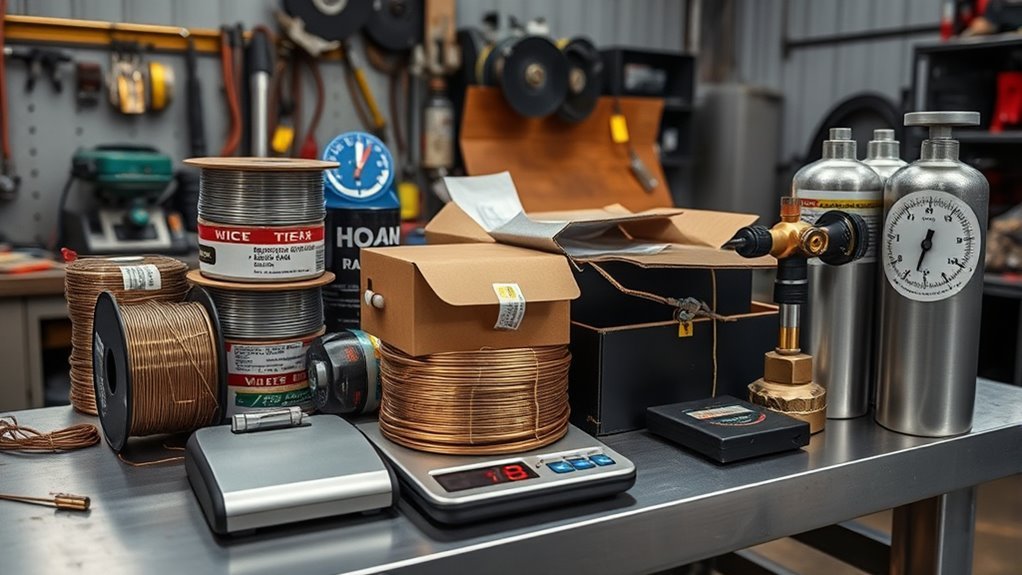
There is no dependable rule that materials and consumables always equal a fixed percentage of a welding bill. Their share depends on whether the job is a tiny crack repair, a replacement bracket, a long railing, a heavy structural frame, or a complete fabricated product.
A clear estimate should identify the following items separately:
| Item | How it may be billed | Questions to ask |
|---|---|---|
| Base metal | By weight, stock length, sheet, plate, tube, or fabricated part | What alloy, grade, thickness, and quantity are included? |
| Filler wire or electrodes | Included in labor, charged by estimated use, or listed as a consumable | Does the filler match the base metal and required procedure? |
| Shielding gas or flux | Included, billed as shop supplies, or charged by project use | Is purging or a specialty gas mixture required? |
| Abrasives and cutting supplies | Grinding discs, cutoff wheels, flap discs, brushes, and saw blades | How much old metal, rust, coating, or failed weld must be removed? |
| Finishing materials | Primer, paint, rust treatment, polishing, or outsourced powder coating | What finish and corrosion protection are included? |
For a very small repair, the contractor may still need to open a package of filler, install a new grinding wheel, or obtain a short length of matching stock. Ask whether unused material remains the contractor’s property or is included with the completed job.
Pro Tip: Let the welder confirm the metal grade before buying material yourself. Customer-supplied metal may save markup, but the wrong alloy, thickness, coating, or condition can create extra labor or make the proposed repair unsuitable.
How Metal Type Affects Pricing
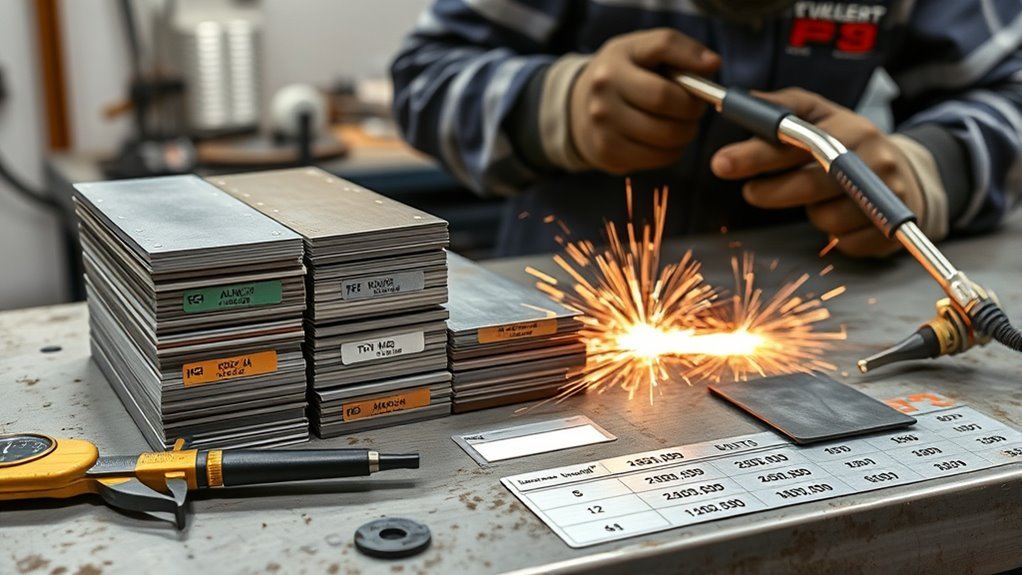
The base metal changes the price of the stock, the suitable welding process, the filler material, cleaning requirements, heat control, and the level of operator skill required. Mild steel is commonly the least expensive option for general fabrication and repairs. Stainless steel, aluminum, cast iron, and specialty alloys often cost more, but there is no universal multiplier that applies to every project.
Steel Versus Stainless Steel and Aluminum
Mild steel is widely available and can be welded with several common processes. Standard stock, filler wire, electrodes, and fabrication equipment are readily available, which often keeps both material and labor costs lower.
Stainless steel may require careful heat control, compatible filler, dedicated cleaning tools, distortion management, and shielding on the back of some joints. The desired cosmetic finish can also add grinding and polishing time.
Aluminum conducts heat quickly and forms a persistent oxide layer. Proper cleaning, compatible filler, suitable shielding gas, and equipment designed for aluminum wire or AC TIG work may be needed. Thin aluminum can also distort or burn through if the procedure is not well controlled.
Cast iron repairs can require gradual heating, controlled cooling, specialized filler, short weld sequences, and an assessment of whether welding is appropriate at all. Cracks may continue beyond the visible damage, making inspection important.
Specialty alloys may require documented material identification, qualified procedures, controlled heat input, traceable filler, and nondestructive examination. Those requirements can make a small-looking repair expensive.
Thickness and Preparation Needs
Thicker material does not merely use more filler. The joint may require beveling, preheating, several weld passes, cleaning between passes, controlled interpass temperatures, and slower work in difficult positions.
Surface condition is equally important. Paint, oil, rust, galvanizing, plating, moisture, old filler, and damaged metal must be handled correctly before welding. Cutting out a failed section and fabricating a replacement can take longer than depositing the new weld.
Ask the welder to identify:
- The material type, grade, and thickness
- The amount of damaged metal that must be removed
- The required joint design and number of weld passes
- Whether preheating or controlled cooling is needed
- The required surface finish and corrosion protection
- Any dimensional tolerance or code requirement
Filler Metal and Shielding Costs
Filler and shielding choices must match the base metal, joint, service conditions, and applicable welding procedure. A cheaper wire or electrode is not a saving if it creates cracking, poor corrosion resistance, excessive cleanup, or a failed inspection.
Ordinary carbon-steel wire and electrodes are generally easier to source than specialty stainless, nickel-alloy, aluminum, hardfacing, or low-hydrogen consumables. Some work may also need sealed storage, heated electrode ovens, gas purging, or material traceability.
Instead of relying on a standard “cost per inch,” ask for the estimated weld length, joint size, number of passes, process, preparation time, filler specification, and inspection level. Those details explain the price more accurately than seam length alone.
Cost Differences by Welding Method
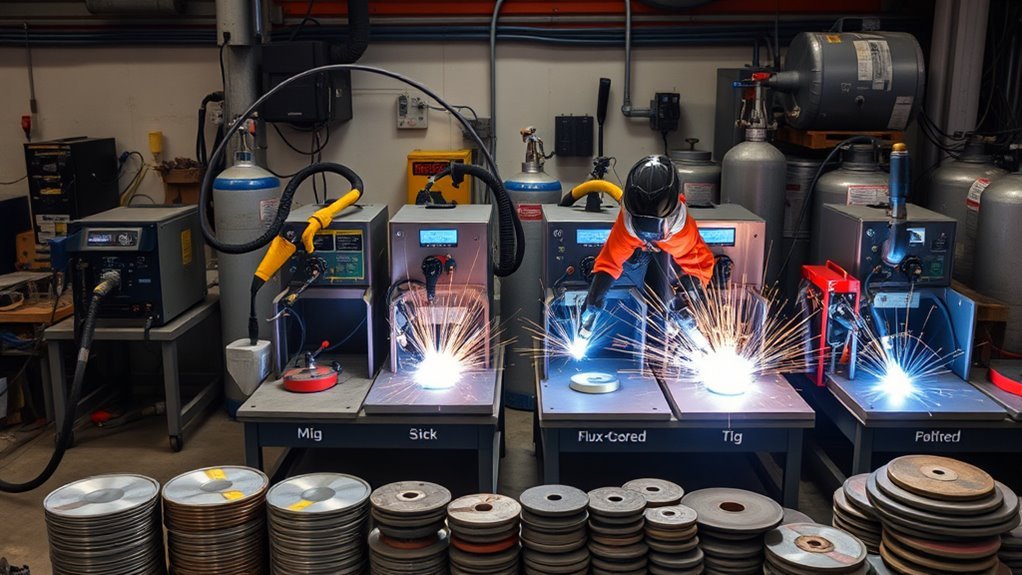
The welding process affects deposition speed, cleanup, portability, appearance, equipment, shielding, and the operator skill needed. However, process alone does not determine the bill. A fast process on a difficult joint may still cost more than a slower process used on a simple bench job.
| Process | Common use | Published hourly guide | Cost effect |
|---|---|---|---|
| Stick / SMAW | Outdoor repair, structural work, heavier steel, and field conditions | About $50–$75 per hour | Portable and practical outdoors, but slag removal and electrode changes add time |
| MIG / GMAW | Shop fabrication, automotive work, mild steel, stainless, and some aluminum | About $65–$95 per hour | Fast wire feeding can reduce labor on clean, accessible, repetitive joints |
| Flux-cored / FCAW | Structural steel, thicker sections, field fabrication, and high-deposition work | Project-specific quote | High deposition can save time, while fumes, slag, wire cost, and cleanup affect the total |
| TIG / GTAW | Thin material, stainless steel, aluminum, precision joints, and cosmetic work | About $75–$125 per hour | Precise but commonly slower, with greater cleaning, fit-up, and operator-control demands |
The stick, MIG, and TIG guide ranges above come from a current HomeAdvisor welding-cost guide. They are national planning figures rather than fixed trade rates.
Estimating Costs for Repairs and Small Jobs
A small repair may have only a few inches of weld, yet still trigger the contractor’s minimum charge. The welder must identify the metal, inspect the failure, prepare the area, protect nearby surfaces, set up the equipment, make the repair, clean it, and check the finished joint.
A useful estimating formula is:
Estimated total = minimum labor charge + additional labor + metal and fabricated parts + consumables + preparation + travel + finishing + permits or inspection + tax.
Sample Welding Cost Calculation
Suppose a mobile welder applies a two-hour minimum at $85 per hour to repair a steel gate. The estimate includes $45 for replacement steel and consumables plus a $50 travel charge:
- Two-hour labor minimum: $170
- Metal and consumables: $45
- Travel: $50
- Illustrative subtotal: $265 before tax
This is only an example of the calculation method. The actual price may change if the gate must be removed, aligned, reinforced, stripped, painted, or fitted with new hinges.
Common Welding Project Costs
The following 2026 ranges from Angi’s welding-cost guide can help with early budgeting:
| Project | Typical cost range | Examples |
|---|---|---|
| Small repair under 1 foot | $100–$250 | Single crack, broken bracket, or minor patch |
| Fence repair | $150–$350 | Broken section, rusted connection, or damaged post |
| Automotive welding | $100–$600 | Exhaust, body panel, bracket, or eligible frame-related repair |
| Decorative metalwork | $200–$900 | Ornamental railing, artwork, or custom detail |
| Gate fabrication | $400–$1,200 | Fabricated gate, hinges, frame, and installation |
| Structural steel work | $500–$2,500 or more | Beams, posts, load-bearing supports, or reinforcement |
Engineered structural work can exceed these ranges when it requires drawings, demolition, shoring, cranes, restricted access, testing, special inspection, or work outside normal hours.
Mobile Welding and Travel Charges
Mobile welding generally costs more than taking a portable item to a fabrication shop. The contractor may need to transport a welding machine, generator, leads, gas cylinders, ventilation equipment, fire blankets, screens, hand tools, consumables, and personal protective equipment.
A mobile estimate may include:
- A one- or two-hour minimum
- A flat travel or service-zone charge
- A per-mile charge outside the normal service area
- Setup and teardown time
- Generator or equipment charges
- Parking, site-access, or security costs
- After-hours or emergency premiums
Current national guidance places many mobile travel charges around $25 to $100, although remote locations and heavy equipment can cost more. See our guides to mobile welder rates and mobile welding costs. Confirm whether travel time is included in the labor minimum or billed separately.
Pro Tip: A chair, bracket, small gate panel, or removable machine part may cost less to repair when delivered to the shop. Do not remove a structural or safety-critical component without approval from a qualified professional.
Factors That Increase Project Complexity and Price
Two jobs with the same weld length can have very different prices. The following conditions commonly increase labor, equipment, or inspection requirements:
- Poor access: Overhead, vertical, confined, elevated, or obstructed positions slow the work.
- Damage removal: Failed welds, rusted metal, cracks, and distorted parts may need cutting and grinding before repair.
- Fit-up and alignment: Bent gates, frames, hinges, and structural members may require jacks, clamps, fixtures, or temporary supports.
- Thicker metal: Beveling, preheating, and multiple passes add time.
- Thin metal: Careful heat control is needed to prevent burn-through and distortion.
- Specialty alloys: Material identification, compatible filler, purging, temperature control, and cleaning may be necessary.
- Cosmetic finish: Blending, polishing, straightening, and matching an existing finish can take longer than the weld itself.
- Code-regulated work: Drawings, procedures, welder qualifications, inspection, and testing add cost.
- Hazardous surroundings: Combustibles, coatings, occupied buildings, confined spaces, and nearby equipment require additional controls.
- Rush scheduling: Emergency, weekend, overnight, or shutdown work may carry a premium.
Welding Safety and Hot-Work Requirements
Warning: Welding can cause fire, explosion, electric shock, burns, eye damage, and harmful fume exposure. Do not weld on a used tank, drum, pipe, wheel, pressurized component, coated surface, or unknown metal without proper identification, cleaning, ventilation, isolation, and professional safety procedures.
The OSHA welding, cutting, and brazing standard requires controls for fire hazards, personal protection, ventilation, confined spaces, hazardous coatings, and used containers.
Before on-site welding begins, the responsible parties should address:
- Removal or shielding of combustible materials
- Suitable fire-extinguishing equipment
- A fire watch when conditions require one
- Adequate local exhaust or general ventilation
- Protection for nearby people from arc radiation and sparks
- Safe handling and securing of gas cylinders
- Isolation of fuel, pressure, electricity, and moving equipment
- Identification of galvanized, lead-painted, cadmium-coated, stainless, or otherwise hazardous materials
- Confined-space entry and rescue requirements
- Site-specific hot-work authorization
Do not ask a contractor to skip ventilation, fire protection, preparation, or inspection merely to reduce the price. Those controls protect the worker, the property, and everyone nearby.
DIY Welding Versus Hiring a Professional
DIY welding may appear cheaper when the job is small, but the equipment cost is only part of the decision. A safe setup can require a suitable machine, electrical supply, helmet, safety glasses, gloves, protective clothing, ventilation, fire protection, clamps, grinders, filler, shielding gas, and practice material.
Hire a qualified professional when the work involves:
- A load-bearing building component
- A vehicle frame, suspension, steering, hitch, or safety component
- A pressure vessel, fuel system, gas line, pipeline, or pressurized pipe
- A lifting device, trailer, guardrail, balcony, stair, or elevated platform
- Cast iron or an unidentified alloy
- A used tank, drum, container, or enclosed section
- A code, permit, engineer, insurer, or inspection requirement
- Hidden cracks, severe corrosion, or repeated failure
For nonstructural work, an experienced owner may complete basic preparation or painting after receiving the welder’s instructions. Avoid grinding, cutting, heating, or removing a part when doing so could change alignment, expose hazardous coatings, or weaken a structure.
Permits, Engineering, and Welding Inspections
Not every welding repair needs a permit. Requirements depend on the location, adopted building code, property type, and whether the work changes a structural, fire-rated, pressure-containing, or otherwise regulated system.
Structural steel in a permitted building project may require drawings from a licensed design professional and special inspection under the locally adopted building code. The 2024 International Building Code’s special-inspection provisions illustrate how regulated structural work can involve inspection and testing.
Before accepting a structural quote, ask the local building department or project designer:
- Whether a permit is required
- Whether engineered drawings are required
- Which welding code or specification governs the work
- Whether the welder must hold a project-specific qualification
- Whether a special inspector or welding inspector is required
- Whether visual or nondestructive testing is required
- Who will provide and retain the inspection records
A lower bid is not a true saving if it excludes required engineering, inspection, documentation, or permit fees.
How to Get Accurate Estimates From Welders
Accurate quotes begin with a consistent scope. Give each contractor the same measurements, photos, material information, access details, finish requirements, and schedule so the bids can be compared fairly.
Provide Detailed Project Specs
Include as many of the following details as possible:
- Overall dimensions and metal thickness
- Known metal type and grade
- Clear photos of the full item and close-ups of the damage
- Drawings for fabricated or structural work
- Location and access restrictions
- Whether the item can be taken to a shop
- Required appearance, tolerance, coating, or polish
- Expected load or service environment
- Known code, engineering, permit, or inspection requirements
- Desired completion date
Do not conceal previous repairs, cracks, coatings, contamination, or repeated failures. Those facts can change the recommended repair and its price.
Ask About Included Costs
Request a written estimate that identifies:
- Hourly or project labor
- Minimum service charge
- Estimated labor hours
- Travel and setup
- Base metal and fabricated parts
- Filler, gas, abrasives, and shop supplies
- Removal of old metal or failed welds
- Alignment, fitting, and temporary supports
- Primer, paint, polishing, or powder coating
- Equipment rental, lifting, or access equipment
- Engineering, permits, inspection, and testing
- Cleanup, disposal, tax, and payment schedule
- Exclusions and change-order terms
Ask whether the price is fixed, estimated, or time-and-materials. If hidden damage is possible, the contract should explain how additional work will be approved and billed.
Compare Multiple Written Quotes
Compare at least two or three written quotes when the project is large enough to justify it. Confirm that each contractor is pricing the same material, thickness, finish, inspection scope, and installation work.
Do not select a bid solely because it has the lowest hourly rate. A better-equipped welder may finish faster, produce less distortion, require less rework, or include preparation and finishing that another bidder excluded.
Check:
- Relevant experience with the metal and process
- Applicable welder qualifications
- Business licensing where required
- Liability and workers’ compensation coverage
- References or examples of similar work
- Written warranty or workmanship terms
- Start date, completion date, and payment milestones
Verify the Right Welding Qualifications
A qualification should match the work. The process, position, material group, thickness, joint, and governing code can all matter. A general certificate does not automatically qualify someone for every structural, pressure, pipeline, or specialty-alloy weld.
The AWS Certified Welder Program evaluates a welder’s ability to follow a welding procedure and produce an acceptable test weld. An AWS Certified Welding Inspector, or CWI, performs inspection-related work; CWI is not simply another name for a certified production welder.
Pressure-equipment work may be governed by ASME requirements, while pipeline work may be governed by API requirements. Structural building work may reference AWS structural welding codes. Ask the engineer, owner, inspector, or authority having jurisdiction which qualifications and documents are required.
Ways to Reduce Welding Costs
Cost savings should come from better planning, not weaker joints or skipped safety controls.
- Take removable items to the shop: This may avoid mobile travel and setup charges.
- Combine several small repairs: One visit may cover multiple items under the same minimum charge.
- Provide clear photos and measurements: Better information reduces uncertainty in the quote.
- Clear safe access: Move ordinary obstacles, vehicles, and stored items before the appointment.
- Use standard stock sizes: Custom profiles and specialty alloys can cost more and take longer to obtain.
- Choose a practical finish: A functional shop finish usually costs less than a seamless cosmetic blend or polished finish.
- Schedule before failure becomes severe: Early repair may prevent additional cutting, alignment, or replacement work.
- Confirm the scope in writing: Clear change-order rules reduce billing disputes.
Do not clean unknown coatings, cut structural members, remove fireproofing, or disassemble safety-critical parts unless the contractor or project professional confirms that it is safe.
Frequently Asked Questions
What certifications should a welder have for specialized jobs?
The welder should hold qualifications that match the required process, position, metal, thickness, and governing code. An AWS Certified Welder credential may be relevant, but a CWI is an inspector credential. Pressure-equipment, pipeline, structural, aerospace, or other regulated work can require different project-specific qualifications and procedures.
Do welders offer a warranty or workmanship guarantee?
Some do, but warranty terms are not universal. Ask for the duration, covered defects, exclusions, maintenance requirements, and remedy in writing. Damage caused by corrosion, overloading, movement, misuse, design problems, or failure of the surrounding metal may be excluded.
How long does a welding project take?
A straightforward shop repair may be completed the same day, while custom fabrication can take several days or weeks. Material availability, drawings, approval, site access, coating, curing, permits, inspections, and the contractor’s schedule can all extend the timeline.
Are permits or inspections required for structural welding?
They may be. Requirements depend on the jurisdiction, adopted code, property, and scope. Repairs to load-bearing building components may require a permit, engineered detail, qualified welder, and special inspection. Contact the local building department before work begins.
Can a welded joint be painted to match the existing surface?
Usually, but the result depends on preparation and coating compatibility. Spatter, slag, scale, oil, rust, sharp edges, and damaged coating must be removed or treated. The repaired area then needs the correct primer, topcoat, film thickness, and curing conditions.
Why does mobile welding cost more?
Mobile welders must load, transport, set up, and remove equipment at the job site. The price may include travel, a service minimum, generator use, gas cylinders, safety screens, ventilation, parking, and time spent working around site restrictions.
Why is a contractor’s hourly rate higher than a welder’s wage?
The service rate supports the entire business, not only the welder’s take-home pay. It can include equipment, insurance, vehicle expenses, rent, payroll taxes, administration, quoting, non-billable travel, training, consumables, and profit.
Sources
- Angi: How Much Does Welding Cost? 2026 Data — national project, labor, travel, preparation, and permit cost ranges
- HomeAdvisor: Welding Cost Guide — hourly rates, small-project totals, minimum charges, and process-specific planning ranges
- U.S. Bureau of Labor Statistics: May 2025 National Wage Data — employee wage benchmark for welders, cutters, solderers, and brazers
- OSHA 29 CFR 1910.252 — welding fire prevention, personal protection, ventilation, and hot-work requirements
- American Welding Society Certified Welder Program — welder performance testing and qualification context
- 2024 International Building Code, Chapter 17 — special-inspection framework for regulated construction work
Conclusion
Professional welding commonly costs about $60 to $125 per hour, but the hourly figure alone does not predict the final bill. Minimum charges, mobile travel, preparation, fabrication, metal type, thickness, process, finishing, permits, and inspection can matter as much as the time spent welding.
For the most reliable estimate, provide clear measurements and photos, ask for an itemized written scope, verify qualifications that match the project, and compare the complete out-the-door price rather than the lowest advertised rate. Structural, pressure-containing, vehicle-safety, and other critical work should be handled under the appropriate professional, code, and inspection requirements.