Unibody frame welding cost can range from the low four figures for localized work to $15,000 or more for major multi-area damage. There is no reliable nationwide flat rate because the final price depends on the damaged part, the vehicle-specific OEM procedure, parts, measuring, refinishing, alignment, scans, and any required calibration.
Quick Answer
For budgeting, unibody structural repairs that involve welding or section replacement often run from roughly $1,000 into the low five figures. Published U.S. frame-repair estimates currently span about $600 to $15,000+ depending on severity, but those figures are not a national average for unibody welding. The dependable price is a written, VIN-specific estimate based on measuring, OEM procedures, parts, refinishing, alignment, scans, and required calibrations.
Key Takeaways
- Use roughly $1,000 to $15,000+ only as a broad planning range for structural collision work; some minor frame repairs can fall below $1,000.
- The vehicle maker’s repair procedure determines whether a part may be straightened, sectioned, welded, bonded, riveted, or replaced.
- The estimate should include measuring, parts, labor, corrosion protection, refinishing, alignment, scans, and any required ADAS calibration.
- Structural welding is not a safe DIY project for a road-going vehicle.
- Choose a shop with current structural training, the correct equipment, documented OEM procedures, and a written warranty.
At a Glance
| Time Required | The metal repair may take hours, but teardown, parts, refinishing, scans, alignment, and calibration can extend the complete job to several days or longer. |
| Difficulty | Advanced structural collision repair; not suitable for DIY work. |
| Tools Needed | Vehicle-specific OEM repair information, structural measuring and anchoring equipment, an approved welder or mixed-attachment tools, scan equipment, and refinishing tools. |
| Cost | About $1,000 to $15,000+ as a broad planning range for structural collision repair. Some minor frame work can cost less; multi-area structural, restraint, suspension, or ADAS damage can exceed this range or result in a total loss. |
Understanding Unibody Frame Welding
A unibody vehicle does not have a separate ladder frame under the body. Its rails, pillars, rockers, floor, roof structure, and other reinforced panels work together as the vehicle’s structure. In collision-repair language, “unibody frame welding” usually means repairing or replacing one of these structural parts.
A bolt-on front or rear subframe is different from the welded unibody structure. A subframe can carry suspension or powertrain components and may be replaceable as an assembly, while damage to welded rails, pillars, rockers, aprons, or floors follows body-structure repair procedures. If your vehicle is a pickup or SUV with a separate ladder frame, see our truck frame welding cost guide instead.
The work begins with damage analysis and precise measuring. A technician may straighten an allowed area, replace a damaged component at factory seams, or section a part only where the vehicle maker permits it. The repair plan should come from the vehicle-specific body repair manual, not from a generic welding rule. I-CAR’s OEM Technical Information Matrix helps repairers locate available manufacturer procedures.
Modern vehicles may require steel GMA/MAG welding, squeeze-type resistance spot welding, MIG brazing, rivet bonding, structural adhesive, or a combination of methods. The repair process should not be chosen by habit or by whichever welder is available: the required attachment method, wire, adhesive, weld spacing, heat limits, and sectioning location depend on the exact vehicle and part.
A safe structural repair is not simply “a strong weld.” It is a documented repair that follows the vehicle maker’s material, joining, measuring, and post-repair requirements.
Accurate pre-repair and post-repair measurements matter because panel fit alone cannot prove that the structure is within specification. The repair may also require a wheel alignment, diagnostic scans, restraint-system checks, or ADAS calibration.
Warning: Do not drive a collision-damaged vehicle if a wheel rubs, the steering has changed, a door will not latch, an airbag or safety-system warning is on, or structural parts are visibly torn. Have it towed for inspection.
What Affects Unibody Frame Welding Cost?
Unibody frame welding costs are driven by the complete repair plan, not just the minutes spent welding. Two vehicles with similar-looking damage can need very different procedures after teardown and measuring.
Type and Location of Damage
A shallow bend in an OEM-approved repair area may need measuring, anchoring, and a controlled pull. A torn rail, crushed rocker, damaged pillar, buckled floor, or distorted strut tower may require one or more structural parts to be replaced. Damage near suspension mounts, seat-belt anchors, airbag sensors, high-voltage batteries, or ADAS components adds inspection and repair steps.
Cosmetic dents are not automatically structural damage. A dented outer panel may be repairable without structural welding, while a small exterior mark can hide damage behind the panel. Teardown and three-dimensional measuring help separate cosmetic work from structural work.
Labor, Parts, and Materials
Structural labor is only one line in the estimate. The total may include:
- Damage analysis and teardown: removing trim, lamps, suspension parts, glass, or interior pieces to expose the damaged structure.
- Measuring and setup: anchoring the vehicle, recording control-point measurements, and making controlled pulls.
- OEM repair research: identifying material strength, cut locations, attachment methods, one-time-use parts, and required inspections.
- Structural parts: rails, aprons, pillars, rockers, floors, reinforcements, brackets, fasteners, and adhesives.
- Joining operations: test welds, plug welds, spot welds, MIG brazing, riveting, bonding, or mixed attachment methods.
- Corrosion protection: epoxy primer, seam sealer, cavity wax, undercoating, and restored coatings where the OEM requires them.
- Refinishing: surface preparation, paint, blending, and curing.
- Mechanical and electronic work: alignment, suspension repairs, pre- and post-repair scans, calibrations, and road testing.
Vehicle age, local labor rates, parts availability, aluminum or advanced high-strength steel construction, EV high-voltage procedures, and the shop’s required equipment can all change the price.
Note: An estimate written before teardown may be preliminary. Hidden damage, one-time-use parts, and manufacturer-required operations can produce a supplement after the repair plan is fully documented.
How Much Does Unibody Frame Welding Cost?

There is no authoritative nationwide average for “unibody frame welding” because estimates are written for a specific VIN, damaged part, repair procedure, labor market, and parts list. Published U.S. frame-repair figures vary from about $600 at the low end to $15,000+ for major structural work. The bands below narrow that broad market context into practical unibody-repair scopes, but they are still budgeting estimates rather than guaranteed prices.
| Repair Scope | Planning Range | What May Be Included |
|---|---|---|
| Localized structural repair | About $1,000–$3,000 | Measurement, setup, an allowed pull or small repair area, corrosion protection, and limited refinishing. |
| Single structural section replacement | About $3,000–$8,000 | Part replacement, approved joining methods, setup and measuring, corrosion restoration, refinishing, scans, and possible alignment or calibration. |
| Major or multi-area structural damage | About $8,000–$15,000+ | Multiple structural parts, suspension or restraint work, extensive refinishing, scans, calibrations, and longer setup time. The vehicle may be declared a total loss. |
These bands can overlap. A luxury vehicle, EV, aluminum-intensive vehicle, rare part, or repair involving airbags and sensors can cost far more than a similar-looking repair on a simpler vehicle. A shop may also decline a repair when the OEM does not permit straightening or sectioning in the damaged area.
For context, Experian publishes a $600–$10,000 frame-damage repair range, while a 2026 Indiana collision-repair guide publishes $1,000–$15,000+ for structural damage. Those sources use different scopes and markets, which is exactly why a VIN-specific estimate is more useful than a single online “average.”
To compare quotes fairly, make sure each estimate covers the same repair plan. A low quote that omits scans, calibration, corrosion protection, one-time-use parts, or refinishing is not an equal comparison.
Why Can Two Unibody Repair Estimates Be Thousands Apart?
Two estimates can look far apart even when both shops inspected the same vehicle because one may include the complete repair plan while the other is still preliminary. Compare the operations line by line before treating the lower total as the better deal.
| Estimate Line | Why It Changes the Total |
|---|---|
| Teardown and measuring | A photo estimate may miss hidden rail, floor, suspension-mount, or reinforcement damage that appears only after parts are removed and the body is measured. |
| Repair vs. replacement | An OEM-approved pull can be much cheaper than replacing a rail, pillar, rocker, apron, or floor section and duplicating the required attachment method. |
| Refinish and corrosion protection | Primer, seam sealer, cavity wax, undercoating, paint preparation, blending, and curing add material and labor beyond the structural metal work. |
| Mechanical and electronic operations | Alignment, suspension work, restraint checks, diagnostic scans, and required ADAS calibration can materially change the final bill. |
| Parts and sublet work | OEM parts, one-time-use fasteners, glass, calibrations, specialized aluminum work, or dealer sublet operations may appear only on the more complete estimate. |
For related repair costs, see our guides to general frame welding cost and car frame welding cost.
What a Professional Unibody Repair Includes
- Initial inspection and scan: The shop records visible damage, warning lights, diagnostic trouble codes, and safety-system concerns.
- Teardown and blueprinting: Damaged areas are exposed so hidden damage and required parts can be identified.
- Structural measuring: The vehicle is measured against OEM dimensions before pulling or part replacement.
- OEM repair-plan research: The technician confirms material type, repairability, sectioning location, attachment method, corrosion products, and post-repair requirements.
- Straightening or replacement: Allowed areas are pulled into specification, or damaged sections are removed and replaced as directed.
- Joining and corrosion restoration: The shop performs test welds or other required attachments, then restores seam sealer, primers, coatings, and cavity protection.
- Refinish and reassembly: Repaired areas are painted, blended, cured, and reassembled with required new fasteners or clips.
- Verification: Final measurements, alignment, scans, calibrations, warning-light checks, and a documented quality-control inspection confirm completion.
Pro Tip: Ask for the final itemized invoice, pre- and post-repair measurement report, scan report, alignment printout, calibration documentation, and the warranty in writing. These records show what was repaired and how the shop verified it.
Importance of Professional Welding Services
Structural collision repair affects load paths, occupant protection, suspension mounting points, door openings, and the way the vehicle manages energy in another crash. An improper weld, excessive heat, an unapproved cut, or missing adhesive can weaken the repair even when the surface looks acceptable.
Training and certification are useful screening tools, but they do not guarantee the result. Current I-CAR Gold Class standards require role-based training and welding training for structural technicians. OEM certification can add vehicle-specific tools, equipment, training, and facility requirements.
A complete repair also restores corrosion protection. I-CAR notes that welding can create corrosion hot spots and that seam sealer, cavity wax, adhesives, primers, and other protection must be restored according to the body repair manual. See its guidance on corrosion protection inspection during collision repair.
ADAS and electronic safety systems add another layer. Depending on the vehicle and damage, structural work, bumper or sensor removal, alignment, or component replacement may trigger scan, aiming, initialization, or calibration requirements.
Choosing the Right Auto Body Shop
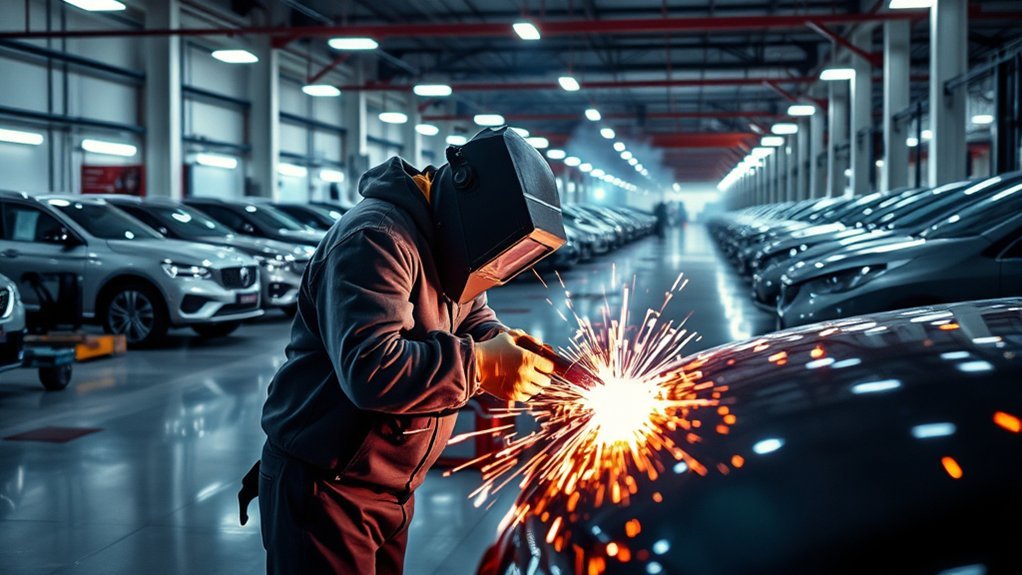
Finding the right auto body shop is essential because structural work requires more than general welding experience.
The best estimate is not automatically the lowest one; it is the estimate that documents every operation needed to return the vehicle to the manufacturer’s repair specifications.
Use this checklist when comparing shops:
- Structural training: Ask whether the technician performing the work has current steel or aluminum structural welding training appropriate for your vehicle.
- OEM procedure access: Confirm that the shop will research and follow the repair information for your exact year, make, model, and damaged part.
- Measuring capability: Ask how the shop records pre-repair and post-repair structural measurements.
- Correct equipment: The shop should have the required anchoring, measuring, welding, spot-welding, riveting, bonding, scan, or calibration equipment—or document qualified sublet work.
- Repair-plan detail: The written estimate should list parts, labor, attachment methods, corrosion protection, scans, calibrations, alignment, refinishing, and taxes or fees.
- Experience with your vehicle: OEM certification or proven experience with the same construction materials and systems is valuable.
- Written warranty: Ask what is covered, for how long, whether mileage limits apply, and where warranty work must be performed.
- Reputation and communication: Review complaint history, recent customer feedback, supplement procedures, and how the shop documents changes.
The Federal Trade Commission recommends checking current certifications while remembering that certification alone is not a guarantee. It also recommends getting a written estimate that identifies the condition, parts, and anticipated labor charge. See the FTC’s Auto Repair Basics.
Red Flags to Avoid
- A firm structural quote based only on a photo, with no plan for teardown or measuring.
- A shop that cannot show the OEM procedure or explain why a part is repairable.
- A generic promise to “MIG or TIG it” without identifying the required attachment method.
- No plan to restore corrosion protection behind or inside the repaired structure.
- No mention of scans, alignment, restraint checks, or possible ADAS calibration.
- Pressure to approve work without a written estimate or authorization limit.
Getting a Cost Estimate for Your Vehicle
Start with a collision-repair shop that can inspect and measure the vehicle. Provide the VIN, insurance information if a claim is involved, prior repair history, and any symptoms such as steering pull, unusual tire contact, water leaks, warning lights, or doors that no longer fit correctly.
A useful written estimate should identify:
- the damaged structural part and whether it will be repaired, replaced at factory seams, or sectioned;
- the OEM procedure and required attachment method;
- labor for teardown, measuring, setup, pulling, cutting, fitting, joining, refinishing, and reassembly;
- new, recycled, aftermarket, or OEM parts and any one-time-use fasteners;
- corrosion-protection materials and operations;
- alignment, scans, calibrations, restraint inspections, and road-test requirements;
- sublet work, hazardous-material charges, storage, taxes, and the shop’s warranty.
Get more than one estimate for expensive repairs, but compare the operations rather than the bottom line alone. Ask each shop to explain any missing line items or major differences.
Insurance and Total-Loss Decisions
Insurance coverage depends on the cause of damage and the policy. Collision coverage generally pays for covered crash damage to your vehicle, minus the deductible. Comprehensive coverage applies to covered non-collision events such as theft, hail, flood, fire, or animal impact. The National Association of Insurance Commissioners advises consumers to review the specific coverages they purchased.
Structural damage does not automatically total a vehicle. The insurer compares the repair cost with the vehicle’s pre-loss value and applies state rules and policy terms. Extensive structural damage, airbags, suspension work, expensive electronics, or poor parts availability can push the estimate high enough for a total-loss decision.
Before authorizing permanent repairs on an insurance claim, confirm inspection and approval requirements with the insurer. Keep copies of the estimate, supplements, photos, measurements, invoices, scans, calibration reports, and all claim communications.
When Is Unibody Frame Repair Not Worth It?
A qualified shop may recommend replacement or decline the job when:
- the OEM does not permit straightening or sectioning in the damaged area;
- heat, tearing, buckling, or previous repairs have affected a nonrepairable advanced high-strength steel part;
- corrosion has removed too much sound metal for an approved repair;
- critical mounting points cannot be restored within specification;
- required parts or repair information are unavailable;
- the complete repair cost is too close to or above the vehicle’s value.
Do not confuse a cosmetic rust patch with a documented structural repair. Welding reinforcement plates over a weakened unibody area without an OEM-supported procedure can change load paths and hide continuing corrosion.
Frequently Asked Questions
How Much Does Unibody Frame Welding Cost?
Use roughly $1,000 to $15,000+ as a broad planning range for structural collision repairs that may involve pulling, section replacement, welding, refinishing, alignment, scans, or calibration. Some minor frame work can cost less. There is no authoritative nationwide unibody-welding average, so the written estimate for your VIN and damage is the dependable number.
Can I Perform Unibody Frame Welding Myself?
No—not on a road-going vehicle’s structural members unless you are a properly trained collision-repair professional with the vehicle-specific OEM procedure, measuring equipment, approved joining equipment, and the ability to verify the completed repair. A weld that looks sound can still weaken advanced steel, alter a crash load path, or leave hidden corrosion.
How Long Does Unibody Frame Welding Take?
The welding operation may take several hours, but the complete repair commonly takes longer. Teardown, measuring, parts ordering, pulling, fitting, corrosion protection, paint curing, reassembly, scans, alignment, and calibration can extend the job to several days or more. The shop should give you a repair-plan timeline after teardown.
What Are Signs of Unibody Frame Damage?
Possible signs include uneven panel gaps, doors or a liftgate that bind, steering pull, a changed steering-wheel position, unusual tire wear, wheel rubbing, water leaks, new noises, or airbag and driver-assistance warning lights after a collision. These symptoms do not prove structural damage; a professional inspection and measurement are needed.
Will Insurance Cover Unibody Frame Welding Costs?
It may. Collision coverage generally applies to covered crash damage to your vehicle, subject to the deductible and policy terms. Comprehensive coverage may apply when the structural damage came from a covered non-collision event. Pre-existing damage, rust, exclusions, valuation, and total-loss rules can change the outcome.
Can Unibody Frame Welding Affect Vehicle Safety?
Yes. Correct structural repair can restore the damaged area according to the manufacturer’s procedure. Incorrect heat, weld placement, sectioning, adhesive use, measuring, or corrosion protection can reduce strength or alter how the structure performs in another crash.
Does Frame Damage Automatically Mean the Car Is Totaled?
No. Many structural parts can be repaired or replaced when the OEM provides an approved procedure and the shop has the required equipment. A total-loss decision usually depends on the complete repair cost, the vehicle’s pre-loss value, salvage value, state rules, and insurer policy.
What Should I Receive After a Structural Repair?
Request the final itemized invoice, written warranty, pre- and post-repair measurement reports, diagnostic scan reports, alignment printout, calibration documentation when required, and photos of concealed repair stages if the shop provides them. Keep these records with the vehicle’s service history.
Conclusion
Unibody frame welding cost cannot be judged from a photo or reduced to a single hourly rate. Use roughly $1,000 to $15,000+ only as a broad planning range for structural collision work; some minor repairs can cost less, while rail, pillar, rocker, floor, suspension, restraint, or sensor damage can push the total higher. The next step is to get a measured, VIN-specific written estimate from a qualified collision shop that follows the exact OEM procedure, restores corrosion protection, completes required scans and calibrations, and documents the finished repair.
Sources
- I-CAR OEM Technical Information Matrix — locating manufacturer-specific collision repair information and procedures.
- I-CAR Gold Class Standards for Collision Repair — role-based training, structural technician requirements, welding training, and ADAS education.
- I-CAR: Today’s Advanced Vehicles Require Changes in Collision Repair — OEM-directed attachment methods, including GMA welding, resistance spot welding, and MIG brazing.
- I-CAR: Corrosion Protection Inspection During the Repair Process — restoring primers, seam sealers, cavity wax, and related protection after structural work.
- Federal Trade Commission: Auto Repair Basics — written estimates, certifications, second opinions, repair orders, and warranties.
- National Association of Insurance Commissioners: What Does Auto Insurance Cover? — collision, comprehensive, deductible, and policy-coverage basics.
- Experian: Average Cost of Auto Repair After an Accident — broad U.S. consumer frame-damage repair range used only as pricing context.
- Bob Rohrman Collision Center: 2026 Collision Repair Cost Ranges — current local structural-repair ranges illustrating how major unibody work can reach the low five figures.