Vehicle frame welding cost is usually a planning range rather than a flat shop price, and the ranges below are rough estimates rather than sourced national averages. A limited, accessible crack with an approved repair may cost roughly $500 to $2,500. Rust removal, collision straightening, rail replacement, extensive disassembly, corrosion protection, alignment, scanning, and calibration can push a complete structural-repair bill to $2,000 to $10,000 or more. More importantly, not every frame component is approved for welding. The vehicle manufacturer’s repair procedure must be checked before price or repair method is decided.
Quick Answer
For budgeting, a limited, repairable vehicle-frame crack may cost roughly $500 to $2,500. Rust removal, collision straightening, rail work, extensive disassembly, and calibration can raise the complete structural-repair bill to $2,000 to $10,000 or more. These are planning ranges rather than guaranteed national prices, and actual pricing depends on whether the manufacturer permits the proposed repair.
Key Takeaways
- A narrowly scoped weld can cost less than a complete structural repair, so compare what each estimate includes instead of relying on one generic average.
- A body-on-frame truck, a unibody car, and a removable subframe require different repair decisions.
- Some rails and high-strength components cannot be welded or sectioned unless the vehicle maker provides an approved procedure.
- A complete estimate may include measuring, straightening, parts, welding, corrosion protection, alignment, scanning, and calibration.
- Structural frame welding is not an appropriate beginner DIY project.
Warning: Do not drive a vehicle with a visibly cracked rail, severe rust-through, a shifted suspension mount, abnormal wheel position, compromised steering, or a body that no longer sits square. Arrange a tow to a qualified structural or collision-repair facility.
How Much Does Frame Welding Cost?
There is no dependable flat price for vehicle frame welding. The word “frame” may describe a thick ladder-frame rail on a truck, a thin high-strength unibody rail, a crossmember, a mounting bracket, or a removable subframe. Each requires a different repair plan.
For budgeting, the following U.S. price ranges are more realistic than one narrow nationwide figure. They are planning ranges, not guaranteed quotes.
| Repair Type | Planning Range | What May Be Included |
|---|---|---|
| Small, accessible crack where an approved repair exists | $500–$2,500 | Cleaning, crack preparation, approved reinforcement or repair, welding, and basic corrosion protection |
| Localized rust cut-out and fabricated frame section | $1,500–$4,000+ | Removal of weakened metal, fabrication, fitting, welding, rust treatment, coating, and reassembly |
| Collision-related structural repair | $2,000–$10,000+ | Teardown, measuring, pulling, rail or panel replacement, welding or bonding, refinishing, alignment, scans, and calibration |
| Major rail or complete frame replacement | Often several thousand dollars to $15,000+ | Major parts, extensive labor, drivetrain or body removal, measurements, refinishing, and mechanical work |
A quote that covers only the welding operation can look much cheaper than the complete structural repair. Before using the total as a realistic budget, check whether it excludes teardown, hidden rust, frame-machine time, replacement parts, alignment, coatings, scanning, or calibration.
The cheapest weld is not a bargain if the proposed joint is prohibited by the manufacturer or the surrounding metal is too weak to support it.
Frame Welding vs. Frame Straightening: What Is the Difference?
Frame welding repairs or joins metal where an approved procedure allows it. Frame straightening restores a bent or shifted structure to the specified dimensions using measuring and pulling equipment. A collision repair may require straightening before any new rail, reinforcement, or section is attached, so the welding portion can be only one part of the total bill.
Factors That Affect Frame Welding Prices
A shop must identify the material, damage, repair procedure, and required finishing work before it can price the job accurately.
- Vehicle construction: A traditional body-on-frame truck usually differs greatly from a unibody car or crossover.
- Damage location: Work near suspension mounts, steering points, crush zones, body mounts, or drivetrain supports carries greater structural importance.
- Rust extent: The visible hole may be smaller than the weakened area uncovered after paint, scale, undercoating, and previous patches are removed.
- Material strength: High-strength and ultra-high-strength steels may have limits on heat, straightening, and sectioning.
- Manufacturer procedure: The OEM may require full component replacement, a factory-seam replacement, or a specific sectioning location.
- Access: Fuel tanks, wiring, brake lines, exhaust parts, suspension components, trim, or interior panels may need removal.
- Measurement and straightening: Collision damage may require a frame rack and three-dimensional measuring before welding starts.
- Joining method: The approved procedure may use GMA welding, squeeze-type resistance spot welding, MIG brazing, rivets, structural adhesive, or a combination.
- Corrosion protection: Primer, seam sealer, cavity wax, undercoating, and refinishing must be restored after heat and grinding remove factory protection.
- Post-repair work: Alignment, diagnostic scans, sensor aiming, and ADAS calibration can add labor and subcontracting charges.
- Location and shop rate: Labor rates and facility costs vary by region.
- Mobile service: Travel and setup may add cost, although many structural jobs require equipment that cannot be brought to a driveway.
Professional Frame Repair vs. DIY Welding
The apparent price gap between professional and DIY welding does not reflect the full job. Buying a small amount of steel or welding wire for $50 does not provide the equipment, measurements, training, procedure information, or safety controls needed for a structural repair.
Why Professional Structural Repair Costs More
A qualified shop is not charging only for the minutes when an arc is active. Its estimate may cover:
- OEM repair-information access;
- vehicle teardown and protection;
- material identification;
- structural measurement and alignment;
- approved welding, bonding, or fastening equipment;
- practice welds and test coupons;
- fire prevention and fume control;
- corrosion-protection restoration;
- diagnostic scanning and calibration;
- documented quality-control checks.
DIY Frame-Welding Risks
Structural frame welding is not a suitable project for learning basic welding. A weld can look smooth while still having poor fusion, porosity, excessive heat input, inadequate penetration, or an incorrect joint design. The heat can also weaken surrounding metal, damage electronics, ignite concealed materials, or distort the structure.
Beginning a repair with tack welds and asking a professional to finish it may make the job harder. The shop may have to remove the attempted repair, inspect for heat damage, and start again before accepting responsibility for the vehicle.
Note: Practicing on matching scrap and performing destructive test welds are professional quality-control steps. They are not substitutes for an OEM-approved repair procedure or structural-repair training.
Quality and Safety Checks
Professional quality control may include visual weld inspection, approved test coupons, three-dimensional measurements, confirmation of panel fit, corrosion-protection inspection, wheel alignment, diagnostic scans, and calibrations. Routine X-ray inspection should not be assumed or advertised unless the shop specifically documents that service.
I-CAR advises technicians to inspect for defects such as porosity, poor penetration, contamination, and incomplete welds. It also recommends following the exact vehicle-maker procedure throughout the repair. See I-CAR’s weld-inspection guidance.
Body-on-Frame vs. Unibody Repair
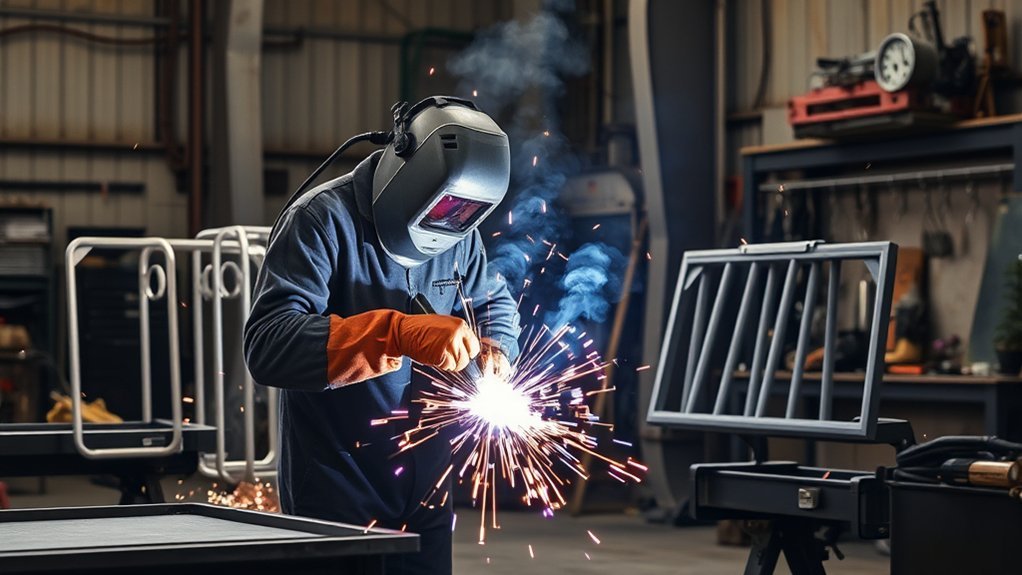
The correct repair depends heavily on how the vehicle is built.
| Construction Type | Description | Repair Considerations |
|---|---|---|
| Body-on-frame | The body is mounted to a separate ladder-style frame, common on pickups and some SUVs. | Some cracks may have approved repairs, while other manufacturers prohibit rail sectioning. Heat-treated or hydroformed rails need vehicle-specific guidance. |
| Unibody | The floor, pillars, rails, and body panels work together as the vehicle structure. | Repair locations, joint design, weld type, adhesives, and material limits are normally specified in the body repair manual. |
| Removable subframe | A bolt-on structure supports the engine, suspension, or drivetrain. | Replacement may be safer and more economical than welding, especially when suspension mounting points are distorted or cracked. |
If you are pricing a pickup or SUV with a separate ladder frame, see the more specific truck frame welding cost guide. This page covers the broader vehicle-frame question, including body-on-frame, unibody, and removable-subframe repairs.
Can Every Vehicle Frame Be Welded?
No. The manufacturer may require replacement instead of welding or may permit sectioning only at named locations with a specified joint and attachment method.
Modern structures can contain mild steel, high-strength steel, ultra-high-strength steel, aluminum, castings, structural adhesives, rivets, and composite parts. Adding an unapproved joint can change the way crash energy travels through the structure.
For example, I-CAR’s Toyota/Lexus sectioning summary states that frame sectioning is not an approved repair procedure on Toyota and Lexus full-frame vehicles. I-CAR’s OEM Technical Information Matrix also shows why sectioning permission must be checked by vehicle and component: some parts allow partial replacement or an approved sectioning location, while others require a different repair method. Always check the current vehicle-specific repair manual rather than relying on a generic welding method.
Warning: A repair plate welded over rust does not restore strength if the rail underneath no longer contains sound metal. Covering corrosion can also trap moisture and hide continued deterioration.
When Replacement May Be Better
Replacement may be safer or more economical when:
- the manufacturer prohibits welding or sectioning in the damaged area;
- the metal is kinked, torn, stretched, or heavily thinned by corrosion;
- damage reaches a suspension, steering, body, or drivetrain mounting point;
- multiple cracks or previous patches are present;
- a crush zone or high-strength reinforcement is affected;
- repair cost approaches or exceeds the vehicle’s market value;
- a replacement subframe or rail assembly is readily available.
Is Frame Welding Worth the Cost?
Frame welding is worth considering only after the shop confirms that the manufacturer permits the repair and that enough sound structure remains to complete it correctly. The financial decision then depends on the complete repair bill, the vehicle’s value and condition, the extent of hidden damage, and whether the finished repair can be documented and verified.
| Repair May Be Worth Pricing Further When | Replacement or Moving On May Make More Sense When |
|---|---|
| The OEM permits the repair, damage is localized, surrounding metal is sound, dimensions can be restored, and the total bill remains reasonable for the vehicle. | The repair is prohibited, corrosion is widespread, several structural areas are damaged, previous repairs have failed, or the complete cost approaches the vehicle’s value. |
Cost Considerations for Complex Frame Repairs
Complex repairs cost more because welding may be only one operation in a much larger procedure. Severe rust can continue behind brackets, inside boxed rails, and beneath undercoating. Collision damage may travel beyond the visibly bent area into suspension mounts, floors, pillars, crossmembers, and adjacent panels.
| Cost Component | Why It May Be Needed |
|---|---|
| Disassembly | Provides safe access and protects fuel, electrical, brake, interior, and suspension components. |
| Structural measuring | Confirms whether the vehicle is square and identifies hidden movement. |
| Frame-machine labor | Returns approved repairable areas to specified dimensions before parts are attached. |
| Replacement parts | Required when metal cannot safely be straightened, welded, or sectioned. |
| Corrosion protection | Restores coatings removed by cutting, grinding, heat, and part replacement. |
| Alignment and mechanical work | Checks steering, suspension geometry, mounts, and related components. |
| Scanning and calibration | May be required after collision damage, battery disconnection, structural work, or sensor movement. |
Ask whether the estimate is based on visible damage only. A shop may need to update the price after teardown reveals hidden corrosion, previous repairs, or additional structural movement.
How to Choose a Qualified Frame-Repair Shop
Price matters, but the shop must also have the information, training, equipment, and willingness to follow the manufacturer’s procedure.
Look for a facility with structural collision-repair experience and relevant training. I-CAR Welding Training & Certification covers steel GMA welding, steel sectioning, and aluminum GMA welding. An AWS Certified Welder credential can demonstrate welding-process qualification, but it does not replace vehicle-specific collision-repair knowledge.
Useful questions include:
- Have you checked the repair manual for my exact VIN, model, and model year?
- Does the manufacturer permit welding or sectioning in this location?
- What material and strength grade is the damaged component?
- Will the vehicle be measured before and after the repair?
- Which joining method, filler wire, adhesive, rivet, or reinforcement is specified?
- How will removed corrosion protection be restored?
- Are alignment, scans, and calibrations included?
- Will I receive photos, measurements, and repair documentation?
- What written workmanship warranty is offered?
- What conditions, such as pre-existing rust, are excluded from the warranty?
Pro Tip: Ask each shop to quote the same scope. One estimate may cover only welding, while another includes teardown, parts, rust treatment, alignment, scanning, and refinishing. Comparing only the final totals can therefore be misleading.
What a Frame-Welding Quote Should Include
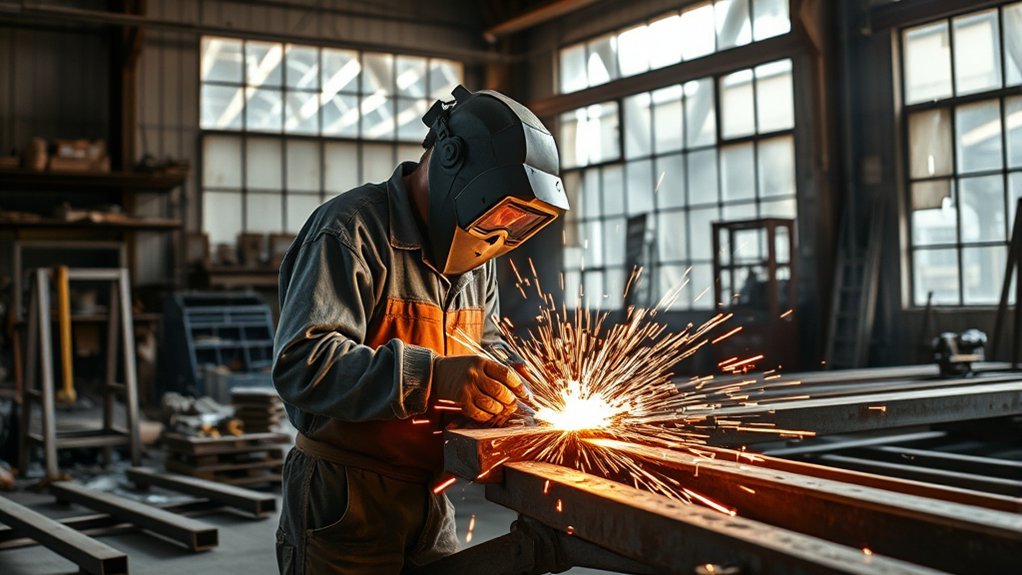
A useful written estimate should identify the repair area and explain more than an hourly welding charge. Depending on the job, it should address:
- initial inspection and measurement;
- teardown and reassembly;
- the OEM procedure or position statement used;
- repair versus replacement decision;
- parts, fabricated steel, fasteners, adhesives, and consumables;
- frame-machine or straightening labor;
- welding and test-coupon requirements;
- surface preparation and refinishing;
- seam sealer, primer, cavity wax, and undercoating;
- wheel alignment and suspension inspection;
- pre- and post-repair diagnostic scans;
- ADAS calibration or aiming when required;
- taxes, travel, towing, and subcontracted services;
- warranty terms and exclusions.
Multiple estimates remain useful, but a low quote is not automatically better. A shop that excludes measurement, corrosion protection, or required calibration may appear cheaper while leaving important operations out of the repair.
Preparing for a Frame-Repair Estimate
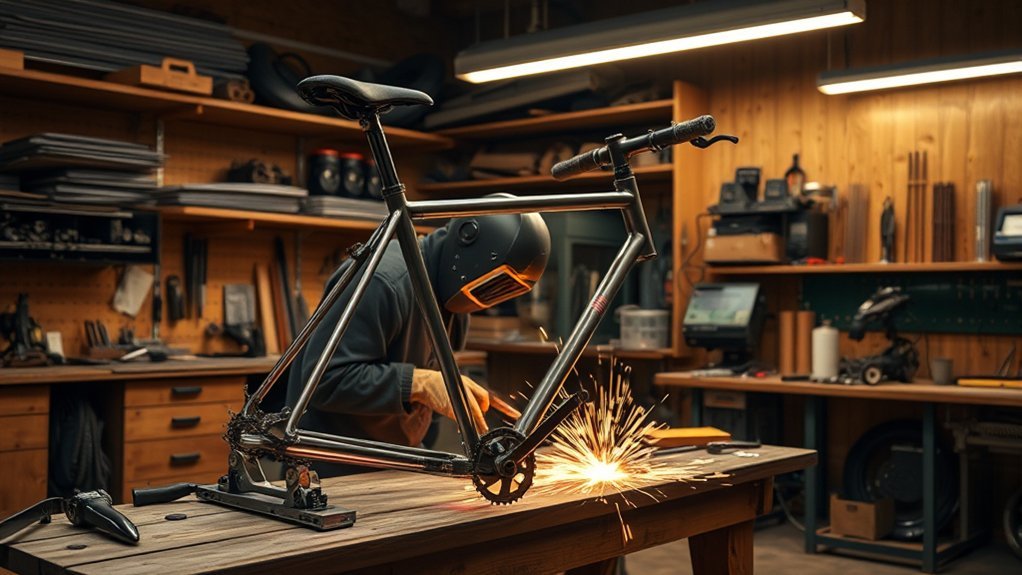
Customers can prepare for an estimate without entering the work area or attempting any welding.
- Provide the VIN: The shop needs the exact vehicle identity to locate material information and repair procedures.
- Describe what happened: Explain whether the damage followed a collision, towing incident, overload, rust, fatigue crack, or previous repair.
- Share previous records: Supply body-shop invoices, alignment reports, inspection results, and insurance documents when available.
- Take clear photos: Include wide views, close-ups, both sides of the rail, suspension mounts, and nearby corrosion.
- Remove personal belongings: Clear the passenger area or bed if the shop needs access for measuring or disassembly.
- Do not grind or cover the damage: Fresh paint, undercoating, filler, or a temporary plate can hide evidence the technician needs to evaluate.
- Arrange towing when necessary: Do not drive a vehicle that has shifted steering, severe rust-through, a cracked structural mount, or visibly distorted wheel position.
The shop, not the customer, should handle clamping, weld cleaning, lead management, structural alignment, and test welds.
Long-Term Value of Quality Frame Repairs
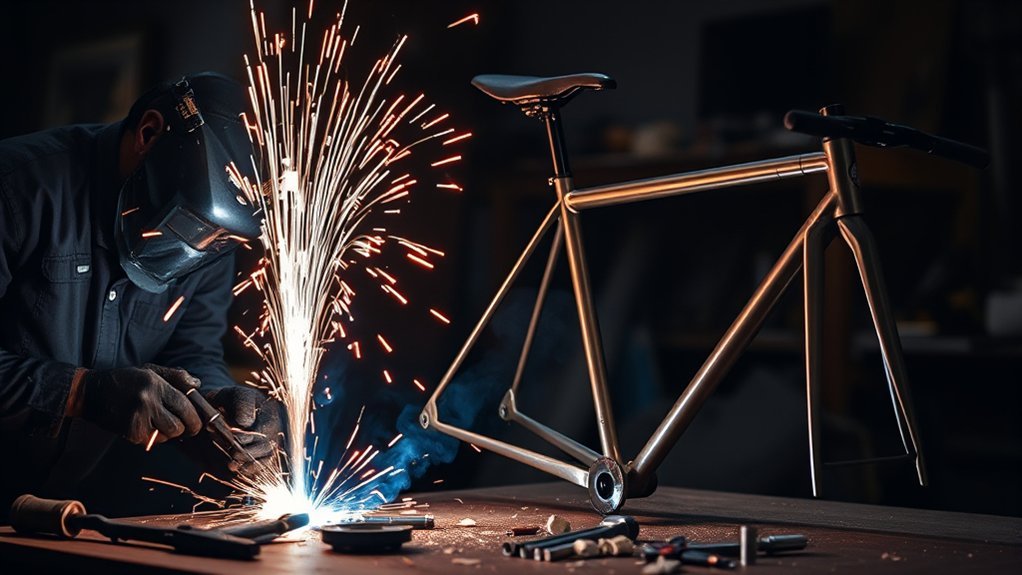
A properly planned repair may prevent recurring cracks, water intrusion, corrosion, tire wear, alignment problems, and repeat labor. However, quality does not mean adding more weld or thicker plate. It means following the approved repair design, using compatible materials, controlling heat, restoring corrosion protection, and confirming the vehicle’s dimensions and systems afterward.
Structural damage can still affect resale value even when repaired correctly. Keep the estimate, invoices, photographs, measurement reports, alignment printout, scan results, calibration records, and warranty. Documentation helps a future buyer, insurer, or inspector understand what was repaired and how the work was completed.
Legal, Insurance, and Inspection Considerations
There is no single rule that makes every frame weld legal or illegal across the United States. Requirements can depend on the vehicle type, state inspection system, title status, insurer, and manufacturer instructions.
- Passenger vehicles: State safety-inspection and rebuilt-title requirements vary. A repaired vehicle may also need separate documentation when it has a salvage or rebuilt title.
- Commercial vehicles: Federal Motor Carrier Safety Administration guidance for 49 CFR § 393.201 states that a welded commercial-vehicle frame repair must comply with the vehicle manufacturer’s recommendations.
- Insurance claims: Collision coverage may pay for qualifying crash-related structural damage, subject to the policy, deductible, valuation, and total-loss decision. Comprehensive coverage generally applies to covered non-collision causes such as theft, fire, hail, flooding, or animal impact. Do not assume corrosion or wear is covered; check the policy and claim circumstances.
- Resale and disclosure: Structural repair history, title branding, and local disclosure rules can affect a later sale. Keep complete records and check the requirements where the vehicle will be registered or sold.
Frequently Asked Questions
How much does it cost to weld a vehicle frame?
A limited, accessible crack may cost about $500 to $2,500 when an approved repair exists. Rust removal, structural straightening, rail replacement, parts, alignment, scans, and calibration can raise a complete repair to $2,000 to $10,000 or more.
Can every cracked vehicle frame be welded?
No. Repairability depends on the vehicle, material, crack location, corrosion, previous work, and manufacturer instructions. Some rails must be replaced, while others may only be sectioned at an approved location.
Can a badly rusted frame be repaired by welding plates over it?
A plate should not simply cover thin or perforated metal. The shop must expose the full damaged area and determine whether enough sound material remains for an approved repair. Widespread rust may make rail or frame replacement more appropriate.
How long does a frame-welding repair take?
A limited repair with easy access may be completed in a day. Collision damage, hidden rust, parts delays, structural measuring, refinishing, alignment, scanning, and calibration can extend the project to several days or longer.
Can I weld my vehicle frame myself?
Structural frame welding is not recommended for an inexperienced DIYer. A safe repair requires material identification, approved procedures, structural measurement, suitable equipment, fire and fume controls, test welds, corrosion protection, and post-repair checks.
What safety precautions are required during welding?
Professional precautions include controlling fuel and electrical hazards, removing or shielding combustible materials, providing ventilation or local fume extraction, using suitable eye and skin protection, protecting vehicle electronics, and keeping fire-extinguishing equipment ready.
Does frame welding reduce a vehicle’s resale value?
It can. Buyers may discount a vehicle with structural-repair history even when the work was completed correctly. Title branding, repair quality, documentation, local disclosure rules, and the vehicle’s age all influence the effect on value.
Do professional frame repairs include a warranty?
Some shops provide a written workmanship warranty, but coverage varies. Ask whether the warranty covers weld failure, corrosion protection, paint, alignment, and related labor, and whether pre-existing rust or previous repairs are excluded.
Is it legal to weld a vehicle frame?
There is no single U.S. rule that makes every passenger-vehicle frame weld legal or illegal. The acceptable repair depends on manufacturer instructions and applicable state inspection, title, and registration rules. For covered commercial vehicles, welded frame repairs must comply with manufacturer recommendations under federal frame requirements.
Is frame welding worth the cost?
It can be when the manufacturer permits the repair, damage is localized, surrounding metal is sound, and the complete repair cost remains reasonable for the vehicle. Replacement or moving on may make more sense when corrosion is widespread, several structural areas are damaged, or repair cost approaches the vehicle’s value.
Conclusion
Frame welding can be a practical repair when the damaged component still has sound metal and the vehicle manufacturer provides an approved method. A limited crack may cost roughly $500 to $2,500, while rust removal, structural straightening, rail replacement, alignment, scanning, and calibration can push the total beyond $10,000.
Do not choose a repair based only on the lowest welding price. Request a VIN-specific, itemized written estimate that identifies the OEM procedure, structural measurement work, corrosion protection, alignment, scans, and calibrations included. When welding is prohibited or deterioration is widespread, component or frame replacement may be the safer choice.
Related Frame and Car Welding Cost Guides
\n
- \n
- Car Frame Welding Cost
- Unibody Frame Welding Cost
- Welding Chassis Cost
- Auto Welding Costs: Average Prices and Factors
\n
\n
\n
\n
Sources
- I-CAR Welding Training & Certification — structural welding qualifications and collision-repair training.
- I-CAR OEM Technical Information Matrix — manufacturer repair information, materials, joining methods, and sectioning resources.
- I-CAR Structural Sectioning Procedures: Toyota/Lexus — manufacturer restrictions on full-frame sectioning.
- SAE Technical Paper 2020-01-0197 — effects of welding ultra-high-strength structural members on vehicle crash response.
- Occupational Safety and Health Administration: Welding Hazards and Solutions — welding fumes, radiation, electrical, burn, and fire hazards.
- Federal Motor Carrier Safety Administration: Vehicle Frames — requirements for commercial-vehicle frame condition and welded repairs.
- National Association of Insurance Commissioners: Auto Insurance Coverage — distinction between collision and comprehensive physical-damage coverage.