Welding training cost varies widely because public career centers, community colleges, nonprofit welding institutes, and private trade schools package training differently. Published examples include about $3,066 for Florida State College at Jacksonville’s 1,050-hour Welding Technology Career Certificate, $4,820 in tuition and fees plus $1,589 in textbooks and supplies at TCAT Knoxville, and a $16,828 projected total for Hobart Institute of Welding Technology’s 840-hour 2026 Structural Welding Program. These are examples, not a national average. Your true out-of-pocket cost also depends on books, tools and PPE, testing, transportation, living costs, and financial aid.
Quick Cost Summary
For a realistic budget, compare current published program prices rather than relying on one national “average.” Published examples range from $2,400 in tuition for Tulsa Tech’s five-month Welding Fabricator program, before its listed technology fee, books, tools, supplies, and certifications, to a $16,828 projected total for Hobart’s 24-week Structural Welding Program. Salina Tech lists $9,050 for its nine-month technical certificate and $12,905 for its two-year associate degree. Always compare what each published number includes.
Key Takeaways for Prospective Students
- No Single National Price: Published welding-program costs differ by school type, residency, length, and what the school bundles into its price.
- Compare the Same Cost Type: Tuition, total required program charges, and full cost of attendance are different numbers. Add books, PPE, tools, testing, travel, housing, and lost work time where they apply.
- Separate Contact Hours from Booth Hours: Published clock/contact hours are useful for screening value, but they are not automatically one-person hood-down welding hours. Ask each school for its actual lab schedule and booth-sharing policy.
- Workforce Pell Is Program-Specific: Since July 1, 2026, students in an approved eligible workforce program may receive Pell Grants. The short-program time threshold is at least 8 but less than 15 weeks and at least 150 but less than 600 clock hours, plus other federal and state approval criteria.
- Apprenticeship Is a Paid Alternative: Registered Apprenticeships provide paid work experience and progressive wage increases, but program length and any apprentice-paid costs vary by sponsor.
At a Glance: Welding Education Overview
| Time Required | Current published examples run from 5 months at Tulsa Tech to 2 years for Salina Tech’s associate degree; other welding programs can be shorter or longer. |
| Training Focus | Varies by program: shop safety, cutting, blueprint reading, SMAW/Stick, GMAW/MIG, FCAW, GTAW/TIG, fabrication, pipe, and qualification-test preparation may be included. |
| Required Gear | School-specific PPE and tools. Current examples include $858 for tools, supplies, and certifications at Tulsa Tech and about $1,600 for Alvin Community College’s tool kit; the included items are not identical. |
| Best Number to Compare | Your net cost after grants and scholarships, plus any indirect living/transportation cost you will actually incur and the amount of supervised hands-on training you receive. |
Welding Training Cost by Program Type
There is no authoritative national welding-school price because schools publish different kinds of numbers. Some pages show tuition only. Others include fees, books, equipment, or testing. The best way to compare programs is to use current school-published examples and label exactly what each price includes.
| Current Program Example | Published Price | Published Length | What the Number Means |
|---|---|---|---|
| Tulsa Tech — Welding Fabricator | $2,400 tuition + $150 technology fee + $223 estimated books + $858 estimated tools, supplies, and certifications | 5 months | Current 2026–27 adult-student direct-cost line items; food, housing, transportation, and personal costs are separate. |
| FSCJ — Welding Technology Career Certificate | Approximately $3,066 | 1,050 clock/contact hours; 8 months full time or 16 months part time | Published in-state tuition estimate; the program page says it is financial-aid eligible. |
| Salina Tech — Welding Technology | $9,050 technical certificate; $12,905 associate degree | 9 months; 2 years | School-published program costs for two credential levels. |
| Hobart Institute — Structural Welding Program | $16,828 projected total | 24 weeks / 840 clock hours | 2026 published total: $14,200 tuition + $1,525 equipment + $1,103 training materials. |
Official school pages support these examples and add useful context:
- Tulsa Technology Center lists its 2026–27 Welding Fabricator program at $2,400 tuition, a $150 technology fee, $223 estimated books, and $858 estimated tools, supplies, and certifications.
- Florida State College at Jacksonville (FSCJ) lists approximately $3,066 for 1,050 clock/contact hours in its Welding Technology Career Certificate.
- TCAT Knoxville lists $4,820 in tuition/fees and $1,589 in textbooks/supplies for its 12-month, 1,296-hour Welding Technology program.
- Alvin Community College lists its Welding AAS at approximately $4,975 for in-district students and $8,035 for out-of-district students, including tuition and fees, plus an approximately $1,600 tool kit.
- Salina Tech lists $9,050 for its nine-month technical certificate and $12,905 for its two-year associate degree.
- Hobart Institute of Welding Technology lists a 2026 projected total of $16,828 for its 24-week, 840-hour Structural Welding Program.
Compare Cost per 100 Scheduled Contact Hours
Published clock or contact hours can help you screen program value, but they are not the same as individual welding-booth hours. Use this calculation only when two schools publish comparable tuition and mandatory-fee figures:
Published Cost per 100 Scheduled Hours = (Comparable Tuition & Mandatory Fees ÷ Published Program Clock Hours) × 100
Using tuition/fee figures from the school pages above, FSCJ’s approximately $3,066 over 1,050 hours equals about $292 per 100 scheduled hours. TCAT Knoxville’s $4,820 in tuition/fees over 1,296 hours equals about $372 per 100 scheduled hours. Those figures still do not tell you how many hours you personally spend welding under the hood.
For a true hands-on comparison, ask each school for the scheduled lab hours, whether students share machines, how much open-lab time is available, and whether required classroom or general-education hours are included in the published clock-hour total.
Use cost per scheduled hour as a screening tool. Only call a figure “cost per booth hour” when the school has verified the individual hood-down welding hours behind that number.
How to Calculate Your Full Cost of Attendance
True Out-of-Pocket Education Cost
Net Cost = Tuition + Mandatory Fees + Books + Lab/Consumables + Tools & PPE + Testing + Transportation + Added Living Costs − Grants − Scholarships − Employer/Sponsor Assistance
If you borrow, calculate loan interest and fees separately. A loan pays today’s bill but does not reduce the total amount you ultimately repay.
Make sure you know which of these items are included in the school’s advertised price:
- Institutional Fees: Application, registration, technology, lab, facility, and graduation charges.
- Books & Learning Materials: Textbooks, digital access, blueprint-reading materials, and required online modules.
- Consumables: Practice metal, test coupons, electrodes/wire, shielding gas, cutting tips, and grinding supplies.
- Personal Tools & PPE: Helmet, protective clothing, gloves, boots, safety glasses, hearing protection, and instructor-required hand tools.
- Qualification Testing: School, state, AWS Accredited Test Facility, or employer performance-test charges and any retest fees.
- Indirect Costs: Transportation, parking, housing, food, child care, and wages you give up while attending.
Pro Tip: Submit the FAFSA when the school and program participate in federal student aid, but do not assume every short welding course is Pell-eligible. Ask the financial-aid office for a written net-cost estimate showing grants and scholarships separately from loans.
Types of Welding Schools and How Pricing Varies

Community and Technical Colleges
Public community colleges and career-tech schools can offer low published prices for local residents, but the exact amount depends on residency rules, program length, and whether tools and fees are included. Current examples include FSCJ at approximately $3,066 in published in-state tuition for 1,050 hours, TCAT Knoxville at $4,820 in tuition/fees plus $1,589 in textbooks/supplies, and Salina Tech at $9,050 for a nine-month technical certificate.
College credits may transfer when the receiving institution accepts them, but transfer is not automatic. Ask for a written articulation or transfer policy before enrolling. If you are comparing regional options, our guide on welding school cost in Missouri shows state-specific program pricing and training options.
Career and Vocational Trade Schools
Career-focused welding schools usually emphasize concentrated shop practice and job-specific skills. Their programs may cover SMAW, GMAW, FCAW, GTAW, cutting, blueprint reading, fabrication, pipe, or qualification-test preparation, depending on the curriculum.
Do not assume a private or career-focused school is automatically “better” because it costs more or finishes faster. Compare the exact start-date price, included gear and materials, scheduled hands-on hours, accreditation/approval status, completion data, employer connections, and the amount you would need to borrow.
Specialized Private Academies
Specialized schools may focus on structural welding, pipe welding, aerospace processes, or other narrow industrial skills. Published prices can be substantially higher than local public programs. For a published example, Hobart Institute lists a 2026 projected total of $16,828 for its 24-week Structural Welding Program and $26,485 for its 40-week, 1,400-hour Pathways Welding Program.
Specialized paths can also require additional safety systems and occupational qualifications. For commercial diving and wet-welding training, review our separate guide to underwater welding school cost, because those programs have different training, medical, and safety requirements.
Financing Warning: Do not judge a payment plan only by its monthly payment. Before signing, get the APR, term, finance charges, required fees, refund/cancellation rules, and total of payments in writing. Compare that total with public-school, grant, employer-sponsored, and apprenticeship alternatives.
Pre-Enrollment Shop Quality Checklist
For U.S. postsecondary institutions, check institutional accreditation information in the U.S. Department of Education’s Database of Accredited Postsecondary Institutions and Programs (DAPIP). Then visit the welding shop and ask for written answers to these questions:
- Booth Access: How many students share each welding station, and how many scheduled hours are individual hands-on lab time? There is no universal federal “1:1 booth” rule, so compare the school’s actual access policy.
- Ventilation & Fume Controls: How does the school control welding fumes, and where does it use mechanical ventilation or local exhaust when required? Review applicable OSHA 29 CFR 1910.252 welding requirements.
- Metal & Gas Allowances: Are practice plate, pipe coupons, specialty metals, shielding gases, electrodes/wire, and cutting supplies included or metered separately?
- Outcome Definitions: What are the completion and placement rates, which students are included in those calculations, and what counts as a “placed” graduate?
- Qualification Tests: Which practical tests are included in tuition, who administers them, what code/process/position is tested, and what does a retest cost?
How Long Does Welding Training Take?
Welding training can take months or years because different credentials require different amounts of shop, classroom, and general-education time. Current school-published examples are more useful than a single generic duration:
| Current Program | Published Duration | Training Scope |
|---|---|---|
| Tulsa Tech Welding Fabricator | 5 months | Cutting, MIG/GMAW, flux-cored welding, fabrication, blueprint-related skills, safety, and listed industry credentials. |
| Hobart Structural Welding Program | 24 weeks / 840 clock hours | Blueprint reading, cutting, SMAW, GMAW, GTAW, FCAW, multiple metals, and opportunities for four welder qualifications. |
| FSCJ Welding Technology Career Certificate | 8 months full time / 16 months part time; 1,050 hours | SMAW, GMAW, FCAW, GTAW, plate and pipe, plus academic, lab, and hands-on preparation for practical certification testing. |
| TCAT Knoxville Welding Technology | 12 months / 1,296 hours | Flame cutting, arc welding, GTAW, GMAW, FCAW, and progression toward pipe welding. |
| Salina Tech Welding Technology | 9-month certificate or 2-year associate degree | Multiple welding processes, theory and hands-on project work; the associate path also requires general education. |
How Much Do Welding Tools, PPE, and Gear Cost?
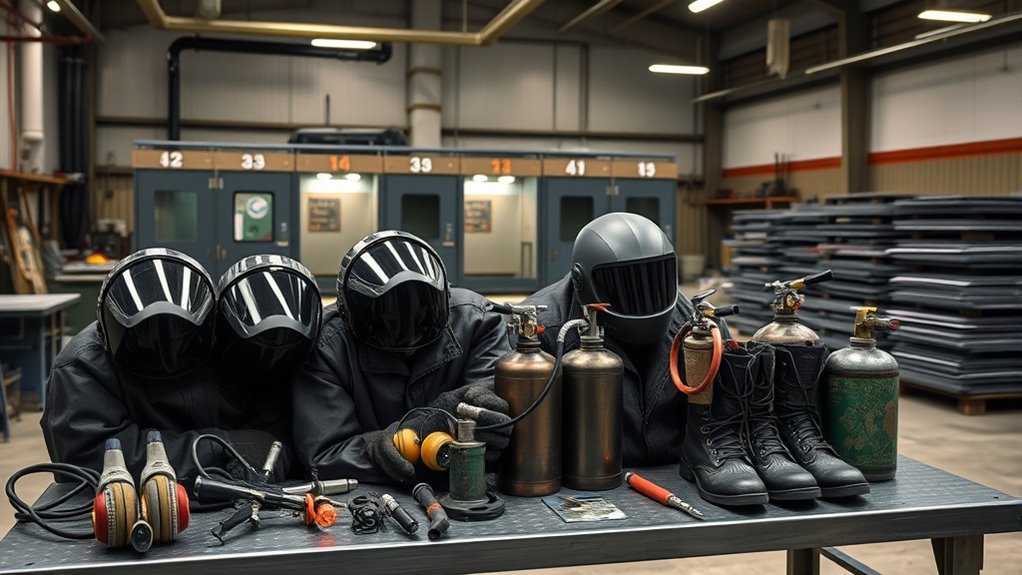
There is no single required welding-student gear budget because schools bundle different items. Current official examples show the variation: Tulsa Tech lists $858 for tools, supplies, and certifications in its 2026–27 Welding Fabricator program; Alvin Community College estimates an approximately $1,600 tool kit for its welding program; and Hobart’s 2026 Structural Welding projected total includes $1,525 for equipment plus $1,103 for training materials.
Your school’s approved list may include some or all of the following:
- Welding Helmet & Eye Protection: The required shade range and helmet type depend on the work and school policy.
- Protective Clothing: Flame-resistant clothing, welding jacket or sleeves, and other protection suited to the process and position.
- Welding Gloves: Schools may require different glove types for processes such as SMAW, GMAW/FCAW, and GTAW.
- Safety Footwear: Work boots that meet the school or worksite’s protective-footwear requirements.
- Hand Tools: Common lists can include a chipping hammer, wire brush, welding pliers, tape measure, square, soapstone, grinder, clamps, and inspection tools.
- Respiratory Protection: Do not choose a respirator or filter only from a generic shopping list. Where tight-fitting respirators are required, OSHA’s respiratory-protection standard requires a program that addresses hazard evaluation, medical evaluation, fit testing, and proper respirator selection.
Pro Tip: Wait for the instructor-approved tool and PPE list before buying. Ask whether the school’s bundle is mandatory, whether equivalent gear is allowed, which items you keep after graduation, and whether consumables are included in lab fees.
Welding Certification and Qualification Exam Costs
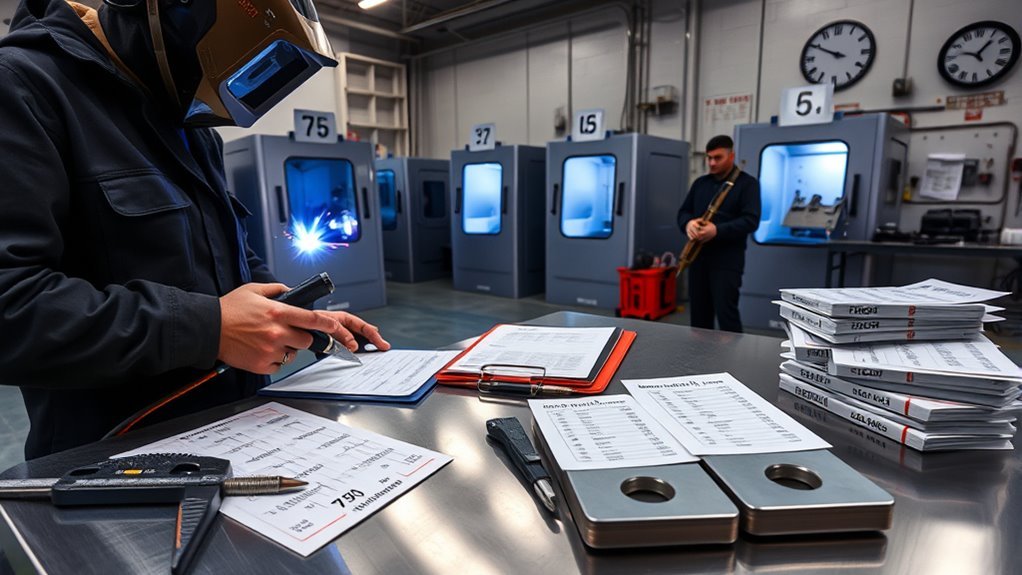
A school completion certificate, an AWS Certified Welder credential, and an employer-specific performance qualification are different. Budget them separately.
- School Certificate or Diploma: This confirms completion of the school’s curriculum. Whether a graduation or credential fee is included depends on the institution.
- AWS Certified Welder (CW): The AWS 2026 price list sets the Certified Welder application fee at $70 for both members and non-members. AWS does not publish one national hands-on test price; it directs candidates to the Accredited Test Facility (ATF) for current exam pricing.
- ATF Test Cost: According to the AWS Certified Welder program, testing cost varies by ATF, process, and qualification requirements. Get a written quote for the test, retest, materials, inspection/evaluation, and any facility charges.
- Employer Code Qualification: Employers may require performance qualification to a specific code, procedure, process, material, and position. Who pays varies by employer and project; do not assume it is always free to the welder.
For budgeting, use the fixed AWS application fee plus the actual written ATF or school quote. Do not rely on a generic nationwide “per test” amount because AWS states that test-facility pricing varies. For more credential-specific detail, see our guide to welding certification costs.
Financial Aid, Workforce Pell, and Scholarships

Can Short-Term Welding Courses Qualify for Federal Pell Grants?
Yes, but only if the specific program becomes an approved eligible workforce program. Workforce Pell took effect July 1, 2026. Federal Student Aid says institutions must obtain the required state/governor certification and submit the program to the U.S. Department of Education for approval; a short welding course is not automatically eligible.
For clock-hour programs, the federal short-program duration threshold is:
- At least 8 weeks but less than 15 weeks of instruction.
- At least 150 clock hours but less than 600 clock hours.
- The program must also satisfy the other federal eligible-workforce-program requirements, including the required state certification and Department approval.
Review the current Federal Student Aid Workforce Pell announcement, and ask the school’s financial-aid office whether your exact program and start date are approved.
Industry Scholarships and Workforce Grants
- AWS Foundation Welder Training Scholarship: The AWS Foundation says it awards up to 800 scholarships of $1,000 each annually for students in welding certificate programs under two years. The published application cycle runs December 1 through November 30, with selections made on a rolling schedule.
- WIOA Workforce Funding: WIOA can support approved training for eligible participants, but the amount and covered costs are determined locally. Use your local American Job Center to check eligibility, approved providers, and what your local program will pay.
- VA Educational Benefits: Eligible veterans and other beneficiaries should verify the exact school/program and benefit rules using the VA GI Bill Comparison Tool.
Apprenticeships: A Paid Earn-While-You-Learn Alternative
Welding school is not the only route into paid metalworking. A Registered Apprenticeship is a job that combines paid work experience, structured on-the-job learning, mentorship, related classroom instruction, progressive wage increases, and a portable credential.
The U.S. Department of Labor’s Apprenticeship.gov confirms that apprentices are paid and receive progressive wage increases. It also states that program length varies by employer, occupation, industry, and program type. That is why a national starting-wage range, fixed program length, or guaranteed $0 apprentice cost should not be assumed.
| Factor | Welding School | Registered Apprenticeship |
|---|---|---|
| Training Cost | Student pays the school’s tuition/fees, reduced by grants, scholarships, or other aid. | Sponsor structure varies. Ask whether the sponsor covers related instruction and whether the apprentice pays tools, books, dues, fees, or other costs. |
| Earning Model | Typically education first; earnings depend on any separate job the student holds. | Paid employment with progressive wage increases as skills and productivity grow. |
| Program Length | Varies from short courses to multi-year degree programs. | Varies by employer, occupation, industry, and program design. |
| Admission | School admission requirements vary. | Apply to an employer or program sponsor; selection requirements vary by opportunity. |
Is Welding School Worth the Cost? ROI & Wage Realities

Welding school can be worth the cost when the training matches local employer requirements and the net price is low enough to avoid burdensome debt. Use current wage data as a benchmark, then compare it with wages in the area and industry where you actually plan to work.
According to the latest national U.S. Bureau of Labor Statistics (BLS) OEWS data, welders, cutters, solderers, and brazers had a $25.84 median hourly wage and $53,750 median annual wage in May 2025.
- Lowest 10%: Less than $39,240 per year.
- Median: $53,750 per year ($25.84 per hour).
- Highest 10%: More than $77,530 per year.
The current BLS Occupational Outlook Handbook projects 2% employment growth from 2025 to 2035 and about 40,300 openings per year on average over the decade. BLS says many openings are expected from workers transferring occupations or leaving the labor force.
Personal Payback Period Calculation
Use a payback calculation as a personal scenario, not as a promised earnings result. For example, if your net education cost is $8,000 and the training increases your gross annual earnings by $14,560, the simple pre-tax payback period is about 6.6 months ($8,000 ÷ $14,560 × 12). Your real result will differ after taxes, unemployment between jobs, overtime, benefits, raises, and loan interest.
As a financing illustration, a $28,000 loan at a fixed 12% APR repaid over 84 months, with no added fees, has a standard amortized payment of about $494 per month and about $41,519 in total payments. This is a math example, not a claim about a current school financing offer.
10 Practical Strategies to Lower Welding School Costs
- Get Public-School Quotes First: Compare local community colleges and career-tech schools before assuming a private program is necessary.
- Check the Exact Program’s Aid Status: Ask whether your specific credential and start date participate in Title IV aid or have approved Workforce Pell status.
- Apply for the AWS Foundation Scholarship: If your program qualifies, review the current $1,000 Welder Training Scholarship cycle and submit within the published application window.
- Ask an American Job Center About WIOA: Check local eligibility, approved providers, and the exact costs your local workforce program can cover.
- Apply for Registered Apprenticeships: A paid apprenticeship may reduce the need to borrow while you learn, but compare sponsor requirements and apprentice-paid expenses.
- Do Not Buy Gear Before Orientation: Use the instructor-approved list so you do not buy equipment that is prohibited, duplicated, or already included.
- Consider Used Non-Safety Hand Tools: If the instructor allows it, used clamps, squares, hammers, and toolboxes can reduce cost; follow the school’s required specifications for safety-critical PPE.
- Ask Employers About Education Benefits: Get any tuition-reimbursement or sponsorship policy in writing, including eligibility dates, grade rules, annual caps, and repayment requirements if you leave the job.
- Audit the Consumables Policy: Confirm whether practice metal, shielding gas, electrodes/wire, grinding discs, cutting tips, and qualification coupons are included or billed separately.
- Compare Total Repayment, Not Just Tuition: If borrowing is unavoidable, compare APR, monthly payment, total of payments, and your realistic take-home pay. There is no universal “safe” welding-school debt cap.
Frequently Asked Questions
How much does welding school cost on average?
There is no authoritative national welding-school average because programs publish different cost types. Current published examples include $2,400 in tuition at Tulsa Tech before its listed fees/books/tools, about $3,066 at FSCJ, $9,050 for Salina Tech’s nine-month certificate, and a $16,828 projected total for Hobart’s 24-week Structural Welding Program.
Can short-term welding programs qualify for Federal Pell Grants?
Yes, if the specific course becomes an approved eligible workforce program. For clock-hour programs, Workforce Pell’s short-program threshold is at least 150 but less than 600 clock hours and at least 8 but less than 15 weeks, plus other federal and state requirements. Ask the school whether your exact program has Department approval.
How much do welding tools and safety gear cost for a student?
The amount is school-specific because bundles are different. Current official examples include $858 for tools, supplies, and certifications at Tulsa Tech, an approximately $1,600 tool kit at Alvin Community College, and $1,525 of equipment plus $1,103 of training materials inside Hobart’s Structural Welding projected total. Compare the itemized list, not just the total.
How much do AWS welding certification tests cost?
AWS lists a $70 Certified Welder application fee for 2026. The hands-on test price is not one national amount: individual AWS Accredited Test Facilities set their own fees, and AWS says cost varies by facility, welding process, and qualification requirements. Get the current test and retest quote from the ATF.
Is a union or registered apprenticeship cheaper than welding school?
It can reduce the need for school debt because a Registered Apprenticeship is paid employment with progressive wage increases and related instruction. However, program length and apprentice-paid costs vary by sponsor, so do not assume every apprenticeship has $0 tuition, tools, dues, or fees.
Can I transfer welding credits between community colleges?
Maybe. Transfer depends on the sending and receiving institutions, the credential, course equivalency, and any articulation agreement. Get written confirmation from the receiving college before enrolling if transfer credit is important to your plan.
Do I need welding school to become a welder?
Not always. The BLS says welders typically need a high school diploma or equivalent combined with technical and on-the-job training. Welding school is one route; employer training and Registered Apprenticeship are other routes. Employers may also require you to pass a job-specific welding performance test.
What welding-school costs should I compare besides tuition?
Compare mandatory school fees, books, tools and PPE, lab consumables, certification or qualification testing, retests, transportation, housing, food, child care, and lost work time. Then subtract grants, scholarships, and confirmed employer or sponsor assistance to estimate your own net cost.
Conclusion
Welding school can be a strong investment when the net cost, amount of supervised hands-on training, credential value, and local hiring requirements make sense together. Current published examples range from a few thousand dollars in public-program tuition to more than $16,000 in projected direct program cost, and specialized programs can cost more.
Before enrolling, compare written itemized costs, actual lab/booth access, financial-aid approval for your exact program, qualification-test costs, completion and placement definitions, and local wages. Also apply for paid apprenticeships and employer-sponsored training where available. Choose the route that builds the skills employers test without taking on more debt than your realistic budget can support.
Sources
- U.S. Bureau of Labor Statistics — National Occupational Employment and Wage Statistics, May 2025 — current national mean and median wage data.
- U.S. Bureau of Labor Statistics — Occupational Outlook Handbook: Welders, Cutters, Solderers, and Brazers — May 2025 pay distribution, entry requirements, and 2025–2035 outlook.
- Federal Student Aid — Eligible Workforce Programs / State Workforce Pell Certification — program approval and state certification requirements effective in 2026.
- Federal Student Aid — Workforce Programs and Pell Grant Eligibility — short-program clock-hour and week thresholds.
- American Welding Society — 2026 Certification & Education Price List — $70 Certified Welder application fee and ATF-priced examination note.
- American Welding Society — Certified Welder Program — ATF testing-cost variability and certification process.
- AWS Foundation — Welder Training Scholarship — award amount, annual availability, and application cycle.
- Apprenticeship.gov — Career Seekers — paid work experience, progressive wages, classroom instruction, and portable credentials.
- OSHA — 29 CFR 1910.252 — welding, cutting, brazing, ventilation, and related safety requirements.
- OSHA — 29 CFR 1910.134 — respiratory-protection program, medical evaluation, fit testing, and respirator selection requirements.
- Tulsa Technology Center — Welding Fabricator — 2026–27 tuition, fee, books, tools/supplies/certification estimate, and program length.
- Florida State College at Jacksonville — Welding Technology Career Certificate — 1,050 hours and approximate $3,066 cost.
- TCAT Knoxville — Welding Technology — 12-month/1,296-hour length, tuition/fees, and textbook/supply cost.
- Alvin Community College — Welding Technology — AAS in-district/out-of-district costs and approximate tool-kit charge.
- Salina Tech — Welding Technology — nine-month certificate and two-year associate program costs.
- Hobart Institute of Welding Technology — Welding Programs — 2026 Structural and Pathways program tuition, equipment, training materials, duration, and clock hours.