Welding school cost in Missouri ranges from $295 for a hobby class to $28,500 for a full career program in the current examples reviewed. Tarkio Technology Institute currently publishes two different totals for its 24-credit Welding Technology Certificate—$6,530 on its cost page and $6,650 on its welding program page—while Southern Missouri Technical Institute lists $8,000 in tuition and fees for its 900-hour 2026–2027 welding program. Your real cost depends on training hours, included gear and materials, certification testing, housing, transportation, and financial aid.
Quick Answer
Current Missouri examples reviewed here range from a $295 hobby class to a $28,500 full career program. Published career-program examples include $6,530–$6,650 across two conflicting Tarkio Tech pages, $7,200–$19,900 at Iron Eagle, $8,000 for SoMoTech’s 900-hour program, $14,500–$28,500 on American Welding Academy’s current homepage, $14,900–$25,900 at Missouri Welding Institute, and $15,750–$21,000 at Crider’s. Public colleges may charge by credit plus welding and campus fees, so compare the full net cost—not tuition alone.
Key Takeaways
- Published Missouri examples reviewed here run from $295 for a hobby class to $28,500 for a full career program; Tarkio Tech currently publishes conflicting $6,530 and $6,650 totals for its 24-credit Welding Technology Certificate.
- Check whether tuition includes gear, books, metals, supplies, certification tests, and required safety boots.
- Career options reviewed range from 160-hour specialty training to 960-hour pipe programs, so price alone does not show training depth.
- Housing, transportation, food, loan interest, and lost work time can add thousands to the final cost.
- Verify aid eligibility with both the school and the funding program; Workforce Pell took effect July 1, 2026, but only approved programs qualify.
School prices, program approvals, and aid rules can change, so confirm a written cost-of-attendance estimate before paying a deposit.
At a Glance
| Lowest Reviewed Option | $295 hobby class at Crider’s Institute |
| Career-Focused Programs | About $6,530–$28,500 in current full-program examples; Tarkio publishes a conflicting $6,650 total on another page |
| Reviewed Training Lengths | 160–960 hours for the career-focused examples with published hours |
| Common Extra Costs | Boots, commuting, housing, food, retests, and loan interest |
How Much Does Welding School Cost in Missouri?

There is no single statewide price for welding school. The current published examples below show why you should compare program scope, required hours, and included costs—not just the sticker price.
| School and Program | Length | Published Price |
|---|---|---|
| Southern Missouri Technical Institute Welding | 900 hours | $8,000 tuition and fees + $50 application fee |
| Tarkio Technology Institute Welding Technology Certificate | 24 credits | $6,530 on cost page; $6,650 on welding program page — confirm current total |
| Iron Eagle Downhill Pipeline | 4 weeks / 160 hours | $7,200 |
| Iron Eagle Master Manufacturing & Structural Welding | 9 weeks / 360 hours | $12,700 |
| Iron Eagle Master Pipe Welding | 14 weeks / 560 hours | $19,900 |
| American Welding Academy Fabrication Welding & Fitting | 12 weeks / 480 hours | $14,500 on current homepage; FAQ still shows $13,500 |
| American Welding Academy Pipe Welding & Fitting | 24 weeks / 960 hours | $28,500 on current homepage; FAQ still shows $25,500 |
| Missouri Welding Institute Master Pipe Welding & Fitting | 18 weeks / 720 hours | $25,900 |
| Missouri Welding Institute Master Structural Welding & Fitting | 11 weeks / 440 hours | $18,900 |
| Missouri Welding Institute Advanced Pipe Fitting | 10 weeks / 400 hours | $14,900 |
| Crider’s Master Pipe Welding | 24 weeks / 600 hours | $21,000 |
| Crider’s Structural and Alloy Welding | 16 weeks / 400 hours | $15,750 |
| Crider’s Hobby Welding Class | Short class | $295 |
These figures are not directly interchangeable. Private trade schools may bundle tools, materials, books, and testing. Public colleges often charge tuition by credit hour and add program or campus fees. Southern Missouri Technical Institute lists $8,000 in tuition and fees for its 900-hour 2026–2027 welding program, plus a $50 application fee.
State Technical College of Missouri lists 2026–2027 Welding Technology tuition at $460 per credit hour for in-state students and $920 per credit hour for nonresidents. Its published standard per-credit fees total another $61, so tuition plus those standard fees equals $521 per credit for an in-state welding student or $981 per credit for a nonresident before variable program, assessment, laptop, housing, meal-plan, book, or supply costs. Ozarks Tech publishes tiered per-credit tuition, welding course fees of $55–$200, and a $1,665 Welding Specialist program fee.
Private programs also span a wide range. Iron Eagle Welding Academy currently lists career-focused courses from $7,200 to $19,900. American Welding Academy’s current homepage lists $14,500 for Fabrication Welding & Fitting and $28,500 for Pipe Welding & Fitting. Its FAQ/contact page still shows the older $13,500 and $25,500 totals, so request a current written cost before paying a deposit.
Pro Tip: Ask every school for one written total that includes tuition, mandatory fees, gear, consumables, books, testing, and deposits. That is the number to compare.
What Does the Published Price Equal Per Training Hour?
One useful cross-check is published school price divided by required training hours. It does not prove one school is better or cheaper because inclusions differ, but it helps expose how much program length affects the sticker price.
| Program | Published Price | Hours | Published Price per Hour |
|---|---|---|---|
| SoMoTech Welding | $8,000 | 900 | About $8.89 |
| Crider’s Master Pipe Welding | $21,000 | 600 | $35.00 |
| Iron Eagle Master Pipe Welding | $19,900 | 560 | About $35.54 |
| MWI Master Pipe Welding & Fitting | $25,900 | 720 | About $35.97 |
The strongest comparison is still net price + included materials + hands-on hours + the certifications or qualifications included. A low per-hour figure can be misleading if major gear, testing, or living costs sit outside the published price. American Welding Academy is omitted from the per-hour table because its current homepage and FAQ publish conflicting program prices.
The least expensive tuition is not always the lowest total cost. A longer commute, required housing, or separately billed metals can erase the difference.
Breakdown of Program Costs: Tuition, Gear, and Supplies

Missouri Welding Institute currently itemizes the two main welding programs. Its Master Pipe program lists $20,300 tuition, $720 gear, $4,700 metal and supplies, and $180 books, for a $25,900 total. Its Master Structural program lists $15,520 tuition, $720 gear, $2,480 metal and supplies, and $180 books, for an $18,900 total.
Tuition and Mandatory Fees
Start with the amount required to enroll and finish the program. Ask whether the quote includes application or reservation fees, lab fees, technology fees, certification tests, graduation fees, and any charge for repeating a course or test.
At public colleges, multiply the required credits by the correct resident tuition rate, then add per-credit and per-semester fees. Do not use tuition alone as your estimate.
Gear, Metals, and Supplies
| Program | Tuition | Gear | Metals & Supplies | Books | Total |
|---|---|---|---|---|---|
| Master Pipe Welding & Fitting | $20,300 | $720 | $4,700 | $180 | $25,900 |
| Master Structural Welding & Fitting | $15,520 | $720 | $2,480 | $180 | $18,900 |
MWI says the listed books and equipment are built into the program price, but students must purchase steel-toed safety boots separately. Other schools may require a helmet, jacket, gloves, safety glasses, pliers, grinders, or consumables that are not included.
How to Calculate Your True Cost
Use this formula before you compare offers:
True program cost = tuition + required fees + gear and supplies + testing + housing + food + transportation + loan interest − grants and scholarships.
Also consider lost income if the schedule prevents you from working. An 18-week full-time program can have a different financial impact than a part-time certificate spread across several semesters.
For a broader benchmark outside Missouri, compare this state-specific guide with our national welding school cost guide. Use this Missouri guide for state-specific school prices, aid, certification, housing, and commuting decisions.
Comparing Pipe Welding, Structural, and Advanced Programs
Program Length and Hours
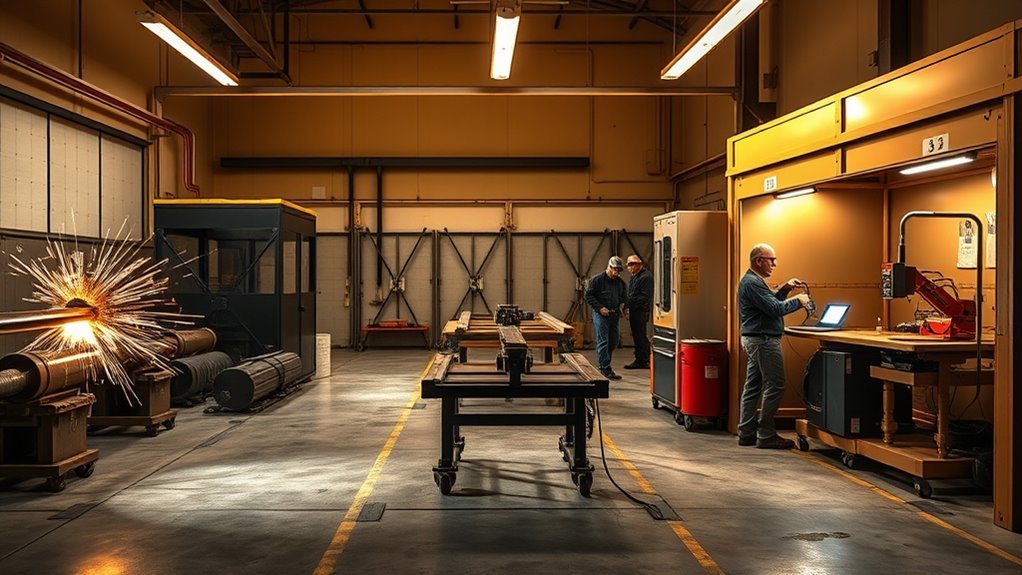
Missouri Welding Institute lists 720 hours for Master Pipe, 440 hours for Master Structural, and 400 hours for Advanced Pipe Fitting. Crider’s lists 600 hours over 24 weeks for Master Pipe and 400 hours over 16 weeks for Structural and Alloy. Iron Eagle lists 160 hours for its Downhill Pipeline course, 360 hours for Master Manufacturing & Structural, and 560 hours for Master Pipe. American Welding Academy lists 480 hours for Fabrication Welding & Fitting and 960 hours for Pipe Welding & Fitting. SoMoTech’s welding program is 900 hours.
Longer is not automatically better. Compare how much time is spent practicing the processes employers use, including SMAW, GMAW, FCAW, GTAW, blueprint reading, fit-up, safety, and test preparation.
Total Program Cost
MWI currently lists $25,900 for Master Pipe, $18,900 for Master Structural, and $14,900 for Advanced Pipe Fitting. Its custom course is $49 per hour and is intended for qualified welders who need targeted training. Review the current MWI program page.
Crider’s currently lists $21,000 for its Master Pipe program and $15,750 for its Structural and Alloy program. Its FAQ says the Master program includes tuition, books, supplies, tools, and two AWS welding certifications. Review Crider’s current program FAQ.
For other current benchmarks, Iron Eagle lists $19,900 for Master Pipe, $12,700 for Master Manufacturing & Structural, and $7,200 for Downhill Pipeline. American Welding Academy’s homepage lists $28,500 for its 24-week Pipe Welding & Fitting course and $14,500 for its 12-week Fabrication Welding & Fitting course, while its FAQ still shows older $25,500 and $13,500 totals. SoMoTech lists $8,000 in tuition and fees for its 900-hour 2026–2027 welding program, plus a $50 application fee. Tarkio Technology Institute’s cost page lists its 24-credit Welding Technology Certificate at $6,530, while its welding program page lists $6,650; confirm the current written total.
Career Readiness Outcomes
| Program Type | Main Focus | Best Fit |
|---|---|---|
| Pipe welding and fitting | Pipe positions, fitting, structural core, and several welding processes | Students targeting field construction, plant work, or pipe manufacturing |
| Structural welding | Plate, fit-up, structural positions, fabrication, and field work | Students who want a shorter route into structural or shop welding |
| Advanced pipe fitting | Blueprints, isometrics, trade math, and pipe layout | Students focused on fitting rather than a broad welding curriculum |
| Custom or brush-up training | A specific process, position, or employer test | Experienced welders who can identify a narrow skill gap |
Note: A school diploma or certification paper does not guarantee a job. Employers and project owners may require a separate performance test for the process, metal, position, or code used on the job.
Short Courses and Hobbyist Options: Cost vs. Value
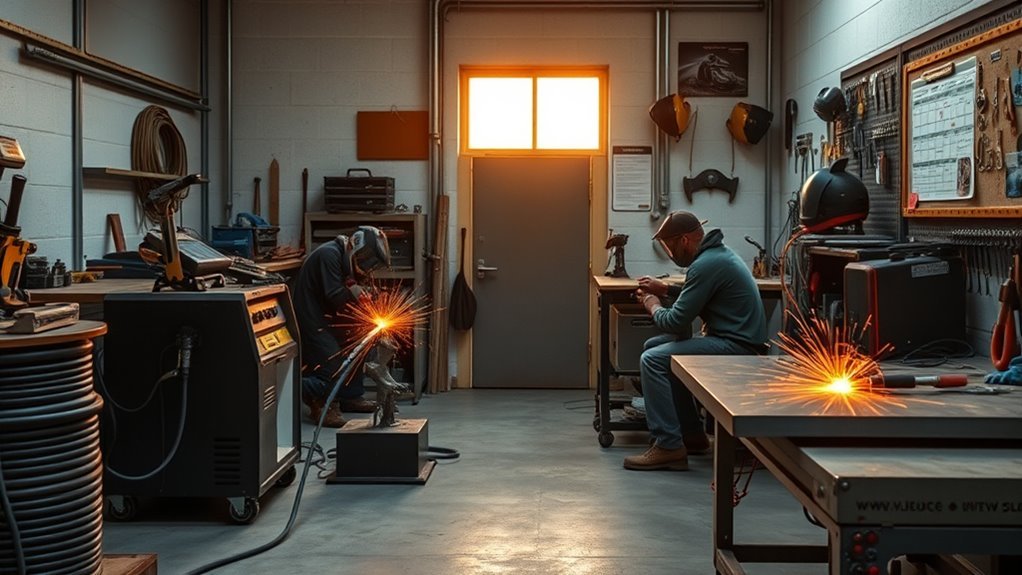
A short class can be a smart choice if you want to learn basic safety, machine setup, and simple repairs without changing careers. Crider’s currently lists its hobby class at $295.
For employment, compare the short class with a full program that includes repeated booth time, several welding processes, blueprint reading, fit-up, safety, and certification testing. A low-cost hobby class is not a substitute for hundreds of hours of supervised practice when an employer expects code-quality welds.
- Choose a hobby class for home projects, basic repairs, and deciding whether you enjoy welding.
- Choose a structural track for fabrication, plate work, and many shop or field roles.
- Choose a pipe track when your goal requires pipe positions, fitting, and more specialized testing.
- Choose custom training when you already weld and need to prepare for a specific test.
Financial Aid, Grants, and Scholarship Opportunities

Start with grants and scholarships because they usually do not need to be repaid. The American Welding Society Foundation scholarship portal says it awards more than $2.7 million in scholarships. For 2026–2027, its Welder Training Scholarship is open to students in certificate programs shorter than two years, with a November 30 deadline.
New for 2026: Workforce Pell took effect July 1, 2026. It can extend Federal Pell Grant access to students enrolled in federally approved short-term workforce programs, but a welding course does not qualify automatically. Missouri’s current Workforce Pell guidance says an eligible program must be offered by a Title IV institution, provide 150–599 clock hours over 8–14 weeks, lead to a stackable and portable credential, and meet verified completion and job-placement thresholds of at least 70% within 180 days. Missouri includes welding among the eligible instructional areas, but the exact school program still needs the required state and U.S. Department of Education approvals.
That timing rule matters when you compare the programs above. A 160-hour, 4-week course is too short in calendar length for the current Workforce Pell window, while a 900-hour program exceeds the 599-hour cap. Programs that fall inside the 150–599-hour and 8–14-week window still are not automatically eligible because institution and program approval also matter. Federal Student Aid confirms the July 1, 2026 effective date and approval process.
Missouri also offers programs such as the A+ Scholarship and Fast Track Workforce Incentive Grant, but eligibility depends on the student, school, credential, and approved-program rules. Missouri announced on July 24, 2026 that the 2026–2027 Fast Track application is open. The state says Fast Track can cover tuition and fees when combined with other governmental aid for eligible programs, plus eligible apprenticeship costs for tools, books, and uniforms. State Tech also says A+ can cover standard tuition and fees for qualified students, but not program- or class-specific fees, books, tools, or other supplies. Review the Missouri Department of Higher Education and Workforce Development aid page and verify your exact program before assuming an award will apply.
School eligibility differs. Crider’s says it accepts VA benefits and state Vocational Rehabilitation but cannot accept federal aid such as Pell Grants. American Welding Academy says it does not accept FAFSA or Pell Grants and is not a Title IV school. Public colleges may offer federal aid to eligible students and programs. Ask each school for a written list of aid it can process.
Questions to Ask the Financial Aid Office
- Is this exact welding program eligible for federal, state, VA, workforce, or rehabilitation funding?
- Does the award cover only tuition, or can it cover gear, books, testing, housing, and transportation?
- What deadlines, grades, attendance, residency, or work commitments apply?
- What happens to the aid if I withdraw or fail to complete the required hours?
- What is my net price after grants and scholarships but before loans?
Private Loans, Repayment Options, and Eligibility
Use private loans only after you have checked grants, scholarships, employer help, payment plans, and any federal aid available through an eligible school. Private loan approval, interest rates, cosigner rules, repayment dates, and hardship options depend on the lender and your credit profile.
Missouri Welding Institute currently links students to a private loan option that may cover school-certified costs. That does not mean every applicant will qualify or that borrowing the full amount is affordable.
Warning: Private student loans usually have fewer borrower protections than federal loans. Compare the annual percentage rate, fixed versus variable interest, total repayment amount, cosigner release terms, late fees, and in-school payment rules before signing.
- Subtract grants, scholarships, savings, and employer assistance from the full cost.
- Borrow only the remaining amount you need.
- Compare at least several written loan offers using APR and total repayment—not the monthly payment alone.
- Check when interest starts and whether payments are required while you are in school.
- Read the refund policy in case you withdraw or the program changes.
The Consumer Financial Protection Bureau recommends exhausting federal loan options before private loans when federal aid is available.
Cost Factors: Program Length, Class Size, and Hands-On Time
The price of welding school depends on more than the calendar. Compare the following factors:
- Program length and hours: More booth time, processes, and test preparation usually cost more.
- Student-to-instructor access: Ask how often an instructor can watch your welds and give feedback.
- Included materials: Pipe, plate, electrodes, wire, gas, and coupons can be a large part of the total.
- Equipment availability: Ask whether students share booths or machines and how much practice time is guaranteed.
- Schedule: Day, evening, or full-time training affects commuting and your ability to keep working.
- Credential and testing: Confirm which tests are included and whether retests cost extra.
- Placement support: Ask for recent, documented outcomes for the exact program—not a broad marketing claim.
Pro Tip: Divide the full school price by required hands-on hours, then compare what is included. Cost per hour is not a complete quality score, but it exposes major differences between programs.
Additional Expenses: Housing, Transportation, and Living Costs
Living costs can change the final price more than a small tuition difference. Build a weekly budget for rent, food, fuel, vehicle maintenance, phone or internet, laundry, and personal expenses.
MWI-Arranged Student Housing Costs
Missouri Welding Institute does not describe these units as on-campus housing. It arranges nearby housing on a first-come, first-served basis. Its current housing page lists older single units and shared two-bedroom options at $750 per month per person, and newer single units at $850 per month per person. Utilities are included except telephone and internet. Pets are not allowed. Review current MWI housing details.
- Estimate the full stay: Multiply monthly rent by the program length and include partial months.
- Confirm what is furnished: Ask about furniture, kitchen items, bedding, deposits, and move-in dates.
- Check the housing rules: Review guest, pet, damage, roommate, and early-move-out policies in writing.
Commuting and Transportation
If you commute, estimate round-trip miles, training days, fuel economy, parking, maintenance, and possible overnight stays. A long daily drive during an 11- or 18-week program can cost more than expected.
Compare driving alone with carpooling or moving closer to the school. Also budget for travel to employer interviews, certification test facilities, or job sites after graduation.
Certification and Licensing Costs in Missouri
For many welding jobs, the practical credential cost is performance qualification or certification testing. Requirements can also depend on the employer, contractor role, union, project owner, code, or locality, so confirm the rules for the exact work you plan to perform instead of assuming one credential covers every job.
The AWS Certified Welder program charges a $70 application fee in 2026, while the Accredited Test Facility sets the hands-on test price. AWS also lists a $105 yearly certification-maintenance subscription. Check the current AWS certification price list.
Ask the school which certification tests are included, which code or procedure they use, whether the test is administered by an AWS Accredited Test Facility, and what a retest costs. A school-issued certificate of completion and an employer-recognized welding qualification are not always the same thing.
- Training cost: Tuition, materials, and practice time
- Testing cost: Facility charge, test coupons, and application fee
- Retest cost: Additional booth time and another test
- Maintenance cost: Any required certification updates or continuity records
Return on Investment: Job Placement and Earning Potential
Welding school can shorten the path to an entry-level job, but the return is not guaranteed. Pay varies by skill, process, industry, shift, travel, overtime, union status, and location.
The U.S. Bureau of Labor Statistics reported a national mean annual wage of $56,760 for welders, cutters, solderers, and brazers in May 2025. The national median was $53,750.
That national wage data is not a promised starting salary. New graduates may earn less, while experienced workers in specialized, travel-heavy, overtime, or high-cost roles may earn more. BLS projects about 40,300 openings per year on average from 2025 to 2035, largely from replacement needs rather than rapid occupation growth. Review current regional jobs and wage data instead of relying only on a school’s headline earnings claim. See the latest BLS wage tables and BLS Occupational Outlook Handbook data.
How to Estimate Payback Time
Use a conservative estimate:
Payback months = total education cost ÷ expected monthly increase in after-tax income.
Include tuition, living costs, loan interest, and lost income in the total. Use actual entry-level job postings you qualify for—not the highest advertised welder salary.
Example: If your total education cost is $25,900, an extra $500 per month in after-tax income implies about 52 months to recover that cost. An extra $1,000 per month implies about 26 months. This is only a budgeting example; it is not a salary or job-placement forecast.
How to Check Placement Claims
- Ask for the placement rate for the exact program and graduation year.
- Ask how the school defines “placed” and whether part-time or unrelated jobs count.
- Request the number of graduates, completers, and students included in the calculation.
- Ask which employers hired recent graduates and what tests they required.
- Check whether placement support continues if your first job does not work out.
Frequently Asked Questions
How much does welding school cost in Missouri?
In the Missouri examples reviewed, a hobby class costs $295 and published full career-program totals run from about $6,530 to $28,500. Tarkio Tech’s official pages currently disagree between $6,530 and $6,650 for its 24-credit Welding Technology Certificate, while American Welding Academy’s current homepage lists its 24-week Pipe Welding & Fitting program at $28,500 and its FAQ still shows an older $25,500 total. Confirm a written current price before paying a deposit.
How long is welding school in Missouri?
The career-focused examples reviewed here range from 160 to 960 training hours. Published schedules run from 4 weeks for Iron Eagle’s 160-hour Downhill Pipeline course to 24 weeks for American Welding Academy’s 960-hour Pipe Welding & Fitting course. Program length should be compared with hands-on hours, processes taught, and testing—not weeks alone.
Can Workforce Pell pay for welding school in Missouri?
Potentially. Missouri’s current Workforce Pell rules require an approved program at a Title IV institution with 150–599 clock hours delivered over 8–14 weeks, plus other credential and outcome requirements. Welding is an eligible instructional area, but the exact program must still receive the required approvals. Confirm eligibility with the school before budgeting the grant.
Can Pell Grants pay for welding school in Missouri?
Only if the student, school, and specific program meet federal eligibility rules. Crider’s says it cannot accept federal aid such as Pell Grants, and American Welding Academy says it is not a Title IV school. Workforce Pell expanded potential access to approved short-term programs starting July 1, 2026, but approval is program-specific.
Do Missouri welding schools include tools and PPE in tuition?
Some do and some do not. MWI itemizes gear, metals, supplies, and books in its published totals but says students must buy steel-toed boots. Crider’s says its Master program includes books, supplies, tools, and two AWS welding certifications. Always request an itemized list before comparing prices.
What extra costs should I budget beyond welding-school tuition?
Budget for mandatory fees, PPE, tools, metals and consumables, books, certification tests and retests, transportation, housing, food, loan interest, and possible lost income. Public colleges may also add per-credit campus and program fees that are not included in the tuition rate.
Is a public college always cheaper than a private welding school?
Not automatically. Public tuition can be lower, especially for residents, but you still need to add per-credit fees, program fees, books, tools, transportation, and the time required to finish. Private schools may bundle materials and testing. Compare the full net cost after grants and what each program includes.
Is welding school worth the cost?
It can be if the program gives you relevant hands-on training, recognized qualification opportunities, affordable net cost, and a realistic path to jobs you qualify for. Estimate payback using your total education cost and conservative local entry-level earnings rather than a school’s highest advertised salary.
What should I compare before choosing a Missouri welding school?
Compare the full net price, hands-on hours, welding processes taught, schedule, instructor access, included materials, certification or qualification tests, retest fees, refund policy, aid eligibility, housing or commuting cost, and documented completion and placement outcomes.
How to Choose the Best-Value Missouri Welding Program
The best-value program is not automatically the one with the lowest tuition. Compare the net price after grants, required training hours, included metal and gear, certification or qualification testing, schedule, housing or commuting cost, and recent job-placement evidence.
- Get an itemized written cost: tuition, fees, books, PPE, tools, metals, tests, retests, deposits, and refund rules.
- Normalize the offer: compare required hours and what is included, then add your living and transportation costs.
- Verify aid before enrolling: confirm Pell or Workforce Pell, Missouri aid, VA benefits, scholarships, and employer assistance for the exact program.
If two schools are close in net price, favor the program that gives you more relevant hands-on practice, clearer testing inclusions, and documented outcomes for the welding work you actually want to pursue.
- Budget-first: compare public-school tuition plus every mandatory fee, then subtract grants before judging the lowest net price.
- Speed-first: compare total clock hours, weekly schedule, included testing, and whether the shorter format limits aid eligibility.
- Pipe-career goal: compare pipe positions, fitting content, included metals, qualification tests, and the amount of supervised booth time—not the program name alone.
For other states, see our guides to welding school in Oklahoma, welding school in Texas and welding school in Minnesota.
Sources
- Missouri Welding Institute Programs — current program prices, hours, and itemized costs
- Crider’s Institute FAQ — current class prices, inclusions, admissions, and aid limitations
- Ozarks Tech Tuition and Fees — public-college tuition structure and welding-related fees
- Southern Missouri Technical Institute 2026–2027 Tuition and Fees — current 900-hour welding program price
- Iron Eagle Welding Academy — current program prices, weeks, and training hours
- American Welding Academy Home — current homepage program prices and start dates
- American Welding Academy FAQ — program hours, aid status, and older conflicting price figures
- Tarkio Technology Institute Welding — current Welding Technology Certificate cost and credits
- Tarkio Technology Institute Cost and Class Dates — conflicting lower published Welding total used for verification
- State Technical College of Missouri Tuition and Fees — 2026–2027 Welding Technology per-credit tuition
- AWS Certification and Education Price List — 2026 Certified Welder application and maintenance pricing
- Missouri Welding Institute Housing — current arranged housing rates and terms
- Federal Student Aid Workforce Pell Effective Dates — July 1, 2026 implementation guidance
- American Welding Society Foundation Scholarships — current scholarship opportunities and award total
- Missouri Grants and Scholarships — official state aid programs and eligibility resources
- Missouri Fast Track Workforce Incentive Grant — current application and program overview
- Missouri Fast Track 2026–2027 Announcement — current application opening and covered-cost summary
- Missouri Workforce Pell Grant — current short-term program eligibility criteria and approval process
- U.S. Bureau of Labor Statistics OEWS Tables — May 2025 welding mean wage data
- BLS Occupational Outlook Handbook: Welders — May 2025 median wage and 2025–2035 outlook