
Hiring a professional welder usually involves more than multiplying an hourly rate by the time spent making the weld. Your final price may include inspection, surface preparation, cutting, fit-up, travel, equipment setup, filler metal, shielding gas, grinding, finishing, and cleanup. Current 2026 consumer pricing data places many residential and light-fabrication welding services between $60 and $125 per hour, although local and specialized quotes can fall outside that range.
Quick Answer
Most residential and light-fabrication welding services cost about $60 to $125 per hour in 2026, but small jobs often carry a one- or two-hour minimum. Mobile travel, setup, metal type, access, required welding process, finishing, permits, and inspection can raise the final quote.
Key Takeaways
- A common 2026 benchmark is about $60–$125 per hour, but local demand and job difficulty matter.
- Small repairs may cost more per weld because the minimum charge must cover setup, administration, and cleanup.
- Mobile jobs may add travel, site setup, power, weather protection, and access costs.
- TIG, stainless steel, aluminum, difficult access, and code-controlled work often require more time or skill.
- Compare written quotes by scope, materials, inspection requirements, warranty, and total price—not by hourly rate alone.
At a Glance
| Typical Service Rate | About $60–$125 per hour for many residential and light-fabrication jobs |
| Small-Job Pricing | Often subject to a one- or two-hour minimum or a flat shop charge |
| Mobile Work | May include travel, setup, fuel, power, access, and site-safety charges |
| Best Budgeting Step | Request two or three written, itemized quotes based on the same scope |
Welder Hourly Rates and Minimum Charges
A current 2026 consumer cost guide from Angi places many professional welding rates between $60 and $125 per hour. Another national guide reports a broader $50–$125 range. These figures are budgeting benchmarks rather than fixed prices.
A welder may charge in one of several ways:
- Hourly: Common for repairs, troubleshooting, and projects with an uncertain scope.
- Flat price: Common when the welder can inspect the job and predict the required work.
- Time and materials: Labor is billed by time, while metal, filler, gas, hardware, and finishing are added separately.
- Per inch, foot, pound, or unit: More common for repetitive fabrication or commercial production.
Small repairs often have a minimum charge even when the actual arc time is only a few minutes. The welder still has to review the job, prepare the metal, set up equipment, complete the weld, clean the area, inspect the result, and handle billing.
Note: An hourly service rate is not the welder’s take-home wage. It may also cover equipment, insurance, vehicle costs, rent, utilities, safety gear, nonbillable time, administration, and taxes.
Specialty work may exceed ordinary residential rates. Examples include emergency calls, difficult-access repairs, certified structural work, pressure-containing components, sanitary stainless fabrication, critical aluminum work, and jobs that require formal inspection or documentation.

The ZELUS Weighted Vest adds adjustable resistance to workouts, helping boost strength, endurance, and calorie burn during training sessions. Designed for a secure one-size-fits-most fit, it uses evenly distributed weight and reflective detailing for comfort and visibility while running, walking, or exercising. Practical storage pockets make it easy to carry small essentials as you stay focused on fitness goals.

Aegend Swim Goggles are designed to help swimmers enjoy a clear, comfortable, and secure fit in the pool. Built for adults and youth, they aim to reduce leaking and provide full eye protection for training, recreation, and water sports. Their versatile design makes them a practical choice for men and women looking for dependable swim eyewear.

This renter-friendly curtain rod bracket lets you hang curtains over outside-mounted vertical blinds without drilling, screws, or wall damage. It clips directly onto rectangular headrails for a fast, secure installation and fits curtain rods up to 1 inch in diameter. Ideal for apartments, condos, sliding glass doors, and rental homes, it offers a clean, damage-free way to add privacy and style in minutes.
What Influences the Price to Hire a Welder
The final bill depends on more than the length of the visible crack or seam. Labor, metal type, thickness, preparation, access, welding position, required process, finish quality, and inspection requirements all affect the quote.
Labor Hourly Rates
A welder’s rate usually reflects experience, local business costs, equipment, and the level of responsibility involved. A basic shop repair may fit within the common market range, while code-controlled structural or industrial work may require a welder qualified for a particular process, material, position, and procedure.
Ask whether the quoted labor time includes:
- Job inspection and measurements
- Cutting, beveling, cleaning, and rust removal
- Part alignment, clamping, and fixture setup
- Preheating or controlled cooling
- Grinding, dressing, and cleanup
- Visual inspection or other testing
- Loading, unloading, or disassembly
Material Selection Costs
Mild steel is often easier and less expensive to source and weld than stainless steel, aluminum, cast iron, or specialty alloys. However, there is no dependable universal multiplier. The difference depends on the grade, thickness, quantity, joint design, filler metal, shielding gas, contamination control, and required finish.
A quote should identify whether the welder or the customer is supplying the base metal. When the shop supplies it, the price may include ordering time, delivery, cutting loss, storage, and markup.
Project Complexity Level
A short weld is not always a simple weld. A cracked bracket that is easy to remove and place on a bench may cost less than a similar crack located under a vehicle, inside a machine, near finished surfaces, or beside flammable materials.
| Factor | How It Affects Cost |
|---|---|
| Poor access | Slows preparation, positioning, welding, and inspection |
| Thick metal | May require beveling, preheat, multiple passes, and more filler |
| Rust, paint, or contamination | Adds cleaning time and may create fume hazards |
| Tight tolerance | Requires more careful fit-up, heat control, and inspection |
| Code or engineering requirements | May require qualified procedures, records, permits, or inspection |
Material Costs and Consumables
Consumable prices change with supplier, cylinder arrangement, wire or rod classification, package size, and metal market conditions. For that reason, a reliable estimate should use current supplier prices instead of fixed national figures.
Consumables and Pricing
Depending on the job, consumables may include:
- Welding wire, electrodes, or filler rods
- Shielding gas or self-shielded flux-cored wire
- Tungsten electrodes
- Grinding and cutoff wheels
- Abrasive discs and surface-cleaning products
- Contact tips, nozzles, cups, and liners
- Fasteners, brackets, hinges, and other hardware
- Primer, paint, corrosion protection, or finishing supplies
Some welders include routine consumables in the hourly rate. Others list them separately or apply a shop-supplies charge. Ask how the quote handles unused material and whether a minimum quantity must be purchased.
Shielding Gas Needs
MIG and TIG welding commonly use shielding gas, but the correct gas depends on the process and material. The shop may use argon, carbon dioxide, helium, or a specified blend. Gas cost depends on cylinder size, ownership or rental terms, local refill pricing, flow rate, purge requirements, and total welding time.
A detailed commercial estimate may calculate gas from expected flow and arc time. For a small household repair, gas is more likely to be included in the hourly rate or shop-supplies charge.
Material Wastage Rates
Material loss can come from saw cuts, test pieces, trimming, damaged stock, incorrect measurements, rejected welds, grinding, and leftover lengths that cannot be reused. There is no single waste percentage that applies to every project.
For custom fabrication, the shop should account for a practical cutting allowance and explain any unusually large material purchase. Standard sizes and simple designs often reduce both waste and labor.
Pro Tip: Send clear photos with a ruler or tape measure visible, identify the metal if known, and describe how the part is loaded. Better information helps the welder price material, access, and preparation more accurately.
How Metal Type Affects Project Pricing
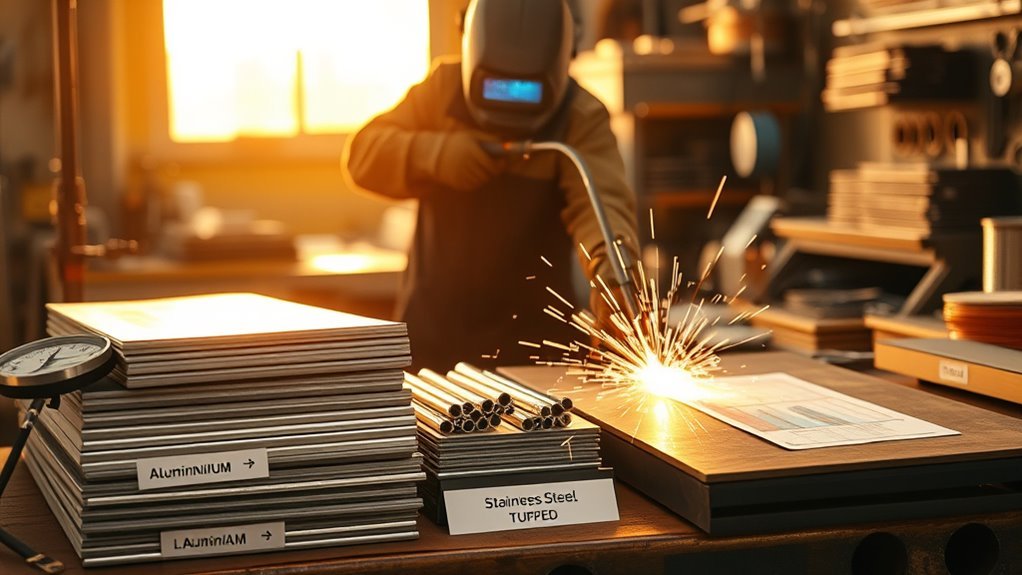
The base metal affects both material cost and the welding procedure. A welder must consider alloy, thickness, heat response, cleanliness, filler compatibility, distortion, corrosion resistance, and the required appearance.
| Metal | Typical Cost Effect | Common Considerations |
|---|---|---|
| Mild steel | Often the most economical | Widely available and compatible with several common processes |
| Stainless steel | Often higher | Requires suitable filler, contamination control, and heat-tint or finish decisions |
| Aluminum | Often higher | Oxide removal, cleanliness, equipment setup, and heat control are important |
| Cast iron | Highly job-dependent | May require special filler, preheating, slow cooling, or an alternative repair |
| Specialty alloys | Usually requires a custom quote | Material identification, procedure control, and specialized experience may be required |
Do not choose a cheaper metal only to lower the welding quote. The material must still meet the project’s strength, corrosion, temperature, weight, and code requirements.
Pricing for Small Repairs and Mobile Jobs
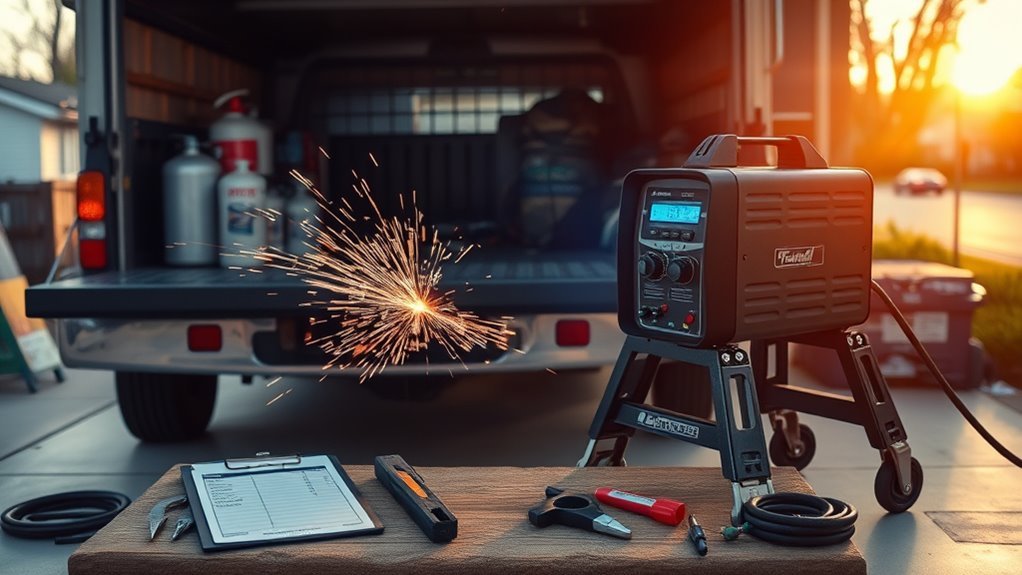
A portable item is usually cheaper to repair at a welding shop because the welder does not have to travel with equipment. Mobile service is useful for gates, trailers, machinery, railings, farm equipment, and structures that cannot be moved safely.
A mobile quote may include:
- A minimum service or call-out charge
- Travel time or mileage
- Loading and unloading equipment
- Generator or engine-driven welder use
- Extension leads, gas cylinders, screens, and fire protection
- Site access, permits, or an assigned fire watch
- Weather delays or temporary wind protection
- After-hours or emergency service
| Quote Item | What to Confirm |
|---|---|
| Minimum charge | How much time or work is included |
| Travel | Flat fee, mileage, portal-to-portal time, or service radius |
| Labor | Hourly, flat-rate, or time-and-material billing |
| Materials | Base metal, filler, gas, hardware, and shop supplies |
| Finishing | Grinding, blending, primer, paint, polishing, or coating |
For a very small item, ask whether you can bring it to the shop and combine it with other nonurgent work. That may reduce the effect of a mobile minimum.
Welding Methods and Their Cost Differences
The welding method affects speed, setup, consumables, cleanup, appearance, and the skill needed. The shop should select the process that fits the material and service requirements rather than simply using the method with the lowest advertised hourly rate.
| Process | Common Uses | Typical Price Effect |
|---|---|---|
| MIG/GMAW | General fabrication, steel repairs, production work | Fast wire feed can reduce labor on suitable jobs |
| TIG/GTAW | Thin metal, stainless, aluminum, visible or precise work | Often costs more because it prioritizes control and precision over speed |
| Stick/SMAW | Outdoor repairs, heavier steel, field work | Portable and versatile, but slag removal and electrode changes add time |
| Flux-cored/FCAW | Structural fabrication, outdoor or high-deposition work | Can improve deposition speed but may use more wire and require cleanup |
| Submerged arc/SAW | Long seams and heavy production | Usually quoted as a commercial production process rather than a small repair |
Miller’s MIG-versus-TIG guidance explains that TIG gives the welder finer control of amperage, filler, and torch movement, while its pace generally favors precision rather than deposition speed.
The lowest hourly rate is not always the lowest final price. A suitable process, accurate fit-up, and less rework can matter more than the advertised rate.

This compact electric kettle quickly boils up to 1 liter of water with 1500 watts, making it ideal for tea, French press coffee, and fast hot water needs. The BPA-free glass carafe features easy-to-read markings, a wide opening for simple cleaning, and a built-in mesh filter to help keep mineral scale out of your cup. With auto shutoff, boil-dry protection, and cordless serving, it offers a convenient and stylish way to heat water for smaller kitchens, dorms, and apartments.

The Manbook offers a blunt, practical approach to mental toughness, responsibility, and professional growth. Written by Nick Freitas, it is designed to help readers push through excuses, build discipline, and get the job done with focus and confidence. This hardcover edition is a useful pick for anyone looking for straightforward guidance on self-improvement and resilient living.

The WORX 20V JAWSAW is a uniquely safe cordless chainsaw designed with a fully enclosed bar and chain that retracts when not in use, helping protect the user during storage and operation. It cuts branches up to 4 inches thick, features auto-tension and automatic chain lubrication for smoother performance, and is lightweight enough for overhead trimming. The included battery works across the WORX Power Share platform, making it a versatile choice for yard cleanup and tree maintenance.
Estimating Time, Labor, and Overhead
A practical welding estimate can be summarized as:
Estimated total = minimum or setup charge + labor + materials and consumables + travel + finishing + permits or inspection
For example, suppose a mobile repair is estimated at two labor hours at $85 per hour, plus $45 in materials and a $35 travel charge. The estimated total would be:
($85 × 2) + $45 + $35 = $250
This is only an illustration, not a standard price. The real quote may change if the welder discovers hidden rust, thin surrounding metal, an incorrect material description, poor access, previous repair damage, or a need to fabricate a replacement section.
What a Written Welding Quote Should Include
- Customer and jobsite information
- Description of the repair or fabrication
- Metal type, dimensions, and thickness when known
- Welding process or procedure requirements
- Preparation, removal, and reinstallation work
- Labor rate, estimated hours, or fixed project price
- Material and consumable charges
- Travel, equipment, and minimum fees
- Finish, coating, and cleanup scope
- Permit, inspection, or testing responsibility
- Schedule, payment terms, warranty, and exclusions
Repair Versus Replacement
Repair is not always the economical choice. Replacement may be safer or less expensive when the surrounding metal is severely rusted, distorted, too thin to support a sound repair, repeatedly cracked, or part of a component whose manufacturer does not approve welding.
Ask the welder to explain whether the quote restores only the visible damage or addresses its cause. A crack caused by poor support, vibration, fatigue, overload, or misalignment may return unless the design or loading problem is corrected.
Tips for Hiring and Vetting a Welder
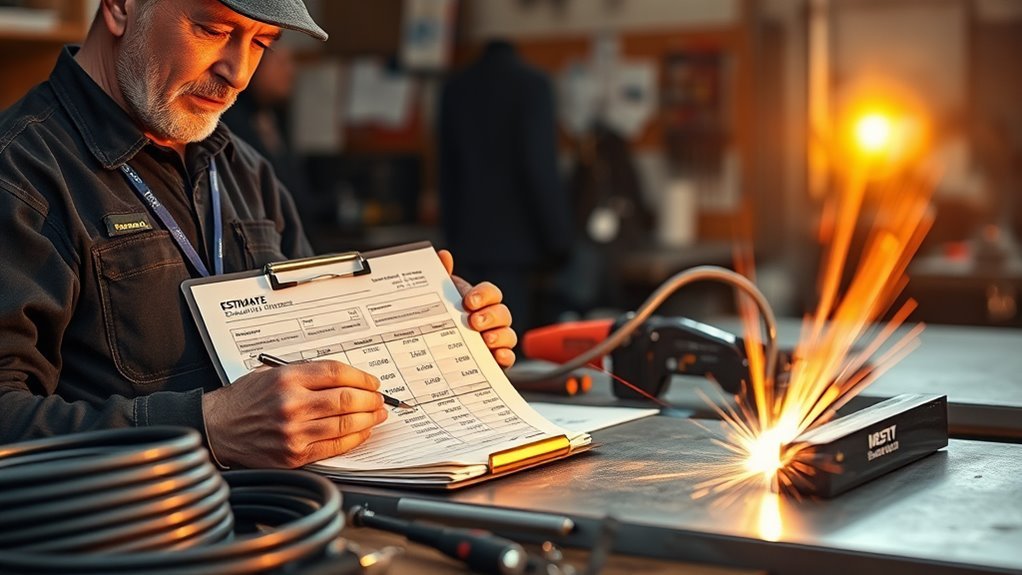
Compare welders based on relevant experience, qualifications, scope, safety, and total value. A low quote may omit preparation, finishing, travel, inspection, or repair of hidden damage.
- Provide the same information to every bidder. Send dimensions, photos, material details, location, access conditions, and the expected use of the part.
- Ask about similar projects. A welder who regularly repairs mild-steel gates may not be the best choice for sanitary stainless pipe or an aluminum boat.
- Verify applicable credentials. The AWS Certified Welder Program tests performance for specified processes, materials, positions, procedures, and code requirements.
- Request proof of insurance. Ask for a current certificate showing the business name, coverage, and limits rather than assuming coverage exists.
- Discuss inspection. Determine whether visual inspection is sufficient or whether the project requires a certified inspector or nondestructive testing.
- Get the warranty in writing. Confirm what it covers, how long it lasts, and whether coating failure, corrosion, misuse, or design problems are excluded.
- Check the full price. Compare labor, materials, travel, finishing, tax, permits, and possible change-order terms.
Pro Tip: Do not ask only, “What is your hourly rate?” Ask, “What is the expected total, what assumptions is it based on, and what could make the price change?”
Budgeting for Equipment, Training, and Hidden Costs
A customer normally does not pay a separate training or certification fee for an ordinary welding job. Instead, professional training, qualification testing, continuing education, equipment, maintenance, insurance, and safety programs are part of the business costs reflected in the service rate.
Possible hidden or overlooked project costs include:
- Disassembly and reinstallation
- Crane, lift, scaffold, or confined-space access
- Machining, drilling, bending, or cutting
- Rust, coating, oil, or hazardous-material removal
- Temporary supports and fixtures
- Replacement hardware
- Heat treatment or controlled cooling
- Nondestructive testing or engineering review
- Primer, paint, polishing, powder coating, or passivation
- Waste disposal and site cleanup
- Permit and inspection fees
- Rush, weekend, or after-hours service
Warning: Welding can cause fire, burns, electric shock, eye injury, and exposure to hazardous fumes. Structural members, lifting devices, pressure-containing parts, fuel systems, vehicle safety components, and code-regulated work should be evaluated by a properly qualified professional. OSHA requires fire prevention, suitable ventilation, eye protection, and added electric-shock protection in wet or high-humidity conditions.
The OSHA welding, cutting, and brazing requirements address fire prevention, combustible materials, fire watches, ventilation, and other workplace controls. The NFPA hot-work permit resource can help facilities document fire-safety checks when a permit program applies.
Frequently Asked Questions
How much does a welder charge per hour?
Many residential and light-fabrication services fall around $60–$125 per hour in 2026. Your local rate may be lower or higher based on the project, location, qualifications, access, and whether the work is performed in a shop or at your site.
Can welding affect nearby paint, glass, or electronics?
Yes. Heat, ultraviolet radiation, sparks, grinding debris, and spatter can damage paint, glass, wiring, hoses, sensors, and electronic equipment. The welder should inspect the area, shield nearby surfaces, control sparks, and follow the equipment or vehicle manufacturer’s isolation procedures.
Do welders carry insurance for accidental property damage?
Many professional welding businesses carry general liability insurance, but coverage is not automatic. Request a current certificate of insurance and check the business name, coverage limits, expiration date, and any exclusions relevant to your project.
Can welding be done in extreme weather conditions?
Sometimes, but only when the work can be performed safely and the procedure allows it. Rain and standing water increase electrical risk, while wind can disrupt shielding gas and spread sparks. OSHA requires special protection for arc welding in wet or high-humidity conditions. Work should be postponed when safe controls cannot be maintained.
Are permits or inspections required for my welded project?
It depends on the project and local jurisdiction. Structural modifications, railings, stairs, commercial work, pressure systems, and work connected to a building permit may require plans or inspection. A facility may also require a hot-work permit. Ask the local building or fire authority before work starts.
How long does a professional weld last without maintenance?
There is no universal lifespan. A properly designed and completed weld may remain serviceable for many years, but its life depends on loading, vibration, fatigue, corrosion, temperature, base-metal condition, joint design, workmanship, coating, and inspection. Safety-critical welds should follow an appropriate inspection and maintenance schedule.
Should materials be included in a welding quote?
The quote should clearly state whether base metal, filler, shielding gas, hardware, abrasives, finishing supplies, tax, and delivery are included. Do not assume an hourly rate covers every material or finishing charge.
Conclusion
For many residential and light-fabrication projects, a practical starting point is $60–$125 per hour, plus any minimum, travel, material, finishing, permit, or inspection charges. The final cost depends on the metal, access, preparation, welding method, required quality, and total scope.
Get two or three written quotes based on the same information. Compare what each price includes, verify relevant experience and insurance, and ask what conditions could change the total. A clear, complete scope is the best protection against surprise charges and incomplete work.
Sources
- Angi: How Much Do Welding Projects Cost? 2026 Data — current consumer pricing ranges, minimum charges, materials, travel, and project factors
- HomeGuide: Welding Cost Guide — hourly pricing structures, minimum labor charges, and process comparisons
- OSHA 29 CFR 1910.252 — welding fire prevention, ventilation, fire-watch, and wet-condition safety requirements
- National Fire Protection Association Hot Work Permit — hot-work hazard review and permit documentation
- American Welding Society Certified Welder Program — process-specific performance qualification and certification information
- Miller: MIG vs. TIG Welding Equipment and Process — differences in control, heat input, pace, and process selection

OGX Extra Strength Damage Remedy + Coconut Miracle Hair Oil helps hydrate dry, coarse hair while smoothing frizz and flyaways for a silky finish. This nourishing leave-in treatment blends coconut oil, vanilla bean extract, and tiare essence to add softness, shine, and a pleasant scent. It is paraben-free and designed to support a restorative hair care routine for medium to coarse hair types.

Coghlan's Magnetic Bear Bell helps alert bears and other wildlife to your presence while hiking, walking, or exploring outdoors. The built-in magnetic silencer lets you quiet the bell when it is not needed, and the hook-and-loop closure makes it easy to attach to clothing, boots, hats, packs, or pet collars. It is a simple safety accessory designed to add peace of mind on the trail.

These Business Source open-ring rubber bands are designed for easy one-handed use, making everyday bundling and organization more efficient. They offer a firm, reliable stretch with quality construction that meets or exceeds federal specifications, and their sustainable design supports practical office and industrial use. The compact box format makes them convenient to store and keep on hand for fast access.
