
To calculate welding cost in India, first turn the drawing into measurable quantities: purchased material weight, weld type and length, deposited weld metal, cutting and forming operations, labor hours, finishing, inspection, and delivery. Price each quantity with a current supplier or shop rate, then add overhead, risk allowance, profit, and the correct GST treatment.
Quick Answer
Calculate welding cost by adding purchased material, filler and gas, productive labor time, cutting and bending, machine use, finishing, inspection, logistics, and overhead. Add contingency for genuine uncertainty, apply either markup or a target-margin formula, and calculate GST only after confirming how the supply is classified.
Key Takeaways
- Do not estimate from the finished structure’s weight alone. Use a material takeoff and a weld schedule.
- Calculate deposited weld metal before pricing filler, flux, shielding gas, and arc time.
- Use a labor operating factor for arc-on productivity. A welding machine’s duty-cycle rating is a separate equipment limit.
- Use current, dated quotations for steel, cutting, coating, NDT, transport, and industrial gas.
- Keep overhead, contingency, profit, and GST as separate, visible lines in the estimate.
At a Glance
| Time Required | About 30–90 minutes for a simple drawing; longer for coded, multi-process, or site-fabrication work |
| Difficulty | Intermediate; requires drawing interpretation and current supplier rates |
| Tools Needed | Drawing, bill of materials, weld schedule, welding procedure, calculator or spreadsheet, supplier quotations, and shop production records |
| Cost | Project-specific; there is no reliable national per-kg or hourly rate for every welding job |
Welding Cost Formula in India

A complete fabrication quote can be summarized with this formula:
Quoted price before GST = direct material + consumables + labor + machine operations + finishing + inspection + logistics + allocated overhead + contingency + profit.
Keep every item on a separate line. This makes the quote easier to check, update, and defend when a drawing, quantity, supplier rate, or delivery requirement changes.

These Stanley MaxSteel straight aviation snips are built for clean, controlled cutting through sheet metal and other tough materials. Serrated cutting edges help prevent slippage for more accurate results, while the double pivot action delivers increased cutting power with less effort. Designed for dependable performance, they are a practical choice for metalworking, HVAC tasks, and general workshop use.

Post-it Super Sticky Easel Pads are designed to keep ideas visible and organized during meetings, training sessions, brainstorming, and project planning. The large premium paper resists marker bleed-through and sticks securely to many surfaces, then repositions without surface damage. A sturdy backcard and portable handle make them easy to move between rooms and use with most easel stands.

This versatile Cuisinart cookware set provides essential pots and pans for everyday cooking, from sauces and soups to sautéing, simmering, and frying. The aluminum-encapsulated base promotes fast, even heating, while cool-grip handles and tight-fitting glass lids support comfortable, efficient cooking. Designed for broad compatibility, it is dishwasher safe and oven safe for flexible use across many recipes.
Information Needed Before Calculating
- Latest approved drawing and revision number
- Quantity and batch size
- Material grade, section, thickness, and finish
- Net dimensions and purchased stock sizes
- Joint type, weld size, total weld length, position, and number of passes
- Welding process, filler classification, shielding gas, and approved procedure
- Cutting, drilling, machining, bending, rolling, and fit-up requirements
- Inspection, NDT, documentation, and certification requirements
- Coating, galvanizing, painting, blasting, or polishing specification
- Workshop or onsite work, access restrictions, permits, lifting, packing, and delivery distance
Pro Tip: Put a revision number and quotation-validity date on every estimate. Steel, industrial gas, coating, freight, electricity, and exchange-rate changes can quickly make an old price unusable.
Step 1: Calculate Raw Material and Scrap
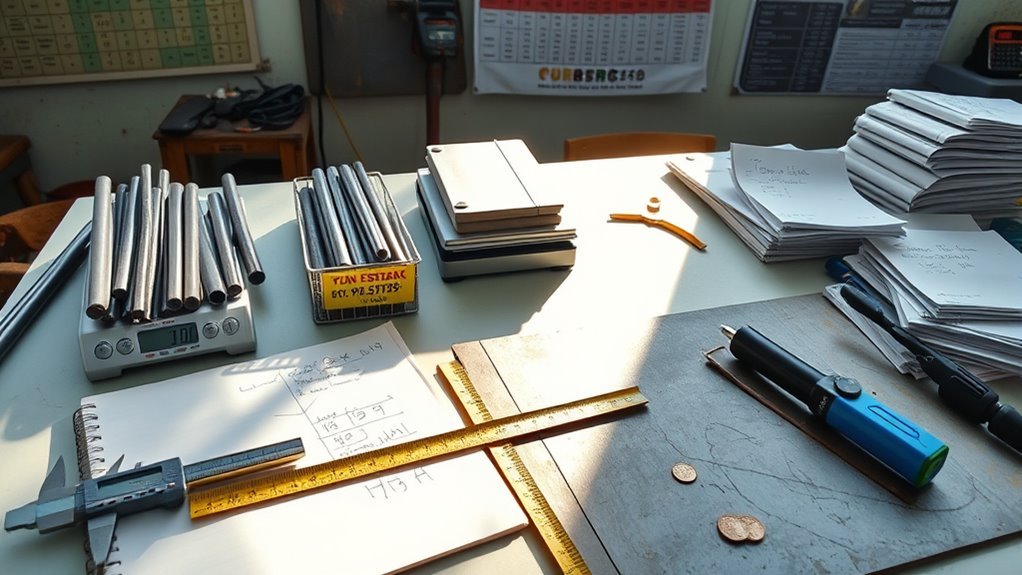
Start with a material takeoff from the drawing. Record each plate, pipe, tube, angle, channel, beam, bar, fastener, and bought-out part separately.
Purchased material weight = net material weight ÷ expected material yield
Material cost = purchased weight × current supplier rate
For example, a part needing 100 kg of net steel at a 93% nesting yield requires about 107.53 kg of purchased steel:
100 kg ÷ 0.93 = 107.53 kg
A simple 5%–10% allowance may be used for an early estimate, but it should not replace a nesting plan or actual shop-yield data. Plate shape, stock length, kerf, edge trimming, test coupons, minimum order quantities, and reusable offcuts can all change the result.
| Material item | Quantity basis | Cost check |
|---|---|---|
| Plate and sections | Purchased kg or stock lengths | Supplier quote, freight, cutting loss, and minimum order |
| Pipe and tube | Length × unit weight | Grade, schedule, finish, and available stock length |
| Bought-out parts | Pieces | Fasteners, hinges, inserts, anchors, and certificates |
| Scrap credit | Recoverable scrap kg | Deduct only when recovery and resale are realistic |
Step 2: Calculate Weld Metal, Consumables, and Gas
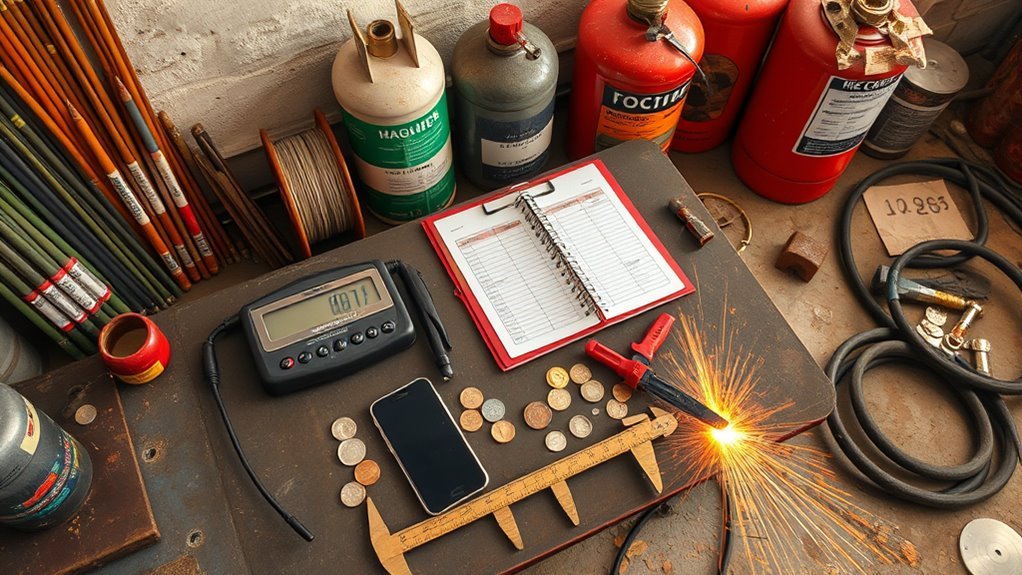
Calculate Deposited Weld Metal
Build a weld schedule listing every weld type, size, and length. Use the weld cross-sectional area from the drawing, weld calculator, procedure data, or CAD model.
Deposited weld metal, kg = weld area in mm² × weld length in metres × material density in g/cm³ ÷ 1,000
For an ideal equal-leg fillet weld, the theoretical triangular area is approximately:
Fillet area, mm² = leg size² ÷ 2
Actual deposited area may be higher because of weld profile, root gap, reinforcement, overwelding, starts, stops, and repair. For critical quotations, use the approved weld detail rather than the theoretical triangle alone.
Calculate Filler Metal and Flux
Filler required, kg = deposited weld metal ÷ deposition efficiency
Use the filler manufacturer’s data or your shop’s measured recovery. Do not apply one efficiency value to every process. Stub loss and spatter may be significant with stick welding, while continuous-wire processes normally recover a larger share of purchased filler.
For submerged arc welding, TWI notes that flux consumption can be close to 1 kg of flux per 1 kg of deposited weld metal when housekeeping and flux recovery are efficient. Confirm the actual ratio with the flux system and procedure used.
Calculate Shielding-Gas Cost
Gas volume, litres = flow rate in L/min × arc time in minutes × loss allowance
Gas cost = gas volume × cost per usable litre
If gas is purchased by cylinder:
Cylinders required = total gas volume ÷ usable gas volume per cylinder
A conventional industrial cylinder at about 200 bar may contain roughly 10,000 litres and provide around 10–12 arc hours at 12–15 L/min, but this is only a planning reference. Water capacity, actual fill pressure, residual pressure, purge time, leaks, regulator accuracy, and starts and stops affect usable volume. See the TWI welding-cost guidance.
Note: Include contact tips, nozzles, liners, tungsten, grinding discs, anti-spatter products, ceramic backing, purge dams, flux recovery loss, and other job-specific consumables. Small items can become material on a long or high-volume project.
Step 3: Calculate Welding Labor
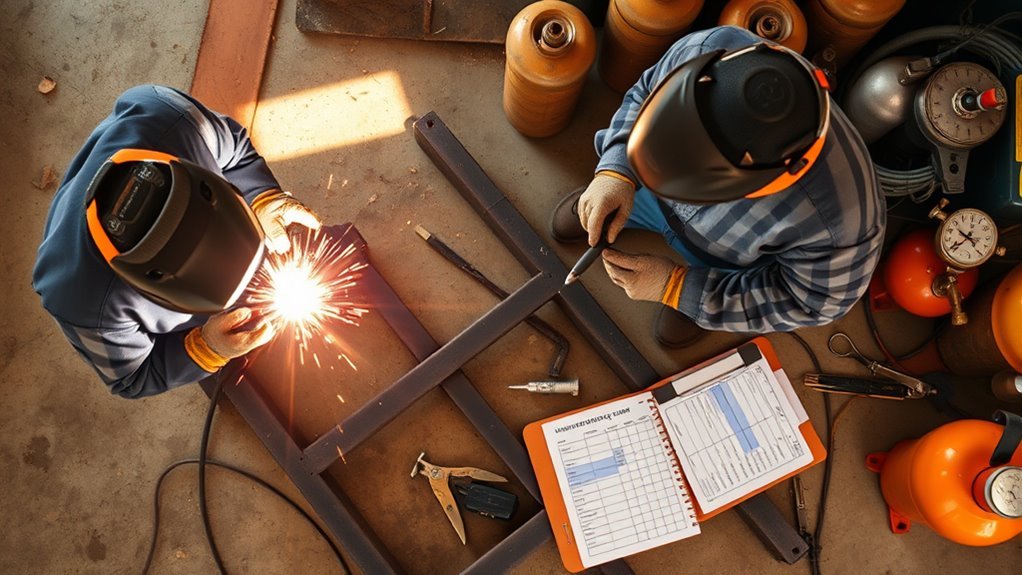
Calculate Arc Time
Arc time can be estimated from travel speed:
Arc time, hours = total weld length in mm ÷ travel speed in mm/min ÷ 60
It can also be estimated from deposition rate:
Arc time, hours = deposited weld metal in kg ÷ deposition rate in kg/hour
Use procedure-qualified or measured production values. Welding position, joint access, heat input limits, pass size, starts and stops, preheat, interpass temperature, and welder skill can change both travel speed and deposition rate.
Convert Arc Time to Total Labor
The welder is not striking an arc for every paid minute. Time is also used for fit-up, tacking, repositioning, cleaning, changing electrodes, replacing wire, checking dimensions, controlling distortion, moving screens, and handling parts.
Welding labor hours = arc time ÷ labor operating factor
TWI gives broad illustrative arc-on operating factors of about 15%–30% for manual metal arc welding, 25%–40% for manual TIG, and 30%–45% for manual MIG/MAG. These are planning references, not guaranteed shop rates. Setup and assembly may need to be added separately, and the best estimate comes from timed jobs performed under similar conditions.
A two-hour arc-time estimate at a 35% operating factor requires about 5.71 labor hours before adding any separate cutting, major fit-up, inspection, or site-access time.
Calculate the Loaded Labor Rate
Do not confuse an employee’s wage with the chargeable labor cost. A loaded rate may include:
- Basic wage and allowances
- Employer contributions and statutory costs
- Paid nonproductive time
- Supervision and quality support
- PPE, training, and certification
- Small tools and normal shop consumables
Labor cost = total labor hours × loaded hourly rate
Warning: Do not use a welding power source’s duty-cycle percentage as the welder’s eight-hour productivity percentage. Machine duty cycle is a thermal equipment rating over a stated test period and output; labor operating factor measures arc-on time against paid working time.
Step 4: Add Cutting, Bending, and Machine Costs
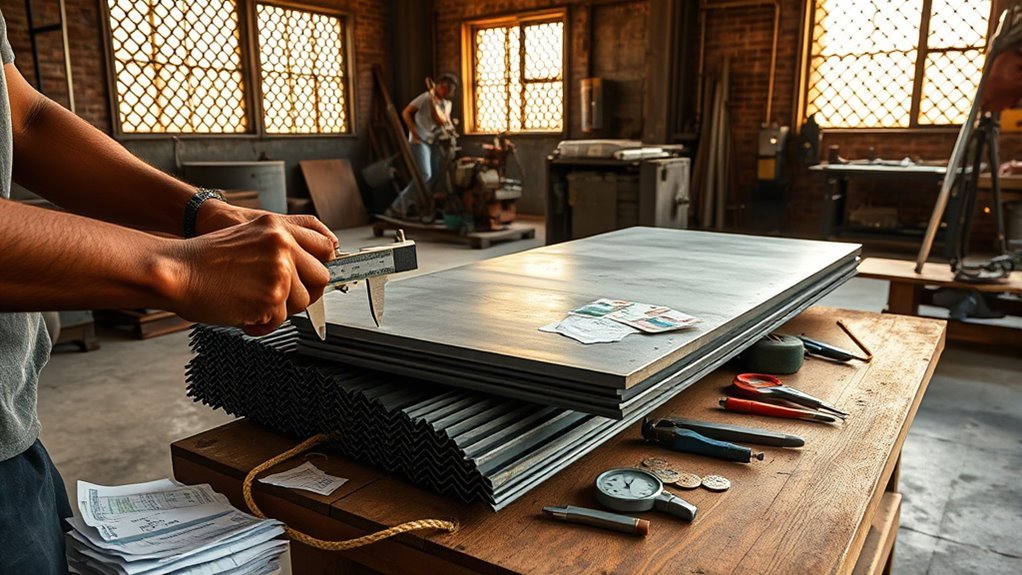
Cutting Machine Rates
Price cutting from an internal machine-hour rate or a dated subcontract quotation. A good cutting quote identifies:
- Material grade and thickness
- Total cut length and number of pierces
- Plate or stock size
- Nesting yield and remnant handling
- Programming and setup
- Edge-quality requirement
- Quantity and repeatability
- Deburring, marking, beveling, and inspection
Cutting cost per batch = setup charge + active machine time × machine rate + secondary finishing
Bending Operation Time
For press-brake or rolling work, record setup separately from cycle time:
Bending cost = setup hours × setup rate + cycle time per part × quantity × production rate
Include tooling changes, trial bends, material springback, handling of large parts, crane assistance, bend-sequence checks, and scrap risk. A flat “per bend” rate is useful only when it comes from the actual supplier or a repeatable internal standard.
Welding Machine, Electricity, and Depreciation
A machine-hour rate can include depreciation or lease cost, maintenance, calibration, repairs, torch and feeder upkeep, floor space, and electricity.
Electricity cost = measured input kW × operating hours × electricity tariff
Use input power from a meter, nameplate, or manufacturer data. Arc voltage multiplied by welding current is not the same as the machine’s total electrical input.
Welding Machine Duty Cycle
A 60% machine duty cycle generally means the power source can weld for six minutes and must cool for four minutes within the manufacturer’s 10-minute test period at the stated output. The rating changes with amperage and model, so use the machine manual or rating plate. The Miller duty-cycle guide explains this distinction.
Cooling delays should be costed only when the required output and weld sequence are likely to exceed the machine’s rating. In many manual jobs, normal repositioning and cleaning already allow the machine to cool.
Step 5: Add Finishing, Surface Treatment, and Inspection
Surface Preparation Methods
Price preparation from the specified cleanliness and profile, not simply from the finished part’s weight. Possible operations include:
- Degreasing and chemical cleaning
- Grinding weld spatter and sharp edges
- Blending or polishing visible welds
- Power-tool cleaning
- Abrasive blasting
- Pickling and passivation for stainless steel
- Masking threaded, machined, or electrical-contact areas
Record labor, abrasive or chemical consumption, handling, environmental controls, and waste disposal.
Coating and Plating Rates
Obtain current supplier quotations for powder coating, wet painting, hot-dip galvanizing, anodizing, plating, or specialist linings. The quotation should state:
- Chargeable area, weight, or batch basis
- Pretreatment and surface-preparation standard
- Coating system, thickness, colour, and finish
- Minimum batch charge
- Masking, hanging, drainage holes, or vent holes
- Testing and certificate requirements
- Transport to and from the finishing vendor
- Repair policy for damaged or rejected coating
Finishing cost = measured area or weight × vendor rate + minimums + masking + transport + inspection
Inspection and Testing Fees
Do not estimate inspection as a fixed percentage of the job. Build it from the inspection and test plan:
- Visual and dimensional inspection
- Welder qualification and procedure documentation
- Material certificates and traceability
- Dye-penetrant or magnetic-particle testing
- Ultrasonic or radiographic testing
- Third-party inspector mobilization
- Test coupons, destructive tests, reports, and dossier preparation
The required standard may depend on the product, customer, design code, industry, and contract. Verify applicable Indian Standards through the Bureau of Indian Standards and use the latest project specification.
Note: Also include an expected rework allowance when supported by actual defect history. Do not hide predictable rework inside contingency.
Step 6: Add Logistics, Packaging, and Onsite Costs
Workshop and onsite welding have different cost structures. Break logistics into measurable items:
| Item | Typical calculation basis |
|---|---|
| Transport | Vehicle type, distance, weight, dimensions, tolls, permits, and waiting time |
| Packing | Crate, pallet, wrapping, rust protection, labels, and export treatment |
| Loading and unloading | Labor, forklift, crane, rigging, and site waiting time |
| Onsite labor | Crew hours, travel time, accommodation, meals, overtime, and minimum call-out |
| Access and permits | Scaffolding, elevated work, confined space, shutdown, induction, and hot-work permit |

This versatile cookware set equips home cooks with essential pots, pans, and a steamer insert for everyday meals and larger gatherings. The aluminum-encapsulated base promotes quick, even heating, while Cool Grip handles and tight-fitting glass lids support comfortable, controlled cooking. Designed for stovetop, oven, broiler, and dishwasher use, it offers reliable performance across a wide range of recipes.

The WORX 20V JAWSAW is a uniquely safe cordless chainsaw designed with a fully enclosed bar and chain that retracts when not in use, helping protect the user during storage and operation. It cuts branches up to 4 inches thick, features auto-tension and automatic chain lubrication for smoother performance, and is lightweight enough for overhead trimming. The included battery works across the WORX Power Share platform, making it a versatile choice for yard cleanup and tree maintenance.

The DeLonghi Water Filter helps reduce scale buildup and unwanted impurities that can affect your coffee machine's performance and taste. Its active carbon and ion-exchange technology helps improve brew consistency, maintain flavor, and reduce the need for frequent descaling. Designed as an OEM authorized replacement part, it fits select DeLonghi models for reliable everyday maintenance.
Include Safety Costs
Budget for welding screens, PPE, ventilation or fume extraction, fire extinguishers, fire watch, gas testing, barricades, cylinder restraints, safe electrical connections, and permit controls. Current guidance is available from the DGFASLI construction safety resources.
Industrial gas cylinders must be transported, stored, and used under applicable requirements. Check the live PESO Gas Cylinder Rules page and its current amendments.
Warning: A cost estimate does not replace an approved welding procedure, engineering review, hot-work permit, risk assessment, ventilation plan, or inspection requirement. Never reduce a safety or quality control merely to meet a target price.
Step 7: Add Overhead, Contingency, and Profit
Allocate Overhead
Overhead covers costs that cannot be traced conveniently to one part but are necessary to operate the business. Examples include rent, administration, estimating, software, utilities, security, calibration, insurance, non-job-specific maintenance, and office salaries.
Common allocation methods include:
- Overhead per direct labor hour
- Overhead per machine hour
- A percentage of direct conversion cost
- Activity-based rates for estimating, inspection, purchasing, and dispatch
Use one consistent system so the same cost is not charged twice.
Add Contingency
Contingency covers identifiable uncertainty, such as incomplete drawings, uncertain site access, unstable supplier prices, or a first-time process. Five percent to 15% may be used as an internal planning range when the risk justifies it, but the percentage should follow a documented risk review rather than habit.
Contingency = defined cost base × approved contingency percentage
Calculate Markup or Margin
Markup and gross margin are not the same:
Selling price using markup = total cost × (1 + markup percentage)
Selling price for a target gross margin = total cost ÷ (1 − target margin percentage)
For example, ₹100,000 cost plus a 20% markup produces a ₹120,000 price and a 16.67% gross margin. A true 20% gross margin requires a selling price of ₹125,000.
Worked Welding Cost Example
The following example is illustrative. The rates are assumptions, not national market prices. Replace every assumed rate with a current quotation or verified shop rate.
Job: One batch of welded mild-steel brackets with 100 kg net steel and 2.5 kg deposited weld metal.
| Cost item | Example calculation | Amount |
|---|---|---|
| Steel | 100 kg ÷ 93% yield × ₹70/kg | ₹7,527 |
| MIG wire | 2.5 kg ÷ 90% assumed efficiency × ₹250/kg | ₹694 |
| Shielding gas | 15 L/min × 120 arc min × 1.10 loss factor × ₹0.20/L | ₹396 |
| Welding labor | 2 arc hours ÷ 35% operating factor × ₹350/hour | ₹2,000 |
| Separate cutting, setup, and fit-up labor | 3 hours × ₹350/hour | ₹1,050 |
| Cutting and bending | Current subcontract quotations | ₹2,100 |
| Machine, power, and small consumables | Internal machine-hour calculation | ₹650 |
| Finishing | Vendor quotation including transport | ₹2,500 |
| Inspection and documentation | Visual, dimensional, records, and report | ₹800 |
| Packing and delivery | Supplier quotation | ₹1,200 |
| Direct-cost subtotal | ₹18,917 | |
| Allocated overhead | 10% of direct-cost subtotal | ₹1,892 |
| Contingency | 7% of cost including overhead | ₹1,457 |
| Cost before profit | ₹22,266 | |
| Profit markup | 15% markup | ₹3,340 |
| Quoted price before GST | Rounded commercial price | ₹25,600 |
The final invoice would add GST at the rate applicable to the actual supply classification. The example must be recalculated whenever its drawing, batch size, procedure, vendor price, or delivery scope changes.
Welding Cost Calculation Template
- Material: Purchased kg or pieces × current landed rate.
- Weld metal: Weld area × length × density.
- Filler: Deposited weld metal ÷ deposition efficiency × filler rate.
- Gas: Flow × arc minutes × loss factor × gas rate.
- Arc time: Weld length ÷ travel speed, or weld metal ÷ deposition rate.
- Labor: Arc time ÷ operating factor, plus separately identified setup and fabrication hours.
- Machines: Cutting, bending, machining, welding, power, depreciation, and maintenance.
- Finishing: Measured area or weight × current vendor quote, plus minimums and transport.
- Inspection: Each inspection or NDT activity from the ITP.
- Logistics: Packing, loading, transport, access equipment, travel, and onsite costs.
- Overhead: Apply the company’s documented allocation method.
- Risk and profit: Add contingency, then markup or target-margin pricing.
- Tax: Add GST after confirming the classification and taxable value.
Common Welding Costing Mistakes
- Pricing only by finished steel weight
- Using net weight instead of purchased weight
- Ignoring weld size and total weld length
- Using filler weight as though every kilogram is deposited
- Charging only arc time and forgetting fit-up, cleaning, and handling
- Confusing machine duty cycle with labor productivity
- Using wages instead of a loaded labor rate
- Applying an old coating, gas, steel, or freight price
- Ignoring vendor minimum charges
- Forgetting inspection, documentation, permits, or safety controls
- Adding the same overhead through both labor and a final percentage
- Calling markup “margin”
- Applying GST without checking the supply classification
- Failing to state drawing revision, exclusions, quantity, and quotation validity
Frequently Asked Questions
How do GST rates affect a welding invoice in India?
GST depends on what is being supplied and how the contract is structured. The CBIC service-rate table lists 12% for qualifying residual job work under heading 9988 and 18% for other manufacturing services on physical inputs owned by others. Repair, installation, fabricated-goods, and works-contract classifications may be different. Confirm the SAC or HSN, ownership of the material, registration status, place of supply, and contract terms before invoicing. Check the current CBIC GST rate table and obtain professional tax advice where necessary.
Can warranty or post-installation support be priced separately?
Yes. State the warranty period, covered defects, exclusions, response time, travel limits, consumable responsibility, inspection process, and whether support is included or charged by visit, hour, or annual agreement. Also state whether taxes are included and when the warranty starts.
How should emergency or out-of-hours welding be priced?
Use a stated minimum call-out charge plus travel, mobilization, overtime labor, equipment, consumables, access, permits, standby time, and any rapid procurement cost. The quote should explain when the premium begins and whether it applies to the complete crew or only to productive site time.
Do municipality or site permits add extra charges?
They can. Price application fees, hot-work permits, safety induction, security passes, shutdown coordination, fire watch, gas testing, scaffolding, lifting plans, traffic controls, and the labor needed to obtain approvals. Confirm which party is responsible before work starts.
Are foreign-sourced welding consumables taxed differently in India?
Imported consumables may attract basic customs duty, social-welfare surcharge, IGST, anti-dumping duty, safeguard duty, or other charges depending on the customs tariff heading, origin, value, and current notifications. Use the ICEGATE Customs Duty Calculator with the correct classification and country of origin. Include freight, insurance, clearance, testing, bank charges, and exchange-rate risk in the landed cost.
How do I calculate welding cost per kilogram?
First calculate the complete job cost. Then divide by the agreed quantity basis, such as kilograms of finished fabrication or kilograms of deposited weld metal. State the basis clearly. A finished-fabrication ₹/kg rate can be misleading because two products with the same weight may have very different weld lengths, tolerances, positions, coatings, and inspection requirements.
Should profit be added before or after GST?
Build the commercial selling price by adding overhead, risk allowance, and profit to the project cost. GST is then calculated on the taxable value according to the applicable GST rules. Do not treat GST collected from the customer as operating profit.
Conclusion
To calculate welding cost in India accurately, begin with a controlled drawing and convert the job into measurable material, weld, process, labor, inspection, finishing, and logistics quantities. Use current quotations and measured production data instead of unsupported national rate ranges. Keep machine duty cycle separate from labor operating factor, show overhead and contingency openly, use the correct profit formula, and confirm GST classification before issuing the final invoice.
Sources
- TWI — Welding Costs — shielding-gas planning, SAW flux consumption, operating factors, and welding productivity.
- Miller — Duty Cycle: What It Is and Why It Is Important — machine duty-cycle definition and thermal limits.
- Central Board of Indirect Taxes and Customs — GST Rates — current service classifications and GST rate entries.
- ICEGATE — Customs Duty Calculator — customs-duty checking for imported welding consumables and equipment.
- Petroleum and Explosives Safety Organisation — Gas Cylinder Rules — current cylinder rules, amendments, approvals, and compliance information.
- DGFASLI — Construction Safety Manuals — Indian occupational-safety guidance relevant to fabrication and hot work.

This daily devotional helps parents pray purposefully for their children through a full year of Scripture readings, reflections, and guided prayer prompts. Written to encourage faithful family discipleship, it offers practical, biblically grounded support for parents who want to shape their prayers around God's Word. A foreword by Sinclair B. Ferguson adds trusted theological insight and encouragement.

Kerasal Nail Renewal is a restorative nail repair treatment designed to improve the appearance of damaged toe and finger nails. Its dermatologist-developed formula with urea and lactic acid gently exfoliates, hydrates, and smooths to help reduce thickness, roughness, ridges, and discoloration. With consistent daily use and a precision applicator tip, it offers targeted, mess-free care for healthier-looking nails over time.

The Cuisinart Mini-Prep Plus Food Processor is a compact kitchen helper designed for quick chopping, grinding, and small-batch prep. Its powerful motor and reversible stainless steel blade make it easy to process herbs, vegetables, hard cheese, nuts, and more, while the lightweight design and dishwasher-safe parts simplify everyday use and cleanup.