Welding cost per hour is only part of the price, because a quote covers much more than the time the arc is active. The welder may need to travel, inspect the damage, identify the metal, remove coatings or failed welds, fit and clamp the parts, complete the weld, grind the area, and apply a finish. Knowing how these charges work makes it easier to compare estimates and avoid surprise fees. For related guides, see professional welding cost, welding service cost, what welders charge per hour and mobile welding costs.
Quick Answer
Professional welding services commonly run about $60 to $125 per hour in 2026, although many contractors quote a project price instead. Small jobs may trigger a $100 to $200 minimum, and mobile work can add travel fees. TIG, aluminum, stainless steel, difficult access, structural requirements, and rush service usually raise the final cost.
Key Takeaways
- A practical 2026 planning range is about $60 to $125 per hour, but your local quote may fall outside that range.
- A minimum charge, travel, setup, preparation, materials, finishing, permits, and inspection can matter more than the time spent welding.
- TIG welding, specialty metals, structural requirements, tight access, and detailed fabrication usually require more time or skill.
- Do not compare estimates by hourly rate alone. Compare the complete scope, materials, qualifications, timeline, warranty, and total price.
At a Glance
| Typical Hourly Range | About $60–$125 per hour |
| Common Home-Project Total | About $250–$900 for many ordinary repairs and fabrication jobs |
| Small-Job Minimum | Often $100–$200 |
| Possible Mobile Travel Fee | About $25–$100, depending on distance and equipment |
Note: These are national planning estimates, not fixed prices. Local labor costs, metal prices, access, specifications, and contractor availability can change your quote.
Welding Cost per Hour: Welder Hourly Rates
Current consumer cost data places many professional welding rates at approximately $60 to $125 per hour. Some contractors bill by the hour, while others use a fixed project price or a minimum service charge. The best billing method depends on how predictable the work is.
A simple shop repair may be covered by a minimum charge. Mobile work may include travel from the shop, equipment loading, site setup, and return travel. Custom gates, railings, structural components, and repeated fabrication are more likely to receive a complete project quote.
How Welding Is Billed
| Billing Method | When It Is Common | What to Confirm |
|---|---|---|
| Hourly rate | Repairs with uncertain damage or changing scope | Whether travel, setup, cleanup, and equipment time are billable |
| Minimum charge | Small repairs that take less than a normal service block | What labor, travel, and consumables the minimum includes |
| Fixed project price | Custom fabrication or clearly defined repairs | Materials, finish, installation, tax, permits, and change-order terms |
| Per piece or linear unit | Repeated parts or standardized shop production | Joint size, tolerances, quantity, inspection, and finishing requirements |
Welder Wage vs. Customer Rate
A contractor’s hourly charge is not the same as the welder’s hourly wage. The U.S. Bureau of Labor Statistics reported a national median employee wage of $25.84 per hour for welders, cutters, solderers, and brazers in May 2025.
The customer-facing rate is higher because a business must also cover payroll expenses, equipment, shielding gas, filler metal, abrasives, vehicles, fuel, insurance, administration, shop rent, maintenance, non-billable estimating time, and profit.
The lowest hourly rate is not always the lowest total price. An experienced welder with the correct equipment may complete a sound repair faster and with less rework.
Pro Tip: Ask for the estimated total, not only the hourly rate. Confirm whether the clock starts at the shop, upon arrival, or after equipment setup.
Factors Affecting Welding Costs
The welding process affects productivity and setup, but it is only one part of the price. Metal type, thickness, joint design, access, preparation, finish, inspection requirements, and the consequences of failure can have an equal or greater effect.
Welding Method Impact
| Process | Common Strength | Typical Cost Effect |
|---|---|---|
| MIG/GMAW | Fast wire-fed production on suitable shop work | Often economical when the joint, metal, and environment suit the process |
| Stick/SMAW | Portable field work and many steel repairs | Moderate equipment needs, but electrode changes and slag cleanup add time |
| Flux-Cored/FCAW | Productive welding on thicker steel and field applications | Can reduce welding time, although wire, gas, slag removal, and equipment still affect cost |
| TIG/GTAW | Precise heat control and clean, high-quality welds | Often costs more because deposition is slower and operator skill and preparation requirements are high |
| Submerged Arc/SAW | High-productivity industrial welding of long seams and thick material | Specialized equipment and setup make it uncommon for ordinary household repairs |
The American Welding Society’s GTAW guidance notes that TIG/GTAW has lower deposition rates and greater skill and setup requirements than processes such as GMAW and FCAW. Its control and weld quality can still make it the correct choice for thin material, tubing, specialty alloys, and critical work.
Material Type Influence
Mild carbon steel is often the least expensive material to fabricate and repair because it is widely available and compatible with several productive processes. Stainless steel and aluminum may increase the price because the base material costs more and the work can require stricter cleaning, heat control, shielding, filler selection, and distortion management.
Cast iron repairs can also be unpredictable. Existing cracks, contamination, casting quality, preheating, cooling control, and the possibility of additional cracking may affect whether repair is practical.
Project Size, Access, and Preparation
The visible weld may be a small part of the job. Labor can include:
- Inspecting the damage and confirming whether repair is safe
- Identifying the base metal and coating
- Removing paint, rust, oil, plating, or the failed weld
- Cutting replacement pieces and preparing the joint
- Aligning, fitting, clamping, and tack welding
- Welding multiple passes or positions
- Grinding, blending, cleaning, and applying a finish
- Installing or testing the completed part
Tight access, overhead work, ladders, confined spaces, buried damage, and nearby combustible materials can slow the job and require extra controls.
Location, Scheduling, and Code Requirements
Prices are usually higher where wages, rent, insurance, and travel costs are higher. Emergency, weekend, overnight, or rush work may also carry a premium.
Structural railings, stairs, supports, load-bearing connections, pressure-containing equipment, and some vehicle repairs may need drawings, an approved procedure, qualified personnel, permits, inspection, or engineering review. Those requirements should be defined before work starts.
Material Costs
Material charges include more than the visible replacement metal. A complete estimate may account for the base metal, filler, shielding gas or flux, abrasives, cutting supplies, fasteners, primer, paint, coatings, and waste.
Essential Welding Materials Overview
- Base metal: Plate, sheet, tubing, pipe, angle, channel, bar, castings, or formed replacement pieces.
- Filler material: Wire, electrodes, rods, or flux selected for the process and base metal.
- Shielding: Gas or flux used to protect the molten weld from atmospheric contamination.
- Preparation supplies: Cutting discs, grinding wheels, wire brushes, solvents, and abrasives.
- Finishing supplies: Primer, paint, rust protection, polishing materials, powder coating, or other finishes.
- Waste and remnants: The contractor may need to buy a full stock length even when the repair uses only part of it.
A contractor’s weekly gas, wire, or abrasive spending does not provide a dependable estimate for one customer. Ask for the material quantity, specification, unit price or allowance, markup, and finishing cost shown in your quote.
Impact on Total Costs
There is no universal rule that materials always equal 10% or labor always equals 60% to 70% of a welding bill. A small mobile repair may be dominated by travel and setup. A large gate may contain substantial steel and finishing costs. A precise stainless assembly may be labor-intensive even when it uses little material.
A more useful estimate follows this structure:
Estimated total = labor or fixed fabrication price + base metal + consumables + travel or service call + preparation + finishing + installation + permits or inspection + applicable tax.
Material Type Variations
| Material | Relative Cost | Why the Quote May Change |
|---|---|---|
| Mild steel | Usually lower | Common availability and several productive process options |
| Stainless steel | Moderate to high | Higher material cost, cleanliness, filler selection, heat control, and finishing |
| Aluminum | Moderate to high | Oxide removal, specialized equipment, shielding, distortion control, and alloy identification |
| Cast iron | Variable | Crack condition, contamination, preheat, cooling, machining, and repair risk |
| Specialty alloys | Usually high | Limited availability, expensive filler, procedure requirements, testing, and specialist labor |
Note: A current supplier quote is more reliable than a generic metal-price table. Specify the alloy or grade, shape, dimensions, thickness, quantity, and finish.
Types of Welding Processes
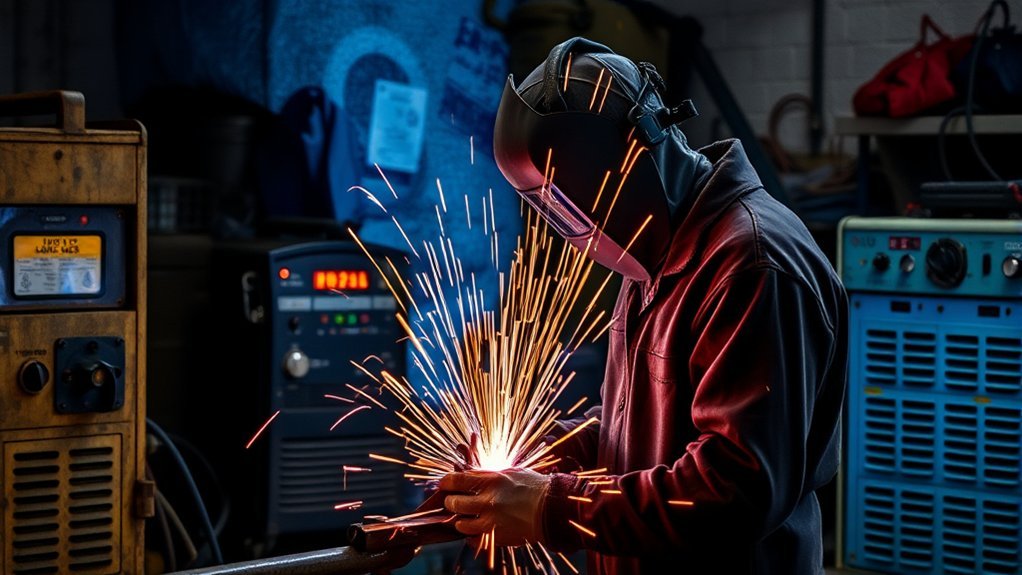
Welders choose a process based on the metal, joint, position, environment, required quality, code, and available equipment. The cheapest process is not automatically the correct one.
- Shielded Metal Arc Welding (SMAW or stick): Uses a coated consumable electrode. It is portable and useful for many steel repairs and field conditions, but rod changes and slag removal add time.
- Gas Metal Arc Welding (GMAW or MIG): Uses continuously fed solid wire and shielding gas. Its speed and adaptability make it common in shops and light fabrication.
- Gas Tungsten Arc Welding (GTAW or TIG): Uses a nonconsumable tungsten electrode and provides precise control. It is often selected for thin material, tubing, stainless steel, aluminum, and work requiring a clean appearance.
- Flux-Cored Arc Welding (FCAW): Uses a tubular wire containing flux. The American Welding Society describes it as a productive process with the penetration needed for many heavy-duty applications.
- Submerged Arc Welding (SAW): Uses a granular flux that covers the arc. It is mainly used for mechanized or industrial welding of long seams and thick steel.
MIG welding is popular because it can be fast and adaptable, but process selection should be based on the joint requirements—not a generic hourly-price chart.
Welding Costs by Type of Metal

Metal type influences both material and labor costs. Mild steel is commonly the most economical. Stainless steel and aluminum often require more expensive stock, specialized preparation, suitable filler, and closer heat control. Specialty alloys may require documented procedures or testing.
A price “per inch of weld” is only useful when the contractor has defined the complete joint. One linear inch may involve a single small fillet weld, several passes on thick plate, an awkward overhead position, or a cosmetic TIG joint. Those tasks do not have the same labor or consumable requirements.
When comparing a per-foot or per-inch quote, confirm:
- Weld type and size
- Material and thickness
- Number of sides and passes
- Welding position
- Joint preparation and fit-up
- Cleaning, grinding, and finish
- Inspection or testing standard
- Minimum quantity or setup charge
Project Complexity and Labor Charges
Complexity changes both the amount of time required and the level of responsibility the contractor accepts. Current national consumer estimates place many small repairs around $100–$250, medium projects around $250–$700, and larger custom structures around $700–$2,500 or more. These figures are planning examples, not bids for structural or industrial work.
| Project Level | Example | Main Cost Drivers |
|---|---|---|
| Simple repair | Accessible mild-steel bracket or small fence break | Minimum charge, setup, cleaning, and a short weld |
| Moderate repair | Gate repair, railing section, equipment bracket, or exhaust component | Removal, alignment, replacement metal, multiple welds, and finishing |
| Custom fabrication | Gate, furniture, guard, frame, or decorative assembly | Design, measurements, stock, cutting, fitting, welding, hardware, finish, and installation |
| Specialty or critical work | Load-bearing, pressure-containing, coded, inspected, or difficult-access work | Procedure qualification, certified personnel, engineering, testing, access control, and liability |
Additional Fees Beyond Hourly Rates
An hourly quote may not include every project expense. Ask about these possible charges:
- Minimum service fee: Often about $100–$200 for small repairs
- Mobile travel or callout: Often about $25–$100, with more for long distances
- Preparation: Cleaning, cutting, removing failed welds, and rust removal may add labor
- Materials and markup: Base metal, filler, gas, hardware, and waste
- Equipment: Generator, lift, crane, purge equipment, positioner, or specialty tooling
- Finishing: Grinding, polishing, painting, rust protection, or powder coating
- Permits and inspections: Possible for structural or permanently installed work
- Rush or after-hours service: May carry a premium
- Removal and disposal: Demolishing failed parts or hauling debris
Warning: Do not weld a used fuel tank, drum, cylinder, pipe, or sealed container unless it has been professionally evaluated, cleaned, isolated, vented, and made safe for hot work. OSHA also requires combustible materials to be removed or protected and suitable eye and fire protection to be available.
Review the applicable OSHA welding, cutting, and brazing requirements for fire prevention, used containers, ventilation, and personal protection.
Tips for Hiring a Welder
The right welder should be selected for the metal, process, position, code, and risk involved—not only for the lowest hourly price.
- Describe the project clearly. Send overall photos, close-ups, measurements, location, access details, and any drawings.
- Confirm the metal. Tell the contractor whether the item is mild steel, stainless steel, aluminum, cast iron, or unknown.
- Check relevant experience. A contractor who fabricates gates may not be the right specialist for pressure piping, aluminum castings, or vehicle frames.
- Verify qualifications. Ask which process, material, position, thickness, and code the welder is qualified to use for your job.
- Request proof of insurance. Confirm appropriate general liability and any other coverage required for the project.
- Ask about permits and inspection. Requirements vary by location and type of installation.
- Review similar work. Look at completed projects and customer feedback.
- Get the warranty in writing. Confirm what workmanship is covered and what conditions are excluded.
The AWS Certified Welder Program uses performance qualification testing. The applicable process, base material, welding position, and code matter, so ask what the credential or qualification actually covers.
Getting Estimates and Questions to Ask
Collect two or three written estimates when the job is large enough to justify comparison. Each contractor should receive the same photos, measurements, scope, finish requirements, and timeline.
Ask these questions before approving the work:
- Is this an hourly estimate, minimum service charge, or fixed project price?
- What is included in the quoted total?
- When does billable time begin and end?
- Are travel, setup, cleanup, and equipment charges separate?
- Who supplies the metal, filler, hardware, and finish?
- What metal and welding process will be used?
- Does the work require a permit, engineer, approved procedure, or inspection?
- Is the welder qualified for the applicable process, material, position, and code?
- Could hidden rust, cracking, contamination, or access problems change the price?
- How will change orders be approved?
- What payment schedule and methods are accepted?
- What workmanship warranty is included?
A complete written estimate should identify the scope, exclusions, materials, finish, labor or project price, travel, taxes, payment terms, schedule, and process for approving additional work.
Pro Tip: Photos help with screening, but damage can extend beyond what is visible. Treat a remote estimate as preliminary until the contractor inspects the metal, access, and surrounding conditions.
How to Lower Welding Costs Safely
- Bring a portable item to the shop when practical to avoid mobile travel and field setup.
- Combine several small repairs into one visit to spread the minimum charge.
- Provide accurate dimensions, photos, drawings, and finish requirements before requesting a quote.
- Choose standard sizes and readily available materials when the design allows.
- Clear safe access to the work area before the contractor arrives.
- Schedule nonurgent work during ordinary business hours.
- Approve the design and finish before fabrication begins.
- Maintain gates, railings, equipment, and coatings so corrosion does not spread.
Do not cut costs by hiring an unqualified person for a load-bearing connection, pressure-containing item, safety-critical vehicle component, or contaminated container. A failed weld can cost far more than a correct repair.
Frequently Asked Questions
How do I choose the right welder for my project?
Choose someone with experience in the same metal, process, joint type, and application. For structural, pressure-containing, inspected, or otherwise critical work, verify the applicable qualification, code experience, insurance, and inspection requirements.
Are there additional fees beyond the hourly rate?
Yes. Common additions include a minimum service charge, travel, setup, metal, filler, shielding gas, cutting, grinding, equipment rental, finishing, installation, permits, inspection, disposal, tax, and rush-service premiums.
What payment methods do welders typically accept?
Payment methods vary by business and may include cash, check, card, electronic transfer, or an online invoice. Ask whether a deposit is required, when the balance is due, and whether card or late-payment fees apply.
How long does a typical welding job take?
A small, accessible shop repair may be completed within a service minimum, while custom fabrication or a complicated field repair may take several hours or days. Inspection, material ordering, finishing, and installation can extend the overall schedule.
Can I negotiate the hourly rate with my welder?
You can discuss the scope and billing method, but reducing uncertainty is usually more effective than bargaining over the rate. Ask whether bringing the item to the shop, combining repairs, using standard material, changing the finish, or choosing a flexible schedule can reduce the total.
Why is the billable welding rate higher than a welder’s wage?
The customer rate must cover more than direct wages. It may include payroll costs, insurance, vehicles, fuel, shop rent, equipment, maintenance, consumables, estimating, administration, non-billable travel, warranty risk, and business profit.
Does TIG welding always cost more than MIG welding?
Not always, but TIG often costs more when it requires slower deposition, detailed preparation, precise heat control, and a highly skilled operator. MIG may be faster on suitable work, but the correct process depends on the metal, thickness, joint, appearance, environment, and required quality.
Conclusion
Professional welding commonly costs about $60 to $125 per hour in 2026, but the hourly rate is only one part of the bill. Minimum charges, mobile travel, preparation, metal, consumables, finishing, permits, inspection, and project risk can change the total.
For the most useful comparison, give each welder the same scope and ask for a written total that identifies inclusions, exclusions, qualifications, materials, finish, schedule, and warranty. Choose the professional who offers the right process and experience for the job—not automatically the lowest hourly number.
Sources
- Angi — How Much Does Welding Cost? 2026 Data — current consumer hourly rates, common project totals, minimum charges, mobile fees, and cost factors
- U.S. Bureau of Labor Statistics — National Employment and Wage Data — May 2025 employee wage data released in 2026
- American Welding Society — Certified Welder Program — performance qualification and certification scope
- American Welding Society — Gas Tungsten Arc Welding — GTAW skill, deposition, setup, and application considerations
- American Welding Society — Flux-Cored Arc Welding — FCAW operation, productivity, and heavy-duty applications
- Occupational Safety and Health Administration — 29 CFR 1910.252 — fire prevention, used-container, ventilation, and personal-protection requirements