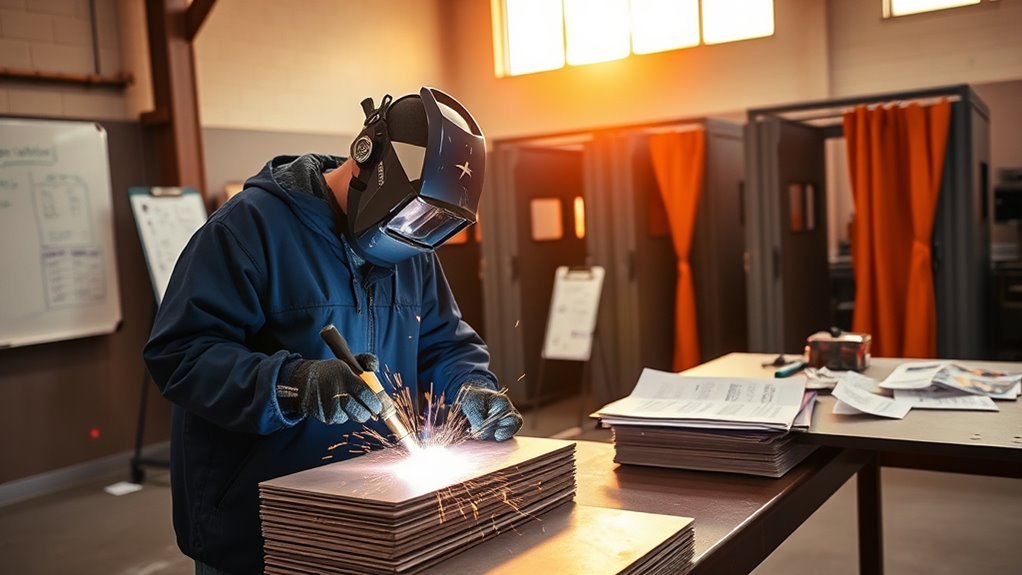
Welding school in Minnesota cost runs from roughly $2,500 for a focused short certificate to more than $10,000 for a diploma, based on current school-published program estimates. The final bill depends on program length and what the school includes in its advertised price. Tuition, mandatory fees, books, welding gear, tools, transportation, and living expenses can all affect what you actually pay.
Quick Answer
For 2026–27, published Minnesota welding-program costs range from about $2,497 for Minnesota West’s 9-credit GMAW certificate to $10,641.72 for DCTC’s 36-credit diploma including listed textbooks and equipment. Short certificates often cost less, while books, PPE, tools, transportation, and housing can raise your total cost.
Key Takeaways
- Minnesota welding-school prices vary substantially by school, program length, and what the published estimate includes.
- Minnesota West currently lists about $2,497 for its 9-credit GMAW certificate and $4,439 for its 16-credit welding certificate.
- Anoka Technical College lists an estimated $4,357 for its 17-credit Basic Welding certificate and $8,715 for its 34-credit diploma for 2026–27.
- Books, course fees, helmets, jackets, gloves, tools, transportation, and housing can add meaningful costs beyond basic tuition.
- FAFSA-based aid, Pell Grants, Minnesota programs, scholarships, veteran benefits, and school payment options may reduce your out-of-pocket cost if you qualify.
Welding School in Minnesota Cost: Tuition, Fees, and Supplies

There is no single statewide price for welding school in Minnesota. Schools structure their programs differently, and published estimates do not always include the same expenses. The best comparison is to look at the program length, credits, tuition, mandatory fees, books, and required welding equipment together.
| School / Program | Length / Credits | Published Cost | What to Know |
| Minnesota West — GMAW Certificate | 9 credits | About $2,497 | Focused Gas Metal Arc Welding training. |
| Anoka Tech — Basic Welding Certificate | 17 credits | About $4,357 | 2026–27 estimate based on tuition and fees. |
| Anoka Tech — Welding Diploma | 34 credits | About $8,715 | 2026–27 estimate based on tuition and fees. |
| Northland — Welding Technology Diploma | 32 credits / about 1 year | About $8,403.21–$8,753.31 | Estimate includes tuition, books, writing kit, listed fees, and tool-kit option. |
| DCTC — Welding Technology Diploma | 36 credits | About $10,641.72 | 2026–27 estimate includes tuition, student fees, $375 textbooks, and $1,050 tools/equipment. |
Note: These prices are not perfectly apples-to-apples. One college may publish tuition and mandatory fees only, while another may include textbooks, a welding helmet, clothing, or tools. Always request the school’s current program-cost sheet before enrolling.
Minnesota West’s current welding page lists its one-semester, 16-credit Welding Certificate at about $4,439. Its 32-credit Welding Diploma is listed at about $4,439 per semester, which works out to roughly $8,878 across two semesters based on the school’s published estimate.
Alexandria Technical & Community College provides another useful example of costs beyond tuition. Its 2026–27 Welding Technology estimate lists 36 first-year credits, about $725 for books, $1,924 in course fees, and $235 under other expenses. Its regular on-campus tuition and fees are listed at $230.06 per credit, although actual costs can vary by course and registration.
Program Options and Lengths: Certificate, Diploma, and GMAW
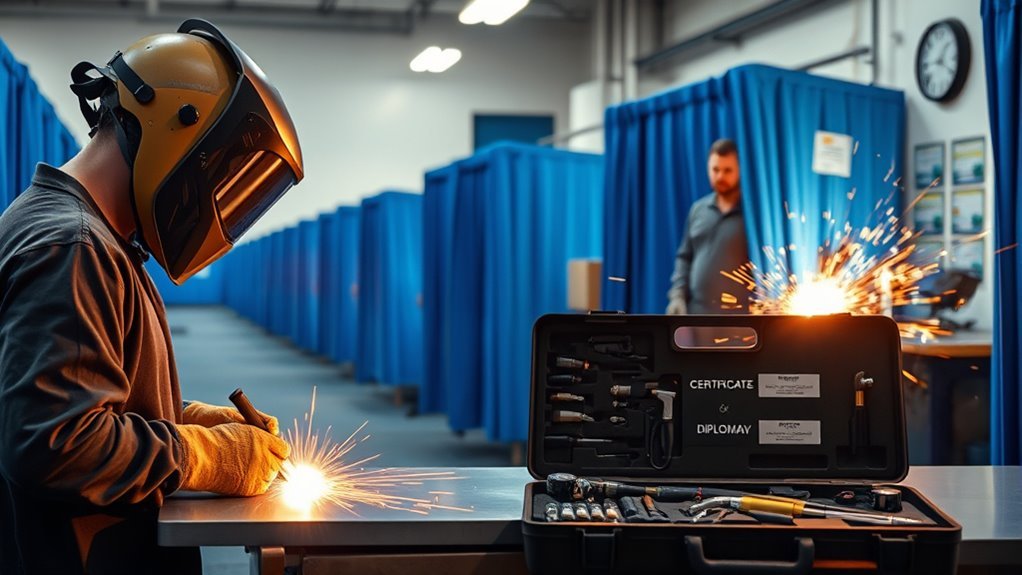
When choosing a welding program, match the training length to the kind of work you want. A short certificate can get you into focused training quickly, while a diploma usually includes a broader mix of welding processes, blueprint reading, fabrication, safety, and related technical skills.
Focused GMAW Certificate
A GMAW certificate concentrates on Gas Metal Arc Welding, commonly called MIG welding. Minnesota West currently lists its GMAW certificate at 9 credits and about $2,497. The curriculum includes welding principles, blueprint reading, and Gas Metal Arc Welding.
Basic Welding Certificate
A broader certificate normally adds several welding processes. Minnesota West’s 16-credit welding certificate covers Shielded Metal Arc Welding, Gas Metal Arc Welding, plasma and oxy-fuel cutting, welding symbols, blueprints, and shop safety. Anoka Technical College offers a 17-credit Basic Welding certificate with an estimated 2026–27 tuition-and-fee cost of $4,357.
Welding Diploma
A diploma generally requires more credits and lab time. Anoka’s welding diploma is 34 credits and has an estimated 2026–27 tuition-and-fee cost of $8,715. Northland’s 32-credit Welding Technology Diploma can be completed in about one year and publishes an estimated total between $8,403.21 and $8,753.31 depending on the tool-kit option.
Dakota County Technical College offers a 36-credit Welding Technology diploma. Its 2026–27 published estimate is $10,641.72, including tuition, student fees, $375 in textbooks, and a $1,050 tools-and-equipment charge.
Pro Tip: Compare programs by both total cost and hands-on lab hours. A lower tuition number does not automatically mean a better value if the program includes fewer welding processes, fewer lab hours, or fewer required tools.
Financial Aid, Scholarships, and Veteran Benefits

If you need help paying for welding school, start with the Free Application for Federal Student Aid (FAFSA). Schools use FAFSA information to determine eligibility for federal grants, work-study, federal student loans, and some state or institutional aid.
The maximum Federal Pell Grant for the 2026–27 award year is $7,395. Your actual award depends on federal eligibility rules, enrollment, cost of attendance, and other factors. Pell Grants generally do not have to be repaid when you remain eligible and meet program requirements.
Minnesota also introduced Workforce Pell for eligible short-term career programs beginning July 1, 2026. A student must complete the FAFSA, meet federal eligibility requirements, and attend a participating institution and qualifying program.
Eligible Minnesota students should also check the North Star Promise Scholarship. It is a last-dollar program, which means other grants, scholarships, waivers, and qualifying gift aid are applied before North Star Promise is calculated. Deadlines and eligibility rules matter, so contact the school’s financial aid office rather than assuming an award is available.
Workforce Development Scholarships may also apply to qualifying high-demand programs. For example, Northland currently states that students pursuing its Welding Technology Diploma may be eligible for a $2,500 Minnesota Workforce Development Scholarship.
Veterans, service members, and eligible family members should check VA education benefits. GI Bill benefits can help pay for eligible college, career, trade, licensing, certification, and apprenticeship training depending on the student’s benefit program and eligibility.
Note: Financial aid amounts can change by award year, school, program, enrollment status, cost of attendance, and individual eligibility. A school’s financial aid office can calculate your actual package.
Career Paths and Potential Earnings in Minnesota
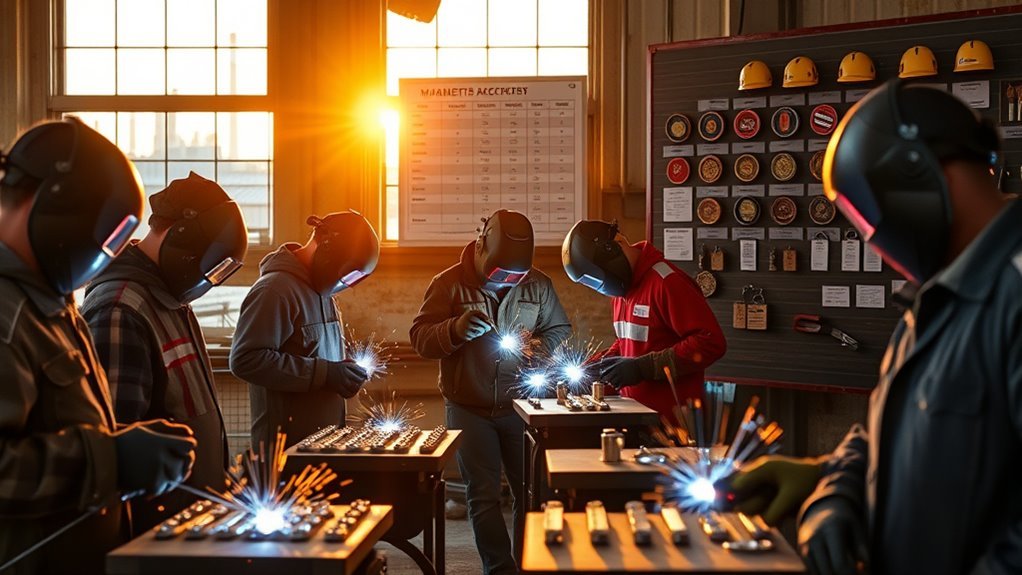
Welding training can lead to work in manufacturing, construction, fabrication, repair, maintenance, and related industries. Entry-level job titles can include production welder, fabrication welder, maintenance welder, MIG welder, TIG welder, or welder-fitter.
Current Minnesota Department of Employment and Economic Development wage data for Welders, Cutters, Solderers, and Brazers shows a statewide median wage of $29.64 per hour in the first quarter of 2026. The 75th-percentile wage is $32.17 per hour, while the 90th percentile is $37.23 per hour.
Minnesota’s Q1 2026 median wage for welders, cutters, solderers, and brazers is $29.64 per hour, according to Minnesota DEED.
Pay varies by region, industry, shift, experience, welding process, certifications or qualifications required by the employer, and the complexity of the work. Specialized pipe, structural, inspection, and fabrication work may require additional training or demonstrated qualification tests.
Welding school itself does not automatically make every graduate “certified” for every welding job. Employers and projects may require a welder to pass a performance qualification under a specific code or procedure. For structural steel, for example, the AWS D1.1 Structural Welding Code includes requirements for welder and procedure qualification.
How to Budget for Tools, Books, and Living Expenses

Upfront welding-school costs can hit your budget quickly. Price the complete program before enrolling, including tuition, mandatory fees, books, welding helmet, jacket, gloves, safety glasses, boots, hand tools, transportation, parking, and housing if you will live away from home.
Do not use one school’s supply estimate as a rule for every Minnesota program. Alexandria Tech, for example, currently lists about $725 for first-year welding books, $1,924 in course fees, and $235 in other estimated expenses. DCTC separately lists $375 for textbooks and $1,050 for welding-related tools and equipment in its 36-credit diploma estimate.
Northland’s cost sheet shows why the details matter. Its estimated program total is $8,753.31 with a fall tool kit that includes a welding hood, compared with $8,403.21 for the option without the hood.
Your living expenses depend on the campus, commute, family situation, and schedule. Add rent or temporary lodging, food, fuel, parking, childcare, health insurance, and lost work hours if they apply to you.
After estimating the full cost, subtract confirmed grants and scholarships rather than assuming you will receive them. If the school allows it, used textbooks, approved used tools, shared equipment, and equipment you already own may help lower upfront spending.
Want a different angle? See our Minnesota welding school budget guide, or compare with welding school costs in Ohio and welding school costs nationally.
Questions to Ask Before You Enroll
Before choosing a welding school, request a written cost sheet for the exact semester and program you plan to enter. Tuition tables alone may leave out hundreds or thousands of dollars in required equipment and course charges.
Ask the admissions or program office these questions:
- What is the total program cost? Ask whether the estimate includes tuition, mandatory fees, books, PPE, welding hood, clothing, tools, testing, and graduation costs.
- How many credits and semesters are required? A 9-credit specialty certificate is very different from a 34- or 36-credit diploma.
- How many hours will I spend welding in the lab? Hands-on practice is a major part of welding skill development.
- Which welding processes are taught? Check for SMAW, GMAW, GTAW, FCAW, cutting, blueprint reading, fabrication, and other skills related to your target job.
- What equipment must I buy? Ask whether a helmet, jacket, gloves, safety glasses, boots, hand tools, and consumables are included.
- Does the program prepare students for qualification tests? Ask which AWS, ASME, employer, or industry standards are covered and whether testing fees are included.
- Are evening classes available? Scheduling varies. DCTC, for example, currently describes daytime, afternoon, and evening welding classes.
- What job support is available? Ask about employer visits, job fairs, internships, apprenticeships, resume help, and placement services.
- Which credits can transfer? Get a written transfer evaluation if you may continue into another certificate, diploma, AAS, or bachelor’s program.
Warning: Welding involves intense light, heat, electrical hazards, hot metal, gases, and fumes. Follow your school’s lab rules, ventilation requirements, instructor guidance, and required PPE. Respirator use and fit testing depend on the hazards and respiratory-protection requirements that apply to the training or workplace.
Pro Tip: Compare the net amount you expect to pay after confirmed grants and scholarships, not just the school’s advertised tuition. Also compare what equipment is already included in each school’s estimate.
Frequently Asked Questions
What Safety Certifications Are Required During Welding Training?
There is no single safety certification required for every Minnesota welding student. Schools normally require shop-safety instruction and specific PPE. Respirator training, medical evaluation, and fit testing may apply when respiratory protection is required. Welder performance qualifications under AWS, ASME, or employer procedures are separate from basic school safety training.
Can I Transfer Credits Between Minnesota Welding Schools?
Some welding and other technical credits can transfer, but the receiving college decides how the credits apply to your new program. Minnesota State schools evaluate transfer coursework based on factors such as course content and program requirements. Use Minnesota State transfer resources and Transferology, and obtain a formal evaluation before changing schools.
Do Schools Offer Evening or Weekend Welding Classes?
Some do, but schedules vary by campus and term. DCTC currently describes daytime, afternoon, and evening welding classes. Other programs may require a fixed full-time daytime schedule, so confirm current lab times and course availability before applying.
Is Job Placement Assistance Provided After Program Completion?
Many technical colleges provide career services, but the level of support differs. Ask whether the welding program offers resume help, interview preparation, job fairs, employer visits, internships, job-board access, or direct employer referrals. Do not treat job placement as guaranteed unless the school provides a specific written outcome or commitment.
Are Apprenticeships Coordinated Through the Welding School?
Some programs have employer, internship, apprenticeship, or workforce-development partnerships, while others expect students to find opportunities separately. Ask the program coordinator whether the school has formal employer partners, union contacts, internships, paid work-based learning, or registered apprenticeship connections.
How Much Does Welding School Cost in Minnesota in 2026?
Current published examples range from about $2,497 for Minnesota West’s 9-credit GMAW certificate to $10,641.72 for DCTC’s 36-credit Welding Technology diploma. The amount you pay can be higher after housing and transportation, or lower after grants, scholarships, veteran benefits, and other eligible aid.
How Much Can a Welder Earn in Minnesota?
Minnesota DEED reported a statewide median of $29.64 per hour for welders, cutters, solderers, and brazers in the first quarter of 2026. The 90th-percentile wage was $37.23 per hour. Actual pay varies by experience, region, industry, shift, welding process, and job requirements.
Financial Disclaimer: This article is for informational purposes only and does not constitute professional financial advice. Tuition, fees, aid programs, eligibility rules, and scholarship amounts can change. Confirm current costs and funding options with the school’s financial aid or business office before making an enrollment decision.
Conclusion
Welding school in Minnesota can be a relatively short path into skilled work, but there is no single statewide price. Current published examples range from a roughly $2,500 focused GMAW certificate to diploma estimates above $10,000. Compare the complete cost rather than tuition alone, including books, fees, PPE, tools, transportation, and housing.
Before enrolling, get the current program-cost sheet, check how much hands-on welding time the program provides, verify which welding processes and qualification standards it covers, and complete your financial-aid applications. A clear comparison of total cost, training depth, schedule, and career support will give you a much better picture of which Minnesota welding program fits your budget and goals.
Sources
- Minnesota West Community & Technical College — Welding Programs — certificate, diploma, GMAW, credit, and published program-cost information.
- Dakota County Technical College — Welding Technology — 2026–27 diploma cost, textbooks, tools, and program information.
- Northland Community & Technical College — Welding Technology Program Costs — tuition, tools, books, fees, financial aid, and total estimated program cost.
- Minnesota Department of Employment and Economic Development — Welder Wage Data — Q1 2026 statewide employment and wage percentiles.
- Federal Student Aid — Pell Grants — 2026–27 Pell Grant amount and eligibility guidance.
- Minnesota Office of Higher Education — Workforce Pell — 2026 short-term career-training financial-aid program information.