
Exhaust welding can be a cost-effective way to seal a small crack, reconnect a joint, or replace a short damaged section, but the final bill depends on more than the weld itself. Rust, access, pipe material, shop labor, and nearby components can turn a quick repair into a larger exhaust-system job.
Quick Answer
Budget about $100–$300 for a small, accessible exhaust weld at many U.S. independent shops. A cut-and-splice or flex-pipe repair may cost about $200–$600, while badly rusted sections or parts that require replacement can push the total from several hundred dollars to more than $1,000.
Key Takeaways
- A simple weld on solid, easy-to-reach pipe is usually the least expensive repair.
- Heavy rust, thin metal, broken hangers, seized fasteners, and poor access increase labor and may make replacement the better choice.
- Ask whether the quote includes diagnosis, cutting, new pipe or clamps, welding, leak testing, taxes, and a workmanship warranty.
- Do not ignore exhaust fumes in the cabin; an exhaust leak can expose occupants to carbon monoxide.
At a Glance
| Small Accessible Weld | About $100–$300 as a planning range |
| Cut-and-Splice or Flex-Pipe Repair | About $200–$600, depending on parts and access |
| Replacement Instead of Welding | Several hundred dollars to $1,000+, depending on the vehicle and component |
| Typical Shop Time | About 1–2 hours for a straightforward repair; longer if removal or extensive fabrication is required |
These are rough budgeting ranges, not fixed national prices. A shop must inspect the leak, surrounding metal, and vehicle layout before giving an accurate quote.
Factors Influencing Exhaust Welding Costs
The cost of welding an exhaust depends on the condition of the entire repair area, not just the size of the visible hole. A shop may need to raise the vehicle, locate every leak, clean away corrosion, cut out weak metal, fit a new section, weld it, and pressure- or smoke-test the system.
- Location of the damage: A leak on an exposed straight pipe is easier to reach than one near the engine, subframe, fuel system, heat shields, or rear suspension.
- Condition of the metal: Thick, solid steel can accept a durable weld. Thin, flaking, or heavily pitted metal may burn through and require a larger replacement section.
- Type of repair: Sealing one crack costs less than cutting out a failed flex pipe, fabricating a new section, or replacing a muffler or resonator.
- Pipe material and diameter: Stainless steel, aluminized steel, custom tubing, and unusual diameters can require different filler metal, tools, and fabrication time.
- Vehicle access: Rusted clamps, seized bolts, broken hangers, and tightly packed components increase labor.
- Shop labor and minimum charges: Many shops bill a minimum amount even when the arc time is brief because diagnosis, setup, lifting, preparation, and leak testing still take time.
The visible crack may be small, but the condition of the metal around it usually determines whether welding will last.

These Stanley MaxSteel straight aviation snips are built for clean, controlled cutting through sheet metal and other tough materials. Serrated cutting edges help prevent slippage for more accurate results, while the double pivot action delivers increased cutting power with less effort. Designed for dependable performance, they are a practical choice for metalworking, HVAC tasks, and general workshop use.

Drop Stop provides complete coverage for the gap around your seat belt catch, helping keep keys, phones, and other small items from slipping into hard-to-reach spaces. Designed to move with your seat, it installs easily and stays in place without constant readjustment. This original, patented seat gap filler comes with bonus accessories for added convenience and a cleaner, safer driving experience.

The ANCEL AD310 is a compact OBD II scanner designed to quickly diagnose check engine light issues by reading and clearing emission-related trouble codes. It also provides live data, freeze frame, I/M readiness, and vehicle information, making it a practical tool for drivers and home mechanics. With broad compatibility across many 1996 and newer OBD2 vehicles, it is a simple, fast, and portable way to check engine problems.
Regional Price Variations in Welding Services
Labor prices vary by ZIP code, shop type, and local operating costs. According to AAA’s 2026 labor-rate overview, U.S. repair-shop rates can range from below $100 to above $200 per hour, with many shops charging $120–$159 per hour. That makes the original idea of a universal $20–$100 exhaust-welding bill unrealistic for many modern shop repairs.
Independent muffler and fabrication shops may quote differently from dealerships or general repair chains because they often have exhaust-specific tools, tubing, and welding experience. However, “independent” does not automatically mean cheaper or better. Compare the full scope of work, parts quality, warranty, and leak-testing method rather than choosing only by the lowest number.
Pro Tip: Ask two or three exhaust-focused shops for an itemized quote. Send photos only as a starting point; an under-vehicle inspection is still needed to judge rust and access.
When Welding Makes Sense Versus Replacement
Welding is usually worth considering when the damaged area is limited and the surrounding pipe is still structurally sound. It may be suitable for a clean crack, a separated seam, a broken joint, or a short damaged section that can be cut out and replaced.
Replacement is often the better value when the pipe is thin across a broad area, rust has created several holes, the muffler shell is separating, a flex section has failed internally, or the repair sits on a damaged catalytic converter or manifold. Welding onto badly corroded metal may create a temporary seal but fail again beside the new bead.
Replacement prices can be far higher than weld-only work. Current RepairPal exhaust-pipe estimates show that some complete vehicle-specific pipe assemblies exceed $1,000 because the part may include multiple pipes, flanges, flex sections, or emissions components. A local fabrication shop may sometimes replace only the failed section, but that option depends on legal requirements, available space, and the condition of the remaining system.
Note: A quote for “exhaust repair” may refer to welding, clamping, replacing a short section, or installing a complete assembly. Ask the shop to identify the exact leak and repair method in writing.
Quality of Work and Its Impact on Pricing
A durable repair starts with clean, solid metal and correct fit-up. The technician should remove rust and contamination, support the exhaust so the joint is not under stress, use a process suited to the tubing, and check for leaks after the repair. A neat-looking bead alone does not prove that the surrounding metal is healthy or that the system is sealed.
MIG and TIG welding can both produce sound exhaust repairs when the technician uses the right settings, filler metal, and preparation. MIG is common for routine steel exhaust fabrication because it is efficient. TIG offers precise heat control and may be preferred for thin stainless tubing or appearance-sensitive custom work. Neither process is automatically “better” in every situation.
Before approving the job, ask whether the shop will replace weak adjacent metal, correct failed hangers, maintain clearance from the body, and provide a workmanship warranty. Those details matter more than choosing a process by name.
Customer Experiences and Recommendations
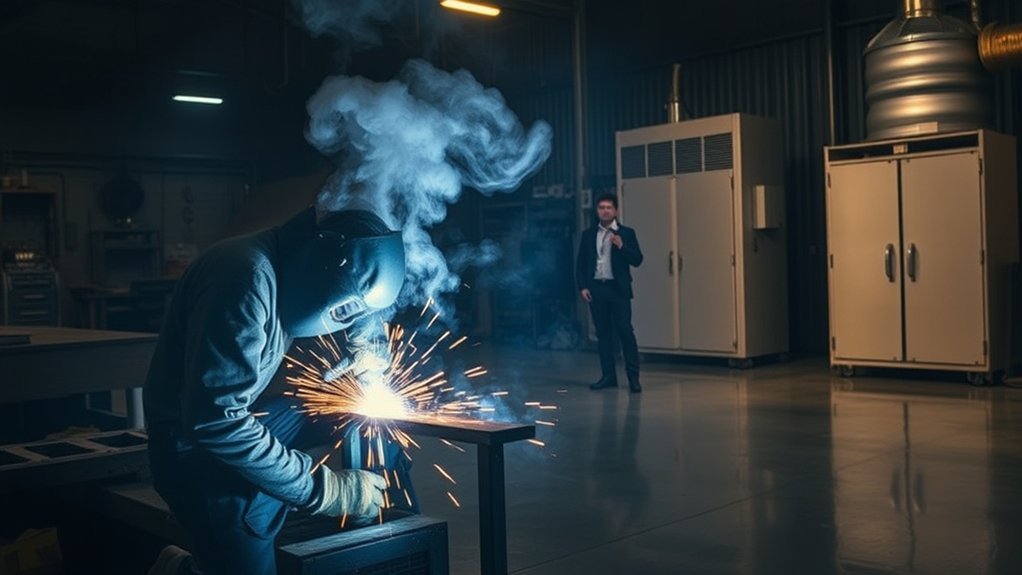
Customer reviews can help you identify shops that explain repairs clearly, keep appointments, and stand behind their work. They are less reliable as a price guide because one customer may have paid for a single tack weld while another needed a flex pipe, hangers, gaskets, or a complete assembly.
Use reviews to look for repeated comments about:
- accurate diagnosis and written estimates;
- photos of the failed area before and after repair;
- clean welds and proper exhaust alignment;
- no rattles, fumes, or warning lights after service;
- clear warranty terms and fair handling of comeback repairs.
When comparing quotes, ask each shop to price the same repair scope. A low quote that covers only one visible hole is not comparable to a quote that removes a rusted section, installs new tubing, repairs hangers, and leak-tests the entire system.

The Veepeak OBDCheck BLE is a Bluetooth OBD-II scanner designed for iOS and Android users who want an easy way to read and clear check engine light codes. It supports generic diagnostics such as freeze frame data, I/M readiness, and live sensor readings through compatible third-party apps. Built for most 1996+ vehicles in the US, it connects over Bluetooth LE and works with popular apps for everyday vehicle troubleshooting and monitoring.

This versatile Cuisinart cookware set provides essential pots and pans for everyday cooking, from sauces and soups to sautéing, simmering, and frying. The aluminum-encapsulated base promotes fast, even heating, while cool-grip handles and tight-fitting glass lids support comfortable, efficient cooking. Designed for broad compatibility, it is dishwasher safe and oven safe for flexible use across many recipes.

This versatile cookware set equips home cooks with essential pots, pans, and a steamer insert for everyday meals and larger gatherings. The aluminum-encapsulated base promotes quick, even heating, while Cool Grip handles and tight-fitting glass lids support comfortable, controlled cooking. Designed for stovetop, oven, broiler, and dishwasher use, it offers reliable performance across a wide range of recipes.
Exploring Alternatives for Exhaust Repairs
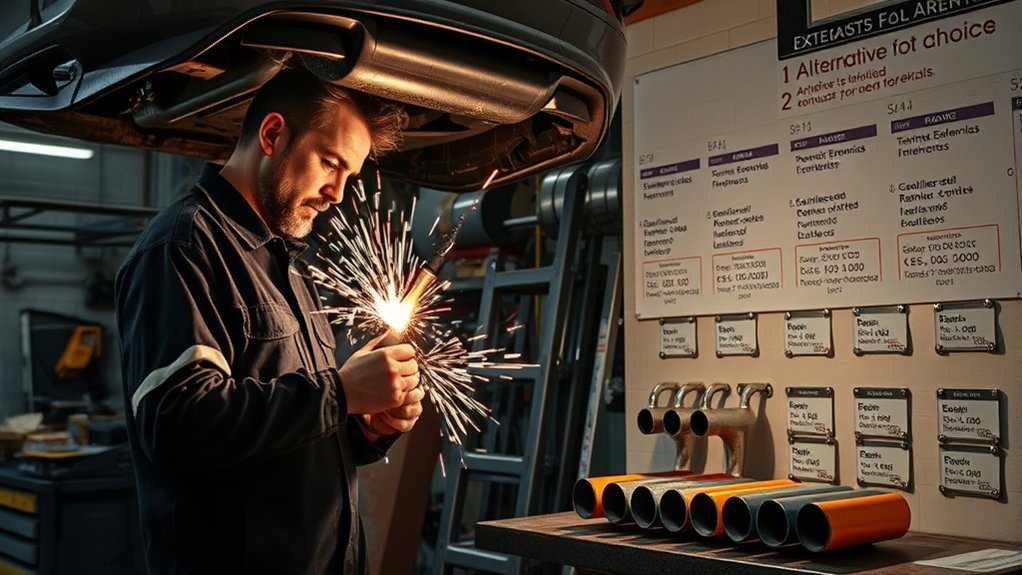
Welding is not the only repair method. Depending on the location and condition of the damage, a shop may recommend a bolt-on direct-fit part, a sleeve and exhaust clamp, a new gasket or flange, a replacement flex section, or a fabricated pipe section.
- Clamp or sleeve repair: Useful for some straight-pipe joints when enough solid metal remains. It may be removable and less expensive than welding.
- Direct-fit replacement: A bolt-on part can reduce fabrication time when the factory-style assembly is available and reasonably priced.
- Fabricated section: An exhaust shop can sometimes cut out only the failed area and bend or weld in new tubing.
- Complete component replacement: Best when a muffler, resonator, converter housing, manifold, or large pipe section is broadly corroded or damaged.
Do not authorize removal of a catalytic converter or other emissions-control device as a cost-saving shortcut. The U.S. Environmental Protection Agency states that removing a catalytic converter without an approved replacement is illegal under federal law.
Exhaust Leak Safety and When to Stop Driving
A loud exhaust is not only a noise problem. The CDC warns that even a small exhaust-system leak can allow carbon monoxide to build up inside a vehicle. Carbon monoxide is colorless and odorless, so you cannot rely on smell alone to judge the risk.
Warning: Stop driving and move to fresh air if you develop headache, dizziness, nausea, confusion, weakness, or unusual sleepiness while exhaust fumes may be entering the cabin. Seek emergency help for severe symptoms. Do not idle a leaking vehicle in a garage or other enclosed area.
Arrange prompt inspection if you notice exhaust odor in the cabin, a sudden increase in noise, a hanging pipe, visible soot near a joint, heat damage, reduced power, or a check-engine light. Tow the vehicle when a pipe is dragging, a hot component could contact fuel or wiring, or fumes are entering the passenger area.
Frequently Asked Questions
Can I weld my exhaust myself to save money?
Only attempt exhaust welding if you already have suitable welding, vehicle-lifting, fire-prevention, and ventilation skills. Underbody welding involves hot metal, sparks, electrical hazards, fumes, and nearby fuel, brake, wiring, and interior materials. OSHA requires controls for welding fumes and hot-work hazards. For most drivers, an exhaust or fabrication shop is the safer choice. Never work beneath a vehicle supported only by a jack.
What types of exhaust damage can be repaired by welding?
A localized crack, separated seam, broken joint, or short damaged section may be weldable when the surrounding metal is thick and solid. Broad rust, multiple perforations, a separating muffler shell, internal flex-pipe failure, or damage to a converter or manifold often calls for partial or complete replacement.
How long does a typical exhaust welding job take?
A straightforward inspection and weld may take about one to two hours. The welding itself may be brief, but lifting the vehicle, finding all leaks, cleaning the metal, cutting and fitting pipe, cooling the area, and leak testing add time. Rusted fasteners, tight access, or component removal can turn it into a several-hour job.
Will welding my exhaust improve vehicle performance?
Welding does not create extra performance by itself. A correct repair can restore the seal and flow the system was designed to have, which may correct noise, fumes, poor sensor readings, or drivability problems caused by a leak. A restricted pipe, poor alignment, or an incomplete repair can create new problems.
Is exhaust welding covered by a vehicle warranty?
Coverage depends on the warranty, the failed part, the cause of damage, and who performed the repair. An aftermarket repair does not automatically void the whole vehicle warranty. The FTC explains that a manufacturer may deny coverage for damage caused by a defective aftermarket part or improper installation, but it must connect that damage to the repair. Review the written warranty before authorizing work.
Can I drive with a small exhaust leak?
It is safer to have any suspected leak inspected promptly. A leak can worsen, damage nearby parts, affect emissions readings, and allow carbon monoxide into the cabin. Stop driving if fumes enter the passenger area, the pipe hangs or drags, the vehicle loses power, or anyone develops possible carbon-monoxide symptoms.
Conclusion
Exhaust welding can be an economical repair when the leak is small, accessible, and surrounded by solid metal. A realistic planning budget is often about $100–$300 for a basic weld-only repair, while fabrication, flex-pipe work, severe rust, or replacement can raise the total sharply. Compare itemized quotes, choose a shop that leak-tests its work, and treat cabin fumes as an urgent safety issue.
Sources
- AAA — Average Mechanic Labor Rate: Repair Costs in Your State — current U.S. labor-rate context.
- RepairPal — Exhaust Pipe Replacement Cost Estimate — comparison between weld-only repair and complete pipe replacement.
- CDC — Carbon Monoxide Poisoning Basics — risk of carbon monoxide entering a vehicle through an exhaust leak.
- OSHA — Welding, Cutting, and Brazing Requirements — ventilation, fire prevention, and hot-work safety.
- U.S. EPA — Transportation Air Pollution Frequently Asked Questions — federal prohibition on removing a catalytic converter without an approved replacement.
- FTC — Auto Warranties and Auto Service Contracts — how aftermarket repairs can affect warranty coverage.

Make straight, accurate cuts with your handheld circular saw using this all-metal rip fence from DEWALT. It attaches easily to compatible saws and helps you set a consistent distance from the blade for smooth, precise rip cuts. Built for durability, it is a practical accessory for improving control and consistency on a variety of cutting jobs.

OGX Extra Strength Damage Remedy + Coconut Miracle Hair Oil helps hydrate dry, coarse hair while smoothing frizz and flyaways for a silky finish. This nourishing leave-in treatment blends coconut oil, vanilla bean extract, and tiare essence to add softness, shine, and a pleasant scent. It is paraben-free and designed to support a restorative hair care routine for medium to coarse hair types.

This practical guide brings together traditional skills and self-sufficiency knowledge in one accessible reference. It helps readers learn time-tested home, craft, and survival techniques with clear guidance suited for beginners and hobbyists alike. Ideal for anyone interested in homesteading, DIY living, or preserving old-fashioned know-how.
