

Welding trade school can cost a few thousand dollars for a short public-college certificate or considerably more for a long private program. A broad planning range is about $3,000 to $25,000 for tuition and required school fees, but that is not an official national average. Your real cost depends on the school, residency status, program length, equipment, financial aid, transportation, and living expenses.
Quick Answer
Most students should plan on roughly $3,000 to $25,000 for tuition and required school fees, but there is no single national price. A short public-college certificate may cost less, while a private or longer program may cost more. Add tools, PPE, tests, transportation, and living costs before comparing aid-adjusted net prices.
Key Takeaways
- Treat national welding-school prices as planning estimates, not guaranteed rates.
- Compare each program’s full cost, including fees, tools, PPE, testing, travel, housing, and lost work time.
- A school completion certificate is not the same as passing an employer- or code-based welding qualification test.
- Public colleges, apprenticeships, grants, scholarships, VA benefits, and employer training can reduce your net cost.
- Judge value by hands-on training, verified outcomes, credentials, debt, and local job demand—not price alone.
At a Glance
| Short Certificate | Often several weeks to under one year; use roughly $3,000–$10,000 as a planning range. |
| Diploma Program | Commonly about 9–18 months; a broad planning range is $5,000–$15,000. |
| Associate Degree | Usually about two academic years; tuition and required fees may fall around $10,000–$25,000 or more. |
| Common Extra Costs | PPE, tools, books, lab or consumable fees, certification tests, transportation, housing, and lost income. |
| Best Comparison Number | Total net cost after grants and scholarships, divided by the verified training and employment outcomes you receive. |
Note: The price bands in this guide are broad budgeting estimates. Always replace them with the school’s current written tuition, mandatory fees, cost of attendance, and financial-aid offer before enrolling.
Typical Price Ranges for Welding Trade School Programs

A useful starting estimate is $3,000–$10,000 for a short certificate, $5,000–$15,000 for a longer diploma, and $10,000–$25,000 or more for an associate degree. These figures are not fixed national averages. Programs can fall below or above them.
The advertised price may also describe different things. One school may list tuition only, while another includes registration, lab time, consumables, books, and basic protective gear. A low advertised tuition can therefore produce a higher final bill than a program with a more complete published price.
| Program type | Common length | Broad tuition and fee estimate | Best suited for |
|---|---|---|---|
| Focused certificate | Several weeks to under one year | About $3,000–$10,000 | Entry-level skills or one focused process |
| Diploma | About 9–18 months | About $5,000–$15,000 | Broader shop practice and multiple processes |
| Associate degree | About two academic years | About $10,000–$25,000 or more | Technical training plus general education and possible transfer credit |
| Bachelor’s pathway | About four years | Varies widely by institution and aid | Welding engineering, engineering technology, education, inspection, or management rather than basic welder training |
Before comparing two prices, confirm whether each program charges by the credit hour, clock hour, course, semester, or full program. Also ask whether prerequisites and general-education classes are included in the published total.

This daily devotional helps parents pray purposefully for their children through a full year of Scripture readings, reflections, and guided prayer prompts. Written to encourage faithful family discipleship, it offers practical, biblically grounded support for parents who want to shape their prayers around God's Word. A foreword by Sinclair B. Ferguson adds trusted theological insight and encouragement.

Die With Zero offers a fresh perspective on personal finance by encouraging readers to use money intentionally to create memorable life experiences instead of simply accumulating wealth. Written by Bill Perkins, this book combines practical guidance with a motivating philosophy to help readers align spending, saving, and life goals for a more fulfilling future.

Stay organized with a durable 1-subject notebook set designed for school, note-taking, and digital study support. The college ruled pages resist ink bleed, tear out cleanly, and work with the Five Star Study App to create flashcards and sync notes to Google Drive. Tough pockets, a water-resistant cover, and Spiral Lock wire help protect your work throughout the year.
Types of Institutions and How Costs Differ
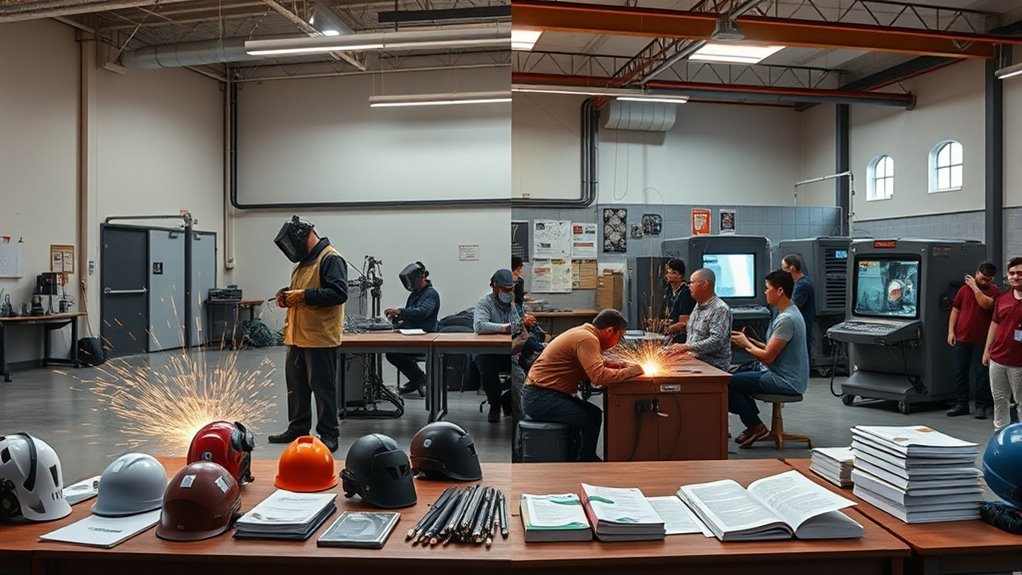
Where you train can affect both the sticker price and the amount you pay after aid.
Community and Technical Colleges
Public colleges often offer lower rates to in-district or in-state students. However, there is no dependable nationwide “$5,000 two-year program” price. You must multiply the required credits by your tuition rate and add course, lab, technology, registration, and graduation fees.
An associate degree may also include math, communication, and other general-education courses. Those classes can support future advancement or transfer, but they add time and cost compared with a focused certificate.
Private Career and Trade Schools
Private career schools may provide concentrated schedules, frequent start dates, dedicated welding booths, and fewer general-education requirements. They may also charge a higher program price. Compare the amount financed, completion rate, typical debt, equipment access, and employment reporting—not just how quickly the school says you can graduate.
Registered Apprenticeships and Employer Training
A Registered Apprenticeship combines paid work, supervised on-the-job learning, and related classroom instruction. Apprentices earn wages while developing skills, although available openings, entry requirements, and training schedules vary by employer and region.
Unions, manufacturers, shipyards, contractors, and workforce programs may also sponsor training. Ask whether the program requires an employment commitment, repayment if you leave early, union dues, tools, travel, or unpaid classroom time.
Commercial Diving and Underwater Welding
Underwater welding should not be treated as a normal welding-school specialization with a small added fee. It generally belongs to a commercial-diving career path that requires diving, life-support, emergency, medical, and underwater-work training in addition to welding skills. Compare commercial-diving programs separately from ordinary welding certificates.
Pro Tip: Ask every school for the same written items: total tuition, mandatory fees, included equipment, estimated personal supplies, certification charges, refund policy, financing terms, completion data, and employment-outcome methodology.
Program Lengths and What You Get for Your Money
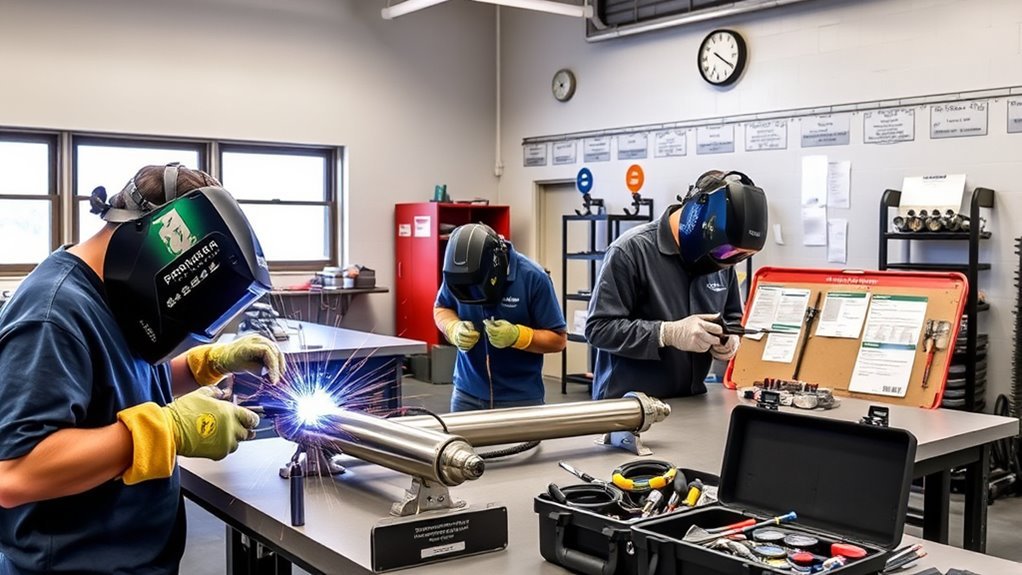
Program length affects more than tuition. It can change how many welding processes you practice, how much booth time you receive, whether general education is included, and how soon you can start earning full-time wages.
Certificate vs. Degree
A short certificate usually focuses on entry-level shop safety, blueprint basics, metal preparation, and selected processes such as shielded metal arc welding, gas metal arc welding, flux-cored arc welding, or gas tungsten arc welding.
A diploma often adds more lab hours, positions, metals, pipe work, fabrication, and advanced process practice. An associate degree may combine similar technical courses with general education, mathematics, communications, and additional fabrication or inspection topics.
A four-year welding-related degree is a different educational route. It may prepare a student for engineering, automation, quality, teaching, inspection, technical sales, or management. It is not required for most entry-level production welding jobs.
What’s Included
Do not assume that a program includes everything shown in its advertising. Request a written list covering:
- Required welding processes, positions, materials, and plate or pipe work
- Scheduled lab hours and estimated individual booth time
- Student-to-instructor ratio during shop classes
- Machines, torches, ventilation, booths, and testing equipment
- PPE, hand tools, books, online platforms, and consumables
- Blueprint reading, weld symbols, measurement, metallurgy, and fabrication
- Career services, employer visits, internships, and apprenticeship connections
- Tests or credentials included in tuition
- Transferability of credits to another college or degree
- Extra charges for failed courses, retests, or extended lab access
Note: Finishing a welding course may earn a school certificate, but it does not automatically mean you are qualified for every welding job. Employers and project codes may require a separate performance test for a specific process, material, position, thickness, or procedure.
Mandatory and Optional Additional Expenses

Tuition is only one part of the total. Build a line-by-line budget before deciding that a program is affordable.
| Expense | Possible budgeting allowance | What to verify |
|---|---|---|
| Helmet, jacket, gloves, glasses, boots, and other PPE | Roughly $200–$800 | Required ratings, approved brands, and what the school supplies |
| Hand tools and measuring tools | Roughly $100–$500 | Tool list, storage, replacement policy, and whether used tools are allowed |
| Books, software, and course materials | Roughly $100–$600 | Rental, digital-access expiration, and required editions |
| Lab, metal, gas, electrode, wire, and consumable fees | Roughly $200–$2,000 | Whether fees are per class, term, hour, or program |
| Testing and credential fees | Varies by test and facility | Application, test coupon, inspection, retest, and maintenance charges |
| Personal welding machine | Optional; commonly several hundred to several thousand dollars | Do not buy unless the school requires it or you have a safe practice location |
| Transportation and parking | Personal calculation | Daily mileage, fuel, tolls, transit, parking, and externship travel |
| Housing, food, insurance, and personal expenses | Personal calculation | Full program length, school breaks, deposits, and moving costs |
| Lost income | Hours reduced × current take-home pay | Whether daytime labs prevent full-time work |
The allowance figures above are only budgeting aids. Use the school’s required supply list and your local prices for a final calculation.
Warning: Do not buy a welding machine before confirming that you need one. Most schools provide shop machines, and home practice requires suitable electrical service, ventilation, fire controls, gas-cylinder handling, PPE, and a safe work area.
Certification, Licensing, and Testing Costs

Welding credentials use similar words but do not all mean the same thing:
- School certificate or diploma: Shows that you completed the school’s curriculum.
- Welder qualification: Shows that you passed a performance test for a defined procedure, process, material, position, or code.
- AWS Certified Welder credential: A performance-based credential processed through the American Welding Society after testing at an AWS Accredited Testing Facility.
- Inspector or advanced professional credential: A separate certification path that may require work experience, written examinations, practical testing, and higher fees.
According to the AWS price list effective January 1, 2026, the Certified Welder application fee is $70. The Accredited Testing Facility sets the price of the performance test. AWS also lists a $105 annual WeldCert Pro maintenance subscription for unlimited renewals.
The AWS Certified Welder Program requires candidates to complete a performance qualification test at an Accredited Testing Facility. Welders must then maintain the credential under the applicable AWS requirements, including purchasing the annual subscription and submitting continuity information before expiration.
There is no single national license that every welder must hold. Requirements may instead come from an employer, union, project specification, building or safety code, contractor rule, state or local authority, or customer. Check the exact job and location rather than relying on a general statement that a state does or does not license welders.
Note: A school that prepares students for certification is not necessarily including the certification test in tuition. Ask which test, code, process, position, and material are covered—and who pays if you need a retest.
Financial Aid, Scholarships, and Payment Options
Start with aid that does not have to be repaid, then compare work-based training and borrowing options.

This interactive sentence building set helps children practice early reading, writing, and grammar through hands-on play. Color-coded word cards, photo cards, and punctuation pieces make it easy to build simple sentences while reinforcing capitalization, parts of speech, and sentence structure. It is a versatile learning tool for homeschool and classroom use, with included game ideas and teaching suggestions to support multiple skill levels.

These colorful answer buzzers turn lessons, review games, and family activities into lively game-show style challenges that boost participation and make learning more interactive. Each buzzer has a distinct sound to clearly identify who buzzed in first, while the durable, palm-sized design makes them easy for kids and adults to use in classrooms, homeschools, and group settings.

BIC Cristal Xtra Smooth Blue Ball Pens deliver dependable everyday writing with a medium 1.0mm point and fluid Easy-Glide System Ink. Designed to create clear, dark lines, these pens are ideal for notes, lists, journaling, schoolwork, and office tasks. The convenient 10-count pack offers reliable performance for home, work, or classroom use.
FAFSA, Grants, and Federal Loans
The Free Application for Federal Student Aid can be used when applying to participating colleges, career schools, and trade schools. Completing the FAFSA does not guarantee aid or make every welding course eligible. The school’s financial-aid office determines the final offer after admission.
Use Federal Student Aid’s career-school guidance and College Scorecard to compare annual cost, graduation, debt, repayment, and post-enrollment earnings where data are available.
Grants generally do not need to be repaid if you remain eligible and meet the program rules. Loans must be repaid with interest. Compare the interest rate, fees, total amount borrowed, expected monthly payment, and repayment protections before accepting a loan.
Welding Scholarships
The AWS Foundation scholarship portal includes a Welder Training Scholarship for students seeking certificate training lasting less than two years, along with other district, section, and national awards. Eligibility and deadlines change, so check the official application portal for the current cycle.
Also search for awards from your school, state workforce agency, local AWS section, employer, union, community foundation, and industry association. Apply even when an award is smaller; several modest grants can cover PPE, tools, tests, or transportation.
Veterans Benefits and Workforce Programs
Veterans, service members, and eligible family members should use the GI Bill Comparison Tool to confirm that the exact school and program are approved and to estimate available benefits.
Local American Job Centers and workforce agencies may help eligible students pay for occupational training under available federal, state, or local programs. Funding, approved-provider lists, and eligibility vary by area.
Payment Plans and Employer Assistance
A school payment plan may reduce the amount due at enrollment, but check setup fees, late fees, cancellation terms, and whether unpaid balances prevent class attendance or transcript release.
Some employers offer tuition assistance or reimbursement. Obtain the terms in writing. Look for minimum grades, approved-school rules, service commitments, annual limits, tax treatment, repayment clauses, and the date reimbursement is paid.
Pro Tip: Compare schools using net cost after grants and scholarships. Do not subtract loans from the price as though they were discounts; loans move the payment into the future and add interest.
Comparing Return on Investment by Industry and Location
Return on investment depends on your net school cost, time away from work, starting pay, local demand, overtime, travel, union status, and the type of welding you can perform.
The May 2025 Bureau of Labor Statistics wage table reports a $25.84 median hourly wage for welders, cutters, solderers, and brazers—about $53,750 a year when annualized at 2,080 hours.
The same BLS May 2025 occupational wage table reports a mean annual wage of $56,760 for the occupation. These are national figures for workers at all experience levels, not guaranteed starting salaries for new graduates.
The BLS Occupational Outlook Handbook also projects about 45,600 openings per year, on average, from 2024 through 2034. Many openings are expected to come from workers changing occupations or leaving the workforce rather than rapid growth in total employment.
Estimate a Simple Payback Period
Use this rough calculation:
Net training cost ÷ expected monthly increase in take-home pay = estimated payback months
For example, suppose your final net training cost is $9,000 and the training is expected to increase your take-home pay by $750 per month. The simple payback estimate is 12 months. This is only a planning tool. It does not account for taxes, loan interest, overtime changes, unemployment, raises, relocation, or the income you gave up while studying.
| Scenario | Possible advantage | Main risk to check |
|---|---|---|
| Low-cost public certificate near home | Lower tuition and little or no relocation expense | Limited processes, lab access, scheduling, or local openings |
| Private accelerated program | Focused schedule and earlier completion | Higher debt or an unrealistic placement promise |
| Associate degree | Broader education and possible transfer value | More time, general-education expense, and delayed full-time earnings |
| Registered Apprenticeship | Paid work and structured skill development | Competitive entry, fixed work schedule, or limited local openings |
| Specialty training in another region | Access to employers or processes unavailable locally | Housing, travel, relocation, and no guarantee of specialty employment |
Compare wage data for the state and metropolitan area where you expect to work. Also check actual entry-level job advertisements. A national median should not be used as a promised first-year salary.
How to Choose the Most Cost-Effective Welding Program
The cheapest program is not automatically the best value, and the most expensive program is not automatically the best training. Use the same process for every school.
Compare Total Costs
Calculate the full amount with this formula:
Tuition + mandatory fees + PPE + tools + books + tests + transportation + living costs + lost income − grants and scholarships = estimated net program cost
Keep loans out of the subtraction. A loan changes when you pay; it does not reduce the underlying cost.
Ask each school for a current cost-of-attendance sheet and written program estimate. Confirm whether tuition can increase before you finish and whether repeating a class creates new tuition, material, or lab charges.
Evaluate Funding Options
Use this order when possible:
- Grants and scholarships
- Paid apprenticeship or employer-sponsored training
- Veterans or workforce benefits for which you qualify
- Current income and an affordable payment plan
- Federal student loans after reviewing the full terms
- Private financing only after comparing rates, protections, fees, and repayment costs
Verify Accreditation and Aid Eligibility
Search the school in the U.S. Department of Education Database of Accredited Postsecondary Institutions and Programs. Accreditation can affect federal aid, credit transfer, employer acceptance, and further education.
Accreditation is not the same as AWS welder certification. A school can be institutionally accredited without automatically making every graduate an AWS Certified Welder. Likewise, welding instruction may be useful even when a provider is not a traditional accredited college, but aid, transfer, and employer acceptance may differ.
Check Program Quality and Outcomes
Ask for evidence rather than relying on general statements such as “high placement” or “industry recognized.” Useful questions include:
- How many scheduled hours are spent welding rather than watching demonstrations?
- How many students share each booth or machine?
- Which processes, positions, materials, and thicknesses will I practice?
- Which credentials or performance tests are included?
- What percentage of the latest cohort completed the program?
- How is job placement defined, and what reporting period is used?
- How many graduates found welding-related work rather than any job?
- What was the median debt of students who completed?
- Which local employers hired recent graduates?
- Can I speak with a current student or recent graduate?
- Are credits transferable, and which schools have accepted them?
- What happens if equipment is unavailable or a lab is canceled?
Watch for Enrollment Red Flags
Warning: Be cautious when a school pressures you to sign immediately, will not provide a full written price, treats loans as discounts, guarantees employment or salary, hides refund terms, or claims one certificate qualifies you for every welding job.
Read the enrollment agreement and cancellation policy before paying a deposit. Keep copies of advertisements, cost sheets, aid offers, financing documents, emails, and certification promises.
Frequently Asked Questions
Can I work while attending welding trade school?
Yes, depending on the program schedule. Evening, weekend, and part-time options may make employment easier, while daytime lab blocks can limit work hours. Include reduced income, commuting, sleep, homework, and physical recovery in your plan. Missing shop practice can slow skill development, so review attendance rules before committing to a work schedule.
Are online welding courses accepted by employers?
Online courses can teach safety concepts, blueprint reading, weld symbols, metallurgy, and process theory. They cannot replace supervised practice and a hands-on performance test when a job requires proof that you can produce an acceptable weld. Favor programs that combine online theory with documented in-person lab work.
What health risks come with welding training?
Welding can expose students to metal fumes, gases, ultraviolet and infrared radiation, burns, eye injury, electrical shock, fire, noise, and material-specific hazards. Follow the school’s procedures for ventilation, hot work, cylinder handling, PPE, eye protection, hearing protection, and respirator use. OSHA notes that many risks can be controlled through proper work practices and protective equipment.
Do employers reimburse tuition after hiring graduates?
Some employers provide tuition assistance or reimbursement, but it is not guaranteed. The policy may limit eligible schools, courses, grades, annual payments, or reimbursement dates. It may also require you to remain employed for a set period or repay the benefit if you leave early. Obtain the full agreement before relying on it.
How quickly do welding certifications expire?
There is no universal expiration period. Renewal and continuity rules depend on the issuing organization, code, process, employer, and project. Under the current AWS Certified Welder system, welders purchase an annual WeldCert Pro subscription and submit maintenance information before expiration to verify continued use of the welding process.
Is welding school required to become a welder?
Not always. Some welders learn through Registered Apprenticeship, military service, an employer, a union, high school career education, or supervised entry-level work. Formal school can provide structured practice and broader exposure to processes, but employers may still require a job-specific performance test.
Can FAFSA help pay for welding trade school?
It can when the student, school, and program meet federal aid requirements. Submit the FAFSA and add each school you are considering. The school’s financial-aid office issues the final aid offer after admission. Compare grants, loans, work-study, and the remaining net cost rather than assuming the advertised tuition will be fully covered.
Should I buy a welding machine before starting school?
Usually not. First confirm whether the school requires a personal machine; many provide all major shop equipment. Buying too early can leave you with the wrong process, power requirement, accessories, or duty cycle. Home practice also requires a safe location, suitable electrical service, ventilation, fire protection, PPE, and proper cylinder storage.
Conclusion
Welding trade school may cost about $3,000–$25,000 for tuition and required fees, but the useful number is your full net cost after grants and scholarships. Add PPE, tools, materials, testing, transportation, housing, and lost income before comparing programs.
Do not assume that a higher price produces better employment results. Verify accreditation, hands-on hours, equipment access, included credentials, completion, debt, and job-placement reporting. Compare formal school with apprenticeship and employer-sponsored routes, then choose the option that builds the skills required by employers in the region and industry where you plan to work.
Sources
- U.S. Bureau of Labor Statistics — May 2025 Occupational Employment and Wage Statistics — national employment, median hourly wage, and mean annual wage for welders, cutters, solderers, and brazers.
- Federal Student Aid — Choosing a College or Career School — net price, completion, debt, repayment, and earnings comparisons.
- U.S. Department of Education — College Accreditation — accreditation guidance and the recognized-institution database.
- American Welding Society — Certified Welder Program and 2026 Program Price List — performance testing, application fees, and credential maintenance.
- Occupational Safety and Health Administration — Welding, Cutting, and Brazing Hazards — fumes, radiation, burns, eye damage, electrical hazards, and protective controls.
- U.S. Department of Veterans Affairs — GI Bill Comparison Tool — approved programs and estimated education benefits.

Ticonderoga wood-cased pencils deliver smooth, reliable writing with an exclusive #2 graphite formula that produces consistent, bold lines. Made with premium wood for easy sharpening and minimal breakage, these pre-sharpened pencils also feature a latex-free eraser that removes marks cleanly. Trusted by teachers and suitable for kids, they offer dependable performance for school, office, and everyday writing tasks.

Aegend Swim Goggles are designed to help swimmers enjoy a clear, comfortable, and secure fit in the pool. Built for adults and youth, they aim to reduce leaking and provide full eye protection for training, recreation, and water sports. Their versatile design makes them a practical choice for men and women looking for dependable swim eyewear.

The U.S. Polo Assn. Women's Analog Watch blends classic style with everyday versatility, featuring a gold-tone dial, Roman numeral markers, and a crystal-embellished bezel for a polished look. Its stainless steel bracelet adds durability and comfort, while the adjustable fit makes it suitable for wrists from 5.5" to 8". Designed to elevate both formal and casual outfits, this timepiece offers an elegant finishing touch for any occasion.
