In an aluminum vs plastic welding cost comparison, aluminum welding is usually more expensive than basic thermoplastic welding for a comparable one-off repair, but the gap is not fixed. The real price depends on the process, part size, joint access, material identification, strength requirements, inspection level, finishing, and production volume. A simple plastic repair may need only a controlled hot-air tool and matching rod, while structural aluminum may require an AC-capable TIG or aluminum-ready MIG system, shielding gas, careful cleaning, and a qualified operator. Industrial plastic fabrication, however, can use costly extrusion or automatic welding equipment and may exceed the cost of some aluminum jobs.
Quick Answer
Yes, aluminum welding usually costs more than a basic thermoplastic repair because it often needs more expensive equipment, shielding gas, surface preparation, and skilled labor. Plastic welding becomes more expensive when it requires industrial extrusion equipment, precise resin matching, long sealed seams, difficult access, or strict testing and cosmetic standards.
Key Takeaways
- Basic hot-air plastic repairs normally have the lower entry cost.
- Aluminum often costs more because of shielding gas, oxide removal, wire-feeding needs, heat control, and operator skill.
- Professional plastic-welding equipment ranges from handheld tools to multi-thousand-dollar extrusion and automatic systems.
- The cheapest method is the one that meets the required strength, seal, appearance, safety, and service life with the least rework.
At a Glance
| Basic One-Off Repair | Common thermoplastic welding is usually cheaper. |
| Structural or High-Integrity Joint | Aluminum often has the higher labor and quality-control cost. |
| Industrial Plastic Fabrication | Plastic can cost as much as or more than aluminum when extrusion, automation, testing, or long sealed seams are required. |
| Best Cost Metric | Compare total installed cost, expected rework, inspection, downtime, and service life—not machine price alone. |
Aluminum vs Plastic Welding Cost: Materials, Consumables, and Equipment
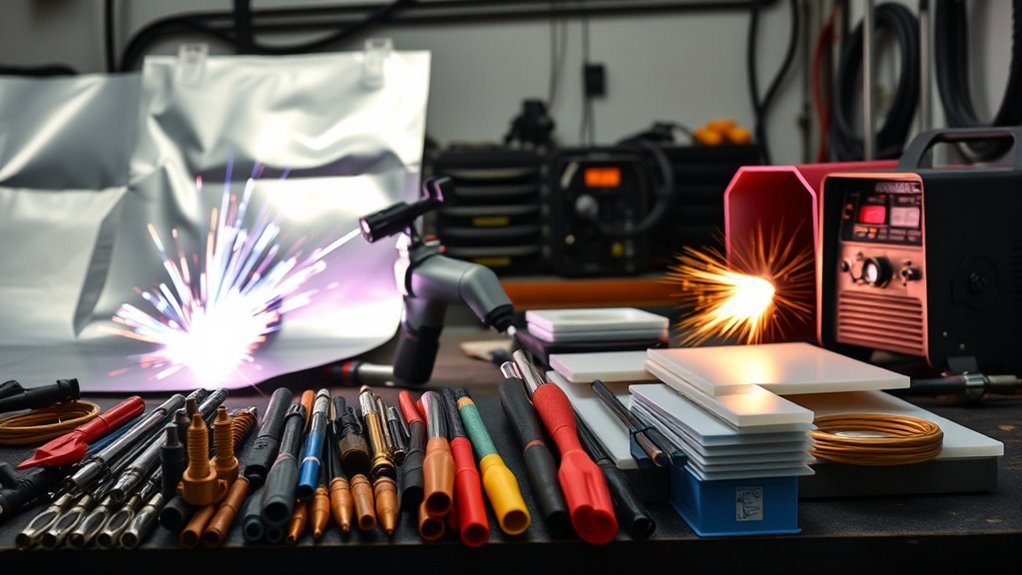
The cost difference starts with the type of equipment each joint needs. It then grows or shrinks based on consumables, preparation, labor, inspection, and rework. For stand-alone price guides, see our aluminum welding cost guide, our plastic welding cost guide, and the general welding cost guide.
Equipment and Setup Costs
Aluminum TIG welding commonly needs an AC-capable power source, TIG torch, work lead, foot or hand control, regulator, shielding-gas cylinder, and suitable tungsten and filler metal. Aluminum MIG may need a spool gun or push-pull feeding system because soft aluminum wire can be difficult to feed through a long conventional liner. Some machines also require a 240-volt circuit for their full output.
Basic plastic welding can use a temperature-controlled hot-air tool, the correct nozzle, and compatible welding rod. That setup is usually less expensive than a complete aluminum TIG package. However, professional plastic equipment is not always cheap. In July 2026, Leister listed a TRIAC ST professional hand tool at about $519, while its WELDPLAST S2 PVC extrusion welder was listed at about $6,300. For comparison, Lincoln Electric listed its AC/DC Square Wave TIG 200 at a $2,779.99 MSRP. These listing prices were not re-checked when this article was updated and may have changed, so confirm them on the manufacturer pages.
Note: Equipment prices change and package contents differ. Compare complete, job-ready systems—including power, gas, torches, nozzles, accessories, and safety equipment—not bare machine prices.
Consumables and Preparation
Aluminum usually adds recurring costs for argon shielding gas, filler rod or wire, tungsten or MIG-gun consumables, cleaning solvent, dedicated stainless-steel brushes, and replacement contact tips or liners. The surface must be free of oil, moisture, dirt, and oxide contamination. Filler selection also matters: 4043, 4943, and 5356 have different strength, crack-resistance, temperature, anodizing, and feedability characteristics, so 5356 is not a universal choice.
Plastic welding usually consumes matching thermoplastic rod or sheet material and may need specialized nozzles, welding shoes, scrapers, reinforcement mesh, or test coupons. The filler must be compatible with the base resin. Unknown, painted, contaminated, UV-degraded, or mixed plastics can add identification and preparation time—or make a reliable fusion repair impractical.
Labor, Inspection, and Rework
For many jobs, labor is more important than consumable cost. Aluminum may require precise fit-up, tacking, heat control, cleaning between operations, distortion correction, and cosmetic finishing. Plastic may require slow hand-welding passes, careful pressure and speed control, trimming, leak testing, or repeat work when the resin or temperature is wrong.
The cheapest machine does not guarantee the cheapest joint. First-pass quality, rework, testing, and downtime often decide the final cost.
Skill, Training, and Labor Time Differences
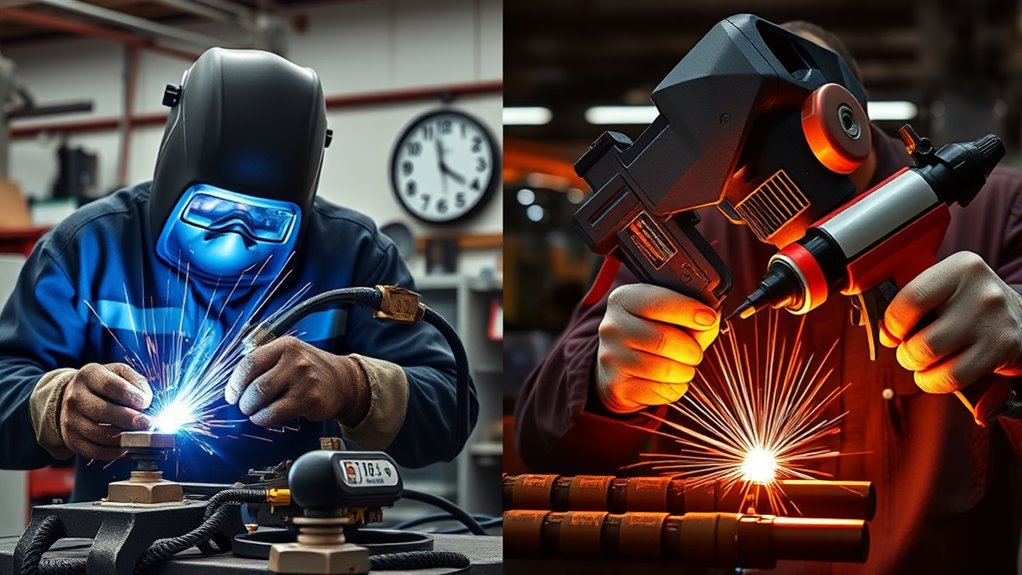
Aluminum often carries a higher labor rate because the operator must manage a narrow process window. Aluminum transfers heat quickly, forms a tenacious oxide layer, and can develop porosity, lack of fusion, burn-through, or distortion when cleaning, shielding, fit-up, or heat input is poor. MIG operators must also control wire feeding and use the correct drive rolls, liner, spool gun, or push-pull system.
Plastic welding has a lower learning barrier only for simple, noncritical repairs. Professional work still requires correct polymer identification, compatible filler, clean surfaces, controlled temperature, steady pressure, and consistent travel speed. Tank, pipe, geomembrane, flooring, roofing, and appearance-critical repairs may require trained technicians, approved procedures, test welds, and documented inspection.
Neither process has one universal certification rule. Qualification depends on the industry, contract, code, employer, and risk of failure. Structural aluminum work may fall under an adopted code such as AWS D1.2, while plastic fabrication may follow manufacturer procedures, project specifications, or application-specific standards.
Process Complexity and Quality Control Requirements
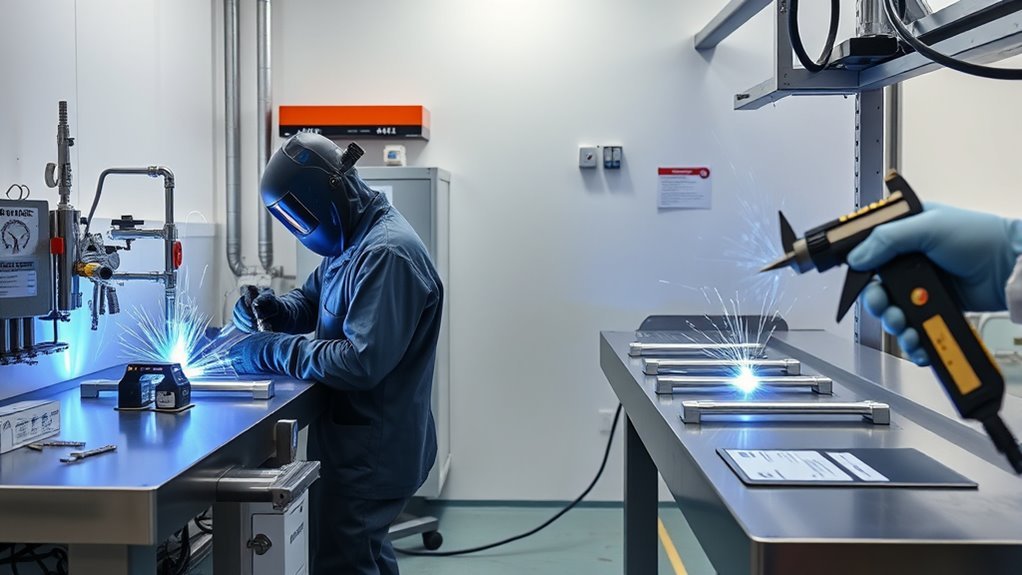
Aluminum welding quality depends on alloy and temper, joint design, thickness, process, shielding, filler metal, heat input, and cleaning. AC TIG provides oxide-cleaning action, but the work still needs proper mechanical and solvent cleaning. MIG may be faster for production, while TIG often offers more control for thin, detailed, or cosmetic work. Inspection can range from visual checks to dye penetrant, radiography, ultrasonic testing, destructive coupons, or code-required procedure and welder qualification.
Plastic welding has a different set of controls. Only thermoplastics can normally be fusion welded; thermosets do not remelt in the same way. The operator must identify the resin, confirm filler compatibility, set the correct temperature, and balance pressure with travel speed. Leister notes that plastic welding depends on the relationship between temperature, pressure, and speed, and that extrusion welding generally requires filler made from the same plastic as the base material.
Quality checks for plastic may include visual bead inspection, bend or peel tests, spark testing, vacuum-box testing, air-channel testing, pressure testing, or destructive samples. The correct method depends on whether the joint is a cosmetic repair, a roof membrane, a chemical tank, a pipe, or a containment liner.
Warning: Both processes create hazards. Metal welding can expose workers to fumes, gases, ultraviolet radiation, burns, electrical shock, and oxygen-deficient atmospheres. Heating plastics can release irritating or toxic fumes that vary by resin and additives. Use suitable ventilation, PPE, fire controls, and the product safety data sheet. Do not heat or weld unidentified plastic.
Typical Applications and Lifecycle Cost Considerations
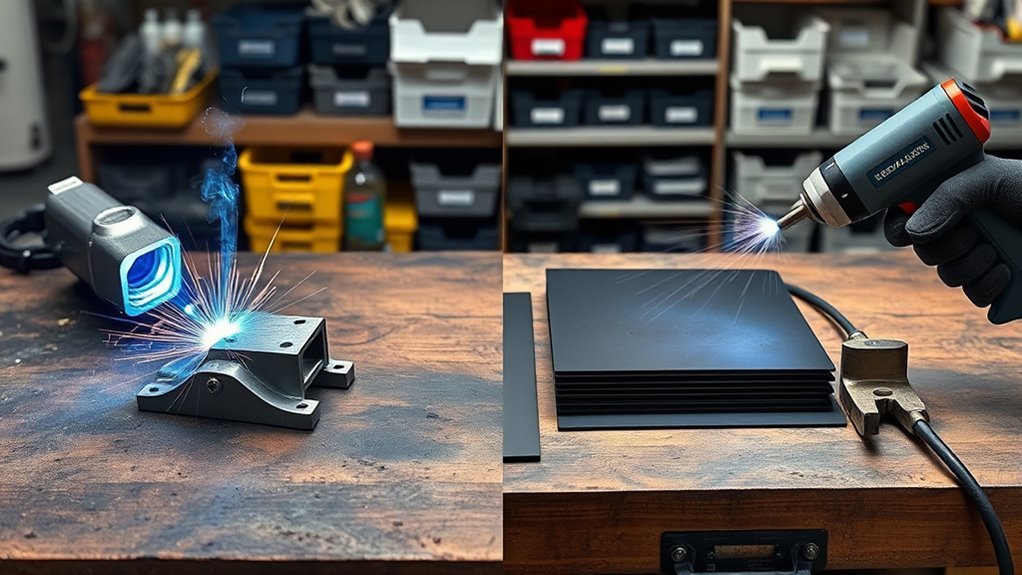
A fair comparison starts with the service requirements. Aluminum and thermoplastics are not interchangeable in many applications, so the lowest repair price may not deliver the needed strength, temperature resistance, chemical resistance, stiffness, weight, appearance, or life span.
Where Aluminum Often Makes Sense
Aluminum is commonly selected for lightweight structural frames, transportation parts, marine components, ladders, platforms, housings, heat-transfer equipment, and fabricated assemblies. Its higher welding cost may be justified when the part needs stiffness, fatigue performance, heat resistance, dimensional stability, or a code-controlled structural joint.
Do not assume every aluminum repair is durable or economical. The alloy, temper, crack location, prior service damage, corrosion, heat-affected zone, and loading must be evaluated. A repair near a highly stressed or safety-critical area may need engineering review or replacement instead.
Where Plastic Welding Often Makes Sense
Thermoplastic welding is useful for chemical tanks, piping, liners, roofing membranes, flooring, vehicle trim, housings, ducts, tarpaulins, and corrosion-resistant equipment. Plastic can offer low weight and strong chemical resistance, and a small repair may be completed on site with modest equipment.
The advantage disappears when the resin is unknown, incompatible, badly degraded, contaminated, reinforced, multilayered, or exposed to a service temperature or chemical that the repaired joint cannot handle. Some assemblies are better replaced, mechanically fastened, bonded with an approved adhesive, or redesigned.
How to Calculate Total Lifecycle Cost
Use the same cost structure for both options:
Total installed cost = equipment allocation + setup + preparation + consumables + labor + inspection + finishing + expected rework + downtime.
Then add lifecycle factors:
- Expected service life: How long should the repaired or fabricated joint remain acceptable?
- Failure consequence: Would failure cause only a cosmetic issue, or could it release liquid, stop production, or create a safety hazard?
- Repair access: Will future service require disassembly, travel, confined-space controls, or production shutdown?
- Replacement interval: Is repeated low-cost repair still cheaper than one higher-quality repair or full replacement?
- End-of-life value: Aluminum has established recycling markets, while plastic recyclability depends heavily on resin type, contamination, additives, and local collection systems.
When Plastic Welding Becomes the More Expensive Choice
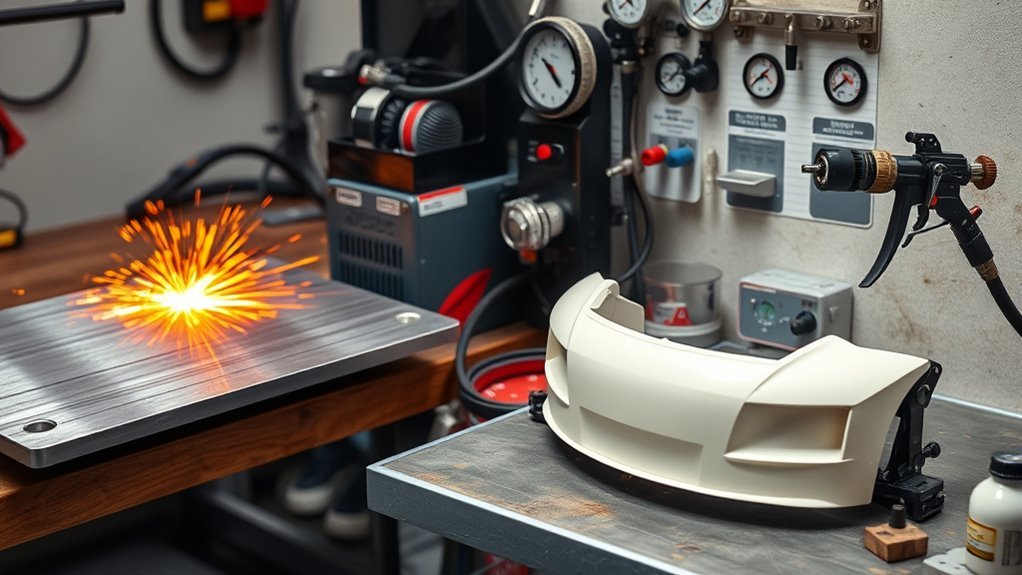
Plastic welding can overtake aluminum welding in cost when the job moves beyond a small, accessible repair. Common cost escalators include:
- Industrial equipment: Extrusion welders, automatic membrane welders, data-logging systems, and application-specific tooling can cost thousands of dollars.
- Material identification: The shop may need testing or manufacturer records to determine the resin and compatible filler.
- Long or thick seams: Large tanks, liners, pipes, and heavy sheet may require extrusion welding, multiple passes, or extensive edge preparation.
- Leak-tight or pressure service: Test welds, documented procedures, pressure testing, spark testing, or destructive coupons add time.
- Restricted access: Corners, internal seams, and installed equipment may need custom shoes, small tools, disassembly, or slower hand welding.
- Appearance standards: Color matching, flush trimming, grain restoration, and invisible vehicle or consumer-product repairs increase labor.
- Degraded material: UV damage, stress cracking, chemicals, contamination, and previous repairs can lower first-pass success.
Plastic also loses its apparent price advantage when repeated failures create downtime. A low-cost repair that lasts only a short time may have a higher total cost than a more durable replacement or a properly engineered alternative.
Choosing the Right Method for Budget and Performance
Choose the joining process only after confirming the material and the required joint performance. Aluminum welding is not a substitute for plastic welding, and plastic welding is not a substitute for an aluminum structural joint. In many projects, the material choice is already fixed; the decision is whether to repair, replace, redesign, outsource, or buy equipment.
Information Needed for an Accurate Quote
- Base material or resin identification, alloy or grade, and thickness
- Joint type, total weld length, position, and access
- Photos showing the full part, crack, surrounding damage, and backside access
- Required strength, leak tightness, appearance, and service temperature
- Chemical, weather, vibration, fatigue, or load exposure
- Inspection, code, documentation, and warranty requirements
- Whether the work is in a shop, in the field, or during a production shutdown
Pro Tip: Ask for an itemized quote that separates preparation, welding, finishing, inspection, travel, and expected rework. That makes two bids easier to compare and reveals whether replacement is more economical than repair.
Simple Decision Rules
- Choose a basic plastic repair when the thermoplastic is known, the damage is small, the joint is noncritical, and a matching filler and controlled hot-air process are available.
- Choose professional plastic fabrication for tanks, pipes, membranes, long seams, pressure or leak-tight service, and jobs that require documented testing.
- Choose aluminum welding when the part is aluminum and the repair can restore the required structural, dimensional, thermal, or cosmetic performance.
- Replace or redesign when the base material is unknown, badly degraded, repeatedly failing, safety-critical, or prohibited from repair by the manufacturer, engineer, insurer, or governing specification.
Frequently Asked Questions
Can either method be reversed or recycled more easily?
Neither welded joint is normally “reversed” without cutting, machining, or reheating and damaging the joint area. Aluminum can be remelted through established recycling systems, although alloy mixing and contamination still matter. Thermoplastic can sometimes be mechanically recycled, but acceptance and material quality depend on resin type, additives, contamination, and local processing capability.
Do environmental regulations affect welding costs differently?
Yes, but there is no universal rule that one process always costs more. Aluminum welding may require fume control, shielding-gas management, hot-work controls, and waste handling. Plastic welding may require local exhaust ventilation and resin-specific controls for fumes and additives. Location, material, coatings, production volume, and workplace rules determine the compliance cost.
How does joint accessibility affect the method and price?
Poor access increases setup and labor for both methods. Aluminum may need a smaller torch, remote control, backing, purge arrangement, fixture, or part removal. Plastic may need a compact nozzle, custom welding shoe, internal access, or disassembly. Restricted positions also make consistent heat, pressure, shielding, and inspection harder.
Are hybrid metal-plastic assemblies common and costly?
They are common in vehicles, appliances, tanks, electronics, and industrial equipment. Aluminum cannot be fusion welded directly to ordinary thermoplastic with standard TIG, MIG, or hot-air tools. The assembly usually relies on mechanical fasteners, inserts, adhesives, overmolding, seals, or specialized joining technology. Tooling, corrosion isolation, thermal expansion, sealing, and testing can make the assembly expensive.
What are typical warranty differences between the two methods?
There is no dependable five-to-ten-year versus one-to-three-year rule. Warranty length and exclusions depend on the equipment maker, repair shop, original product manufacturer, application, and whether the repair follows an approved procedure. Ask whether the warranty covers only workmanship or also leakage, cracking, finish, removal, shipping, and consequential damage.
Can every type of plastic be welded?
No. Fusion welding is mainly used for compatible thermoplastics because they soften when heated and can solidify again. Thermoset plastics do not remelt in the same way. Multilayer, reinforced, contaminated, unknown, or heavily degraded plastics may also be unsuitable for a dependable welded repair.
Which option is cheaper for a one-time DIY repair?
A small repair on a known, common thermoplastic is usually cheaper to attempt because the equipment and filler can cost less. DIY aluminum welding generally needs a larger setup and more practice. Safety-critical, load-bearing, pressure-containing, fuel-related, or unknown-material repairs should be evaluated by a qualified professional rather than chosen by tool cost.
Conclusion
Aluminum welding is usually the more expensive option when you compare it with a simple repair on a known thermoplastic. Its equipment, shielding gas, cleaning, filler selection, heat control, labor, and inspection often raise the installed cost. That does not make plastic welding automatically cheap. Industrial equipment, long sealed seams, difficult access, material identification, testing, and repeat failures can push plastic-welding costs above an aluminum job. Compare the complete process and required service life, then choose the method that meets the specification with the lowest risk of rework or failure.
Sources
- Occupational Safety and Health Administration: Welding, Cutting, and Brazing Hazards — metal-welding health and safety risks.
- Miller: Cleaning and Preparing Aluminum Before Welding — oxide removal and contamination control.
- Miller Aluminum Welding Guide — filler-metal selection and process considerations.
- American Welding Society D1 Committee — scope of the structural aluminum welding code.
- Leister Plastic Fabrication Know-How — thermoplastic welding parameters, joint types, and extrusion welding.
- UK Health and Safety Executive: Controlling Fume During Plastics Processing — ventilation and plastic-fume controls.