
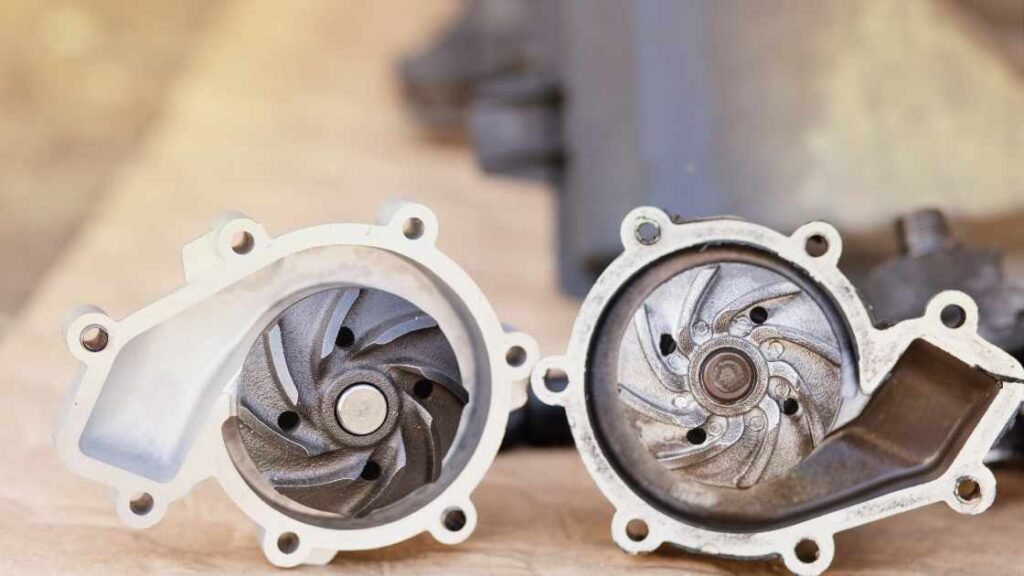
Quick answer: RepairPal’s U.S. estimate updated July 25, 2026 puts the average water pump replacement cost at $888 to $1,139. That includes about $361 to $529 in labor and $527 to $610 in parts, before taxes, fees, location adjustments, and related repairs. Kelley Blue Book puts the job at roughly two to three hours of shop time.
Your actual bill can be lower or much higher. The biggest variables are your exact vehicle and engine, how difficult the pump is to reach, whether timing-system parts must be removed, whether the pump is belt-driven or electric, where you have the work done, and what else the technician finds during the repair.
Last updated: August 11, 2026 · By: Weston Harrison
Every cost figure below was re-checked against the source pages on August 11, 2026.
For a current benchmark, see RepairPal’s water pump replacement estimate. Always use a VIN- and location-specific quote before authorizing the repair.
2026 Water Pump Replacement Cost Snapshot
| Cost Item | Current U.S. Estimate |
|---|---|
| Total replacement | $888 – $1,139 |
| Labor | $361 – $529 |
| Parts | $527 – $610 |
| Typical shop time | About 2 – 3 hours |
Source: RepairPal national estimate updated July 25, 2026; shop time per Kelley Blue Book (February 2025). These figures exclude taxes, fees, location adjustments, and related repairs.
What Three Cost Sources Actually Say
No single estimator owns this number. The three most-cited U.S. sources measure slightly different things, and reading them side by side tells you more than any one of them alone.
| Source | What It Measures | Reported Figure |
|---|---|---|
| RepairPal national estimate (updated July 25, 2026) | Parts plus labor, before taxes and fees | $888 – $1,139 |
| Kelley Blue Book, using Cox Automotive data (February 2025) | Dealership service center | About $900; parts $200 – $400, with labor roughly two-thirds of the bill |
| ConsumerAffairs cost guide (May 2026) | Independent shop vs. dealership | About $800 independent; $1,000 or more at a dealership |
Two things stand out. First, labor, not the pump, is the main expense in most quotes. Second, the sources disagree on parts: RepairPal’s $527 to $610 parts figure sits well above the $200 to $400 that Kelley Blue Book reports, which usually reflects whether gaskets, coolant, and related hardware are bundled into the parts line. When you compare quotes, compare what is inside the parts line, not just the total.
Why The “Average” Keeps Moving
Treat any published range as a snapshot, not a fixed price. RepairPal repriced this repair between our checks: a May 2026 guide cited the national range as $857 to $1,106, while the estimator showed $888 to $1,139 in late July 2026. RepairPal’s own pages can also disagree on the same day, with the Toyota Camry appearing at $611 to $791 on its model page and $632 to $815 in the national estimator’s sidebar.
That is not an error on anyone’s part. It reflects a live database of shop-reported labor times and parts prices being refreshed at different intervals. The practical takeaway: use these ranges to judge whether a quote is plausible, not to argue a shop down to the dollar.
A correct diagnosis comes before you buy a pump or approve the job. Coolant leaks, overheating, unusual noises, belt problems, thermostat faults, and other cooling-system issues produce overlapping symptoms, and a pump replaced for a thermostat’s fault is a full bill for no fix.
The Role Of A Water Pump In Your Vehicle
Your vehicle’s water pump circulates coolant through the engine and cooling system. That flow carries heat away from the engine and toward the radiator so the cooling system can control operating temperature.
Core Functions Of A Water Pump
Inside the pump, an impeller spins to push coolant through the block and back to the radiator. What drives that impeller varies by design: a serpentine or accessory belt at the front of the engine, the timing belt or timing chain, or an electric motor. Many pumps also have a small weep hole that drips coolant deliberately when the internal seal begins to fail, which is the earliest warning most drivers ever get.
- Circulates coolant through the engine
- Supports temperature control
- Helps prevent overheating when the cooling system is working correctly
Signs Of Water Pump Failure
- Coolant leak: A puddle, dripping coolant, or dried coolant residue near the pump area can indicate a leak.
- Weep hole drip: Some pumps have a built-in weep hole that drips when the pump’s seal starts to go. Kelley Blue Book lists this as a specific early symptom, and it often shows up before any temperature change.
- Abnormal noise: Grinding, squealing, or whining from the pump or belt area needs diagnosis because several rotating components can make similar sounds. A low-pitched grinding that rises in pitch with engine speed often points to a failing pump bearing or a wobbling pulley.
- Steam: Steam from under the hood can indicate severe overheating or coolant loss.
- Overheating: A rising temperature gauge or overheating warning can occur when coolant circulation is inadequate.
If the temperature warning appears or steam is coming from under the hood, pull over safely and shut the engine off. Do not continue driving an overheating vehicle, and do not open a hot pressurized cooling system.
What Affects Water Pump Replacement Cost?
Water pump replacement cost depends on much more than the pump itself. Vehicle design determines how much disassembly is required, while part choice, shop type, local labor, coolant, and related repairs affect the final invoice.
Car Make, Model, Engine, And Year
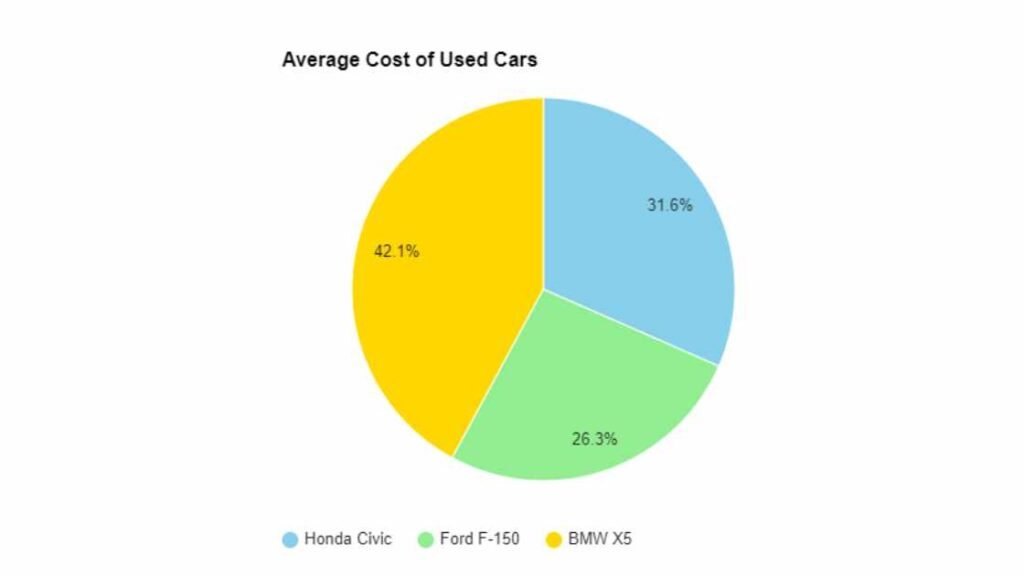
The exact vehicle matters more than the badge alone. Two model years of the same vehicle can use different engines, pump designs, and labor procedures. Current RepairPal estimates show how wide the spread runs across the market:
| Vehicle | Current RepairPal Estimate |
|---|---|
| Toyota Corolla | $499 – $637 |
| Nissan Altima | $622 – $760 |
| Honda Civic | $640 – $810 |
| Honda Accord | $763 – $1,023 |
| Honda CR-V | $814 – $1,090 |
| Ford F-150 | $957 – $1,102 |
| Chevrolet Silverado 1500 | $1,059 – $1,485 |
| BMW X5 | $1,091 – $1,320 |
| Ford Flex | $1,839 – $2,454 |
That is a spread of roughly $500 to $2,450 for the same nominal repair — a five-fold difference driven almost entirely by access. The Ford Flex is the clearest illustration: RepairPal assigns it $1,318 to $1,933 in labor alone, several times the Corolla’s entire bill, because of how deeply the pump is buried.
Note on precision: these are vehicle-level estimates, not guaranteed quotes, and RepairPal refreshes them on a rolling basis. Figures shifted by $2 to $20 between RepairPal’s model pages and its national sidebar on the day we checked. Use them as a sanity check on a written quote, not as a target price. RepairPal’s current pages for the Honda Civic, Ford F-150, and BMW X5 also show substantial differences by model year.
Belt-Driven Vs. Electric Water Pumps
Not every pump is turned by a belt. Kelley Blue Book notes that Toyota and Lexus hybrids, some Audi, Bentley, and Volkswagen models, and several BMWs use electrically driven water pumps instead. This matters for two reasons.
First, an electric pump assembly generally costs more as a part than a conventional cast belt-driven pump. Second, diagnosis changes: RepairPal notes that on cars with electric pumps, a technician checks the engine computer for fault codes and runs electrical tests rather than simply listening for a bad bearing. If you own a hybrid or a recent European model, ask the shop specifically which type your engine uses before comparing your quote to a generic average — a belt-driven benchmark can understate an electric-pump job substantially.
Dealership Vs. Independent Shop
Where you take the car is the largest variable you actually control. ConsumerAffairs reports the repair averaging around $800 at an independent shop and $1,000 or more at a dealership, and Kelley Blue Book’s roughly $900 figure is specifically a dealer-service-center number.
Dealerships typically use manufacturer-specified parts, carry make-specific training and tooling, and charge labor rates that reflect it. Independents can often use quality aftermarket parts and bill at a lower hourly rate. Neither is automatically the right call: a dealer is often worth the premium on a hybrid, a European model, or any engine where the pump sits behind the timing cover, while a straightforward belt-driven pump on a common commuter car is exactly the job a good independent does well and cheaply. Call both, and compare the itemised quotes rather than the headline totals.
OEM Vs. Aftermarket Parts
Part choice can change the quote. OEM or manufacturer-branded parts may cost more, while aftermarket pumps can offer lower-priced alternatives. Quality, warranty terms, included gaskets or hardware, and correct vehicle fitment should matter more than choosing the cheapest pump.
- OEM or manufacturer-branded: Often positioned at a higher price and built to the vehicle manufacturer’s specified application.
- Aftermarket: Can offer more price choices, but quality and warranty terms vary by manufacturer and seller.
One practical rule: on any engine where the pump sits behind the timing system, the part price is a rounding error next to the labor. Saving $40 on a pump you may have to pay several hundred dollars in labor to reach again is a poor trade. Ask what warranty the specific pump carries before choosing on price.
Pump Location And Labor
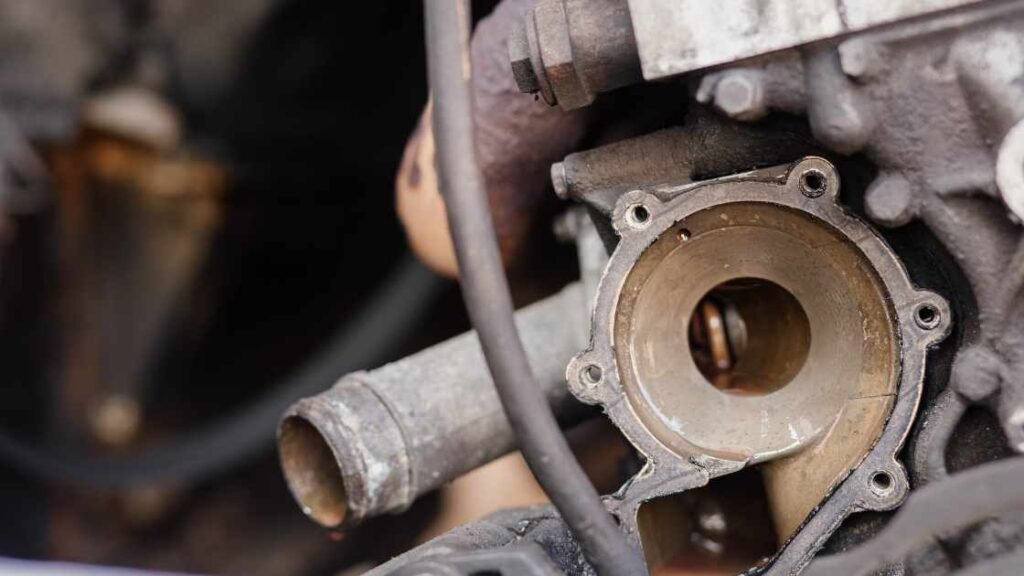
Access is the largest cost driver in this repair. An externally accessible pump may require little disassembly. A pump behind timing covers or surrounded by tightly packaged engine components can require substantially more labor.
RepairPal’s current national estimate assigns about $361 to $529 of the average job to labor, and Kelley Blue Book reports that labor makes up roughly two-thirds of a typical dealership bill. Your shop’s actual charge depends on local rates and the labor procedure for your specific engine.
Related Parts And Fluids
A complete quote may include more than the pump. Depending on the vehicle and what the technician finds, the job can also involve coolant, seals or gaskets, drive belts, timing-belt components, tensioners, a thermostat, diagnosis, taxes, fees, or other cooling-system repairs.
For context, RepairPal’s current national estimates for the jobs most often bundled with a water pump are a thermostat replacement at $609 to $709, a timing belt replacement at $889 to $1,291, and a coolant change at $437 to $508. RepairPal recommends inspecting the wider cooling system — hoses, fittings, radiator, cooling fan, and fan clutch — while the pump is out, and replacing the thermostat at the same time.
Average Price Range For Water Pump Replacement
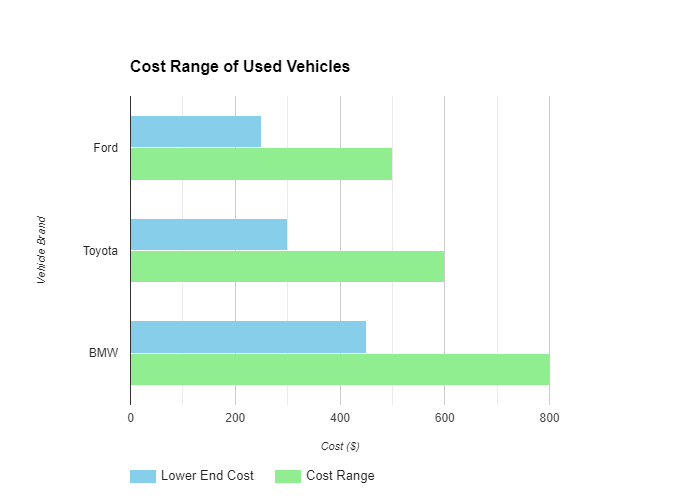
For 2026 budgeting, $888 to $1,139 is a stronger current national benchmark than a generic $400-to-$1,000 range. However, it remains an average estimate rather than a minimum or maximum. Older, simpler applications may cost less, while difficult access, expensive pump assemblies, luxury models, trucks, and related repairs can push the total higher — as high as $2,454 on the Ford Flex, on RepairPal’s own numbers.
Why Model Year Can Change The Price
Do not rely on a brand-only estimate, and do not assume newer means dearer. RepairPal’s BMW X5 pages make the point cleanly: the 2026 X5 is estimated at $968 to $1,173, while the 2014 through 2018 X5 sits at $1,333 to $1,504. The older truck is the more expensive repair, because the engine and pump design changed.
The Toyota Camry shows the same pattern in reverse. RepairPal’s overall Camry estimate is $611 to $791, but its 2018 through 2023 Camry listings run $883 to $1,083 — well above the model average pulled down by two decades of older cars.
That is why a useful estimate identifies the year, make, model, engine, and location before you compare prices — and why a quote for “a Camry” tells you almost nothing.
How Long Should The Job Take?
Kelley Blue Book puts a typical water pump replacement at two to three hours of shop time. That figure holds for an externally accessible, belt-driven pump. Where the pump is driven by or hidden behind the timing belt, the labor operation is effectively a timing belt job with a pump swap inside it, and the time can run several times longer.
Time matters because it is what you are really buying. If a shop quotes you well above the national range, the honest explanation is almost always labor hours, not markup — ask how many hours the job books at for your engine and what the shop’s hourly rate is. Two numbers you can check beat one total you cannot.
What Extra Charges Should You Ask About?
Before approving the repair, ask whether the written estimate includes:
- Water pump and gasket or seal
- Required coolant, in the specification your vehicle calls for
- Labor for removal, installation, refill, and bleeding the cooling system of air
- Any timing belt, drive belt, tensioner, idler, or pulley work
- Thermostat or other recommended cooling-system parts
- Diagnostic charges
- Shop supplies, disposal fees, and taxes
- Parts and labor warranty terms
For related cost benchmarks across other repairs, see our automotive cost guides. a dedicated cooling-system or thermostat cost article to link here
DIY Vs. Professional Service: A Cost Comparison
A DIY replacement can remove professional labor from the bill, but the difficulty varies dramatically by vehicle. RepairPal notes that most water pumps need only simple tools — yet the procedures vary wildly from car to car, and some require significant disassembly of the front of the engine. Before ordering parts, check the service procedure for your exact engine.
Three Difficulty Tiers: Which One Is Your Car?
Most vehicles fall into one of three brackets, and the bracket tells you almost everything about whether DIY makes sense.
- Tier 1 — externally accessible, belt-driven. The pump bolts to the front of the engine behind an accessory or serpentine belt. Hand tools, a drain pan, and a torque wrench. This is the two-to-three-hour job Kelley Blue Book describes and the realistic DIY candidate.
- Tier 2 — timing-belt-driven. The pump is cheap; reaching it is not. You are performing a timing belt service either way, with the alignment risk that carries. Doing this wrong can bend valves on an interference engine.
- Tier 3 — buried, electric, or behind a timing chain cover. Ford Flex territory, where RepairPal books $1,318 to $1,933 in labor alone. Special tools, extensive disassembly, and often electrical diagnosis. This is a shop job.
Materials Needed For DIY Replacement
For a Tier 1 job, the shopping list is short. Price every item against your VIN rather than a universal part listing — the wrong gasket or the wrong coolant specification will cost you the job twice.
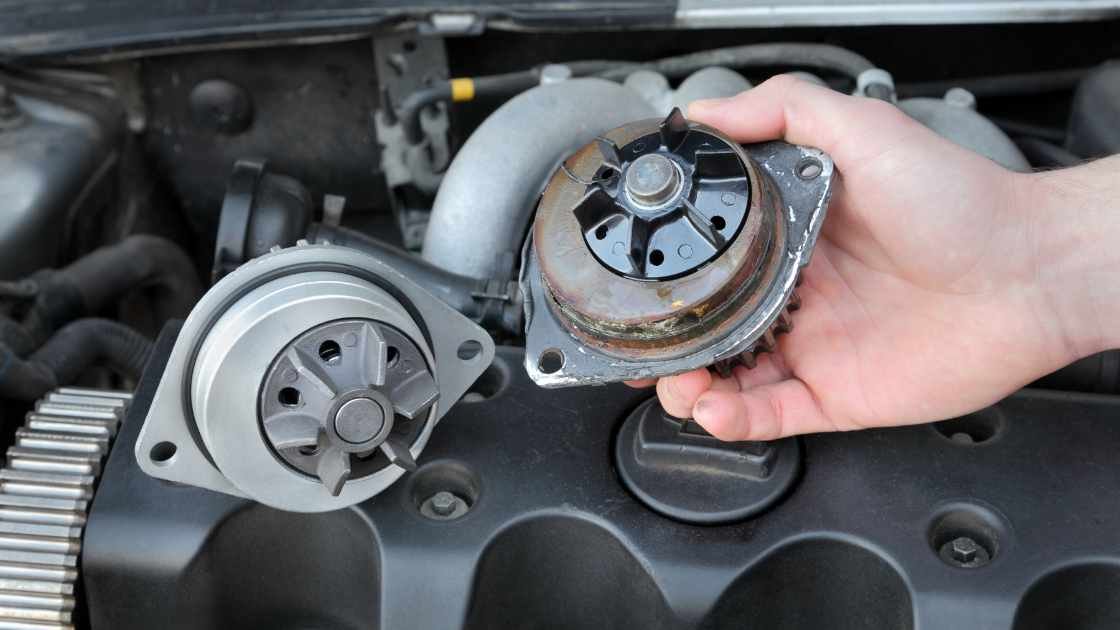
New water pump
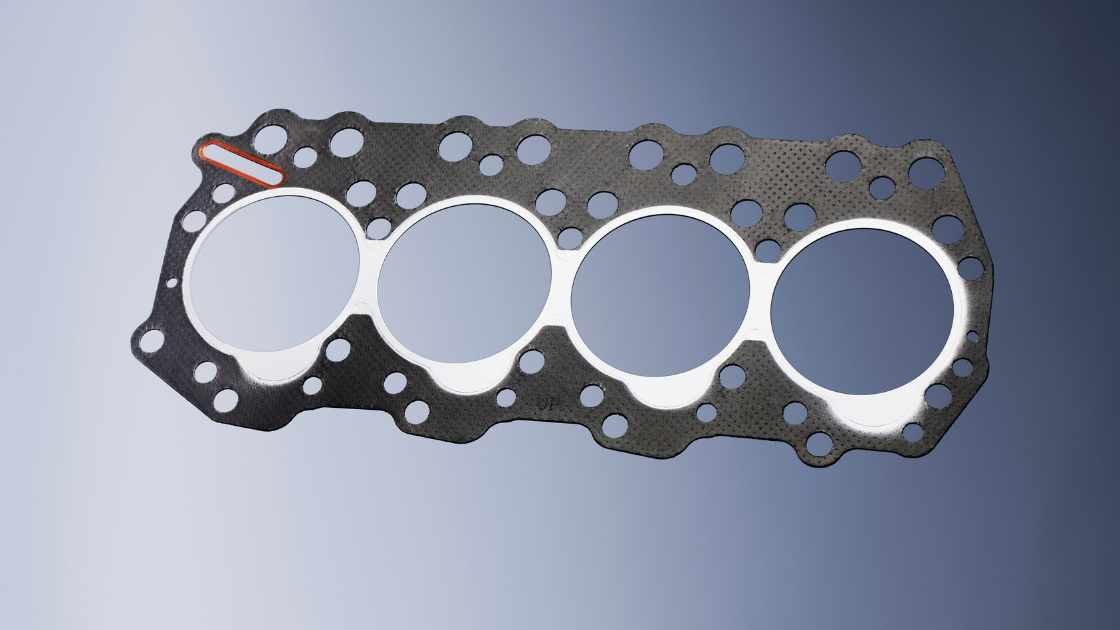
Gasket or gasket sealant
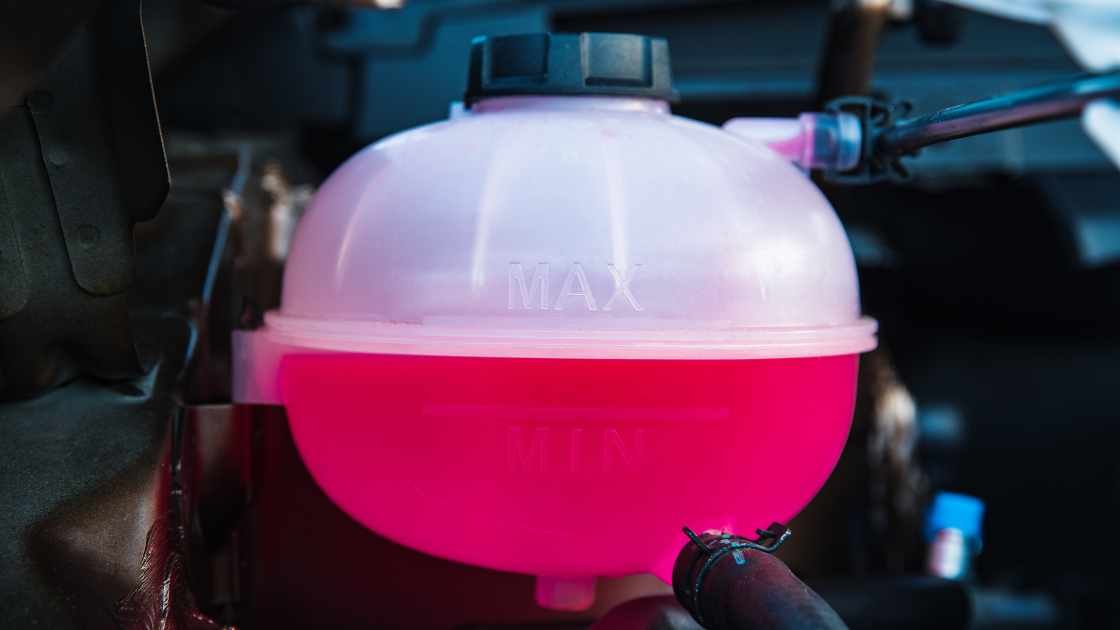
Coolant
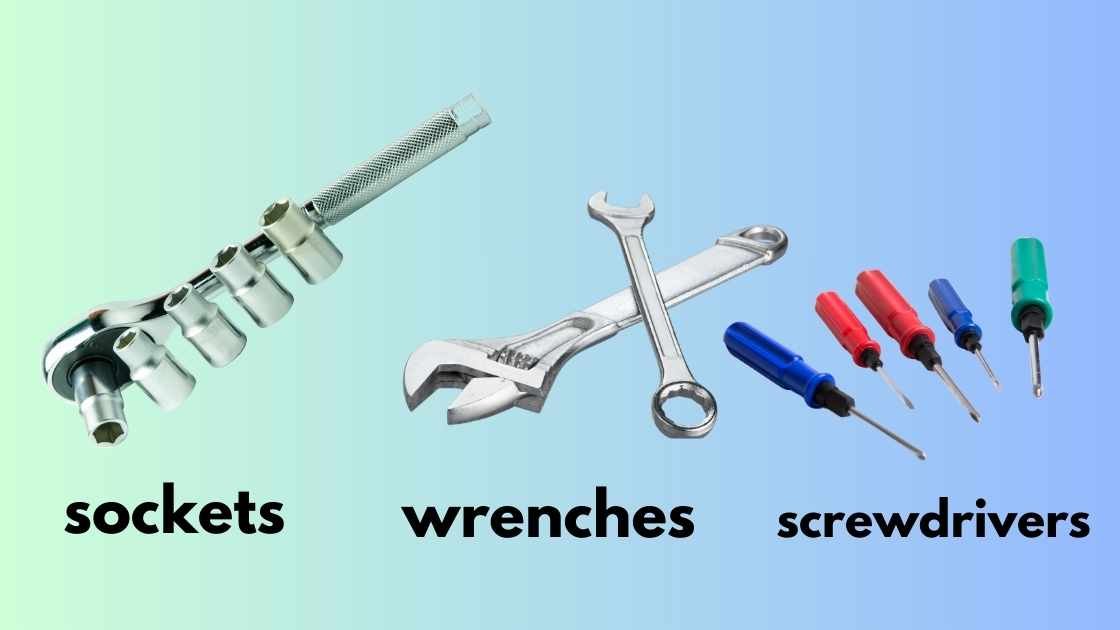
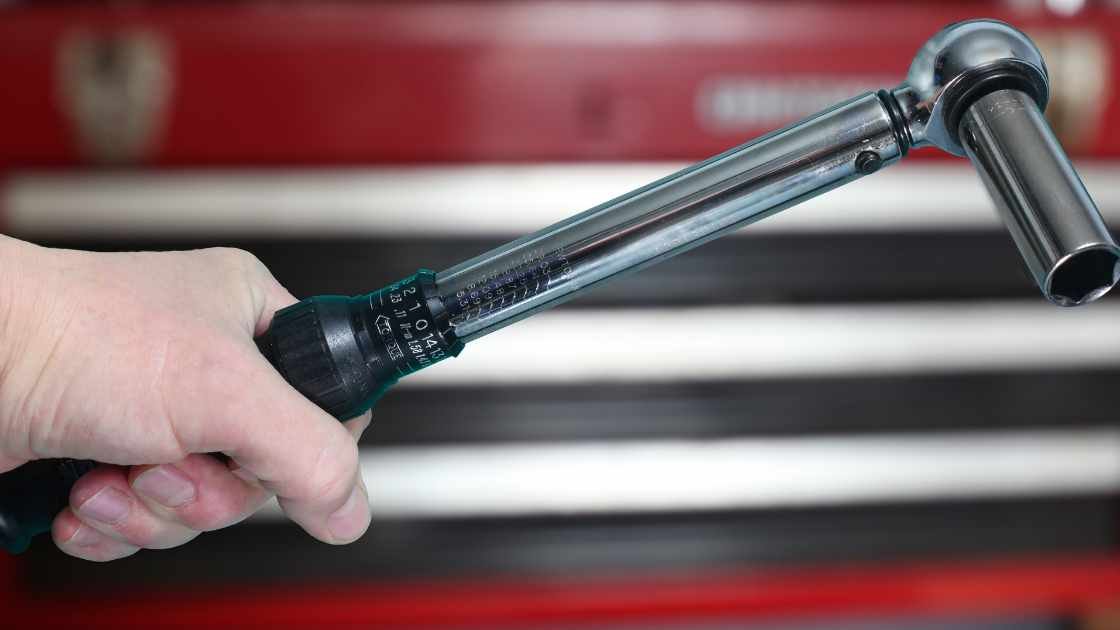
Basic hand tools (sockets, wrenches, screwdrivers)
Torque wrench
- Drain pan
- Work gloves and safety glasses
Two details catch out first-timers. Coolant is not generic — modern vehicles specify particular chemistries, and mixing incompatible types can cause corrosion and gelling, so use what the manufacturer calls for. And refilling is not the last step: air trapped in the system will cause overheating even with a perfect pump installation, so follow your vehicle’s bleeding procedure exactly.
A DIY total depends on the exact pump, coolant requirement, gaskets, replacement belts or timing components, and tools you already own. Price the correct components by VIN instead of relying on a universal water-pump part estimate.
When To Choose Professional Service
Professional service is the safer choice when the pump requires substantial engine disassembly, timing-system work, specialized bleeding procedures, or diagnosis you cannot perform confidently. It is also worth considering when a mistake could cause a coolant leak, timing problem, or immediate overheating.
| Cost / Decision Factor | DIY | Professional Service |
|---|---|---|
| Parts & Materials | You purchase the vehicle-specific pump, seals, coolant, and any related parts | Usually included in the written repair estimate |
| Labor | Your time; 2 – 3 hours on an accessible pump | Current national labor component averages about $361 – $529 |
| Tools | You supply or purchase them | Shop supplies required service equipment |
| Diagnosis | Your responsibility | Technician can confirm whether the pump is actually the fault |
| Warranty | Usually limited to the part manufacturer’s terms | Depends on the shop and parts used |
| Best suited to | Tier 1 externally accessible, belt-driven pumps | Tier 2 and Tier 3: timing-driven, buried, or electric pumps |
| Total | Vehicle-specific parts, fluids, tools, and your time | RepairPal national benchmark: $888 – $1,139 before taxes, fees, location adjustments, and related repairs |
DIY can save labor when the procedure is straightforward and you already have the skills and equipment. For a difficult engine layout, paying for professional diagnosis and installation can reduce the risk of repeating the job or causing additional damage.
Quick answer: RepairPal’s U.S. estimate updated July 25, 2026 puts the average water pump replacement cost at $888 to $1,139. That includes about $361 to $529 in labor and $527 to $610 in parts, before taxes, fees, location adjustments, and related repairs. Kelley Blue Book puts the job at roughly two to three hours of shop time.
Your actual bill can be lower or much higher. The biggest variables are your exact vehicle and engine, how difficult the pump is to reach, whether timing-system parts must be removed, whether the pump is belt-driven or electric, where you have the work done, and what else the technician finds during the repair.
Last updated: August 11, 2026 · By: Weston Harrison
Every cost figure below was re-checked against the source pages on August 11, 2026.
For a current benchmark, see RepairPal’s water pump replacement estimate. Always use a VIN- and location-specific quote before authorizing the repair.
2026 Water Pump Replacement Cost Snapshot
| Cost Item | Current U.S. Estimate |
|---|---|
| Total replacement | $888 – $1,139 |
| Labor | $361 – $529 |
| Parts | $527 – $610 |
| Typical shop time | About 2 – 3 hours |
Source: RepairPal national estimate updated July 25, 2026; shop time per Kelley Blue Book (February 2025). These figures exclude taxes, fees, location adjustments, and related repairs.
What Three Cost Sources Actually Say
No single estimator owns this number. The three most-cited U.S. sources measure slightly different things, and reading them side by side tells you more than any one of them alone.
| Source | What It Measures | Reported Figure |
|---|---|---|
| RepairPal national estimate (updated July 25, 2026) | Parts plus labor, before taxes and fees | $888 – $1,139 |
| Kelley Blue Book, using Cox Automotive data (February 2025) | Dealership service center | About $900; parts $200 – $400, with labor roughly two-thirds of the bill |
| ConsumerAffairs cost guide (May 2026) | Independent shop vs. dealership | About $800 independent; $1,000 or more at a dealership |
Two things stand out. First, labor, not the pump, is the main expense in most quotes. Second, the sources disagree on parts: RepairPal’s $527 to $610 parts figure sits well above the $200 to $400 that Kelley Blue Book reports, which usually reflects whether gaskets, coolant, and related hardware are bundled into the parts line. When you compare quotes, compare what is inside the parts line, not just the total.
Why The “Average” Keeps Moving
Treat any published range as a snapshot, not a fixed price. RepairPal repriced this repair between our checks: a May 2026 guide cited the national range as $857 to $1,106, while the estimator showed $888 to $1,139 in late July 2026. RepairPal’s own pages can also disagree on the same day, with the Toyota Camry appearing at $611 to $791 on its model page and $632 to $815 in the national estimator’s sidebar.
That is not an error on anyone’s part. It reflects a live database of shop-reported labor times and parts prices being refreshed at different intervals. The practical takeaway: use these ranges to judge whether a quote is plausible, not to argue a shop down to the dollar.
A correct diagnosis comes before you buy a pump or approve the job. Coolant leaks, overheating, unusual noises, belt problems, thermostat faults, and other cooling-system issues produce overlapping symptoms, and a pump replaced for a thermostat’s fault is a full bill for no fix.
The Role Of A Water Pump In Your Vehicle
Your vehicle’s water pump circulates coolant through the engine and cooling system. That flow carries heat away from the engine and toward the radiator so the cooling system can control operating temperature.
Core Functions Of A Water Pump
Inside the pump, an impeller spins to push coolant through the block and back to the radiator. What drives that impeller varies by design: a serpentine or accessory belt at the front of the engine, the timing belt or timing chain, or an electric motor. Many pumps also have a small weep hole that drips coolant deliberately when the internal seal begins to fail, which is the earliest warning most drivers ever get.
- Circulates coolant through the engine
- Supports temperature control
- Helps prevent overheating when the cooling system is working correctly
Signs Of Water Pump Failure
- Coolant leak: A puddle, dripping coolant, or dried coolant residue near the pump area can indicate a leak.
- Weep hole drip: Some pumps have a built-in weep hole that drips when the pump’s seal starts to go. Kelley Blue Book lists this as a specific early symptom, and it often shows up before any temperature change.
- Abnormal noise: Grinding, squealing, or whining from the pump or belt area needs diagnosis because several rotating components can make similar sounds. A low-pitched grinding that rises in pitch with engine speed often points to a failing pump bearing or a wobbling pulley.
- Steam: Steam from under the hood can indicate severe overheating or coolant loss.
- Overheating: A rising temperature gauge or overheating warning can occur when coolant circulation is inadequate.
If the temperature warning appears or steam is coming from under the hood, pull over safely and shut the engine off. Do not continue driving an overheating vehicle, and do not open a hot pressurized cooling system.
What Affects Water Pump Replacement Cost?
Water pump replacement cost depends on much more than the pump itself. Vehicle design determines how much disassembly is required, while part choice, shop type, local labor, coolant, and related repairs affect the final invoice.
Car Make, Model, Engine, And Year
The exact vehicle matters more than the badge alone. Two model years of the same vehicle can use different engines, pump designs, and labor procedures. Current RepairPal estimates show how wide the spread runs across the market:
| Vehicle | Current RepairPal Estimate |
|---|---|
| Toyota Corolla | $499 – $637 |
| Nissan Altima | $622 – $760 |
| Honda Civic | $640 – $810 |
| Honda Accord | $763 – $1,023 |
| Honda CR-V | $814 – $1,090 |
| Ford F-150 | $957 – $1,102 |
| Chevrolet Silverado 1500 | $1,059 – $1,485 |
| BMW X5 | $1,091 – $1,320 |
| Ford Flex | $1,839 – $2,454 |
That is a spread of roughly $500 to $2,450 for the same nominal repair — a five-fold difference driven almost entirely by access. The Ford Flex is the clearest illustration: RepairPal assigns it $1,318 to $1,933 in labor alone, several times the Corolla’s entire bill, because of how deeply the pump is buried.
Note on precision: these are vehicle-level estimates, not guaranteed quotes, and RepairPal refreshes them on a rolling basis. Figures shifted by $2 to $20 between RepairPal’s model pages and its national sidebar on the day we checked. Use them as a sanity check on a written quote, not as a target price. RepairPal’s current pages for the Honda Civic, Ford F-150, and BMW X5 also show substantial differences by model year.
Belt-Driven Vs. Electric Water Pumps
Not every pump is turned by a belt. Kelley Blue Book notes that Toyota and Lexus hybrids, some Audi, Bentley, and Volkswagen models, and several BMWs use electrically driven water pumps instead. This matters for two reasons.
First, an electric pump assembly generally costs more as a part than a conventional cast belt-driven pump. Second, diagnosis changes: RepairPal notes that on cars with electric pumps, a technician checks the engine computer for fault codes and runs electrical tests rather than simply listening for a bad bearing. If you own a hybrid or a recent European model, ask the shop specifically which type your engine uses before comparing your quote to a generic average — a belt-driven benchmark can understate an electric-pump job substantially.
Dealership Vs. Independent Shop
Where you take the car is the largest variable you actually control. ConsumerAffairs reports the repair averaging around $800 at an independent shop and $1,000 or more at a dealership, and Kelley Blue Book’s roughly $900 figure is specifically a dealer-service-center number.
Dealerships typically use manufacturer-specified parts, carry make-specific training and tooling, and charge labor rates that reflect it. Independents can often use quality aftermarket parts and bill at a lower hourly rate. Neither is automatically the right call: a dealer is often worth the premium on a hybrid, a European model, or any engine where the pump sits behind the timing cover, while a straightforward belt-driven pump on a common commuter car is exactly the job a good independent does well and cheaply. Call both, and compare the itemised quotes rather than the headline totals.
OEM Vs. Aftermarket Parts
Part choice can change the quote. OEM or manufacturer-branded parts may cost more, while aftermarket pumps can offer lower-priced alternatives. Quality, warranty terms, included gaskets or hardware, and correct vehicle fitment should matter more than choosing the cheapest pump.
- OEM or manufacturer-branded: Often positioned at a higher price and built to the vehicle manufacturer’s specified application.
- Aftermarket: Can offer more price choices, but quality and warranty terms vary by manufacturer and seller.
One practical rule: on any engine where the pump sits behind the timing system, the part price is a rounding error next to the labor. Saving $40 on a pump you may have to pay several hundred dollars in labor to reach again is a poor trade. Ask what warranty the specific pump carries before choosing on price.
Pump Location And Labor
Access is the largest cost driver in this repair. An externally accessible pump may require little disassembly. A pump behind timing covers or surrounded by tightly packaged engine components can require substantially more labor.
RepairPal’s current national estimate assigns about $361 to $529 of the average job to labor, and Kelley Blue Book reports that labor makes up roughly two-thirds of a typical dealership bill. Your shop’s actual charge depends on local rates and the labor procedure for your specific engine.
Related Parts And Fluids
A complete quote may include more than the pump. Depending on the vehicle and what the technician finds, the job can also involve coolant, seals or gaskets, drive belts, timing-belt components, tensioners, a thermostat, diagnosis, taxes, fees, or other cooling-system repairs.
For context, RepairPal’s current national estimates for the jobs most often bundled with a water pump are a thermostat replacement at $609 to $709, a timing belt replacement at $889 to $1,291, and a coolant change at $437 to $508. RepairPal recommends inspecting the wider cooling system — hoses, fittings, radiator, cooling fan, and fan clutch — while the pump is out, and replacing the thermostat at the same time.
Average Price Range For Water Pump Replacement
For 2026 budgeting, $888 to $1,139 is a stronger current national benchmark than a generic $400-to-$1,000 range. However, it remains an average estimate rather than a minimum or maximum. Older, simpler applications may cost less, while difficult access, expensive pump assemblies, luxury models, trucks, and related repairs can push the total higher — as high as $2,454 on the Ford Flex, on RepairPal’s own numbers.
Why Model Year Can Change The Price
Do not rely on a brand-only estimate, and do not assume newer means dearer. RepairPal’s BMW X5 pages make the point cleanly: the 2026 X5 is estimated at $968 to $1,173, while the 2014 through 2018 X5 sits at $1,333 to $1,504. The older truck is the more expensive repair, because the engine and pump design changed.
The Toyota Camry shows the same pattern in reverse. RepairPal’s overall Camry estimate is $611 to $791, but its 2018 through 2023 Camry listings run $883 to $1,083 — well above the model average pulled down by two decades of older cars.
That is why a useful estimate identifies the year, make, model, engine, and location before you compare prices — and why a quote for “a Camry” tells you almost nothing.
How Long Should The Job Take?
Kelley Blue Book puts a typical water pump replacement at two to three hours of shop time. That figure holds for an externally accessible, belt-driven pump. Where the pump is driven by or hidden behind the timing belt, the labor operation is effectively a timing belt job with a pump swap inside it, and the time can run several times longer.
Time matters because it is what you are really buying. If a shop quotes you well above the national range, the honest explanation is almost always labor hours, not markup — ask how many hours the job books at for your engine and what the shop’s hourly rate is. Two numbers you can check beat one total you cannot.
What Extra Charges Should You Ask About?
Before approving the repair, ask whether the written estimate includes:
- Water pump and gasket or seal
- Required coolant, in the specification your vehicle calls for
- Labor for removal, installation, refill, and bleeding the cooling system of air
- Any timing belt, drive belt, tensioner, idler, or pulley work
- Thermostat or other recommended cooling-system parts
- Diagnostic charges
- Shop supplies, disposal fees, and taxes
- Parts and labor warranty terms
For related cost benchmarks across other repairs, see our automotive cost guides. a dedicated cooling-system or thermostat cost article to link here
DIY Vs. Professional Service: A Cost Comparison
A DIY replacement can remove professional labor from the bill, but the difficulty varies dramatically by vehicle. RepairPal notes that most water pumps need only simple tools — yet the procedures vary wildly from car to car, and some require significant disassembly of the front of the engine. Before ordering parts, check the service procedure for your exact engine.
Three Difficulty Tiers: Which One Is Your Car?
Most vehicles fall into one of three brackets, and the bracket tells you almost everything about whether DIY makes sense.
- Tier 1 — externally accessible, belt-driven. The pump bolts to the front of the engine behind an accessory or serpentine belt. Hand tools, a drain pan, and a torque wrench. This is the two-to-three-hour job Kelley Blue Book describes and the realistic DIY candidate.
- Tier 2 — timing-belt-driven. The pump is cheap; reaching it is not. You are performing a timing belt service either way, with the alignment risk that carries. Doing this wrong can bend valves on an interference engine.
- Tier 3 — buried, electric, or behind a timing chain cover. Ford Flex territory, where RepairPal books $1,318 to $1,933 in labor alone. Special tools, extensive disassembly, and often electrical diagnosis. This is a shop job.
Materials Needed For DIY Replacement
For a Tier 1 job, the shopping list is short. Price every item against your VIN rather than a universal part listing — the wrong gasket or the wrong coolant specification will cost you the job twice.
New water pump
Gasket or gasket sealant
Coolant
Basic hand tools (sockets, wrenches, screwdrivers)
Torque wrench
- Drain pan
- Work gloves and safety glasses
Two details catch out first-timers. Coolant is not generic — modern vehicles specify particular chemistries, and mixing incompatible types can cause corrosion and gelling, so use what the manufacturer calls for. And refilling is not the last step: air trapped in the system will cause overheating even with a perfect pump installation, so follow your vehicle’s bleeding procedure exactly.
A DIY total depends on the exact pump, coolant requirement, gaskets, replacement belts or timing components, and tools you already own. Price the correct components by VIN instead of relying on a universal water-pump part estimate.
When To Choose Professional Service
Professional service is the safer choice when the pump requires substantial engine disassembly, timing-system work, specialized bleeding procedures, or diagnosis you cannot perform confidently. It is also worth considering when a mistake could cause a coolant leak, timing problem, or immediate overheating.
| Cost / Decision Factor | DIY | Professional Service |
|---|---|---|
| Parts & Materials | You purchase the vehicle-specific pump, seals, coolant, and any related parts | Usually included in the written repair estimate |
| Labor | Your time; 2 – 3 hours on an accessible pump | Current national labor component averages about $361 – $529 |
| Tools | You supply or purchase them | Shop supplies required service equipment |
| Diagnosis | Your responsibility | Technician can confirm whether the pump is actually the fault |
| Warranty | Usually limited to the part manufacturer’s terms | Depends on the shop and parts used |
| Best suited to | Tier 1 externally accessible, belt-driven pumps | Tier 2 and Tier 3: timing-driven, buried, or electric pumps |
| Total | Vehicle-specific parts, fluids, tools, and your time | RepairPal national benchmark: $888 – $1,139 before taxes, fees, location adjustments, and related repairs |
DIY can save labor when the procedure is straightforward and you already have the skills and equipment. For a difficult engine layout, paying for professional diagnosis and installation can reduce the risk of repeating the job or causing additional damage.

9 thoughts on “How Much Does It Cost to Replace a Water Pump in 2026?”
Pingback: How Much Does It Cost To Replace Airbags?
Pingback: How Much Do Retainers Cost To Replace?
Pingback: How Much Does It Cost To Replace A Retainer?
Pingback: How Much Is A School Computer Cost To Repair?
Pingback: How Much It Cost To Replace Air Conditioning Blowing Hose?
Pingback: Average Living Cost In Irving: Monthly Budget, Rent & Essentials
Pingback: Average Living Cost In Birmingham: Monthly Budget, Rent & Essentials
Pingback: Average Living Cost In Seoul: Prices, Rent & Transport
Pingback: Average Living Cost In York: Monthly Expenses & Rent